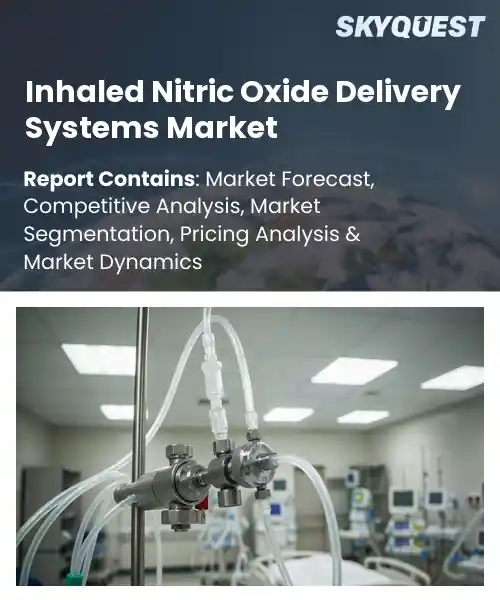
Inhaled Nitric Oxide Delivery Systems Market
Report ID: SQMIG35A3609
Report ID: SQMIG35A3609
[email protected]
USA +1 351-333-4748
Report ID:
SQMIG35A3609 |
Region:
Global |
Published Date: May, 2026
Pages:
157
|Tables:
115
|Figures:
77


Global Inhaled Nitric Oxide Delivery Systems Market size was valued at USD 0.882 Billion in 2024 and is poised to grow from USD 0.96 Billion in 2025 to USD 1.852 Billion by 2033, growing at a CAGR of 8.62% during the forecast period (2026-2033).
The main reason for the inhaled nitric oxide delivery systems market growth is due to the need for targeted medicine to help improve pulmonary blood flow and improve oxygen delivery in critically ill patients being treated with neonatal intensive care. The different parts that make up this market (gas, delivery equipment, monitoring products, and disposables) directly relate to the number of people affected by morbidity and mortality due to diseases such as persistent pulmonary hypertension of the newborn or ARDS. In the past 20 years, there has been a shift in how nitric oxide has been provided to hospitals, moving from bulk gas delivery (hospital only) to portable devices that no longer require bulk gas delivery, along with integrated monitoring capabilities.
Due to the advancements in technology and the COVID-19 pandemic there has been a sharp increase in the number of clinical settings that are able to use Nitric Oxide for treatment and a significant increase in devices that deliver NO in a manner that minimizes staff exposure while delivering nitric oxide effectively. While clinicians observed an increase in oxygen delivery by the inhalation of Nitric Oxide for patients with severe ARDS, they also investigated the use of inhaled NO to reduce the number of days on the ventilator. As a result of these findings, manufacturers have been creating small delivery devices and improved monitoring systems in greater quantities to meet the new and increased demand for their products. Favorable reimbursement pathways and partnerships between device makers and gas suppliers facilitated broader adoption in neonatal intensive care, cardiac surgery and ambulatory pulmonary hypertension clinics, creating revenue streams and further innovation.
How is AI Enhancing Device Performance In The Inhaled Nitric Oxide Delivery Systems Market?
Inhaled nitric oxide (iNO) systems are enhanced through the application of artificial intelligence (AI) and advanced technologies such as adaptive and precise real/time control, clinical analytics and predictive maintenance capabilities. The core components of AI technology include precise measurement of both the concentration of iNO and the amount of NO2 produced, closed-loop adaptive dosing, where the iNO is infused synchronously with the ventilator flow, and predictive maintenance to minimize unscheduled downtime. The market for iNO has also moved from cylinder-based iNO delivery systems to generator-based, tankless iNO systems, which can be enhanced through the use of AI, as described above.
With this transition, closed-loop delivery abilities of iNO will increase consistency and reliability, decrease the burden on clinicians, and improve the safety of bedside titration. Real-world examples of closed-loop delivery and integrated iNO sensing have demonstrated how software-based features have created the confidence to adopt these technologies and increase clinical utilization.
On April 21, 2026, Beyond Air announced a national purchasing agreement with its LungFit PH system, whereby algorithmic monitoring and tankless iNO generation provides a foundation for greater adoption of this technology, while also improving hospital workflow and enabling more precise iNO dosing with online monitoring. In summary, AI-enabled features are creating new pathways for improving the market for iNO by streamlining adoption processes and reducing the operational burden on the clinician.
Market snapshot - (2026-2033)
Global Market Size
USD 0.882 Billion
Largest Segment
Cylinder-Based Delivery Systems
Fastest Growth
Generator-Based Systems
Growth Rate
8.62% CAGR
To get more insights on this market click here to Request a Free Sample Report
Global inhaled nitric oxide delivery systems market is segmented by system type, application, end-user, distribution and region. Based on system type, the market is segmented into Cylinder-Based Delivery Systems and Generator-Based Systems. Based on application, the market is segmented into Persistent Pulmonary Hypertension of the Newborn (PPHN), Acute Respiratory Distress Syndrome (ARDS) and Cardiac Surgery. Based on end-user, the market is segmented into NICUs, ICUs and Cardiac Surgical Centers. Based on distribution, the market is segmented into Direct Sales and Distributors. Based on region, the market is segmented into North America, Europe, Asia Pacific, Latin America and Middle East & Africa.
The Cylinder-Based Delivery Systems category is the most widely used delivery option, due to compatibility with existing hospital gas systems, ease of use/logistics, existing familiarity by clinicians with the use of cylinders, clearly defined regulatory processes, established safety rules, and these reasons working together decrease the barriers to adoption and help to drive cylinder-based procurement for critical care providers. As a result of all these cause and effect dynamics, there is significant cylinder utilization in settings where immediate, guaranteed delivery of nitric oxide to critically ill patients is crucial.
The Generator-Based Systems segment continues to grow rapidly because they allow for on-site manufacture of nitric oxide, eliminating the need for complex resupply of nitric oxide gas cylinders and allowing for continuous therapy and easier tracking of inventory. Ongoing advances in smaller, more mobile generating devices and increasing interest from other types of care settings will also aid in developing products and will shape clinical workflow and overall growth of these markets in the future.
Due to the large differences in severity and variability of oxygenation failure with ARDS, there continues to be such an acute need for the delivery of precise pulmonary vasodilation and real-time monitoring; therefore, the ARDS segment dominates. Additionally, the requirement for accurate titration, safety interlocks, and seamless integration of ventilators, as per critical care protocols and evidence-based practices, are driving hospitals to select systems that meet their unique needs and purchasing criteria. Also, this provides an ever-increasing opportunity for the development of hospital-based delivery platforms that are specifically adapted to meet the complexity of the respiratory support needs.
On the other hand, the Cardiac Surgical segment has the most considerable growth potential due to an increase in the use of nitric oxide and targeted management of pulmonary vascular resistance during the perioperative period associated with complex surgical procedures. The demand for rapid titration, compatibility with perfusion circuits, and devices designed for optimal operating room workflows increases adoption within surgical centers, thus creating opportunities for the development of specialized methods of delivery and expanding clinical uses.
To get detailed segments analysis, Request a Free Sample Report
Due to a very strong interaction of clinical skills, industry innovation and supportive health systems, North America is well positioned to lower barriers to entry for adoption through highly concentrated centers of excellence in neonatal and pulmonary care to increase the speed of adoption; and extensive experience with complex respiratory therapy to help influence clinical best practices and device integration. Due to a well-established regulatory environment and clearly defined reimbursement pathway, manufacturers have reduced their risk of commercializing their products by having defined cash flow requirements for product improvement and training. In addition, with a strong presence of original equipment manufacturers (OEMs) and contract innovators, technology transfer from research to the bedside is expedited. Lastly, integrated distribution networks, experienced clinical educators and collaborative research partnerships among the hospitals, industry and academic institutions, help maintain adoption momentum and create a self-reinforcing ecosystem that is difficult to replicate.
In the United States, the Inhaled Nitric Oxide Delivery Systems Market is led by tertiary hospitals offering a high level of care, a concentration of neonatal ICUs and strong representation from the med-tech industry. There is also a high volume of clinical research, collaborating with device manufacturers on product development, allowing for iterative improvements and an increasing number of indications for use. Many healthcare providers have established extensive professional training programs and distribution networks, making it possible to quickly put into use new delivery systems within the broader critical care environment. Furthermore, the close working relationship between clinicians and device manufacturers supports innovation at the local level and allows for product improvement in complex care environments.
Canada has a very coordinated when it comes to the Inhaled Nitric Oxide Delivery Systems Market with provinces collaborating on purchasing; developed centers of excellence (particularly in pediatric and adult respiratory care); and introduced provider-endorsed clinical pathways that support device selection. Academic hospitals and referral centers are at the forefront of developing clinical pathways and training providers in the adoption of devices and best practices within their clinical network. The collaboration between the national health authorities, clinicians and suppliers provides a solid foundation for selecting devices that are consistent with system-wide priorities, while targeted investments in provider education are made to ensure their safe and effective use in critical care units.
Europe is experiencing rapid expansion driven by converging forces in healthcare modernization, regulatory alignment, and clinical demand for advanced respiratory support. Strengthening hospital capabilities in tertiary centers and expanding specialist networks in neonatal and pulmonary care create natural demand for reliable delivery platforms. Regulatory harmonization and clearer conformity pathways have facilitated smoother market entry for innovative devices, while evolving clinical guidelines and growing clinician familiarity increase clinical acceptance. Investments in hospital infrastructure and procurement modernization enable hospitals to evaluate and adopt new technologies. Tight collaborations among European manufacturers, distributors, and clinical research centers accelerate localized innovation and support post market evidence generation, contributing to sustained expansion across major markets.
Inhaled Nitric Oxide Delivery Systems Market in Germany is led by a strong domestic medtech industry, well established clinical research networks, and widespread access to tertiary care units. Hospitals with specialized neonatal and pulmonary services often participate in device evaluations, shaping procurement decisions and clinical pathways. Manufacturer presence and local engineering expertise support rapid product customization and service provision. Close engagement between clinicians and suppliers fosters practical device enhancements that align with German hospital requirements and quality expectations.
Inhaled Nitric Oxide Delivery Systems Market in United Kingdom is marked by accelerated uptake driven by centralized hospital evaluation mechanisms, active clinical guideline evolution, and coordinated procurement initiatives. Major neonatal and critical care centers function as early adopters and training hubs, while national health system structures enable broader dissemination once clinical value is demonstrated. Collaborative pilots between academic centers and industry, together with focused education programs for clinicians and biomedical staff, are contributing to rapid expansion and increasing routine integration in complex respiratory care.
Inhaled Nitric Oxide Delivery Systems Market in France is emerging with growing attention from regional centers of excellence and an expanding base of clinical specialists in neonatology and pulmonology. Strategic investments in hospital modernization and selective adoption in tertiary hospitals are fostering initial uptake. Local partnerships between research hospitals and suppliers support clinical evaluations and adaptation to national procurement frameworks. Emphasis on clinician training and post market monitoring is strengthening confidence and paving the way for more widespread clinical incorporation.
Asia Pacific is strengthening its position through coordinated enhancements in healthcare delivery, targeted investment in tertiary care infrastructure, and active engagement with global technology partners. Expansion of specialist respiratory and neonatal services in urban centers is creating demand for advanced delivery systems, while regulatory pathways are becoming more navigable, enabling faster introduction of proven technologies. Localization efforts by manufacturers, including adaptation of devices to regional clinical settings and collaboration on training, lower barriers to adoption. Growing clinical research activity and pilot implementations in leading hospitals generate region specific evidence that supports wider dissemination. Strategic alliances between multinational suppliers and local distributors are enhancing supply chain resilience and service capabilities across the region.
Inhaled Nitric Oxide Delivery Systems Market in Japan benefits from a sophisticated healthcare environment with strong emphasis on technology integration and clinical quality. Leading hospitals and research institutes play a pivotal role in evaluating delivery platforms and informing clinician training. Local regulatory clarity and partnerships between domestic and international manufacturers facilitate market entry and product adaptation. Focused investment in staff education and maintenance support ensures reliable operation in tertiary care settings, supporting steady integration into specialized respiratory and neonatal services.
Inhaled Nitric Oxide Delivery Systems Market in South Korea is advancing through rapid enhancement of critical care facilities, active participation in clinical research, and close collaboration with global technology providers. Tertiary hospitals and academic centers serve as adoption focal points, enabling practical validation and clinician familiarization. Emphasis on localized training programs, efficient distribution networks, and post market support contributes to growing confidence among healthcare providers and facilitates broader uptake across major hospital systems.
To know more about the market opportunities by region and country, click here to
Buy The Complete Report
Increasing Adoption In Neonatal Care
Technological Improvements In Delivery Devices
High Treatment Costs and reimbursement
Limited Access In Emerging Regions
Request Free Customization of this report to help us to meet your business objectives.
Competitive dynamics in the global inhaled nitric oxide delivery systems market are driven by tankless generator innovations that reduce hospital logistics and cost, prompting licensing deals, strategic equity investments, and regulatory focused product launches; concrete examples include a global commercialization agreement between Third Pole and Chiesi, VERO Biotech regulatory clearances for tankless delivery, and strategic funding rounds that accelerate commercial entry.
SkyQuest’s ABIRAW (Advanced Business Intelligence, Research & Analysis Wing) is our Business Information Services team that Collects, Collates, Correlates, and Analyses the Data collected by means of Primary Exploratory Research backed by robust Secondary Desk research.
As per SkyQuest analysis, the global inhaled nitric oxide delivery systems market is primarily driven by clinical demand for targeted pulmonary vasodilation in neonatal and critical care, alongside rapid technological improvements in delivery devices that enable precise dosing and on-site generation. However high treatment costs and inconsistent reimbursement remain a significant restraint, limiting hospital willingness to adopt or upgrade systems. North America leads the market, supported by advanced tertiary centers and strong medtech infrastructure. Cylinder-based delivery systems continue to dominate due to proven compatibility with hospital gas infrastructure and established clinician familiarity. Continued innovation toward portable connected platforms may expand applications but reimbursement will determine adoption speed.
| Report Metric | Details |
|---|---|
| Market size value in 2024 | USD 0.882 Billion |
| Market size value in 2033 | USD 1.852 Billion |
| Growth Rate | 8.62% |
| Base year | 2024 |
| Forecast period | (2026-2033) |
| Forecast Unit (Value) | USD Billion |
| Segments covered |
|
| Regions covered | North America (US, Canada), Europe (Germany, France, United Kingdom, Italy, Spain, Rest of Europe), Asia Pacific (China, India, Japan, Rest of Asia-Pacific), Latin America (Brazil, Rest of Latin America), Middle East & Africa (South Africa, GCC Countries, Rest of MEA) |
| Companies covered |
|
| Customization scope | Free report customization with purchase. Customization includes:-
|
To get a free trial access to our platform which is a one stop solution for all your data requirements for quicker decision making. This platform allows you to compare markets, competitors who are prominent in the market, and mega trends that are influencing the dynamics in the market. Also, get access to detailed SkyQuest exclusive matrix.
Table Of Content
Executive Summary
Market overview
Parent Market Analysis
Market overview
Market size
KEY MARKET INSIGHTS
COVID IMPACT
MARKET DYNAMICS & OUTLOOK
Market Size by Region
KEY COMPANY PROFILES
Methodology
For the Inhaled Nitric Oxide Delivery Systems Market, our research methodology involved a mixture of primary and secondary data sources. Key steps involved in the research process are listed below:
1. Information Procurement: This stage involved the procurement of Market data or related information via primary and secondary sources. The various secondary sources used included various company websites, annual reports, trade databases, and paid databases such as Hoover's, Bloomberg Business, Factiva, and Avention. Our team did 45 primary interactions Globally which included several stakeholders such as manufacturers, customers, key opinion leaders, etc. Overall, information procurement was one of the most extensive stages in our research process.
2. Information Analysis: This step involved triangulation of data through bottom-up and top-down approaches to estimate and validate the total size and future estimate of the Inhaled Nitric Oxide Delivery Systems Market.
3. Report Formulation: The final step entailed the placement of data points in appropriate Market spaces in an attempt to deduce viable conclusions.
4. Validation & Publishing: Validation is the most important step in the process. Validation & re-validation via an intricately designed process helped us finalize data points to be used for final calculations. The final Market estimates and forecasts were then aligned and sent to our panel of industry experts for validation of data. Once the validation was done the report was sent to our Quality Assurance team to ensure adherence to style guides, consistency & design.
Analyst Support
Customization Options
With the given market data, our dedicated team of analysts can offer you the following customization options are available for the Inhaled Nitric Oxide Delivery Systems Market:
Product Analysis: Product matrix, which offers a detailed comparison of the product portfolio of companies.
Regional Analysis: Further analysis of the Inhaled Nitric Oxide Delivery Systems Market for additional countries.
Competitive Analysis: Detailed analysis and profiling of additional Market players & comparative analysis of competitive products.
Go to Market Strategy: Find the high-growth channels to invest your marketing efforts and increase your customer base.
Innovation Mapping: Identify racial solutions and innovation, connected to deep ecosystems of innovators, start-ups, academics, and strategic partners.
Category Intelligence: Customized intelligence that is relevant to their supply Markets will enable them to make smarter sourcing decisions and improve their category management.
Public Company Transcript Analysis: To improve the investment performance by generating new alpha and making better-informed decisions.
Social Media Listening: To analyze the conversations and trends happening not just around your brand, but around your industry as a whole, and use those insights to make better Marketing decisions.
REQUEST FOR SAMPLE
 REQUEST FREE CUSTOMIZATION
Global Inhaled Nitric Oxide Delivery Systems Market size was valued at USD 0.882 Billion in 2024 and is poised to grow from USD 0.96 Billion in 2025 to USD 1.852 Billion by 2033, growing at a CAGR of 8.62% during the forecast period (2026-2033).
Competitive dynamics in the global inhaled nitric oxide delivery systems market are driven by tankless generator innovations that reduce hospital logistics and cost, prompting licensing deals, strategic equity investments, and regulatory focused product launches; concrete examples include a global commercialization agreement between Third Pole and Chiesi, VERO Biotech regulatory clearances for tankless delivery, and strategic funding rounds that accelerate commercial entry. 'Mallinckrodt Pharmaceuticals (INOmax)', 'Bellerophon Therapeutics', 'GeNO LLC', 'Vero Biotech', 'SensorMedics (CareFusion/BD)', 'International Biomedical', 'Air Liquide Medical Systems', 'Linde plc', 'Praxair (Linde)', 'Air Products Healthcare', 'BOC Healthcare (Linde)', 'Messer Group', 'NOxBOX (Advanced Inhalation Therapies)', 'Advanced Inhalation Therapies', 'Oxygen Biotherapeutics', 'CIRCOR International', 'Neodiagnostix', 'Vapotherm Inc.', 'Fisher & Paykel Healthcare', 'Masimo Corporation'
In neonatal care, growing clinician familiarity with inhaled nitric oxide therapy and the establishment of clinical protocols have encouraged hospital departments to integrate specialized delivery systems into routine practice, thereby expanding device procurement and support services; focused training programs for neonatal intensive care staff and positive clinical perceptions regarding targeted pulmonary vasodilation foster institutional confidence, prompting broader adoption across units and sustained investment in compatible delivery equipment and consumables as part of comprehensive respiratory care strategies and promoting collaborations between manufacturers and hospitals.
Expanding Clinical Indications: Adoption of inhaled nitric oxide is broadening beyond traditional neonatal care into adult critical care and diverse pulmonary disorders, driven by growing clinical interest and emerging therapeutic concepts. Clinicians are exploring perioperative uses, targeted pulmonary vasodilation in complex comorbidities, and adjunctive roles to support organ-specific strategies. This trend reflects increasing interdisciplinary collaboration, guideline consideration, and emphasis on tailored patient selection, prompting manufacturers to support varied clinical workflows and evidence generation to validate real-world benefits and optimize treatment pathways.
Why does North America Dominate the Global Inhaled Nitric Oxide Delivery Systems Market? |@12


Want to customize this report? This report can be personalized according to your needs. Our analysts and industry experts will work directly with you to understand your requirements and provide you with customized data in a short amount of time. We offer $1000 worth of FREE customization at the time of purchase.
Feedback From Our Clients


 USA (+1) 351-333-4748

