
Immunohistochemistry Market
Report ID: SQMIG35J2148
Report ID: SQMIG35J2148
[email protected]
USA +1 351-333-4748
Report ID:
SQMIG35J2148 |
Region:
Global |
Published Date: December, 2025
Pages:
176
|Tables:
95
|Figures:
68


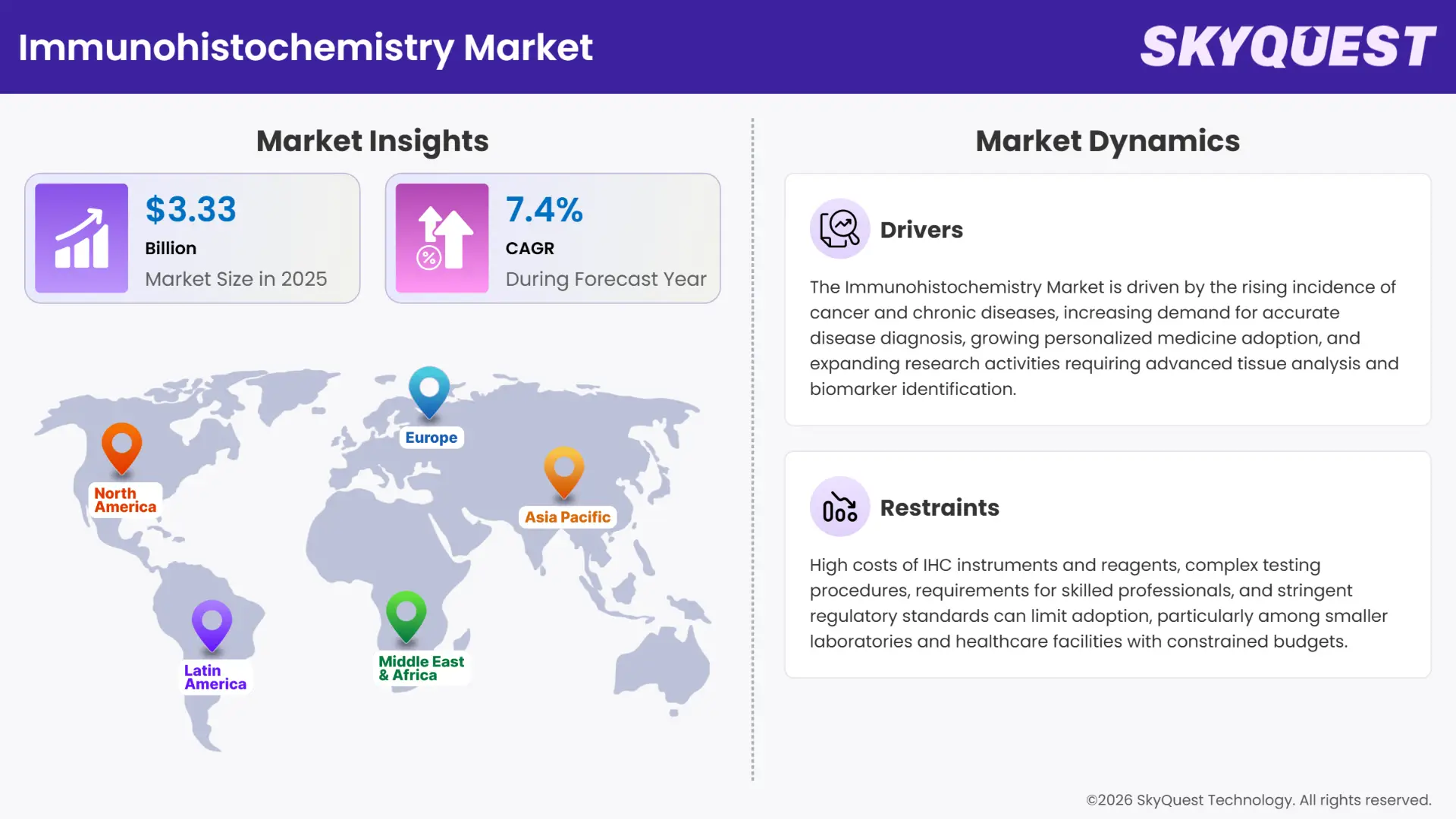
Global Immunohistochemistry Market size was valued at USD 3.10 Billion in 2024 and is poised to grow from USD 3.33 Billion in 2025 to USD 5.89 Billion by 2033, growing at a CAGR of 7.4% during the forecast period (2026–2033).
Key Takeaways: Market Trends & Insights
The increasing use of automation and machine learning in immunohistochemistry (IHC) as well as the introduction of technologically advanced immunohistochemistry solutions are expected to significantly propel the global immunohistochemistry market growth during the forecast period. Due to improvements in its protocols, IHC is now much more in demand for disease diagnosis. Moreover, the global immunohistochemistry market penetration is being driven by the introduction of highly advanced immunohistochemistry systems for disease diagnosis and a rise in product approvals. To support this trend, businesses are actively working to launch platforms that reflect current technological capabilities and meet end-user needs.
How are AI-Powered Tools Enhancing Diagnostic Accuracy in IHC?
Artificial intelligence (AI) revolutionizes pathology workflows in the immunohistochemistry (IHC) industry by improving their speed, accuracy, and consistency. High-throughput diagnostics are now feasible due to AI-powered image analysis technologies that automate biomarker detection and quantification, reducing human error. Real-time HER2 assessment in breast cancer samples is now possible due to Roche Diagnostics' 2024 integration of AI-based algorithms into its VENTANA DP 200 slide scanner. Similarly, in 2025, Paige AI partnered with top labs to implement AI-assisted IHC analysis tools for lung and prostate cancer, increasing diagnostic turnaround by more than 40%. These developments show how AI is improving clinical decision-making in oncology diagnosis and IHC workflows.
To get more insights on this market click here to Request a Free Sample Report
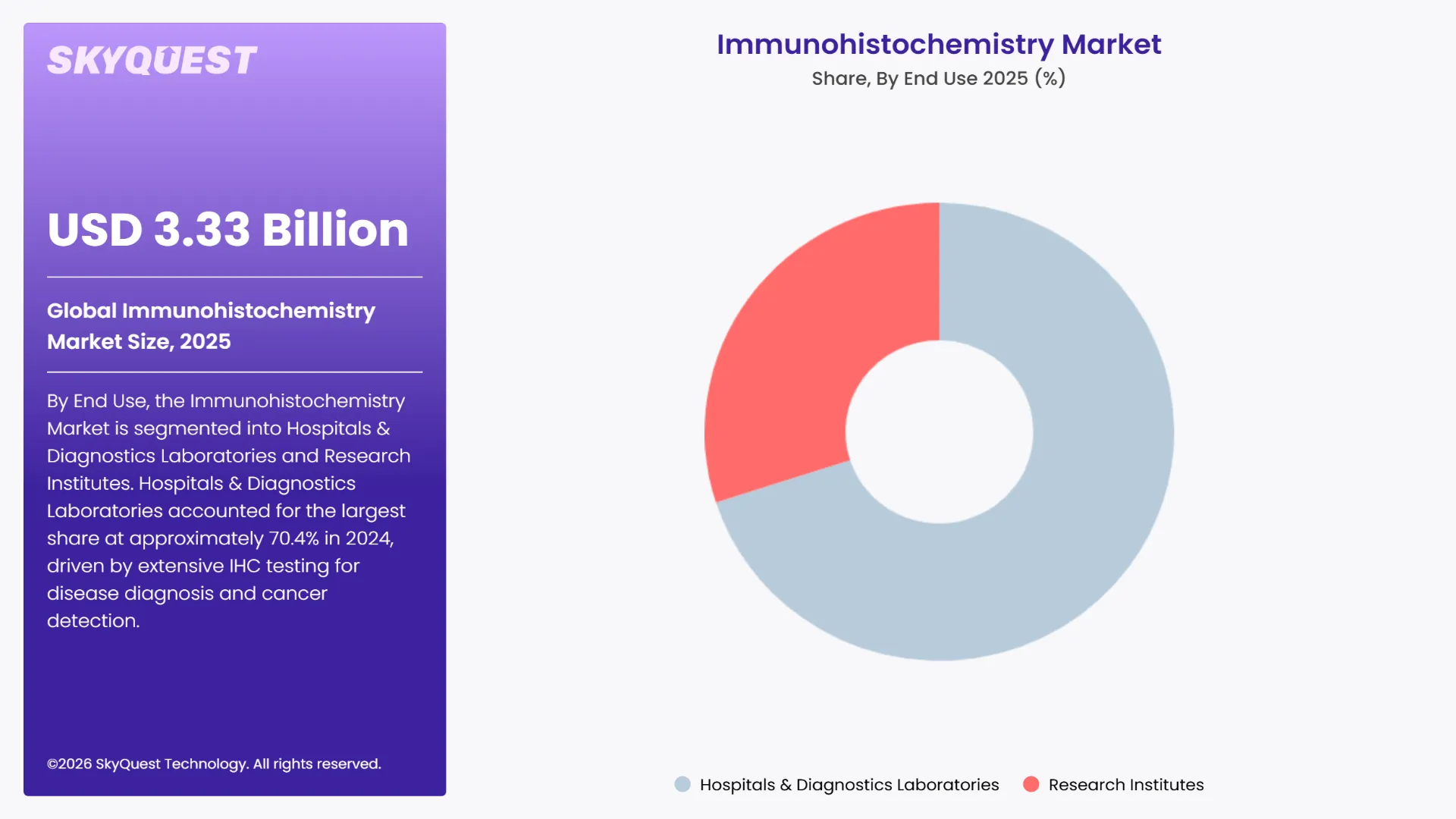
The global immunohistochemistry market is segmented into product, application, end use, and region. By product, the market is classified into antibodies, equipment, reagents, and kits. Depending on the application, it is divided into diagnostics, cancer, infectious diseases, cardiovascular diseases, autoimmune diseases, diabetes mellitus, nephrological diseases, and research. According to end use, the market is bifurcated into hospitals & diagnostics laboratories and research institutes. Regionally, it is analyzed across North America, Europe, Asia-Pacific, Latin America, and the Middle East and Africa.
As per the 2024 immunohistochemistry market analysis, the antibodies segment led the market with the largest revenue share of 41.4%. This is due to the fact that antibodies are essential for both drug testing and diagnosing illnesses. Monoclonal antibodies and antibody-related products like Fc-fusion proteins, antibody fragments, and antibody-drug conjugates are currently the most widely used products in the industry. Since antibodies are used in a wide range of disciplines, including pathology, neuropathology, and hematopathology, they are a crucial component of IHC applications.
The kits segment is expected to have the highest immunohistochemistry market share during the forecast period. Kits simplify the IHC process by eliminating the need to select the best antibody and stain combination for a tissue sample. Their portability and ease of use are driving the segment's growth. IHC kits are particularly popular in academic institutions and research labs where studies call for smaller quantities of these products. The increasing number of research projects using IHC assays is also contributing to the growth of this market.
As per the 2024 immunohistochemistry market forecast, with the largest revenue share in, roughly 70.4% of total revenue, the hospitals & diagnostic labs sector led the market. The large number of immunohistochemistry (IHC) tests performed in hospital settings is the primary driver of this growth. As the healthcare sector expands, the need for hospitals with sophisticated diagnostic capabilities increases.
The research institutes segment is expected to grow significantly over the course of the forecast period. The benefits that IHC provides over conventional staining methods used in pharmaceutical research and development (R&D) are what are driving this increase. For instance, human-specific VISTA rabbit monoclonal antibodies that have been approved by IHC, like those produced by Cell Signaling Technology, are frequently utilized in biomedical research.
Another factor influencing this trend is the growing use of IHC techniques for drug testing by research organizations. Scientific investigations require the assessment of tissue segment protein expression, localization, and biomarker distribution, all of which are made easier by IHC. Research infrastructure is necessary for the use of IHC techniques in drug development, particularly when evaluating the efficacy of novel medications.
To get detailed segments analysis, Request a Free Sample Report
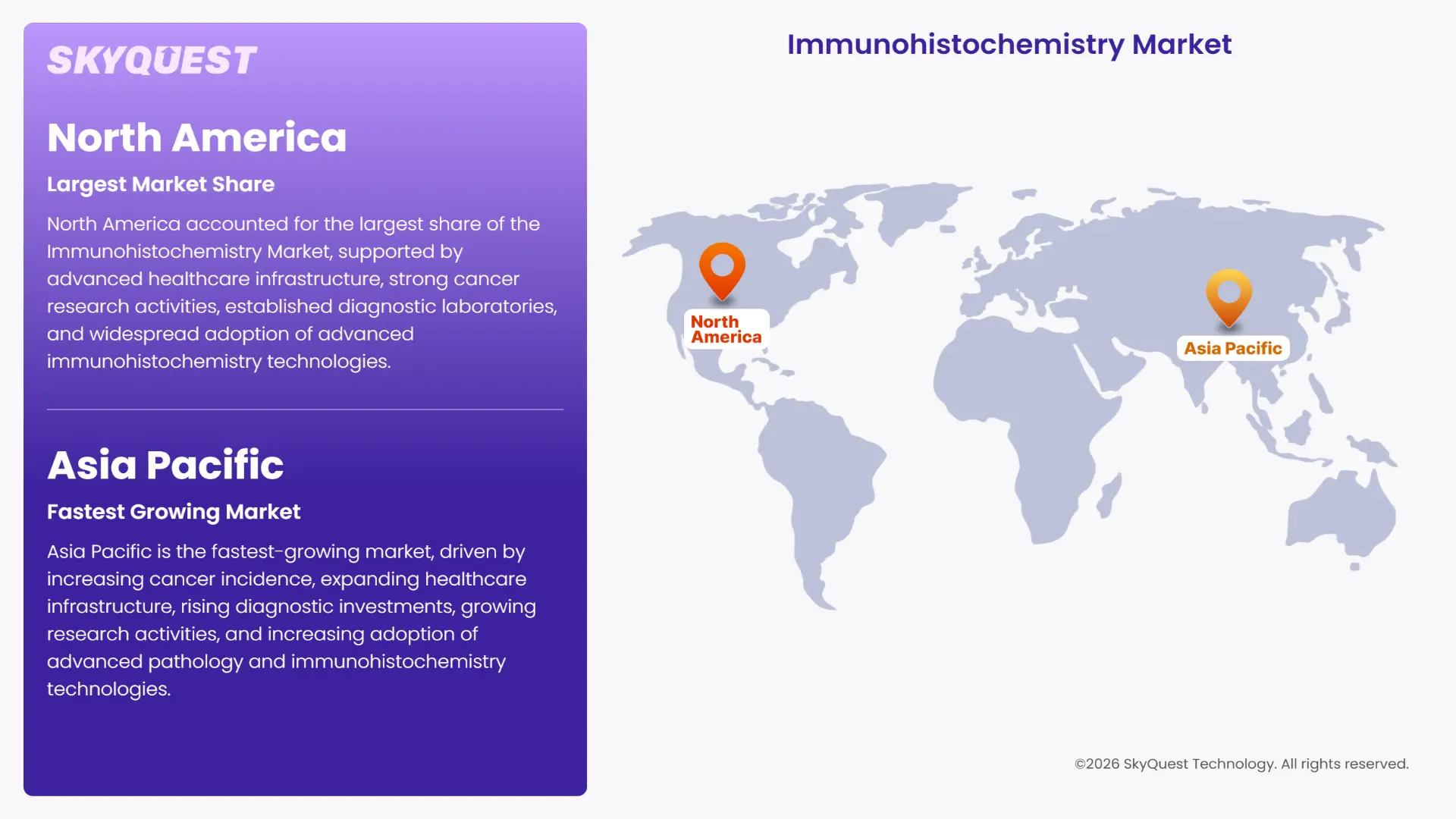
As per the immunohistochemistry market regional analysis, North America led the industry in 2024 with the largest revenue share, accounting for over 37.77% of the global market. This high revenue share is a result of several factors, including the presence of significant market players, the availability of IHC solutions, and the growing use of advanced IHC instruments. Continuously bringing innovative IHC solutions to market further boosts growth. Companies are expanding their footprints rapidly, which aids in the region's continued dominance of the global market.
U.S. Immunohistochemistry Market
The immunohistochemistry sector in the US is being driven by increased research and significant investments in state-of-the-art diagnostic technologies. The market is expanding due to the use of IHC in disease diagnosis, particularly in oncology, and the increased focus on personalized medicine. The presence of leading healthcare organizations, research facilities, and a supportive regulatory environment all promote innovation in the sector. The United States' dominance of the global immunohistochemistry market is further cemented by the ongoing development of advanced IHC platforms and automation technologies as well as the growing need for more accurate and efficient diagnostic instruments.
Canada Immunohistochemistry Market
Federal investments in expanded cancer screening programs and diagnostic infrastructure have contributed to the steady growth of Canada's immunohistochemistry market. Modern IHC technologies have been incorporated by major institutions such as Toronto General to enhance pathology workflows. Research on biomarkers is also being fueled by expanding collaborations between academic institutions and biotech businesses. Accurate, antibody-based diagnostic tools are becoming more and more necessary in both urban and rural healthcare settings as customized medicine gains popularity.
Strong academic research, advanced clinical facilities, and a regulatory framework that supports creative diagnostics are all contributing to the steady growth of the immunohistochemistry market in Europe. Germany, the UK, and France are leading countries in the use of IHC techniques in pathology, particularly for biomarker detection and cancer diagnostics. Hospitals and academic institutions around the region are actively using IHC in clinical practice and translational research. The European Medicines Agency (EMA) and national regulatory bodies support the clinical integration and approval of IHC-based diagnostic tools.
UK Immunohistochemistry Market
Government-sponsored diagnostic programs, a growing biotechnology industry, and a strong academic and clinical research environment are all helping the UK immunohistochemistry market grow. Leading universities and NHS-affiliated pathology labs are actively integrating IHC technologies into routine diagnostics and translational research, particularly in oncology and infectious disease management.
Germany Immunohistochemistry Market
Germany is a significant player in the European immunohistochemistry market due to its robust research infrastructure, government-backed initiatives, and solid academic-industry partnerships. The country's well-established biotechnology and diagnostics ecosystem makes it easier to develop and integrate IHC technologies, and top institutions like the Max Planck Institute and the Fraunhofer Institute are crucial to the advancement of IHC-based research. Germany's regulatory framework, supervised by the Federal Institute for Drugs and Medical Devices (BfArM), offers clear pathways for the clinical validation and commercialization of IHC diagnostic tools.
France Immunohistochemistry Market
National health initiatives aimed at diagnosing chronic illnesses and cancer are the main drivers of the French immunohistochemistry sector. Public hospitals like AP-HP (Assistance Publique – Hôpitaux de Paris) are putting automated IHC systems into place in an effort to speed up diagnostic turnaround times. France also promotes the use of IHC reagents and antibodies with the CE mark and stresses consistency in pathology procedures through regulatory bodies. Partnerships with EU biomedical research networks support the expansion even more.
Increased R&D spending, advancements in diagnostic technology, and the rising prevalence of chronic diseases are all changing the Asia Pacific immunohistochemistry market outlook. Countries like China, India, and Japan are adopting IHC techniques in large quantities, particularly in oncology diagnostics. The market is expanding due to the rising demand for accurate and customized diagnostic tools and the increasing incidence of cancers.
China Immunohistochemistry Market
The immunohistochemistry market in China is growing significantly due to a rapidly expanding biotechnology sector, strategic investments, and increased government support. The country is working hard to enhance its diagnostic capabilities, particularly in oncology and personalized medicine. With the help of research institutes like Tsinghua University, China is spearheading developments in immunohistochemistry technologies, such as multiplexing and AI-powered diagnostic tools, to improve diagnostic precision and workflow efficiency. These programs, which are supported by funding and governmental policies, improve China's standing in the immunohistochemistry market.
Japan Immunohistochemistry Market
The immunohistochemistry market in Japan is expanding significantly due to the country's well-established biotechnology industry, sophisticated healthcare system, and robust government support. The country's focus on personalized medicine and diagnostic accuracy is driving the need for advanced immunohistochemistry technologies, such as multiplex IHC and AI-powered analysis tools. Leading research institutions like RIKEN and Kyoto University are setting the standard for developing innovative diagnostic instruments that will probably solidify Japan's dominance of the regional immunohistochemistry market in the years to come.
To know more about the market opportunities by region and country, click here to
Buy The Complete Report
Growing Rates of Chronic Illness and Cancer
Developments in IHC Systems Technology
Expensive Tools and Chemicals
Pathologists with Inadequate Training
Request Free Customization of this report to help us to meet your business objectives.
With top competitors concentrating on global expansion, FDA/EMA approvals, and strategic alliances, the IHC market is moderately consolidated. The market is still dominated by Agilent, Roche, and Danaher because of advancements in companion diagnostics and automated platforms. Businesses are spending more money on cloud-based pathology tools and staining systems with AI capabilities. One common competitive strategy is to enter emerging markets by forming distributor partnerships and adapting products to local needs.
Integration of Artificial Intelligence and Digital Pathology
Increase in Companion Diagnostics
SkyQuest’s ABIRAW (Advanced Business Intelligence, Research & Analysis Wing) is our Business Information Services team that Collects, Collates, Correlates, and Analyses the Data collected by means of Primary Exploratory Research backed by robust Secondary Desk research.
As per SkyQuest analysis, an increase in disease epidemic numbers, personalized treatment, and technological advances in IHC will likely continue to drive the growth of the global immunohistochemistry market. The introduction of automation, digital pathology, and artificial intelligence is changing how diagnoses will operate from a timeframe and accuracy perspective. Alternative environments in developing countries are a new opportunity for economic development; meanwhile, the introduction and expansion of companion diagnostics are exciting opportunities on the horizon, notwithstanding existing challenges about the high price point and shortage of professionally trained personnel. The implementation of artificial intelligence in hospitals across the US, and Companion diagnostics assays approved by the FDA through Agilent, all are examples of further indication of the dynamism of the market. The growth of precision medicine will not deter immunohistochemistry, nor eliminate the role they play in modern diagnostics and translational research contexts.
| Report Metric | Details |
|---|---|
| Market size value in 2024 | USD 3.10 Billion |
| Market size value in 2033 | USD 5.89 Billion |
| Growth Rate | 7.4% |
| Base year | 2024 |
| Forecast period | 2026–2033 |
| Forecast Unit (Value) | USD Billion |
| Segments covered |
|
| Regions covered | North America (US, Canada), Europe (Germany, France, United Kingdom, Italy, Spain, Rest of Europe), Asia Pacific (China, India, Japan, Rest of Asia-Pacific), Latin America (Brazil, Rest of Latin America), Middle East & Africa (South Africa, GCC Countries, Rest of MEA) |
| Companies covered |
|
| Customization scope | Free report customization with purchase. Customization includes:-
|
To get a free trial access to our platform which is a one stop solution for all your data requirements for quicker decision making. This platform allows you to compare markets, competitors who are prominent in the market, and mega trends that are influencing the dynamics in the market. Also, get access to detailed SkyQuest exclusive matrix.
Table Of Content
Executive Summary
Market overview
Parent Market Analysis
Market overview
Market size
KEY MARKET INSIGHTS
COVID IMPACT
MARKET DYNAMICS & OUTLOOK
Market Size by Region
KEY COMPANY PROFILES
Methodology
For the Immunohistochemistry Market, our research methodology involved a mixture of primary and secondary data sources. Key steps involved in the research process are listed below:
1. Information Procurement: This stage involved the procurement of Market data or related information via primary and secondary sources. The various secondary sources used included various company websites, annual reports, trade databases, and paid databases such as Hoover's, Bloomberg Business, Factiva, and Avention. Our team did 45 primary interactions Globally which included several stakeholders such as manufacturers, customers, key opinion leaders, etc. Overall, information procurement was one of the most extensive stages in our research process.
2. Information Analysis: This step involved triangulation of data through bottom-up and top-down approaches to estimate and validate the total size and future estimate of the Immunohistochemistry Market.
3. Report Formulation: The final step entailed the placement of data points in appropriate Market spaces in an attempt to deduce viable conclusions.
4. Validation & Publishing: Validation is the most important step in the process. Validation & re-validation via an intricately designed process helped us finalize data points to be used for final calculations. The final Market estimates and forecasts were then aligned and sent to our panel of industry experts for validation of data. Once the validation was done the report was sent to our Quality Assurance team to ensure adherence to style guides, consistency & design.
Analyst Support
Customization Options
With the given market data, our dedicated team of analysts can offer you the following customization options are available for the Immunohistochemistry Market:
Product Analysis: Product matrix, which offers a detailed comparison of the product portfolio of companies.
Regional Analysis: Further analysis of the Immunohistochemistry Market for additional countries.
Competitive Analysis: Detailed analysis and profiling of additional Market players & comparative analysis of competitive products.
Go to Market Strategy: Find the high-growth channels to invest your marketing efforts and increase your customer base.
Innovation Mapping: Identify racial solutions and innovation, connected to deep ecosystems of innovators, start-ups, academics, and strategic partners.
Category Intelligence: Customized intelligence that is relevant to their supply Markets will enable them to make smarter sourcing decisions and improve their category management.
Public Company Transcript Analysis: To improve the investment performance by generating new alpha and making better-informed decisions.
Social Media Listening: To analyze the conversations and trends happening not just around your brand, but around your industry as a whole, and use those insights to make better Marketing decisions.
REQUEST FOR SAMPLE
 REQUEST FREE CUSTOMIZATION
Global Immunohistochemistry Market size was valued at USD 3.10 Billion in 2024 and is poised to grow from USD 3.33 Billion in 2025 to USD 5.89 Billion by 2033, growing at a CAGR of 7.4% during the forecast period (2026–2033).
Key vendors in the Immunohistochemistry Market include F. Hoffmann-La Roche Ltd, Agilent Technologies, Thermo Fisher Scientific, Merck KGaA, Abcam, Bio-Rad Laboratories, PerkinElmer, Cell Signaling Technology, Danaher Corporation, and Leica Biosystems.
The key driver of the Immunohistochemistry Market is the rising incidence of cancer and chronic diseases, increasing demand for early and accurate diagnosis, and growing adoption of IHC for identifying cellular abnormalities, tumor markers, and treatment-relevant biomarkers.
The key trend in the Immunohistochemistry Market is the increasing adoption of automated IHC systems and digital pathology, enabling faster, standardized, and more accurate tissue analysis while supporting high-throughput diagnostics and personalized cancer treatment.
North America accounted for the largest share of the Immunohistochemistry Market, with over 37.77% of global revenue in 2024, supported by advanced research infrastructure, leading market players, sophisticated IHC technologies, and growing demand for early, accurate diagnosis.


Want to customize this report? This report can be personalized according to your needs. Our analysts and industry experts will work directly with you to understand your requirements and provide you with customized data in a short amount of time. We offer $1000 worth of FREE customization at the time of purchase.
Feedback From Our Clients


 USA (+1) 351-333-4748

