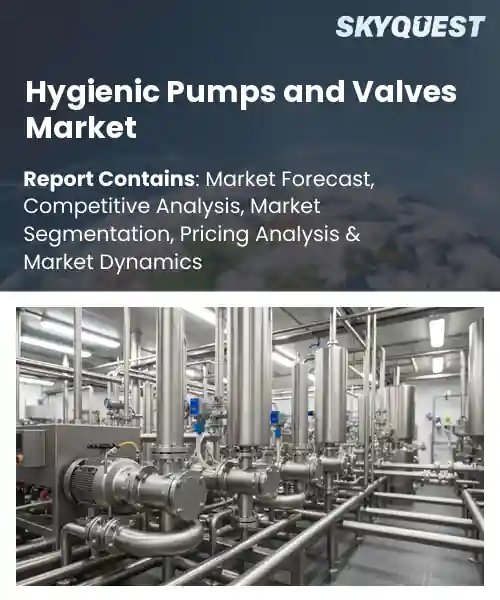
Hygienic Pumps and Valves Market
Report ID: SQMIG20I3027
Report ID: SQMIG20I3027
[email protected]
USA +1 351-333-4748
Report ID:
SQMIG20I3027 |
Region:
Global |
Published Date: May, 2026
Pages:
157
|Tables:
120
|Figures:
77


Global Hygienic Pumps And Valves Market size was valued at USD 1.65 Billion in 2024 and is poised to grow from USD 1.76 Billion in 2025 to USD 2.88 Billion by 2033, growing at a CAGR of 6.38% during the forecast period (2026-2033).
As a research analyst, I identify the primary driver of the hygienic pumps and valves market as accelerating demand for contamination control across food, beverage, pharmaceutical and biotechnology industries. Hygienic pumps and valves are specialized fluid-handling components engineered to minimize microbial harborage and enable clean-in-place and aseptic processing; market matters because product safety failures carry severe public health, regulatory and brand consequences. Over the past two decades the sector evolved from basic stainless-steel fittings toward sophisticated certified designs compliant with 3-A and EHEDG standards, exemplified by dairy processors replacing cast-iron lines with polished stainless systems to satisfy tighter safety audits.
Because regulators and consumers demand higher safety and transparency, manufacturers are investing in hygienic pumps and valves with integrated sensors and modular designs, which drives market growth and opens retrofit opportunities across processing plants. For example, breweries installing CIP systems with hygienic tri-clamp valves cut contamination-related downtime, prompting beverage producers to follow suit, while pharmaceutical contract manufacturers using single-use hygienic pumps accelerated batch turnaround and reduced cross-contamination during biologics production. Those operational gains lead to higher sales of premium stainless and engineered polymer products, recurring aftermarket service revenue and demand for digital solutions that enable energy savings and predictive maintenance.
How is IoT improving operational efficiency in the hygienic pumps and valves market?
The IoT interconnects field sensors, actuators and control systems to edge and cloud analytics and thus improves operational efficiency in the hygienic pumps and valves market. Key aspects are real time condition monitoring, remote diagnostics and data driven maintenance that reduce manual inspection rounds and unplanned stops. The market today is shifting from stand-alone equipment to integrated service models where vendors bundle monitoring and analytics into product packages. The move is driven by enhanced hygiene and traceability requirements for connected assets that enable cleaning validation and accelerate trouble-shooting, such as wireless temperature monitors on pumps, and remote valve position feedback.
Emerson May 2026 announced the Emerson Synchros IIoT platform which digitizes inspection points and adds wireless temperature monitoring for pumps and other assets. This innovation allows for predictive maintenance and faster fault isolation, helping hygienic processors maximize asset uptime and maintain product safety, while reducing the cost of routine rounds.
Market snapshot - (2026-2033)
Global Market Size
USD 1.65 Billion
Largest Segment
Hygienic Pumps
Fastest Growth
Hygienic Pumps
Growth Rate
6.38% CAGR
To get more insights on this market click here to Request a Free Sample Report
Global hygienic pumps and valves market is segmented by product type, material type, operation mode, end-use industry and region. Based on product type, the market is segmented into Hygienic Pumps, Hygienic Valves and Others. Based on material type, the market is segmented into Stainless Steel, Alloy, Plastic and Others. Based on operation mode, the market is segmented into Pneumatic, Electric, Manual and Hydraulic. Based on end-use industry, the market is segmented into Food and Beverage, Pharmaceutical and Biotech, Cosmetics and Personal Care and Others. Based on region, the market is segmented into North America, Europe, Asia Pacific, Latin America and Middle East & Africa.
Stainless steel is expected to be the largest segment of the market. Stainless steel’s innate corrosion resistance and cleanability satisfy rigorous hygienic needs, allowing dependable long-term operation in challenging sanitary applications. Material integrity supports the use of both CIP and SIP processes to reduce the risk of contamination and drive supplier and end-user preference. Proven food, pharmaceutical and personal care formulation compatibility, strong regulatory acceptance and robust mechanical properties confirm leadership in pump and valve designs.
The fastest growth in the plastic segment, however, is being driven by lightweight design trends and cost sensitive applications that require corrosion resistant polymer solutions. Better cleanability and chemical compatibility for single-use and modular systems are being driven by improved surface finishes and advances in high-purity polymer formulations, spurring the adoption of these systems in flexible production schemes and creating new openings for suppliers.
Leading the electric segment is the right flow and pressure control for sterile and batch-sensitive hygienic processes, with easy integration with automation platforms and process monitoring. Regulated manufacturers like the idea of compact variable speed drives and refined motor designs that reduce maintenance and help ensure consistent sanitation cycles. Electric operation is also more energy efficient, and easier to retrofit to existing systems, making it the better choice for many hygienic applications.
On the other hand, pneumatic is the fastest growing segment, due to its robustness for valve actuation in sterile environments, and inherent safety in explosive or wet processing zones. Better design of small actuators, low maintenance seals and more precise proportional control enhance the usefulness of pneumatics for quicker installation and reliable automation for plants driven by simplicity and hygienic integrity.
To get detailed segments analysis, Request a Free Sample Report
North American leadership is due to a concentration of advanced end user industries, mature supplier ecosystems and rigorous sanitary expectations that all favor high specification hygienic equipment. Original equipment manufacturers are focusing on material science, sanitary finishes and engineering validation to satisfy the demand from major pharmaceutical, biotechnology and large scale food and beverage processors who require validated designs, traceable supply chains and seamless integration with automation and cleaning systems. Well developed distribution and aftermarket service networks allow for fast deployment, tailored retrofits and consistent maintenance, increasing customer confidence in proven vendors. Cooperation among equipment manufacturers, processors and regulatory bodies accelerates the adoption of best practices and drives ongoing improvements in hygienic pump and valve design, performance and reliability across complex processing environments.
The United States Hygienic Pumps and Valves Market is driven by advanced pharmaceutical, biotechnology and food processing sectors that require validated sanitary equipment, strict supply chain traceability and integration with automation. Established original equipment manufacturers, local fabricators and extensive aftermarket service networks support rapid deployment, tailored engineering and reliable maintenance to meet high expectations for hygiene, material compatibility and cleaning validation across complex processing environments and continuous product improvement efforts around the world.
The demand for sanitary transfer, gentle product handling and energy efficient operations for food and beverage and dairy producers is driving the growth of Canada’s Hygienic Pumps and Valves Market. International manufacturers work with regional suppliers and local engineering firms to provide customized pump and valve solutions meeting regulatory expectations and export requirements. Service networks enable maintenance of production remote sites. Sustainability and traceability are important, and they are driving the adoption of hygienic innovations.
The expansion across Europe is driven by regulatory harmonization, modernized processing facilities and an increasing focus on sustainability and efficiency in the production of food, beverage and pharmaceuticals. Processors seeking operational resilience and market access are prioritising upgrading legacy equipment and wider adoption of energy and water saving hygienic technologies. An extensive engineering support of specialized suppliers and integrators provides customized solutions to meet stringent cleanability and material compatibility requirements. Cross border collaboration and supplier consolidation accelerate diffusion of best practices and proven designs. Investments in processing infrastructure in the public and private sectors spur replacement cycles and retrofits. Further demand for validated cleaning regimes, hygienic automation interfaces and supply chain transparency will continue to reinforce investment in advanced pump and valve solutions across a diverse range of European manufacturing segments.
Germany Hygienic Pumps and Valves Market benefits from strong engineering competence, a large manufacturing base and a culture of precision, which drives demand for high specification sanitary equipment. Highly engineered pumps and valves designed for stringent process requirements are available from domestic original equipment manufacturers and specialized fabricators. Strong exporter orientation results in continuous innovation. Strong relationships with processors and suppliers lead to integration with automation and validated cleaning systems, maintaining leadership in robust, high performance hygienic solutions across industrial food and pharmaceutical applications.
The United Kingdom hygienic pumps and valves market is characterized by active modernization activities in the food, beverage and biotechnology industries contributing to demand for retrofit solutions and new hygienic installations. Growth is driven by a concentration of innovative processors and service providers who value traceability, compliance and rapid integration with digital monitoring. Local suppliers and international vendors collaborate to provide custom engineering, effective cleaning regimes and excellent aftermarket support to enable rapid responses to changing regulatory expectations and market needs.
France Hygienic Pumps and Valves Market is emerging through modernization of traditional food and beverage segments such as dairy, cheese and artisanal production with growing demand from cosmetics and specialty food processing. Processors are looking for gentle handling, material compatibility and hygienic designs that protect product quality and satisfy traceability demands for export. The regional pump and valve manufacturers and systems integrators are providing tailor-made solutions that integrate artisanal process needs with modern cleanability and sustainability goals for a gradual market maturation.
Asia Pacific is reinforcing its position with industrial modernization, increasing domestic demand for processed and high value foods and growing pharmaceutical and biotechnology activity needing certified hygienic equipment. Local OEMs are maturing in capability and quality and are partnering more and more with global technology providers to localize advanced designs and materials. Higher standards for sanitary equipment are being driven by regulatory frameworks and export requirements, and investment in automation, validated cleaning systems and aftermarket networks is improving serviceability and uptime. Growth in contract manufacturing and food processing offers opportunities for customized hygienic solutions, and the continued emphasis on sustainability, water reduction and energy efficiency further drives the adoption of next generation pumps and valves across the region.
Hygienic Pumps and Valves Market in Japan is driven by a tradition of precision engineering and quality that supports demand for reliable, long life sanitary equipment in food processing and pharmaceutical production. Domestic manufacturers are good at material selection, surface finishes and compact, high performance designs that integrate with automated cleaning and control systems. Supported by skilled service networks, reliability and maintenance planning focus encourages uptake of validated hygienic solutions that meet demanding domestic and export quality expectations.
South Korea Hygienic Pumps and Valves Market is Growing with Rapid Industrial Upgradation Increasing Biotechnology and Processed Food Industry and Improved Collaboration with International Suppliers to Improve Local Product Quality. Manufacturers are focusing on automation integration, gentle product handling and compatibility with cleaning regimes while service providers are creating aftermarket capabilities. The demand for hygienic certified components that provide robust sanitary performance is driving innovations in materials, sealing technologies and system-level solutions that are demanded by export-oriented processors and contract manufacturers.
To know more about the market opportunities by region and country, click here to
Buy The Complete Report
Stringent Hygiene Regulations Worldwide
Rising Demand From Life Sciences
High Compliance and Certification Costs
Complex Maintenance and Sanitation Needs
Request Free Customization of this report to help us to meet your business objectives.
The competitive landscape is a mix of consolidation and technology-led competition driven by the demand for low shear single use solutions and automated integrated valve solutions. Large M&A include moves like Krones’ acquisition of Ampco Pumps. At the same time specialist start-ups are offering product level innovation, for example Alphinity PIXER pumps and MonoBiologics single use assemblies, forcing incumbents to partner and integrate.
SkyQuest’s ABIRAW (Advanced Business Intelligence, Research & Analysis Wing) is our Business Information Services team that Collects, Collates, Correlates, and Analyses the Data collected by means of Primary Exploratory Research backed by robust Secondary Desk research.
As per SkyQuest analysis, accelerating demand for contamination control across food, beverage and life sciences is a primary driver of the global hygienic pumps and valves market, while high compliance and certification costs act as a key restraint; North America leads the market supported by mature end users and service ecosystems and stainless steel products remain the dominating segment because of their corrosion resistance and cleanability. A second driver is digital integration via IoT and predictive maintenance, which improves uptime and traceability and encourages premium product adoption. Together these forces favor suppliers offering validated stainless solutions, connected monitoring and strong aftermarket support to capture retrofit and new installation opportunities.
| Report Metric | Details |
|---|---|
| Market size value in 2024 | USD 1.65 Billion |
| Market size value in 2033 | USD 2.88 Billion |
| Growth Rate | 6.38% |
| Base year | 2024 |
| Forecast period | (2026-2033) |
| Forecast Unit (Value) | USD Billion |
| Segments covered |
|
| Regions covered | North America (US, Canada), Europe (Germany, France, United Kingdom, Italy, Spain, Rest of Europe), Asia Pacific (China, India, Japan, Rest of Asia-Pacific), Latin America (Brazil, Rest of Latin America), Middle East & Africa (South Africa, GCC Countries, Rest of MEA) |
| Companies covered |
|
| Customization scope | Free report customization with purchase. Customization includes:-
|
To get a free trial access to our platform which is a one stop solution for all your data requirements for quicker decision making. This platform allows you to compare markets, competitors who are prominent in the market, and mega trends that are influencing the dynamics in the market. Also, get access to detailed SkyQuest exclusive matrix.
Table Of Content
Executive Summary
Market overview
Parent Market Analysis
Market overview
Market size
KEY MARKET INSIGHTS
COVID IMPACT
MARKET DYNAMICS & OUTLOOK
Market Size by Region
KEY COMPANY PROFILES
Methodology
For the Hygienic Pumps and Valves Market, our research methodology involved a mixture of primary and secondary data sources. Key steps involved in the research process are listed below:
1. Information Procurement: This stage involved the procurement of Market data or related information via primary and secondary sources. The various secondary sources used included various company websites, annual reports, trade databases, and paid databases such as Hoover's, Bloomberg Business, Factiva, and Avention. Our team did 45 primary interactions Globally which included several stakeholders such as manufacturers, customers, key opinion leaders, etc. Overall, information procurement was one of the most extensive stages in our research process.
2. Information Analysis: This step involved triangulation of data through bottom-up and top-down approaches to estimate and validate the total size and future estimate of the Hygienic Pumps and Valves Market.
3. Report Formulation: The final step entailed the placement of data points in appropriate Market spaces in an attempt to deduce viable conclusions.
4. Validation & Publishing: Validation is the most important step in the process. Validation & re-validation via an intricately designed process helped us finalize data points to be used for final calculations. The final Market estimates and forecasts were then aligned and sent to our panel of industry experts for validation of data. Once the validation was done the report was sent to our Quality Assurance team to ensure adherence to style guides, consistency & design.
Analyst Support
Customization Options
With the given market data, our dedicated team of analysts can offer you the following customization options are available for the Hygienic Pumps and Valves Market:
Product Analysis: Product matrix, which offers a detailed comparison of the product portfolio of companies.
Regional Analysis: Further analysis of the Hygienic Pumps and Valves Market for additional countries.
Competitive Analysis: Detailed analysis and profiling of additional Market players & comparative analysis of competitive products.
Go to Market Strategy: Find the high-growth channels to invest your marketing efforts and increase your customer base.
Innovation Mapping: Identify racial solutions and innovation, connected to deep ecosystems of innovators, start-ups, academics, and strategic partners.
Category Intelligence: Customized intelligence that is relevant to their supply Markets will enable them to make smarter sourcing decisions and improve their category management.
Public Company Transcript Analysis: To improve the investment performance by generating new alpha and making better-informed decisions.
Social Media Listening: To analyze the conversations and trends happening not just around your brand, but around your industry as a whole, and use those insights to make better Marketing decisions.
REQUEST FOR SAMPLE
 REQUEST FREE CUSTOMIZATION
Global Hygienic Pumps And Valves Market size was valued at USD 1.65 Billion in 2024 and is poised to grow from USD 1.76 Billion in 2025 to USD 2.88 Billion by 2033, growing at a CAGR of 6.38% during the forecast period (2026-2033).
The competitive landscape is defined by consolidation and technology led rivalry driven by demand for low shear single use solutions and integrated valve automation. Major M&A such as Krones purchase of Ampco Pumps exemplify scale moves. At the same time specialist startups bring product level innovation, for example Alphinity PIXER pumps and MonoBiologics single use assemblies, forcing incumbents to partner and integrate. 'Alfa Laval', 'GEA Group', 'SPX Flow', 'Emerson Electric', 'Spirax Group', 'Flowserve', 'ITT Inc', 'KSB SE', 'Bürkert Fluid Control Systems', 'Gemü Group', 'Samson AG', 'Dover Corporation', 'Idex Corporation', 'Watson-Marlow Fluid Technology Solutions', 'Verder Group', 'Pfeiffer Vacuum', 'Krones', 'Fristam Pumps', 'Tapflo', 'AxFlow'
Regulatory frameworks that emphasize sanitary design and contamination control compel manufacturers and end users to select hygienic pumps and valves that meet high purity standards, driving procurement decisions across food, beverage, and pharmaceutical sectors. Compliance mandates encourage investment in equipment with smooth surfaces, clean-in-place compatibility, and traceable materials, creating sustained demand for specialized products. Vendors respond by certifying designs and offering validated solutions, which increases buyer confidence and accelerates adoption of hygienic components in facility upgrades and new installations globally.
Sustainability And Circular Design: Demand is rising for hygienic pumps and valves made from recyclable materials and designed for disassembly, enabling manufacturers and end users to reduce waste and extend product lifecycles. Suppliers are prioritizing low-impact manufacturing, longer service intervals, and material traceability to meet evolving customer expectations and corporate sustainability goals. This shift fosters collaboration across supply chains, drives innovation in modular components, and positions hygienic fluid handling equipment as a tangible contributor to circular-economy strategies in regulated industries and global procurement practices.
Why does North America Dominate the Global Hygienic Pumps and Valves Market? |@12


Want to customize this report? This report can be personalized according to your needs. Our analysts and industry experts will work directly with you to understand your requirements and provide you with customized data in a short amount of time. We offer $1000 worth of FREE customization at the time of purchase.
Feedback From Our Clients


 USA (+1) 351-333-4748

