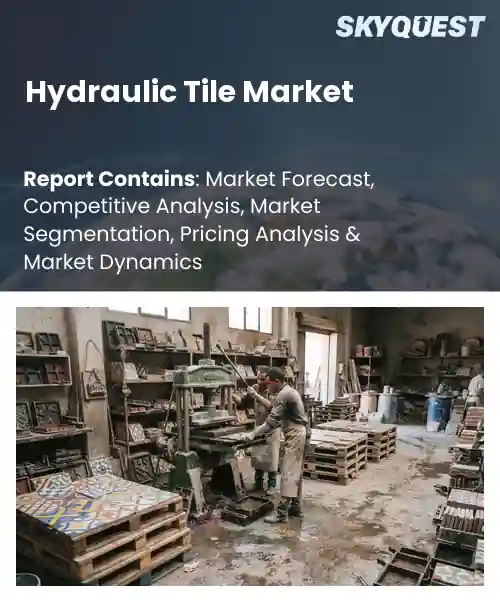
Hydraulic Tile Market
Report ID: SQMIG15F2485
Report ID: SQMIG15F2485
[email protected]
USA +1 351-333-4748
Report ID:
SQMIG15F2485 |
Region:
Global |
Published Date: November, 2026
Pages:
157
|Tables:
120
|Figures:
77


Global Hydraulic Tile Market size was valued at USD 2.1 Billion in 2024 and is poised to grow from USD 2.2 Billion in 2025 to USD 3.21 Billion by 2033, growing at a CAGR of 4.8% during the forecast period (2026-2033).
The hydraulic tile market includes flooring systems with water‑resistant cores, grout‑locking edges and surfaces for residential, commercial and industrial spaces. Its relevance arises from rising demand for durable, low‑maintenance floors that tolerate moisture without sacrificing aesthetics. The market originated in the early 2000s when manufacturers substituted traditional ceramic and porcelain tiles with composite panels reinforced by polymer binders, offering lighter weight and faster installation. A 2015 retrofit of a New York subway station cut replacement time by 30 % while meeting fire‑safety standards. This trajectory illustrates a broader shift toward building materials, positioning hydraulic tiles as a strategic solution for construction. Building on the material advantages highlighted earlier, the most influential growth catalyst for the global hydraulic tile market is the rising adoption of green‑building certifications that reward water efficiency and lower embodied energy. Because hydraulic tiles eliminate separate waterproof membranes, developers can cut material costs and construction waste, directly improving LEED and BREEAM scores. This effect has prompted municipal facilities in Scandinavia to replace aging concrete slabs with hydraulic tile decks, achieving about a 25 % reduction in lifecycle carbon emissions. Consequently, manufacturers are expanding lines to include recycled‑content cores and bio‑based adhesives, unlocking new revenue while meeting sustainable‑construction significant pressure.
How is IoT-enabled predictive maintenance reshaping the hydraulic tile market?
IoT‑enabled predictive maintenance is turning the hydraulic tile market into a data‑driven arena where equipment health is continuously monitored through embedded sensors. These devices capture vibration, pressure and temperature signals, allowing algorithms to forecast wear before a failure occurs. Manufacturers can schedule service only when needed, reducing unplanned downtime and extending the life of high‑pressure pumps and tile‑forming presses. The approach also improves safety by alerting operators to abnormal conditions early, and it supports tighter quality control because machines run at optimal settings. As a result, suppliers are able to offer more reliable products while customers benefit from lower operating costs and higher productivity.A recent development in March 2024 saw a leading hydraulic tile equipment maker integrate an AI‑based monitoring platform that automatically adjusts maintenance cycles, demonstrating how IoT predictive tools accelerate efficiency and drive market growth.
Market snapshot - (2026-2033)
Global Market Size
USD 2.1 Billion
Largest Segment
Hydraulic Cement Tiles
Fastest Growth
Hydraulic Wall Tiles
Growth Rate
4.8% CAGR
To get more insights on this market click here to Request a Free Sample Report
Global hydraulic tile market is segmented by product type, application, end user, distribution channel and region. Based on product type, the market is segmented into Hydraulic Cement Tiles, Hydraulic Floor Tiles, Hydraulic Wall Tiles and Other Hydraulic Tiles. Based on application, the market is segmented into Flooring, Wall Cladding, Outdoor Paving and Other Applications. Based on end user, the market is segmented into Residential, Commercial and Industrial & Institutional. Based on distribution channel, the market is segmented into Direct Sales, Building Material Distributors, Specialty Tile Retailers and Online Retail. Based on region, the market is segmented into North America, Europe, Asia Pacific, Latin America and Middle East & Africa.
Hydraulic Floor Tiles segment dominates because they combine superior load bearing capacity with aesthetic versatility, meeting both structural and design requirements in modern construction. Their ability to integrate seamlessly with radiant heating systems and to resist moisture intrusion makes them the preferred choice for high traffic interiors. Architects and designers favor these tiles for their ease of installation and long term durability, driving widespread specification across residential and commercial projects throughout the building lifecycle.
However, Hydraulic Wall Tiles are witnessing the strongest growth momentum as designers prioritize seamless vertical aesthetics and moisture resistant cladding in wet environments. Advances in digital printing enable intricate patterns, attracting premium segment clients. This expanding interest fuels new product launches and reinforces the market’s move toward integrated surface solutions.
Flooring segment dominates because it serves as the primary interface between occupants and built environments, demanding durability, slip resistance, and aesthetic appeal. Hydraulic tiles excel in providing robust performance under heavy foot traffic while offering myriad design options that satisfy contemporary interior trends. Their compatibility with radiant heating and ease of maintenance reinforce specifier confidence, making them the go to solution for new constructions and renovation projects across diverse property types.
Meanwhile, Outdoor Paving is emerging as the key high growth area as architects integrate hydraulic tiles into landscape designs for durability and low maintenance. The tiles’ resistance to freeze thaw cycles and UV exposure makes them ideal for patios, walkways, and pool surrounds. Growing consumer preference for indoor outdoor aesthetics accelerates adoption, prompting manufacturers to develop optimized collections that expand market opportunities.
To get detailed segments analysis, Request a Free Sample Report
Europe’s dominance stems from a deep-rooted appreciation for historic craftsmanship combined with a contemporary demand for premium interior finishes. The region benefits from an extensive portfolio of heritage buildings that require authentic restoration, fostering a steady demand for genuine hydraulic tiles. Design culture across Europe places high value on artisanal quality and bespoke aesthetics, encouraging investment in premium materials. A well‑developed network of specialist distributors and manufacturers ensures rapid product availability and technical support. Additionally, stringent sustainability and durability standards drive manufacturers to innovate while preserving traditional production methods, reinforcing Europe’s reputation as the benchmark for hydraulic tile excellence. This blend of cultural heritage, design sophistication, and robust supply infrastructure consolidates Europe’s leading position in the market.
Hydraulic Tile Market in Germany thrives on a strong tradition of precision engineering and a vibrant restoration sector. Architects and designers prioritize authentic materials for historic projects, creating a reliable demand for high‑quality tiles. German manufacturers collaborate closely with heritage authorities, ensuring compliance with preservation guidelines while integrating modern performance attributes. A well‑established distribution network facilitates swift access for both large‑scale renovations and boutique installations, reinforcing the market’s resilience and growth potential.
Hydraulic Tile Market in the United Kingdom is propelled by a flourishing heritage conservation movement and a thriving luxury residential segment. The UK’s rich architectural legacy generates consistent demand for authentic tile solutions that meet strict conservation standards. Leading designers integrate hydraulic tiles into contemporary projects to achieve a timeless aesthetic, while specialist suppliers provide tailored services that enhance market responsiveness. This synergy between preservation imperatives and modern design trends sustains a robust market environment.
Hydraulic Tile Market in France benefits from a cultural emphasis on artistry and a strong emphasis on preserving historic interiors. French designers and craftsmen value the expressive potential of hydraulic tiles, often incorporating them into upscale hospitality and residential projects. Local manufacturers focus on craftsmanship and material authenticity, aligning with France’s regulatory framework for heritage sites. The combination of design ambition and heritage stewardship creates a dynamic market landscape that supports continued demand.
Asia Pacific’s rapid expansion is fueled by a growing appetite for distinctive interior finishes that blend tradition with modern luxury. Rising affluence in key economies encourages investment in high‑end residential and hospitality projects where hydraulic tiles are prized for their artistic appeal. Cultural appreciation for handcrafted goods supports the adoption of authentic tile solutions, while evolving design education promotes innovative applications. Strong manufacturing capabilities in the region enable cost‑effective production without compromising quality, attracting both domestic and international architects. Moreover, government incentives aimed at preserving architectural heritage and promoting sustainable building practices further amplify market momentum across the Asia Pacific landscape.
Hydraulic Tile Market in Japan integrates refined aesthetic sensibilities with a respect for historical craftsmanship. Japanese architects favor tiles that convey subtle texture and depth, aligning with the country’s minimalist design ethos. Local manufacturers emphasize meticulous production techniques, ensuring tiles meet exacting quality standards required for both traditional restorations and contemporary interior concepts. The market’s growth is reinforced by a discerning consumer base that values authenticity and durability in premium decorative surfaces.
Hydraulic Tile Market in South Korea is propelled by a dynamic design sector that seeks unique, artisanal finishes for upscale developments. Korean designers incorporate hydraulic tiles to create visual contrast within modern spaces, reflecting a blend of heritage appreciation and contemporary flair. Domestic producers focus on innovative glazing methods that enhance visual impact while maintaining the classic character of hydraulic tiles. This combination of creative demand and advanced manufacturing supports a vibrant market trajectory.
North America reinforces its position through a convergence of strong renovation activity, a surge in boutique hospitality projects, and a heightened focus on sustainable, long‑lasting materials. Consumers and designers alike are embracing the distinctive visual narrative offered by hydraulic tiles, which align with trends toward retro‑inspired and handcrafted interiors. The region benefits from a mature supply chain that provides a wide range of styles and finishes, facilitating customization for high‑end residential and commercial spaces. Educational institutions and design media amplify awareness of hydraulic tile applications, driving market adoption. Additionally, a regulatory environment that encourages the use of durable, low‑maintenance materials enhances the appeal of hydraulic tiles as a responsible design choice across North America.
Hydraulic Tile Market in the United States thrives on a robust restoration sector and an expanding luxury real‑estate market. American architects and interior designers favor hydraulic tiles for their ability to add historic authenticity and visual depth to both heritage renovations and new construction. A diversified network of specialty distributors ensures ready access to a broad palette of colors and patterns, supporting custom project requirements. The market’s momentum is further reinforced by a growing consumer preference for durable, environmentally responsible building materials.
Hydraulic Tile Market in Canada is shaped by a strong heritage preservation culture and a rising interest in artisanal interior finishes. Canadian designers leverage hydraulic tiles to achieve a timeless aesthetic that resonates with the country’s emphasis on natural materials and craftsmanship. Local suppliers focus on delivering high‑quality, sustainably produced tiles that meet the climatic and regulatory demands of the Canadian market. This alignment of design intent and material performance sustains steady market growth.
To know more about the market opportunities by region and country, click here to
Buy The Complete Report
Growing Demand for Sustainable Buildings
Advancements in Prefabrication Technologies
High Initial Installation Costs
Regulatory Compliance Challenges
Request Free Customization of this report to help us to meet your business objectives.
The global hydraulic tile market is shaped by intense competition as manufacturers pursue advanced water‑based glazing technologies, strategic acquisitions, and cross‑industry partnerships to secure supply chain resilience and expand distribution networks, driving differentiation and market share gains. Recent examples include a leading tile producer acquiring a specialty polymer firm to enhance water‑resistant coatings, and another forming a joint venture with a construction‑automation startup to integrate smart installation solutions, underscoring the sector’s focus on innovation‑driven competitive advantage.
Top Player’s Company Profile
Recent Developments
SkyQuest’s ABIRAW (Advanced Business Intelligence, Research & Analysis Wing) is our Business Information Services team that Collects, Collates, Correlates, and Analyses the Data collected by means of Primary Exploratory Research backed by robust Secondary Desk research. As per SkyQuest analysis the global hydraulic tile market is being propelled primarily by the growing demand for sustainable buildings, which pushes architects and developers toward water‑efficient, low‑maintenance tiles that support green‑certification goals. A second driver is the rapid progress in prefabrication and modular construction, allowing faster, more precise installation and reducing onsite labor. Europe remains the dominant region thanks to its heritage‑restoration projects and sophisticated distribution network, while hydraulic floor tiles lead the segment share because of their load‑bearing strength and design versatility. However, high initial installation costs act as a restraint, limiting adoption in price‑sensitive projects and slowing market expansion in emerging economies.
| Report Metric | Details |
|---|---|
| Market size value in 2024 | USD 2.1 Billion |
| Market size value in 2033 | USD 3.21 Billion |
| Growth Rate | 4.8% |
| Base year | 2024 |
| Forecast period | (2026-2033) |
| Forecast Unit (Value) | USD Billion |
| Segments covered |
|
| Regions covered | North America (US, Canada), Europe (Germany, France, United Kingdom, Italy, Spain, Rest of Europe), Asia Pacific (China, India, Japan, Rest of Asia-Pacific), Latin America (Brazil, Rest of Latin America), Middle East & Africa (South Africa, GCC Countries, Rest of MEA) |
| Companies covered |
|
| Customization scope | Free report customization with purchase. Customization includes:-
|
To get a free trial access to our platform which is a one stop solution for all your data requirements for quicker decision making. This platform allows you to compare markets, competitors who are prominent in the market, and mega trends that are influencing the dynamics in the market. Also, get access to detailed SkyQuest exclusive matrix.
Table Of Content
Executive Summary
Market overview
Parent Market Analysis
Market overview
Market size
KEY MARKET INSIGHTS
COVID IMPACT
MARKET DYNAMICS & OUTLOOK
Market Size by Region
KEY COMPANY PROFILES
Methodology
For the Hydraulic Tile Market, our research methodology involved a mixture of primary and secondary data sources. Key steps involved in the research process are listed below:
1. Information Procurement: This stage involved the procurement of Market data or related information via primary and secondary sources. The various secondary sources used included various company websites, annual reports, trade databases, and paid databases such as Hoover's, Bloomberg Business, Factiva, and Avention. Our team did 45 primary interactions Globally which included several stakeholders such as manufacturers, customers, key opinion leaders, etc. Overall, information procurement was one of the most extensive stages in our research process.
2. Information Analysis: This step involved triangulation of data through bottom-up and top-down approaches to estimate and validate the total size and future estimate of the Hydraulic Tile Market.
3. Report Formulation: The final step entailed the placement of data points in appropriate Market spaces in an attempt to deduce viable conclusions.
4. Validation & Publishing: Validation is the most important step in the process. Validation & re-validation via an intricately designed process helped us finalize data points to be used for final calculations. The final Market estimates and forecasts were then aligned and sent to our panel of industry experts for validation of data. Once the validation was done the report was sent to our Quality Assurance team to ensure adherence to style guides, consistency & design.
Analyst Support
Customization Options
With the given market data, our dedicated team of analysts can offer you the following customization options are available for the Hydraulic Tile Market:
Product Analysis: Product matrix, which offers a detailed comparison of the product portfolio of companies.
Regional Analysis: Further analysis of the Hydraulic Tile Market for additional countries.
Competitive Analysis: Detailed analysis and profiling of additional Market players & comparative analysis of competitive products.
Go to Market Strategy: Find the high-growth channels to invest your marketing efforts and increase your customer base.
Innovation Mapping: Identify racial solutions and innovation, connected to deep ecosystems of innovators, start-ups, academics, and strategic partners.
Category Intelligence: Customized intelligence that is relevant to their supply Markets will enable them to make smarter sourcing decisions and improve their category management.
Public Company Transcript Analysis: To improve the investment performance by generating new alpha and making better-informed decisions.
Social Media Listening: To analyze the conversations and trends happening not just around your brand, but around your industry as a whole, and use those insights to make better Marketing decisions.
REQUEST FOR SAMPLE
 REQUEST FREE CUSTOMIZATION


Want to customize this report? This report can be personalized according to your needs. Our analysts and industry experts will work directly with you to understand your requirements and provide you with customized data in a short amount of time. We offer $1000 worth of FREE customization at the time of purchase.
Feedback From Our Clients


 USA (+1) 351-333-4748

