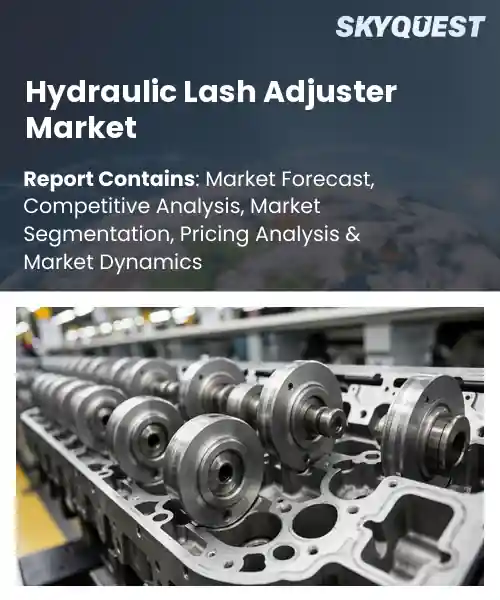
Hydraulic Lash Adjuster Market
Report ID: SQMIG25A2742
Report ID: SQMIG25A2742
[email protected]
USA +1 351-333-4748
Report ID:
SQMIG25A2742 |
Region:
Global |
Published Date: June, 2026
Pages:
157
|Tables:
141
|Figures:
78


Global Hydraulic Lash Adjuster Market size was valued at USD 2.52 Billion in 2024 and is poised to grow from USD 2.64 Billion in 2025 to USD 3.85 Billion by 2033, growing at a CAGR of 4.82% during the forecast period (2026-2033).
The main factor driving the hydraulic lash adjuster market growth is the push to make internal combustion engines work more efficiently, and also the regulatory pressure to cut emissions. Hydraulic lash adjusters basically keep the valve clearance steady on their own, so they tend to run quieter, need less fuss in routine servicing, and they help keep combustion timing in a good spot across different driving loads. This matters a lot because millions of light and heavy vehicles still rely on valve train systems where the clearance level can affect fuel use, plus the long-term durability.
As the rules kept tightening and the industry kept downsizing, a major factor shaping the global hydraulic lash adjuster market outlook is tech integration, it aims to lower life-cycle cost and raise performance. As automakers roll out start-stop systems, turbocharging, and cylinder deactivation, HLAs avoid frequent manual set ups, which in turn reduces warranty issues and minimizes service downtime. That benefit tends to pull in bigger OEM purchase volumes, and it also encourages supplier investment. In commercial transport, where uptime equals money, durable HLAs with advanced coatings can stretch overhaul intervals, plus they make maintenance planning more predictable. As a result, suppliers can grab more aftermarket and retrofit chances, and things like materials innovation plus supply-chain localization also speed up adoption.
AI is improving performance across design, manufacturing, and the “in service” support part of the lifecycle. Some of the key moves are machine learning for geometry and material optimization, computer vision for catching defects during production, sensor-enabled monitoring of valve trains, and digital twins that mimic wear patterns and oil behavior. Right now, many suppliers are combining on line test data with field telematics, aiming to cut down failures and extend service life. In a space where conventional hydraulic adjusters have to satisfy tighter emissions and durability expectations, applied intelligence can shorten development timelines and strengthen reliability, while still sitting alongside alternatives like lashless valvetrains.
Market snapshot - (2026-2033)
Global Market Size
USD 2.52 Billion
Largest Segment
Hydraulic Valve Lash Adjusters
Fastest Growth
Hydraulic Valve Lash Adjusters
Growth Rate
4.82% CAGR
To get more insights on this market click here to Request a Free Sample Report
The global hydraulic lash adjuster market is segmented based on type, application, engine type, sales channel, distribution channel, and region. By type, the market is categorized into Hydraulic Valve Lash Adjusters and Mechanical Lash Adjusters. Based on application, the market is divided into Passenger Cars, Commercial Vehicles, and Motorcycles. By engine type, the market is segmented into Gasoline/Petrol Engines and Diesel Engines. Based on sales channel, the market is classified into OEM and Aftermarket segments. By distribution channel, the market is further segmented into Direct to OEMs, Aftermarket Distributors, and Online channels. Geographically, the market is analyzed across North America, Europe, Asia Pacific, Latin America, and the Middle East & Africa.
As per the hydraulic lash adjuster market analysis, the Hydraulic Valve Lash Adjusters segment is leading, because manufacturers are pushing automatic clearance compensation for modern powertrains, which means less routine service, and it helps keep valve timing accurate even when the load is changing. Their self-adjusting design also brings down mechanical wear and noise, so the overall ride feels better, and it supports regulatory expectations around emissions and efficiency. So in practice, OEMs and engine designers lean toward hydraulic units to hit reliability and total lifecycle cost goals, while also allowing tighter engine calibration and less service work overall.
At the same time, Mechanical Lash Adjusters are showing up as the fastest growing slice, mostly since they’re straightforward and cheaper, which fits retrofits and budget vehicle programs. Their behaviour feels predictable to many repair shops and smaller engine builders, so people like the low fuss aspect. That interest nudges design tweaks and niche demand, which then opens replacement opportunities and low cost production for new entrants.
According to the hydraulic lash adjuster market forecast, the aftermarket segment leads, because the replacement demand keeps rolling , and because independent service networks are everywhere, part turnover stays consistent and availability is broader than what is offered through original sales. Channel partners, including distributors and refurbishers, put effort into inventory, re manufacturing capabilities and technical support to serve aging fleets. Price competition plus quicker distribution typically shortens lead times. That ongoing aftermarket focus keeps revenues steadier, encourages innovation in refurbishing practices, and supports tailored offerings for different vehicle types across service ecosystems.
However, OEM is the fastest growing channel , and it is driven by tighter links to powertrain development, stricter technical specifications, and more demand for factory fitted reliability. Automaker partnerships plus tier supplier consolidation speed up new product launches, increase higher value contracts, and push engineered solutions. That creates pipeline opportunities for more advanced lash adjusters as fresh vehicle programs roll out.
To get detailed segments analysis, Request a Free Sample Report
As per the hydraulic lash adjuster market regional forecast, Asia Pacific leads the market, mostly because auto manufacturing is packed there, plus the supplier ecosystem is layered, and the engineering effort is intense around a few big industrial zones. With strong OEM involvement, plus local parts specialization and that constant back and forth between manufacturers and research centers, companies can keep tweaking designs step by step and also squeeze costs. On top of that, the region has a regulatory push on emissions, and fuel efficiency, so engine component innovation gets more priority. Then there’s the aftermarket side too, with a huge vehicle parc and investments from both multinational and local firms, which makes capacity expansion feel straightforward. The supply chain is also more mature than you’d expect, skilled labor is available, and major consumption markets are close, so scaling new designs is faster, making the region a main source of technical leadership and high volume supply. Competitive pricing on components, and manufacturing models that are flexible, makes it easier for tier suppliers to stay involved long term.
Japan Hydraulic Lash Adjuster Market
The Hydraulic Lash Adjuster sector in Japan does well due to a very interconnected automotive industry, lots of engineering talent, and quality standards that lean heavily toward precision plus durability. OEMs and suppliers keep close relationships, so advanced designs get validated early, and Japan has this long history of materials innovation, supporting compact, high performance components. There’s a steady drive toward fuel efficiency and more refined engine behavior, which helps refined lash adjuster solutions spread across both passenger and commercial vehicle categories.
South Korea Hydraulic Lash Adjuster Market
The Hydraulic Lash Adjuster industry in South Korea is fueled by a responsive automotive supply base, manufacturing agility, and an export mindset that speeds up component development. Network style cooperation between major conglomerates and specialized suppliers helps with quick prototyping, and integration of precision hydraulic systems. There’s also a push for lightweight powertrain approaches, and performance tuning, so demand grows for adaptive lash adjuster arrangements. Add automation investments, and offer consistent quality for both domestic buyers and customers overseas.
North America is seeing fast hydraulic lash adjuster market penetration due to a blend of tech progress, aftermarket maturation, and strong coordination between OEMs and tier suppliers. The focus on performance refinement, emissions control ,and better fuel economy has pulled engineering teams toward more advanced valvetrain components. On the aftermarket side, a mature vehicle service network plus high maintenance frequency keeps demand steady, while diversified powertrain programs let suppliers widen their product mix. When companies invest in advanced manufacturing, precision machining, and quality assurance, competitiveness improves fast, and partnerships between local firms and international suppliers help move know-how around ,and support product localization. All together, that strengthens the region’s image as a meaningful and innovative market for hydraulic lash adjuster solutions. Also, supply chain links and aftermarket data analytics let players adjust products more specifically, and develop service offerings that feel more targeted.
United States Hydraulic Lash Adjuster Market
The Hydraulic Lash Adjuster Market in the United States is shaped by strong OEM research, an established aftermarket base, and a vehicle fleet that keeps demand alive for multiple lash adjuster configurations. There’s high engineering discipline, and suppliers work closely with tier partners, which supports the use of advanced materials and precision manufacturing. Demand shows up across both light duty and commercial categories, and with emphasis on durability ,and serviceability, suppliers tend to bring wider portfolios, plus localized support and technical assistance.
Canada Hydraulic Lash Adjuster Market
The Hydraulic Lash Adjuster Market in Canada benefits from tight integration with North America supply networks, solid manufacturing capability, and aftermarket services that support long component life. Domestic suppliers collaborating with OEMs across the border encourages design adjustments for local operating conditions. Reliability, cold weather performance, and maintainability are key, so suppliers invest in tougher hydraulic lash adjuster variants. Localization efforts and technical support also improve service coverage across both city areas and more remote routes.
Europe is enhancing its hydraulic lash adjuster market share, by mixing advanced powertrain research with close, cross-site collaboration between automotive clusters and a solid supplier base that leans into precision engineering. OEMs and specialized suppliers put a lot of emphasis on lowering emissions and pushing engine efficiency further, so the whole attention shifts toward better valvetrain parts and related subassemblies. Cross border deals, joint development efforts, and modular manufacturing approaches help with quicker product tuning across different markets, sometimes even on a tight schedule. At the same time, investment in materials science, surface treatments, and testing capabilities boosts the durability story, while a mature aftermarket ecosystem plus regulatory alignment makes it easier to pick up refined hydraulic lash adjuster solutions across many vehicle categories. Dedicated research and development hubs around the region support knowledge sharing, and standardization work, so suppliers can scale validated designs and still satisfy a wide range of customer demands.
Germany Hydraulic Lash Adjuster Market
The Hydraulic Lash Adjuster Market in Germany leans on strong engineering know how, a dense web of precision component manufacturers, and very direct OEM collaboration, mostly because they care about robustness, high output and consistent operation. German suppliers usually stick with refined materials, tough testing protocols and process automation so they can meet the strict durability expectations. Research institutes and industry also stay closely connected, which speeds up adoption of fresh ideas, and then established export channels plus specialized manufacturing skills help keep domestic integration smooth, as well as international supply commitments in place.
United Kingdom Hydraulic Lash Adjuster Market
The Hydraulic Lash Adjuster Market in the United Kingdom is influenced by targeted research hubs, flexible manufacturing options and partnership models that push the adoption of advanced valvetrain components. Suppliers and academic institutions tend to prioritize evaluation under different operating scenarios, and they often integrate lightweight material solutions, to balance output with efficiency. Meanwhile an aftermarket services network, plus close relationships with European OEMs, supports product customization and service packages that improve reliability and maintainability across multiple vehicle segments, without too much lag.
France Hydraulic Lash Adjuster Market
The Hydraulic Lash Adjuster Market in France benefits from solid powertrain research institutes, specialty suppliers, and an established automotive manufacturing base that keeps coming back to low emissions and efficiency targets. Supplier clusters often focus on materials innovation, precise assembly methods and validation work across a range of real operating conditions. Collaboration between OEM engineering teams and independent component firms encourages solutions that are tailored for both performance and durability, and coordinated testing facilities alongside aftermarket networks help sustain long term reliability with broader service coverage.
To know more about the market opportunities by region and country, click here to
Buy The Complete Report
Rising Demand For Fuel Efficiency
Advances In Manufacturing Processes
Complexity Of Valve Train Integration
High Replacement And Repair Costs
Request Free Customization of this report to help us to meet your business objectives.
The competitive landscape feels focused in among Tier One suppliers, where the back and forth is mainly driven by proprietary valvetrain patents, OEM supply contracts, and that manufacturing scale thing, which then pushes quite concrete playbooks like targeted acquisitions, OEM co development pacts, and a lot of valvetrain patenting plus product program activity. For instance, recent patent movement and market write ups suggest Eaton and Schaeffler have been leaning into HLA-related technology patenting and there’s also private equity consolidation happening across valvetrain suppliers.
Top Player’s Company Profile
Recent Developments in the Hydraulic Lash Adjuster Market
SkyQuest’s ABIRAW (Advanced Business Intelligence, Research & Analysis Wing) is our Business Information Services team that Collects, Collates, Correlates, and Analyses the Data collected by means of Primary Exploratory Research backed by robust Secondary Desk research.
As per SkyQuest analysis, the hydraulic lash adjuster market is being propelled by the push to raise internal combustion engine efficiency and align with tightening emissions regulations. Also, advances in manufacturing processes act like a second driver, because they boost quality and scalability. One notable restraint is valve-train integration complexity, since it stretches development time and increases qualification costs for OEMs. Asia Pacific dominates the market, mainly due to dense automotive manufacturing, strong supplier ecosystems, and heavy aftermarket demand. Within product categories, hydraulic valve lash adjusters stay the dominant segment, largely because automatic clearance compensation cuts maintenance, reduces noise, and lowers lifecycle costs. That’s why they’re often the preferred option for modern passenger and commercial powertrains.
| Report Metric | Details |
|---|---|
| Market size value in 2024 | USD 2.52 Billion |
| Market size value in 2033 | USD 3.85 Billion |
| Growth Rate | 4.82% |
| Base year | 2024 |
| Forecast period | (2026-2033) |
| Forecast Unit (Value) | USD Billion |
| Segments covered |
|
| Regions covered | North America (US, Canada), Europe (Germany, France, United Kingdom, Italy, Spain, Rest of Europe), Asia Pacific (China, India, Japan, Rest of Asia-Pacific), Latin America (Brazil, Rest of Latin America), Middle East & Africa (South Africa, GCC Countries, Rest of MEA) |
| Companies covered |
|
| Customization scope | Free report customization with purchase. Customization includes:-
|
To get a free trial access to our platform which is a one stop solution for all your data requirements for quicker decision making. This platform allows you to compare markets, competitors who are prominent in the market, and mega trends that are influencing the dynamics in the market. Also, get access to detailed SkyQuest exclusive matrix.
Table Of Content
Executive Summary
Market overview
Parent Market Analysis
Market overview
Market size
KEY MARKET INSIGHTS
COVID IMPACT
MARKET DYNAMICS & OUTLOOK
Market Size by Region
KEY COMPANY PROFILES
Methodology
For the Hydraulic Lash Adjuster Market, our research methodology involved a mixture of primary and secondary data sources. Key steps involved in the research process are listed below:
1. Information Procurement: This stage involved the procurement of Market data or related information via primary and secondary sources. The various secondary sources used included various company websites, annual reports, trade databases, and paid databases such as Hoover's, Bloomberg Business, Factiva, and Avention. Our team did 45 primary interactions Globally which included several stakeholders such as manufacturers, customers, key opinion leaders, etc. Overall, information procurement was one of the most extensive stages in our research process.
2. Information Analysis: This step involved triangulation of data through bottom-up and top-down approaches to estimate and validate the total size and future estimate of the Hydraulic Lash Adjuster Market.
3. Report Formulation: The final step entailed the placement of data points in appropriate Market spaces in an attempt to deduce viable conclusions.
4. Validation & Publishing: Validation is the most important step in the process. Validation & re-validation via an intricately designed process helped us finalize data points to be used for final calculations. The final Market estimates and forecasts were then aligned and sent to our panel of industry experts for validation of data. Once the validation was done the report was sent to our Quality Assurance team to ensure adherence to style guides, consistency & design.
Analyst Support
Customization Options
With the given market data, our dedicated team of analysts can offer you the following customization options are available for the Hydraulic Lash Adjuster Market:
Product Analysis: Product matrix, which offers a detailed comparison of the product portfolio of companies.
Regional Analysis: Further analysis of the Hydraulic Lash Adjuster Market for additional countries.
Competitive Analysis: Detailed analysis and profiling of additional Market players & comparative analysis of competitive products.
Go to Market Strategy: Find the high-growth channels to invest your marketing efforts and increase your customer base.
Innovation Mapping: Identify racial solutions and innovation, connected to deep ecosystems of innovators, start-ups, academics, and strategic partners.
Category Intelligence: Customized intelligence that is relevant to their supply Markets will enable them to make smarter sourcing decisions and improve their category management.
Public Company Transcript Analysis: To improve the investment performance by generating new alpha and making better-informed decisions.
Social Media Listening: To analyze the conversations and trends happening not just around your brand, but around your industry as a whole, and use those insights to make better Marketing decisions.
REQUEST FOR SAMPLE
 REQUEST FREE CUSTOMIZATION
Global Hydraulic Lash Adjuster Market size was valued at USD 2.52 Billion in 2024 and is poised to grow from USD 2.64 Billion in 2025 to USD 3.85 Billion by 2033, growing at a CAGR of 4.82% during the forecast period (2026-2033).
Competitive landscape is concentrated among Tier One suppliers where competition is driven by proprietary valvetrain patents, OEM supply contracts, and manufacturing scale, prompting concrete strategies such as targeted acquisitions, OEM co-development agreements, and valvetrain patenting and product programs; for example, recent patent activity and market reports highlight Eaton and Schaeffler patenting HLA-related technology and private equity consolidation in valvetrain suppliers. 'Schaeffler AG (LuK/INA)', 'Eaton Corporation', 'Delphi Technologies (BorgWarner)', 'NTN Corporation', 'OTICS Corporation', 'Nittan Valve', 'Mahle GmbH', 'Federal-Mogul (Tenneco)', 'NSK Ltd.', 'Musashi Seimitsu', 'Miba AG', 'Fuji Oozx Inc.', 'Precision Camshafts', 'Grainger Inc.', 'Skaland Graphite', 'Jiangsu Lizhou', 'Wells Vehicle Electronics', 'Standard Motor Products', 'Gates Corporation', 'Cloyes Gear and Products'
Improved fuel efficiency requirements and consumer emphasis on lower emissions encourage adoption of hydraulic lash adjusters because they enable more precise valve timing and reduced maintenance, contributing to smoother engine operation and lower mechanical losses. Manufacturers prioritize components that support tighter tolerances and longer service intervals, and hydraulic lash adjusters reduce valve train noise while minimizing manual adjustments. This alignment with OEM goals for cleaner, more efficient powertrains drives integration of these devices across passenger and commercial vehicle platforms, supporting steady growth in component demand and supplier investment.
Hybrid Powertrain Alignment: As vehicle architectures shift toward electrified and hybrid systems, hydraulic lash adjusters are being re-engineered to ensure seamless operation during frequent engine start stop cycles and torque blending. Manufacturers prioritize low-friction designs, improved oil compatibility, and quicker fill response to preserve valve timing and reduce noise vibration harshness. Close collaboration with powertrain control teams and suppliers enables optimized calibration, packaging and durability, helping OEMs meet emission and comfort objectives while maintaining serviceability across diverse drivetrain layouts and global aftermarket support.
Why does Asia Pacific Dominate the Global Hydraulic Lash Adjuster Market? |@12


Want to customize this report? This report can be personalized according to your needs. Our analysts and industry experts will work directly with you to understand your requirements and provide you with customized data in a short amount of time. We offer $1000 worth of FREE customization at the time of purchase.
Feedback From Our Clients


 USA (+1) 351-333-4748

