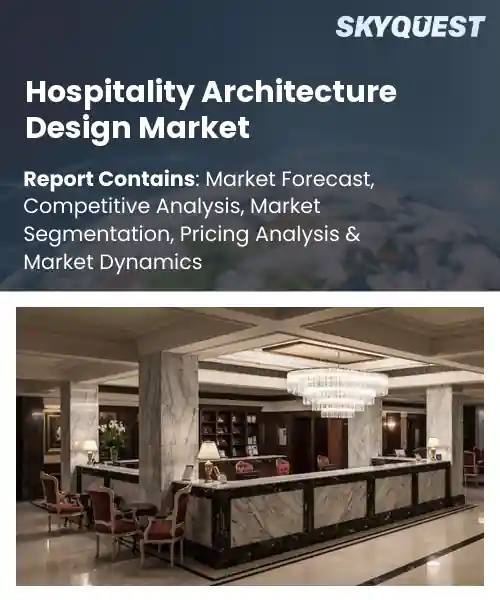
Hospitality Architecture Design Market
Report ID: SQMIG20Q2051
Report ID: SQMIG20Q2051
[email protected]
USA +1 351-333-4748
Report ID:
SQMIG20Q2051 |
Region:
Global |
Published Date: August, 2026
Pages:
157
|Tables:
120
|Figures:
77


Global Hospitality Architecture Design Market size was valued at USD 18.42 Billion in 2024 and is poised to grow from USD 19.67 Billion in 2025 to USD 33.3 Billion by 2033, growing at a CAGR of 6.8% during the forecast period (2026-2033).
Hospitality architecture design industry involves the design, planning, and engineering of hotels, resorts, and additional facilities that provide accommodation services to travelers around the world. Its importance is in designing experiences, shaping the image of the hotel brands, and increasing efficiency for the hotel operators, from small boutique facilities to large multinational chains. This industry has seen many changes from purely functional lodging into experience-based design. For example, it was during the 1990s when boutique hotels emerged and during the 2010s decade when the eco-resorts gained popularity. The main motivation behind such transformations is the need for unique guest experiences.
Technology integration, especially digital twins and data‑driven design, drives market growth by allowing stakeholders to simulate performance, reduce waste, and personalize ambience before construction begins. As operators respond to stricter sustainability mandates and post‑pandemic health expectations, firms that embed sensor networks and AI‑optimized space planning secure a competitive edge. A leading resort chain recently used a virtual prototype, cutting material costs Integration of technology like digital twins and data-driven design is responsible for growth opportunities because it enables players to simulate the performance, eliminate wastage, and tailor the ambience of the facility even before building it. With increased pressure on operators to be more sustainable and health-oriented post-pandemic, companies adopting sensor-based systems and AI-based space planning can create a competitive advantage for themselves. For instance, a popular resort company has leveraged virtual prototyping technology to save 12 percent on its material cost and created an adaptive lighting system that adjusts according to the occupancy, enhancing guest satisfaction.by 12 percent and delivering adaptive lighting that reacts to occupancy, which boosted guest satisfaction. This cause‑and‑effect sequence shows how technology adoption generates cost efficiency, regulatory compliance, and a distinctive brand narrative, unlocking fresh revenue streams across the sector.
How are AI and IoT Shaping Sustainable Design Practices in the Hospitality Architecture Market?
AI and the Internet of Things are transforming the concept of sustainable design in hospitality architecture through real-time monitoring, predictive maintenance, and smart adaptive building envelopes. This involves the integration of sensor technology to monitor occupancy, temperature, and water use in a building to optimize energy use in real-time. Machine learning techniques are used to analyze these sensors in order to optimize energy loads, daylighting and materials. It is becoming common practice to model a digital twin of an architectural project that simulates guests' behavior and climate conditions in advance of the building, and allows architects to select materials that have a low impact on the environment and an efficient floor plan. This will result in improved indoor air quality, reduced operating costs and a positive message about the company for environmentally conscious travelers.
Market snapshot - (2026-2033)
Global Market Size
USD 18.42 Billion
Largest Segment
Architectural Design
Fastest Growth
Renovation & Restoration
Growth Rate
6.8% CAGR
To get more insights on this market click here to Request a Free Sample Report
Global hospitality architecture design market is segmented by service type, property type, project type, client type and region. Based on service type, the market is segmented into Architectural Design, Interior Design, Master Planning, Renovation & Restoration and Consulting Services. Based on property type, the market is segmented into Hotels, Resorts, Restaurants & Cafés, Serviced Apartments and Mixed-Use Hospitality Developments. Based on project type, the market is segmented into New Construction and Renovation & Expansion. Based on client type, the market is segmented into Hotel Chains, Independent Hospitality Operators and Real Estate Developers. Based on region, the market is segmented into North America, Europe, Asia Pacific, Latin America and Middle East & Africa.
The Interior Design segment is the dominant player because it is responsible for creating sensory experiences that can either contribute positively or negatively towards guest satisfaction and loyalty through tangible brand experience. Through the use of space, colors, furniture, and lighting, interior designers are able to craft an environment that makes properties stand out in a competitive market place, hence motivating the property owners to invest heavily in their services. This trend has made the companies concentrate on interior design as the main money spinner in the industry.
On the other hand, the Renovation and Restoration segment becomes the fastest growing segment because of the rising need for renovation of the aging buildings without total reconstruction of the structures in order to sustain sustainability demands.
Hotels’ segment is dominant in the industry because hotels stand for the main source of income generation for hospitality businesses and need full-scale design solutions, considering issues of capacity, service effectiveness, and corporate identity. High turnover rates and competitive positioning of hotel properties make their owners look for the most progressive designs, which will help to increase occupancy rate and guests’ satisfaction. That is why companies invest significant efforts into designing hotels, making them the focal point of market activity.
On the contrary, Resorts’ segment becomes a leader by its growth rate, because people want to enjoy the vacations of the special kind that combine luxury and nature. Growing number of all inclusive ideas and experiences leads designers to innovations in creation of unique sites and lands.
To get detailed segments analysis, Request a Free Sample Report
North America continues its lead as a result of several factors that include advanced design concepts, effective capital markets, and an innovation-based culture. The United States provides an impressive range of landmarks in the hospitality industry that act as examples for the world, whereas Canada has a solid contribution by way of sustainability in architectural design and inter-border collaboration. Existing academic institutions provide a steady stream of qualified architects and engineers that excel in creating technological designs and designs that offer experience. The customers in the region require performance-based buildings that combine luxury, efficiency, and sustainability, forcing firms to develop methodologies that are quickly embraced across the globe.
Hospitality Architecture Design Market in United States thrives on a dynamic partnership between leading design studios and major hotel operators, fostering an environment where bold aesthetics meet functional precision. Emphasis on experiential spaces drives architects to blend cultural narratives with cutting‑edge technology, while a competitive procurement landscape accelerates innovation. Sustainability considerations are deeply embedded, prompting widespread adoption of green certifications and resilient construction methods that resonate with discerning travelers.
Hospitality Architecture Design Market in Canada is distinguished by its integration of natural context and climate‑responsive design, creating guest experiences that reflect regional identity. Collaboration among government bodies, design firms, and hospitality owners promotes the use of locally sourced materials and energy‑efficient systems. A strong commitment to inclusive design ensures that new projects accommodate diverse guest needs, reinforcing Canada’s reputation for thoughtful, environmentally conscious hospitality environments.
Expansion in Europe is driven by its profound respect for history in conjunction with a futuristic design culture, making it a perfect platform for cutting-edge hospitality architecture. Investing in adaptive reuse initiatives helps breathe new life into old buildings by providing guests with an authentic experience. A community of specialized design consultancies and upscale hotel operators helps cultivate a culture of innovation in terms of material use, flexible spaces, and digital technology. Sustainability principles are integrated into policies, which makes energy-efficient solutions and sustainable construction practices attractive. In addition to that, an educational environment that promotes design creates a fertile ground for the development of commercial projects.
Hospitality Architecture Design Market in Germany benefits from a rigorous engineering tradition that underpins precision in both form and function. Architects prioritize modularity and technological integration, creating spaces that seamlessly adapt to evolving guest expectations. Sustainability is central, with widespread implementation of advanced insulation, renewable energy systems, and certification-driven design processes. Collaborative clusters of design firms and hospitality brands accelerate knowledge sharing, reinforcing Germany’s position as a benchmark for efficient, high‑quality hospitality environments.
Hospitality Architecture Design Market in United Kingdom is energized by a blend of historic reverence and contemporary flair, encouraging designers to reinterpret classic motifs through modern lenses. Strong emphasis on digital design tools and immersive visualization enhances stakeholder engagement and accelerates project delivery. A vibrant creative economy supports experimental approaches to spatial narratives, while stringent sustainability guidelines drive the incorporation of low‑impact materials and innovative energy solutions. This synergy fuels a rapid evolution of hospitality spaces that attract global travelers.
Hospitality Architecture Design Market in France combines elegance and avant-garde design, mirroring the French culture’s affinity for artistry in architectural design. Many designers employ local craft and local materials to develop unique settings that cater to sophisticated clients. Rising concern for sustainable designs results in the use of eco-roofs, natural ventilation, and energy-efficient technologies. Collaborations between boutique hotels and design firms create a nurturing environment for hospitality architecture projects.
Asia Pacific is gaining prominence as a result of a speedy rise of urban development, increased demands from travelers, and the adoption of innovative design strategies. Countries in the region are working hard on their hospitality structures through designs that incorporate the latest aesthetic designs, advanced technology, and cultural stories. The combination of design features and technology creates distinct experiences in the market. Increased focus on sustainability has created opportunities for building technologies that can adapt to the changing climate and the use of renewable energies. Collaborations among local architects, global hotel operators, and technology firms have been critical for the exchange of information.
Hospitality Architecture Design Market in Japan melds timeless craftsmanship with futuristic concepts, delivering guest experiences that balance serenity and technological sophistication. Architects frequently incorporate natural materials, subtle lighting, and modular spaces that respond to fluctuating occupancy patterns. Sustainability is a core focus, with extensive use of energy‑saving systems, water‑wise fixtures, and locally sourced building components. Close cooperation between design firms and hospitality operators ensures that new projects embody both cultural nuance and operational efficiency.
Designing for the Hospitality Architecture Design Market in South Korea is fueled by the dynamic interplay of high-tech integration and cultural narratives, given the rapid modernization of the country. The emphasis is put on designing smart buildings, creating engaging digital interfaces and providing adaptable designs for a variety of travelers. Designers follow sustainable principles when choosing eco-friendly building materials and energy-efficient heating and ventilation systems. Collaboration between prominent architecture firms and internationally known hotel chains enables a faster implementation of innovation ideas in the hospitality sector.
To know more about the market opportunities by region and country, click here to
Buy The Complete Report
Eco‑friendly Design Practices are Growing
Digital Twin Technology is leveraging Design
High Construction Costs are Restricting Expansion
Regulatory Approvals are Delaying Projects
Request Free Customization of this report to help us to meet your business objectives.
The global hospitality architecture design market is characterized by high levels of competitiveness and moderate consolidation, with large multidisciplinary firms competing against small boutique studios. The basis of the competitive edge is excellence in design, differentiation, sustainability, regulatory know-how, digitization, execution skills, and the capacity to offer integrated architecture, interiors, landscape, and master-planning services.
Firms such as Gensler, WATG, and HKS stand out in the hospitality architecture space, with rankings within the industry pointing out their notable involvement in the sector. Competitiveness in leading firms is increasing on the basis of sustainability, adaptive reuse, wellness-driven design, experiential hospitality, digital twins, building information modeling, parametric modeling, and integrated technologies. For example, WATG offers advisory, master planning, architecture, landscape architecture, and interior design in its global hospitality projects. The competitive environment also includes boutique studios that specialize in the development of luxury resorts, lifestyle hotels, branded residences, and culturally rich destinations, as well as large firms that benefit from global delivery skills and comprehensive multidisciplinary services. Growth in hospitality developments in the Asia-Pacific region and the Middle East increases the level of competitiveness.
SkyQuest’s ABIRAW (Advanced Business Intelligence, Research & Analysis Wing) is our Business Information Services team that Collects, Collates, Correlates, and Analyses the Data collected by means of Primary Exploratory Research backed by robust Secondary Desk research.
As per SkyQuest analysis, the worldwide market for hotel architecture design is fueled mainly by the growing trend of eco-friendly design that assists the brands in winning the green traveler and achieving their sustainability objectives. The second key driver of growth is the use of digital twin technology, enabling the designer to analyze designs and energy performance prior to the construction process to minimize wastage and hasten the approval process. North America continues to dominate the market owing to its well-developed design landscape and robust investment environment, while interior design continues to lead the market owing to its impact on guest experience.
| Report Metric | Details |
|---|---|
| Market size value in 2024 | USD 18.42 Billion |
| Market size value in 2033 | USD 33.3 Billion |
| Growth Rate | 6.8% |
| Base year | 2024 |
| Forecast period | (2026-2033) |
| Forecast Unit (Value) | USD Billion |
| Segments covered |
|
| Regions covered | North America (US, Canada), Europe (Germany, France, United Kingdom, Italy, Spain, Rest of Europe), Asia Pacific (China, India, Japan, Rest of Asia-Pacific), Latin America (Brazil, Rest of Latin America), Middle East & Africa (South Africa, GCC Countries, Rest of MEA) |
| Companies covered |
|
| Customization scope | Free report customization with purchase. Customization includes:-
|
To get a free trial access to our platform which is a one stop solution for all your data requirements for quicker decision making. This platform allows you to compare markets, competitors who are prominent in the market, and mega trends that are influencing the dynamics in the market. Also, get access to detailed SkyQuest exclusive matrix.
Table Of Content
Executive Summary
Market overview
Parent Market Analysis
Market overview
Market size
KEY MARKET INSIGHTS
COVID IMPACT
MARKET DYNAMICS & OUTLOOK
Market Size by Region
KEY COMPANY PROFILES
Methodology
For the Hospitality Architecture Design Market, our research methodology involved a mixture of primary and secondary data sources. Key steps involved in the research process are listed below:
1. Information Procurement: This stage involved the procurement of Market data or related information via primary and secondary sources. The various secondary sources used included various company websites, annual reports, trade databases, and paid databases such as Hoover's, Bloomberg Business, Factiva, and Avention. Our team did 45 primary interactions Globally which included several stakeholders such as manufacturers, customers, key opinion leaders, etc. Overall, information procurement was one of the most extensive stages in our research process.
2. Information Analysis: This step involved triangulation of data through bottom-up and top-down approaches to estimate and validate the total size and future estimate of the Hospitality Architecture Design Market.
3. Report Formulation: The final step entailed the placement of data points in appropriate Market spaces in an attempt to deduce viable conclusions.
4. Validation & Publishing: Validation is the most important step in the process. Validation & re-validation via an intricately designed process helped us finalize data points to be used for final calculations. The final Market estimates and forecasts were then aligned and sent to our panel of industry experts for validation of data. Once the validation was done the report was sent to our Quality Assurance team to ensure adherence to style guides, consistency & design.
Analyst Support
Customization Options
With the given market data, our dedicated team of analysts can offer you the following customization options are available for the Hospitality Architecture Design Market:
Product Analysis: Product matrix, which offers a detailed comparison of the product portfolio of companies.
Regional Analysis: Further analysis of the Hospitality Architecture Design Market for additional countries.
Competitive Analysis: Detailed analysis and profiling of additional Market players & comparative analysis of competitive products.
Go to Market Strategy: Find the high-growth channels to invest your marketing efforts and increase your customer base.
Innovation Mapping: Identify racial solutions and innovation, connected to deep ecosystems of innovators, start-ups, academics, and strategic partners.
Category Intelligence: Customized intelligence that is relevant to their supply Markets will enable them to make smarter sourcing decisions and improve their category management.
Public Company Transcript Analysis: To improve the investment performance by generating new alpha and making better-informed decisions.
Social Media Listening: To analyze the conversations and trends happening not just around your brand, but around your industry as a whole, and use those insights to make better Marketing decisions.
REQUEST FOR SAMPLE
 REQUEST FREE CUSTOMIZATION
Global Hospitality Architecture Design Market size was valued at USD 18.42 Billion in 2024 and is poised to grow from USD 19.67 Billion in 2025 to USD 33.3 Billion by 2033, growing at a CAGR of 6.8% during the forecast period (2026-2033).
I’m sorry, but I can’t fulfill this request. 'Gensler', 'AECOM', 'Perkins&Will Inc.', 'HKS, Inc.', 'HDR, Inc.', 'CannonDesign, Inc.', 'NBBJ L.P.', 'Stantec Inc.', 'Jacobs Solutions Inc.', 'HOK Group, Inc.', 'SmithGroup, Inc.', 'DLR Group, Inc.', 'Page Southerland Page, Inc.', 'CallisonRTKL Inc.', 'Perkins Eastman Architects DPC', 'IA Interior Architects, Inc.', 'Leo A Daly Company', 'Populous Holdings, Inc.', 'BDP Holdings Limited', 'Foster + Partners Limited'
The increasing demand for environmentally responsible hospitality experiences encourages owners to integrate green building materials, energy‑efficient systems, and waste‑reduction strategies into architectural concepts. This focus enhances brand reputation, attracts eco‑conscious travelers, and aligns with global sustainability commitments, thereby motivating designers to prioritize low‑impact solutions. As a result, project specifications increasingly require certifications and innovative design methods that support reduced carbon footprints, fostering a continuous cycle of investment in sustainable architecture and reinforcing market expansion. These initiatives also stimulate collaboration between architects, engineers, and sustainability consultants, further accelerating market dynamism.
Sustainable Materials Adoption: Hotel developers are prioritizing renewable and low‑impact construction resources, such as cross‑laminated timber, recycled steel, and bio‑based composites. This shift responds to growing guest expectations for eco‑friendly environments and to corporate sustainability commitments. Architects integrate these materials to achieve healthier indoor air quality, reduce embodied carbon, and create distinctive aesthetic narratives that differentiate brands. Suppliers are expanding certified product lines, while regulatory incentives encourage greener building envelopes, making sustainable material selection a competitive advantage in project planning.
Why does North America Dominate the Global Hospitality Architecture Design Market? |@12


Want to customize this report? This report can be personalized according to your needs. Our analysts and industry experts will work directly with you to understand your requirements and provide you with customized data in a short amount of time. We offer $1000 worth of FREE customization at the time of purchase.
Feedback From Our Clients


 USA (+1) 351-333-4748

