Global Honey Powder Market
Honey Powder Market

Report ID: SQMIG30D2052

sales@skyquestt.com
USA +1 351-333-4748

Honey Powder Market Size, Share, and Growth Analysis

Global Honey Powder Market

Honey Powder Market By Type (Granulated Honey, Powdered Honey), By Product (Organic, Conventional), By Process (Spray Dry, Drum/Roller Dry), By Application, By Distribution Channel, By Region - Industry Forecast 2026-2033


Report ID: SQMIG30D2052 | Region: Global | Published Date: May, 2025
Pages: 199 |Tables: 84 |Figures: 68

Format - word format excel data power point presentation

Honey Powder Market Insights

Global Honey Powder Market size was valued at USD 978.95 Million in 2024 and is poised to grow from USD 1024.96 Million in 2025 to USD 1480.06 Million by 2033, growing at a CAGR of 4.7% during the forecast period (2026–2033).

The increasing prevalence of chronic medical conditions such as diabetes, heart disease, and cancer are a significant factor that is positively impacting the market. In addition, the rising demand for products that enhance immunity and promote better health is creating profitable opportunities for manufacturers. Also, the extensive use of honey in home remedies is leading to increased sales of honey globally.

Furthermore, the scientific confirmation of honey's medicinal properties and its use in developing medicines for treating cough and throat infections due to its antiviral, antifungal, and antibacterial properties represent another major growth-inducing factor. Besides this, key players are also focusing on launching various product variations, which is driving market expansion. For instance, Tate & Lyle has been innovating in the market, providing honey powder options that serve as natural alternatives to traditional sweeteners, aligning with consumer preferences for clean-label products.

Along with this, the government of India (GoI) is implementing training programs and mentoring services to educate farmers about the latest beekeeping practices propelling the global honey powder market growth. For instance, National Bee Board (NBB) established under the Ministry of Agriculture & Farmers Welfare, the NBB focuses on the development of scientific beekeeping to enhance crop productivity. It organizes training sessions and awareness programs to disseminate knowledge on advanced beekeeping techniques. Furthermore, the expanding organized distribution channels such as supermarkets, hypermarkets, convenience stores, and general stores, and the thriving e-commerce industry are creating a positive market outlook.
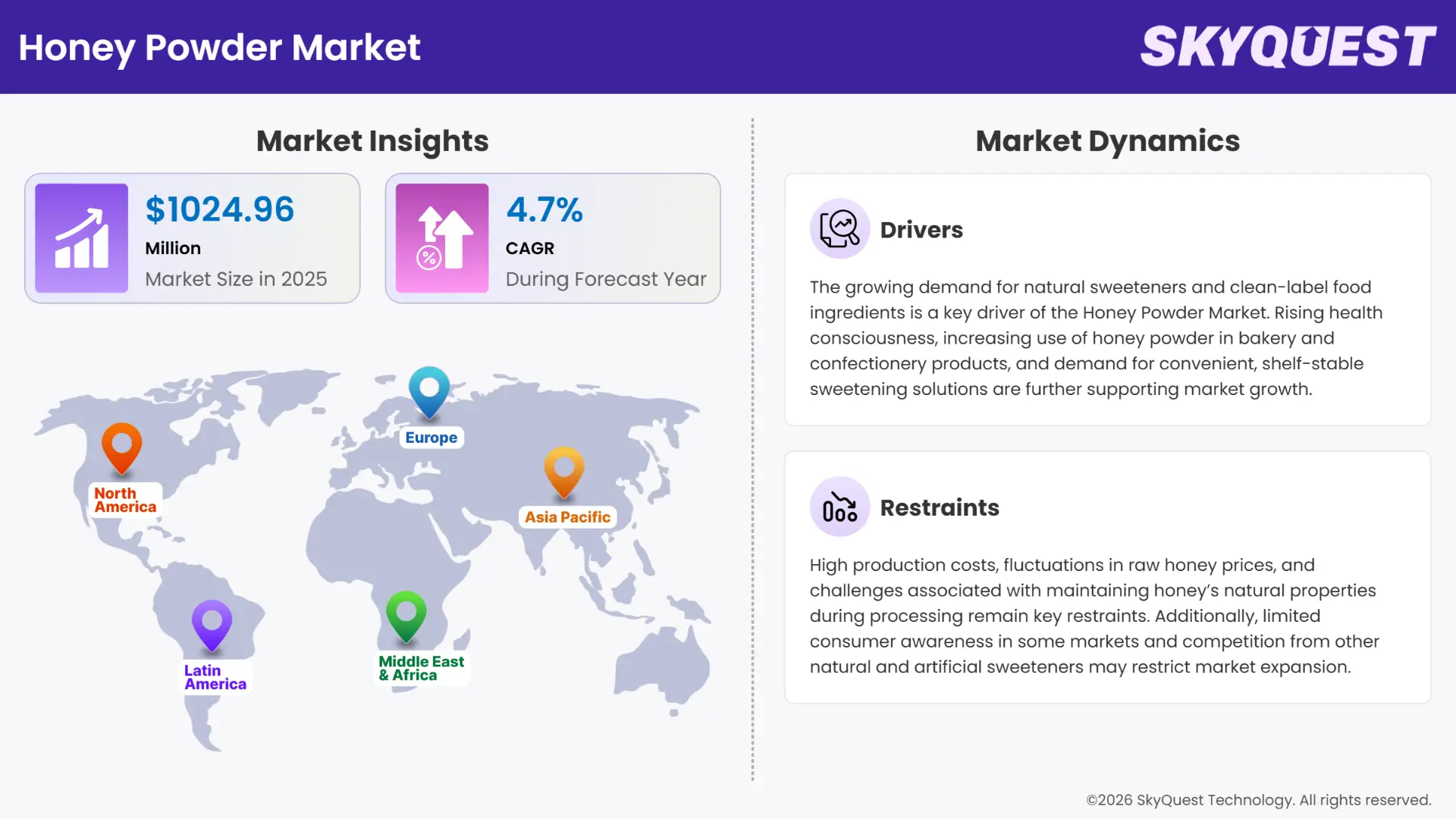
Market snapshot - 2026-2033

Global Market Size

USD 935.0 million

Largest Segment

Organic

Fastest Growth

Conventional

Growth Rate

4.7% CAGR

Global Honey Powder Market 2026-2033 ($ Bn)
Country Share for North America Region 2025 (%)

To get more insights on this market click here to Request a Free Sample Report

Honey Powder Market Segments Analysis

Global Honey Powder Market is segmented by Type, Product, Process, Application, Distribution Channel and region. Based on Type, the market is segmented into Granulated Honey and Powdered Honey. Based on Product, the market is segmented into Organic and Conventional. Based on Process, the market is segmented into Spray Dry, Drum/Roller Dry, Vacuum Dry and Others. Based on Application, the market is segmented into Food & Beverages, Beauty and Personal Care, Nutraceutical and Others. Based on Distribution Channel, the market is segmented into Offline and Online. Based on region, the market is segmented into North America, Europe, Asia Pacific, Latin America and Middle East & Africa.

Why is Organic Honey Powder Segment Leading Honey Powder Market?

As per global honey powder market outlook, the organic honey powder segment dominated the market in 2024, accounting for an impressive 73.1% share. This substantial market position is largely attributed to shifting consumer preferences toward natural and organic ingredients, driven by the rising awareness of health and wellness trends. Consumers are increasingly seeking clean-label products free from synthetic additives, preservatives, and artificial sweeteners, making organic honey powder a preferred choice. Its appeal is further enhanced by being a low-calorie alternative to conventional sweeteners, catering to consumers who are mindful of their calorie intake without compromising on taste. Moreover, organic honey powder's versatility has significantly contributed to its growing demand. In the food and beverage industry, it is widely used as a natural sweetener in products such as energy bars, cereals, and protein shakes.

Meanwhile, the conventional honey powder segment is projected to expand steadily, with a CAGR of 4.2% from 2025 to 2032. This growth is driven by distinct regional demands and evolving industry trends. In North America and Europe, the demand for conventional honey powder is rising as consumers increasingly seek calorie-rich options in indulgent baked goods, desserts, and confectionery products. Conventional honey powder’s affordability compared to its organic counterpart also makes it attractive for cost-conscious consumers in these regions. In the Asia Pacific region, conventional honey powder is gaining prominence in the beauty and personal care sector. Its natural antibacterial and anti-inflammatory properties have led to increased use in facial masks, scrubs, and moisturizing lotions, aligning with the region's growing beauty consciousness. Additionally, the bakery industry in Asia Pacific is incorporating conventional honey powder to enhance flavor, texture, and shelf-life in products such as bread, pastries, and cakes.

How Did Food and Beverages Segment Secure Largest Share in Honey Powder Market?

As per global honey powder market analysis, the food and beverages segment dominated the market in 2024, accounting for the largest 67.6% revenue share. This strong market presence is attributed to the rising consumer preference for minimally processed and natural ingredients. As consumers increasingly prioritize clean-label products free from synthetic additives and artificial flavorings, honey powder has emerged as a desirable alternative to conventional sweeteners. Its natural sweetness, coupled with added health benefits such as antibacterial properties and antioxidant content, has enhanced its appeal in various food categories. In the bakery industry, honey powder is widely used to improve flavor profiles while extending product shelf life. It is also gaining traction in beverage formulations, particularly in functional drinks, herbal teas, and nutritional supplements. Meanwhile, the beauty and personal care segment is poised to experience the fastest growth, with a projected CAGR of 5.9% from 2025 to 2032. This surge is largely driven by the increasing use of honey powder in a wide range of skincare and haircare products, including soaps, face masks, lotions, and shampoos. Honey powder’s renowned properties such as moisturizing, anti-inflammatory, and antibacterial benefits make it a popular ingredient for enhancing skin hydration, reducing acne, and promoting overall skin health. Additionally, honey powder’s longer shelf life and natural origins align with the growing trend toward organic beauty products. As consumers increasingly seek chemical-free, eco-friendly skincare solutions, honey powder’s presence in the beauty and personal care segment is expected to accelerate, driving substantial market growth in the coming years.
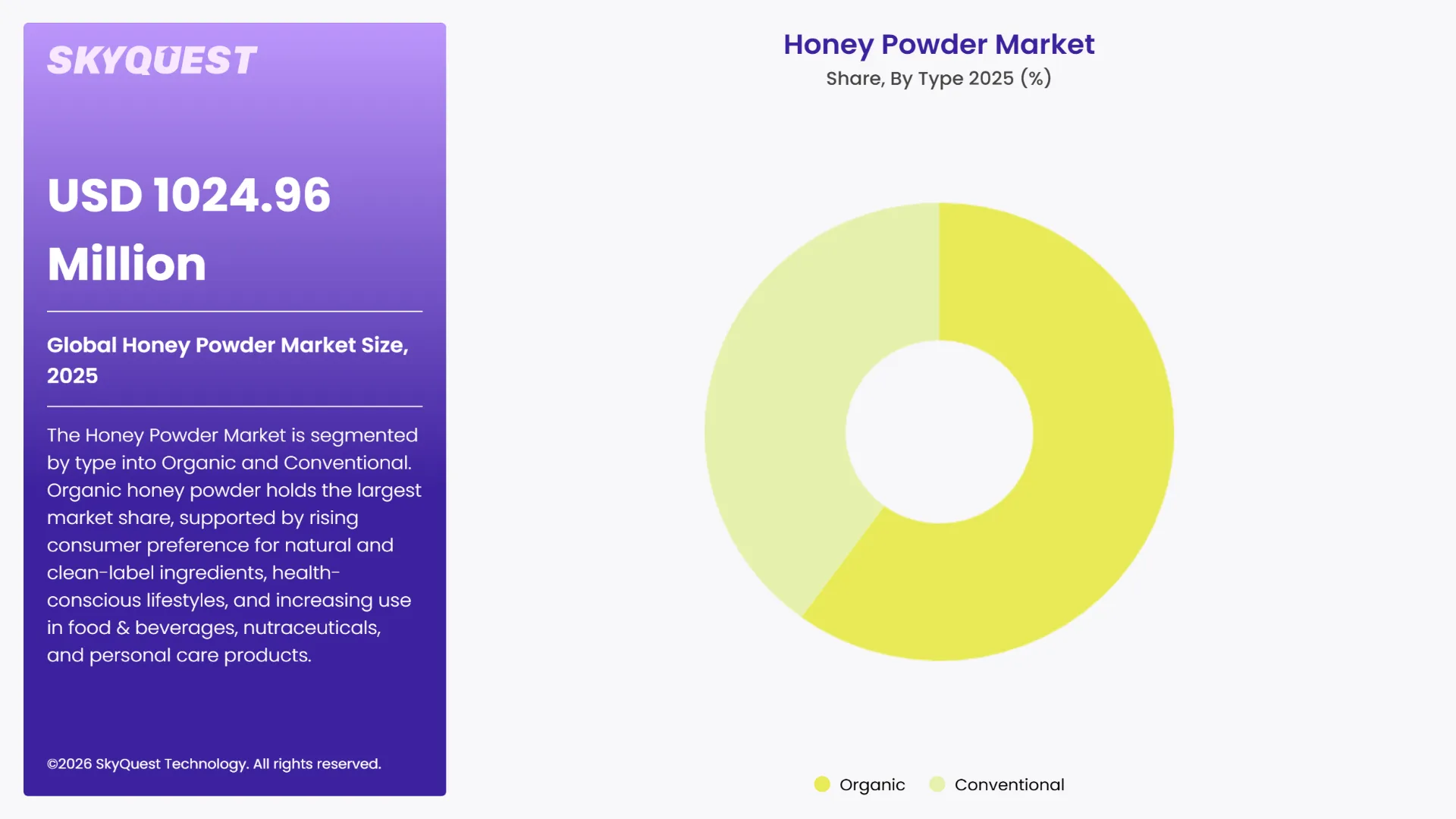
Global Honey Powder Market By Type 2026-2033 (%)

To get detailed segments analysis, Request a Free Sample Report

Honey Powder Market Regional Insights

What Factors are Fueling Growth of Honey Powder Market in North America?

In North America, the honey powder market is thriving due to growing consumer demand for natural and organic ingredients. The region is seeing innovations in clean-label formulations, with honey powder integrated into functional foods, beverages, and dietary supplements. Health-conscious consumers are driving the adoption of honey powder in protein shakes, energy bars, and immune-boosting products. Additionally, advancements in sustainable production methods have become a key focus for North American manufacturers, aligning with the region's increasing preference for eco-friendly food solutions.

In the United States, the honey powder market is thriving due to increasing consumer demand for natural sweeteners in health-focused products. Innovations include honey-infused protein powders, granola bars, and sports nutrition supplements. U.S. companies have also introduced organic honey powder varieties with enhanced bioactive properties, appealing to consumers seeking clean-label and functional ingredients.

In Canada, the honey powder market has gained traction in the functional food space. Honey powder is widely used in breakfast cereals, oatmeal mixes, and smoothie blends to provide natural energy and immune support. Canadian brands are also exploring honey powder's potential in meal replacement products, targeting the health-conscious demographic.

What Trends are Shaping Honey Powder Market in Asia Pacific Region?

As per global honey powder market forecast, in the Asia Pacific region, the honey powder market is witnessing rapid growth driven by both traditional culinary uses and modern wellness trends. Countries in this region are incorporating honey powder into herbal teas, functional beverages, and traditional desserts. Innovations such as microencapsulated honey powder for enhanced flavor stability have emerged to meet the growing demand for convenient yet healthy food products. The rising popularity of honey powder in plant-based foods and supplements reflects the region's increasing focus on holistic health and immunity support.

In Japan, the honey powder market is evolving with a focus on innovation in traditional Japanese confectioneries such as wagashi (sweet rice cakes) and yokan (sweet bean jelly). Japanese companies have developed microencapsulated honey powder, which improves shelf stability and enhances flavor retention in processed foods. Additionally, honey powder is being blended with matcha and fruit extracts in wellness supplements.

In South Korea, the honey powder market is expanding rapidly in the functional beverage sector. South Korean tea producers are adding honey powder to herbal teas, energy drinks, and fermented beverages like kombucha to enhance taste and health benefits. Honey powder is also gaining traction in South Korea's expanding premium dessert market, with bakeries using it in cakes, cookies, and frozen treats.

In Singapore, honey powder is being utilized in upscale dining establishments and premium packaged foods. Singaporean brands are incorporating honey powder into artisanal chocolates, fine pastries, and gourmet sauces. Additionally, honey powder is increasingly used in Singapore’s emerging plant-based food market, offering a natural sweetening alternative for vegan dishes.

In Indonesia, the honey powder market is strongly linked to traditional medicine and herbal supplements. Indonesian manufacturers are blending honey powder with indigenous herbs like turmeric and ginger to create wellness products that support immunity, digestion, and overall vitality. The demand for honey powder in Indonesia has also expanded to include ready-to-drink health tonics and natural cough syrups.

How are European Manufacturers Innovating in Honey Powder Market?

In Europe, the honey powder market is expanding with a strong emphasis on premium and gourmet products. European manufacturers are innovating with honey powder in high-end pastries, desserts, and specialty beverages. Sustainability is a significant trend in this region, with producers adopting energy-efficient spray drying technologies to reduce environmental impact. Furthermore, the demand for honey powder in organic food preservation techniques is rising, reflecting the region's focus on clean and minimally processed food options.
In Germany, sustainability and eco-friendly production methods have become key market trends. German manufacturers are employing advanced spray drying techniques that reduce energy consumption while preserving honey's nutritional value. Honey powder is widely adopted in premium bakery products, including artisan bread, cakes, and pastries. German companies are also leveraging honey powder’s antibacterial properties by developing innovative food preservation solutions, which have seen increased demand in the organic food sector.

In France, honey powder is being integrated into gourmet culinary products such as macaron fillings, tart glazes, and infused syrups. French food brands are experimenting with honey powder blends that combine floral honey varieties with spices, creating exclusive flavor combinations for high-end restaurants and pastry shops. Additionally, honey powder is emerging as a key ingredient in premium chocolates, enhancing texture and flavor without artificial sweeteners.

In Spain, the honey powder market is seeing growth in traditional Spanish cuisine. Manufacturers are producing seasoning blends that mix honey powder with smoked paprika, saffron, and herbs to enhance meat marinades and tapas dishes. Spanish producers are also expanding honey powder applications in ready-to-eat meal kits, appealing to busy consumers seeking authentic yet convenient meal solutions.

In Italy, honey powder is gaining traction in the beverage industry. Italian coffee roasters are introducing honey powder-infused espresso blends, while tea producers are developing specialty teas featuring honey powder as a natural sweetener. Italian brands are also incorporating honey powder in flavored syrups and dessert toppings, offering enhanced taste with fewer calories.

In the United Kingdom, honey powder is thriving in both the wellness and skincare sectors. British beauty brands are creating face masks, moisturizers, and serums enriched with honey powder to leverage its antibacterial and anti-inflammatory properties. In the food industry, British manufacturers are exploring honey powder’s role in organic snack bars, granola mixes, and gluten-free bakery items to address the rising demand for allergen-free options.

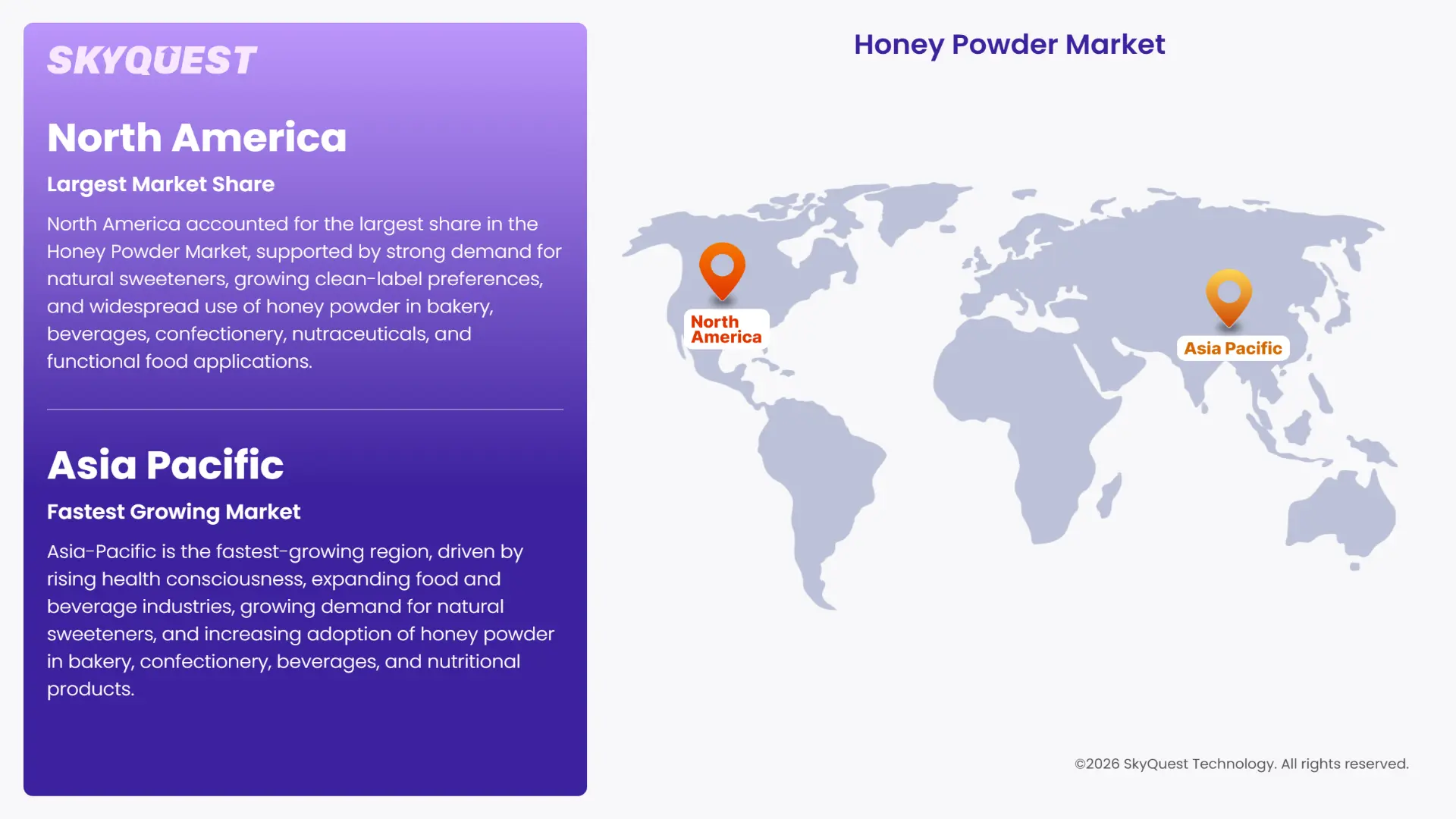
Global Honey Powder Market By Geography, 2026-2033
  • Largest
  • Fastest

To know more about the market opportunities by region and country, click here to
Buy The Complete Report

Honey Powder Market Dynamics

Honey Powder Market Driver

Rising Demand for Natural Sweeteners

  • Increasing awareness of the side effects of refined sugar has increased consumers' preference for natural sweetness, the location of honey powder as a desirable alternative. Honey powder provides a practical, shelf-stable shape of liquid honey, making it very versatile in different industries. Food and beverage manufacturers quickly incorporate honey powder into bakery products, breakfast grains, energy bars and instant drinks, while because of your ability to improve the taste when adding nutritional benefits. In addition, antibacterial properties, antioxidants and immune-enhancing properties of honey powder have increased the appeal in the health and welfare sector.

Growth in Clean-Label and Organic Products

  • The growing trend of clean-label products with minimal, recognizable material and no artificial additives is an important driver for the honey powder market. As a natural component, honey powder matches this consumer's preference. The increasing demand for organic and constant citrus food products further improves the appeal of honey powder. The versatility extends to the diet dose, neutraceautics and skin care joggers, where consumers seek chemical-free materials. The product’s ability to enhance flavor, sweetness, and texture without the need for synthetic additives positions honey powder as a premium choice in the expanding market.

Honey Powder Market Restraints

High Production Costs

  • Producing honey powder involves special processes such as spray drying or freezing drying, both require precise temperature control and the advanced equipment to maintain the nutritional properties of honey. These complex processes increase operating costs, resulting in honey powder than normal sweetness such as sugar or artificial alternatives. In addition, it requires ensuring purity and quality of honey during the drying process strict quality control measures, which further adds production expenses. This cost can limit the adoption of honey powder in the areas or industries in the negotiation, which limits the extension in price-sensitive markets.

Environmental Challenges and Bee Population Decline

  • The honey powder market is facing a significant challenge due to global decline in the bee population. Factors such as pesticides, destruction of housing and climate change help reduce BIE colonies, which directly affect the production of honey. Since bees are important polluters for many crops, where honey is used to produce, their decline poses a serious risk to the supply chain. The supply of this low honey can lead to ups and downs, which can affect the availability and strength of honey powder. As a result, manufacturers may face difficulty maintaining continuous production levels, especially in very more dependent areas of natural honey sources.

Request Free Customization of this report to help us to meet your business objectives.

Honey Powder Market Competitive Landscape

The global honey powder industry is characterized by intense competition, where prominent players focus on product innovation, strategic partnerships and expand their production skills to meet the growing demand. Key companies such as ADM (Archer Daniel Midland), Archer Daniel Midland Company and AMTech content are actively increasing the product portfolio with organic, non-GMO and purely marked honey powder solutions to coordinate with the consumer's preferences. These companies invest in advanced drying technologies such as spray drying and improvement in the stability of the product and to expand the shelf life.

Top Player’s Company Profile

  • ADM (Archer Daniels Midland) (US) 
  • AmTech Ingredients (US) 
  • Z Natural Foods (US) 
  • Woodland Foods (US) 
  • Augason Farms (US) 
  • Specialty Products & Technology, Inc. (US) 
  • Wuhu Deli Foods Co., Ltd. (China) 
  • Norevo GmbH (Germany) 
  • NOW Foods (US) 
  • Sainsbury’s (UK)

Recent Developments in Honey Powder Market

  • In December 2024, Aldi introduced a new range of snacks featuring hot honey, a flavor trend popularized on TikTok. Priced at £1.49, the range includes items like Hot Honey Flatbreads, Greek Feta and hot honey bites, Hot Honey Pork Belly bites, and Honey, Chilli, and Camembert crisps. Additionally, Aldi collaborated with Sauce Shop to create a Spiced Cranberry Hot Honey Sauce for the festive season.
  • In November 2024, Topgam introduced Hanumam, which is a line of honey-based gum doses, started locally characterized by a high dose of liquid honey in Israel. This product differs by using liquid honey instead of powder shapes and appeals to health -conscious consumers in search of natural ingredients.
  • In October 2024, Nespresso launched its first ready for drink coffee, Measant Origins Columbia, Colombia with high quality coffee beans with honey from Colombia. This limited-Setsrit drink starts from October 2, 2024, the United States available in, which was in line with the commitment to the functionality and stability of Nesspresso.
  • In March 2024, the private equity company New Water Capital bought Dutch Gold Honey, a business owned by a family created about 80 years ago. The acquisition also included associated institutions such as McLures Honey & Maple products, Gamber Container packaging and DGH logistics. The Gambber family confirmed the ownership interest in these businesses, while the Dutch Gold Pennsylvania facility was sold for basic income, which had a long-term lease to ensure continuous operation.

Honey Powder Key Market Trends

Honey Powder Market SkyQuest Analysis

SkyQuest’s ABIRAW (Advanced Business Intelligence, Research & Analysis Wing) is our Business Information Services team that Collects, Collates, Correlates, and Analyses the Data collected using Primary Exploratory Research backed by robust Secondary Desk research.

As per SkyQuest analysis, the honey powder market is experiencing significant growth, driven by the increasing demand for natural sweeteners and versatile food ingredients. Consumers seeking healthy alternatives promote market extension, especially in bakery, confectionery and beverage applications. Emerging technologies such as spray drying, encapsulation and formulation of bioactive honey powder increase the quality and shelf stability of the product, which promotes additional market capacity. However, challenges such as raw honey prices and complications are the most important restrictions on maintaining the nutritional characteristics of honey during processing. Despite these hurdles, the market is witnessing innovation and strategic partnerships, positioning honey powder as a vital ingredient in the evolving food and beverage industry.

Report Metric Details
Market size value in 2024 USD 978.95 Million
Market size value in 2033 USD 1480.06 Million
Growth Rate 4.7%
Base year 2024
Forecast period 2026-2033
Forecast Unit (Value) USD Million
Segments covered
  • Type
    • Granulated Honey, Powdered Honey
  • Product
    • Organic, Conventional
  • Process
    • Spray Dry, Drum/Roller Dry, Vacuum Dry, Others
  • Application
    • Food & Beverages, Beauty and Personal Care, Nutraceutical, Others
  • Distribution Channel
    • Offline, Online
Regions covered North America (US, Canada), Europe (Germany, France, United Kingdom, Italy, Spain, Rest of Europe), Asia Pacific (China, India, Japan, Rest of Asia-Pacific), Latin America (Brazil, Rest of Latin America), Middle East & Africa (South Africa, GCC Countries, Rest of MEA)
Companies covered
  • ADM (Archer Daniels Midland) (US) 
  • AmTech Ingredients (US) 
  • Z Natural Foods (US) 
  • Woodland Foods (US) 
  • Augason Farms (US) 
  • Specialty Products & Technology, Inc. (US) 
  • Wuhu Deli Foods Co., Ltd. (China) 
  • Norevo GmbH (Germany) 
  • NOW Foods (US) 
  • Sainsbury’s (UK)
Customization scope

Free report customization with purchase. Customization includes:-

  • Segments by type, application, etc
  • Company profile
  • Market dynamics & outlook
  • Region

To get a free trial access to our platform which is a one stop solution for all your data requirements for quicker decision making. This platform allows you to compare markets, competitors who are prominent in the market, and mega trends that are influencing the dynamics in the market. Also, get access to detailed SkyQuest exclusive matrix.

Table Of Content

Executive Summary

Market overview

  • Exhibit: Executive Summary – Chart on Market Overview
  • Exhibit: Executive Summary – Data Table on Market Overview
  • Exhibit: Executive Summary – Chart on Honey Powder Market Characteristics
  • Exhibit: Executive Summary – Chart on Market by Geography
  • Exhibit: Executive Summary – Chart on Market Segmentation
  • Exhibit: Executive Summary – Chart on Incremental Growth
  • Exhibit: Executive Summary – Data Table on Incremental Growth
  • Exhibit: Executive Summary – Chart on Vendor Market Positioning

Parent Market Analysis

Market overview

Market size

  • Market Dynamics
    • Exhibit: Impact analysis of DROC, 2021
      • Drivers
      • Opportunities
      • Restraints
      • Challenges
  • SWOT Analysis

KEY MARKET INSIGHTS

  • Technology Analysis
    • (Exhibit: Data Table: Name of technology and details)
  • Pricing Analysis
    • (Exhibit: Data Table: Name of technology and pricing details)
  • Supply Chain Analysis
    • (Exhibit: Detailed Supply Chain Presentation)
  • Value Chain Analysis
    • (Exhibit: Detailed Value Chain Presentation)
  • Ecosystem Of the Market
    • Exhibit: Parent Market Ecosystem Market Analysis
    • Exhibit: Market Characteristics of Parent Market
  • IP Analysis
    • (Exhibit: Data Table: Name of product/technology, patents filed, inventor/company name, acquiring firm)
  • Trade Analysis
    • (Exhibit: Data Table: Import and Export data details)
  • Startup Analysis
    • (Exhibit: Data Table: Emerging startups details)
  • Raw Material Analysis
    • (Exhibit: Data Table: Mapping of key raw materials)
  • Innovation Matrix
    • (Exhibit: Positioning Matrix: Mapping of new and existing technologies)
  • Pipeline product Analysis
    • (Exhibit: Data Table: Name of companies and pipeline products, regional mapping)
  • Macroeconomic Indicators

COVID IMPACT

  • Introduction
  • Impact On Economy—scenario Assessment
    • Exhibit: Data on GDP - Year-over-year growth 2016-2022 (%)
  • Revised Market Size
    • Exhibit: Data Table on Honey Powder Market size and forecast 2021-2027 ($ million)
  • Impact Of COVID On Key Segments
    • Exhibit: Data Table on Segment Market size and forecast 2021-2027 ($ million)
  • COVID Strategies By Company
    • Exhibit: Analysis on key strategies adopted by companies

MARKET DYNAMICS & OUTLOOK

  • Market Dynamics
    • Exhibit: Impact analysis of DROC, 2021
      • Drivers
      • Opportunities
      • Restraints
      • Challenges
  • Regulatory Landscape
    • Exhibit: Data Table on regulation from different region
  • SWOT Analysis
  • Porters Analysis
    • Competitive rivalry
      • Exhibit: Competitive rivalry Impact of key factors, 2021
    • Threat of substitute products
      • Exhibit: Threat of Substitute Products Impact of key factors, 2021
    • Bargaining power of buyers
      • Exhibit: buyers bargaining power Impact of key factors, 2021
    • Threat of new entrants
      • Exhibit: Threat of new entrants Impact of key factors, 2021
    • Bargaining power of suppliers
      • Exhibit: Threat of suppliers bargaining power Impact of key factors, 2021
  • Skyquest special insights on future disruptions
    • Political Impact
    • Economic impact
    • Social Impact
    • Technical Impact
    • Environmental Impact
    • Legal Impact

Market Size by Region

  • Chart on Market share by geography 2021-2027 (%)
  • Data Table on Market share by geography 2021-2027(%)
  • North America
    • Chart on Market share by country 2021-2027 (%)
    • Data Table on Market share by country 2021-2027(%)
    • USA
      • Exhibit: Chart on Market share 2021-2027 (%)
      • Exhibit: Market size and forecast 2021-2027 ($ million)
    • Canada
      • Exhibit: Chart on Market share 2021-2027 (%)
      • Exhibit: Market size and forecast 2021-2027 ($ million)
  • Europe
    • Chart on Market share by country 2021-2027 (%)
    • Data Table on Market share by country 2021-2027(%)
    • Germany
      • Exhibit: Chart on Market share 2021-2027 (%)
      • Exhibit: Market size and forecast 2021-2027 ($ million)
    • Spain
      • Exhibit: Chart on Market share 2021-2027 (%)
      • Exhibit: Market size and forecast 2021-2027 ($ million)
    • France
      • Exhibit: Chart on Market share 2021-2027 (%)
      • Exhibit: Market size and forecast 2021-2027 ($ million)
    • UK
      • Exhibit: Chart on Market share 2021-2027 (%)
      • Exhibit: Market size and forecast 2021-2027 ($ million)
    • Rest of Europe
      • Exhibit: Chart on Market share 2021-2027 (%)
      • Exhibit: Market size and forecast 2021-2027 ($ million)
  • Asia Pacific
    • Chart on Market share by country 2021-2027 (%)
    • Data Table on Market share by country 2021-2027(%)
    • China
      • Exhibit: Chart on Market share 2021-2027 (%)
      • Exhibit: Market size and forecast 2021-2027 ($ million)
    • India
      • Exhibit: Chart on Market share 2021-2027 (%)
      • Exhibit: Market size and forecast 2021-2027 ($ million)
    • Japan
      • Exhibit: Chart on Market share 2021-2027 (%)
      • Exhibit: Market size and forecast 2021-2027 ($ million)
    • South Korea
      • Exhibit: Chart on Market share 2021-2027 (%)
      • Exhibit: Market size and forecast 2021-2027 ($ million)
    • Rest of Asia Pacific
      • Exhibit: Chart on Market share 2021-2027 (%)
      • Exhibit: Market size and forecast 2021-2027 ($ million)
  • Latin America
    • Chart on Market share by country 2021-2027 (%)
    • Data Table on Market share by country 2021-2027(%)
    • Brazil
      • Exhibit: Chart on Market share 2021-2027 (%)
      • Exhibit: Market size and forecast 2021-2027 ($ million)
    • Rest of South America
      • Exhibit: Chart on Market share 2021-2027 (%)
      • Exhibit: Market size and forecast 2021-2027 ($ million)
  • Middle East & Africa (MEA)
    • Chart on Market share by country 2021-2027 (%)
    • Data Table on Market share by country 2021-2027(%)
    • GCC Countries
      • Exhibit: Chart on Market share 2021-2027 (%)
      • Exhibit: Market size and forecast 2021-2027 ($ million)
    • South Africa
      • Exhibit: Chart on Market share 2021-2027 (%)
      • Exhibit: Market size and forecast 2021-2027 ($ million)
    • Rest of MEA
      • Exhibit: Chart on Market share 2021-2027 (%)
      • Exhibit: Market size and forecast 2021-2027 ($ million)

KEY COMPANY PROFILES

  • Competitive Landscape
    • Total number of companies covered
      • Exhibit: companies covered in the report, 2021
    • Top companies market positioning
      • Exhibit: company positioning matrix, 2021
    • Top companies market Share
      • Exhibit: Pie chart analysis on company market share, 2021(%)

Methodology

For the Honey Powder Market, our research methodology involved a mixture of primary and secondary data sources. Key steps involved in the research process are listed below:

1. Information Procurement: This stage involved the procurement of Market data or related information via primary and secondary sources. The various secondary sources used included various company websites, annual reports, trade databases, and paid databases such as Hoover's, Bloomberg Business, Factiva, and Avention. Our team did 45 primary interactions Globally which included several stakeholders such as manufacturers, customers, key opinion leaders, etc. Overall, information procurement was one of the most extensive stages in our research process.

2. Information Analysis: This step involved triangulation of data through bottom-up and top-down approaches to estimate and validate the total size and future estimate of the Honey Powder Market.

3. Report Formulation: The final step entailed the placement of data points in appropriate Market spaces in an attempt to deduce viable conclusions.

4. Validation & Publishing: Validation is the most important step in the process. Validation & re-validation via an intricately designed process helped us finalize data points to be used for final calculations. The final Market estimates and forecasts were then aligned and sent to our panel of industry experts for validation of data. Once the validation was done the report was sent to our Quality Assurance team to ensure adherence to style guides, consistency & design.

Analyst Support

Customization Options

With the given market data, our dedicated team of analysts can offer you the following customization options are available for the Honey Powder Market:

Product Analysis: Product matrix, which offers a detailed comparison of the product portfolio of companies.

Regional Analysis: Further analysis of the Honey Powder Market for additional countries.

Competitive Analysis: Detailed analysis and profiling of additional Market players & comparative analysis of competitive products.

Go to Market Strategy: Find the high-growth channels to invest your marketing efforts and increase your customer base.

Innovation Mapping: Identify racial solutions and innovation, connected to deep ecosystems of innovators, start-ups, academics, and strategic partners.

Category Intelligence: Customized intelligence that is relevant to their supply Markets will enable them to make smarter sourcing decisions and improve their category management.

Public Company Transcript Analysis: To improve the investment performance by generating new alpha and making better-informed decisions.

Social Media Listening: To analyze the conversations and trends happening not just around your brand, but around your industry as a whole, and use those insights to make better Marketing decisions.

Honey Powder Market Report Snapshots

$5,300

REQUEST FOR SAMPLE

Please verify that you're not a robot to proceed!
Want to customize this report? REQUEST FREE CUSTOMIZATION

FAQs

Global Honey Powder Market size was valued at USD 978.95 Million in 2024 and is poised to grow from USD 1024.96 Million in 2025 to USD 1480.06 Million by 2033, growing at a CAGR of 4.7% during the forecast period (2026–2033).

The global honey powder industry is characterized by intense competition, where prominent players focus on product innovation, strategic partnerships and expand their production skills to meet the growing demand. Key companies such as ADM (Archer Daniel Midland), Archer Daniel Midland Company and AMTech content are actively increasing the product portfolio with organic, non-GMO and purely marked honey powder solutions to coordinate with the consumer's preferences. These companies invest in advanced drying technologies such as spray drying and improvement in the stability of the product and to expand the shelf life. 'ADM (Archer Daniels Midland) (US) ', 'AmTech Ingredients (US) ', 'Z Natural Foods (US) ', 'Woodland Foods (US) ', 'Augason Farms (US) ', 'Specialty Products & Technology, Inc. (US) ', 'Wuhu Deli Foods Co., Ltd. (China) ', 'Norevo GmbH (Germany) ', 'NOW Foods (US) ', 'Sainsbury’s (UK)'

Increasing awareness of the side effects of refined sugar has increased consumers' preference for natural sweetness, the location of honey powder as a desirable alternative. Honey powder provides a practical, shelf-stable shape of liquid honey, making it very versatile in different industries. Food and beverage manufacturers quickly incorporate honey powder into bakery products, breakfast grains, energy bars and instant drinks, while because of your ability to improve the taste when adding nutritional benefits. In addition, antibacterial properties, antioxidants and immune-enhancing properties of honey powder have increased the appeal in the health and welfare sector.

In North America, the honey powder market is thriving due to growing consumer demand for natural and organic ingredients. The region is seeing innovations in clean-label formulations, with honey powder integrated into functional foods, beverages, and dietary supplements. Health-conscious consumers are driving the adoption of honey powder in protein shakes, energy bars, and immune-boosting products. Additionally, advancements in sustainable production methods have become a key focus for North American manufacturers, aligning with the region's increasing preference for eco-friendly food solutions.
AGC3x.webp
Aisin3x.webp
ASKA P Co. LTD3x.webp
BD3x.webp
BILL & MELIDA3x.webp
BOSCH3x.webp
CHUNGHWA TELECOM3x.webp
DAIKIN3x.webp
DEPARTMENT OF SCIENCE & TECHNOLOGY3x.webp
ETRI3x.webp
Fiti Testing3x.webp
GERRESHEIMER3x.webp
HENKEL3x.webp
HITACHI3x.webp
HOLISTIC MEDICAL CENTRE3x.webp
Institute for information industry3x.webp
JAXA3x.webp
JTI3x.webp
Khidi3x.webp
METHOD.3x.webp
Missul E&S3x.webp
MITSUBISHI3x.webp
MIZUHO3x.webp
NEC3x.webp
Nippon steel3x.webp
NOVARTIS3x.webp
Nttdata3x.webp
OSSTEM3x.webp
PALL3x.webp
Panasonic3x.webp
RECKITT3x.webp
Rohm3x.webp
RR KABEL3x.webp
SAMSUNG ELECTRONICS3x.webp
SEKISUI3x.webp
Sensata3x.webp
SENSEAIR3x.webp
Soft Bank Group3x.webp
SYSMEX3x.webp
TERUMO3x.webp
TOYOTA3x.webp
UNDP3x.webp
Unilever3x.webp
YAMAHA3x.webp
Yokogawa3x.webp

Want to customize this report? This report can be personalized according to your needs. Our analysts and industry experts will work directly with you to understand your requirements and provide you with customized data in a short amount of time. We offer $1000 worth of FREE customization at the time of purchase.

Feedback From Our Clients


