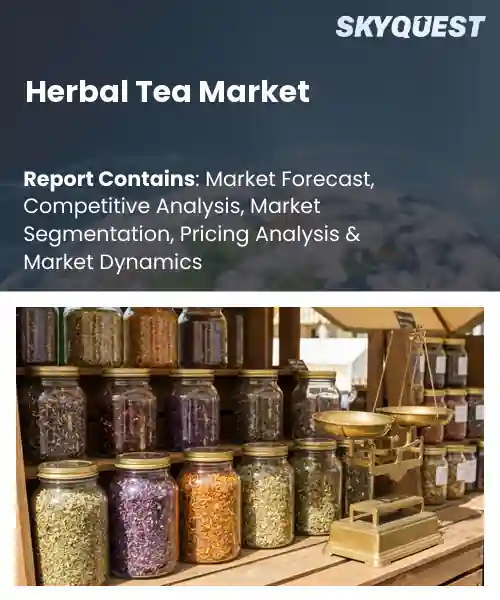
Herbal Tea Market
Report ID: SQMIG30I2774
Report ID: SQMIG30I2774
[email protected]
USA +1 351-333-4748
Report ID:
SQMIG30I2774 |
Region:
Global |
Published Date: February, 2026
Pages:
157
|Tables:
126
|Figures:
77


Global Herbal Tea Market size was valued at USD 3.9 Billion in 2024 and is poised to grow from USD 4.15 Billion in 2025 to USD 6.82 Billion by 2033, growing at a CAGR of 6.4% during the forecast period (2026-2033).
The global herbal tea market growth is driven because more consumers choose to buy functional drinks and natural wellness products. People increasingly use herbal tea as an alternative to traditional tea and coffee drinks. The producers established new production facilities because the market for herbal tea showed strong growth through increased demand for organic and functional blends. To adapt to changing consumer tastes, businesses now offer premium products together with herbal blends and new additives. Herbal tea serves as the beverage that experiences the fastest growth throughout every location. The drink improves digestive function and boosts immune defense while decreasing anxiety symptoms.
Moreover, the clean label movement has created an impact on the emerging herbal tea industry. Consumers choose products that do not contain artificial flavors or preservatives, or any type of additives. The demand for caffeine-free beverages which provide natural effects has started to increase. Companies now create herbal teas which include probiotics and antioxidants and adaptogens as herbal tea production expands.
Why Are Functional Herbal Teas Replacing Traditional Remedies?
Herbal teas now serve as healing drinks instead of their original function as relaxing drinks. Modern brands create products that use adaptogens such as ginseng and ashwagandha and reishi mushrooms to enhance immunity, relieve stress, improve digestion, promote better sleep, and better focus. Tazo launched their Adaptogen Infusions product line in March 2025 to enhance immunity while decreasing stress levels. The company Celestial Seasonings developed its Focus and Clarity product line which includes ginkgo and lion's mane mushrooms to enhance cognitive function. The company introduced two products which included inulin and dandelion tea to support microbiome health and digestive function. The herbal tea sector will start to position its products as daily nutraceuticals because tea makers will use clinical-backed ingredients and vitamin fortification and mental wellness benefits instead of focusing on taste.
Market snapshot - 2026-2033
Global Market Size
USD 3.9 Billion
Largest Segment
Chamomile
Fastest Growth
Turmeric
Growth Rate
6.4% CAGR
To get more insights on this market click here to Request a Free Sample Report
The global herbal tea market is categorized by product type, packaging type, form, distribution channel, and region. By product type, the market includes chamomile, peppermint, hibiscus, lemongrass, ginger, cinnamon, dandelion, turmeric, fruit-based teas, blended formulations, and other varieties. By packaging type, the market is divided into loose tea, tea bags, paperboard packs, and aluminum tins. By form, it is segmented into tea bags and loose-leaf tea. By distribution channel, the market comprises supermarkets and hypermarkets, specialty stores, convenience stores, and online sales channels. Geographically, the market spans North America, Europe, Asia-Pacific, Latin America, and the Middle East & Africa.
According to the global herbal tea market analysis, the most popular herbal tea from remained chamomile because people considered it effective for achieving relaxation and sleep. North America and Europe see high demand for chamomile as an herbal infusion because people regard it as an effective calming agent and digestive aid and sleep-promoting herb. Large tea companies introduced chamomile to their nighttime and stress-relieving teas to meet the rising market demand for natural beverages that help people unwind. Customers purchased chamomile blends through retail stores and online wellness platforms.
However, the peppermint category is predicted to rise rapidly as more individuals become interested in caffeine-free beverages and digestive wellness. Young people now choose peppermint tea because it helps them to reduce bloating and stomach discomfort while maintaining hydration during the entire day. The ingredient is widely used for hot and cold infusions because of its flavor and effectiveness. The market has developed new peppermint products that contain either a single ingredient or a blend of several ingredients.
As per the global herbal tea market forecast, the tea bags category emerged as the most preferred method for making herbal tea because they provided easy usage and portable design which delivered exceptional tea results. People who have tight schedules usually choose single-serve products which they can prepare quickly and carry between home and workplace. Supermarkets and online stores provided customers with more options for multipack herbal tea bags because companies demanded packaging solutions which ensured both cleanliness and function. People in both developed and developing countries prefer tea bags for their daily tea consumption because the products offer practical usage benefits.
Whereas the loose-tea category is anticipated to have the highest herbal tea market share. This is because customers want better quality tea which delivers authentic tea drinking experiences. Specialty shops and internet retailers use artisanal mixes and customizable brewing strengths to attract customers who want to buy better quality natural ingredients. The trend toward higher-quality products together with interest in traditional tea-making methods has led more people to choose loose-leaf tea over standard tea bags.
To get detailed segments analysis, Request a Free Sample Report
As per the herbal tea market regional forecast, Asia Pacific maintains its position as the leading global herbal tea market because its people practice deep cultural use of botanical infusions while they cultivate herbs through local farming and they show strong knowledge of traditional healing practices. The established agricultural networks provide manufacturers with various raw materials which they use to create innovative blends and functional formulas that match local consumer tastes. The distribution system functions smoothly because tea houses and specialty retailers operate near tea growers and processors who create efficient supply networks. The market develops stronger credibility through the public's acceptance of natural wellness products and the partnerships between traditional healers and current commercial brands.
Japan Herbal Tea Market
Japanese herbal tea consumption results from traditional tea practices which evolved into new product development, thus creating market demand from consumers who purchase both single ingredient infusions and blended wellness tea products. Urban consumers who demand high-quality products, need premium tea brands which provide quality items through their specialty retailers and artisanal producers. Authenticity receives promotion through partnerships between heritage tea artisans and contemporary brands, while marketing that emphasizes product origin creates loyalty among consumers who want calming beverages.
South Korea Herbal Tea Market
The South Korean herbal tea market develops from consumer demand for health products, new product design activities, and online shopping experiences which help customers find products. Health-conscious younger consumers prefer contemporary packaging and modern flavor profiles, while functional ingredients create their product attraction. Local producers use domestic botanical cultivation together with food service partnerships to create cafe and online store access points for their products.
The European herbal tea market penetration results from consumer interest in natural health products and the establishment of new retail outlets and increasing demand for functional beverages and sensory experiences. Consumers show an increasing desire for herbal infusions which provide them with perceived health advantages and unique tastes and clear product origins. Supermarkets and specialty stores extend product selection, while e-commerce platforms enable niche brands to connect with specific consumer markets. Sustainability and traceability together with organic certification meet both regulatory standards and preferences of high-end customers, which enhances market credibility.
Germany Herbal Tea Market
The herbal tea market in Germany operates successfully because shoppers trust botanical remedies while the country maintains an extensive health-focused retail system which includes both pharmacies and specialty food outlets. The brand establishes trustworthiness through its scientific proof and quality certifications and organic farming practices. The manufacturers create functional blends which draw from phytotherapeutic traditions, while retailers enable product discovery through their store sections and product labels. The demand for sustainable products and transparent supply chain operations makes customers more confident in their purchase decisions and leads to continuous demand for these products.
United Kingdom Herbal Tea Market
UK consumers rapidly adopt new tea formats which create online connections through their tea drinking rituals that support both premium and niche tea brands. The combo of subscription services and influencer marketing together with new flavor blends attracts city dwellers who want ways to save time and experience something fresh. Small producers promote their products through traceability and ethical sourcing methods, while retailers stock botanical teas that compete with standard tea offerings.
France Herbal Tea Market
The French herbal tea market growth occurs through culinary-based tea blends and traditional craftsmanship and regional product authenticity. The urban tea ateliers and boutique retailers create product lines which attract customers who wish to experience both deep sensory impressions and elegant product design. Producers develop organic farming methods and create packaging materials which match the requirements of high-end gift products. The public begins to accept products through dining partnerships and pastry shop associations and through tasting events which show their products to people who lack expertise.
North America boosts its herbal tea market presence through ongoing product development and wider retail distribution and product selection that meets contemporary functional needs of consumers. Brands use clean label products together with clear ingredient origins and sensory diversity to attract customers from all age groups, while premium packaging, and experiential stores help users discover their products. E-commerce platforms and omnichannel strategies enable artisanal makers to expand their market reach, while their partnerships with wellness influencers and food service operators and health professionals improve their brand credibility. The tea products improve their market value through sustainability practices and certification systems which help them achieve common beverage consumption patterns.
United States Herbal Tea Market
The United States herbal tea market develops through continuous product advances which create new methods of convenient consumption for people who need drinks during their active daily routines. The combination of national retail chains and specialty stores presents extensive product distribution while direct to consumer channels help businesses share their product origins and health advantages. Brands use premium product design together with lifestyle partnerships to reach new customer segments. The distribution of herbal tea through food service alliances and tea bars has established these products as common elements in everyday drinking customs which lead to repeated customer purchases.
Canada Herbal Tea Market
The Canadian herbal tea market exhibits two major consumer preferences which include a preference for natural organic products and an interest in sourcing ingredients from local sources which showcase traditional regional plant life. The available retail options include health food stores grocery chains and specialty cafes which provide customers with multiple shopping methods. The producers use ethical sourcing methods combined with small batch production and transparent origin storytelling to win over environmentally conscious customers. E commerce platforms and community activities enable customers to learn about products and taste them, while culinary and wellness partnerships create new opportunities for product usage.
To know more about the market opportunities by region and country, click here to
Buy The Complete Report
Rising Consumer Health Awareness
Expansion of Retail And Ecommerce
Raw Material Supply Variability
Regulatory Compliance Complexity
Request Free Customization of this report to help us to meet your business objectives.
The global herbal tea industry maintains its competitive nature through brand-retailer partnerships and corporate mergers and technological advancements. Companies increase their product distribution capabilities to maintain their presence in both physical stores and digital marketplaces. The Unilever sale of Ekaterra to CVC Capital Partners represented a major business development. Nestlé Health Science has selected to invest in tea brands which promote health and wellness. Companies must team up with competitors through platform partnerships and acquisition deals and product creation efforts because digital marketplaces and eco-friendly packaging development and traceability technologies have become essential for market survival.
Premium Wellness Positioning
Sustainable Sourcing And Packaging
SkyQuests ABIRAW (Advanced Business Intelligence, Research & Analysis Wing) is our Business Information Services team that Collects, Collates, Correlates, and Analyses the Data collected by means of Primary Exploratory Research backed by robust Secondary Desk research.
As per SkyQuest analysis, the global herbal tea market experiences its primary growth through increasing consumer health awareness while retail and online shopping expansions serve as a secondary market growth factor. The unpredictable nature of raw material supply creates significant challenges because it prevents manufacturers from maintaining their standard production processes and their manufacturing capacity. The market remains led by Asia Pacific because of its cultural acceptance and ability to grow native plants and maintain effective supply networks, while chamomile leads product segments because of its high brand recognition and repeat buying patterns. Brands which use transparent sourcing practices and effective product designs and multiple sales channels will succeed in turning first-time customers into loyal consumers while they benefit from premium products and sustainability-focused customer preferences. The company invests in premium product development through sustainable packaging solutions and medically proven product formulas which drive innovation for products with higher price points across all retail channels.
| Report Metric | Details |
|---|---|
| Market size value in 2024 | USD 3.9 Billion |
| Market size value in 2033 | USD 6.82 Billion |
| Growth Rate | 6.4% |
| Base year | 2024 |
| Forecast period | 2026-2033 |
| Forecast Unit (Value) | USD Billion |
| Segments covered |
|
| Regions covered | North America (US, Canada), Europe (Germany, France, United Kingdom, Italy, Spain, Rest of Europe), Asia Pacific (China, India, Japan, Rest of Asia-Pacific), Latin America (Brazil, Rest of Latin America), Middle East & Africa (South Africa, GCC Countries, Rest of MEA) |
| Companies covered |
|
| Customization scope | Free report customization with purchase. Customization includes:-
|
To get a free trial access to our platform which is a one stop solution for all your data requirements for quicker decision making. This platform allows you to compare markets, competitors who are prominent in the market, and mega trends that are influencing the dynamics in the market. Also, get access to detailed SkyQuest exclusive matrix.
Table Of Content
Executive Summary
Market overview
Parent Market Analysis
Market overview
Market size
KEY MARKET INSIGHTS
COVID IMPACT
MARKET DYNAMICS & OUTLOOK
Market Size by Region
KEY COMPANY PROFILES
Methodology
For the Herbal Tea Market, our research methodology involved a mixture of primary and secondary data sources. Key steps involved in the research process are listed below:
1. Information Procurement: This stage involved the procurement of Market data or related information via primary and secondary sources. The various secondary sources used included various company websites, annual reports, trade databases, and paid databases such as Hoover's, Bloomberg Business, Factiva, and Avention. Our team did 45 primary interactions Globally which included several stakeholders such as manufacturers, customers, key opinion leaders, etc. Overall, information procurement was one of the most extensive stages in our research process.
2. Information Analysis: This step involved triangulation of data through bottom-up and top-down approaches to estimate and validate the total size and future estimate of the Herbal Tea Market.
3. Report Formulation: The final step entailed the placement of data points in appropriate Market spaces in an attempt to deduce viable conclusions.
4. Validation & Publishing: Validation is the most important step in the process. Validation & re-validation via an intricately designed process helped us finalize data points to be used for final calculations. The final Market estimates and forecasts were then aligned and sent to our panel of industry experts for validation of data. Once the validation was done the report was sent to our Quality Assurance team to ensure adherence to style guides, consistency & design.
Analyst Support
Customization Options
With the given market data, our dedicated team of analysts can offer you the following customization options are available for the Herbal Tea Market:
Product Analysis: Product matrix, which offers a detailed comparison of the product portfolio of companies.
Regional Analysis: Further analysis of the Herbal Tea Market for additional countries.
Competitive Analysis: Detailed analysis and profiling of additional Market players & comparative analysis of competitive products.
Go to Market Strategy: Find the high-growth channels to invest your marketing efforts and increase your customer base.
Innovation Mapping: Identify racial solutions and innovation, connected to deep ecosystems of innovators, start-ups, academics, and strategic partners.
Category Intelligence: Customized intelligence that is relevant to their supply Markets will enable them to make smarter sourcing decisions and improve their category management.
Public Company Transcript Analysis: To improve the investment performance by generating new alpha and making better-informed decisions.
Social Media Listening: To analyze the conversations and trends happening not just around your brand, but around your industry as a whole, and use those insights to make better Marketing decisions.
REQUEST FOR SAMPLE
 REQUEST FREE CUSTOMIZATION
Global Herbal Tea Market size was valued at USD 3.9 Billion in 2024 and is poised to grow from USD 4.15 Billion in 2025 to USD 6.82 Billion by 2033, growing at a CAGR of 6.4% during the forecast period (2026-2033).
Tata Consumer Products, The Hain Celestial Group, Dilmah Ceylon Tea Company PLC, Bigelow Tea, Yogi Tea, Twinings, Celestial Seasonings, Pukka Herbs, Traditional Medicinals, Harney & Sons, Tazo, Numi Organic Tea, Stash Tea, Teavana, Rishi Tea, Thompson Tea, Art of Tea, Adagio Teas, Kusmi Tea, Fortnum & Mason Tea
The key driver of the Herbal Tea Market is the growing consumer focus on health and wellness. Rising awareness of natural and functional beverages, increasing preference for organic and caffeine-free options, and the demand for immunity-boosting and therapeutic drinks are fueling global market growth.
Key trends in the Herbal Tea Market include the rising demand for organic and functional herbal teas, growth of ready-to-drink and flavored variants, adoption of sustainable and eco-friendly packaging, expansion of online retail channels, and increasing consumer preference for wellness and immunity-focused beverages.
Asia-Pacific held the largest share in the Herbal Tea Market, driven by strong cultural consumption of herbal beverages, high demand for wellness-focused drinks, expanding herbal tea production, rising health awareness, and increasing preference for organic and natural teas in countries like China and India.


Want to customize this report? This report can be personalized according to your needs. Our analysts and industry experts will work directly with you to understand your requirements and provide you with customized data in a short amount of time. We offer $1000 worth of FREE customization at the time of purchase.
Feedback From Our Clients


 USA (+1) 351-333-4748

