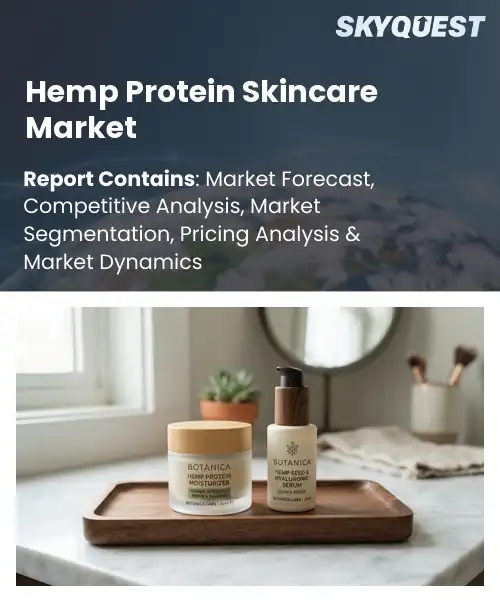
Hemp Protein Skincare Market
Report ID: SQMIG30L2582
Report ID: SQMIG30L2582
[email protected]
USA +1 351-333-4748
Report ID:
SQMIG30L2582 |
Region:
Global |
Published Date: August, 2026
Pages:
157
|Tables:
147
|Figures:
78


Global Hemp Protein Skincare Market size was valued at USD 842.7 Million in 2024 and is poised to grow from USD 917.7 Million in 2025 to USD 1815.2 Million by 2033, growing at a CAGR of 8.9% during the forecast period (2026-2033).
Ingredient efficacy and supply‑chain transparency drive the global hemp protein skincare market because consumers now demand high‑performing actives. When hemp farms secure organic certification and employ blockchain tracking, brands can verify protein content and low pesticide residue, which raises premium pricing and retailer confidence. This credibility has enabled collaborations with manufacturers such as L’Oréal, whose 2022 “Green Science” line launched a hemp‑protein moisturizer that increased skin hydration by 15 % after four weeks in clinical trials. Proven results spur R&D, leading to hybrid blends that pair hemp protein with hyaluronic acid or peptides and open opportunities in anti‑pollution and post‑procedure care.
How is AI-driven formulation accelerating product innovation in the hemp protein skincare market?
AI driven formulation is reshaping hemp protein skincare by rapidly analyzing molecular interactions, predicting texture stability, and tailoring active concentrations to skin types. Machine learning models ingest ingredient databases and consumer feedback, allowing formulators to iterate prototypes in days rather than months. This acceleration shortens time to market and reduces waste, encouraging brands to experiment with novel blends of hemp protein, botanical extracts, and bio actives. As consumer demand for natural, sustainable cosmetics rises, the technology enables personalized products that maintain the protein’s nourishing benefits while delivering consistent sensory experiences. The result is a more dynamic pipeline where innovation cycles are driven by data rather than intuition.In February 2025 a leading hemp protein skincare brand launched an AI optimized serum that combined hemp protein with botanical moisturizers, showing how predictive formulation cuts development time, improves ingredient efficiency, and fuels market expansion. The product received strong consumer interest and set a benchmark for data driven beauty innovation.
Market snapshot - (2026-2033)
Global Market Size
USD 842.7 Million
Largest Segment
Creams
Fastest Growth
Face Masks
Growth Rate
8.9% CAGR
To get more insights on this market click here to Request a Free Sample Report
Global hemp protein skincare market is segmented by product type, application, skin type, distribution channel, end user and region. Based on product type, the market is segmented into Creams, Serums, Face Masks and Cleansers. Based on application, the market is segmented into Moisturizing, Anti-Aging, Acne Care and Skin Barrier Repair. Based on skin type, the market is segmented into Dry Skin, Oily Skin, Sensitive Skin and Combination Skin. Based on distribution channel, the market is segmented into Specialty Beauty Stores, Pharmacies and Online Retail. Based on end user, the market is segmented into Women, Men and Unisex. Based on region, the market is segmented into North America, Europe, Asia Pacific, Latin America and Middle East & Africa.
Creams segment dominates because they provide the most familiar texture and application experience for consumers seeking daily nourishment, and hemp protein’s rich amino acid profile integrates seamlessly into rich emulsions that deliver lasting hydration. The tactile comfort, ease of spreading, and ability to lock in moisture create strong brand loyalty, while formulators favor creams for their versatility in incorporating actives, stabilizing hemp extracts, and meeting broad skin type consumer needs.
However, serums segment emerges as the most rapidly expanding area because lightweight formulations highlight hemp protein’s bioactive peptides, allowing faster skin penetration and targeted delivery of antioxidant benefits. This innovation attracts early adopters seeking visible results, spurring new product launches and reinforcing the market’s growth trajectory for both consumers and brands.
Anti aging segment dominates because hemp protein’s high concentration of essential amino acids supports collagen synthesis, which directly addresses wrinkle reduction and skin firmness concerns that drive consumer purchasing decisions. Formulations enriched with hemp protein are positioned as premium solutions that combine natural efficacy with scientific credibility, appealing to mature demographics seeking holistic plant based alternatives while reinforcing brand narratives around longevity and skin health in the evolving beauty landscape.
Meanwhile, acne care segment is witnessing the strongest growth momentum because hemp protein’s anti inflammatory properties help soothe irritated skin while regulating sebum production, making it an attractive ingredient for blemish focused formulas. Rising consumer awareness of plant derived solutions fuels innovation, expanding reach and creating opportunities for brands targeting acne prone audiences.
To get detailed segments analysis, Request a Free Sample Report
North America leads due to a convergence of sophisticated consumer preferences, well‑defined regulatory pathways, and a deep talent pool in both agricultural science and cosmetic formulation. The United States and Canada host major beauty conglomerates that prioritize clean‑beauty narratives, integrating hemp protein for its nourishing and texture‑enhancing attributes. Strong supply chain linkages between hemp growers and high‑tech extraction facilities guarantee consistent quality, while collaborative research between universities and industry accelerates innovative product development. Market confidence is further reinforced by transparent labeling standards and robust distribution networks that span retail, specialty, and digital channels.
Hemp Protein Skincare Market in the United States benefits from a dense network of research institutions and corporate labs that accelerate ingredient refinement. Consumers prioritize clean beauty, driving brands to integrate hemp protein for its textural and nourishing qualities. Distribution channels are highly developed, allowing rapid product rollout across retail and digital platforms. Collaborative initiatives between agricultural producers and formulators reinforce a reliable supply of high‑quality hemp protein, supporting market depth.
Hemp Protein Skincare Market in Canada thrives on a sustainability‑focused consumer base that values locally sourced botanical actives. Government incentives encourage eco‑friendly farming practices, ensuring a consistent flow of premium hemp biomass. Beauty brands emphasize transparent ingredient stories, aligning with Canadian preferences for ethical formulation. Partnerships between western provinces and coastal processing hubs streamline extraction, while boutique retailers champion innovative product lines that showcase hemp protein’s moisturizing and barrier‑supporting benefits.
Europe’s rapid expansion is propelled by a sophisticated consumer base that seeks high‑performance natural ingredients, combined with a regulatory environment that supports innovative botanical actives. Leading brands across the continent leverage hemp protein’s multifunctional benefits to meet demand for sustainable yet effective skincare solutions. Strong academic‑industry collaborations in key markets accelerate research into bioactive properties, while premium retail channels amplify product visibility. Cultural emphasis on environmental responsibility further fuels adoption, positioning Europe as a dynamic hub for hemp protein integration within luxury and mainstream beauty segments.
Hemp Protein Skincare Market in Germany is anchored by a strong tradition of scientific rigor and a well‑established cosmetics sector. Consumers seek performance‑driven natural actives, prompting brands to integrate hemp protein for its reparative and anti‑oxidant qualities. Robust supply chains link northern agricultural regions with southern formulation hubs, ensuring ingredient purity. Regulatory clarity around novel ingredients fosters confidence, while premium retail channels amplify product visibility across both traditional and online platforms.
Hemp Protein Skincare Market in the United Kingdom experiences brisk adoption driven by a vibrant clean‑beauty community and influential social media narratives. Consumers gravitate toward multifunctional formulas that combine sustainability with visible skin benefits, positioning hemp protein as a sought‑after ingredient. Collaborative research between British universities and boutique manufacturers accelerates innovative applications. Distribution through high‑street chains and niche e‑commerce sites ensures rapid market penetration, reinforcing the United Kingdom’s reputation as a fast‑growing hub.
Hemp Protein Skincare Market in France is emerging as designers and avant‑garde brands experiment with botanical actives to differentiate premium lines. French consumers value sensory elegance and ethical sourcing, encouraging formulators to highlight hemp protein’s textural softness and skin‑conditioning profile. Collaborative incubators in Paris unite fragrance specialists with dermatological experts, fostering niche product concepts. Specialty boutiques and upscale department stores provide curated platforms that amplify visibility among discerning shoppers.
Asia Pacific is strengthening its position through a blend of cultural reverence for natural ingredients and aggressive innovation in cosmetic technology. Brands in Japan and South Korea are integrating hemp protein to achieve lightweight textures and antioxidant reinforcement that align with regional beauty ideals. Government‑backed research initiatives expedite the refinement of extraction processes, while a rising middle class with heightened wellness awareness drives demand for sustainable skin solutions. Strategic partnerships between local hemp cultivators and high‑tech formulation labs ensure consistent quality, and a robust e‑commerce ecosystem accelerates market reach across diverse consumer segments.
Hemp Protein Skincare Market in Japan blends traditional reverence for botanical precision with cutting‑edge formulation technology. Consumers prioritize harmony between efficacy and sensory experience, prompting brands to incorporate hemp protein for its moisturizing and skin‑barrier support attributes. Close cooperation between agricultural cooperatives in northern regions and high‑tech labs in metropolitan areas ensures consistent quality. Retail environments emphasize curated experiences, and premium department stores showcase hemp‑infused collections that align with Japan’s aesthetic standards.
Hemp Protein Skincare Market in South Korea is propelled by a culture of innovation and a youthful demographic eager for novel skin solutions. K‑beauty pioneers experiment with hemp protein to deliver lightweight textures and antioxidant protection, resonating with trend‑focused consumers. Government‑supported research parks facilitate rapid prototyping of extraction methods, while beauty influencers amplify product awareness across digital channels. High‑frequency retail formats ensure that hemp‑based offerings reach a broad consumer base.
To know more about the market opportunities by region and country, click here to
Buy The Complete Report
Increasing Demand For Natural Ingredients
Consumers are increasingly seeking skincare formulations that contain naturally derived components, and hemp protein aligns with this preference due to its plant‑based origin and perceived gentleness on skin. Manufacturers respond by integrating hemp protein into serums, creams, and masks, which expands product portfolios and stimulates market activity. This alignment between consumer expectations and ingredient attributes fuels product innovation, encourages brand differentiation, and supports higher purchase intent, thereby driving overall market expansion. Retail channels also highlight these formulations, reinforcing consumer awareness and encouraging repeat purchases.
Sustainable Sourcing Enhances Brand Image
Brands that adopt hemp protein benefit from its reputation as an environmentally responsible ingredient, since its cultivation requires fewer resources and supports soil health. By promoting sustainable sourcing narratives, companies strengthen consumer trust and differentiate themselves in crowded markets. This ethical positioning resonates with shoppers who prioritize eco‑friendly products, leading to stronger brand loyalty and willingness to pay premium prices. Consequently, manufacturers are motivated to expand hemp‑based lines, reinforcing market momentum and contributing to sustained growth. These efforts resonate across multiple geographic regions, amplifying impact.
Regulatory Ambiguity Limits Market Adoption
The classification of hemp‑derived ingredients varies among jurisdictions, creating uncertainty for manufacturers regarding permissible claims and labeling requirements. Companies must navigate fragmented legal frameworks, which can delay product launches and increase compliance costs. This ambiguity discourages investment in research and development, as firms hesitate to allocate resources without clear guidance. As a result, market entry slows, limiting the availability of hemp protein skincare options and constraining overall market growth. Regulators are also reviewing safety standards, further extending the timeline for approvals.
Supply Chain Constraints Affect Ingredient Availability
Hemp protein extraction relies on specific processing techniques and seasonal agricultural outputs, which can create bottlenecks in raw material supply. Limited cultivation acreage and dependence on qualified growers restrict the volume of consistent feedstock, leading to intermittent shortages for manufacturers. These supply fluctuations force companies to seek alternative ingredients or endure production delays, increasing operational complexity. Consequently, the reliability of product pipelines is compromised, dampening market confidence and slowing expansion of hemp‑based skincare offerings. Additionally, transportation challenges further exacerbate lead times for finished products.
Request Free Customization of this report to help us to meet your business objectives.
The competitive landscape of the global hemp protein skincare market is shaped by firms leveraging strategic M&A, cross‑industry partnerships, and advanced extraction technologies to differentiate their product lines. Recent collaborations between hemp ingredient suppliers and established cosmetics brands have accelerated portfolio diversification, while acquisitions of niche biotech firms have expanded proprietary protein formulations, intensifying rivalry and driving innovation across the sector.
Top Player’s Company Profile
Recent Developments
SkyQuest’s ABIRAW (Advanced Business Intelligence, Research & Analysis Wing) is our Business Information Services team that Collects, Collates, Correlates, and Analyses the Data collected by means of Primary Exploratory Research backed by robust Secondary Desk research. As per SkyQuest analysis, the global hemp protein skincare market is propelled primarily by the rising consumer demand for natural ingredients, which encourages brands to embed hemp protein across creams, serums and masks. A second driver is the sustainability narrative, as eco‑friendly sourcing of hemp boosts brand image and supports premium pricing. The market is most concentrated in North America, where mature distribution channels and clear regulatory pathways foster rapid adoption. Creams remain the dominant segment because their rich texture easily incorporates hemp protein’s amino acids for lasting hydration. However, regulatory ambiguity across jurisdictions restrains broader market entry, slowing product launches and increasing compliance costs.
| Report Metric | Details |
|---|---|
| Market size value in 2024 | USD 842.7 Million |
| Market size value in 2033 | USD 1815.2 Million |
| Growth Rate | 8.9% |
| Base year | 2024 |
| Forecast period | (2026-2033) |
| Forecast Unit (Value) | USD Million |
| Segments covered |
|
| Regions covered | North America (US, Canada), Europe (Germany, France, United Kingdom, Italy, Spain, Rest of Europe), Asia Pacific (China, India, Japan, Rest of Asia-Pacific), Latin America (Brazil, Rest of Latin America), Middle East & Africa (South Africa, GCC Countries, Rest of MEA) |
| Companies covered |
|
| Customization scope | Free report customization with purchase. Customization includes:-
|
To get a free trial access to our platform which is a one stop solution for all your data requirements for quicker decision making. This platform allows you to compare markets, competitors who are prominent in the market, and mega trends that are influencing the dynamics in the market. Also, get access to detailed SkyQuest exclusive matrix.
Table Of Content
Executive Summary
Market overview
Parent Market Analysis
Market overview
Market size
KEY MARKET INSIGHTS
COVID IMPACT
MARKET DYNAMICS & OUTLOOK
Market Size by Region
KEY COMPANY PROFILES
Methodology
For the Hemp Protein Skincare Market, our research methodology involved a mixture of primary and secondary data sources. Key steps involved in the research process are listed below:
1. Information Procurement: This stage involved the procurement of Market data or related information via primary and secondary sources. The various secondary sources used included various company websites, annual reports, trade databases, and paid databases such as Hoover's, Bloomberg Business, Factiva, and Avention. Our team did 45 primary interactions Globally which included several stakeholders such as manufacturers, customers, key opinion leaders, etc. Overall, information procurement was one of the most extensive stages in our research process.
2. Information Analysis: This step involved triangulation of data through bottom-up and top-down approaches to estimate and validate the total size and future estimate of the Hemp Protein Skincare Market.
3. Report Formulation: The final step entailed the placement of data points in appropriate Market spaces in an attempt to deduce viable conclusions.
4. Validation & Publishing: Validation is the most important step in the process. Validation & re-validation via an intricately designed process helped us finalize data points to be used for final calculations. The final Market estimates and forecasts were then aligned and sent to our panel of industry experts for validation of data. Once the validation was done the report was sent to our Quality Assurance team to ensure adherence to style guides, consistency & design.
Analyst Support
Customization Options
With the given market data, our dedicated team of analysts can offer you the following customization options are available for the Hemp Protein Skincare Market:
Product Analysis: Product matrix, which offers a detailed comparison of the product portfolio of companies.
Regional Analysis: Further analysis of the Hemp Protein Skincare Market for additional countries.
Competitive Analysis: Detailed analysis and profiling of additional Market players & comparative analysis of competitive products.
Go to Market Strategy: Find the high-growth channels to invest your marketing efforts and increase your customer base.
Innovation Mapping: Identify racial solutions and innovation, connected to deep ecosystems of innovators, start-ups, academics, and strategic partners.
Category Intelligence: Customized intelligence that is relevant to their supply Markets will enable them to make smarter sourcing decisions and improve their category management.
Public Company Transcript Analysis: To improve the investment performance by generating new alpha and making better-informed decisions.
Social Media Listening: To analyze the conversations and trends happening not just around your brand, but around your industry as a whole, and use those insights to make better Marketing decisions.
REQUEST FOR SAMPLE
 REQUEST FREE CUSTOMIZATION


Want to customize this report? This report can be personalized according to your needs. Our analysts and industry experts will work directly with you to understand your requirements and provide you with customized data in a short amount of time. We offer $1000 worth of FREE customization at the time of purchase.
Feedback From Our Clients


 USA (+1) 351-333-4748

