Healthcare Analytics Market
Report ID: SQMIG35G2325
Report ID: SQMIG35G2325
[email protected]
USA +1 351-333-4748
Report ID:
SQMIG35G2325 |
Region:
Global |
Published Date: December, 2025
Pages:
193
|Tables:
139
|Figures:
77


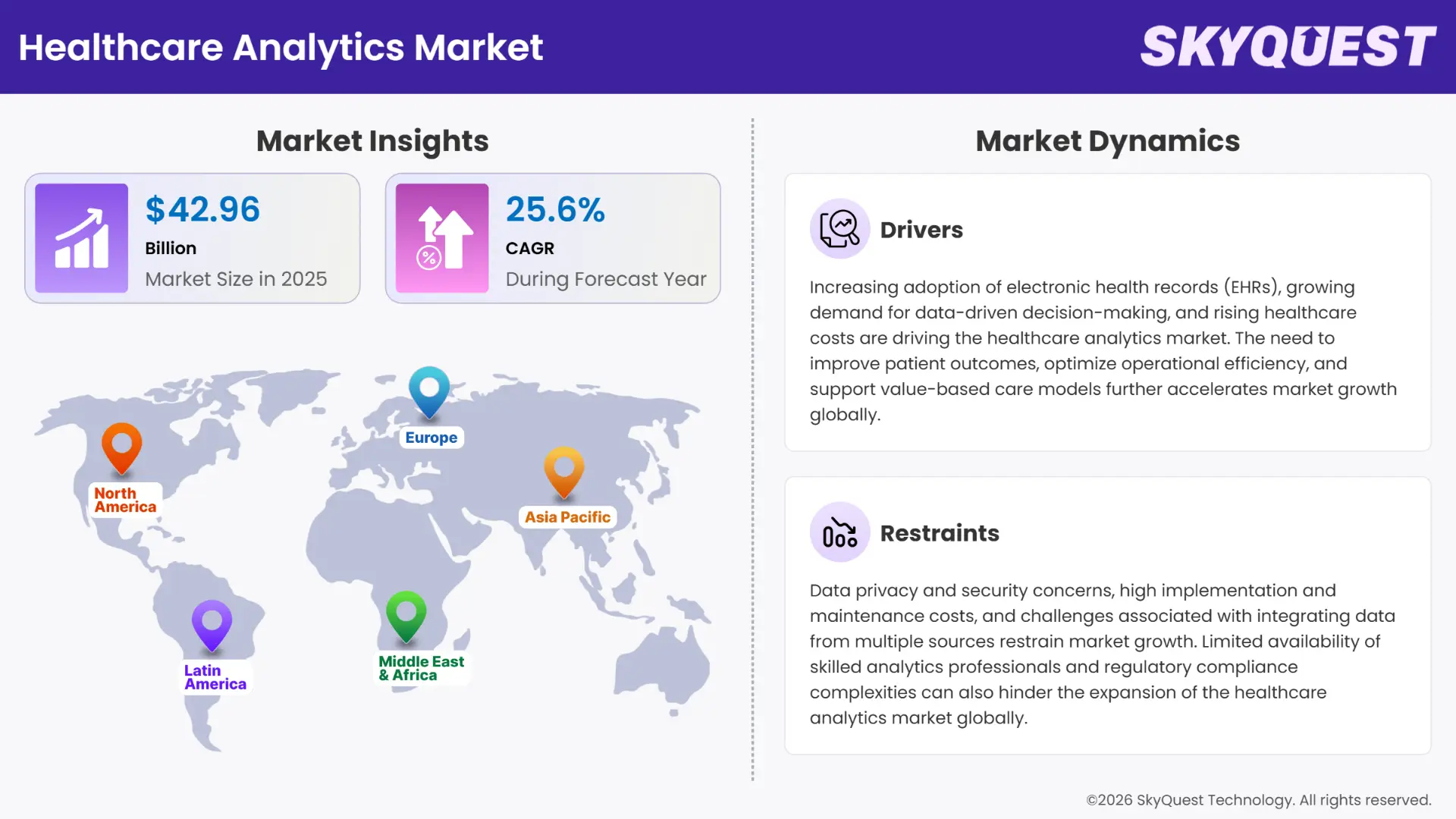
Global Healthcare Analytics Market size was valued at USD 34.2 Billion in 2024 and is poised to grow from USD 42.96 Billion in 2025 to USD 266.03 Billion by 2033, growing at a CAGR of 25.6% during the forecast period (2026–2033).
The healthcare analytics market is witnessing robust growth as healthcare systems globally strive for improved patient outcomes, operational efficiency, and cost reduction. Because there’s rising use of electronic health records (EHRs), a growing set of data needs to be analyzed to draw meaningful insights. The desire for customitized medical care and value-based healthcare strategies is making providers use predictive and prescriptive analytics. With more government efforts promoting healthcare IT and the growth of wearable technology, data is getting better integrated into different healthcare operations.
Yet, the healthcare analytics market is limited by certain factors. Because HIPAA and GDPR are so strict, data privacy concerns prevent healthcare data from being shared and merged easily. Also, since scores of skilled professionals are not available to manage new analytics systems, smaller and mid-sized healthcare facilities struggle to utilize them. Affordable implementation is often difficult due to the required strong IT infrastructure. Despite these problems, the progress of AI and machine learning is helping the market achieve better disease forecasts, early finding of illnesses and better management of people’s health.
One of the primary drivers of the healthcare analytics market is the increasing reliance on data-driven decision-making to enhance clinical outcomes and operational efficiency. Why are healthcare providers increasingly turning to analytics to improve care quality? The answer lies in the rising complexity of patient data and the demand for personalized care pathways. Healthcare analytics tools help providers uncover patterns, reduce diagnostic errors, and monitor treatment effectiveness in real-time. Additionally, with financial pressures mounting, how can hospitals manage costs while maintaining patient satisfaction? Predictive analytics is enabling institutions to optimize staffing, reduce unnecessary testing, and forecast resource utilization, thus controlling costs. Together, these capabilities are pushing hospitals and clinics toward sophisticated analytical platforms to remain competitive and deliver evidence-based care.
The shift toward value-based care models is prompting healthcare systems to adopt advanced analytics tools to comply with evolving regulatory frameworks. But how are these models shaping investment priorities? Under value-based care, reimbursements are tied to outcomes rather than services rendered, requiring organizations to track, report, and improve patient metrics. Moreover, with mandates like HIPAA and the HITECH Act, how can providers ensure compliance while managing massive datasets? Analytics tools with built-in security and audit features help organizations meet stringent compliance standards. These regulatory drivers not only encourage data transparency but also increase the demand for scalable analytics platforms to manage compliance risk and performance monitoring across the care continuum.
To get more insights on this market click here to Request a Free Sample Report
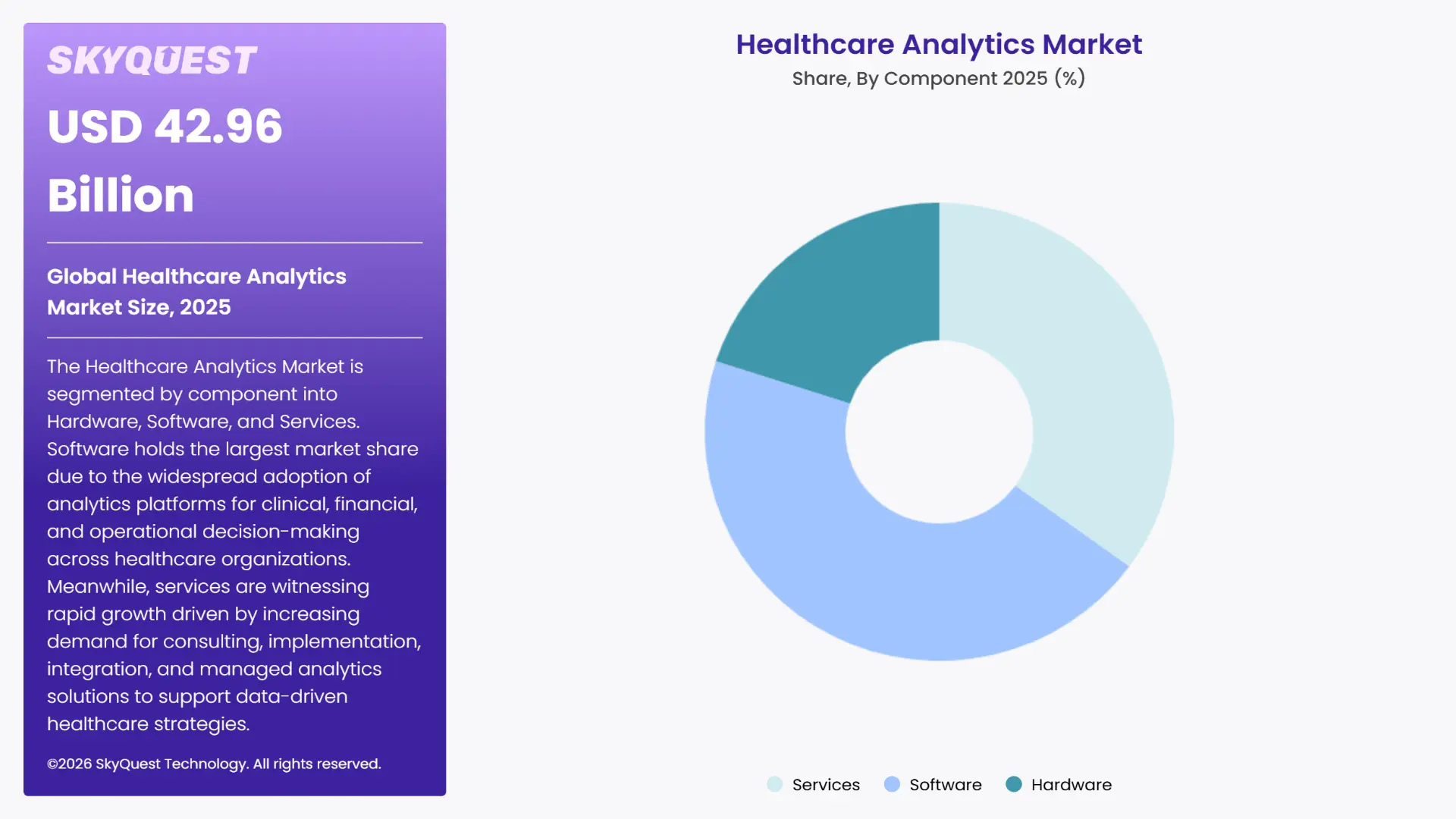
The global healthcare analytics market is segmented by Component, Type, Application, End User and region. Based on Component, the market is segmented into Services and Software. Based on Type, the market is segmented into Descriptive Analytics, Predictive Analytics, Prescriptive Analytics and Diagnostic Analytics. Based on Application, the market is segmented into Financial Analytics, Clinical Analytics, Operational & Administrative Analytics, Population Health Analytics and Others. Based on End User, the market is segmented into Payers, Providers and Pharmaceutical & Medical Device Supply Chain. Based on region, the healthcare analytics market is segmented into North America, Europe, Asia Pacific, Latin America and Middle East & Africa.
Software remains the dominating segment in healthcare analytics due to its critical role in data collection, processing, and visualization. Advanced analytics platforms enable healthcare organizations to integrate vast amounts of clinical, operational, and financial data efficiently. The growth is supported by increasing adoption of AI-powered predictive analytics, real-time data monitoring, and personalized medicine solutions. Additionally, regulatory requirements for data-driven decision-making and the rising emphasis on improving patient outcomes drive software demand. The scalability and flexibility of software solutions also allow healthcare entities to customize analytics as per their needs, further solidifying its dominance.
Healthcare analytics services are the fastest-growing sub-segment, propelled by the need for expert support in data integration, analysis, and strategic decision-making. Organizations are increasingly outsourcing analytics services to leverage specialized skills in big data, machine learning, and clinical informatics. The complexity of healthcare data and the shortage of in-house analytics expertise encourage adoption of consulting, managed, and professional services. Moreover, the shift towards value-based care models creates demand for services that can provide actionable insights to optimize costs and improve care quality, fueling rapid growth.
Payers dominate the healthcare analytics market as they leverage analytics to optimize claims processing, fraud detection, risk stratification, and member management. The growing focus on reducing healthcare costs and enhancing patient engagement compels payers to invest heavily in analytics solutions. Additionally, regulatory pressures and the shift towards value-based reimbursement models increase the demand for data-driven insights to improve care coordination and payment accuracy. Providers represent the fastest growing segment due to their increasing need for clinical decision support, population health management, and operational efficiency improvements. The rising adoption of EHRs and the demand for improved patient outcomes accelerate analytics utilization in hospitals and clinics.
To get detailed segments analysis, Request a Free Sample Report
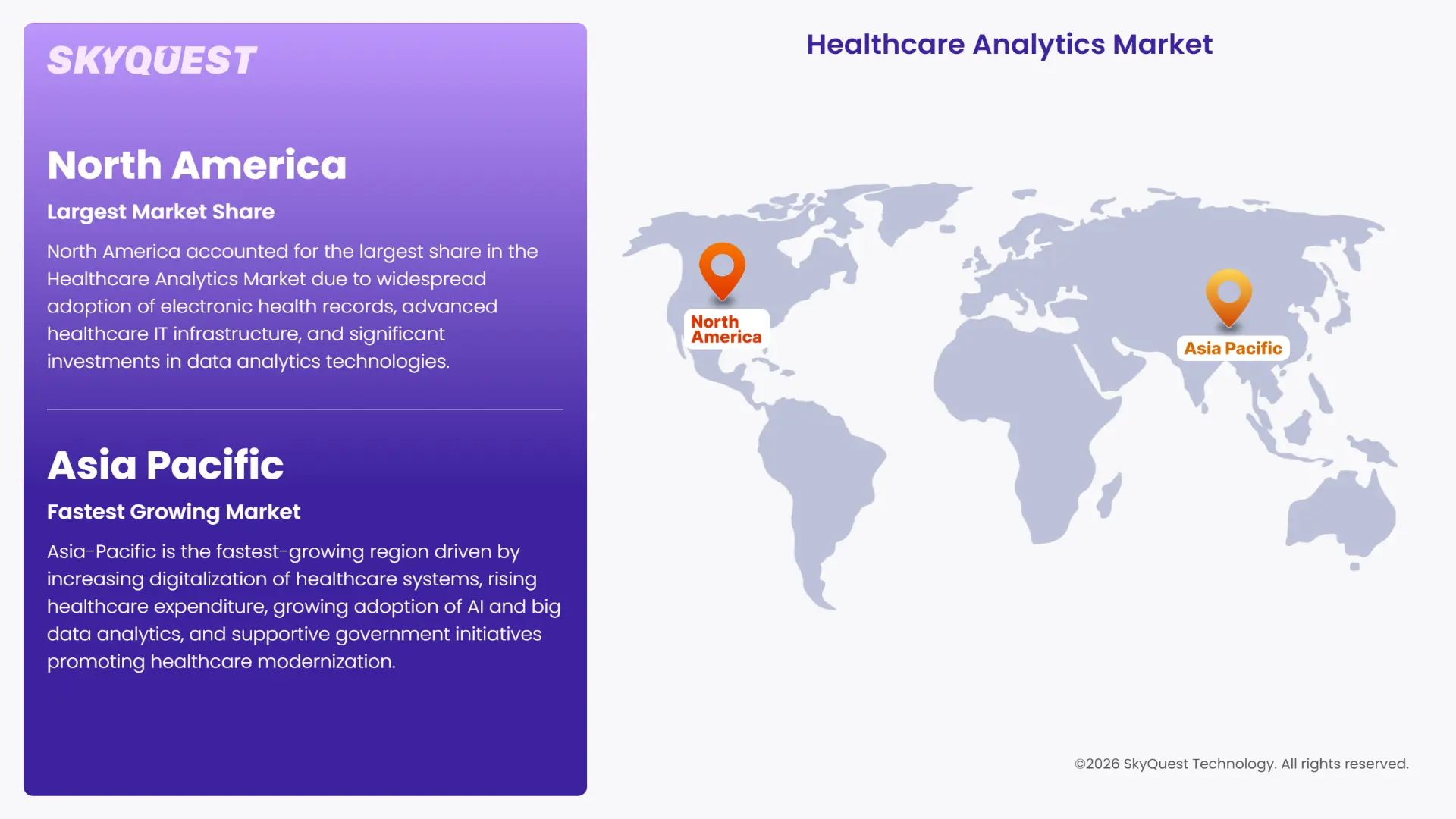
North America leads the global healthcare analytics market growth, driven by substantial healthcare spending, widespread adoption of Electronic Health Records (EHRs), and a strong focus on value-based care models. The integration of advanced technologies like AI and machine learning, along with supportive government initiatives, further propels market growth. The presence of major industry players and a well-established healthcare IT infrastructure also contribute to the region's dominance.
U.S. Healthcare Analytics Market
The U.S. healthcare analytics market share is experiencing significant growth due to the increasing adoption of EHRs and the shift towards value-based care. In March 2024, Microsoft introduced "Microsoft Cloud for Healthcare," aiming to enhance collaboration between patients and providers and improve insights into patient care. Additionally, the Centers for Medicare & Medicaid Services (CMS) reported that healthcare spending is projected to reach $6.2 trillion by 2028, emphasizing the need for efficient analytics solutions to manage costs and improve outcomes.
Canada Healthcare Analytics Market
Canada's healthcare analytics market demand is growing, supported by investments in digital health initiatives and AI integration. In May 2025, Adastra Group, a Canadian data analytics and AI company, expanded its presence by opening a new office in Austin, Texas, to collaborate closely with major partners like AWS and Microsoft. This move underscores Canada's commitment to advancing healthcare analytics and fostering innovation through international partnerships.
The Asia Pacific healthcare analytics market share is the fastest-growing region, fueled by rapid digitalization, increasing healthcare expenditure, and a rising prevalence of chronic diseases. Government initiatives promoting the adoption of EHRs and AI-driven solutions are accelerating market growth. The region's large and aging population further necessitates efficient healthcare analytics to manage resources and improve patient outcomes.
India Healthcare Analytics Market
India's healthcare analytics market trends is expanding rapidly, driven by government initiatives like the Ayushman Bharat Digital Mission (ABDM), which aims to create an integrated digital health infrastructure. In May 2025, Indian healthcare AI startup Qure.AI announced plans to go public within two years, highlighting the country's growing focus on AI-based diagnostic tools for early detection of diseases such as tuberculosis and lung cancer. Additionally, the state of Telangana is pioneering AI-based cancer screening programs to enhance early detection and treatment.
China Healthcare Analytics Market
China holds a significant share of the Asia Pacific healthcare analytics market, driven by substantial investments in health IT infrastructure and AI integration. The government's "Healthy China 2030" initiative emphasizes the use of data-driven approaches to improve healthcare services. In early 2025, the AI system DeepSeek was widely deployed across China's tertiary hospitals, enhancing diagnostic accuracy and streamlining clinical workflows.
Europe's healthcare analytics market share is growing steadily, supported by regulatory frameworks and investments in digital health initiatives. The European Health Data Space (EHDS), implemented in March 2025, aims to facilitate the secure exchange of electronic health data across EU member states, promoting better healthcare delivery and research.
United Kingdom Healthcare Analytics Market
The UK's National Health Service (NHS) is undergoing digital transformation to improve patient care and operational efficiency. Efforts include transitioning from paper-based records to digital systems and implementing unified patient records accessible via the NHS App. Despite challenges such as fragmented IT systems and data privacy concerns, these initiatives aim to modernize healthcare delivery.
Germany Healthcare Analytics Market
Germany is investing in healthcare analytics to enhance patient outcomes and system efficiency. The country is focusing on integrating AI and big data analytics into its healthcare system, supported by government funding and collaborations with technology firms. These efforts aim to improve disease prediction, patient management, and resource allocation within the healthcare sector.
France Healthcare Analytics Market
In 2025, France's healthcare analytics industry is experiencing robust growth, driven by the integration of AI and machine learning technologies. These advancements are enhancing diagnostic accuracy, personalizing treatment plans, and optimizing resource allocation within the healthcare system. The establishment of Europe's largest AI-focused data center in France exemplifies the country's commitment to supporting AI applications in healthcare. Additionally, the Clinnova initiative—a cross-border collaboration involving France, Germany, Switzerland, and Luxembourg—is leveraging federated learning to develop AI algorithms for personalized treatment, particularly in managing chronic diseases like multiple sclerosis.
To know more about the market opportunities by region and country, click here to
Buy The Complete Report
Rising Adoption of Electronic Health Records (EHRs) and Digital Health Tools
Pressure to Reduce Healthcare Costs and Improve Outcomes
Data Privacy and Security Concerns
Interoperability Issues and Data Silos
Request Free Customization of this report to help us to meet your business objectives.
The healthcare analytics market is shaped by a dynamic competitive landscape where key players leverage advanced technologies and strategic partnerships to gain market share. For instance, IBM Watson Health has distinguished itself by integrating AI-driven analytics with clinical decision support, enabling providers to enhance patient outcomes through predictive insights.
Similarly, Optum, a part of UnitedHealth Group, utilizes its vast healthcare data ecosystem to offer population health management and risk adjustment analytics, capitalizing on its payer-provider integration. Meanwhile, smaller innovators like Health Catalyst focus on scalable data platforms tailored to hospital systems, emphasizing interoperability and real-time analytics. Strategic moves such as acquisitions are common; Cerner’s acquisition by Oracle aims to combine cloud infrastructure with robust data analytics to accelerate digital transformation in healthcare. These targeted strategies—ranging from AI adoption and cloud migration to mergers and ecosystem expansion—highlight how companies are not just competing on technology but also on holistic data integration and actionable intelligence to drive value-based care.
SkyQuest’s ABIRAW (Advanced Business Intelligence, Research & Analysis Wing) is our Business Information Services team that Collects, Collates, Correlates, and Analyses the Data collected using Primary Exploratory Research backed by robust Secondary Desk research.
As per SkyQuest analysis, The healthcare analytics market is witnessing robust growth, driven primarily by the escalating need to improve patient outcomes and reduce healthcare costs. A key driver of this market is the growing adoption of data-driven decision-making across healthcare systems. With the increasing volume of healthcare data generated from electronic health records (EHRs), wearable devices, and remote patient monitoring tools, analytics solutions are becoming critical for deriving actionable insights. These insights help healthcare organizations identify at-risk populations, personalize treatment plans, streamline operations, and optimize resource utilization—leading to better care delivery and financial performance.
Despite its potential, the market faces restraints due to concerns over data privacy and interoperability. Regulatory complexities, such as compliance with HIPAA and GDPR, along with fragmented IT infrastructures, hinder seamless data integration and limit the widespread implementation of analytics platforms. North America dominates the global healthcare analytics market due to advanced healthcare IT infrastructure, strong regulatory support, and high adoption of electronic health records. By component, the software segment leads the market, offering predictive, prescriptive, and descriptive analytics tools. Among end users, payers are the dominant segment, leveraging analytics to manage claims, reduce fraud, assess risk, and enhance member health outcomes.
| Report Metric | Details |
|---|---|
| Market size value in 2024 | USD 34.2 Billion |
| Market size value in 2033 | USD 266.03 Billion |
| Growth Rate | 25.6% |
| Base year | 2024 |
| Forecast period | 2026–2033 |
| Forecast Unit (Value) | USD Billion |
| Segments covered |
|
| Regions covered | North America (US, Canada), Europe (Germany, France, United Kingdom, Italy, Spain, Rest of Europe), Asia Pacific (China, India, Japan, Rest of Asia-Pacific), Latin America (Brazil, Rest of Latin America), Middle East & Africa (South Africa, GCC Countries, Rest of MEA) |
| Companies covered |
|
| Customization scope | Free report customization with purchase. Customization includes:-
|
To get a free trial access to our platform which is a one stop solution for all your data requirements for quicker decision making. This platform allows you to compare markets, competitors who are prominent in the market, and mega trends that are influencing the dynamics in the market. Also, get access to detailed SkyQuest exclusive matrix.
Table Of Content
Executive Summary
Market overview
Parent Market Analysis
Market overview
Market size
KEY MARKET INSIGHTS
COVID IMPACT
MARKET DYNAMICS & OUTLOOK
Market Size by Region
KEY COMPANY PROFILES
Methodology
For the Healthcare Analytics Market, our research methodology involved a mixture of primary and secondary data sources. Key steps involved in the research process are listed below:
1. Information Procurement: This stage involved the procurement of Market data or related information via primary and secondary sources. The various secondary sources used included various company websites, annual reports, trade databases, and paid databases such as Hoover's, Bloomberg Business, Factiva, and Avention. Our team did 45 primary interactions Globally which included several stakeholders such as manufacturers, customers, key opinion leaders, etc. Overall, information procurement was one of the most extensive stages in our research process.
2. Information Analysis: This step involved triangulation of data through bottom-up and top-down approaches to estimate and validate the total size and future estimate of the Healthcare Analytics Market.
3. Report Formulation: The final step entailed the placement of data points in appropriate Market spaces in an attempt to deduce viable conclusions.
4. Validation & Publishing: Validation is the most important step in the process. Validation & re-validation via an intricately designed process helped us finalize data points to be used for final calculations. The final Market estimates and forecasts were then aligned and sent to our panel of industry experts for validation of data. Once the validation was done the report was sent to our Quality Assurance team to ensure adherence to style guides, consistency & design.
Analyst Support
Customization Options
With the given market data, our dedicated team of analysts can offer you the following customization options are available for the Healthcare Analytics Market:
Product Analysis: Product matrix, which offers a detailed comparison of the product portfolio of companies.
Regional Analysis: Further analysis of the Healthcare Analytics Market for additional countries.
Competitive Analysis: Detailed analysis and profiling of additional Market players & comparative analysis of competitive products.
Go to Market Strategy: Find the high-growth channels to invest your marketing efforts and increase your customer base.
Innovation Mapping: Identify racial solutions and innovation, connected to deep ecosystems of innovators, start-ups, academics, and strategic partners.
Category Intelligence: Customized intelligence that is relevant to their supply Markets will enable them to make smarter sourcing decisions and improve their category management.
Public Company Transcript Analysis: To improve the investment performance by generating new alpha and making better-informed decisions.
Social Media Listening: To analyze the conversations and trends happening not just around your brand, but around your industry as a whole, and use those insights to make better Marketing decisions.
REQUEST FOR SAMPLE
 REQUEST FREE CUSTOMIZATION
The growth of the healthcare analytics market is limited because of concerns around data privacy, regulations such as HIPAA, GDPR, interoperability challenges, fragmented legacy systems, and a shortage of skills and expertise particularly among the smaller and mid-size healthcare organizations.
Artificial Intelligence is changing the way health care analytics solutions analyze data. It supports an improved ability to predict disease, diagnose disease earlier and help reduce costs and improved outcomes by facilitating personalized care. It improves decision support, enhancements to workflows, and moves management towards the real-time data driven enhancement to healthcare operations and population health management.
Health care analytics can be applied to several areas including; financial analytics (claims, fraud detection), clinical analytics (decision support, quality enhancement), operational analytics (staffing, supply chain), and population health management with the overall goal of enhancing quality and eliminate waste or duplicative efforts.
While payers lead the pack as primary end-users of analytic platforms and tools, providers are the fastest growing end-users and these are mainly focused on supporting providers' clinical decisions, operational efficiency, and improvement in patient care delivery. Suppliers and stakeholders in the pharma space are also gaining tremendously from analytics.
The adoption of electronic health records has provided an unparalleled opportunity for the analytics market to scale due to the volume of patient data and the continuing generation of real time information, data analytics is the backbone to predictive modeling and personalized treatment decisions/actions, they are not limited to predicting an outcome but also regulatory mandates and parcel compliance considerations at all points in the patient's care experience.
Care policies and regulations, including HIPAA, GDPR and the move to value-based care, are promoting the adoption of analytics given there are regulatory requirements for protecting data and reimbursement is based on outcome-based care. In addition, financial incentives provided primarily to a healthcare organization for electronic health record, the government is promoting transparent, efficient, and regulated healthcare systems designed through improved analytics.
Global Healthcare Analytics Market size was valued at USD 34.2 Billion in 2024 and is poised to grow from USD 42.96 Billion in 2025 to USD 266.03 Billion by 2033, growing at a CAGR of 25.6% during the forecast period (2026–2033).
Optum, Inc., SAS Institute Inc., Oracle Health (Cerner), Merative, Health Catalyst, Inovalon, Veradigm LLC, Cotiviti, Inc., MedeAnalytics, Inc., IQVIA, CitiusTech Inc., Apixio, Inc., HealthEC, LLC, Komodo Health, Sisense Ltd., McKesson Corporation, EXLService Holdings, Tredence Inc., Arcadia Solutions, LLC, Aetion, Inc.
The key driver of the healthcare analytics market is the growing need to improve healthcare quality and operational efficiency by leveraging data insights for predictive analytics, population health management, cost reduction, and informed decision-making in hospitals, clinics, and insurance providers.
A key market trend in the healthcare analytics market is the adoption of artificial intelligence and machine learning, enabling predictive modeling, real-time patient monitoring, personalized treatment plans, and enhanced clinical and operational decision-making.
North America accounted for the largest share in the healthcare analytics market, driven by advanced healthcare infrastructure, high adoption of digital technologies, strong investment in data-driven solutions, and the presence of leading analytics solution providers.


Want to customize this report? This report can be personalized according to your needs. Our analysts and industry experts will work directly with you to understand your requirements and provide you with customized data in a short amount of time. We offer $1000 worth of FREE customization at the time of purchase.
Feedback From Our Clients


 USA (+1) 351-333-4748

