Hamster Ovary (CHO) Fc-Fusion Protein Market
Report ID: SQMIG35H2463
Report ID: SQMIG35H2463
[email protected]
USA +1 351-333-4748
Report ID:
SQMIG35H2463 |
Region:
Global |
Published Date: March, 2026
Pages:
157
|Tables:
116
|Figures:
77


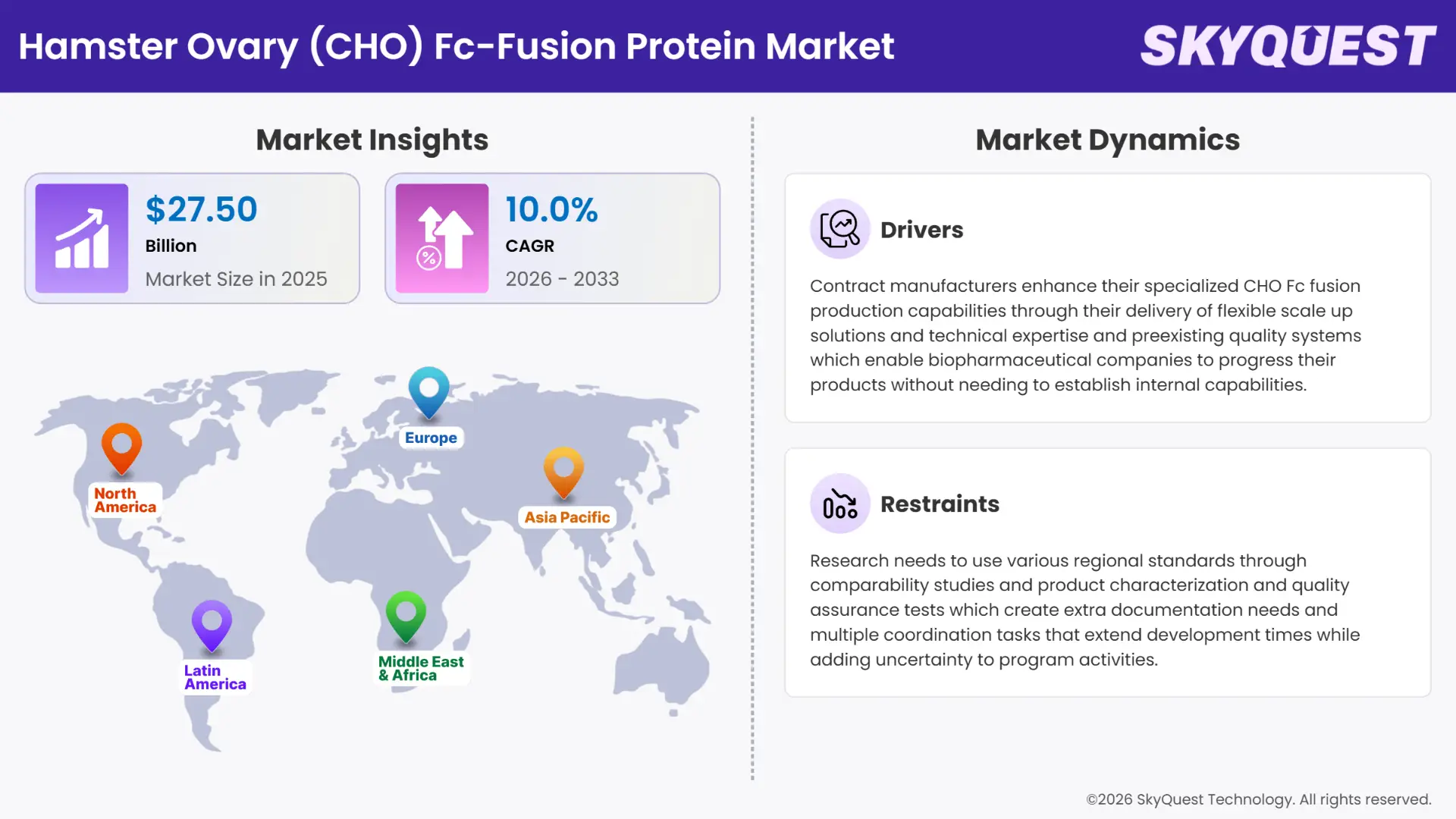
Global Hamster Ovary (Cho) Fc-Fusion Protein Market size was valued at USD 25.00 Billion in 2024 and is poised to grow from USD 27.50 Billion in 2025 to USD 58.95 Billion by 2033, growing at a CAGR of 10.0% during the forecast period (2026-2033).
The global hamster ovary (CHO) fc-fusion protein market growth requires biologics with receptor domains and Fc scaffolds because these products deliver superior efficacy and extended half-life and immune response control. The market includes development and production of Fc fusion drugs which utilize Chinese hamster ovary cell lines to create human-like glycosylation products that can be scaled up for production. The treatment of autoimmune diseases saw a transformation through Fc fusion medications which include etanercept and abatacept, while these drugs established both manufacturing methods and regulatory standards.
Moreover, the global hamster ovary (CHO) fc-fusion protein market outlook evolved from successful single-molecule discoveries to a diverse range of development pipelines, while contract manufacturing organization capacity expanded, and biosimilar products changed the pricing models and market accessibility. The CHO platform has reached improved production capacity after academic research established a link between clinical needs for extensive biologic therapy and technological progress in CHO platform production efficiency. Fc fusion technologies have become essential for drug sponsors because they want to decrease patient drug administration times in response to increasing chronic immunological disease rates. Higher titers and robust glycosylation lead to lower costs per gram, which results in payers covering more therapies while also financing drug development across the world. The real-world situation creates three outcomes, which include increasing biosimilar market presence, improving accessibility for emerging markets and achieving quicker market entry through single-use bioreactor systems and analytics-based scaling processes, which develop commercial opportunities for new businesses.
How is AI Transforming the Hamster Ovary (CHO) Fc-fusion Protein Market?
CHO fc-fusion proteins represent valuable biologic products which researchers create through CHO cell systems, while scientists need to manage both the design of sequences and the control of glycosylation and the construction of enduring cell lines. AI technology enables developers to use predictive protein engineering methods together with intelligent clone selection and data-backed process improvements to revolutionize their entire development workflow. The manufacturing process now experiences decreased uncertainty because organizations can complete product development faster and deliver higher-quality products to the market. The real-world implementation shows organizations which work with AI-enabled design, use industrial cell line platforms and AI-based protein engineering platforms that specialize in developing fc fusion products, to enhance their development process and scaling efficiency.
WhiteLab Genomics announced a partnership with Cytiva in September 2025 to develop AI-driven predictive systems that do stable cell line development through accelerated clone selection which decreases development time and results in more efficient CHO Fc fusion production
To get more insights on this market click here to Request a Free Sample Report
The global hamster ovary (CHO) fc-fusion protein market is segmented by therapeutic indication, fusion partner type, production strategy, molecular architecture, and region. Based on therapeutic indication, the market is categorized into autoimmune disorders, oncology and hematology, and rare genetic diseases. In terms of fusion partner type, it is divided into receptor-Fc fusion, peptide-Fc fusion, and antigen-Fc fusion. By production strategy, the market includes transient expression, stable cell line development, and high-titer perfusion platforms. Based on molecular architecture, the segmentation comprises monomeric Fc-fusion and dimeric or multimeric Fc-fusion proteins. Geographically, the market is segmented into North America, Europe, Asia Pacific, Latin America, and the Middle East & Africa.
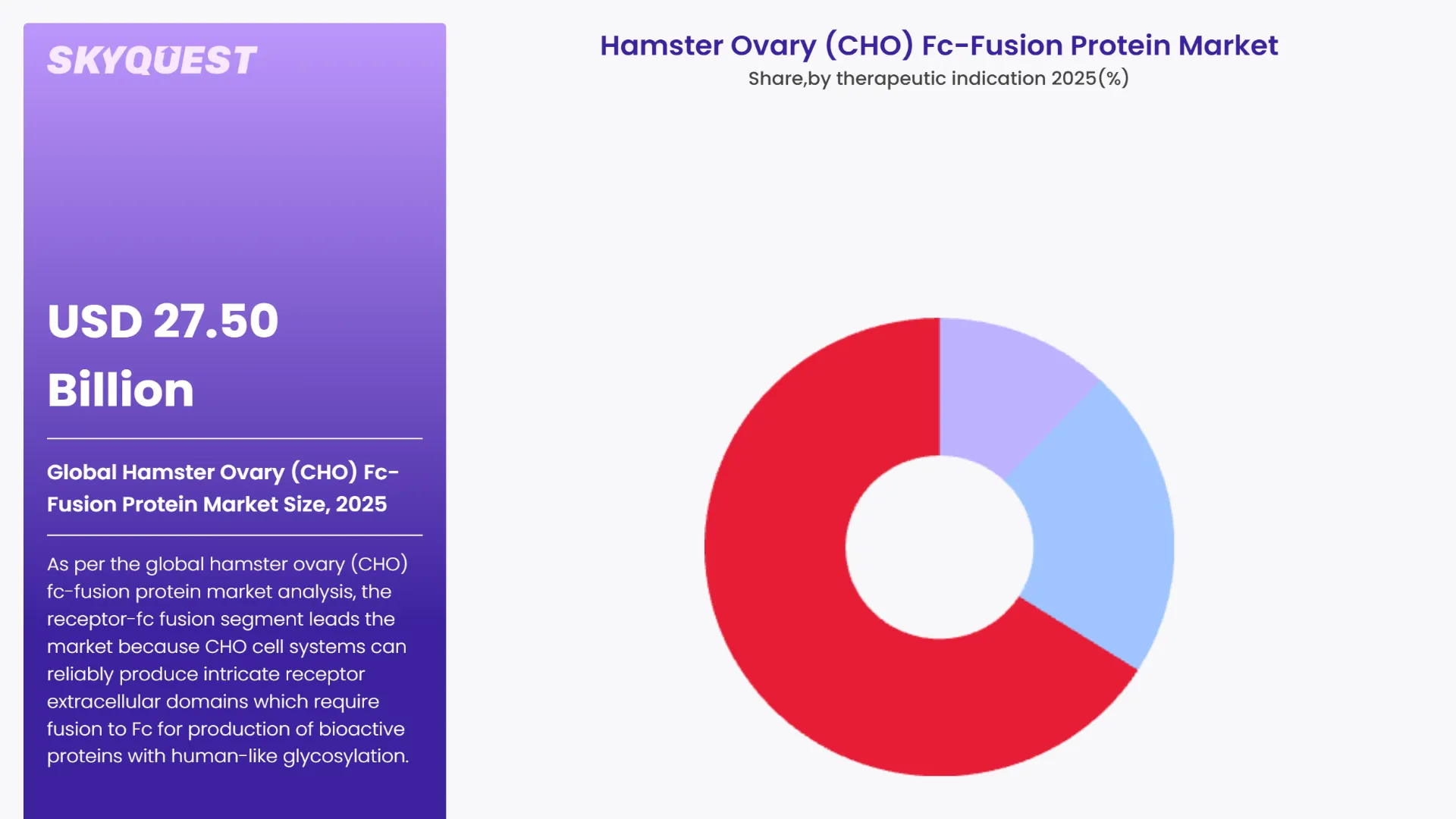
As per the global hamster ovary (CHO) fc-fusion protein market analysis, the receptor-fc fusion segment leads the market because CHO cell systems can reliably produce intricate receptor extracellular domains which require fusion to Fc for production of bioactive proteins with human-like glycosylation. The established therapeutic foundation of receptor-based treatments together with developed manufacturing processes and predictable product delivery, leads developers to choose this method, because it decreases their technical challenges, while maintaining their production schedule.
However, the most rapidly growing field in research focuses on peptide-fc fusion because researchers use modular peptide scaffolds to speed up the hit-to-lead process by creating new drugs with extended half-life through easy development. Researchers can use the CHO Fc-fusion ecosystem to create novel commercialization pathways which allow rapid clinical development of specialized treatments while flexible drug designs enable broader therapeutic applications.
According to the global hamster ovary (CHO) fc-fusion protein market forecast, the stable cell line development leads the market because CHO production systems create consistent expression results which produce standardized glycosylation patterns and high-quality output required for developing advanced Fc-fusion drugs. Master cell banks help commercial supply chains of developers who produce chronic treatments, because these banks help workers control manufacturing processes through established workflows, which help workers understand regulatory boundaries and predictable product performance.
Whereas the high-titer perfusion platforms category is anticipated to have the largest hamster ovary (CHO) fc-fusion protein market share because continuous culture allows CHO systems to maintain productivity through reduced facility needs and accelerated clinical supply production. Process intensification, single-use integration and demand for flexible, cost-efficient manufacturing create faster base-up pathways for businesses to grow their operations while improving their product life value.
To get detailed segments analysis, Request a Free Sample Report
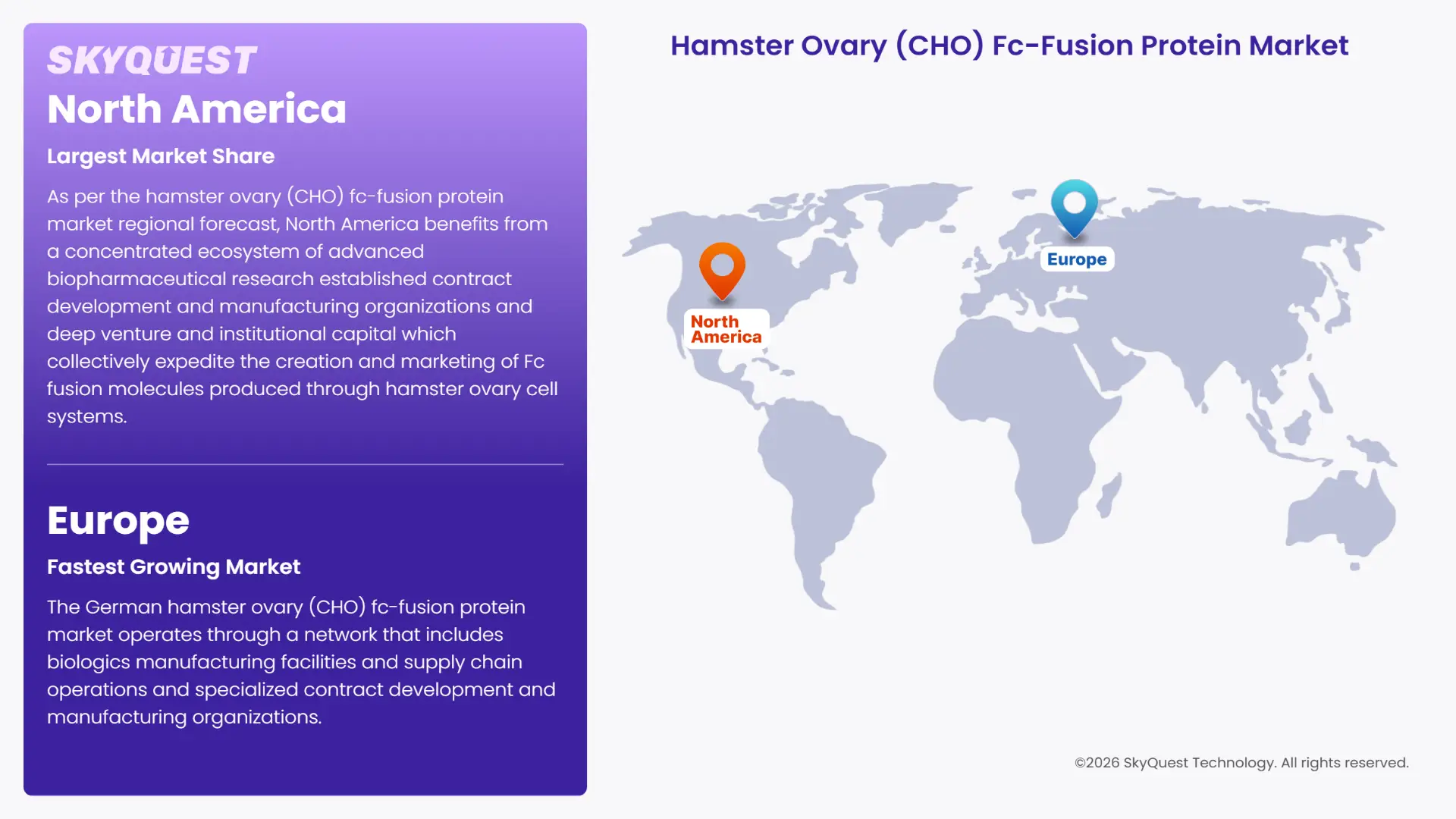
As per the hamster ovary (CHO) fc-fusion protein market regional forecast, North America benefits from a concentrated ecosystem of advanced biopharmaceutical research established contract development and manufacturing organizations and deep venture and institutional capital which collectively expedite the creation and marketing of Fc fusion molecules produced through hamster ovary cell systems. The combination of strong regulatory infrastructure and established payer and clinical networks enable businesses to quickly adopt products and reach their target markets. The scientific workforce and nearby academic and industrial research facilities enable innovation to occur in cell line engineering and manufacturing processes. The region establishes itself as a key location for development manufacturing and commercialization of CHO derived Fc fusion therapeutics through its active partnerships between industry and academic institutions and its early implementation of platform technologies and quality by design methods.
The hamster ovary (CHO) fc-fusion protein sector in the United States demonstrates high market density through its numerous biopharma companies and established contract manufacturers and its clinical trial facilities. The market benefits from strong market development support and established commercialization pathways which enable rapid market translation of new product development. The skilled talent pool, together with academic research centers, allows for innovation in cell line optimization and process intensification, which strengthens market leadership in CHO based Fc fusion development and production.
The Canadian hamster ovary (CHO) fc-fusion protein industry demonstrates biopharmaceutical services growth through its regulatory regime and expanding network of contract manufacturers and research organizations. Academic centers work with emerging biotech firms to accelerate CHO system translation of Fc fusion candidates. Government and regional innovation programs enhance access to expertise and pilot manufacturing capacity, positioning Canada as a complementary market for development partnerships and specialized manufacturing services.
The biotechnology clusters of Europe together with integrated clinical infrastructure and harmonized regulatory pathways, lead to rapid expansion since these elements facilitate development of CHO derived fc fusion proteins. Strong public and private research institutions, coupled with supportive national innovation programs and established manufacturing capacity, enable efficient translation from discovery to scale. The market dynamics involve an increasing number of local biotech companies forming partnerships with international contract manufacturing organizations, biosimilar products that use CHO platforms are becoming more popular, as well as research focusing on developing advanced manufacturing technologies.
The German hamster ovary (CHO) fc-fusion protein market operates through a network that includes biologics manufacturing facilities and supply chain operations and specialized contract development and manufacturing organizations. Engineering capabilities and technical expertise support process scale up and optimization. Research institutes and industry partners work together to develop cell lines which enable Germany to become a key production and technology transfer center for CHO based Fc fusion therapeutics.
The hamster ovary (CHO) fc-fusion protein market in the United Kingdom benefits from translational research strengths, academic biotech clusters, and funding mechanisms that support early development. The promotion of innovation leads to increased use of new cell lines and process technology. The university and clinical center and contract service provider partnership enable candidates to progress through development stages. The regulatory pathways and commercial infrastructure enable CHO-based Fc fusion therapies to move from initial discovery throughout their entire market journey.
The French hamster ovary (CHO) fc-fusion protein market shows expansion through increased biotech investments and supportive innovation programs and strong industry-academic research collaboration. The CHO-based processes can be scaled through the use of centers of excellence and contract manufacturing resources. The development of early-stage candidates into clinical supply capability receives funding and collaborative development support, which establishes France as an emerging leader in European CHO based Fc fusion manufacturing.
Asia Pacific improves its market position through three main strategies which include focused investments to build biomanufacturing facilities, modernized regulatory frameworks that help bioprocess approval, and increased technical capabilities for cell line development and process engineering. Public sector funding and private sector funding both help develop CHO based Fc fusion therapeutics through technology transfer and local manufacturing while multinational agreements help boost operational capabilities and product quality.
Biopharmaceutical companies in Japan establish the foundation that supports hamster ovary (CHO) fc-fusion protein market through their research institutions and their regulatory compliance and their advanced manufacturing capabilities. CHO-based fc fusion production can be scaled up successfully because analytical development and process control and automation functions work together to support all production stages. The cell line engineering field develops new innovations through partnerships between academic institutions and industrial organizations. The Japanese market produces fc fusion therapeutics through rigorous regulatory processes and stringent quality control measures.
The South Korean hamster ovary (CHO) fc-fusion protein market trends show three main characteristics which include active development in the biotech industry and strong backing for production facilities and contract manufacturing services which are currently growing in number. Research teams need to develop new CHO-based Fc fusion therapeutics through major technological changes and process enhancements. South Korea builds clinical and commercial production capabilities through public and private sector funding which supports advanced facilities and international collaborations and workforce development programs.
To know more about the market opportunities by region and country, click here to
Buy The Complete Report
Expansion Of Contract Manufacturing
Advances In Cell Line Engineering
Complex Regulatory Requirements
High Production and Operational Costs
Request Free Customization of this report to help us to meet your business objectives.
The global hamster ovary (CHO) fc-fusion protein market experiences competitive dynamics through targeted licensing agreements and acquisition deals together with platform technology differentiation which major companies use to obtain SIRPalpha Fc assets and smaller biotechs use to obtain regional licensing rights for business growth. Pfizer secured Trillium assets through acquisition; HanchorBio established licensing agreements to boost market presence, and recombinant Fc candidates like NVG-2089 advanced platform development.
SkyQuest’s ABIRAW (Advanced Business Intelligence, Research & Analysis Wing) is our Business Information Services team that Collects, Collates, Correlates, and Analyses the Data collected by means of Primary Exploratory Research backed by robust Secondary Desk research.
As per SkyQuest analysis, the global CHO fc-fusion protein market expands because patients need long-acting biologics with high efficacy which use receptor domains and Fc scaffolds to extend half-life and achieve better immune modulation. The second major driver accelerates candidate progression and manufacturability of AI-enabled protein design and data-driven process optimization. North America leads the market because it has extensive research facilities and CDMO manufacturing capacity, and it receives substantial financial backing. Receptor-fc fusion proteins lead the market because they have been clinically proven to work, and they can be produced through CHO systems. The need to meet complex regulatory requirements makes development more difficult because it extends project timelines while raising standards for product comparability and quality assessment.
| Report Metric | Details |
|---|---|
| Market size value in 2024 | USD 25.00 Billion |
| Market size value in 2033 | USD 58.95 Billion |
| Growth Rate | 10.0% |
| Base year | 2024 |
| Forecast period | 2026-2033 |
| Forecast Unit (Value) | USD Billion |
| Segments covered |
|
| Regions covered | North America (US, Canada), Europe (Germany, France, United Kingdom, Italy, Spain, Rest of Europe), Asia Pacific (China, India, Japan, Rest of Asia-Pacific), Latin America (Brazil, Rest of Latin America), Middle East & Africa (South Africa, GCC Countries, Rest of MEA) |
| Companies covered |
|
| Customization scope | Free report customization with purchase. Customization includes:-
|
To get a free trial access to our platform which is a one stop solution for all your data requirements for quicker decision making. This platform allows you to compare markets, competitors who are prominent in the market, and mega trends that are influencing the dynamics in the market. Also, get access to detailed SkyQuest exclusive matrix.
Table Of Content
Executive Summary
Market overview
Parent Market Analysis
Market overview
Market size
KEY MARKET INSIGHTS
COVID IMPACT
MARKET DYNAMICS & OUTLOOK
Market Size by Region
KEY COMPANY PROFILES
Methodology
For the Hamster Ovary (CHO) Fc-Fusion Protein Market, our research methodology involved a mixture of primary and secondary data sources. Key steps involved in the research process are listed below:
1. Information Procurement: This stage involved the procurement of Market data or related information via primary and secondary sources. The various secondary sources used included various company websites, annual reports, trade databases, and paid databases such as Hoover's, Bloomberg Business, Factiva, and Avention. Our team did 45 primary interactions Globally which included several stakeholders such as manufacturers, customers, key opinion leaders, etc. Overall, information procurement was one of the most extensive stages in our research process.
2. Information Analysis: This step involved triangulation of data through bottom-up and top-down approaches to estimate and validate the total size and future estimate of the Hamster Ovary (CHO) Fc-Fusion Protein Market.
3. Report Formulation: The final step entailed the placement of data points in appropriate Market spaces in an attempt to deduce viable conclusions.
4. Validation & Publishing: Validation is the most important step in the process. Validation & re-validation via an intricately designed process helped us finalize data points to be used for final calculations. The final Market estimates and forecasts were then aligned and sent to our panel of industry experts for validation of data. Once the validation was done the report was sent to our Quality Assurance team to ensure adherence to style guides, consistency & design.
Analyst Support
Customization Options
With the given market data, our dedicated team of analysts can offer you the following customization options are available for the Hamster Ovary (CHO) Fc-Fusion Protein Market:
Product Analysis: Product matrix, which offers a detailed comparison of the product portfolio of companies.
Regional Analysis: Further analysis of the Hamster Ovary (CHO) Fc-Fusion Protein Market for additional countries.
Competitive Analysis: Detailed analysis and profiling of additional Market players & comparative analysis of competitive products.
Go to Market Strategy: Find the high-growth channels to invest your marketing efforts and increase your customer base.
Innovation Mapping: Identify racial solutions and innovation, connected to deep ecosystems of innovators, start-ups, academics, and strategic partners.
Category Intelligence: Customized intelligence that is relevant to their supply Markets will enable them to make smarter sourcing decisions and improve their category management.
Public Company Transcript Analysis: To improve the investment performance by generating new alpha and making better-informed decisions.
Social Media Listening: To analyze the conversations and trends happening not just around your brand, but around your industry as a whole, and use those insights to make better Marketing decisions.
REQUEST FOR SAMPLE
 REQUEST FREE CUSTOMIZATION
Global Hamster Ovary (Cho) Fc-Fusion Protein Market size was valued at USD 25.0 Billion in 2024 and is poised to grow from USD 27.5 Billion in 2025 to USD 58.95 Billion by 2033, growing at a CAGR of 10.0% during the forecast period (2026-2033).
Competition in the global CHO Fc fusion protein market is driven by targeted licensing, acquisitions, and platform differentiation, with major firms buying SIRPalpha Fc assets to secure pipelines and smaller biotechs licensing regional rights to scale. Examples include Pfizer acquiring Trillium assets, HanchorBio licensing deals to expand commercialization, and recombinant Fc candidates such as NVG-2089 pushing platform innovation. 'Amgen', 'Bristol Myers Squibb', 'Sanofi', 'Eli Lilly', 'Alphamab Oncology', 'Acceleron Pharma', 'Roche', 'Pfizer', 'Regeneron', 'Alexion', 'Biogen', 'Samsung Biologics', 'Lonza', 'WuXi Biologics', 'Boehringer Ingelheim', 'Fujifilm Diosynth', 'Catalent', 'Sartorius', 'Cytiva', 'Merck KGaA'
Contract manufacturers are expanding specialized CHO Fc fusion production capabilities, providing flexible scale up, technical expertise, and established quality systems that enable biopharmaceutical developers to advance candidates without building in house capacity. By offering process development, analytical support, and regulatory familiarity, these partners reduce operational burdens and allow sponsors to allocate resources toward discovery and clinical strategy. Enhanced external manufacturing options facilitate faster commercialization pathways, lower fixed investment barriers, and distribute development risk, thereby supporting broader adoption of CHO based Fc fusion production across diverse market players.
Platform Consolidation: Consolidation of CHO-based expression platforms is driving efficiency across development and manufacturing by standardizing cell lines, workflows and analytics. Integrated platforms enable predictable product quality and reproducible processes, encouraging developers and service providers to adopt shared technologies and scalable formats. This trend promotes deeper partnerships between biotechs and CDMOs, accelerates platform-driven transferability, and supports investments in process intensification, automation and quality-by-design. Collectively these dynamics streamline development pathways, reduce technical variability, and improve strategic alignment between discovery, development and commercial manufacturing.
North America Dominate the Global Hamster Ovary (CHO) Fc-Fusion Protein Market.
The Autoimmune Disorders segment accounts for a significant share of the market due to the extensive use of Fc-fusion therapeutics in treating chronic inflammatory and immune-mediated diseases.
Receptor-Fc Fusion proteins dominate the market because they have a strong clinical track record, established manufacturing processes, and proven therapeutic effectiveness across multiple disease areas.
AI is transforming the market through predictive protein engineering, intelligent clone selection, process optimization, and accelerated cell-line development, helping manufacturers reduce development timelines and improve product quality.


Want to customize this report? This report can be personalized according to your needs. Our analysts and industry experts will work directly with you to understand your requirements and provide you with customized data in a short amount of time. We offer $1000 worth of FREE customization at the time of purchase.
Feedback From Our Clients


 USA (+1) 351-333-4748

