Hamster Ovary (CHO) Clotting Factors Market
Report ID: SQMIG35H2460
Report ID: SQMIG35H2460
[email protected]
USA +1 351-333-4748
Report ID:
SQMIG35H2460 |
Region:
Global |
Published Date: March, 2026
Pages:
157
|Tables:
115
|Figures:
77


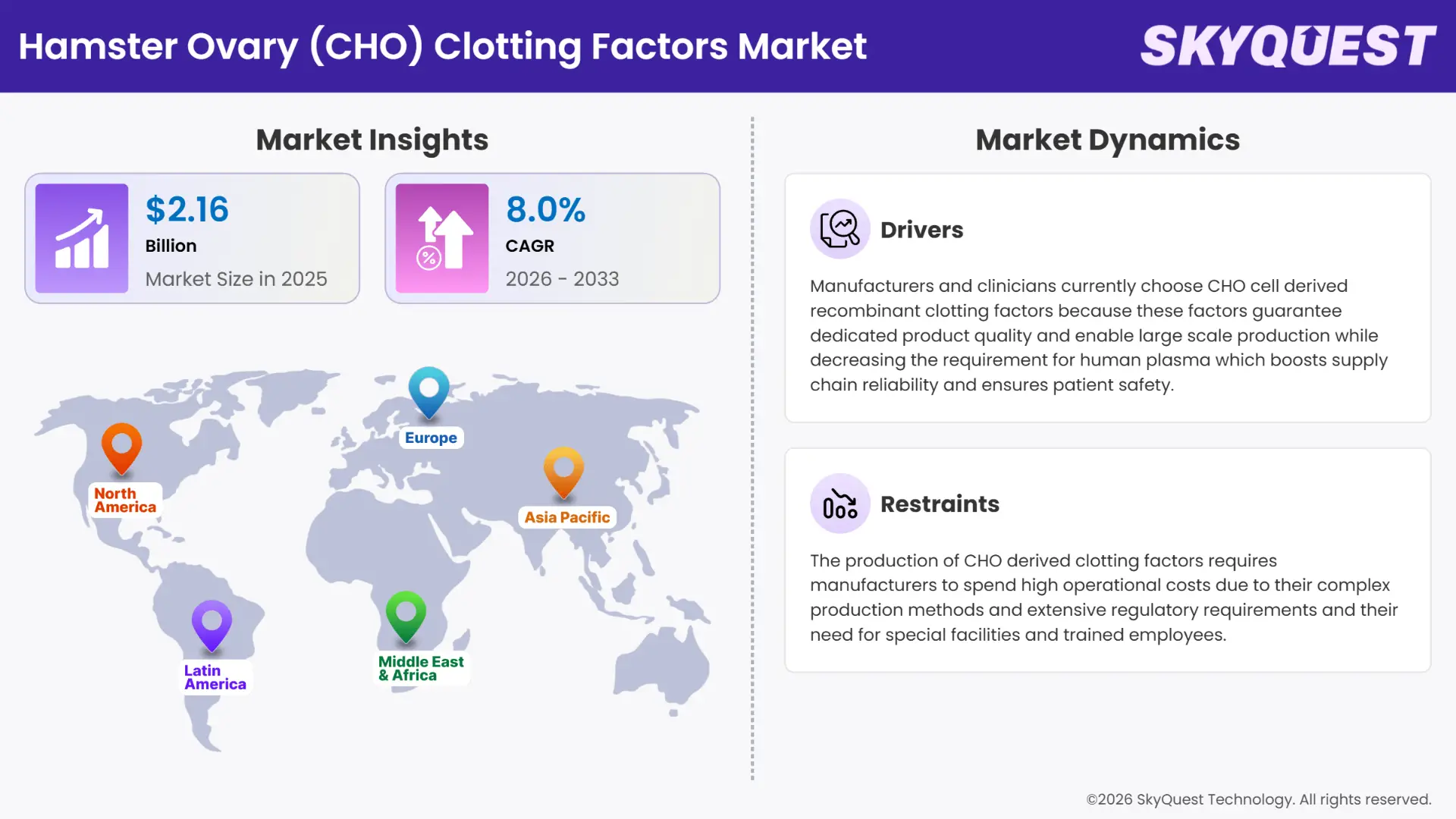
Global Hamster Ovary (Cho) Clotting Factors Market size was valued at USD 2.0 Billion in 2024 and is poised to grow from USD 2.16 Billion in 2025 to USD 4.0 Billion by 2033, growing at a CAGR of 8.0% during the forecast period (2026-2033).
Key Takeaways: Market Trends & Insights
The CHO cell-based manufacturing process for human clotting factors has replaced plasma-derived products which presents a challenge for therapeutic safety and product distribution reliability and product testing requirements. The market includes recombinant Factor VIII and IX therapies which are used for hemophilia treatment because they decrease the risk of pathogen transmission while molecular engineering extends product lifespan and treatment effectiveness.
Moreover, the global hamster ovary (CHO) clotting factors market outlook developed from limited plasma resources to bioprocessing methods which enabled the commercial production of CHO-expressed clotting factors while regulatory frameworks permitted increasing funding which resulted in broader market adoption. Market growth occurs through advanced CHO cell engineering and downstream processing which boosts product yields and decreases manufacturing expenses to enable more hemophilia patients to receive preventive clotting factor treatment and less hospitalization. Manufacturers expand their production capacity because higher yields drive them to invest, which leads to increased price competition and entry of biosimilars into the market especially in Asia-Pacific countries where there is ongoing unmet medical need. The demands for pediatric prophylaxis programs and perioperative management and rapid response to acquired bleeding disorders drive real-world cases that require increased volume. Digital bioprocessing tools for contract manufacturing and glycoengineering which create products with extended half-life and digital bioprocessing tools provide opportunities for businesses to develop products which decrease time needed to reach markets while enabling them to operate in more distant markets.
How is AI Enhancing Productivity in the Hamster Ovary (CHO) Clotting Factors Market?
The global hamster ovary (CHO) clotting factors market growth is driven through AI technology which speeds up cell line creation while maintaining product quality throughout the development process. The core technology elements include machine learning which produces optimal sequence designs and high throughput screening which selects top producing clones and predictive process control which safeguards essential quality characteristics during the scaling process. The current state shows faster transitions from candidate to manufacturing and more consistent batch performance. Market context features growing clinical demand for recombinant clotting factors and manufacturing complexity that reward process efficiency. The bioreactor operations used AI to optimize construct development and digital twin technology to provide a safe and efficient scale-up process. Just Evotec Biologics introduced the J.CHO high expression system which enables AI and ML tools to enhance CHO cell line selection and perfusion process optimization to achieve better performance in producing complex proteins including recombinant clotting factors according to the April 2024 announcement by Just Evotec Biologics.
To get more insights on this market click here to Request a Free Sample Report
The global hamster ovary (CHO) clotting factors market is categorized across multiple dimensions, including product type, expression system technology, manufacturing process, end user, and region. By product type, the market comprises recombinant Factor VIII, recombinant Factor IX, and von Willebrand factor (vWF). In terms of expression system technology, it is divided into standard CHO-K1/DG44-derived systems and glyco-engineered CHO cell lines. Based on the manufacturing process, the market includes fed-batch culture and continuous perfusion bioprocessing methods. By end user, the segmentation covers pharmaceutical companies, biopharmaceutical contract development and manufacturing organizations (CDMOs), and research and clinical trial units. Geographically, the market is segmented into North America, Europe, Asia Pacific, Latin America, and the Middle East & Africa.
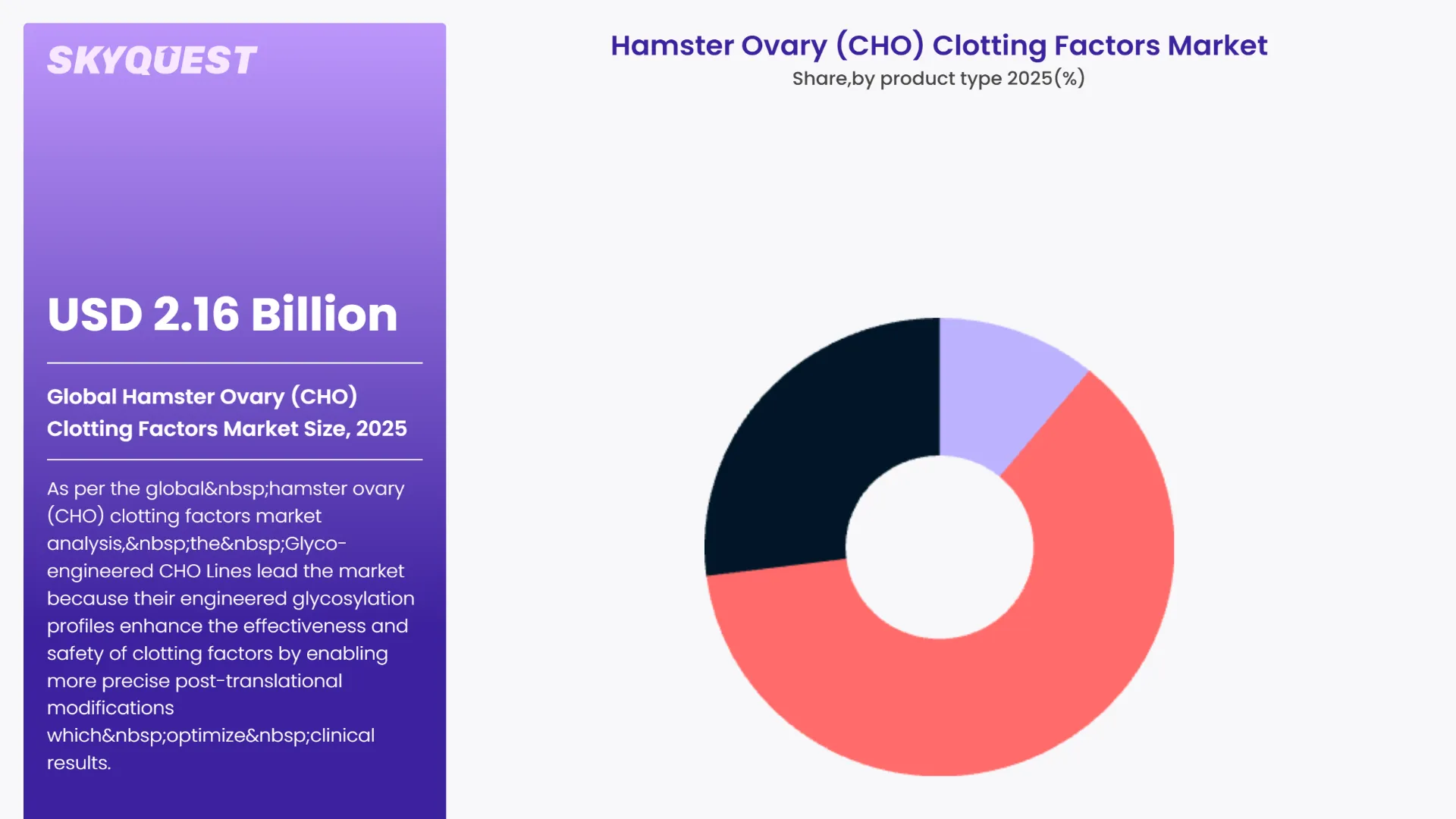
As per the global hamster ovary (CHO) clotting factors market analysis, the Glyco-engineered CHO Lines lead the market because their engineered glycosylation profiles enhance the effectiveness and safety of clotting factors by enabling more precise post-translational modifications which optimize clinical results. Developers select these lines because they provide stable product quality combined with reduced downstream processing work which leads to better development safety and faster achievement of regulatory requirements. The ability to customize glycan structures results in improved receptor binding and stability which determines the commercial viability of products across all development stages.
However, the development of Standard CHO-K1/DG44 Derived products is growing rapidly because developers have become familiar with the product, and the regulatory framework has established guidelines which support process flexibility. The established datasets of the system plus its lower switching expenses make it ideal for initial clinical research which enables seamless technology transitions and budget-friendly manufacturing that accelerates research development and treatment distribution for clotting factor creation.
According to the global hamster ovary (CHO) clotting factors market forecast, the Continuous Perfusion Bioprocessing segment leads the market because it maintains continuous production operations which result in higher productivity while meeting the fluctuating demand for recombinant Factor VIII production. Continuous harvest reduces product residence time and supports consistent quality attributes, which lowers the likelihood of downstream degradation while making it easier to schedule fill-finish operations. The operational cost savings create shorter lead times while providing dependable supply chain systems which prompt manufacturers to choose continuous platforms for their most essential clotting factor products.
However, the Fed-batch Culture is predicted to achieve the largest hamster ovary (CHO) clotting factors market share because it achieves the highest growth rate through its use of advanced media formulas and process improvements which enhance both product output and production efficiency. The system enables fast expansion to new recombinant Factor VIII programs at facilities which already use existing technologies while developers at these facilities can work with their current systems.
To get detailed segments analysis, Request a Free Sample Report
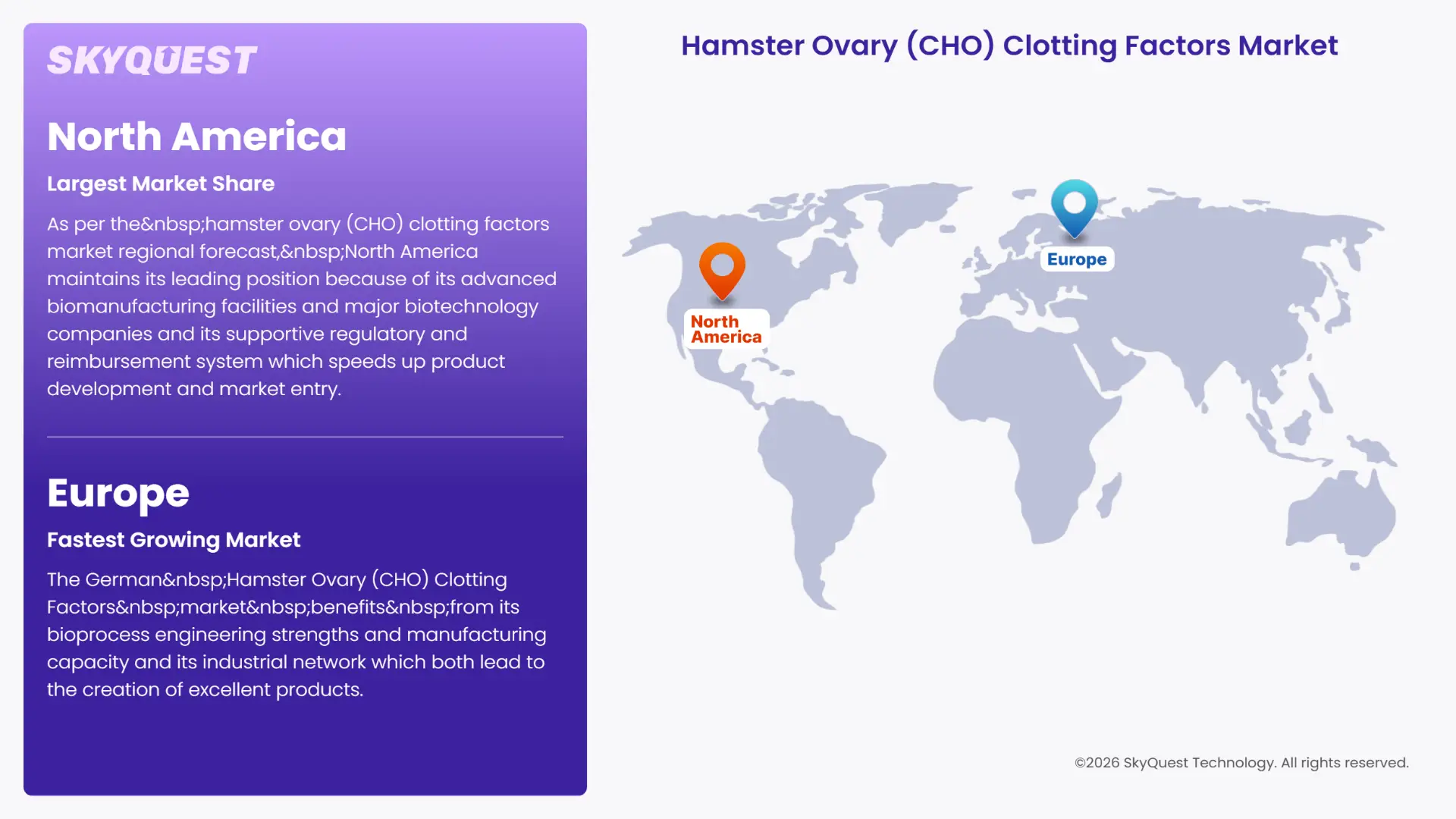
As per the hamster ovary (CHO) clotting factors market regional forecast, North America maintains its leading position because of its advanced biomanufacturing facilities and major biotechnology companies and its supportive regulatory and reimbursement system which speeds up product development and market entry. The close connections between academic research institutions and industry partners enable swift commercial development of new expression systems and process optimization technologies. The supply chains which already exist and the CDMO organizations which conduct contract development and manufacturing work enable buyers to obtain both scalability and quality assurance they require. Clinicians maintain high awareness levels about treatment pathways which results in consistent demand for recombinant clotting factors that CHO cell lines produce. Market leadership depends on innovation investment combined with strategic partnerships which improve yield and purity and clinical use across all therapeutic areas. The investment process relies on strong intellectual property systems to function.
The Hamster Ovary (CHO) Clotting Factors sector in the United States exhibits a unique structure which combines biopharmaceutical headquarters with comprehensive clinical networks and prominent research institutions that facilitate clinical research. The regulatory system is well established while advanced manufacturing facilities exist which enable companies to swiftly increase production and bring products to market. Corporate and venture funding provides the financial resources needed to expand the product development pipeline. The production between contract manufacturers and innovative companies creates a setup which enables the production of recombinant clotting therapies through optimal production procedures and effective quality management and market distribution.
The Canadian Hamster Ovary (CHO) Clotting Factors industry operates through integrated healthcare systems and translational research programs and industry-academic collaborative clusters. The Canadian market gains access to advanced recombinant clotting therapies through its focus on regulatory compliance and its international partnerships with manufacturers. Public research funding creates an environment in which funding the body supports organizations to develop new processes and conduct clinical trials. Canada establishes itself as a supply chain partner through its regional manufacturing capabilities and its commitment to quality assurance.
Europe's expansion process receives strong scientific support through its well-organized regulatory systems and its growing biotech cluster and healthcare system partnerships. Germany maintains its status as the top manufacturing country because of its advanced production capabilities and process engineering systems which other markets use to develop clinical applications. Biologics receive increasingly important focus; the clinical trial system receives supportive frameworks, and international investors establish partnerships with local companies to develop their organizations and share technology. The member states try to establish common quality and safety standards which would eliminate obstacles for companies that want to sell their products across national borders. The combination of patient advocacy with clinician engagement increases the usage of recombinant clotting therapies while the focus on domestic production resilience drives investment into local manufacturing plants and contract services which boosts CHO derived clotting factor production and distribution across the entire region. Strategic funding mechanisms further catalyze activity.
The German Hamster Ovary (CHO) Clotting Factors market benefits from its bioprocess engineering strengths and manufacturing capacity and its industrial network which both lead to the creation of excellent products. Technical universities and contract manufacturers work with biotech firms to translate process improvements into scalable operations. Organizations maintain a strong compliance culture which enables them to distribute products efficiently through their logistics and supplier base to both domestic and international markets. The current situation serves as the base which enables CHO-based clotting factor production to achieve its leading position.
The United Kingdom Hamster Ovary (CHO) Clotting Factors market operates through its active research centers and biotechnology startups and its dedicated funding for biologic therapeutics. The United Kingdom has created a regulatory system that permits flexibility while clinical trials establish the required networks needed to study new CHO-derived climbing factors. Academic centers establish partnerships with industry to speed up commercial development while expanding manufacturing capabilities through new contract manufacturing partnerships. United Kingdom emerges as a key European center for recombinant clotting therapies through its dedication to innovation and collaboration with all industry sectors.
The French Hamster Ovary (CHO) Clotting Factors market develops through enhanced academic research and biotech incubator support and public research initiatives which together help advance biologic studies. Universities and private companies enhance their capability to turn research into practical applications through their increasing partnerships. The growing focus on domestic manufacturing and quality systems has become a major factor driving contract manufacturing operations to establish their presence in the market. Clinicians and patient involvement lead to therapy adoption while the government supports industrial competitiveness through investments in CHO based research and production activities.
Asia Pacific increases its market share through dedicated funding for biomanufacturing, development of new contract development and manufacturing services, and establishment of research centers in academic institutions and industrial partnerships. The government and private investors work together to build local capabilities which enable the production of CHO derived biologics. The organization establishes technology transfer activities and optimizes processes through improved regulatory compliance. The clinical network strengthens clinician engagement, which improves the pathway to treatment adoption while the manufacturing cost-effective system attracts more demand for outsourcing services. The countries in this region develop specific skills for creating cell lines and designing processes and building quality systems which enhance their market position while making it possible for Asia Pacific to expand its global market share of producing recombinant clotting factors.
The Hamster Ovary (CHO) Clotting Factors Market penetration in Japan relies on strong industrial research and process development capabilities and standards for quality and compliance. Pharmaceutical companies and manufacturers collaborate with academic centers to develop cell line engineering and production processes. The need for manufacturing excellence and regulatory compliance creates dependable supply chain systems. The international agreement with Japan establishes the country as a hub for CHO derived clotting factor production while enabling technology transfer to occur between partner organizations.
The Hamster Ovary (CHO) Clotting Factors Market in South Korea expands through biopharmaceutical companies which are increasing their industrial investment and building their process development knowledge base. Research institutions together with private companies work together to enhance their capabilities in developing cell lines and downstream processing methods. The manufacturing capacity expansion projects together with the quality systems development initiatives draw in contract development business. The combination of clinician involvement and domestic adoption together with global company partnership development helps South Korea establish itself as a major producer of CHO derived clotting factors in the regional market.
To know more about the market opportunities by region and country, click here to
Buy The Complete Report
Increasing Adoption of Recombinant Factors
Manufacturers and clinicians currently choose CHO cell derived recombinant clotting factors because these factors guarantee dedicated product quality and enable large scale production while decreasing the requirement for human plasma which boosts supply chain reliability and ensures patient safety. The continual demand for these products leads to dedicated production capacity investments and extended contract commitments which drive market growth and commercial development. The market for CHO based biologics will experience growth because manufacturers need to attain glycosylation profiles and process control which CHO systems provide.
Advances in Cell Culture Technologies
Advancements in cell line engineering and media formulation and bioreactor design have made it possible to create CHO systems that produce high quality clotting factors with improved manufacturing efficiency and decreased process changes. These advancements create a scalable production process which delivers higher product quality while enabling companies to establish CHO derived product lines with greater trust. The market development cycle progresses more smoothly because improved process stability and product consistency make it easier for companies to bring new products to market which drives CHO clotting factor market growth through their multiple product lines and various manufacturing methods.
High Manufacturing Complexity and Costs
The production of CHO derived clotting factors requires manufacturers to spend high operational costs due to their complex production methods and extensive regulatory requirements and their need for special facilities and trained employees. The operational requirements together with the financial burdens prevent many organizations from establishing dedicated capacity which creates supply chain restrictions that lower competitive market pressure. The high expenses for both initial setup and compliance maintenance force companies to stick with their current product lineup until they choose to enter new markets and this leads to decreased market growth because it raises entry barriers and makes it harder for smaller companies to adopt new technologies.
Supply Chain Vulnerabilities and Shortages
The production of CHO derived clotting factors becomes unstable because companies depend on specialized raw materials and single-source reagents which require complex cold chain operations. The production process will face interruptions because feeder supply stops and critical consumable delivery delays which will also lead to batch cancellations and operational uncertainty. Manufacturers might choose to keep their inventory levels low while restricting their production capacity, which leads to reduced market responsiveness and product delivery delays. Supply chain weaknesses prevent companies from quickly increasing their supply capacity, which reduces overall market expansion.
Request Free Customization of this report to help us to meet your business objectives.
The CHO-derived clotting factor market operates through a system of industry consolidation which creates competition among different manufacturing platforms that depend on cell line efficiency and production capabilities. Organizations pursue two primary strategic initiatives which involve acquiring businesses to build their portfolio and operational capacity while establishing joint research projects to advance CHO expression technology. The Takeda acquisition of Shire in 2019 and the Horizon Discovery partnership with Mammoth Biosciences for developing gene-edited CHO cell capabilities have created disruptions in supply chain operations which lead to businesses establishing dedicated licensing agreements and production partnerships.
𝐁𝐢𝐨𝐩𝐫𝐨𝐜𝐞𝐬𝐬 𝐈𝐧𝐭𝐞𝐧𝐬𝐢𝐟𝐢𝐜𝐚𝐭𝐢𝐨𝐧: Manufacturers are implementing intensified upstream and downstream processes to increase CHO productivity while establishing efficient operations and building modular plants which can adapt to different production requirements. Product development timelines become faster when organizations improve their processes through cell line optimization and perfusion strategies and single-use technologies, and integrated analytics. Strategic partnerships with contract developers and investment in digital monitoring and automation technology enable organizations to accelerate their process of validation activities which require both validation and regulatory compliance. The qualitative advancements create organizational capabilities that enable businesses to meet therapy demand while maintaining effective operations and achieving operational efficiencies which lead to competitive advantages through improved supply chains and product quality enhancements.
𝐏𝐫𝐞𝐜𝐢𝐬𝐢𝐨𝐧 𝐓𝐡𝐞𝐫𝐚𝐩𝐞𝐮𝐭𝐢𝐜𝐬 𝐀𝐝𝐨𝐩𝐭𝐢𝐨𝐧: The development of CHO-derived molecules which treat specific genetic and clinical profiles occurs because patients need targeted therapies that focus on their individual needs for clotting factor treatment. Manufacturers use companion diagnostics and biomarker approaches together with adaptive clinical trial designs to develop treatments which target specific patient subgroups and provide customized dosing and delivery options. The new approach focuses on three main elements which include distinct product features and real-world evidence and the establishment of cooperative relationships between diagnostic centers and specialized medical facilities.
SkyQuest’s ABIRAW (Advanced Business Intelligence, Research & Analysis Wing) is our Business Information Services team that Collects, Collates, Correlates, and Analyses the Data collected by means ofPrimary Exploratory Research backed by robust Secondary Desk research.
As per SkyQuest analysis, the hamster ovary (CHO) clotting factors market experiences growth through the increasing demand for safer and more reliable recombinant CHO-produced proteins which serve as an alternative to plasma-derived concentrates. North America remains the leading region because it has established advanced biomanufacturing capabilities which enable businesses to develop partnerships with academic institutions and glyco-engineered CHO lines dominate the technology field since they provide custom glycosylation solutions which enhance therapeutic outcomes. The ongoing development of cell culture technologies and process intensification techniques creates a secondary growth driver which leads to increased hemophilia treatment access and reduced treatment variability while boosting overall patient outcomes.
| Report Metric | Details |
|---|---|
| Market size value in 2024 | USD 2.0 Billion |
| Market size value in 2033 | USD 4.0 Billion |
| Growth Rate | 8.0% |
| Base year | 2024 |
| Forecast period | 2026-2033 |
| Forecast Unit (Value) | USD Billion |
| Segments covered |
|
| Regions covered | North America (US, Canada), Europe (Germany, France, United Kingdom, Italy, Spain, Rest of Europe), Asia Pacific (China, India, Japan, Rest of Asia-Pacific), Latin America (Brazil, Rest of Latin America), Middle East & Africa (South Africa, GCC Countries, Rest of MEA) |
| Companies covered |
|
| Customization scope | Free report customization with purchase. Customization includes:-
|
To get a free trial access to our platform which is a one stop solution for all your data requirements for quicker decision making. This platform allows you to compare markets, competitors who are prominent in the market, and mega trends that are influencing the dynamics in the market. Also, get access to detailed SkyQuest exclusive matrix.
Table Of Content
Executive Summary
Market overview
Parent Market Analysis
Market overview
Market size
KEY MARKET INSIGHTS
COVID IMPACT
MARKET DYNAMICS & OUTLOOK
Market Size by Region
KEY COMPANY PROFILES
Methodology
For the Hamster Ovary (CHO) Clotting Factors Market, our research methodology involved a mixture of primary and secondary data sources. Key steps involved in the research process are listed below:
1. Information Procurement: This stage involved the procurement of Market data or related information via primary and secondary sources. The various secondary sources used included various company websites, annual reports, trade databases, and paid databases such as Hoover's, Bloomberg Business, Factiva, and Avention. Our team did 45 primary interactions Globally which included several stakeholders such as manufacturers, customers, key opinion leaders, etc. Overall, information procurement was one of the most extensive stages in our research process.
2. Information Analysis: This step involved triangulation of data through bottom-up and top-down approaches to estimate and validate the total size and future estimate of the Hamster Ovary (CHO) Clotting Factors Market.
3. Report Formulation: The final step entailed the placement of data points in appropriate Market spaces in an attempt to deduce viable conclusions.
4. Validation & Publishing: Validation is the most important step in the process. Validation & re-validation via an intricately designed process helped us finalize data points to be used for final calculations. The final Market estimates and forecasts were then aligned and sent to our panel of industry experts for validation of data. Once the validation was done the report was sent to our Quality Assurance team to ensure adherence to style guides, consistency & design.
Analyst Support
Customization Options
With the given market data, our dedicated team of analysts can offer you the following customization options are available for the Hamster Ovary (CHO) Clotting Factors Market:
Product Analysis: Product matrix, which offers a detailed comparison of the product portfolio of companies.
Regional Analysis: Further analysis of the Hamster Ovary (CHO) Clotting Factors Market for additional countries.
Competitive Analysis: Detailed analysis and profiling of additional Market players & comparative analysis of competitive products.
Go to Market Strategy: Find the high-growth channels to invest your marketing efforts and increase your customer base.
Innovation Mapping: Identify racial solutions and innovation, connected to deep ecosystems of innovators, start-ups, academics, and strategic partners.
Category Intelligence: Customized intelligence that is relevant to their supply Markets will enable them to make smarter sourcing decisions and improve their category management.
Public Company Transcript Analysis: To improve the investment performance by generating new alpha and making better-informed decisions.
Social Media Listening: To analyze the conversations and trends happening not just around your brand, but around your industry as a whole, and use those insights to make better Marketing decisions.
REQUEST FOR SAMPLE
 REQUEST FREE CUSTOMIZATION
Global Hamster Ovary (Cho) Clotting Factors Market size was valued at USD 2.0 Billion in 2024 and is poised to grow from USD 2.16 Billion in 2025 to USD 4.0 Billion by 2033, growing at a CAGR of 8.0% during the forecast period (2026-2033).
The competitive landscape for CHO-derived clotting factors is defined by consolidation and platform competition driven by cell-line performance and manufacturing capacity. Major strategic moves include M&A to secure portfolios and scale, and technical collaborations to improve CHO expression. Examples include Takeda’s 2019 acquisition of Shire and Horizon Discovery’s partnership with Mammoth Biosciences to develop gene-edited CHO cell capabilities, which are reshaping supply chains and prompting targeted licensing and manufacturing partnerships. 'Takeda', 'Novo Nordisk', 'Pfizer', 'Bayer', 'CSL Behring', 'Sanofi', 'Biogen', 'Octapharma', 'Lonza', 'Thermo Fisher', 'Sartorius', 'Merck KGaA', 'Cytiva', 'Catalent', 'Samsung Biologics', 'WuXi Biologics', 'Boehringer Ingelheim', 'Fujifilm Diosynth', 'Gilead', 'Roche'
CHO cell derived recombinant clotting factors have become preferred for manufacturers and clinicians because they enable consistent product quality, scalable production, and reduced reliance on human plasma, thereby strengthening supply reliability and patient safety. This steady preference encourages investment in dedicated production capacity and long term contracts, which in turn supports greater commercialization and market expansion. As manufacturers prioritize predictable glycosylation profiles and process control inherent to CHO systems, development pipelines are more likely to include CHO based biologics, reinforcing sustained market growth for these clotting factor products.
𝐁𝐢𝐨𝐩𝐫𝐨𝐜𝐞𝐬𝐬 𝐈𝐧𝐭𝐞𝐧𝐬𝐢𝐟𝐢𝐜𝐚𝐭𝐢𝐨𝐧: Manufacturers are adopting intensified upstream and downstream methods to boost CHO productivity, streamline workflows and enable modular facilities supporting flexible production scales. Emphasis on cell line optimization, perfusion strategies, single-use technologies and integrated analytics enhances product consistency and accelerates development timelines. Strategic collaborations with contract developers and investment in automation and digital monitoring facilitate rapid process validation and regulatory alignment. These qualitative advances foster responsiveness to therapeutic demand, reduce operational complexity, create competitive differentiation through supply and improved quality attributes.
North America Dominate the Global Hamster Ovary (CHO) Clotting Factors Market.
Recombinant Factor VIII currently holds the largest market share due to its extensive use in hemophilia A treatment and its established clinical effectiveness in bleeding disorder management.
The Recombinant Factor IX segment is expected to register the fastest growth during the forecast period, supported by increasing adoption in hemophilia B treatment and advancements in recombinant protein manufacturing.
AI is improving cell line development, clone selection, process optimization, and predictive quality control. These technologies help accelerate production timelines, improve batch consistency, and reduce manufacturing costs in recombinant clotting factor production.


Want to customize this report? This report can be personalized according to your needs. Our analysts and industry experts will work directly with you to understand your requirements and provide you with customized data in a short amount of time. We offer $1000 worth of FREE customization at the time of purchase.
Feedback From Our Clients


 USA (+1) 351-333-4748

