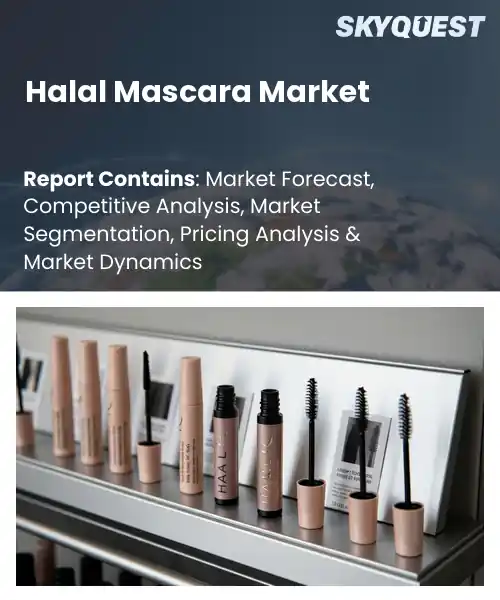
Halal Mascara Market
Report ID: SQMIG30L2471
Report ID: SQMIG30L2471
[email protected]
USA +1 351-333-4748
Report ID:
SQMIG30L2471 |
Region:
Global |
Published Date: July, 2026
Pages:
157
|Tables:
151
|Figures:
78


Global Halal Mascara Market size was valued at USD 487.3 Million in 2024 and is poised to grow from USD 529.7 Million in 2025 to USD 1032.44 Million by 2033, growing at a CAGR of 8.7% during the forecast period (2026-2033).
There has been significant growth in the global halal mascara market owing to increasing demand for cosmetics which are ethically made and certified. The formulation of halal mascara includes ingredients which meet Islamic rules of ethics and eating. The mascara is prepared in a way that ensures that it does not contain any haram components such as ingredients from animals that are not halal or even alcohol. Apart from Muslims, the market has grown significantly among those who have environmental and health consciousness and need vegan cosmetics. The increase in awareness about ingredient transparency, the growth of online selling, and development in innovative formulas are some factors that contribute to market growth. With more investment by major beauty firms in halal certification and product lines, the halal mascara market will continue to grow.
The halal mascara industry encompasses all cosmetic products which comply with the Islamic guidelines regarding ingredients and ethics; hence, these products do not have any animal ingredients prohibited under Sharia law. This sector is important since Muslim consumers.
How is AI-driven Formulation Automation Reshaping the Halal Mascara Market?
The application of AI in formulation automation will revolutionize the halal mascara sector through automation of all stages in the production process. Algorithms will identify any non-halal ingredients within the ingredients database and recommend alternative products that can fulfill performance requirements. Predictive algorithms will ensure texture, pigment stability, and brush compatibility thus reducing the trial-and-error process from months to weeks. In addition, brands will be able to bring out new colors fast while still incurring low costs for certifications, an important factor considering the increasing demand for halal cosmetics among consumers. The technology will enable small companies in the sector to scale up without expensive R&D facilities.
Market snapshot - (2026-2033)
Global Market Size
USD 487.3 Million
Largest Segment
Volumizing Mascara
Fastest Growth
Curling Mascara
Growth Rate
8.7% CAGR
To get more insights on this market click here to Request a Free Sample Report
Global halal mascara market is segmented by product type, formulation, ingredient type, distribution channel, end user and region. Based on product type, the market is segmented into Lengthening Mascara, Volumizing Mascara, Curling Mascara, Waterproof Mascara and Others. Based on formulation, the market is segmented into Liquid, Cream, Gel and Others. Based on ingredient type, the market is segmented into Natural, Organic, Synthetic and Others. Based on distribution channel, the market is segmented into Specialty Beauty Stores, Supermarkets & Hypermarkets, Online Retail, Pharmacies and Others. Based on end user, the market is segmented into Individual Consumers, Professional Makeup Artists, Beauty Salons and Others. Based on region, the market is segmented into North America, Europe, Asia Pacific, Latin America and Middle East & Africa.
The waterproof mascara segment is the leader since it conforms to the consumer requirement for long-lasting wear that is free of smudging, while being in conformity with the grooming norms of religion. Absence of preservatives containing alcohol and usage of permissible materials instills confidence of the consumers while praying and performing routine chores. Also, its efficacy in humid climates and suitability for modest makeup make it popular among halal consumers, ensuring its dominance in the halal mascara market. Certifications provided by manufacturers on the packaging of their products also increase consumer confidence and ensure loyalty.
On the contrary, lengthening mascara turns out to be the fastest growing segment in the halal mascara market. Brush designs and formulas of natural fibers enable lengthening of lashes without violating halal requirements, making it appealing to consumers wishing to have accentuated eyes during festive times.
The leading segment in the product type category is gel formulation due to the thick and flexible texture of the formula, providing high deposition of pigments without having ingredients that go against religious beliefs. Due to the absence of solvents based on alcohol, the formulation of such mascaras meets the requirements of halal cosmetics. The comfortable applicability and coverage level of products make them preferable among the consumers and force the companies to produce halal mascaras with the gel base. Moreover, the formula stability of these products prevents the development of any microorganisms.
At the same time, the largest growth rate is observed in the segment of cream formulation, where the products are known for their light weight and moisturizing components. It makes the formulas attractive and meets the needs of those customers who prefer clean beauty and halal products at the same time.
To get detailed segments analysis, Request a Free Sample Report
In Asia Pacific, the combination of heightened beauty awareness, sophisticated manufacturing facilities, and increasing recognition of halal certifications plays a critical role in its success. There is increased consumer preference for safety and adherence to ethical practices, driving the adoption of halal certification in premium formulas. E-commerce environments and the quick adaptation to technology drive the visibility of the products. Research and development done within the region lead to innovative products that resonate well aesthetically with the locals.
Market for Halal Mascara in Japan is positively impacted by a culture which focuses on cosmetic products that work. The consumer is very careful about the ingredients used in the formulation and thus there is a need for the companies to have the halal certification. The distribution channels focus on providing an experiential shopping environment and thus integrating the halal products within the same beauty aisle becomes easy.
South Korean Halal Mascara Market operates in an exciting atmosphere of beauty trends that change very quickly and where the influence of influencers is huge. The development of the market is caused by a high level of awareness about halal products among customers and producers. Social media play a great role in the promotion, while innovations in packaging and formulation satisfy local aesthetic requirements. The combination of technology and culture contributes to South Korea being a significant part of regional domination.
The growth of Europe is influenced by the changing views on ethically sound beauty products, supported by systems of regulations which provide clear labelling and certification. There is a growing Muslim population in Europe who require beauty products that adhere to their religious practices, and thus, companies include halal certification in their standard product lines. The retail system involves both the physical and digital components, ensuring maximum availability of beauty products. Moreover, there are intersections between the stories of sustainability and halal, thereby providing a strong marketing angle for eco-friendly consumers.
The Market of Halal Mascara in Germany is based on high consumer demand for quality certification and safety of products. Well-developed sales networks, ranging from department stores to exclusive shops, offer halal-certified products together with regular ones. Beauty editors and consumer associations stress the importance of natural ingredients. More and more German producers start producing their goods according to the halal guidelines. This creates favorable conditions for supplying Germany with the halal mascara.
Halal Mascara Market in the United Kingdom enjoys rapid growth on account of the diversity of urban cities and the thriving e-commerce environment. The consumer is conscious of clear labelling, and this makes retail shops pay attention to creating sections of halal products both in-store and online. The influence of social media and beauty bloggers heightens awareness by highlighting the efficiency and legality of these products. Working together, the certification institutions and the new brands make it easier for them to penetrate the market.
France Halal Mascara Market arises due to the growing awareness among consumers about ethical practices in sourcing. Halal-certified products are marketed through boutique retail stores and specialized e-commerce sites, targeting an elite clientele. French cosmetics culture places significance on the experience aspect, prompting companies to integrate halal practices with indulgent formulations. Consumer awareness programs emphasize the importance of halal certification, thus facilitating gradual adoption. Such developments place France as an emerging player in the European halal mascara trend.
North America builds its influence by aligning its efforts with respect to halal certification, tying in with larger trends of clean beauty to appeal to a varied consumer base. Major retailers include a section on halal products while brand leaders infuse halal guidelines in their product creation process. Through collaborations with influencers and marketing, the idea is promoted across different cultures, making it acceptable as part of the wider narrative in the world of halal mascaras.
Halal Mascara Market in United States can flourish due to the fragmented nature of its retail landscape, which allows niche and mass-market products to coexist. Consumer demand for products that disclose all ingredients fuels the popularity of halal-certified products, leading to allocation of shelf space by large chains for those products. Digital media helps to reach multicultural customers, while certification agencies ensure that regulations are followed. Inclusivity in marketing along with efficient distribution systems helps solidify the United States' market position in halal mascara products.
Halal Mascara Market in Canada represents a multicultural customer landscape where ethics and religious conformity play an important part. Various shops across prominent provinces include halal-certified brands in their diverse collections of beauty products, making them visible. Influencers of Canadian beauty give priority to the effectiveness of the product in addition to the certification. Collaboration between the local manufacturers and certification bodies makes it easy for the product to enter the market.
To know more about the market opportunities by region and country, click here to
Buy The Complete Report
Increasing Demand for Halal Cosmetics
Due to consumers' growing concern about religious and ethical issues, there is an increase in the number of customers who seek halal products. This trend pushes manufacturers of cosmetics to produce mascara with halal ingredients and thus expands their product range. With increasing consumer brand loyalty based on trust of the halal status of the products, there is an increase in the market presence and availability of these products, which consequently contributes to market growth driven by increasing demand.
Expansion of Halal Beauty Retail Channels
There is an emergence of boutique stores selling halal beauty products and inclusion of halal sections within the major retail stores, which will be instrumental in opening up channels for the customers who would like to try the certified mascara products. These developments will make it easier for consumers to access such products and try out as there are fewer available choices at present. Additionally, e-commerce websites for halal cosmetics and partnering with influencers will help brands gain more visibility and popularity.
Limited Availability of Certified Ingredients
However, the pool of ingredients certified as halal-by-halal certification bodies is rather limited, hindering the efforts of formulators in replicating the performance of a regular mascara in compliance with religious regulations. There are many instances whereby manufacturers have difficulty in finding pigments, waxes, and preservatives that are in line with both halal requirements and aesthetics. Such constraints will not only delay the development of a particular halal mascara but also hinder the creation of variations of a particular mascara.
Higher Production Costs for Halal Compliance
Halal compliance within the mascara manufacturing process usually demands extra quality checks, special processing systems, and proper documentation to meet the conditions of certification, which leads to higher costs for the company. The company will have to purchase extra equipment and provide employees with training and audits, all of which means higher costs and reduced profit margin. Higher prices may result in decreased sales due to increased prices and may discourage budget buyers.
Request Free Customization of this report to help us to meet your business objectives.
The competitive environment within the global halal mascara market is characterized by active funding and brand launches, with new competitors taking advantage of seed and series funding for gaining a market presence; Amaani’s $3 million seed round and general series-C funding trend that emerged in mid-2026 demonstrate the strategy of financing, strategic collaboration with regional e-commerce players, and innovative technology-driven product development being used for beating the competition.
Digital Halal Influencer Partnerships: The emergence of connected Muslim consumers has made Instagram, TikTok, and YouTube major discovery channels for mascara products. Companies collaborate with certified halal influencers who demonstrate product efficacy while providing religious assurance through authentic storytelling. Such partnerships allow instant feedback mechanisms, help increase brand awareness, and avoid traditional advertising limitations in some regions. With rising influencer trust levels, brands are investing in the creation of joint content and hosting product launches in virtual spaces with direct shipping links embedded in short video clips.
Rise of Clean-Beauty Halal Standards: Both Muslims and those who are not Muslims want makeup products that fulfill requirements of both halal authenticity and clean beauty. This includes reformulation of makeup products such as mascara to be free from any animal-derived substances, alcohol, and other synthetic elements while ensuring that the halal certification of third-party organizations is obtained. The process of product development has thus been changed by this need for both halal and clean beauty, which in turn requires collaboration with reliable suppliers and increases the market potential of halal mascara.
SkyQuest’s ABIRAW (Advanced Business Intelligence, Research & Analysis Wing) is our Business Information Services team that Collects, Collates, Correlates, and Analyses the Data collected by means of Primary Exploratory Research backed by robust Secondary Desk research.
As per SkyQuest analysis, the halal mascara market around the world is driven mainly by the increasing trend for halal cosmetics as more and more Muslims look for cosmetic products that meet their religious standards, and another major factor driving the growth of the market is the rapid development of halal beauty retail channels. One of the major factors restraining the growth of the halal mascara market is the availability of limited ingredients that have certification, which could increase cost and hamper innovation. Asia-Pacific becomes the leading region due to high beauty awareness and the high rate of adoption of e-commerce, and the waterproof mascara becomes the leading product type in this market.
| Report Metric | Details |
|---|---|
| Market size value in 2024 | USD 487.3 Million |
| Market size value in 2033 | USD 1032.44 Million |
| Growth Rate | 8.7% |
| Base year | 2024 |
| Forecast period | (2026-2033) |
| Forecast Unit (Value) | USD Million |
| Segments covered |
|
| Regions covered | North America (US, Canada), Europe (Germany, France, United Kingdom, Italy, Spain, Rest of Europe), Asia Pacific (China, India, Japan, Rest of Asia-Pacific), Latin America (Brazil, Rest of Latin America), Middle East & Africa (South Africa, GCC Countries, Rest of MEA) |
| Companies covered |
|
| Customization scope | Free report customization with purchase. Customization includes:-
|
To get a free trial access to our platform which is a one stop solution for all your data requirements for quicker decision making. This platform allows you to compare markets, competitors who are prominent in the market, and mega trends that are influencing the dynamics in the market. Also, get access to detailed SkyQuest exclusive matrix.
Table Of Content
Executive Summary
Market overview
Parent Market Analysis
Market overview
Market size
KEY MARKET INSIGHTS
COVID IMPACT
MARKET DYNAMICS & OUTLOOK
Market Size by Region
KEY COMPANY PROFILES
Methodology
For the Halal Mascara Market, our research methodology involved a mixture of primary and secondary data sources. Key steps involved in the research process are listed below:
1. Information Procurement: This stage involved the procurement of Market data or related information via primary and secondary sources. The various secondary sources used included various company websites, annual reports, trade databases, and paid databases such as Hoover's, Bloomberg Business, Factiva, and Avention. Our team did 45 primary interactions Globally which included several stakeholders such as manufacturers, customers, key opinion leaders, etc. Overall, information procurement was one of the most extensive stages in our research process.
2. Information Analysis: This step involved triangulation of data through bottom-up and top-down approaches to estimate and validate the total size and future estimate of the Halal Mascara Market.
3. Report Formulation: The final step entailed the placement of data points in appropriate Market spaces in an attempt to deduce viable conclusions.
4. Validation & Publishing: Validation is the most important step in the process. Validation & re-validation via an intricately designed process helped us finalize data points to be used for final calculations. The final Market estimates and forecasts were then aligned and sent to our panel of industry experts for validation of data. Once the validation was done the report was sent to our Quality Assurance team to ensure adherence to style guides, consistency & design.
Analyst Support
Customization Options
With the given market data, our dedicated team of analysts can offer you the following customization options are available for the Halal Mascara Market:
Product Analysis: Product matrix, which offers a detailed comparison of the product portfolio of companies.
Regional Analysis: Further analysis of the Halal Mascara Market for additional countries.
Competitive Analysis: Detailed analysis and profiling of additional Market players & comparative analysis of competitive products.
Go to Market Strategy: Find the high-growth channels to invest your marketing efforts and increase your customer base.
Innovation Mapping: Identify racial solutions and innovation, connected to deep ecosystems of innovators, start-ups, academics, and strategic partners.
Category Intelligence: Customized intelligence that is relevant to their supply Markets will enable them to make smarter sourcing decisions and improve their category management.
Public Company Transcript Analysis: To improve the investment performance by generating new alpha and making better-informed decisions.
Social Media Listening: To analyze the conversations and trends happening not just around your brand, but around your industry as a whole, and use those insights to make better Marketing decisions.
REQUEST FOR SAMPLE
 REQUEST FREE CUSTOMIZATION
Global Halal Mascara Market size was valued at USD 487.3 Million in 2024 and is poised to grow from USD 529.7 Million in 2025 to USD 1032.44 Million by 2033, growing at a CAGR of 8.7% during the forecast period (2026-2033).
The competitive landscape of the global halal mascara market is shaped by aggressive capital‑raising and niche brand launches, with new entrants leveraging seed and series funding to secure market share; Amaani’s $3 million seed round and the broader series‑C financing wave in mid‑2026 illustrate how financing, strategic partnerships with regional e‑commerce platforms, and tech‑driven product development are being used to outpace incumbents. 'Wardah Cosmetics', 'INIKA Organic', 'Safi Cosmetics', 'MINA Halal Cosmetics', 'Amara Cosmetics', 'PHB Ethical Beauty', 'Tuesday in Love', 'Iba Cosmetics', 'Clara International Beauty Group', 'Muslimah Manufacturing', 'OnePure', 'SilkyGirl Cosmetics', 'Zahara Cosmetics', 'SO.LEK Cosmetics', 'Moksa Beauty', 'Amara Halal Cosmetics', 'Inez Cosmetics', 'Martha Tilaar Group', 'SimplySiti Sdn. Bhd.', 'Halal Beauty Cosmetics'
Growing consumer awareness of religious and ethical considerations is prompting many shoppers to prioritize products that adhere to halal standards. This shift encourages cosmetics manufacturers to develop mascara formulations that meet halal certification, thereby expanding product portfolios. As brand loyalty strengthens around trust in halal authenticity, companies experience increased shelf presence and broader distribution opportunities, which collectively drive market expansion through heightened demand and enhanced consumer confidence. Retailers are also allocating more promotional space to these offerings, and media influencers are amplifying the message, further reinforcing purchase intent across demographics.
Digital Halal Influencer Partnerships: The rise of connected Muslim consumers has turned Instagram, TikTok and YouTube into primary discovery platforms for mascara. Brands are partnering with certified halal influencers who showcase product performance while affirming religious compliance, creating authentic storytelling that resonates with followers. These collaborations enable real‑time feedback loops, accelerate brand awareness, and bypass conventional advertising restrictions in certain regions. As influencer credibility grows, marketers allocate more resources to co‑create content, host virtual launch events, and integrate shoppable links directly within short‑form videos.
Why does Asia Pacific Dominate the Global Halal Mascara Market? |@12


Want to customize this report? This report can be personalized according to your needs. Our analysts and industry experts will work directly with you to understand your requirements and provide you with customized data in a short amount of time. We offer $1000 worth of FREE customization at the time of purchase.
Feedback From Our Clients


 USA (+1) 351-333-4748

