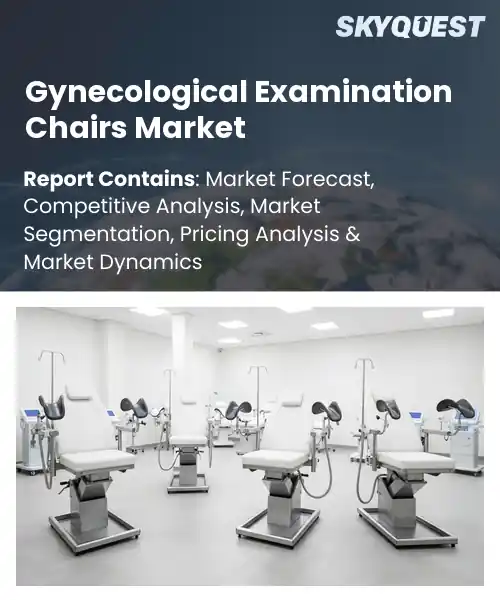
Gynecological Examination Chairs Market
Report ID: SQMIG35A3423
Report ID: SQMIG35A3423
[email protected]
USA +1 351-333-4748
Report ID:
SQMIG35A3423 |
Region:
Global |
Published Date: May, 2026
Pages:
157
|Tables:
151
|Figures:
78


Global Gynecological Examination Chairs Market size was valued at USD 732.5 Million in 2024 and is poised to grow from USD 772.06 Million in 2025 to USD 1175.91 Million by 2033, growing at a CAGR of 5.4% during the forecast period (2026-2033).
The primary driver of the gynecological examination chairs market is expanding demand for comprehensive women’s healthcare, caused by growing screening programs, rising preventive care awareness, and obstetrics and gynecology infrastructure development. The market provides specialized chairs for clinics, hospitals, and ambulatory centers, and is important because equipment ergonomics and functionality influence diagnostic accuracy, patient comfort, and clinical throughput. Over time, the industry has changed from basic, fixed stools to adjustable, motorized chairs with built-in lighting and imaging mounts. This shift occurred as the clinicians put a greater value on both infection control and workflow efficiency. For instance, private clinics located in India and Western Europe are using more advanced chairs for performing office procedures.
A key trend driving the global gynecological examination chairs sector growth is technological innovation paired with global shifts toward outpatient and minimally invasive gynecologic procedures, which creates demand for versatile ergonomically designed chairs. Clinics are performing an increasing number of office hysteroscopies as well as ultrasound guided interventions which have led manufacturers to develop motorized height adjustment, modular leg supports and integrated imaging mounts allowing for the safe and efficient point-of-care diagnostic. Therefore, clinics are able to provide improved throughput and better patient experience; while cost pressures also create an opportunity for rental models and moderate priced equipment designed specifically for emerging markets. Mobile screening units located in Sub-Saharan Africa have a need for lightweight chairs.
How Is Iot Enhancing Remote Monitoring in the Gynecological Examination Chairs Market?
Using IoT to improve remote monitoring in the gynecological examination chairs sector allows traditional equipment to have connected sensors and cloud connectivity, such as utilizing sensors embedded in the chair to detect patient positioning and ambient conditions, telemetry used for checking device condition and maintenance, and secure data streams transmitting data to be used for telemedicine and electronic medical records. Currently the market is seeing early adoption in advanced clinics and modular retro-fits of chairs to add on features not available in the original version of the chair, thus providing better appointment triage/better workflow for clinicians/less interruption of service.
Sibel Health April 2026, received regulatory clearance for a wireless maternal fetal monitoring platform that demonstrates how connected monitoring can integrate with clinic workflows and remote care. That development underscores how IoT enabled monitoring supports gynecological chair manufacturers and clinics by improving continuity of care and operational efficiency.
Market snapshot - (2026-2033)
Global Market Size
USD 732.5 Million
Largest Segment
Electric Gynecological Examination Chairs
Fastest Growth
Electromechanical Examination Chairs
Growth Rate
5.4% CAGR
To get more insights on this market click here to Request a Free Sample Report
Global gynecological examination chairs market is segmented by product type, mobility type, application, end user, distribution channel and region. Based on product type, the market is segmented into Manual Gynecological Examination Chairs, Electric Gynecological Examination Chairs, Hydraulic Gynecological Examination Chairs, Electromechanical Examination Chairs and Others. Based on mobility type, the market is segmented into Fixed Examination Chairs and Mobile Examination Chairs. Based on application, the market is segmented into Gynecological Examination, Obstetric Examination, Colposcopy Procedures, Urogynecology Procedures, Minor Surgical & Diagnostic Procedures and Others. Based on end user, the market is segmented into Hospitals, Gynecology & Obstetrics Clinics, Ambulatory Surgical Centers (ASCs), Diagnostic Centers, Maternity & Fertility Centers and Others. Based on distribution channel, the market is segmented into Direct Sales, Medical Equipment Distributors and Online Sales Channels. Based on region, the market is segmented into North America, Europe, Asia Pacific, Latin America and Middle East & Africa.
Based on the global gynecological examination chairs market outlook, electric gynecological examination chairs segment dominates because clinics and hospitals prioritize automated positioning, precise motorized adjustments, and integrated controls that streamline multi procedure workflows. Procurement decision-making is influenced by the ease of use for staff, patient comfort and the ability of the imaging system to be used with other types of imaging systems or accessories. Safety interlocks and programmable preset functions are typically emphasized by manufacturers of these types of systems, resulting in a strong preference for higher volume facilities and specialty facilities.
However, hydraulic gynecological examination chairs are gaining rapid traction because their mechanical reliability, lower maintenance demands, and minimal power needs suit clinics upgrading equipment. Their adaptable positioning and simplified controls appeal to mid sized providers and ambulatory centers, driving replacement and retrofit purchases that broaden market penetration and create steady demand for durable, cost effective units.
Medical equipment distributors segment dominates because distributors combine deep clinical relationships, localized inventory, and technical service networks that lower procurement friction for hospitals and clinics. The purchasers experience lower adoption risk from their ability to provide products along with training, financing, and regulatory compliance services, which leads to preference for purchasing products through a distributor. By acting as a trusted intermediary, distributors will create continuing demand and become a critical partner within the supply chain by positively impacting specification and repeat purchases by suppliers.
Meanwhile, online sales channels are witnessing rapid growth due to streamlined procurement portals, broad product visibility, and easier access for smaller clinics. Digital marketplaces and online manufacturing portals reduce the time required to make purchasing decisions and streamline the process of re-ordering accessories, allowing for quicker purchases as well as post-purchase assistance. This trend will lower the barriers to entry while creating scalable market potential for specific types of products and providing services remotely.
To get detailed segments analysis, Request a Free Sample Report
As per the global gynecological examination chairs market share, North America occupies a leading position due to a confluence of factors that support rapid adoption and continual innovation in industry. A well developed healthcare infrastructure and a high concentration of specialized clinics and academic medical centers cultivate demand for advanced, ergonomically designed equipment. A combination of strong research and development skills from the manufacturers; close working relationships with clinical staff; strong distribution networks will allow for the refinement of products prior to release into the marketplace. Lastly, the favorable reimbursement policies and procurement practices of hospitals and outpatient providers help reduce the barriers to acquiring new products. Furthermore, clear regulations and stringent post-market monitoring will enhance the confidence of the provider. Manufacturers also prioritize after sales service and clinical training, strengthening long term relationships with healthcare buyers and reinforcing North America as the dominant regional market.
Gynecological examination chairs market in United States is characterized by early adoption of advanced chair features, close collaboration between manufacturers and leading clinical institutions, and a dense network of specialized obstetrics and gynecology clinics. Procurement decisions reflect emphasis on ergonomic design, infection control, and integration with diagnostic systems. Strong aftermarket support and clinical training programs encourage repeat investment by hospitals and private practices seeking to improve workflow and patient experience overall.
Gynecological examination chairs market in Canada reflects procurement driven by regional health authorities and an emphasis on equitable access across urban and rural settings. Providers put some of their main focus on chairs, and when evaluating these chairs, the most important criteria considered are durability, ease of cleaning, and patient comfort. Providers also collaborate with their suppliers by offering clinical staff training on how to correctly use the products, and ensuring the products are compliant with infection prevention protocols.
Based on global gynecological examination chairs regional forecast, Europe is experiencing rapid industry expansion driven by concerted efforts to modernize clinical facilities, heightened awareness of women health priorities, and active engagement by local manufacturers. Improvements in patient dignity and procedure efficiency as a result of capital investments by outpatient and specialized gynaecological centres have created an opportunity for improved equipment in both outpatient facilities and specialized treatment centres. Patient care has also benefited from a harmonized regulatory environment and easily understood standards that promote supplier confidence and facilitate the distribution of products across borders. The clinical guidelines established for both patient comfort and infection control enhance the justification for the purchase of new or advanced chair models. Cooperation between clinicians and engineering groups, which is common within medical-device clusters, creates opportunities for rapidly adapting products to meet the practices of European clinicians.
Gynecological examination chairs market in Germany is anchored by a robust medical technology industry known for engineering excellence and rigorous clinical evaluation. Chairs selected, by Hospitals and specialist centers, contain durability and advanced functions with a high level of system integration. Through working closely, manufacturing companies and clinicians are able to develop casual ergonomic designs to comply with strict procurement requirements. Additionally, there is a heavy export orientation and partnerships with distributors in Europe to provide greater availability to customers.
Gynecological examination chairs market in United Kingdom reflects rapid modernization of clinical facilities and emphasis on patient centered design. Targeted procurement in public and private sectors encourages replacement of older equipment with ergonomic multifunctional chairs. Clinician training and standardized evaluation support adoption of innovative features that enhance workflow and comfort. Collaborative links between academic centers and industry facilitate clinical validation and dissemination, driving uptake across hospital trusts and community outpatient services.
Gynecological examination chairs market France is emerging as providers update outpatient and private clinic facilities with more patient focused equipment. There is a demand for versatile chairs that can accommodate diagnostic and procedural uses while meeting applicable national regulations. Local manufacturers' and distributors' design modifications provide chairs in terms of the comfort of the chair and the aesthetic aspects that practitioners appreciate. There is more collaboration between clinicians and suppliers and increased cooperative purchasing initiatives assisting with the broad adoption of the furnishings, including those in hospitals and ambulatory settings, throughout the area.
As per global gynecological examination chairs regional forecast, Asia Pacific is strengthening its role through a combination of expanding healthcare infrastructure, growing clinical capacity, and strategic partnerships between international and local manufacturers. As more regional manufacturers adapt their products to the local clinical workflow and cost-sensitive aspects involved with those products, they have also made a significant effort to maintain advanced features comparable to those found on products available internationally. In addition, the investment made in clinician training, after-sales support and distribution networks will facilitate the adoption of new clinical products by both urban and secondary care facilities. Government initiatives that encourage the provision of medical services for women, as well as incentive programs to provide for medical devices to be manufactured locally, have increased the opportunities for market entry.
Gynecological examination chairs market in Japan reflects strong demand for precision engineered solutions that integrate advanced ergonomics and diagnostic compatibility. Healthcare providers look for chairs that are dependable, simple to operate, and can easily integrate into imaging systems. Domestic manufacturers emphasize quality, durability, and advanced user interface design through close working relationships with clinicians and a process of continually improving their product based on feedback from these users. When purchasing chairs, healthcare procurement professionals tend to focus on the supplier's track record of performance and ability to provide service.
Gynecological examination chairs market in South Korea shows strong uptake of innovative features driven by a dynamic medical technology sector and close collaboration with clinical specialists. The competitive capabilities of the manufacturers allow for both domestic availability and regional supply. Procurement will focus on getting products that meet both operating needs and are cost-effective, while also easing the procurement/management process through training and service provisions that build doctor/hospital confidence in the supplier and/or manufacturer selected.
To know more about the market opportunities by region and country, click here to
Buy The Complete Report
Increasing Focus on Women's Health
Integration Of Advanced Imaging Systems
High Equipment Acquisition and Maintenance Costs
Limited Skilled Personnel Availability
Request Free Customization of this report to help us to meet your business objectives.
Consolidation and product-led differentiation define the competitive landscape in the global gynecological examination chairs market outlook, with consolidation, private equity activity and tech-driven substitution reshaping demand for gynecological examination chairs. For example Baxter acquired Hillrom to deepen connected-care hardware capabilities, Hologic has formed clinical and industry partnerships to integrate women’s health imaging and training, and at-home and telehealth screening innovations are changing clinical workflow and purchase criteria.
Top Player’s Company Profile
Recent Developments
SkyQuest’s ABIRAW (Advanced Business Intelligence, Research & Analysis Wing) is our Business Information Services team that Collects, Collates, Correlates, and Analyses the Data collected by means of Primary Exploratory Research backed by robust Secondary Desk research.
As per SkyQuest analysis, the global gynecological examination chairs industry is driven by expanding demand for comprehensive women’s healthcare, with one key driver being increased screening programs and preventive care awareness, and a second driver being integration of advanced imaging and digital workflows that enable point-of-care diagnostics. One restraint is high acquisition and maintenance costs that limit uptake among smaller providers. The dominating region is North America, supported by robust healthcare infrastructure and strong R&D, and the dominating segment is Electric Gynecological Examination Chairs, favored for automated positioning and workflow efficiency. Overall, manufacturers should balance innovation with cost and service models to accelerate adoption across varied care settings.
| Report Metric | Details |
|---|---|
| Market size value in 2024 | USD 732.5 Million |
| Market size value in 2033 | USD 1175.91 Million |
| Growth Rate | 5.4% |
| Base year | 2024 |
| Forecast period | (2026-2033) |
| Forecast Unit (Value) | USD Million |
| Segments covered |
|
| Regions covered | North America (US, Canada), Europe (Germany, France, United Kingdom, Italy, Spain, Rest of Europe), Asia Pacific (China, India, Japan, Rest of Asia-Pacific), Latin America (Brazil, Rest of Latin America), Middle East & Africa (South Africa, GCC Countries, Rest of MEA) |
| Companies covered |
|
| Customization scope | Free report customization with purchase. Customization includes:-
|
To get a free trial access to our platform which is a one stop solution for all your data requirements for quicker decision making. This platform allows you to compare markets, competitors who are prominent in the market, and mega trends that are influencing the dynamics in the market. Also, get access to detailed SkyQuest exclusive matrix.
Table Of Content
Executive Summary
Market overview
Parent Market Analysis
Market overview
Market size
KEY MARKET INSIGHTS
COVID IMPACT
MARKET DYNAMICS & OUTLOOK
Market Size by Region
KEY COMPANY PROFILES
Methodology
For the Gynecological Examination Chairs Market, our research methodology involved a mixture of primary and secondary data sources. Key steps involved in the research process are listed below:
1. Information Procurement: This stage involved the procurement of Market data or related information via primary and secondary sources. The various secondary sources used included various company websites, annual reports, trade databases, and paid databases such as Hoover's, Bloomberg Business, Factiva, and Avention. Our team did 45 primary interactions Globally which included several stakeholders such as manufacturers, customers, key opinion leaders, etc. Overall, information procurement was one of the most extensive stages in our research process.
2. Information Analysis: This step involved triangulation of data through bottom-up and top-down approaches to estimate and validate the total size and future estimate of the Gynecological Examination Chairs Market.
3. Report Formulation: The final step entailed the placement of data points in appropriate Market spaces in an attempt to deduce viable conclusions.
4. Validation & Publishing: Validation is the most important step in the process. Validation & re-validation via an intricately designed process helped us finalize data points to be used for final calculations. The final Market estimates and forecasts were then aligned and sent to our panel of industry experts for validation of data. Once the validation was done the report was sent to our Quality Assurance team to ensure adherence to style guides, consistency & design.
Analyst Support
Customization Options
With the given market data, our dedicated team of analysts can offer you the following customization options are available for the Gynecological Examination Chairs Market:
Product Analysis: Product matrix, which offers a detailed comparison of the product portfolio of companies.
Regional Analysis: Further analysis of the Gynecological Examination Chairs Market for additional countries.
Competitive Analysis: Detailed analysis and profiling of additional Market players & comparative analysis of competitive products.
Go to Market Strategy: Find the high-growth channels to invest your marketing efforts and increase your customer base.
Innovation Mapping: Identify racial solutions and innovation, connected to deep ecosystems of innovators, start-ups, academics, and strategic partners.
Category Intelligence: Customized intelligence that is relevant to their supply Markets will enable them to make smarter sourcing decisions and improve their category management.
Public Company Transcript Analysis: To improve the investment performance by generating new alpha and making better-informed decisions.
Social Media Listening: To analyze the conversations and trends happening not just around your brand, but around your industry as a whole, and use those insights to make better Marketing decisions.
REQUEST FOR SAMPLE
 REQUEST FREE CUSTOMIZATION
Global Gynecological Examination Chairs Market size was valued at USD 732.5 Million in 2024 and is poised to grow from USD 772.06 Million in 2025 to USD 1175.91 Million by 2033, growing at a CAGR of 5.4% during the forecast period (2026-2033).
Consolidation and product-led differentiation define the competitive landscape, with consolidation, private equity activity and tech-driven substitution reshaping demand for gynecological examination chairs; for example Baxter acquired Hillrom to deepen connected-care hardware capabilities, Hologic has formed clinical and industry partnerships to integrate women’s health imaging and training, and at-home and telehealth screening innovations are changing clinical workflow and purchase criteria. 'SCHMITZ medical GmbH', 'AGA Sanitätsartikel GmbH', 'medifa GmbH', 'Promotal', 'Favero Health Projects', 'Lemi Group', 'Greiner GmbH', 'Inmoclinc', 'Zhangjiagang Medi Medical Equipment', 'Jiangsu Saikang Medical Equipment', 'Jiangsu Suxin Medical Equipment', 'Hebei Pukang Medical Instruments', 'Medige International Industries', 'Guangdong Dongpin Beauty & Medical Technology', 'Euroclinic MediCare Solutions', 'Silverfox Corporation Limited', 'Esthetica Medical Furniture', 'Surgitech', 'Namrol Group', 'MESPA Health Care Products'
Increased awareness and prioritization of women’s health has led healthcare providers to expand screening and preventive services, which in turn raises demand for specialized gynecological examination chairs designed for patient comfort and clinical efficiency. Clinics and hospitals seek equipment that facilitates comprehensive exams while improving patient experience, prompting procurement of adjustable, ergonomic chairs. Manufacturers respond by offering designs that accommodate diverse patient needs and streamline clinician workflows, making investment in these chairs a strategic choice for facilities aiming to enhance care quality and operational effectiveness.
Enhanced Patient Experience: Manufacturers are prioritizing ergonomic designs, adjustable positioning, and improved cushioning to reduce anxiety and discomfort during exams, while incorporating privacy enhancing features and quieter mechanisms. Emphasis on patient dignity, customizable settings for different body types, and easier clinician access supports compassionate care pathways. This user centered focus extends to infection control materials and simplified controls that shorten procedure time and enhance safety, encouraging broader acceptance of gynecological services across outpatient and hospital environments and positive clinical outcomes.
Why does North America Dominate the Global Gynecological Examination Chairs Market? |@12


Want to customize this report? This report can be personalized according to your needs. Our analysts and industry experts will work directly with you to understand your requirements and provide you with customized data in a short amount of time. We offer $1000 worth of FREE customization at the time of purchase.
Feedback From Our Clients


 USA (+1) 351-333-4748

