Gravity Energy Storage Market
Report ID: SQMIG55F2096
Report ID: SQMIG55F2096
[email protected]
USA +1 351-333-4748
Report ID:
SQMIG55F2096 |
Region:
Global |
Published Date: February, 2026
Pages:
157
|Tables:
116
|Figures:
77


Global Gravity Energy Storage Market size was valued at USD 42.20 Billion in 2024 and is poised to grow from USD 68.15 Billion in 2025 to USD 3154.03 Billion by 2033, growing at a CAGR of 61.5% during the forecast period (2026-2033).
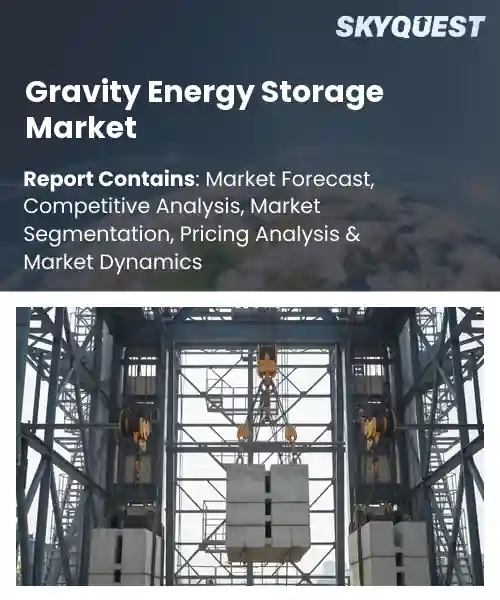
Gravity energy storage systems focus primarily on several technologies capable of storing potential energy by raising and lowering heavy masses. A major driver of gravity energy storage is the rapidly advancing integration of variable renewable electricity, long-duration, durable energy storage.
The market for gravity energy storage is important because it provides a low cycle degradation alternative to electrochemical battery systems for applications such as grid support, seasonal load shifting, and peak shaving. Most of the energy stored using gravity has been associated with traditional pumped hydroelectric systems. However, significant gravity energy storage market growth in the market which has occurred over the past year as mechanical forms of storing energy through gravity have emerged, including deep borehole solutions from new private companies and high-rise modular storage systems.
Early market growth has been driven by the rapid scaling of established pumped hydro storage facilities along with the start-up pilots indicating market acceptance of the various emerging gravity technology solutions from innovators. The increasing amounts of wind and solar energy being added to the global electricity system are resulting in longer and less predictable outages. Therefore, operators want energy storage that can provide energy for long durations without significant degradation; mechanical gravity systems have the simplest construction yielding many decades of use. Thus, minimizing cycling wear and providing competitive overall costs for energy storage.
How Can AI Optimize Operations and Performance in the Gravity Energy Storage Market?
AI technology provides gravity energy storage companies with benefits in the areas of operations optimization and operational performance improvement. AI provides predictive forecasting of renewable generation, predicts when to charge and discharge, predictive maintenance for winches and bearings, and performs digital twin simulations of design and resiliency to assist in moving toward their respective end-user applications. The gravity energy storage companies should be able to move from pilot demonstrations, toward first-phase commercial applications, in order to develop reliable long-duration storage solutions for supporting variable generation from renewable sources. Some examples of the sites that gravity energy will be used for including tall towers with gravity energy system that release energy for discharge; and deep mining shafts for utilizing gravity energy system. Machine learning software using telemetry data and market signals will increase uptime and enhance value for storage operations.
As of February 2026, Energy Vault announced the expansion of their operations to incorporate AI technology into their existing infrastructure using their VaultOS energy management software platform in partnership with battery manufacturers. Thus, demonstrating the capability of utilizing AI controlled operations to coordinate gravity energy systems with other energy storage systems, optimizing timing for released energy from storage, and providing predictive controls for reducing mechanical wear and tear to improve the efficiency and expedite the market scalability of gravity energy systems.
Market snapshot - (2026-2033)
Global Market Size
USD 0.39 Billion
Largest Segment
Above 1 MWh
Fastest Growth
Above 1 MWh
Growth Rate
42.2% CAGR
To get more insights on this market click here to Request a Free Sample Report
Global gravity energy storage market is segmented into energy capacity, technology, application, end user and region. Based on energy capacity, the market is segmented into Below 500 kWh, 500 kWh to 1 MWh and Above 1 MWh. Based on technology, the market is segmented into grid-scale and advanced flywheels. Based on application, the market is segmented into frequency regulation, load balancing and backup power. Based on end user, the market is segmented into utility companies, industrial facilities and commercial buildings. Based on region, the market is segmented into North America, Europe, Asia Pacific, Latin America and Middle East & Africa.
As per gravity energy storage market forecast, the above 1 MWH sector represents the largest portion of the overall gravity storage market. The needs of gravity storage systems and their long duration discharge profiles can better accommodate renewable variability and peak shifting when the actual installed capacity is high due to the large energy capacity of this segment. Creating large scale installations provides the opportunity for economies of scale during both construction and operation resulting in a lower cost. This is encouraging a higher level of investment from utilities and developers to construct projects and will lead to greater integration into grid planning and system services, which will create a much stronger market preference for higher capacity solutions.
As per gravity energy storage market outlook, the 500 KWH to 1 MWH capacity segment is rapidly emerging as the fastest growing portion of the market as the modular medium capacity systems are better suited for commercial and industrial usage, and more flexibility near the grid edge. The combination of quicker manufacturing, shorter deployment timeframes, and higher expected demand for onsite resiliency and flexible dispatch, are creating more installations and opening new commercial opportunities for gravity storage technology.
Grid scale segment stands out because gravity energy storage achieves its strongest value proposition at utility scale. As the financing and planning of large-scale development projects is now considered to be progressing, developers are focusing on large-scale facilities, which ultimately results in lower operational costs and more predictable performance levels. In addition, developers also want to follow the grid operators who have asked for reliable energy storage solutions that can reliably function when power needs to be supplied.
As per gravity energy storage market analysis, advanced flywheels are emerging as the most rapidly expanding technology due to exceptional rapid response, long cycle life, and growing cost competitiveness for short duration services and industrial power quality. The compact design of newly developed gravity storage systems will allow for the use of mechanical energy storage at constrained locations thereby generating the revenues of speed to market and increasing the potential application areas where mechanical energy storage can be utilized.
To get detailed segments analysis, Request a Free Sample Report
As per gravity energy storage market regional outlook, Europe is at the forefront of the energy storage industry because multiple factors align to make it an attractive environment, supportive regulatory regimes, a well-developed R&D ecosystem, and an existing industrial infrastructure that can enable the translation from design to scalable projects. The various geographical characteristics and existing infrastructure can potentially support deployments of energy storage systems, as well as cross-border transmission systems that can provide demand for large-scale, long-duration storage solutions. The public’s acceptance, willingness to engage with local communities on project development, and availability of a mature financing environment (with a diversity of funding instruments) help to mitigate the risk associated with developing large energy storage projects. Furthermore, collaboration amongst utilities, technology vendors, and academia promotes iterative enhancements and improvements in operational maturity and cost efficiency. These factors will continue to strengthen and maintain Europe’s market leadership position throughout multiple value chains.
As per gravity energy storage market regional forecast, Germany energy storage sector is characterized by a high level of engineering prowess and commitment to reliability in the electrical grid. Utilities, research institutes, and industry participants develop pilot projects and collaborate on design refinements. Utility procurement processes favor flexible systems, and integration into the grid is key. As the availability of brownfield development sites presents practical locations for deployment; with developed supply chains in place to manufacture and install the technology. In addition, the supportive policy environment encourages innovation, resulting in growth across all stages of project development and technical refinement.
As per gravity energy storage industry analysis, the gravitational energy storage market in the UK is fueled by a strategic focus on system resilience and an offshore grid framework for integration of GEMS. Market drivers such as innovation centers and private investors are collaborating with utilities to explore modular and repurposed sites to test new concepts. Attention to capacity and flexibility regulatory issues provides the foundation for a business-friendly environment to grow the market. The community engagement process promotes fast-tracking the permitting process for complex projects. In addition, a growing ecosystem of engineering and technology-firm companies actively promotes installation procedures. The UK position is enhanced by strong project management expertise and investor funding.
The French gravity energy storage market trends have a balanced approach based on energy strategies that value the complementarity between dispatch-able and non-dispatchable resources. National engineering expertise coupled with large infrastructure operators provides for demonstrated collaborative projects with an emphasis on safety and environmental compatibility. Regional co-operations between neighbouring grids enhance the market opportunity for storage services. An active network of novel action between industry. and research is creating the technical depth needed to support the development of gravitational energy storage technology in France. The French GEMS environment can help facilitate the evolution and scale of gravitational storage into operational assets.
North American growth is driven by utility modernization, increasing need for long duration firming capacity, and a strong private sector investment landscape supporting pilot and deployment activities for large scale projects. There are also unique opportunities for gravity energy storage due to variances in topography and availability of brownfield sites. In addition, market structures that support revenue through ancillary services and capacity services, as well as the potential for flexible systems, will benefit from additional revenues due to flexibility in the market.
Growing U.S. gravity energy storage market is driven by active utility procurement efforts and a dynamic investment community looking to invest in excess storage solutions. There has been a strong collaboration between regional grid operators and independent developers to align project features with the needs of the electric system. There is also a robust manufacturing ecosystem that accelerates the commercialization of energy storage systems. The types of deployment models being pursued include retrofitting existing legacy sites and developing new engineered facilities, which will allow for flexibility of electric energy storage systems.
Canada gravity energy storage market benefits from abundant availability of suitable site conditions and an emphasis on energy security over the long term. The provincial utilities in Canada and the clean energy mandates for all provinces have generated increased interest in gravity energy storage for both grid-connected and remote applications. Engineering resources with a strong culture of innovation allow gravity concepts to be adapted to northern operating environments. In addition, collaboration between developers and communities to site projects has also expanded the scope of projects.
Investment in technology, strategic industrial partnerships, and pilot programs focused on gravity storage, enable the advancing Asia Pacific region to demonstrate applicability of gravity storage to large dense grids. Also, national priorities for energy security and industrial competitiveness are encouraging project deployment that can link to existing maritime and urban infrastructures. Similarly, the manufacturing capabilities of the region in terms of precision engineering and system integration have paved the way for commercial-scale deployments to occur, while multi-sectoral collaboration is enabling development of local supply chains.
Japan’s gravity energy storage market is focused on technological advancements, reliability of systems about islanded grid applications, and energy security concerns. Manufacturers, utilities and research organizations are collaborating to develop modular solutions that can be placed in high density areas, amongst others, while providing compact, high-performance designs and meeting national durability standards.
In South Korea, the gravity energy storage market is being driven by the industrial capacity of the country and its desire to export advanced technology systems. Major company conglomerates have established joint ventures and are working collectively to create standardized components and assembly processes, with the intent to commercially commercialize as quickly as possible. The government and the industry are coordinating efforts to incorporate gravity energy storage systems into the urban and port infrastructure; therefore, practical demonstration will be conducted to show how the proposed systems will function in their native environments.
To know more about the market opportunities by region and country, click here to
Buy The Complete Report
Increasing Renewable Energy Integration
Rising Demand for Long-Duration Storage
High Capital Expenditure Requirements
Site and Geotechnical Limitations
Request Free Customization of this report to help us to meet your business objectives.
Competitive dynamics surrounding gravity energy storage are shaped by incumbent companies' active pursuit of scale through licensing and strategic partner relationships and also through the diversification of technology; Energy Vault has employed licensing and strategic investments to establish entry into China through partnerships with Atlas Renewable and Saudi Aramco. Meanwhile, the competitive environment is intensifying as a result of M&A activity and the related licensing agreements as well as product diversification into battery and software categories while new entrants engage with high density and underground gravity-based approaches to energy storage.
SkyQuest’s ABIRAW (Advanced Business Intelligence, Research & Analysis Wing) is our Business Information Services team that Collects, Collates, Correlates, and Analyses the Data collected by means of Primary Exploratory Research backed by robust Secondary Desk research.
As per SkyQuest analysis, gravity energy storage is gaining traction as higher renewable penetration and the economics of long-duration capacity drive demand, with increasing renewable energy integration acting as a primary catalyst and growing interest in long-duration firming as a secondary driver. Despite strong technical appeal, high upfront capital expenditure remains a key restraint that slows deployment and raises financing challenges. Europe currently leads the market due to supportive policy, R&D ecosystems and available sites, while large Above 1 MWh systems dominate commercial plans because their scale delivers longer discharge durations and lower unit costs, even as modular medium-capacity builds emerge for commercial and industrial resilience. The market is highly concentrated, with leading players such as Energy Vault, Gravitricity, and ARES dominating the majority of gravity energy storage market share. The market is witnessing a strong growth toward modular and long-duration energy storage solutions, with increasing integration of gravity systems with renewable energy projects and growing adoption of hybrid storage technologies to enhance grid stability and efficiency.”
| Report Metric | Details |
|---|---|
| Market size value in 2024 | USD 0.39 Billion |
| Market size value in 2033 | USD 9.27 Billion |
| Growth Rate | 42.2% |
| Base year | 2024 |
| Forecast period | (2026-2033) |
| Forecast Unit (Value) | USD Billion |
| Segments covered |
|
| Regions covered | North America (US, Canada), Europe (Germany, France, United Kingdom, Italy, Spain, Rest of Europe), Asia Pacific (China, India, Japan, Rest of Asia-Pacific), Latin America (Brazil, Rest of Latin America), Middle East & Africa (South Africa, GCC Countries, Rest of MEA) |
| Companies covered |
|
| Customization scope | Free report customization with purchase. Customization includes:-
|
To get a free trial access to our platform which is a one stop solution for all your data requirements for quicker decision making. This platform allows you to compare markets, competitors who are prominent in the market, and mega trends that are influencing the dynamics in the market. Also, get access to detailed SkyQuest exclusive matrix.
Table Of Content
Executive Summary
Market overview
Parent Market Analysis
Market overview
Market size
KEY MARKET INSIGHTS
COVID IMPACT
MARKET DYNAMICS & OUTLOOK
Market Size by Region
KEY COMPANY PROFILES
Methodology
For the Gravity Energy Storage Market, our research methodology involved a mixture of primary and secondary data sources. Key steps involved in the research process are listed below:
1. Information Procurement: This stage involved the procurement of Market data or related information via primary and secondary sources. The various secondary sources used included various company websites, annual reports, trade databases, and paid databases such as Hoover's, Bloomberg Business, Factiva, and Avention. Our team did 45 primary interactions Globally which included several stakeholders such as manufacturers, customers, key opinion leaders, etc. Overall, information procurement was one of the most extensive stages in our research process.
2. Information Analysis: This step involved triangulation of data through bottom-up and top-down approaches to estimate and validate the total size and future estimate of the Gravity Energy Storage Market.
3. Report Formulation: The final step entailed the placement of data points in appropriate Market spaces in an attempt to deduce viable conclusions.
4. Validation & Publishing: Validation is the most important step in the process. Validation & re-validation via an intricately designed process helped us finalize data points to be used for final calculations. The final Market estimates and forecasts were then aligned and sent to our panel of industry experts for validation of data. Once the validation was done the report was sent to our Quality Assurance team to ensure adherence to style guides, consistency & design.
Analyst Support
Customization Options
With the given market data, our dedicated team of analysts can offer you the following customization options are available for the Gravity Energy Storage Market:
Product Analysis: Product matrix, which offers a detailed comparison of the product portfolio of companies.
Regional Analysis: Further analysis of the Gravity Energy Storage Market for additional countries.
Competitive Analysis: Detailed analysis and profiling of additional Market players & comparative analysis of competitive products.
Go to Market Strategy: Find the high-growth channels to invest your marketing efforts and increase your customer base.
Innovation Mapping: Identify racial solutions and innovation, connected to deep ecosystems of innovators, start-ups, academics, and strategic partners.
Category Intelligence: Customized intelligence that is relevant to their supply Markets will enable them to make smarter sourcing decisions and improve their category management.
Public Company Transcript Analysis: To improve the investment performance by generating new alpha and making better-informed decisions.
Social Media Listening: To analyze the conversations and trends happening not just around your brand, but around your industry as a whole, and use those insights to make better Marketing decisions.
REQUEST FOR SAMPLE
 REQUEST FREE CUSTOMIZATION
Global Gravity Energy Storage Market size was valued at USD 0.39 Billion in 2024 and is poised to grow from USD 0.55 Billion in 2025 to USD 9.27 Billion by 2033, growing at a CAGR of 42.2% during the forecast period (2026-2033).
Competitive dynamics in gravity energy storage are defined by licensing, strategic partnerships, and technology diversification as incumbents pursue scale: Energy Vault has used licensing and strategic investments to enter China and secured partners such as Atlas Renewable and Saudi Aramco; M&A and licensing deals alongside product diversification into battery and software lines intensify rivalry while newer entrants pursue underground and high-density gravity approaches. 'Energy Vault', 'Gravitricity', 'ARES (Advanced Rail)', 'Gravity Power', 'Faresin Industries', 'Gravity-Bank', 'Teraloop', 'RheEnergise', 'Haldane', 'Lift Energy', 'Quidnet', 'Mountain Gravity', 'Stiesdal', 'Anergy', 'PUMPED', 'Gravity Energy Storage Services', 'Energy Tower (Gravity)', 'Heindl Energy', 'Sink Float Solutions', 'Green Gravity'
Integration of variable renewable generation increases demand for long-duration, high-efficiency storage solutions that can absorb surplus production and dispatch energy during low-generation periods. Gravity energy storage systems provide predictable, long-life mechanical storage with low environmental footprint, enabling grid operators and energy planners to balance supply and demand without relying exclusively on chemical batteries. Their operational flexibility supports firming of renewables and reduces curtailment, creating favorable conditions for project development, investor interest, and utility procurement decisions that drive deployment in support of broader decarbonization goals.
Renewable Firming Demand: Rising penetration of variable renewables is increasing demand for dependable, long duration storage that can firm output and provide system flexibility. Gravity energy storage is gaining attention because it avoids chemical materials, offers predictable operation profiles and can complement battery assets. Utilities are exploring integrated planning to use gravity systems for congestion relief, frequency support and seasonal balancing. Policy incentives and procurement mechanisms oriented toward reliability are encouraging demonstrations and cross sector partnerships, enabling technology maturation and commercial scale deployment.
As per gravity energy storage market regional outlook, Europe is at the forefront of the energy storage industry because multiple factors align to make it an attractive environment, supportive regulatory regimes, a well-developed R&D ecosystem, and an existing industrial infrastructure that can enable the translation from design to scalable projects.


Want to customize this report? This report can be personalized according to your needs. Our analysts and industry experts will work directly with you to understand your requirements and provide you with customized data in a short amount of time. We offer $1000 worth of FREE customization at the time of purchase.
Feedback From Our Clients


 USA (+1) 351-333-4748

