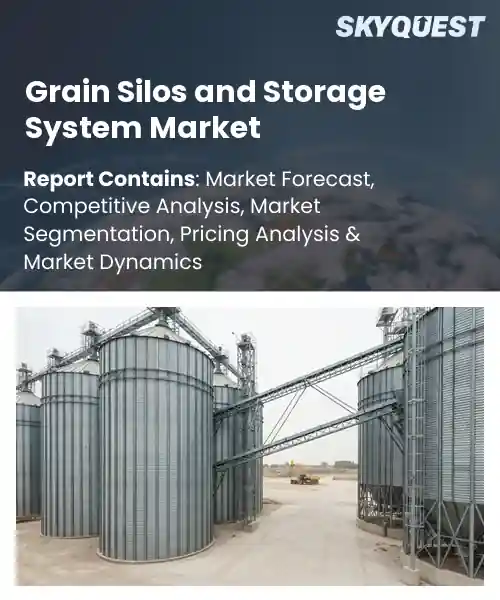
Grain Silos and Storage System Market
Report ID: SQMIG20H2109
Report ID: SQMIG20H2109
[email protected]
USA +1 351-333-4748
Report ID:
SQMIG20H2109 |
Region:
Global |
Published Date: July, 2026
Pages:
157
|Tables:
93
|Figures:
76


Global Grain Silos And Storage System Market size was valued at USD 1.68 Billion in 2024 and is poised to grow from USD 1.78 Billion in 2025 to USD 2.84 Billion by 2033, growing at a CAGR of 6.0% during the forecast period (2026-2033).
Grain silos and storage systems form the backbone of agriculture, providing safe, controlled environments for harvested crops from farm to market. The primary driver of this market is the escalating demand for food security as populations grow and climate variability threatens yields; this pressure compels producers to adopt advanced storage solutions that minimize losses. Historically, the sector evolved from simple wooden bins in the early 20th century to steel and concrete structures with automated aeration. For example, Brazil’s adoption of high‑capacity concrete silos in 2015 reduced spoilage rates by 15 percent, illustrating how modernization improves commodity reliability and trade competitiveness.
A pivotal factor driving the global grain silos market is the adoption of digital monitoring and automation, which enhances efficiency and curbs spoilage. IoT sensors and cloud analytics now allow real‑time tracking of temperature, humidity, and oxygen, enabling timely ventilation and pest control. In the U.S. Midwest, a major agribusiness deployed smart silos that cut moisture‑related losses by 20% and reduced energy use by 15%. This success prompts vendors to offer integrated hardware‑software packages, creating new revenue from predictive maintenance and significantly encouraging designs that are modular and retrofit‑friendly for both large terminals and smallholder cooperatives worldwide today.
How is IoT-driven Automation Reshaping The Global Grain Silos And Storage System Market?
IoT-driven automation is turning grain silos into smart hubs that continuously track temperature, humidity and grain movement. Sensors feed data to cloud platforms where algorithms predict spoilage risk and trigger ventilation or aeration without human intervention. Remote dashboards let operators adjust settings from a distance, reducing labor and response time. Integrated with farm management software, these systems coordinate harvest schedules, optimize loading sequences and enable predictive maintenance that prevents equipment failure. The result is higher grain quality, lower loss rates and more efficient use of storage capacity across the supply chain. As farmers adopt these technologies, the overall market gains momentum and attracts further innovation.
In January 2024, Cargill announced a new IoT‑enabled silo network that automates temperature control and moisture monitoring, boosting storage efficiency and supporting market growth.
Market snapshot - (2026-2033)
Global Market Size
USD 1.68 Billion
Largest Segment
Grain Bins
Fastest Growth
Bag Silos
Growth Rate
6.0% CAGR
To get more insights on this market click here to Request a Free Sample Report
Global grain silos and storage system market is segmented by type, commodity, material and region. Based on type, the market is segmented into Flat Bottom Silo, Hopper Silo, Grain Bins and Bag Silos. Based on commodity, the market is segmented into Rice, Wheat, Maize, Soybean and Sunflower. Based on material, the market is segmented into Steel, Concrete and Fiberglass. Based on region, the market is segmented into North America, Europe, Asia Pacific, Latin America and Middle East & Africa.
Flat bottom silo segment dominates because its simple geometry and ease of integration allow manufacturers to standardize production while meeting diverse capacity needs. The design offers rapid loading and unloading, minimal grain movement, and lower maintenance, which aligns with operators’ focus on operational efficiency. Consequently, buyers prioritize flat bottom silos for both new installations and retrofits, reinforcing its leading position in the grain silos and storage system market overall globally.
However, hopper silo segment is witnessing the strongest growth momentum as producers seek higher discharge rates for large scale handling. Innovative sloped designs reduce flow friction and enable automated extraction, attracting agribusinesses upgrading to mechanized workflows. This acceleration fuels market expansion and creates new opportunities for equipment suppliers worldwide soon.
Wheat commodity segment dominates because wheat remains the staple grain for the largest share of global feed and food production, driving continuous demand for secure storage. Its moderate moisture tolerance and long shelf life necessitate robust silo solutions, prompting manufacturers to tailor designs that preserve grain integrity. This persistent requirement sustains investment in wheat specific storage infrastructure, cementing its leadership in the grain silos and storage system market across regions.
Meanwhile, soybean commodity segment emerges as the key high growth area as demand for plant based protein accelerates. Advanced hermetic storage technologies are being integrated to protect oil content and prevent oxidation, appealing to processors seeking quality. This surge expands market depth and spurs innovation across the storage ecosystem today.
To get detailed segments analysis, Request a Free Sample Report
Asia Pacific dominance stems from a combination of abundant agricultural production, advanced engineering capabilities, and supportive policy frameworks. The region benefits from large‑scale grain cultivation that generates continuous demand for modern storage solutions. Manufacturers in Japan and South Korea leverage high‑tech design, automation, and durability to meet stringent quality expectations, positioning the region as a hub for innovative silo systems. Strategic investments in research and development foster continuous improvement, while export‑oriented strategies expand market reach. Additionally, regional supply chains integrate raw material sourcing with component fabrication, reducing lead times and enhancing cost competitiveness. The convergence of technical expertise, robust infrastructure, and forward‑looking regulatory environments solidifies Asia Pacific as the leading contributor to the global grain storage ecosystem and fostering resilient agricultural value chains.
Grain Silos and Storage System Market in Japan benefits from a tradition of precision engineering and a strong focus on sustainability. Local manufacturers emphasize modular designs that accommodate varying crop volumes while meeting stringent safety standards. Collaborative ties with agricultural cooperatives streamline adoption, and ongoing research into corrosion‑resistant materials enhances longevity. The market also leverages advanced monitoring technologies to optimize inventory management and reduce post‑harvest losses and improve chain efficiency.
Grain Silos and Storage System Market in South Korea is driven by rapid adoption of high‑tech farming practices and a governmental emphasis on food security. Companies prioritize compact, automated solutions that fit limited land areas while ensuring precise temperature control. Partnerships with research institutes foster innovation in sensor integration, enabling real‑time condition monitoring. The market also benefits from export‑focused strategies that position domestic designs as competitive alternatives in neighboring regions.
The rapid expansion of the market in North America is propelled by extensive grain production, modern logistics networks, and a strong emphasis on technological advancement. Producers seek efficient storage to safeguard large harvests, prompting adoption of automated silo designs that integrate digital monitoring and predictive maintenance. Investment in research encourages development of lightweight, corrosion‑resistant structures, enhancing operational reliability. Regulatory frameworks support safety standards and promote sustainability initiatives, reinforcing market confidence. Collaborative efforts between equipment manufacturers and agricultural cooperatives streamline solution deployment, while the presence of major research institutions accelerates innovation cycles. Together these factors create a dynamic environment that fuels continual growth and positions North America as a key growth engine in the global landscape. The focus on integrated supply‑chain management further amplifies the market’s appeal.
Grain Silos and Storage System Market in the United States leverages far‑mable acreage and advanced agribusiness infrastructure. Industry leaders prioritize scalable, high‑capacity silo solutions equipped with IoT sensors for real‑time data capture. Partnerships with federal research agencies drive innovations in energy‑efficient designs and waste reduction. The market also embraces sustainability standards, encouraging the use of recycled materials and low‑emission manufacturing processes. These dynamics support robust adoption across diverse grain‑producing regions.
Grain Silos and Storage System Market in Canada emphasizes resilience to climatic conditions and the integration of energy sources. Manufacturers develop insulated silo structures that maintain optimal grain quality despite temperature fluctuations. Collaborative initiatives with provincial agricultural boards focus on reducing post‑harvest loss through monitoring technologies. The market also supports practices, promoting the adoption of ventilation systems and recyclable component designs. These efforts reinforce Canada’s commitment to grain storage solutions.
Europe strengthens its position through a blend of regulatory support, technological innovation, and a tradition of high‑quality engineering. The region prioritizes sustainability, encouraging the use of eco‑friendly materials and energy‑efficient designs that meet stringent environmental standards. Collaborative research programs across Germany, the United Kingdom, and France accelerate development of smart silo systems equipped with data analytics and predictive controls. Strong industrial networks facilitate rapid prototyping and scale‑up of advanced storage solutions, while comprehensive safety regulations ensure reliability. Market participants also benefit from integrated logistics infrastructure that streamlines grain movement from field to storage. By combining legacy expertise with forward‑looking policies, Europe enhances its competitiveness and solidifies its role as a key contributor to the global grain storage ecosystem. The emphasis on cross‑border trade corridors further expands market reach.
Grain Silos and Storage System Market in Germany is characterized by precision engineering and a strong focus on automation. Companies develop modular silo solutions that integrate sensor networks for condition monitoring. Collaborative efforts with research institutes promote the use of corrosion‑resistant alloys and energy‑saving ventilation. The market also aligns with European safety standards, ensuring reliable performance across climatic zones. These attributes position Germany as a benchmark for high‑efficiency grain storage.
Grain Silos and Storage System Market in the United Kingdom focuses on design and compliance with safety legislation. Industry players emphasize lightweight insulated silo structures that maintain grain integrity during temperature shifts. Partnerships with agricultural universities drive research into smart monitoring and predictive maintenance. The market also supports circular economy principles, encouraging reuse of components and low‑carbon manufacturing. These initiatives reinforce the United Kingdom’s role as a grain storage hub.
Grain Silos and Storage System Market in France emphasizes sustainability and integration with renewable energy. Manufacturers develop silo solutions featuring solar‑assisted ventilation and high‑efficiency insulation to reduce consumption. Collaborative projects with national research agencies focus on advanced sensor technology for real‑time grain tracking. The market also aligns with EU environmental directives, promoting recyclable materials and low‑impact manufacturing. These efforts position France as a significant leader in eco‑friendly grain storage innovation.
To know more about the market opportunities by region and country, click here to
Buy The Complete Report
Rising Global Food Demand
Advancements In Automated Storage
High Capital Investment Requirements
Stringent Environmental Regulations
Request Free Customization of this report to help us to meet your business objectives.
The competitive landscape is shaped by aggressive M&A activity, strategic partnerships, and rapid tech innovation, with firms like AGCO Corp acquiring niche storage technology providers and AG Growth International Inc forming joint ventures to integrate AI-driven monitoring, while startups such as Silo leverage cloud platforms to streamline supply chains, intensifying pressure on incumbents to adopt digital solutions.
SkyQuest’s ABIRAW (Advanced Business Intelligence, Research & Analysis Wing) is our Business Information Services team that Collects, Collates, Correlates, and Analyses the Data collected by means of Primary Exploratory Research backed by robust Secondary Desk research.
As per SkyQuest analysis, the global grain silos and storage system market is being propelled primarily by rising global food demand, which pushes producers to secure larger, more reliable storage capacity. A second important driver is the rapid adoption of automated storage technologies, where IoT sensors and predictive analytics improve grain quality and reduce losses. The market faces a notable restraint in the high capital investment required for building and equipping modern silos, limiting uptake among smaller growers. Asia Pacific dominates the landscape due to its vast agricultural output and advanced engineering ecosystem, while flat‑bottom silos lead the segment hierarchy because of their simple geometry, ease of integration and low maintenance requirements.
| Report Metric | Details |
|---|---|
| Market size value in 2024 | USD 1.68 Billion |
| Market size value in 2033 | USD 2.84 Billion |
| Growth Rate | 6.0% |
| Base year | 2024 |
| Forecast period | (2026-2033) |
| Forecast Unit (Value) | USD Billion |
| Segments covered |
|
| Regions covered | North America (US, Canada), Europe (Germany, France, United Kingdom, Italy, Spain, Rest of Europe), Asia Pacific (China, India, Japan, Rest of Asia-Pacific), Latin America (Brazil, Rest of Latin America), Middle East & Africa (South Africa, GCC Countries, Rest of MEA) |
| Companies covered |
|
| Customization scope | Free report customization with purchase. Customization includes:-
|
To get a free trial access to our platform which is a one stop solution for all your data requirements for quicker decision making. This platform allows you to compare markets, competitors who are prominent in the market, and mega trends that are influencing the dynamics in the market. Also, get access to detailed SkyQuest exclusive matrix.
Table Of Content
Executive Summary
Market overview
Parent Market Analysis
Market overview
Market size
KEY MARKET INSIGHTS
COVID IMPACT
MARKET DYNAMICS & OUTLOOK
Market Size by Region
KEY COMPANY PROFILES
Methodology
For the Grain Silos and Storage System Market, our research methodology involved a mixture of primary and secondary data sources. Key steps involved in the research process are listed below:
1. Information Procurement: This stage involved the procurement of Market data or related information via primary and secondary sources. The various secondary sources used included various company websites, annual reports, trade databases, and paid databases such as Hoover's, Bloomberg Business, Factiva, and Avention. Our team did 45 primary interactions Globally which included several stakeholders such as manufacturers, customers, key opinion leaders, etc. Overall, information procurement was one of the most extensive stages in our research process.
2. Information Analysis: This step involved triangulation of data through bottom-up and top-down approaches to estimate and validate the total size and future estimate of the Grain Silos and Storage System Market.
3. Report Formulation: The final step entailed the placement of data points in appropriate Market spaces in an attempt to deduce viable conclusions.
4. Validation & Publishing: Validation is the most important step in the process. Validation & re-validation via an intricately designed process helped us finalize data points to be used for final calculations. The final Market estimates and forecasts were then aligned and sent to our panel of industry experts for validation of data. Once the validation was done the report was sent to our Quality Assurance team to ensure adherence to style guides, consistency & design.
Analyst Support
Customization Options
With the given market data, our dedicated team of analysts can offer you the following customization options are available for the Grain Silos and Storage System Market:
Product Analysis: Product matrix, which offers a detailed comparison of the product portfolio of companies.
Regional Analysis: Further analysis of the Grain Silos and Storage System Market for additional countries.
Competitive Analysis: Detailed analysis and profiling of additional Market players & comparative analysis of competitive products.
Go to Market Strategy: Find the high-growth channels to invest your marketing efforts and increase your customer base.
Innovation Mapping: Identify racial solutions and innovation, connected to deep ecosystems of innovators, start-ups, academics, and strategic partners.
Category Intelligence: Customized intelligence that is relevant to their supply Markets will enable them to make smarter sourcing decisions and improve their category management.
Public Company Transcript Analysis: To improve the investment performance by generating new alpha and making better-informed decisions.
Social Media Listening: To analyze the conversations and trends happening not just around your brand, but around your industry as a whole, and use those insights to make better Marketing decisions.
REQUEST FOR SAMPLE
 REQUEST FREE CUSTOMIZATION
Global Grain Silos And Storage System Market size was valued at USD 1.68 Billion in 2024 and is poised to grow from USD 1.78 Billion in 2025 to USD 2.84 Billion by 2033, growing at a CAGR of 6.0% during the forecast period (2026-2033).
The competitive landscape is shaped by aggressive M&A activity, strategic partnerships, and rapid tech innovation, with firms like AGCO Corp acquiring niche storage technology providers and AG Growth International Inc forming joint ventures to integrate AI-driven monitoring, while startups such as Silo leverage cloud platforms to streamline supply chains, intensifying pressure on incumbents to adopt digital solutions. 'Franklin Electric Co Inc', 'Brock Grain Systems Inc', 'Sukup Manufacturing Co', 'GSI Group LLC', 'Silo SA', 'Buhler Group AG', 'Ahrens Agri SA', 'Meridian Manufacturing Inc', 'Chief Industries Inc', 'SCAFCO Grain Systems Inc', 'Neuero Industrietechnik GmbH', 'Mymsa Almacenamiento SA', 'Frame Steel Buildings Inc', 'Bin Master Level Controls', 'Simeza SA', 'Westeel Inc', 'Kepler Weber SA', 'Obial SA de CV', 'Lambton Conveyor Limited', 'Tornum AB'
The expanding world population combined with shifting dietary preferences elevates the demand for staple grains, prompting producers to secure larger, more reliable storage capacities. As agricultural output rises, stakeholders invest in advanced silo solutions to minimize post‑harvest losses and maintain supply chain continuity. This heightened emphasis on preserving grain quality and extending shelf life directly fuels the adoption of modern storage systems, thereby accelerating market expansion and encouraging continuous innovation within the sector. Furthermore, the need for strategic reserves in volatile climates reinforces the priority placed on robust storage infrastructure.
Digital Twin Integration: Adoption of digital twin technology is reshaping grain silo operations by creating virtual replicas of physical assets. These dynamic models enable operators to simulate storage conditions, predict structural stress, and optimize ventilation strategies without interrupting service. By integrating sensor feeds and predictive analytics, managers gain actionable insights into grain flow, moisture migration, and equipment wear, reducing spoilage risk and maintenance downtime. This proactive approach enhances operational transparency, supports compliance with safety standards, and drives cost efficiencies across the supply chain.
Why does Asia Pacific Dominate the Global Grain Silos and Storage System Market? |@12


Want to customize this report? This report can be personalized according to your needs. Our analysts and industry experts will work directly with you to understand your requirements and provide you with customized data in a short amount of time. We offer $1000 worth of FREE customization at the time of purchase.
Feedback From Our Clients


 USA (+1) 351-333-4748

