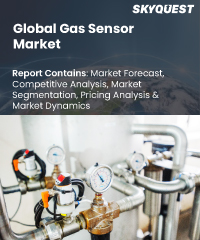
Gas Sensor Market
Report ID: SQMIG20D2161
Report ID: SQMIG20D2161
[email protected]
USA +1 351-333-4748
Report ID:
SQMIG20D2161 |
Region:
Global |
Published Date: September, 2025
Pages:
177
|Tables:
130
|Figures:
77


Global Gas Sensor Market size was valued at USD 1.53 Billion in 2024 and is poised to grow from USD 1.69 Billion in 2025 to USD 3.73 Billion by 2033, growing at a CAGR of 10.42% during the forecast period (2026–2033).
The global Gas Sensor Market outlook is changing dramatically as a result of growing regulatory pressures and environmental concerns. According to the International Energy Agency, global energy-related CO2 emissions increased 1.1% in 2023 and reached a new record high of 37.55 Gt, despite international climate commitments made under the Paris Agreement. Governments everywhere are consequently implementing stricter emissions monitoring laws.
Moreover, the oil and gas sector continues to be a major force behind the adoption of gas sensors, with significant investments affecting market dynamics. In February 2024, India unveiled a massive USD 67 billion investment plan to strengthen its natural gas supply chain, despite Statistics Norway's prediction that investments in oil and gas extraction would rise by 13% in 2024. These investments are speeding up the deployment of advanced gas detection systems, particularly in offshore drilling and exploration operations where monitoring of toxic and flammable gases is critical to operational safety.
How is Contactless Gas Sensing Revolutionizing Healthcare Monitoring?
In 2025, researchers from Georgia Tech, Northwestern University, and the Korea Institute of Science and Technology (KIST) created the first contactless wearable gas sensor, marking a significant advancement in the field. This tiny device, roughly the size of a dime, does not require skin contact, in contrast to conventional gas sensors. It tracks important gases that are naturally released by human skin, including carbon dioxide (CO₂), oxygen, water vapor, and volatile organic compounds (VOCs), using small air chambers and cutting-edge detection technologies. This development makes it possible to monitor health in real time and continuously without causing discomfort or irritation, which is particularly advantageous for skin that is damaged or delicate.
Market snapshot - 2026-2033
Global Market Size
USD 3.8 billion
Largest Segment
Carbon Monoxide (CO)
Fastest Growth
Nitrogen Oxide
Growth Rate
10.3% CAGR
To get more insights on this market click here to Request a Free Sample Report
The global Gas Sensor Market is segmented into type, technology, application, and region. By type, the market is classified into oxygen, carbon monoxide (CO), carbon dioxide (CO2), nitrogen oxide, and hydrocarbon. Depending on technology, it is divided into electrochemical, photoionization detectors (PID), solid state/metal oxide semiconductors, catalytic, infrared, and semiconductors. According to the application, the market is categorized into medical, building automation, industrial, food & beverages, automotive, and transportation & logistics. Regionally, it is analyzed across North America, Europe, Asia-Pacific, Latin America, and the Middle East and Africa.
Why Does the Carbon Monoxide Segment Lead to the Global Gas Sensor Market?
As per the 2024 Gas Sensor Market analysis, the carbon monoxide (CO) segment remains the market leader in the market, with a projected 28% share. The significant presence of this market is driven by the vital role CO sensors play in several industries, most notably building automation, industrial safety, and automobiles. The government's tougher CO emissions rules and increased focus on workplace safety have further solidified the segment's leadership. These sensors are crucial for detecting this colorless, odorless, and potentially lethal gas, which poses major health risks at high concentrations. The continuous growth of the automotive sector and the expanding industrial uses of CO detection in manufacturing processes have had a major impact on this segment's market dominance.
The nitrogen oxide segment of the gas sensors industry is anticipated to grow at the fastest rate, with a projected compound annual growth rate (CAGR) of 12% from 2025 to 2032. This remarkable increase is mostly due to stricter emission control regulations around the world and rising environmental concerns. The segment is expanding due to the growing applications of these sensors in industrial safety, air purification, and air quality monitoring. The automotive industry's shift to more stringent emission standards and the growing need for NOx monitoring in industrial processes have created significant opportunities.
What Makes Electrochemical Gas Sensors Ideal for Confined Spaces?
As per the 2024 Gas Sensor Market forecast, the market is led by the electrochemical gas sensor segment, which is expected to hold a 50% market share in 2024. This noteworthy market position is due to the low power requirements of electrochemical gas sensors, which make them ideal for confined space applications like gas leak detection and indoor air quality monitoring. These sensors are particularly favored in portable instruments with multiple sensors due to their energy efficiency. Because of their exceptional sensitivity to even the smallest leaks and high accuracy in identifying specific gases, electrochemical gas sensors are extensively utilized in the oil and gas industry. Their market dominance is further cemented by their growing use in hazardous environments, manufacturing facilities, and chemical industries, as well as the requirement to adhere to laws like COSHH and OSHA.
With a projected compound annual growth rate (CAGR) of 16% between 2025 and 2032, the solid state/metal oxide semiconductor gas sensor sector is expanding rapidly. This remarkable expansion is being driven by the segment's unique characteristics, which include broad chemical reactivity, stable oxides, enhanced responsiveness, and inexpensive fabrication. These sensors excel at detecting a wide range of gases, including CO, CO2, O2, SO2, O3, H2, Ar, N2, NH3, VOCs, and LPG. The increasing use in specialized applications like medical breath analysis and harsh environment gas detection, along with ongoing research to enhance sensing capabilities through improved structural stability and advanced material preparation techniques, are driving this market's growth.
To get detailed segments analysis, Request a Free Sample Report
How are Technological Innovations Shaping the Gas Sensor Market in North America?
As per the Gas Sensor Market regional analysis, stricter safety regulations and increased industrial automation are driving a rapid expansion of the market in North America. The US and Canada are the region's primary markets, and most of the demand is driven by the automotive, oil and gas, and healthcare sectors. The region's focus on workplace safety and environmental monitoring has sped up the adoption of advanced gas detection systems, particularly in industrial applications. Both countries' legal frameworks and government initiatives show a strong commitment to reducing emissions and enhancing air quality monitoring systems.
U.S. Gas Sensor Market
In 2024, the US will dominate the North American Gas Sensor Market with a global market share of about 25%. The primary drivers of the market are the country's sizable oil and gas sector, stringent workplace safety regulations, and the growing automobile sector. Large manufacturing facilities and the increased focus on industrial safety have led to a high demand for industrial gas sensors. The expansion of the healthcare sector and the growing emphasis on air quality monitoring in smart buildings have caused the market to grow even more quickly. Furthermore, technological developments in wireless capabilities and sensor miniaturization have opened new application areas across a range of industries.
Canada Gas Sensor Market
Stricter industrial emissions laws and the rising need for methane detection in oil and gas are driving the Canadian Gas Sensor Market. Adoption is accelerating due to government programs that support worker safety and smart city air quality monitoring. The increasing use of electrochemical sensors in mining is also helping the Canadian market. The market is anticipated to grow 6.4% in 2024 and 2025 due to improvements in infrastructure.
Why are IoT and Smart City Initiatives Crucial for Europe’s Gas Sensing Evolution?
The European Gas Sensor Market has strong potential to achieve the highest Gas Sensor Market share due to strict environmental regulations and industry safety standards. Notable markets that each significantly contribute to regional expansion are France, Germany, and the United Kingdom. The region's focus on industrial automation, smart city initiatives, and environmental monitoring has led to a high demand for gas sensing solutions. The automotive industry's transformation and the increasing use of IoT-based monitoring systems have caused the market to grow even faster.
Germany Gas Sensor Market
Germany leads the European gas sensor market with about 21% of the regional market share in 2024. The country's strong industrial base, particularly in the manufacturing and automotive sectors, has led to a high demand for industrial gas sensors. Germany's emphasis on Industry 4.0 initiatives and industrial automation has created a wealth of opportunities for advanced gas sensing solutions. The country's robust automotive industry and focus on environmental conservation have further supported market growth. Growing R&D spending has also contributed to advancements in sensor technologies.
UK Gas Sensor Market
The UK has the greatest potential for growth in Europe, with a projected CAGR of about 11% between 2025 and 2032. The country's market expansion is being driven by rising investments in industrial safety systems and environmental monitoring. New markets for gas sensor applications have been created by the UK's emphasis on renewable energy and emission reduction. Government efforts to improve air quality monitoring and workplace safety have led to even greater market growth. The expansion of building automation systems and smart city initiatives is also driving the need for advanced gas sensing solutions.
France Gas Sensor Market
The French Gas Sensor Market grew by 7.1% in 2024 because of strict decarbonization goals and industrial automation. Carbon monoxide and hydrogen sensors are in greater demand as a result of government support for electric vehicles and hydrogen infrastructure. Sensor adoption is accelerating due to indoor air quality regulations that will be implemented in public buildings and schools. Another important factor driving market growth through 2025 is the manufacturing sector's adoption of IoT-based monitoring.
What Role do Industrialization and Environmental Policies Play in Market Expansion in Asia-Pacific?
The Asia-Pacific Gas Sensor Market is growing quickly due to rapid industrialization and environmental consciousness. China, Japan, and India are the primary markets in this region, and each contributes differently to market expansion. Due to the region's expanding manufacturing sector and heightened emphasis on workplace safety and environmental protection, there is a significant need for gas sensing solutions. Government initiatives promoting industrial safety and air quality monitoring have also accelerated market growth.
China Gas Sensor Market
In the Asia-Pacific Gas Sensor Market, China emerges as the market leader. The country's extensive manufacturing base and rapid industrial automation have led to a significant increase in the need for gas sensing solutions. Gas sensors are widely used in many different industries in China because of the country's emphasis on environmental preservation and workplace safety. The country's automotive sector transformation and growing investments in smart city projects have further accelerated market expansion. Government initiatives that promote industrial safety and air quality monitoring have also helped the market expand.
Japan Gas Sensor Market
The Japanese Gas Sensor Market is expected to expand 6.8% in 2024 because of investments in smart factories and strict air quality regulations. Sensor innovation is being driven by the automotive industry's emphasis on pollution monitoring and fuel efficiency. Next-generation cooling systems are driving up demand for ammonia and refrigerant sensors. Gas leak detection systems are also being promoted in residential and industrial areas through 2025 as part of Japan's current push for disaster-resilient infrastructure.
To know more about the market opportunities by region and country, click here to
Buy The Complete Report
Gas Sensor Market Drivers
Tight Environmental Rules
Growing Demand from Smart Infrastructure and Automobiles
Gas Sensor Market Restraints
Expensive, Advanced Sensors
Problems with Sensor Calibration and Maintenance
Request Free Customization of this report to help us to meet your business objectives.
In the fiercely competitive global Gas Sensor Market, major rivals are concentrating on partnerships, innovation, and geographic expansion. Bosch Sensortec is investing in small, low-power sensor solutions, while companies such as Honeywell and Figaro Engineering are introducing multi-gas detection modules. The main tactics influencing competitiveness and market share are strategic partnerships with auto and smart home manufacturers as well as ongoing R&D expenditures in AI and IoT integration.
Top Player’s Company Profile
Recent Developments in Gas Sensor Market
SkyQuest’s ABIRAW (Advanced Business Intelligence, Research & Analysis Wing) is our Business Information Services team that Collects, Collates, Correlates, and Analyses the Data collected by means of Primary Exploratory Research backed by robust Secondary Desk research.
As per SkyQuest analysis, the global Gas Sensor Market is projected to gradually grow due to growth in smart infrastructure, industrial automation, and challenging environmental specifications. As demand grows in the industrial, automotive, healthcare, oil & gas, and other markets, technologies such as electrochemical and infrared sensors will be tasked with new sensor producers. IoT and AI have merged to create smarter, faster, and more responsive detection systems, while miniaturization is creating opportunities for wearable and portable devices. While the market is being driven by government regulations and innovation, it continues to face challenges with calibration and price. By offering new ideas and flexible applications, start-ups are enhancing the work of many established players in the market. The market will continue to grow in the future.
| Report Metric | Details |
|---|---|
| Market size value in 2024 | USD 1.53 Billion |
| Market size value in 2033 | USD 3.73 Billion |
| Growth Rate | 10.42% |
| Base year | 2024 |
| Forecast period | 2026-2033 |
| Forecast Unit (Value) | USD Billion |
| Segments covered |
|
| Regions covered | North America (US, Canada), Europe (Germany, France, United Kingdom, Italy, Spain, Rest of Europe), Asia Pacific (China, India, Japan, Rest of Asia-Pacific), Latin America (Brazil, Rest of Latin America), Middle East & Africa (South Africa, GCC Countries, Rest of MEA) |
| Companies covered |
|
| Customization scope | Free report customization with purchase. Customization includes:-
|
To get a free trial access to our platform which is a one stop solution for all your data requirements for quicker decision making. This platform allows you to compare markets, competitors who are prominent in the market, and mega trends that are influencing the dynamics in the market. Also, get access to detailed SkyQuest exclusive matrix.
Table Of Content
Executive Summary
Market overview
Parent Market Analysis
Market overview
Market size
KEY MARKET INSIGHTS
COVID IMPACT
MARKET DYNAMICS & OUTLOOK
Market Size by Region
KEY COMPANY PROFILES
Methodology
For the Gas Sensor Market, our research methodology involved a mixture of primary and secondary data sources. Key steps involved in the research process are listed below:
1. Information Procurement: This stage involved the procurement of Market data or related information via primary and secondary sources. The various secondary sources used included various company websites, annual reports, trade databases, and paid databases such as Hoover's, Bloomberg Business, Factiva, and Avention. Our team did 45 primary interactions Globally which included several stakeholders such as manufacturers, customers, key opinion leaders, etc. Overall, information procurement was one of the most extensive stages in our research process.
2. Information Analysis: This step involved triangulation of data through bottom-up and top-down approaches to estimate and validate the total size and future estimate of the Gas Sensor Market.
3. Report Formulation: The final step entailed the placement of data points in appropriate Market spaces in an attempt to deduce viable conclusions.
4. Validation & Publishing: Validation is the most important step in the process. Validation & re-validation via an intricately designed process helped us finalize data points to be used for final calculations. The final Market estimates and forecasts were then aligned and sent to our panel of industry experts for validation of data. Once the validation was done the report was sent to our Quality Assurance team to ensure adherence to style guides, consistency & design.
Analyst Support
Customization Options
With the given market data, our dedicated team of analysts can offer you the following customization options are available for the Gas Sensor Market:
Product Analysis: Product matrix, which offers a detailed comparison of the product portfolio of companies.
Regional Analysis: Further analysis of the Gas Sensor Market for additional countries.
Competitive Analysis: Detailed analysis and profiling of additional Market players & comparative analysis of competitive products.
Go to Market Strategy: Find the high-growth channels to invest your marketing efforts and increase your customer base.
Innovation Mapping: Identify racial solutions and innovation, connected to deep ecosystems of innovators, start-ups, academics, and strategic partners.
Category Intelligence: Customized intelligence that is relevant to their supply Markets will enable them to make smarter sourcing decisions and improve their category management.
Public Company Transcript Analysis: To improve the investment performance by generating new alpha and making better-informed decisions.
Social Media Listening: To analyze the conversations and trends happening not just around your brand, but around your industry as a whole, and use those insights to make better Marketing decisions.
REQUEST FOR SAMPLE
 REQUEST FREE CUSTOMIZATION


Want to customize this report? This report can be personalized according to your needs. Our analysts and industry experts will work directly with you to understand your requirements and provide you with customized data in a short amount of time. We offer $1000 worth of FREE customization at the time of purchase.
Feedback From Our Clients


 USA (+1) 351-333-4748

