Gangway Ladder Market
Report ID: SQMIG20T2057
Report ID: SQMIG20T2057
[email protected]
USA +1 351-333-4748
Report ID:
SQMIG20T2057 |
Region:
Global |
Published Date: July, 2026
Pages:
157
|Tables:
153
|Figures:
78


Global Gangway Ladder Market size was valued at USD 4.87 Billion in 2024 and is poised to grow from USD 5.12 Billion in 2025 to USD 7.69 Billion by 2033, growing at a CAGR of 5.2% during the forecast period (2026-2033).
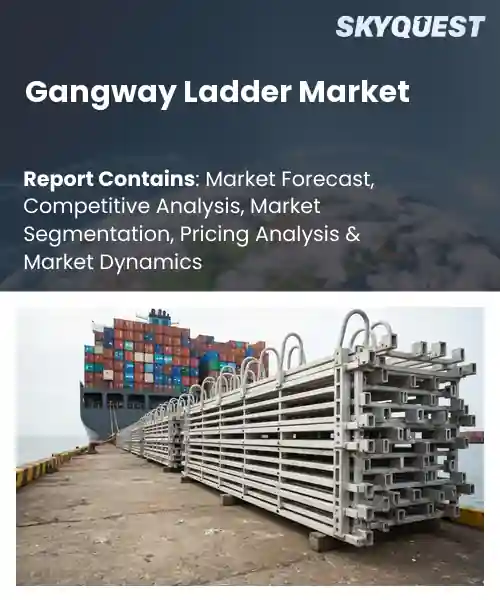
The global gangway ladder market supplies portable, self‑supporting stair systems used for ship boarding, offshore platforms, and industrial facilities. Its importance stems from the need for safe, personnel access in hazardous environments, where conventional fixed stairs are impractical. Manufacturers responded by integrating lightweight aluminum alloys and anti‑slip coatings, reducing weight while enhancing durability. This evolution reflects regulatory pressure from bodies such as IMO, which increasingly mandate certified gangways for crew safety. Rising safety compliance across maritime and offshore sectors serves as the catalyst driving market expansion, as tighter regulations compel firms to replace wooden gangways with aluminum or composite models. This shift creates opportunities for manufacturers to offer modular ladders that reconfigure for different vessel drafts, illustrated by a European shipyard that cut turnaround time by 30 % after adopting interchangeable sections. At the same time, the growth of offshore wind farms generates demand for lightweight, corrosion‑resistant gangways that can be quickly deployed on turbine platforms. As these projects multiply, the need for advanced ladder technology intensifies, reinforcing the market’s upward trajectory.
How is IoT-enhanced automation influencing safety standards in the gangway ladder market?
IoT‑enhanced automation is reshaping safety standards for gangway ladders by embedding sensors that continuously monitor load, angle, and surface conditions. Real‑time alerts warn users of overload or instability, reducing the risk of slips and falls. Remote diagnostics allow maintenance teams to schedule repairs before wear becomes hazardous, keeping equipment in optimal condition. Data from connected ladders also feeds analytics platforms that identify common failure points, informing design improvements and preventive strategies. As manufacturers adopt lightweight composites paired with IoT modules, ladders become both stronger and smarter, aligning with stricter occupational safety expectations while supporting smoother operations on rail platforms and industrial sites.
In April 2024, a leading ladder manufacturer introduced an IoT‑enabled gangway ladder with automated safety monitoring, demonstrating how connected technology can boost compliance and operational efficiency.
Market snapshot - (2026-2033)
Global Market Size
USD 4.87 Billion
Largest Segment
Fixed Gangway Ladders
Fastest Growth
Telescopic Gangway Ladders
Growth Rate
5.2% CAGR
To get more insights on this market click here to Request a Free Sample Report
Global gangway ladder market is segmented by product type, material, application, end user, distribution channel and region. Based on product type, the market is segmented into Fixed Gangway Ladders, Adjustable Gangway Ladders, Telescopic Gangway Ladders, Folding Gangway Ladders and Others. Based on material, the market is segmented into Aluminum, Steel, Fiberglass, Stainless Steel and Others. Based on application, the market is segmented into Marine, Offshore Platforms, Industrial Facilities, Construction and Others. Based on end user, the market is segmented into Shipyards, Ports & Harbors, Oil & Gas Companies, Industrial Facilities and Others. Based on distribution channel, the market is segmented into OEM, Industrial Distributors, Direct Sales and Others. Based on region, the market is segmented into North America, Europe, Asia Pacific, Latin America and Middle East & Africa.
As per gangway ladder market outlook, fixed gangway ladders segment dominates because they provide a permanently installed, robust access solution that meets stringent maritime safety standards. Their structural rigidity and ease of integration with vessel decks reduce maintenance downtime, making them the preferred choice for shipyards and ports. Reliability, proven performance, and compliance with regulatory frameworks reinforce their leading position in the market. Additionally, their straightforward installation lowers capital expenditure, encouraging broader adoption across varied vessel classes.
However, telescopic gangway ladders are witnessing the strongest growth momentum as operators seek versatile access solutions that can be compactly stored and quickly deployed. Innovations in lightweight alloys and lock free mechanisms enable rapid retraction, meeting rising demand for multi purpose platforms in offshore and construction environments, driving market expansion.
Aluminum segment leads with large gangway ladder market share because its corrosion resistance and light weight make it ideal for marine environments. The material’s ability to sustain repeated loading without fatigue reduces lifecycle costs, while its ease of fabrication accelerates production schedules. These attributes satisfy operator demands for reliable, low maintenance ladders, cementing aluminum’s prominent role in market offerings. Furthermore, its recyclable nature aligns with sustainability initiatives, enhancing brand perception and encouraging broader adoption across diverse vessel types.
On the other hand, fiberglass is emerging as the key high growth area as its non conductive properties attract offshore platforms requiring electrical isolation. Advances in composite molding reduce weight while preserving strength, prompting adoption in hazardous environments where steel corrosion risk is prohibitive, thereby expanding market opportunities for manufacturers.
To get detailed segments analysis, Request a Free Sample Report
North America shows a confluence of advanced manufacturing capabilities, stringent safety regulations, and a robust industrial infrastructure that collectively reinforce its market leadership. The region’s deep engineering expertise drives continuous innovation in ladder design, material selection, and ergonomic features, aligning closely with the high standards set by regulatory bodies. A mature construction sector and extensive petrochemical complexes generate sustained demand, while strong distribution networks and skilled labor pools ensure rapid product availability and service support. Collaborative partnerships between equipment manufacturers and end‑users further accelerate adoption of best‑in‑class solutions, cementing the region’s position as the benchmark for quality and performance in gangway ladder applications.
As per gangway ladder market regional outlook, United States benefits from a sophisticated supply chain that integrates precision metallurgy with cutting‑edge coating technologies. Industry players prioritize compliance with rigorous occupational safety guidelines, fostering a culture of continuous improvement and product reliability. Significant investment in research and development nurtures innovative ladder configurations that address the nuanced requirements of offshore platforms, shipyards, and heavy‑industry facilities, reinforcing the United States as a pivotal hub for high‑performance ladder solutions.
As per gangway ladder market regional forecast, Canada is characterized by a strong emphasis on safety culture and adherence to comprehensive workplace standards. Collaborative efforts between manufacturers and regulatory agencies emphasize the development of durable, weather‑resistant ladder systems suited to the nation’s diverse climatic conditions. The presence of extensive natural resource extraction projects and a growing renewable energy sector fuels demand for versatile ladder solutions, while a skilled workforce ensures high levels of installation expertise and maintenance proficiency.
Europe’s rapid expansion is propelled by an integrated approach that blends rigorous regulatory frameworks with a heightened focus on worker safety and sustainability. Leading manufacturers leverage deep engineering talent to deliver lightweight yet robust ladders that meet exacting European standards, while collaborative research initiatives across borders accelerate the introduction of innovative materials and ergonomic designs. The region’s diversified industrial landscape, encompassing shipbuilding, energy, and heavy manufacturing, creates broad-based demand for adaptable ladder solutions. Additionally, strong environmental consciousness encourages the adoption of corrosion‑resistant finishes and recyclable components, positioning Europe as a catalyst for forward‑looking advancements in gangway ladder technology.
Germany reflects a tradition of precision engineering and unwavering commitment to quality. Manufacturers emphasize the integration of advanced alloy technologies with meticulous safety testing, delivering ladders that excel in load‑bearing capacity and durability. Strong ties to the automotive, maritime, and chemical sectors drive continuous refinement of ladder designs, ensuring alignment with sector‑specific operational challenges and regulatory expectations.
United Kingdom is shaped by a dynamic construction and offshore environment that demands rapid deployment of resilient ladder systems. Industry focus on modularity and ease of installation supports fast‑track project timelines while maintaining compliance with rigorous health and safety directives. Collaborative networks between suppliers and end‑users foster rapid feedback loops, accelerating the introduction of ergonomic enhancements and corrosion‑resistant finishes.
France is emerging through a blend of growing infrastructure projects and a strong emphasis on occupational safety. Manufacturers prioritize the development of lightweight, yet sturdy ladders that cater to the diverse needs of the nuclear, renewable energy, and maritime sectors. Ongoing dialogue with regulatory bodies ensures that product offerings align closely with evolving French safety standards and environmental considerations.
Asia Pacific is strengthening its market position through a combination of rapid industrialization, escalating infrastructure investments, and a cultural emphasis on safety excellence. Regional manufacturers are adopting advanced production techniques that enable the creation of high‑strength, corrosion‑resistant ladders tailored to the demanding environments of ports, shipyards, and large‑scale manufacturing facilities. Strategic collaborations with multinational engineering firms facilitate technology transfer and the incorporation of global best practices. Moreover, growing awareness of workplace safety standards drives companies to prioritize compliance and invest in training, thereby expanding the adoption of sophisticated ladder solutions across the region.
Japan benefits from a heritage of meticulous craftsmanship and a strong focus on technological innovation. Producers integrate high‑grade steel with precision coating processes to deliver ladders that withstand harsh maritime conditions while maintaining lightweight profiles. Close collaboration with the shipbuilding and petrochemical sectors ensures that ladder designs address specific operational demands and adhere to exacting safety protocols.
South Korea is propelled by aggressive growth in heavy industry and a proactive safety culture. Manufacturers emphasize the use of advanced alloy compositions and anti‑corrosive treatments to produce ladders capable of enduring intense industrial workloads. Strong partnerships with offshore energy developers and large‑scale factories encourage the rapid rollout of customized ladder solutions that meet both performance expectations and stringent regulatory requirements.
To know more about the market opportunities by region and country, click here to
Buy The Complete Report
Increasing Safety Regulations
Growing Demand for Modular Ladders
High Initial Capital Expenditure
Complex Installation and Maintenance Processes
Request Free Customization of this report to help us to meet your business objectives.
The global gangway ladder industry is shaped by intense rivalry among established manufacturers and emerging players, with demand for safer, lighter aluminum designs driving competition. Recent M&A activity, such as Werner’s acquisition of a niche aluminum‑ladder specialist, and strategic partnerships like JLG’s joint venture with a robotics firm to automate ladder inspections, illustrate how firms are leveraging consolidation and technology to capture market share. Continuous product innovation, including modular gangway systems and integrated safety sensors, further intensifies the competitive landscape.
SkyQuest’s ABIRAW (Advanced Business Intelligence, Research & Analysis Wing) is our Business Information Services team that Collects, Collates, Correlates, and Analyses the Data collected by means of Primary Exploratory Research backed by robust Secondary Desk research.
As per SkyQuest analysis, the global gangway ladder market growth is being propelled primarily by increasingly stringent safety regulations that require compliant, robust access solutions across shipyards, ports and offshore sites. A second important driver is the rising demand for modular ladders that can be quickly assembled and reconfigured to meet fast‑paced construction and renewable‑energy projects. The market’s main restraint is the high upfront capital needed for design, material and specialized installation, which can deter smaller operators. North America remains the dominating region due to its advanced manufacturing base and strict regulatory environment, while fixed gangway ladders continue to lead the segment landscape because of their proven durability and ease of integration. The global gangway ladder market trend driven by increasing demand for safe access solutions in marine, industrial, offshore, and transportation applications.
| Report Metric | Details |
|---|---|
| Market size value in 2024 | USD 4.87 Billion |
| Market size value in 2033 | USD 7.69 Billion |
| Growth Rate | 5.2% |
| Base year | 2024 |
| Forecast period | (2026-2033) |
| Forecast Unit (Value) | USD Billion |
| Segments covered |
|
| Regions covered | North America (US, Canada), Europe (Germany, France, United Kingdom, Italy, Spain, Rest of Europe), Asia Pacific (China, India, Japan, Rest of Asia-Pacific), Latin America (Brazil, Rest of Latin America), Middle East & Africa (South Africa, GCC Countries, Rest of MEA) |
| Companies covered |
|
| Customization scope | Free report customization with purchase. Customization includes:-
|
To get a free trial access to our platform which is a one stop solution for all your data requirements for quicker decision making. This platform allows you to compare markets, competitors who are prominent in the market, and mega trends that are influencing the dynamics in the market. Also, get access to detailed SkyQuest exclusive matrix.
Table Of Content
Executive Summary
Market overview
Parent Market Analysis
Market overview
Market size
KEY MARKET INSIGHTS
COVID IMPACT
MARKET DYNAMICS & OUTLOOK
Market Size by Region
KEY COMPANY PROFILES
Methodology
For the Gangway Ladder Market, our research methodology involved a mixture of primary and secondary data sources. Key steps involved in the research process are listed below:
1. Information Procurement: This stage involved the procurement of Market data or related information via primary and secondary sources. The various secondary sources used included various company websites, annual reports, trade databases, and paid databases such as Hoover's, Bloomberg Business, Factiva, and Avention. Our team did 45 primary interactions Globally which included several stakeholders such as manufacturers, customers, key opinion leaders, etc. Overall, information procurement was one of the most extensive stages in our research process.
2. Information Analysis: This step involved triangulation of data through bottom-up and top-down approaches to estimate and validate the total size and future estimate of the Gangway Ladder Market.
3. Report Formulation: The final step entailed the placement of data points in appropriate Market spaces in an attempt to deduce viable conclusions.
4. Validation & Publishing: Validation is the most important step in the process. Validation & re-validation via an intricately designed process helped us finalize data points to be used for final calculations. The final Market estimates and forecasts were then aligned and sent to our panel of industry experts for validation of data. Once the validation was done the report was sent to our Quality Assurance team to ensure adherence to style guides, consistency & design.
Analyst Support
Customization Options
With the given market data, our dedicated team of analysts can offer you the following customization options are available for the Gangway Ladder Market:
Product Analysis: Product matrix, which offers a detailed comparison of the product portfolio of companies.
Regional Analysis: Further analysis of the Gangway Ladder Market for additional countries.
Competitive Analysis: Detailed analysis and profiling of additional Market players & comparative analysis of competitive products.
Go to Market Strategy: Find the high-growth channels to invest your marketing efforts and increase your customer base.
Innovation Mapping: Identify racial solutions and innovation, connected to deep ecosystems of innovators, start-ups, academics, and strategic partners.
Category Intelligence: Customized intelligence that is relevant to their supply Markets will enable them to make smarter sourcing decisions and improve their category management.
Public Company Transcript Analysis: To improve the investment performance by generating new alpha and making better-informed decisions.
Social Media Listening: To analyze the conversations and trends happening not just around your brand, but around your industry as a whole, and use those insights to make better Marketing decisions.
REQUEST FOR SAMPLE
 REQUEST FREE CUSTOMIZATION
Global Gangway Ladder Market size was valued at USD 4.87 Billion in 2024 and is poised to grow from USD 5.12 Billion in 2025 to USD 7.69 Billion by 2033, growing at a CAGR of 5.2% during the forecast period (2026-2033).
The global gangway ladder market is shaped by intense rivalry among established manufacturers and emerging players, with demand for safer, lighter aluminum designs driving competition. Recent M&A activity, such as Werner’s acquisition of a niche aluminum‑ladder specialist, and strategic partnerships like JLG’s joint venture with a robotics firm to automate ladder inspections, illustrate how firms are leveraging consolidation and technology to capture market share. Continuous product innovation, including modular gangway systems and integrated safety sensors, further intensifies the competitive landscape. 'Trelleborg Marine & Infrastructure', 'SafeRack LLC', 'Thyssenkrupp Marine Systems GmbH', 'Fassmer GmbH & Co. KG', 'Marine Aluminium AS', 'SMST Designers & Constructors B.V.', 'MacGregor (Cargotec Corporation)', 'Carbis Loadtec Group', 'Safe Harbor Access Systems', 'Meiser GmbH', 'ErectaStep LLC', 'BOP Products LLC', 'Alimak Group AB', 'Zarges GmbH', 'FibreGrid Limited', 'Wiese Europe B.V.', 'Verhoef Access Technology', 'Leroy-Somer Marine Systems', 'Mar Quipt Ltd.', 'Fronteq (Frontier Technologies)'
The adoption of stricter occupational health and safety standards worldwide compels shipyards, ports, and offshore facilities to prioritize secure access solutions, prompting them to select gangway ladders equipped with enhanced guardrails, anti‑slip surfaces, and load‑bearing certifications, thereby driving demand for higher‑quality, compliant products that meet evolving regulatory expectations and reduce accident liability for operators. These regulations also encourage manufacturers to invest in research and development of modular designs that facilitate installation and maintenance, further reinforcing market expansion as end‑users seek solutions that align with compliance timelines and operational efficiency goals.
Sustainability‑Driven Ladder Design: Shipyards and offshore platforms are increasingly specifying ladders constructed from recycled aluminum and corrosion‑resistant composites, aligning procurement with corporate carbon‑reduction goals. Manufacturers respond by integrating eco‑friendly coatings and modular designs that extend service life while minimizing scrap. This shift also influences certification bodies, prompting stricter environmental criteria for safety equipment. As operators prioritize greener assets, demand for sustainably sourced gangway ladders grows, encouraging supply chains to adopt circular‑economy practices and reinforcing brand reputation among environmentally conscious stakeholders globally and sustainably.
Why does North America Dominate the Global Gangway Ladder Market? |@12


Want to customize this report? This report can be personalized according to your needs. Our analysts and industry experts will work directly with you to understand your requirements and provide you with customized data in a short amount of time. We offer $1000 worth of FREE customization at the time of purchase.
Feedback From Our Clients


 USA (+1) 351-333-4748

