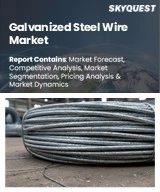
Galvanized Steel Wire Market
Report ID: SQMIG15O2045
Report ID: SQMIG15O2045
[email protected]
USA +1 351-333-4748
Report ID:
SQMIG15O2045 |
Region:
Global |
Published Date: December, 2025
Pages:
192
|Tables:
175
|Figures:
71


Global Galvanized Steel Wire Market size was valued at USD 15.1 billion in 2024 and is poised to grow from USD 15.84 billion in 2025 to USD 23.23 billion by 2033, growing at a CAGR of 4.9% during the forecast period (2026-2033).
The trend of market adoption by consumers and developers continues to rise as they increasingly shift toward sustainable, low-VOC materials that are superior in durability, indoor air quality, and lifecycle value compared to synthetic flooring. In effect, natural stone becomes a long-term investment that is in tune with the environment for both modern and heritage-based building designs. Hardness coupled with unrivaled resistance to heavy foot traffic and extreme weather conditions keeps providing very good traction for the granite segment, making it a go-to material in airports, retail malls, public plazas, and outdoor walkways. Factors such as rapid urbanization, mega infrastructure projects, and the growth of commercial construction across China, India, and Southeast Asia propelled the region's growth. Europe is still a solid contributor, as restoration work progresses on historic structures while demand for high-quality artisanal stonework grows; North America continued to post solid performances driven by remodeling activity among upscale homes.
How Does AI Optimize the Production and Quality of Galvanized Steel Wire?
Artificial intelligence continuously optimizes global galvanized steel wire market strategies by improving the accuracy of manufacturing, optimizing resource consumption, and ensuring premium quality. AI algorithms continuously monitor, in real-time, drawing lines and galvanizing baths for monitoring parameters of wire tension, zinc temperature, and coating speed to dynamically adapt the processes for optimum coating uniformity and adhesion. This correspondingly makes sure that minimum zinc consumption is used while offering maximum corrosion resistance. The machine learning model predicts defects or other irregularities that might be possible on the surface of the wire based on sensor readings, together with probable proactive interventions to make sure the rate of scrap will be lower. In this regard, AI-operated computer vision systems for automated inline inspection of galvanized coating by a number of wire manufacturers in 2024 detected defects such as coating unevenness or bare spots with superhuman accuracy. Furthermore, AI optimizes energy use in annealing furnaces and galvanizing pots toward greener production. Predictive maintenance algorithms applied to machinery used in wire drawing reduce unplanned downtime and ensure consistent output to meet demand in high-end applications across the world.
Market snapshot - 2026-2033
Global Market Size
USD 14.50 Billion
Largest Segment
Low-Carbon Steel Wire
Fastest Growth
High-Carbon Steel Wire
Growth Rate
4.3% CAGR
To get more insights on this market click here to Request a Free Sample Report
Global Galvanized Steel Wire Market is segmented by Type, Gauge/Diameter, Application, Coating Method, End-Use Industry and region. Based on Type, the market is segmented into Low-Carbon Steel Wire, Medium-Carbon Steel Wire and High-Carbon Steel Wire. Based on Gauge/Diameter, the market is segmented into Fine Gauge (<1mm), Medium Gauge (1mm-5mm) and Heavy Gauge (>5mm). Based on Application, the market is segmented into Fencing & Netting, Binding & Tying, Cable Armoring, Stranded Wire & Ropes, Mesh Production, Agriculture and Construction Reinforcement. Based on Coating Method, the market is segmented into Hot-Dip Galvanized and Electro-Galvanized. Based on End-Use Industry, the market is segmented into Construction, Agriculture, Infrastructure, Industrial Manufacturing, Power & Telecommunication, Automotive and Fencing. Based on region, the market is segmented into North America, Europe, Asia Pacific, Latin America and Middle East & Africa.
The global galvanized steel wire market startegies, is dominated by low-carbon steel wire. Its high ductility, ease of forming, and lower cost compared to other types make it ideal for high-volume uses such as general-purpose fencing, binding wire for construction rebar, mesh production, and several ends uses in agriculture. Since these prevalent applications are highly cost-sensitive, the sheer scale of consumption translates to the low-carbon segment remaining the largest by volume, used in a necessity across all industries globally.
The high-carbon steel wire segment is growing at the highest rate. It draws its driving force from superior strength, hardness, and durability that make the material highly essential in high-performance applications. This has created an increasing demand to manufacture stranded wire, heavy-duty ropes, and other critical infrastructure components such as suspension cables for bridges and armouring cables for power transmission. The demand for these wires is seen to increase rapidly with increasing complexity and demand in global infrastructure projects.
The share of market demand is dominated by the segment of construction. Galvanized steel wire in this industry is one of the chief raw materials, widely used for binding rebar, creating a mesh for concrete reinforcement, and manufacturing fences for on-site security. The size of residential and commercial building projects in most countries worldwide, further supplemented by infrastructure development, generates a persistently high-volume demand for this versatile and corrosion-resistant product, sealing its leading market position.
The infrastructure end-use industry represents the most rapidly growing sector of use. Such growth is dictated by huge investments in global public infrastructure that are being made in power transmission and distribution networks, telecommunication infrastructure (cable armouring), bridge construction-stay cables, and transportation systems. The demand for durable, long-lasting, and corrosion-resistant steel wire components in such giant projects fuels the rapid rise of galvanized steel wire consumption.
To get detailed segments analysis, Request a Free Sample Report
According to the global galvanized steel wire regional forecast, the Asia-Pacific region will contribute the largest market share in 2024, based on its developed industrial base and large-scale infrastructure modernization projects. Advanced manufacturing sectors, which need large quantities of high-quality, corrosion-resistant wire for automotive and construction purposes, underline the dominance of the region. Government-led programs to upgrade aged transportation networks and power grids further accelerate the deployment of durable steel wire solutions across the region.
According to the galvanized steel wire regional outlook, the Japanese market is driven by continuous attention to disaster resilience and infrastructure longevity. The "National Resilience" program of the country has channelled substantial investment in reinforcing bridges, tunnels, and coastal defences with high-strength galvanized wire to counter the risks of earthquakes and typhoons. The strong automotive sector also keeps demanding specialized tire reinforcement wire to achieve stringent safety and performance requirements for exportable vehicles.
As per the galvanized steel wire regional analysis, in South Korea, the market is expanding due to the dominance of its shipbuilding and heavy manufacturing industries. The world-leading shipbuilding industry requires enormous amounts of galvanized wire for rigging and cables. Besides that, the government's policy to switch to green energy is driving up demand for high-durability wires to be used in building offshore wind farms and next-generation power transmission lines.
According to the global galvanized steel wire market forecast, North America holds a significant market share, fueled by a resurgence in domestic manufacturing and extensive public works programs. Fences and structural reinforcement continue to see steady demand from the construction sector in the region, supplemented through federal infrastructure bills. The automotive industry has brought new niches on board with the move toward electric cars that use high-strength, lightweight wire components.
According to the galvanized steel wire market outlook, in the United States, the market is growing due to increased federal spending to modernize the roads, bridges, and power grid, the strong farming sector also fosters excellent demand for durable fencing options. Moreover, "Buy American" provisions in government contracts further support the application of domestically produced galvanized wire in major infrastructure projects.
As per the galvanized steel wire market analysis, it is also supported in Canada by the solid mining and energy industries for operations under extreme conditions, which rely on high-performance wire. Furthermore, the establishment of renewable energy infrastructure-in particular, wind and hydroelectricity-drives further demand for corrosion-resistant transmission components. Other factors contributing to the growth of the market include the expansion in the construction sector in city centers.
According to the global galvanized steel wire industry analysis, In Europe, the market share is stable and determined by strict environmental legislation and an emphasis on the circular economy. Demand in this region is driven by applications in automotive and construction, where material preference is for those with a low carbon footprint and of high recyclability. Advanced galvanizing techniques using less zinc and offering superior corrosion protection are being increasingly used by European manufacturers.
According to the galvanized steel wire market trends, In Germany, the market is anchored by a world-class automotive and engineering sector. German OEMs are currently leading in the use of ultra-high-strength galvanized wire for advanced vehicle chassis and safety applications. Stringent building codes ensure that there is always demand within the country for high-quality reinforcement wire in various residential and commercial construction projects.
As per the galvanized steel wire industry trends, In the United Kingdom, growth is being seen within the infrastructure and renewable energies markets. Industrial strategies following Brexit are pushing toward investments in national rail and road upgrades, which spur demand for steel wire. The expanding offshore wind sector is also a major consumer of specialized, corrosion-resistant wire products for the subsea cabling application.
As per the galvanized steel wire industry, in France, the market is supported by strong government backing for modernizing public infrastructure and the high-speed rail network. The agricultural industry is a permanent consumer of galvanized wire, especially for vineyard trellising. Besides that, the attention of car manufacturers to electric mobility stimulates activity in the development of wire components for battery systems and lightweight structures.
To know more about the market opportunities by region and country, click here to
Buy The Complete Report
Expansion in Construction and Infrastructure Development
Increasing Demand from the Agricultural Sector
Volatility in Zinc and Steel Raw Material Prices
Competition from Substitute Materials
Request Free Customization of this report to help us to meet your business objectives.
The competitive landscape of global galvanized steel wire market statistics remains moderately fragmented, with large integrated steel producers along with several specialized wire manufacturers and regional players contributing to it in 2024. Major global suppliers include ArcelorMittal, Bekaert, Kiswire Ltd., Tata Steel, JSW Steel, and several Chinese manufacturers such as HBIS Group and Baosteel Group that can take advantage of significant scale, vertical integration back to steel production, and extensive distribution networks. Competition is based on a set of parameters that includes product quality-coating uniformity and tensile strength-international standards such as ASTM and EN-production cost efficiency-product range-width and coating types-and logistics/transportation capabilities to serve a wide range of industries, including construction, agriculture, and infrastructure, reliably. Price competition is very aggressive and strongly driven by the underlying costs of their steel and zinc inputs. High-volume product segments are traditionally supplied by large, well-established companies, although smaller, specialist manufacturers can be very competitive by offering wire products with specialist properties, dimensions, or by catering to local needs or applications.
SkyQuest’s ABIRAW (Advanced Business Intelligence, Research & Analysis Wing) is our Business Information Services team that Collects, Collates, Correlates, and Analyses the Data collected by means of Primary Exploratory Research backed by robust Secondary Desk research.
As per SkyQuest analysis, the galvanized steel wire market remains an integral component of global industrial activity, inextricably linked to the building, agriculture, and infrastructure markets. Growth expectations for the segment are therefore closely linked to the broader macroeconomic trends affecting the end-use industries, as well as further infrastructure investments globally. While the move to EAF steelmaking has positively impacted long-term demand through increased scrap processing requirements (binder wire), the core applications related to fencing, agriculture, and structural reinforcement provide volume stability. Challenges remain regarding the management of volatile raw material prices pertaining to zinc and steel, plus the threat of substitution from stainless steel or polymers within very specific niches. Scale, cost efficiency, and coating quality are aspects wherein main competitors differ. The opportunity to develop value-added corrosion-resistant coatings to serve specific needs for renewable energy infrastructure projects and potentially embed sustainability metrics into product offerings will be relevant to shifting market expectations globally.
| Report Metric | Details |
|---|---|
| Market size value in 2024 | USD 15.1 billion |
| Market size value in 2033 | USD 23.23 billion |
| Growth Rate | 4.9% |
| Base year | 2024 |
| Forecast period | 2026-2033 |
| Forecast Unit (Value) | USD Billion |
| Segments covered |
|
| Regions covered | North America (US, Canada), Europe (Germany, France, United Kingdom, Italy, Spain, Rest of Europe), Asia Pacific (China, India, Japan, Rest of Asia-Pacific), Latin America (Brazil, Rest of Latin America), Middle East & Africa (South Africa, GCC Countries, Rest of MEA) |
| Companies covered |
|
| Customization scope | Free report customization with purchase. Customization includes:-
|
To get a free trial access to our platform which is a one stop solution for all your data requirements for quicker decision making. This platform allows you to compare markets, competitors who are prominent in the market, and mega trends that are influencing the dynamics in the market. Also, get access to detailed SkyQuest exclusive matrix.
Table Of Content
Executive Summary
Market overview
Parent Market Analysis
Market overview
Market size
KEY MARKET INSIGHTS
COVID IMPACT
MARKET DYNAMICS & OUTLOOK
Market Size by Region
KEY COMPANY PROFILES
Methodology
For the Galvanized Steel Wire Market, our research methodology involved a mixture of primary and secondary data sources. Key steps involved in the research process are listed below:
1. Information Procurement: This stage involved the procurement of Market data or related information via primary and secondary sources. The various secondary sources used included various company websites, annual reports, trade databases, and paid databases such as Hoover's, Bloomberg Business, Factiva, and Avention. Our team did 45 primary interactions Globally which included several stakeholders such as manufacturers, customers, key opinion leaders, etc. Overall, information procurement was one of the most extensive stages in our research process.
2. Information Analysis: This step involved triangulation of data through bottom-up and top-down approaches to estimate and validate the total size and future estimate of the Galvanized Steel Wire Market.
3. Report Formulation: The final step entailed the placement of data points in appropriate Market spaces in an attempt to deduce viable conclusions.
4. Validation & Publishing: Validation is the most important step in the process. Validation & re-validation via an intricately designed process helped us finalize data points to be used for final calculations. The final Market estimates and forecasts were then aligned and sent to our panel of industry experts for validation of data. Once the validation was done the report was sent to our Quality Assurance team to ensure adherence to style guides, consistency & design.
Analyst Support
Customization Options
With the given market data, our dedicated team of analysts can offer you the following customization options are available for the Galvanized Steel Wire Market:
Product Analysis: Product matrix, which offers a detailed comparison of the product portfolio of companies.
Regional Analysis: Further analysis of the Galvanized Steel Wire Market for additional countries.
Competitive Analysis: Detailed analysis and profiling of additional Market players & comparative analysis of competitive products.
Go to Market Strategy: Find the high-growth channels to invest your marketing efforts and increase your customer base.
Innovation Mapping: Identify racial solutions and innovation, connected to deep ecosystems of innovators, start-ups, academics, and strategic partners.
Category Intelligence: Customized intelligence that is relevant to their supply Markets will enable them to make smarter sourcing decisions and improve their category management.
Public Company Transcript Analysis: To improve the investment performance by generating new alpha and making better-informed decisions.
Social Media Listening: To analyze the conversations and trends happening not just around your brand, but around your industry as a whole, and use those insights to make better Marketing decisions.
REQUEST FOR SAMPLE
 REQUEST FREE CUSTOMIZATION
Global Galvanized Steel Wire Market size was valued at USD 14.50 Billion in 2023 and is poised to grow from USD 15.18 Billion in 2024 to USD 21.90 Billion by 2032, growing at a CAGR of 4.3% during the forecast period (2025–2032).
The competitive landscape of global galvanized steel wire market statistics remains moderately fragmented, with large integrated steel producers along with several specialized wire manufacturers and regional players contributing to it in 2024. Major global suppliers include ArcelorMittal, Bekaert, Kiswire Ltd., Tata Steel, JSW Steel, and several Chinese manufacturers such as HBIS Group and Baosteel Group that can take advantage of significant scale, vertical integration back to steel production, and extensive distribution networks. Competition is based on a set of parameters that includes product quality-coating uniformity and tensile strength-international standards such as ASTM and EN-production cost efficiency-product range-width and coating types-and logistics/transportation capabilities to serve a wide range of industries, including construction, agriculture, and infrastructure, reliably. Price competition is very aggressive and strongly driven by the underlying costs of their steel and zinc inputs. High-volume product segments are traditionally supplied by large, well-established companies, although smaller, specialist manufacturers can be very competitive by offering wire products with specialist properties, dimensions, or by catering to local needs or applications. 'ArcelorMittal', 'Bekaert', 'Kiswire Ltd.', 'Tata Steel Limited', 'JSW Steel', 'HBIS Group', 'Nippon Steel Corporation', 'POSCO', 'Gerdau S.A.', 'Nucor Corporation', 'WIRECO WorldGroup', 'Ezz Steel'
Construction activities, residential building, commercial projects, and large-scale infrastructure development in bridges, roads, utilities, etc., raise huge demand for galvanized steel wire globally. Use in concrete reinforcement, binding, fencing, and structural components benefits from its strength and corrosion resistance, which gives critical features regarding durability for such applications. This directly boosts the global galvanized steel wire market growth.
Increased Application in Infrastructure and Renewable Energy Projects: Galvanized steel wire is in rising demand for large projects of infrastructure, such as bridge cables, high-tensile fencing along highways, and armouring cables for power transmission. Further, its application in the support structures for installations of solar panels and wind farms falls in line with the shift toward renewable energy infrastructure across the world. This application expansion is one of the key trends driving the global galvanized steel wire market.
How is Asia-Pacific Driving Global Infrastructure Innovation?


Want to customize this report? This report can be personalized according to your needs. Our analysts and industry experts will work directly with you to understand your requirements and provide you with customized data in a short amount of time. We offer $1000 worth of FREE customization at the time of purchase.
Feedback From Our Clients


 USA (+1) 351-333-4748

