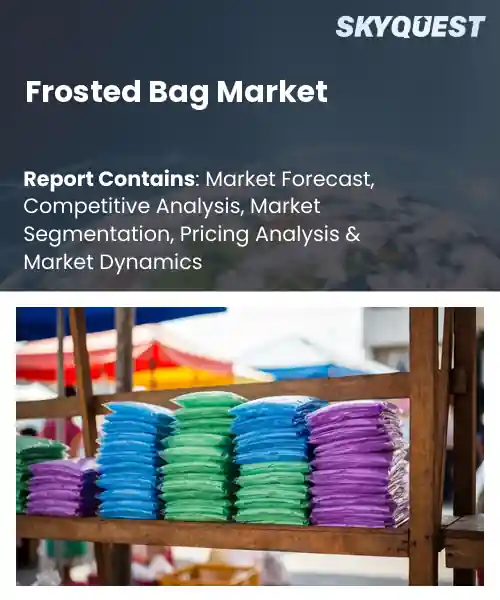
Frosted Bag Market
Report ID: SQMIG15G2177
Report ID: SQMIG15G2177
[email protected]
USA +1 351-333-4748
Report ID:
SQMIG15G2177 |
Region:
Global |
Published Date: June, 2026
Pages:
157
|Tables:
179
|Figures:
79


Global Frosted Bag Market size was valued at USD 1.12 Billion in 2024 and is poised to grow from USD 1.17 Billion in 2025 to USD 1.72 Billion by 2033, growing at a CAGR of 4.9% during the forecast period (2026-2033).
The frosted bag market consists of polymer and textile containers, with surfaces getting a matte finish that hides what’s inside. It matters a lot because it helps protect perishable stuff, reduces spoilage caused by light exposure, and also helps brands look good in food, cosmetics, and medical packaging.
Moreover, another factor that is reshaping the frosted bag market outlook is the stricter sustainability regulations, together with the boom in e commerce deliveries that require protective yet lightweight packaging. In many places governments now place tighter limits on single-use plastics, which pushes manufacturers to put money into recyclable frosted films made from bio based polymers. This lets brands talk about lower carbon footprints, while still keeping package integrity. So demand rises from online retailers too; for example a cosmetics e shop started using recyclable frosted polyolefin pouches, and they saw 15 % fewer shipment damages plus reduced logistics expenses. As a result, suppliers that can ramp up embossing lines get more contract opportunities, and investors tend to expect faster revenue growth in regions that are prioritizing greener packaging rules.
AI-driven automation is changing the frosted bag industry by making the workflow smoother for design, material handling, and quality control. Machine learning approaches can forecast the most suitable polymer combinations, so offer a better frosted or semi-opaque feel while wasting less material. Robotic cutters along with vision systems keep checking the surface consistency in real time, which shortens cycle time and lowers the defect rate. On top of that, integrated data platforms let manufacturers tweak production schedules right away when demand changes, improving inventory turnover and also supporting sustainability targets. In practice, these tools are turning a process that used to be labor-heavy into something more efficient, faster to respond, and easier to scale for global packaging needs, with less friction overall.
Market snapshot - (2026-2033)
Global Market Size
USD 1.12 Billion
Largest Segment
Low-Density Polyethylene (LDPE)
Fastest Growth
Growth Rate
4.9% CAGR
To get more insights on this market click here to Request a Free Sample Report
The global frosted bag market is segmented by material type, product type, capacity, printing type, end-use industry, distribution channel, and region. Based on material type, the market is categorized into low-density polyethylene (LDPE), high-density polyethylene (HDPE), polypropylene (PP), recycled plastic, and others. By product type, the market is segmented into die-cut handle frosted bags, soft loop handle frosted bags, rope handle frosted bags, drawstring frosted bags, and others. Based on capacity, the market is classified into small (less than 5 liters), medium (5–15 liters), and large (more than 15 liters) bags. By printing type, the market is divided into plain frosted bags, flexographic printed bags, screen printed bags, and others. Based on end-use industry, the market serves retail and apparel, luxury goods, cosmetics and personal care, gifts and promotional products, and other sectors. By distribution channel, the market is segmented into direct sales, packaging distributors, e-commerce platforms, and others. Regionally, the market is analyzed across North America, Europe, Asia Pacific, Latin America, and the Middle East & Africa.
As per the frosted bag market analysis, the low-density polyethylene (LDPE) segment takes over in practice because the inherent flexibility and that clear, clean look they get, match what frosted bag designers are expecting, more or less. The material is also easy to run through, so teams can do faster tooling swaps which helps with those shorter production timelines retailers keep pushing for. Plus it gives decent barrier protection to the goods, while still feeling premium in-hand, and that nudges brand trust. So manufacturers lean on LDPE for cost efficient, high volume orders, and that ends up reinforcing its top position across a bunch of retail lanes and even the seasonal promos.
However, HDPE is showing the most noticeable growth momentum because the extra rigidity helps with more inventive structural builds that keep bags from wearing out so quickly. A number of eco minded brands are picking HDPE too, mainly due to its recyclable profile, and with extrusion tech improving, the application side is widening, which speeds up overall market expansion and basically opens fresh opportunity windows.
According to the frosted bag market forecast, Die Cut Handle Frosted Bags usually lead, mainly because the built in handle feels smoother for the user, like the whole thing was planned rather than assembled. The precision die cutting process keeps the handle positioned consistently, which cuts down on assembly time and reduces waste. That efficiency then strengthens supply chain reliability, and the frosted visual keeps supporting the brand narrative. So retailers end up preferring this format to communicate a more polished vibe, boost shelf impact, and handle faster moving inventory cycles for both boutique setups and mass market outlets, especially during seasonal promotional periods.
Meanwhile, Soft Loop Handle Frosted Bags are becoming the key high growth lane because the ergonomic loop fits with what shoppers are looking for now, comfortable carry solutions and less strain. Designers are adding loop colors, so brand visibility goes up, and the simple attachment approach also makes production easier to scale. All of this tends to fuel market expansion and creates extra space for branding plays or repeatable design language across collections.
To get detailed segments analysis, Request a Free Sample Report
As per the frosted bag market regional forecast, North America gets this mature packaging ecosystem thing going where cutting edge coating technologies blend in with wide distribution networks, and that helps a lot. Consumers want high visibility , premium look packaging so demand stays consistent. At the same time retailers care a lot about differentiation , frosted bags can readily provide that “oh wow” effect. In the US and Canada strong R&D keeps pushing material performance and aesthetic appeal, so nobody stands still. And then those environmental stewardship initiatives, they keep nudging the market toward recyclable frosted solutions, which makes adoption easier. All these bits together create a resilient demand base, so suppliers invest more, and North America keeps its leading status for frosted bag usage.
United States Frosted Bag Market
The Frosted Bag sector in the United States is driven by a retail scene that’s fast and always visual. Brand storytelling in stores needs impact, so the packaging has to look good right away. Manufacturers therefore push back with rapid turnaround and customized designs, which creates this vibrant setup of specialty converters. Sustainability agendas plus consumer demand for recyclable packaging basically fuel interest in advanced frosted films. When ingredient suppliers team up closely with packaging converters, they speed up those product refinements, and the market stays tuned to changing brand strategies.
Canada Frosted Bag Market
In Canada, the Frosted Bag market growth leans heavily on sustainable packaging across grocery and specialty food channels. Shoppers tend to like the subtle elegance of frosted surfaces, so many products can hold premium positioning. Canadian research institutions and packaging firms collaborate to create solutions that are locally tailored, while still following strict environmental guidelines. Retail partners usually focus on reliable supply and quick adaptation to seasonal trends, and that helps keep expansion steady across the country.
The European frosted bag market penetration is fueled by a mix of consumer expectations that are getting higher , and regulatory frameworks that are pushing eco minded packaging. Across Europe, manufacturers invest in eco friendly frosted films that fit circular economy goals, while designers use tactile appeal to make products stand out on busy shelves. There’s also strong cross border trade within the European Union, which makes knowledge exchange easier and speeds up adoption of top tier technologies. Retailers, especially in premium segments, treat frosted packaging as a channel for brand storytelling, and that boosts demand across different categories, locking in Europe’s rapid growth track.
Germany Frosted Bag Market
In Germany, the Frosted Bag sector is shaped by a leadership style around technical sophistication and strict quality standards. German converters focus on precision engineering, so brands can get very uniform frosted finishes, matching exact specifications. Joint research programs between industry and academics help keep improving materials, particularly for barrier performance and recyclability. Retail channels value the premium look, which keeps demand firm across both food and non food sectors.
United Kingdom Frosted Bag Market
The Frosted Bag Market expansion in the United Kingdom is accelerated by a lively fast moving consumer goods environment that prizes distinct shelf presence. Brands use frosted solutions to signal freshness and sophistication, and that clicks with consumers who want both visual appeal and sustainability. Packaging firms in the UK also keep improving flexible production, so design changes can happen fast, supporting agile marketing campaigns. Regulatory support for recyclable packaging further strengthens market momentum.
France Frosted Bag Market
The French Frosted Bag industry emergence shows rising consumer appetite for packaging that feels both refined and responsible. French manufacturers emphasize artisanal quality, folding frosted textures into packaging to lift perceived product value. Partnerships with fashion forward retailers encourage creative uses, and it spreads beyond the usual food categories. Environmental commitments also push the development of bio based frosted films, which lines up with national sustainability aims and supports wider market acceptance.
Asia Pacific is enhancing its frosted bag market share by doing a mix of rapid industrialization, expanding retail networks, and then the rising appetite people have for packaging that looks visually bold . In that same rhythm local manufacturers use cost‑lean production strengths, while also slipping in more advanced coating technologies, so they can still hit global quality expectations . Because sustainability is getting more attention everywhere across the region, firms are investing in recyclable frosted materials, which seems to line up with the international rules. And then there are these strategic partnerships, between large multinational packaging players and nearby converters, that help push technology across, making it easier to launch more product variants. All of this basically makes the region more competitive, and it also widens the take‑up of frosted bag solutions in all different buyer groups.
Japan Frosted Bag Market
In Japan, the frosted bag market activity is steered by a culture that likes refined looks, and careful craftsmanship. Packaging designers often pick frosted surfaces for that understated elegance, and it fits the tastes of consumers who are picky. Japanese converters tend to run high‑accuracy operations, to land on steady translucency, which in turn supports premium branding. There’s also environmental awareness, so companies try to use recyclable frosted films, bringing sustainability into the design without throwing away the traditional feel.
South Korea Frosted Bag Market
In South Korea, the frosted bag market growth is pushed forward by a lively mix of consumer electronics and cosmetics, where brands want eye‑catching, differentiated presentation. Many firms choose frosted finishes to give a modern, almost luxurious impression. At the same time, faster uptake of advanced coating techniques helps with quick customization, which matters since trends change very fast . On the policy side, strong governmental support for eco minded packaging encourages more innovation in recyclable frosted materials, keeping the whole region on a more future‑ready track.
To know more about the market opportunities by region and country, click here to
Buy The Complete Report
Rising Consumer Preference For Premium Look
Expansion Of Sustainable Packaging Solutions
High Cost Of Frosted Materials
Limited Availability Of Specialized Equipment
Request Free Customization of this report to help us to meet your business objectives.
The competitive landscape for the global frosted bag market is getting more intense, as sustainability minded startups pull in big funding, so the older incumbent manufacturers are feeling pressured and they start speeding up tech adoption. At the same time, a few of them are looking for strategic collaborations too. In general, the eco‑friendly demand keeps pushing the market players to innovate, and the latest capital infusions are helping them develop new products faster, so they can grab market share with frosted‑style bag offerings that are more distinctive than before, or at least that's the idea.
Top Player’s Company Profile
Recent Developments in the Frosted Bag Market
SkyQuest’s ABIRAW (Advanced Business Intelligence, Research & Analysis Wing) is our Business Information Services team that Collects, Collates, Correlates, and Analyses the Data collected by means of Primary Exploratory Research backed by robust Secondary Desk research.
As per SkyQuest analysis, the global frosted bag market seems to be growing at a steady pace, mostly because buyers keep choosing premium‑looking packaging that boosts brand perception. There’s also a second driver that comes from the wider push for sustainable packaging solutions, where visual appeal has to coexist with recycled or bio‑based polymers. North America is leading this expansion, since advanced coating technologies, plus well‑developed distribution networks, really hold the demand in place. In terms of materials, the Low‑Density Polyethylene segment is the one that dominates, largely due to its flexibility, clarity, and cost‑effectiveness for large‑scale production. Still, the high price of frosted materials acts like a restraint, so more budget‑sensitive manufacturers hesitate to adopt it, and they end up searching for cheaper substitutes that don’t feel like a downgrade.
| Report Metric | Details |
|---|---|
| Market size value in 2024 | USD 1.12 Billion |
| Market size value in 2033 | USD 1.72 Billion |
| Growth Rate | 4.9% |
| Base year | 2024 |
| Forecast period | (2026-2033) |
| Forecast Unit (Value) | USD Billion |
| Segments covered |
|
| Regions covered | North America (US, Canada), Europe (Germany, France, United Kingdom, Italy, Spain, Rest of Europe), Asia Pacific (China, India, Japan, Rest of Asia-Pacific), Latin America (Brazil, Rest of Latin America), Middle East & Africa (South Africa, GCC Countries, Rest of MEA) |
| Companies covered |
|
| Customization scope | Free report customization with purchase. Customization includes:-
|
To get a free trial access to our platform which is a one stop solution for all your data requirements for quicker decision making. This platform allows you to compare markets, competitors who are prominent in the market, and mega trends that are influencing the dynamics in the market. Also, get access to detailed SkyQuest exclusive matrix.
Table Of Content
Executive Summary
Market overview
Parent Market Analysis
Market overview
Market size
KEY MARKET INSIGHTS
COVID IMPACT
MARKET DYNAMICS & OUTLOOK
Market Size by Region
KEY COMPANY PROFILES
Methodology
For the Frosted Bag Market, our research methodology involved a mixture of primary and secondary data sources. Key steps involved in the research process are listed below:
1. Information Procurement: This stage involved the procurement of Market data or related information via primary and secondary sources. The various secondary sources used included various company websites, annual reports, trade databases, and paid databases such as Hoover's, Bloomberg Business, Factiva, and Avention. Our team did 45 primary interactions Globally which included several stakeholders such as manufacturers, customers, key opinion leaders, etc. Overall, information procurement was one of the most extensive stages in our research process.
2. Information Analysis: This step involved triangulation of data through bottom-up and top-down approaches to estimate and validate the total size and future estimate of the Frosted Bag Market.
3. Report Formulation: The final step entailed the placement of data points in appropriate Market spaces in an attempt to deduce viable conclusions.
4. Validation & Publishing: Validation is the most important step in the process. Validation & re-validation via an intricately designed process helped us finalize data points to be used for final calculations. The final Market estimates and forecasts were then aligned and sent to our panel of industry experts for validation of data. Once the validation was done the report was sent to our Quality Assurance team to ensure adherence to style guides, consistency & design.
Analyst Support
Customization Options
With the given market data, our dedicated team of analysts can offer you the following customization options are available for the Frosted Bag Market:
Product Analysis: Product matrix, which offers a detailed comparison of the product portfolio of companies.
Regional Analysis: Further analysis of the Frosted Bag Market for additional countries.
Competitive Analysis: Detailed analysis and profiling of additional Market players & comparative analysis of competitive products.
Go to Market Strategy: Find the high-growth channels to invest your marketing efforts and increase your customer base.
Innovation Mapping: Identify racial solutions and innovation, connected to deep ecosystems of innovators, start-ups, academics, and strategic partners.
Category Intelligence: Customized intelligence that is relevant to their supply Markets will enable them to make smarter sourcing decisions and improve their category management.
Public Company Transcript Analysis: To improve the investment performance by generating new alpha and making better-informed decisions.
Social Media Listening: To analyze the conversations and trends happening not just around your brand, but around your industry as a whole, and use those insights to make better Marketing decisions.
REQUEST FOR SAMPLE
 REQUEST FREE CUSTOMIZATION
Global Frosted Bag Market size was valued at USD 1.12 Billion in 2024 and is poised to grow from USD 1.17 Billion in 2025 to USD 1.72 Billion by 2033, growing at a CAGR of 4.9% during the forecast period (2026-2033).
The competitive landscape of the global frosted bag market is intensifying as sustainable‑focused startups secure sizable funding, prompting incumbent manufacturers to accelerate technology adoption and explore strategic collaborations; eco‑friendly demand drives players to innovate, with recent capital infusions enabling rapid product development and positioning firms to capture market share through differentiated frosted‑bag offerings. 'Novolex Holdings', 'Berry Global Group', 'Inteplast Group', 'PPC Flexible Packaging', 'Elkay Plastics', 'International Plastics Inc.', 'PolyPak Packaging', 'Associated Bag Company', 'Universal Plastic Bag Co.', 'Bag Makers Inc.', 'Shenzhen Xintaixing Packaging', 'Dongguan Xinhai Environmental Protection Materials', 'Alpha Packaging', 'PackagingSupplies.com', 'Four Star Plastics', 'The Plastic Bag Store', 'A-Pac Manufacturing', 'Custom Poly Packaging', 'Prime Line Packaging', 'Packman Packaging'
The market experiences robust expansion as consumers increasingly value aesthetically appealing packaging that conveys quality and sophistication. Frosted bags provide a subtle glossy finish that enhances product visibility while delivering a tactile premium experience. Brands adopt this style to differentiate offerings, foster emotional connections, and support higher perceived value. This shift stimulates demand across categories such as confectionery, cosmetics, and specialty foods, encouraging manufacturers to integrate frosted finishes into their product lines, thereby accelerating overall market growth in the global marketplace.
Sustainable Packaging Momentum: Consumers and brands alike are prioritizing environmentally responsible solutions, driving demand for frosted bags that convey a premium, low‑impact image. The subtle matte finish aligns with sustainability narratives, allowing companies to differentiate products without sacrificing aesthetic appeal. As retailers adopt stricter green procurement policies, manufacturers are integrating recycled substrates and water‑based frosted coatings, reinforcing the market’s shift toward circularity while maintaining functional performance and brand perception and supporting long‑term cost efficiencies for supply chain partners through innovation.
Why does North America Dominate the Global Frosted Bag Market? |@12


Want to customize this report? This report can be personalized according to your needs. Our analysts and industry experts will work directly with you to understand your requirements and provide you with customized data in a short amount of time. We offer $1000 worth of FREE customization at the time of purchase.
Feedback From Our Clients


 USA (+1) 351-333-4748

