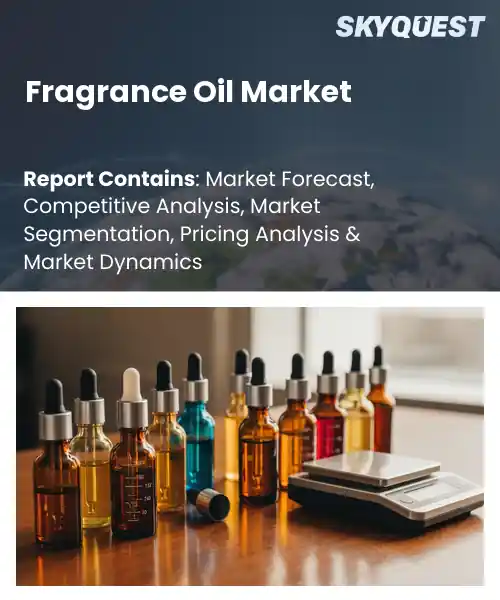
Fragrance Oil Market
Report ID: SQMIG30K2089
Report ID: SQMIG30K2089
[email protected]
USA +1 351-333-4748
Report ID:
SQMIG30K2089 |
Region:
Global |
Published Date: February, 2026
Pages:
157
|Tables:
144
|Figures:
78


Global Fragrance Oil Market size was valued at USD 8.4 Billion in 2024 and is poised to grow from USD 8.8 Billion in 2025 to USD 12.81 Billion by 2033, growing at a CAGR of 4.8% during the forecast period (2026-2033).
Fragrance oil market comprises concentrated aromatic blends used in personal care, fine fragrance, household products, candles and wellness, and its primary driver is rising consumer demand for personalized sensory experiences that convey identity and comfort. Historically the sector moved from a perfumery niche governed by a few houses to a diversified industry influenced by synthetic chemistry, artisan perfumers and consumer goods companies that embed bespoke scents into mass products. This evolution matters because scent affects purchase decisions, brand differentiation and premiumization, as seen in niche perfume debuts and scented cleaning products, and it creates momentum for strategic market expansion globally.
As the demand from consumers drives manufacturers to change their supply chain strategies to establish a new relationship between supplier and consumer, the influence of sustainability and regulatory requirements will be one of the main factors shaping the growth path of companies. The new demands made by consumers for ingredients that are renewable, traceable and managed for allergens are leading to investment by manufacturers into biotechnology, upcycling, and certified natural ingredients. This will reduce the dependence on the dwindling amounts of botanical materials, while also creating the ability to produce larger volumes of aroma molecules, such as biovanillin or fermented musks.
How is AI Transforming Product Development in the Fragrance Oil Market?
AI is reshaping fragrance oil product development by changing how ideas are generated tested and refined. Key aspects include algorithm driven ideation that proposes novel accords virtual screening of raw materials to meet sustainability goals and consumer driven personalization that maps preferences to scent profiles. The current market favors AI assisted creativity because it shortens R and D cycles and opens new sensory territory while preserving the perfumer role as curator. Real world instances show large houses using AI platforms as creative partners and brands launching AI inspired scents that capture consumer curiosity and market differentiation.
Market snapshot - 2026-2033
Global Market Size
USD 8.4 Billion
Largest Segment
Synthetic Oils
Fastest Growth
Natural Oils
Growth Rate
4.8% CAGR
To get more insights on this market click here to Request a Free Sample Report
The fragrance oil market is segmented by type, application, distribution channel, customer type, fragrance profile and region. Based on type, the market is segmented into natural oils and synthetic oils. Based on application, the market is segmented into personal care, household, food & beverages and industrial. Based on distribution channel, the market is segmented into retail and direct sales. Based on customer type, the market is segmented into retail consumers and commercial buyers. Based on fragrance profile, the market is segmented into citrus, floral, woody, oriental and fresh. Based on region, the market is segmented into North America, Europe, Asia Pacific, Latin America and Middle East & Africa.
Based on the global fragrance oil market forecast, natural oils segment dominates because consumer preference for authentic, clean-label aromatic experiences drives formulators and brands to favor botanically derived extracts over artificial alternatives. Their perceived premium value and compatibility with artisanal and niche product stories encourages product differentiation and retailer support, which in turn reinforces procurement focus and supplier investment. By providing a physical connection for traceability and source information, manufacturers have the opportunity to use marketing as a strategy to retain demand, as well as develop and promote their range of products.
However, synthetic oils are the most rapidly expanding due to formulation flexibility, cost consistency and creation of novel olfactory molecules unavailable in nature. Due to advancements in perfume chemistry and an increase in the regulatory approval of targeted synthetic chemicals, the adoption of these fragrances for mass-market and household use is accelerating significantly, opening up many opportunities for both large-scale production and scent innovation.
Personal care segment dominates because fragrance oils are integral to perfumery, bath and body formulations where scent is central to product performance and brand identity. There is a lot of innovation in creating unique products for consumers that create an ongoing demand for fragrance suppliers and product developers to work together to develop custom fragrance combinations and product stability. Manufacturers and marketers' desire for unique signature fragrances combined with the need for differentiated sensory attributes and compelling shelf presence is motivating investment into both the development of fragrances and aggressive steps toward premiumizing fragrance offerings.
Meanwhile, household is the fastest growing area as demand for scented home care and fabric products and smart diffusion solutions expands. Innovations in microencapsulation and concentrated oil formats and better compatibility with automated dispensers accelerate adoption by manufacturers, opening white space opportunities for tailored oil portfolios and application specific blends.
To get detailed segments analysis, Request a Free Sample Report
As per the global fragrance oil market analysis, Asia Pacific dominance is driven by a convergence of large consumer engagement with personal care and home fragrance, established manufacturing capacity, and a rich supply of botanical and synthetic raw materials across the region. The desire for premium and innovative scents in the skin care, cosmetics, and home fragrance markets has led to many different products being available from various suppliers. In addition to this, by combining their agile formulation capabilities with their R&D capabilities and strong relationships with suppliers, they can quickly adapt their products to meet the needs of a particular region.
Fragrance distributors benefit from this as their retail networks are large and e-commerce is prevalent; furthermore, urbanization is contributing to both the distribution and the discovery of fragrance products. The cultural use of scent in everyday activities within the Asia Pacific region, along with consumers' willingness to try out new and different scent experiences, creates a strong foundation for fragrances within the region.
Japan Fragrance Oil Market
Fragrance oil market in Japan reflects refined consumer preferences and a strong emphasis on quality and natural ingredients. The process of production in Japan is centered around creating fragrances of extreme precision, niche perfumery, collaboration between botanical producers and perfumers, as well as, using retail channels such as specialty shops and highly developed online platforms to launch fragrances that are very well targeted to the intended audience. The clear regulatory environment combined with superior manufacturing allow the producer to support premium price points.
South Korea Fragrance Oil Market
Fragrance oil market in South Korea is characterized by dynamic innovation in scent applications and strong integration with beauty and lifestyle trends. Manufacturers emphasize trend-led formulations, high impact accords, and collaboration with influencers to boost visibility. Distribution blends modern retail, vibrant online marketplaces, and pop-ups. Investment in scent technology and agile marketing practices enables rapid adaptation to emerging consumer moods, supporting a distinct spectrum of niche and mainstream fragrance propositions.
Based on global fragrance oil market regional forecast, Europe rapid expansion is propelled by a blend of heritage perfumery, sophisticated consumer preferences, and a robust industrial ecosystem that supports both artisanal and large-scale fragrance development. The product differentiation and premiumization of established brands and new independent niche entrants are being driven by both existing luxury houses and an increasing number of independent brands. Producers continue to innovate with Natural Extracts, Sustainable Sourcing, and Cleaner Synthetic Alternatives due to continued strong regulatory frameworks and growing consumer interest in Ingredient Transparency.
The market place has been facilitated by the well-developed distribution networks that now exist across specialty retail, fashion collaborations, and travel-related channels. The manufacturing stronghold of Germany and France provides the foundation for the olfactory excellence that is characteristic of Europe, while the UK is able to react quickly to trend cycles and influence-driven demand.
Germany Fragrance Oil Market
Fragrance oil market in Germany leverages strong industrial capability and an integrated chemical supply chain to ensure consistent quality and scalable production. Technical formulation expertise, quality assurance and regulatory compliance are critical to the success of this market segment. As a result, Germany provides an excellent source of specialty and commodity fragrances. In order to develop custom formulations for both industrial and consumer applications, we will continue our research partnership with other companies; additionally, we will sell our products to professional buyers and retailers based on safety and performance specifications.
United Kingdom Fragrance Oil Market
Fragrance oil market in United Kingdom shows agility driven by trend awareness, retail innovation, and an independent brand scene. Producers and retailers use influencer marketing & engagement, product rotation, and online retailers (e-commerce) to meet consumers' changing tastes. E-commerce channels and small boutiques can reach specific target audiences & provide personalized scent options. In addition, investing in creative design of fragrances as well as establishing strong relationships between fashion and beauty industries is resulting in quicker experimentation with fragrances and wider acceptance of same in mass and niche channels.
France Fragrance Oil Market
Fragrance oil market in France draws on a deep perfumery heritage and concentrated presence of renowned fragrance houses that influence global scent language. The luxury and heritage consumer will respond positively to high-quality raw materials and the traditional methods used to manufacture the product, as well as to artistry. Skilled artisans around the world, through their networks of perfumers and small manufacturers, are working to maintain traditional methods of production while creating new products using selective innovation. Distribution mixes flagship maisons and curated retailers, reinforcing France as a symbol of olfactory prestige and expertise.
As per regional outlook, North America is strengthening its position through a combination of innovation in formulation, expanding application areas, and strategic collaboration between ingredient suppliers, brands, and retailers. A strong focus on personalization, product differentiation, and clean ingredient narratives drives experimentation with novel accords, delivery systems, and multifunctional formulations that span personal care, home care, and wellness categories. Through innovative marketing strategies and modern technology, manufacturers and independent perfumers engage consumers with sampling opportunities.
Additionally, enhancing the supply chain through partnerships allows for local production and expedited time to market. The presence of clarifying regulations and initiatives that promote sustainability and responsible sourcing assist industries to reformulate products and utilize alternative ingredients. Each of these factors helps permit a greater ability to penetrate existing markets, create new occasions for use, and establish a greater position for North America in the global fragrance oil marketplace.
United States Fragrance Oil Market
Fragrance oil market in United States is driven by diverse consumer segments, rapid product innovation, and strong demand across personal care, home fragrance, and wellness categories. By employing personalized and experiential marketing strategies as well as sampling tools, brands feel they can build stronger consumer loyalties. Brands partner with others in their supply chains, invest in clean reformulations of their products, and distribute through multiple channels to provide consumers with greater access to clean ingredients and opportunities for discovering new products.
Canada Fragrance Oil Market
Fragrance oil market in Canada emphasizes sustainability, natural ingredient sourcing, and formulations suited to consumers who value transparency and provenance. There are producers of artisan-style items and larger productions that maintain a balance between sustainable production methods and meeting their demands for large quantity production. Distribution of these items consists of specialty boutiques, online retail stores, and partnerships with other countries allowing them to increase their market presence. By investing in clean formulations and ensuring their supply chain is traceable; a company builds its credibility.
To know more about the market opportunities by region and country, click here to
Buy The Complete Report
Rising Demand For Personal Care
Expansion in Home Fragrance
Strict Regulatory Compliance Requirements
Volatility in Raw Material Supply
Request Free Customization of this report to help us to meet your business objectives.
Competitive dynamics in the global fragrance oil market outlook center on consolidation, technology partnerships, and ingredient innovation, driven by competition for faster sustainable formulation and clearer brand differentiation. Recent industry moves show scale through M&A and resource pooling, for example the merger creating DSM Firmenich, while acquisitions of AI firms such as Myrissi and collaborations between fragrance houses and AI labs, including Osmo partnerships, signal tech led differentiation.
Clean and Natural Shift
Personalized Fragrance Experiences
SkyQuest’s ABIRAW (Advanced Business Intelligence, Research & Analysis Wing) is our Business Information Services team that Collects, Collates, Correlates, and Analyses the Data collected by means of Primary Exploratory Research backed by robust Secondary Desk research.
As per SkyQuest analysis, the global fragrance oil industry is propelled by robust consumer appetite for personalized sensory experiences. The implementation of smart fragrance diffusion systems has expanded alternatives and avenues for the development of products and their applications, creating an increasing number of repeat purchases and premium pricing for raw materials in the personal care and designer scent markets. The expansion of home fragrance systems and smart diffusion systems has further increased markets where the products can be sold. The primary restraints on this market are the amount of time and testing required by regulatory agencies for compliance regulations, which results in higher costs to manufacturers, and longer time for a product to be launched.
| Report Metric | Details |
|---|---|
| Market size value in 2024 | USD 8.4 Billion |
| Market size value in 2033 | USD 12.81 Billion |
| Growth Rate | 4.8% |
| Base year | 2024 |
| Forecast period | 2026-2033 |
| Forecast Unit (Value) | USD Billion |
| Segments covered |
|
| Regions covered | North America (US, Canada), Europe (Germany, France, United Kingdom, Italy, Spain, Rest of Europe), Asia Pacific (China, India, Japan, Rest of Asia-Pacific), Latin America (Brazil, Rest of Latin America), Middle East & Africa (South Africa, GCC Countries, Rest of MEA) |
| Companies covered |
|
| Customization scope | Free report customization with purchase. Customization includes:-
|
To get a free trial access to our platform which is a one stop solution for all your data requirements for quicker decision making. This platform allows you to compare markets, competitors who are prominent in the market, and mega trends that are influencing the dynamics in the market. Also, get access to detailed SkyQuest exclusive matrix.
Table Of Content
Executive Summary
Market overview
Parent Market Analysis
Market overview
Market size
KEY MARKET INSIGHTS
COVID IMPACT
MARKET DYNAMICS & OUTLOOK
Market Size by Region
KEY COMPANY PROFILES
Methodology
For the Fragrance Oil Market, our research methodology involved a mixture of primary and secondary data sources. Key steps involved in the research process are listed below:
1. Information Procurement: This stage involved the procurement of Market data or related information via primary and secondary sources. The various secondary sources used included various company websites, annual reports, trade databases, and paid databases such as Hoover's, Bloomberg Business, Factiva, and Avention. Our team did 45 primary interactions Globally which included several stakeholders such as manufacturers, customers, key opinion leaders, etc. Overall, information procurement was one of the most extensive stages in our research process.
2. Information Analysis: This step involved triangulation of data through bottom-up and top-down approaches to estimate and validate the total size and future estimate of the Fragrance Oil Market.
3. Report Formulation: The final step entailed the placement of data points in appropriate Market spaces in an attempt to deduce viable conclusions.
4. Validation & Publishing: Validation is the most important step in the process. Validation & re-validation via an intricately designed process helped us finalize data points to be used for final calculations. The final Market estimates and forecasts were then aligned and sent to our panel of industry experts for validation of data. Once the validation was done the report was sent to our Quality Assurance team to ensure adherence to style guides, consistency & design.
Analyst Support
Customization Options
With the given market data, our dedicated team of analysts can offer you the following customization options are available for the Fragrance Oil Market:
Product Analysis: Product matrix, which offers a detailed comparison of the product portfolio of companies.
Regional Analysis: Further analysis of the Fragrance Oil Market for additional countries.
Competitive Analysis: Detailed analysis and profiling of additional Market players & comparative analysis of competitive products.
Go to Market Strategy: Find the high-growth channels to invest your marketing efforts and increase your customer base.
Innovation Mapping: Identify racial solutions and innovation, connected to deep ecosystems of innovators, start-ups, academics, and strategic partners.
Category Intelligence: Customized intelligence that is relevant to their supply Markets will enable them to make smarter sourcing decisions and improve their category management.
Public Company Transcript Analysis: To improve the investment performance by generating new alpha and making better-informed decisions.
Social Media Listening: To analyze the conversations and trends happening not just around your brand, but around your industry as a whole, and use those insights to make better Marketing decisions.
REQUEST FOR SAMPLE
 REQUEST FREE CUSTOMIZATION
Global Fragrance Oil Market size was valued at USD 8.4 Billion in 2024 and is poised to grow from USD 8.8 Billion in 2025 to USD 12.81 Billion by 2033, growing at a CAGR of 4.8% during the forecast period (2026-2033).
Givaudan, Firmenich, International Flavors & Fragrances, Symrise, Takasago International Corporation, Sensient Technologies Corporation, Robertet, Drom Fragrances, Axxence Aromatic Gmbh, Alpha Aromatics, Aromatics International, Natures Flavors, Aromatech, BVM Fragrances Pvt., Senteales, Aromantic, Frutarom, Colgate-Palmolive (Fragrance Division), Bell Flavors and Fragrances, Oil of Wintergreen Co.
The key driver of the Fragrance Oil Market is the growing demand for personal care, cosmetics, and home fragrance products. Increasing consumer preference for premium and long-lasting scents, along with rising usage in perfumes, skincare, and household products, is significantly driving market growth.
A key market trend in the Fragrance Oil Market is the rising shift toward natural, sustainable, and clean-label fragrance ingredients. Additionally, growing demand for customized and premium scent formulations, along with innovations in aroma chemistry, is driving product differentiation and market expansion.
Europe accounted for the largest share in the Fragrance Oil Market, driven by a strong presence of leading fragrance manufacturers, a well-established perfume industry, and high demand for premium and luxury scent products across the region.


Want to customize this report? This report can be personalized according to your needs. Our analysts and industry experts will work directly with you to understand your requirements and provide you with customized data in a short amount of time. We offer $1000 worth of FREE customization at the time of purchase.
Feedback From Our Clients


 USA (+1) 351-333-4748

