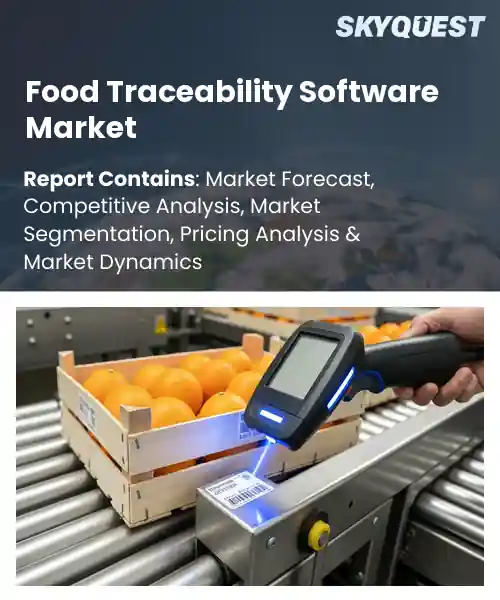
Food Traceability Software Market
Report ID: SQMIG45E2720
Report ID: SQMIG45E2720
[email protected]
USA +1 351-333-4748
Report ID:
SQMIG45E2720 |
Region:
Global |
Published Date: February, 2026
Pages:
157
|Tables:
198
|Figures:
80


Global Food Traceability Software Market size was valued at USD 12.32 Billion in 2024 and is poised to grow from USD 13.38 Billion in 2025 to USD 25.95 Billion by 2033, growing at a CAGR of 8.63% during the forecast period (2026-2033).
The global food traceability software market growth depends on regulatory requirements and the increasing demand from consumers who want to understand food sources. Retailers and processors choose food traceability software because it enables them to monitor ingredient movement through supply chains and to connect batch information with digital records and to perform product recalls. The past ten years have seen organizations move from using paper documentation to adopting cloud-based systems and testing blockchain technology which Walmart mandated for produce tracking through blockchain while IBM Food Trust connected farms to supermarkets. Companies invested in traceability systems to fight contamination because dangerous outbreaks harmed their brands and disrupted their business operations while their patrons needed to trust their products.
In addition, the global food traceability software market penetration depends on consumer confidence maintenance because interoperability and data standardization enable organizations to share information with their various partners. The adoption of standards reduces integration costs, which leads suppliers to implement software solutions at a higher rate, enabling them to trace more products while decreasing brand expenses during product recalls. A European dairy cooperative used combined GS1 identifiers with cloud APIs to trace contamination back to its farm within hours, which prevented operational shutdowns and maintained its retailer partnerships. The platforms provide analytics services, which enable businesses to transform their traceability data into demand forecasting and waste management, creating financial benefits that encourage further investment.
How is Blockchain Enhancing Transparency in the Food Traceability Software Market?
The implementation of blockchain technology establishes an unchangeable public ledger, which tracks each stage of the food supply chain from farm to table. The system containsthree main components which include records that resist tampering and proof of provenance and time-stamped data that authorized partners can access. The current market climate demonstrates two primary forces which include regulatory pressures and customer requirements for validated product origins that drive market expansion. The platforms enable retailers and consumers to verify product handling details through real-time access to sensor data and batch records, and QR code information. The process of tracing products back through their supply chain enables companies to trace the origins of their product throughout the entire distribution process, which helps them establish precise accountability while increasing efficiency at the beginning of product recalls.
Market snapshot - (2026-2033)
Global Market Size
USD 22.3 Billion
Largest Segment
Cloud-Based Solutions
Fastest Growth
Blockchain Solutions
Growth Rate
7.4% CAGR
To get more insights on this market click here to Request a Free Sample Report
The global food traceability software market is segmented based on software type, component, deployment mode, enterprise size, functionality, application area, end user, and region. By software type, the market includes blockchain solutions, cloud-based solutions, and on-premises solutions. Based on components, it is divided into software and services. In terms of deployment mode, the market is categorized into cloud-based, on-premises, and hybrid models. Based on enterprise size, it is segmented into large enterprises and small & medium enterprises (SMEs). By functionality, the market includes monitoring & reporting, and data integration. Based on the application area, it covers quality & safety management, supply chain management, regulatory compliance, recall management, and others. In terms of end user, the market is segmented into food manufacturers, retailers, logistics providers, and other end users. Geographically, the market is divided into North America, Europe, Asia Pacific, Latin America, and the Middle East & Africa.
As per the global food traceability software market analysis, the market will be led by on-premise solutions because they provide better data protection and management and compliance capabilities. The organizations use on-premise solutions to protect their sensitive supply chain and regulatory data which large corporations require. The customized infrastructure of strict compliance industries together with its reliable performance and minimal need for outside networks strengthens this market segment's dominance.
However, the cloud-based solutions segment has experienced the fastest growth because it enables users to adopt its services without difficulty while providing them with the ability to scale their operations and allowing them to connect their systems with IoT sensors and mobile devices. The subscription system accelerates implementation across multiple food industries, which enables continuous feature updates and third-party linkages to create market spaces that boost business growth and drive innovation.
However, cloud based solutions are emerging as the most rapidly expanding area due to lower adoption barriers, flexible scalability, and seamless integration with IoT sensors and mobile interfaces. Their subscription model accelerates deployment across diverse food businesses, fosters continuous feature rollout and third party integrations, and creates ecosystems that expand addressable markets and speed innovation.
According to the global food traceability software market forecast, the quality & safety management segment leads the market because it provides food producers and distributors with essential capability, which includes hazard analysis testing and corrective control systems as part of their traceability management process. The system delivers three crucial components which include audit-ready documents and supplier evaluation capabilities and quality control systems that protect against contamination, which decreases the risk of product recalls and safeguards brand image, forcing companies to invest more resources to meet growing safety requirements and contractual obligations.
Whereas the recall management application is predicted to have the largest food traceability software market share because recent high-profile cases and new regulations require organizations to establish procedures for immediate product removal and customer alerts. The integration of analytics with automation systems enables organizations to shorten their response times while creating new service platforms, which transform quick remediation activities into revenue streams while lowering liability risks.
To get detailed segments analysis, Request a Free Sample Report
As per the food traceability software market regional forecast, North America leads the market because of its strict regulatory requirements, advanced technological infrastructure, and high adoption rates by supply chain professionals. The three groups involved in the distribution network must work together to create data standards and systems that can communicate with each other. The food category implementation process benefits multiple vendors who establish service networks which enable broad product distribution. The academic and industrial partners keep working together to create new practical solutions while consumers want to know product origins which drive demand. The operational advantages of traceability solutions become clear through their ability to handle recalls efficiently and build supply chain resilience.
The United States food traceability software sector develops through three factors which include companies across all industries who use traceability software and software vendors who partner with system integrators and retailers who collaborate with technology providers. Companies require integrated platforms because they need to supply chain visibility together with rapid response capabilities during emergencies. The three factors which enable widespread adoption of professional services and technological advancements and pilot testing by multiple groups take place across both basic commodity products and high-end food items in all distribution channels.
The food traceability software industry in Canada establishes its presence through regulated industries which work with processing and exporting companies together with specialized resource sector adoption efforts. The stakeholders who work with export regulations and product provenance drive businesses to adopt traceability systems. The value chain partners through vendor collaborations develop custom solutions which enable organizations to create value while their focus on cloud services and interoperability lets them share information across international borders throughout their production and distribution processes.
The European food traceability software market experiences rapid growth because of two factors which are strict regulatory requirements and supply chain harmonization. The network of manufacturers and distributors together with retailers requires cross-border trading support through compatible solutions which enable multi-tier product tracking. The combination of public and private organizations with industry groups establishes common data standards which enable organizations to implement data sharing systems and certification programs. The technology providers develop three product options which include modular platforms and integration features, and compliance functions which meet different marketplace requirements. The combination of customer demand for ethical sourcing and environmental credentials with pilot program funding and ecosystem partnership growth drives deployment across mainstream and niche food markets.
The food traceability software market in Germany operates through three core components which include food manufacturing facilities and processing plants and the need to comply with regulations and the trend of implementing digital technologies across food businesses. The three components which create a need for strong traceability platforms involve integrated supply networks and quality control practices. The native vendors and global suppliers battle to provide businesses with scalable and interoperable solutions which meet standards requirements and deliver complete batch-level operational visibility throughout the entire food processing value chain.
The food traceability software market in the United Kingdom experiences two major changes which involve the quick adoption of technology by retailers and restaurants and the government funding of digital supply chain technology during the creation of new cloud-based systems. The consumer demand for product origins drives businesses to create collaborative programs which link technology providers with growers and processors. The supply chain operations of regional areas can expand through the system's two main features, which are flexible integration options and user-friendly analytics capabilities.
The food traceability software market in France develops through increasing demand from artisanal producers and cooperatives and retailers who wish to verify provenance and maintain product quality standards. Companies use three factors to make their market entry decisions, which include pilot programs and partnerships between technology startups and cooperative networks, and the need for traceability solutions that honor production standards.
The food traceability software market in Asia Pacific grows stronger because producers and processors adopt digital technology for their operations while the region invests in logistics and cold chain systems and trade partners begin to work together more effectively. The combination of domestic technology development and global platform use enables the creation of customized solutions for various agricultural systems and distribution methods. The government and industry organizations establish pilot programs and interoperability projects to solve traceability problems which exist between smallholder and industrial supply chains. People now want mobile tracking systems together with cloud analytics and IoT device links because they desire to know about food safety and product origins while online shopping and modern retail stores become more common. The regional centers of technical excellence together with their partnerships to trusted global solution providers deliver deployment and localization expertise which helps organizations in various market segments.
The Japanese food traceability software market growth results from established manufacturing standards together with automation technology and quality control systems which are essential for production and processing. The market requires advanced solutions which enable domestic producers to monitor machine data, track product lots, and manage compliance procedures. The joint efforts between established technology companies and niche providers create localized solutions which enable safe data handling and precise supply chain visibility across large businesses and food artisans.
The South Korean food traceability software market penetration results from its modern infrastructure, which connects technology companies with food distributors, and government initiatives that support traceability solutions. The growth of ecommerce and modern retail stores requires businesses to implement real-time tracking systems and mobile solutions and analytics tools. Domestic vendors concentrate their efforts on developing logistics platform connections and provenance tracking capabilities, while their global partner network provides solutions that meet both local demands and international distribution requirements.
To know more about the market opportunities by region and country, click here to
Buy The Complete Report
Increasing Regulatory Compliance Requirements
Food companies need traceability software because compliance regulations make it necessary for them to adopt these solutions which create standardized recordkeeping and help auditors with automated documentation and provide visibility throughout complex supply chains. The software allows companies to prove their product origins while simplifying their reporting requirements to enable cross-border trade. The current enforcement rules create incentives for businesses to invest in interoperable platforms and permanent monitoring systems, which lead processors and distributors and retailers to implement digital traceability as their main solution for meeting legal requirements while lowering compliance risks.
Rising Consumer Demand for Transparency
The rising expectations of consumers for product provenance and safety lead food companies to adopt traceability software, which enables them to create verifiable storytelling through accessible provenance data. The transparent batch history and digital trace-link system from brands enables them to establish trust with customers and support their premium product pricing while they can quickly work through product quality issues. The ability to show validated supply chain data strengthens customer ties and business reputation, which motivates companies across the value chain to adopt traceability platforms as their main strategic method for meeting demands and achieving competitive advantage.
High Implementation and Integration Costs
Traceability software adoption faces challenges because food businesses must deal with high initial costs and challenging integration processes while their financial resources limit their buying decisions. Legacy enterprise systems need specific skills for their matching process, which takes a long time to finish and needs both system changes and company operations to be put on hold. The two factors of ongoing system maintenance and scalable system capabilities drive higher total ownership costs, which makes smaller producers and distributors stay away from making long-term commitments. The combination of budget constraints and procurement risk awareness causes investment delays, which prevents organizations from implementing traceability solutions at their desired speed.
Data Privacy and Security Concerns
Centralized traceability platforms face adoption challenges because stakeholders hesitate to use these systems due to their concern about data privacy and cybersecurity risks, which might allow unauthorized parties to access sensitive sourcing data and damage their reputation and expose them to competition. Data protection regulations present different requirements for each legal jurisdiction which causes organizations to choose between safeguarding legal compliance and accepting restrictive contractual obligations that block cross-border data sharing. The suppliers will not join interoperable networks because these systems demand them to share operational information, which reduces the entire network's traceability potential. The cautious method of negotiation expands the gaps between parties, which results in slower collaborative integration processes that prevent the establishment of clear market access routes for businesses to pursue.
Request Free Customization of this report to help us to meet your business objectives.
The market consists of several fragmented elements because of buyer requirements and regulatory demands which both create advantages for businesses that can demonstrate traceability and rapid compliance with regulations. Vendors establish partnerships and conduct targeted acquisitions and develop new platforms to respond to demand because of their business strategy. FoodLogiQ has developed new traceability and compliance features through its iterative product development process. TraceX has established partnerships with various organizations to expand its pilot programs. Agritrack has established operations in the United States to meet the demand for FSMA compliance products.
AI-driven Predictive Traceability: Organizations use artificial intelligence and machine learning technology for their traceability systems to detect potential contamination events and identify system failures and predict possible quality issues which may occur in the future. The tools help teams make decisions which treat Procurements and Processing and Distributions as one unit while building relationships with suppliers and keeping operations running smoothly. Organizations use predictive models to create dynamic routing and targeted testing and efficient recall containment while providing operational transparency and compliance. Adoption encourages organizations to link their systems with sensor networks and ERP systems, which will create ongoing improvements throughout the value chain based on insights gained from data analysis.
Sustainability and Provenance Reporting: The rising importance of sustainability and ESG principles has increased the need for traceability solutions which trace product origins and their resource consumption and environmental impact throughout intricate supply chain networks. The platforms use lifecycle information together with certification data and supplier sustainability practices to support their claims which they need for stakeholder reporting purposes. The trend leads to the establishment of common data exchange practices which require suppliers to receive training in sustainable product procurement according to corporate sustainability goals. The software enables organizations to show their responsible sourcing practices which leads to waste reduction and strengthens brand trust with customers.
SkyQuest’s ABIRAW (Advanced Business Intelligence, Research & Analysis Wing) is our Business Information Services team that Collects, Collates, Correlates, and Analyses the Data collected by means of Primary Exploratory Research backed by robust Secondary Desk research.
As per SkyQuest analysis, the global food traceability software market expands because companies must implement digital traceability systems to meet regulatory requirements while consumers demand transparency which transforms compliance tools into business benefits. The market for smaller suppliers remains restricted because of high implementation and integration costs, which create obstacles for businesses to adopt the solution. The North American market holds the largest share because it has developed infrastructure and multiple vendors and organizations that develop common standards while Blockchain Solutions provides unchanging data which establishes trust between complex supply networks. The speed of traceability technology development from pilot programs to full industry implementation will depend on companies maintaining their focus on developing interoperability solutions and cloud integration functions.
| Report Metric | Details |
|---|---|
| Market size value in 2024 | USD 22.3 Billion |
| Market size value in 2033 | USD 42.4 Billion |
| Growth Rate | 7.4% |
| Base year | 2024 |
| Forecast period | (2026-2033) |
| Forecast Unit (Value) | USD Billion |
| Segments covered |
|
| Regions covered | North America (US, Canada), Europe (Germany, France, United Kingdom, Italy, Spain, Rest of Europe), Asia Pacific (China, India, Japan, Rest of Asia-Pacific), Latin America (Brazil, Rest of Latin America), Middle East & Africa (South Africa, GCC Countries, Rest of MEA) |
| Companies covered |
|
| Customization scope | Free report customization with purchase. Customization includes:-
|
To get a free trial access to our platform which is a one stop solution for all your data requirements for quicker decision making. This platform allows you to compare markets, competitors who are prominent in the market, and mega trends that are influencing the dynamics in the market. Also, get access to detailed SkyQuest exclusive matrix.
Table Of Content
Executive Summary
Market overview
Parent Market Analysis
Market overview
Market size
KEY MARKET INSIGHTS
COVID IMPACT
MARKET DYNAMICS & OUTLOOK
Market Size by Region
KEY COMPANY PROFILES
Methodology
For the Food Traceability Software Market, our research methodology involved a mixture of primary and secondary data sources. Key steps involved in the research process are listed below:
1. Information Procurement: This stage involved the procurement of Market data or related information via primary and secondary sources. The various secondary sources used included various company websites, annual reports, trade databases, and paid databases such as Hoover's, Bloomberg Business, Factiva, and Avention. Our team did 45 primary interactions Globally which included several stakeholders such as manufacturers, customers, key opinion leaders, etc. Overall, information procurement was one of the most extensive stages in our research process.
2. Information Analysis: This step involved triangulation of data through bottom-up and top-down approaches to estimate and validate the total size and future estimate of the Food Traceability Software Market.
3. Report Formulation: The final step entailed the placement of data points in appropriate Market spaces in an attempt to deduce viable conclusions.
4. Validation & Publishing: Validation is the most important step in the process. Validation & re-validation via an intricately designed process helped us finalize data points to be used for final calculations. The final Market estimates and forecasts were then aligned and sent to our panel of industry experts for validation of data. Once the validation was done the report was sent to our Quality Assurance team to ensure adherence to style guides, consistency & design.
Analyst Support
Customization Options
With the given market data, our dedicated team of analysts can offer you the following customization options are available for the Food Traceability Software Market:
Product Analysis: Product matrix, which offers a detailed comparison of the product portfolio of companies.
Regional Analysis: Further analysis of the Food Traceability Software Market for additional countries.
Competitive Analysis: Detailed analysis and profiling of additional Market players & comparative analysis of competitive products.
Go to Market Strategy: Find the high-growth channels to invest your marketing efforts and increase your customer base.
Innovation Mapping: Identify racial solutions and innovation, connected to deep ecosystems of innovators, start-ups, academics, and strategic partners.
Category Intelligence: Customized intelligence that is relevant to their supply Markets will enable them to make smarter sourcing decisions and improve their category management.
Public Company Transcript Analysis: To improve the investment performance by generating new alpha and making better-informed decisions.
Social Media Listening: To analyze the conversations and trends happening not just around your brand, but around your industry as a whole, and use those insights to make better Marketing decisions.
REQUEST FOR SAMPLE
 REQUEST FREE CUSTOMIZATION
Global Food Traceability Software Market size was valued at USD 22.3 Billion in 2024 and is poised to grow from USD 23.95 Billion in 2025 to USD 42.4 Billion by 2033, growing at a CAGR of 7.4% during the forecast period (2026-2033).
Competitive landscape is fragmented, driven by buyer mandates and regulatory pressure that reward traceability integration and fast compliance. Vendors respond with partnerships, targeted acquisitions, and platform innovation; for example FoodLogiQ has rolled iterative traceability and compliance features, TraceX has formed industry partnerships to scale pilots, and Agritrack expanded into the United States to capture FSMA-driven demand. 'IBM Food Trust', 'Trimble Ag Software', 'FoodLogiQ', 'rfxcel', 'Optel Group', 'Everledger', 'SAP', 'Zebra Technologies', 'Myco', 'Clear Labs', 'AgriDigital', 'Tealbook', 'Pathcheck', 'Provenance', 'S4S Technologies', 'ChainPoint', 'HACCP Manager', 'Ceres Tag', 'HarvestMark', 'Scio Networks'
Compliance-driven regulations compel food companies to adopt traceability software because these solutions standardize recordkeeping, automate documentation for audits, and ensure consistent visibility across complex supply chains. By enabling firms to demonstrate provenance and fulfill mandatory reporting, software reduces the operational burden of manual processes and supports cross-border trade. This enforcement environment incentivizes investment in interoperable platforms and continuous monitoring capabilities, prompting processors, distributors, and retailers to prioritize digital traceability as a practical means to meet legal obligations and reduce regulatory risk.
Ai Driven Predictive Traceability: Enterprises increasingly deploy artificial intelligence and machine learning within traceability platforms to anticipate contamination risks, detect anomalies, and forecast quality deviations before they escalate. These capabilities enable proactive decision making across procurement, processing and distribution, enhancing supplier collaboration and reducing disruption. Predictive models support dynamic routing, targeted testing and efficient recall containment while improving operational transparency and compliance. Adoption encourages integration with sensor networks and ERP systems, fostering continuous improvement cycles and relationships across the value chain through data-driven insights.
As per the food traceability software market regional forecast, North America leads the market because of its strict regulatory requirements, advanced technological infrastructure, and high adoption rates by supply chain professionals.


Want to customize this report? This report can be personalized according to your needs. Our analysts and industry experts will work directly with you to understand your requirements and provide you with customized data in a short amount of time. We offer $1000 worth of FREE customization at the time of purchase.
Feedback From Our Clients


 USA (+1) 351-333-4748

