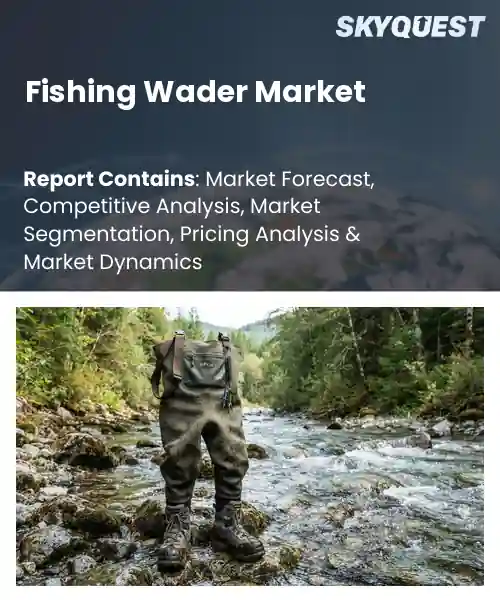
Fishing Wader Market
Report ID: SQMIG25J2330
Report ID: SQMIG25J2330
[email protected]
USA +1 351-333-4748
Report ID:
SQMIG25J2330 |
Region:
Global |
Published Date: August, 2026
Pages:
157
|Tables:
144
|Figures:
78


Global Fishing Wader Market size was valued at USD 487.3 Million in 2024 and is poised to grow from USD 529.7 Million in 2025 to USD 1032.44 Million by 2033, growing at a CAGR of 8.7% during the forecast period (2026-2033).
Demand in angling has transformed fishing waders from niche apparel to a multi‑billion‑dollar segment, driven chiefly by the rising participation in recreational fishing across North America, Europe, and emerging Asian markets. The market comprises waterproof boots, chest‑high breeches, and insulated suits designed to keep anglers dry and mobile in varied water conditions. Historically, waders were simple rubber boots used by professional fishers, but the 1990s saw the introduction of breathable membranes such as Gore‑Tex, expanding appeal to day‑trip hobbyists. This technological shift, coupled with growing environmental awareness, has elevated consumer expectations for durability and sustainability, reinforcing the sector’s relevance globally. Demand for waders is amplified by three forces: longer fishing seasons, rising disposable income among millennials, and retail consolidation that favors omnichannel distribution. Warmer temperatures extend hatch periods, compelling anglers to fish earlier and later, which directly raises the frequency of wader purchases. At the same time, a generation that values experiential leisure allocates more budget to premium gear, prompting manufacturers to launch lightweight, quick‑dry models with integrated storage. Retail giants such as Decathlon and Amazon streamline access, allowing niche brands to reach audiences; this synergy creates a feedback loop where product innovation drives sales, and expanded sales justify R&D.
How is AI-driven design impacting sustainability trends in the fishing wader market
AI‑driven design is reshaping fishing waders by using algorithms to select eco‑friendly fabrics, streamline pattern cutting, and predict durability under varied water conditions. These tools reduce material waste, shorten prototyping cycles, and enable manufacturers to test performance virtually before physical production. As anglers seek gear that protects both fish habitats and their own comfort, brands are integrating data‑rich simulations to balance breathability, buoyancy, and recyclability. The market’s rapid expansion, driven by heightened outdoor participation and heightened environmental awareness, creates fertile ground for tech‑enabled sustainability, turning what was once a niche concern into a core product attribute.Swiftcurrent, February 2026, was highlighted in a leading buyers guide, underscoring the brand’s push toward smarter material use that aligns with AI‑driven sustainability trends and supports market growth.
Market snapshot - (2026-2033)
Global Market Size
USD 487.3 Million
Largest Segment
Multi-Cardiac Marker Devices
Fastest Growth
Troponin Testing Devices
Growth Rate
8.7% CAGR
To get more insights on this market click here to Request a Free Sample Report
Global fishing wader market is segmented by product type, material, boot type, application, distribution channel and region. Based on product type, the market is segmented into Chest Waders, Waist Waders, Hip Waders and Pant Waders. Based on material, the market is segmented into Neoprene, Nylon, Polyester and Rubber. Based on boot type, the market is segmented into Bootfoot Waders and Stockingfoot Waders. Based on application, the market is segmented into Recreational Fishing, Professional Fishing and Hunting & Outdoor Activities. Based on distribution channel, the market is segmented into Offline and Online. Based on region, the market is segmented into North America, Europe, Asia Pacific, Latin America and Middle East & Africa.
Chest waders segment dominates because they deliver full-body waterproof protection that meets anglers’ need for confidence in deep or fast‑moving water. Their integrated seams, reinforced knees, and compatibility with boot systems create a durable solution unmatched by lower‑body options. This comprehensive performance aligns with consumer expectations for safety and versatility, fostering strong brand loyalty and encouraging repeat purchases across recreational and professional fishing circles.
However, hip waders are witnessing the strongest growth momentum as anglers seek lighter, more agile options for shallow streams and fast‑moving rivers. Their reduced weight and lower profile enhance mobility while still offering essential waterproof coverage, attracting a new cohort of active anglers and prompting manufacturers to innovate with breathable fabrics and quick‑dry technologies.
Nylon segment leads because its lightweight nature and high tensile strength enable designers to create flexible, breathable waders that resist tearing in demanding conditions. The material’s quick‑dry characteristic reduces post‑use downtime, appealing to anglers who value efficiency. Its compatibility with advanced seam sealing techniques enhances waterproof performance, positioning nylon as the preferred choice for a broad range of fishing applications.
Meanwhile, neoprene is emerging as the key high‑growth area as manufacturers capitalize on its superior insulation and exceptional durability in cold‑water environments. The material’s inherent stretch provides a snug fit that enhances comfort, while its resistance to oil and chemicals meets the needs of professional anglers. This appeal drives rapid product line expansions and fuels market momentum.
To get detailed segments analysis, Request a Free Sample Report
North America benefits from a mature outdoor culture that prioritizes high‑performance apparel for recreational and commercial fishing. Robust distribution channels, including specialty retailers and large‑scale sporting goods chains, ensure extensive product accessibility. Advanced manufacturing capabilities support rapid innovation, allowing brands to integrate cutting‑edge materials that enhance comfort and durability. Consumer willingness to invest in premium gear drives market depth, while strong brand heritage reinforces loyalty. Additionally, a regulatory environment that emphasizes safety and environmental stewardship encourages adoption of technologically advanced wader solutions, reinforcing the region’s leadership position.
Fishing Wader Market in the United States reflects a convergence of avid anglers, sophisticated retail networks, and a penchant for high‑tech apparel. Enthusiasts prioritize functionality, prompting manufacturers to focus on breathable waterproof fabrics and ergonomic designs. The presence of leading outdoor brands fosters intense competition, spurring continuous product refinement. Retailers emphasize experiential shopping, offering hands‑on trials that reinforce consumer confidence. This dynamic ecosystem sustains the United States as a cornerstone of global demand.
Fishing Wader Market in Canada is shaped by extensive freshwater and coastal fishing opportunities across varied climates. Anglers value robust protection against harsh weather, leading suppliers to emphasize insulated and waterproof technologies. A strong emphasis on environmental responsibility encourages the adoption of sustainable materials. Retail channels often combine online reach with regional specialty stores, ensuring accessibility in both urban and remote communities. These factors collectively position Canada as a significant contributor to the North American market leadership.
Europe’s expansion is propelled by a blend of traditional fishing cultures and a growing focus on outdoor leisure activities. Heightened consumer awareness of performance apparel drives demand for innovative, lightweight designs that balance protection and mobility. Sustainable manufacturing practices resonate strongly with environmentally conscious buyers, prompting brands to incorporate eco‑friendly fabrics. A well‑established network of specialty retailers across the continent facilitates broad market penetration, while collaborative research initiatives between academic institutions and industry accelerate product development. These synergistic forces foster a vibrant market environment, positioning Europe as a fast‑moving hub for fishing wader adoption.
Fishing Wader Market in Germany benefits from a disciplined consumer base that values precision engineering and durability. Manufacturers invest heavily in research to integrate high‑performance polymers and ergonomic fittings that meet exacting standards. Retail distribution blends well‑known sporting chains with dedicated specialty outlets, ensuring comprehensive coverage. An emphasis on quality control and sustainability further enhances brand credibility, reinforcing Germany’s dominant role within the European landscape.
Fishing Wader Market in the United Kingdom experiences accelerated growth driven by a resurgence of coastal and river angling activities. Consumers prioritize versatility, prompting an influx of multi‑seasonal wader designs that adapt to variable weather conditions. Retail strategies focus on experiential engagement, with trial stations and community events fostering brand loyalty. The market’s rapid expansion is underpinned by a robust online presence that complements traditional storefronts, catering to both seasoned anglers and new entrants.
Fishing Wader Market in France reflects an emerging enthusiasm for sustainable outdoor pursuits. Anglers increasingly seek eco‑friendly materials that align with broader environmental values. Brands respond by integrating recycled textiles and low‑impact manufacturing processes. Distribution channels are expanding through a combination of boutique specialty stores and growing e‑commerce platforms, which together enhance product accessibility. This emerging market segment contributes to France’s rising influence within the European fishing wader arena.
Asia Pacific’s strengthening presence arises from a convergence of cultural fishing traditions and rapid technological adoption. Consumers across the region display a keen interest in lightweight, breathable wader solutions that accommodate both temperate and tropical environments. Innovation hubs in key economies drive the integration of advanced material science, emphasizing moisture‑wicking and rapid‑dry properties. Expanding retail ecosystems, ranging from extensive sporting goods chains to vibrant online marketplaces, broaden consumer reach. Collaborative efforts between manufacturers and local fishing communities further refine product relevance, anchoring Asia Pacific as an increasingly influential market player.
Fishing Wader Market in Japan leverages a sophisticated consumer base that values meticulous craftsmanship and high functionality. Manufacturers focus on ultra‑lightweight waterproof membranes and seamless construction to enhance comfort during prolonged fishing expeditions. Retail distribution combines flagship specialty stores with a strong digital presence, ensuring widespread availability. Cultural appreciation for outdoor recreation underscores demand for advanced wader technology, reinforcing Japan’s pivotal role in regional market growth.
Fishing Wader Market in South Korea is driven by a youthful demographic embracing active outdoor lifestyles. Preference for sleek, high‑performance designs encourages rapid product development cycles that incorporate cutting‑edge fabric technologies. Retail strategies blend modern e‑commerce platforms with curated boutique outlets, facilitating easy access to innovative wader offerings. The synergy of consumer enthusiasm and technological agility positions South Korea as a dynamic contributor to the Asia Pacific market evolution.
To know more about the market opportunities by region and country, click here to
Buy The Complete Report
Growing Recreational Fishing Interest
Sustainable Material Adoption Trends
High Production Cost Challenges
Regulatory Environmental Compliance Pressures
Request Free Customization of this report to help us to meet your business objectives.
The competitive landscape is shaped by established brands such as Patagonia, Simms and Orvis, which differentiate through sustainable material sourcing, advanced breathable membrane technology and expanded retail partnerships, respectively; these concrete moves intensify rivalry and drive market momentum. Recent strategic actions include Patagonia’s partnership with a recycled‑fabric supplier to launch an eco‑focused wader line, Simms’ introduction of a lightweight, waterproof membrane that reduces weight by 15 percent, and Orvis’ distribution alliance with major outdoor chains to broaden its product reach.
Top Player’s Company Profile
Recent Developments
SkyQuest’s ABIRAW (Advanced Business Intelligence, Research & Analysis Wing) is our Business Information Services team that Collects, Collates, Correlates, and Analyses the Data collected by means of Primary Exploratory Research backed by robust Secondary Desk research. As per SkyQuest analysis, the global fishing wader market is propelled primarily by a surge in recreational fishing enthusiasm, which fuels demand for durable, comfortable gear, while high production costs act as a notable restraint limiting price‑sensitive adoption. North America continues to dominate the market thanks to its mature outdoor culture and extensive distribution networks, and chest waders remain the leading segment because they provide full‑body waterproof protection sought by both hobbyists and professionals. A second driver – the rapid uptake of sustainable materials such as recycled nylon and eco‑friendly membranes – further boosts growth by aligning products with anglers’ environmental values and differentiating brands in a competitive landscape.
| Report Metric | Details |
|---|---|
| Market size value in 2024 | USD 487.3 Million |
| Market size value in 2033 | USD 1032.44 Million |
| Growth Rate | 8.7% |
| Base year | 2024 |
| Forecast period | (2026-2033) |
| Forecast Unit (Value) | USD Million |
| Segments covered |
|
| Regions covered | North America (US, Canada), Europe (Germany, France, United Kingdom, Italy, Spain, Rest of Europe), Asia Pacific (China, India, Japan, Rest of Asia-Pacific), Latin America (Brazil, Rest of Latin America), Middle East & Africa (South Africa, GCC Countries, Rest of MEA) |
| Companies covered |
|
| Customization scope | Free report customization with purchase. Customization includes:-
|
To get a free trial access to our platform which is a one stop solution for all your data requirements for quicker decision making. This platform allows you to compare markets, competitors who are prominent in the market, and mega trends that are influencing the dynamics in the market. Also, get access to detailed SkyQuest exclusive matrix.
Table Of Content
Executive Summary
Market overview
Parent Market Analysis
Market overview
Market size
KEY MARKET INSIGHTS
COVID IMPACT
MARKET DYNAMICS & OUTLOOK
Market Size by Region
KEY COMPANY PROFILES
Methodology
For the Fishing Wader Market, our research methodology involved a mixture of primary and secondary data sources. Key steps involved in the research process are listed below:
1. Information Procurement: This stage involved the procurement of Market data or related information via primary and secondary sources. The various secondary sources used included various company websites, annual reports, trade databases, and paid databases such as Hoover's, Bloomberg Business, Factiva, and Avention. Our team did 45 primary interactions Globally which included several stakeholders such as manufacturers, customers, key opinion leaders, etc. Overall, information procurement was one of the most extensive stages in our research process.
2. Information Analysis: This step involved triangulation of data through bottom-up and top-down approaches to estimate and validate the total size and future estimate of the Fishing Wader Market.
3. Report Formulation: The final step entailed the placement of data points in appropriate Market spaces in an attempt to deduce viable conclusions.
4. Validation & Publishing: Validation is the most important step in the process. Validation & re-validation via an intricately designed process helped us finalize data points to be used for final calculations. The final Market estimates and forecasts were then aligned and sent to our panel of industry experts for validation of data. Once the validation was done the report was sent to our Quality Assurance team to ensure adherence to style guides, consistency & design.
Analyst Support
Customization Options
With the given market data, our dedicated team of analysts can offer you the following customization options are available for the Fishing Wader Market:
Product Analysis: Product matrix, which offers a detailed comparison of the product portfolio of companies.
Regional Analysis: Further analysis of the Fishing Wader Market for additional countries.
Competitive Analysis: Detailed analysis and profiling of additional Market players & comparative analysis of competitive products.
Go to Market Strategy: Find the high-growth channels to invest your marketing efforts and increase your customer base.
Innovation Mapping: Identify racial solutions and innovation, connected to deep ecosystems of innovators, start-ups, academics, and strategic partners.
Category Intelligence: Customized intelligence that is relevant to their supply Markets will enable them to make smarter sourcing decisions and improve their category management.
Public Company Transcript Analysis: To improve the investment performance by generating new alpha and making better-informed decisions.
Social Media Listening: To analyze the conversations and trends happening not just around your brand, but around your industry as a whole, and use those insights to make better Marketing decisions.
REQUEST FOR SAMPLE
 REQUEST FREE CUSTOMIZATION


Want to customize this report? This report can be personalized according to your needs. Our analysts and industry experts will work directly with you to understand your requirements and provide you with customized data in a short amount of time. We offer $1000 worth of FREE customization at the time of purchase.
Feedback From Our Clients


 USA (+1) 351-333-4748

