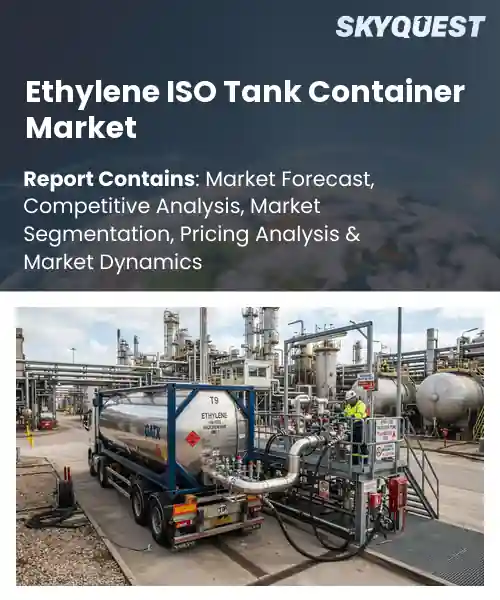
Ethylene ISO Tank Container Market
Report ID: SQMIG20I3973
Report ID: SQMIG20I3973
[email protected]
USA +1 351-333-4748
Report ID:
SQMIG20I3973 |
Region:
Global |
Published Date: August, 2026
Pages:
157
|Tables:
143
|Figures:
78


Global Ethylene Iso Tank Container Market size was valued at USD 2.1 Billion in 2024 and is poised to grow from USD 2.25 Billion in 2025 to USD 3.93 Billion by 2033, growing at a CAGR of 7.2% during the forecast period (2026-2033).
The global ethylene ISO tank container market supplies refrigerated vessels used to move liquefied ethylene from petrochemical hubs to downstream users. Its importance stems from ethylene’s role as a feedstock for plastics, fibers and chemicals, which makes logistics essential. Market originated in the 1990s when insulated steel containers enabled safe carriage at 103 °C, replacing bulk rail. Demand has followed the expansion of ethylene production in United States, Middle East and China, highlighted by 2021 deployment of 2,000 m³ ISO tanks at a Saudi refinery. Primary driver today is need to cut product loss and safety risks while supporting just‑in‑time supply chains. Environmental regulations and the push for lower carbon footprints have become the key catalyst shaping the ethylene ISO tank container market.
By enabling closed‑loop shipment, insulated tanks reduce evaporative emissions, allowing producers to meet tightening emission caps and avoid costly penalties. This advantage spurs investment in larger‑capacity tanks, as seen in Europe where 3,600 m³ containers are being introduced for cross‑border polymer plants, improving load efficiency and cutting transport‑related CO₂ per tonne. Consequently, logistics providers gain revenue streams through leasing and maintenance contracts, while ethylene users benefit from pricing and reduced inventory buffers, creating a cycle of demand and infrastructure expansion.
How is AI-driven automation improving safety and efficiency in the ethylene ISO tank container market?
AI-driven automation is reshaping safety and efficiency in the ethylene ISO tank container market by embedding sensors, real‑time analytics and machine‑learning models into the tank ecosystem. Continuous monitoring of pressure, temperature and leak indicators alerts operators to anomalies before they become hazards, reducing the risk of spills and exposure. Predictive algorithms analyze historical patterns to schedule maintenance only when wear is detected, cutting unnecessary downtime and extending asset life. Integrated control systems also synchronize loading, transport and unloading sequences, streamlining workflows and minimizing human error. Together these technologies create a more resilient supply chain that can respond swiftly to market demands while protecting people and the environment.
Air Liquide announced an AI‑driven predictive‑maintenance platform for its ethylene ISO tank fleet in April 2024, improving early fault detection and optimizing service intervals, which directly supports safer operations and smoother market flow.
Market snapshot - (2026-2033)
Global Market Size
USD 2.1 Billion
Largest Segment
20–40 Feet
Fastest Growth
Above 40 Feet
Growth Rate
7.2% CAGR
To get more insights on this market click here to Request a Free Sample Report
Global ethylene iso tank container market is segmented by tank capacity, material, application, ownership model, end user and region. Based on tank capacity, the market is segmented into Up to 20 Feet, 20–40 Feet and Above 40 Feet. Based on material, the market is segmented into Stainless Steel, Carbon Steel and Others. Based on application, the market is segmented into Chemical Transportation, Petrochemical Transportation and Industrial Gas Transportation. Based on ownership model, the market is segmented into Owned and Leased. Based on end user, the market is segmented into Chemical Manufacturers, Logistics & Transportation Companies and Petrochemical Companies. Based on region, the market is segmented into North America, Europe, Asia Pacific, Latin America and Middle East & Africa.
Stainless steel segment dominates because its superior corrosion resistance aligns with the aggressive nature of ethylene, which demands airtight containment. The material’s durability reduces maintenance cycles, extending container lifespan and ensuring safety compliance. These attributes lower total cost of ownership for users, prompting manufacturers and logistics firms to prioritize stainless steel designs over alternatives. Consequently, market preference consolidates around this material for high value ethylene transport in global supply chains.
However, carbon steel segment is witnessing the strongest growth momentum because manufacturers are leveraging cost effective production techniques that lower upfront investment. Advances in protective coatings mitigate corrosion concerns, expanding its suitability for medium term ethylene shipments. This affordability drives broader adoption among logistics providers, accelerating market expansion and creates new service models.
Owned segment leads because firms handling ethylene prioritize full control over container integrity and scheduling. Ownership eliminates third party dependency, allowing precise coordination with production cycles and regulatory inspections. This control reduces risk of contamination and ensures compliance with stringent safety standards. As a result, major chemical manufacturers and petrochemical players favor outright purchase to safeguard their supply chain reliability throughout the entire distribution network and maintain consistent product quality.
On the other hand, leased segment emerges as the key high growth area because it offers flexible financing that aligns with volatile ethylene demand. Service providers are expanding leasing portfolios with advanced tracking and maintenance services, reducing capital burden for users. This flexibility encourages smaller operators to enter the market, spurring overall demand.
To get detailed segments analysis, Request a Free Sample Report
Asia Pacific leads the global Ethylene ISO Tank Container market due to a confluence of strategic advantages. The region benefits from a dense network of petrochemical hubs that generate sustained demand for safe and efficient ethylene transport. Advanced manufacturing capabilities and a strong emphasis on container standardization enhance reliability and cost competitiveness. Proximity to major raw material sources reduces logistics complexity, while robust export corridors enable seamless movement to downstream markets. Collaborative industry initiatives drive continuous innovation in container design, reinforcing safety and environmental performance. The region’s regulatory frameworks also promote high safety standards, encouraging adoption of ISO‑rated solutions across the supply chain. Moreover, growing domestic consumption of petrochemical derivatives fuels internal demand, reinforcing the market’s depth and breadth.
Ethylene ISO Tank Container Market in Japan is shaped by a mature petrochemical sector that prioritizes high safety and efficiency. Strong engineering expertise supports the development of advanced container specifications that meet stringent local regulations. Integrated logistics networks link production sites with export terminals, facilitating smooth trans‑border movement. Continuous collaboration between manufacturers and end users drives incremental improvements in container durability and environmental performance, reinforcing Japan’s role as a key hub for ethylene transport.
Ethylene ISO Tank Container Market in South Korea benefits from a dynamic chemical manufacturing base that emphasizes export orientation. Close proximity to major shipping lanes enables rapid deployment of containers to regional markets, enhancing turnaround times. Government‑backed initiatives encourage adoption of internationally recognized container standards, fostering confidence among global trading partners. Ongoing investment in research and development yields innovative designs that improve load stability and reduce emissions, positioning South Korea as a strategic conduit for ethylene logistics across Asia.
North America experiences rapid expansion of the Ethylene ISO Tank Container market driven by a combination of extensive petrochemical infrastructure and a strong emphasis on safety and environmental stewardship. The United States and Canada host integrated production complexes that generate consistent demand for reliable container solutions. Advanced logistics frameworks, including extensive rail and marine networks, enable efficient distribution across vast distances. Industry collaboration promotes the adoption of standardized container designs that meet rigorous safety criteria, while regulatory incentives encourage the transition to low‑emission transport options. Continuous innovation in material engineering and monitoring technologies further enhances container performance, supporting the region’s commitment to operational excellence and sustainable supply chain practices. The growing focus on circular economy principles drives interest in reusable container solutions, aligning with broader sustainability goals across the continent. Investments in port infrastructure improve turnaround efficiency, reinforcing the attractiveness of ISO‑rated containers for both domestic distribution and international trade.
Ethylene ISO Tank Container Market in the United States is anchored by a network of chemical production sites that demand transport solutions. Regulatory frameworks enforce safety standards, prompting widespread adoption of ISO‑rated containers. Multimodal logistics, including rail corridors and ports, facilitate movement of ethylene across the country and to export markets. Collaboration between manufacturers and end users drives refinement of container technology, supporting the United States’ leadership in safe chemical logistics.
Ethylene ISO Tank Container Market in Canada is shaped by a growing petrochemical sector that emphasizes environmental responsibility. Stringent national safety regulations encourage the use of ISO‑certified containers for ethylene transport, ensuring high levels of protection. The country’s rail system and access to Atlantic and Pacific ports provide distribution channels for domestic consumption and export. Research initiatives focus on lightweight materials and monitoring, enhancing container efficiency and aligning with Canada’s broader sustainability objectives.
Europe is actively strengthening its position in the Ethylene ISO Tank Container market through a combination of rigorous regulatory frameworks, a focus on sustainability, and a tradition of engineering excellence. The region’s comprehensive safety directives drive widespread adoption of ISO‑certified containers, ensuring consistent protection across borders. Investment in green logistics encourages the development of low‑emission transport solutions, while advanced manufacturing hubs deliver high‑quality container designs that meet demanding performance criteria. Collaborative research programs among industry leaders and academic institutions foster continuous innovation in materials and monitoring technologies. Integrated multimodal transport networks, including extensive rail corridors and deep‑sea ports, enhance distribution efficiency throughout the continent and to global markets, reinforcing Europe’s role as a reliable hub for ethylene logistics. Policy incentives also support the transition to reusable container systems, aligning with the EU’s circular economy objectives.
Ethylene ISO Tank Container Market in Germany benefits from a chemical manufacturing base and an emphasis on engineering precision. National safety standards mandate the use of ISO‑certified containers, fostering high levels of reliability. The country’s dense rail network and port facilities enable efficient distribution of ethylene both domestically and to neighboring markets. Collaboration between container producers and end users drives improvement in material durability and environmental performance, reinforcing Germany’s leadership in safe chemical logistics.
Ethylene ISO Tank Container Market in the United Kingdom is driven by a petrochemical sector that prioritizes safety and environmental compliance. Stringent UK regulations require ISO‑certified containers for ethylene transport, ensuring protection standards. The nation’s integrated rail and maritime infrastructure supports movement of containers to hubs and export terminals. Partnerships between container manufacturers and chemical producers focus on advancing lightweight designs and monitoring, enhancing operational efficiency and aligning with the United Kingdom’s sustainability commitments.
Ethylene ISO Tank Container Market in France is shaped by a chemical industry that emphasizes safety and green logistics. French regulations promote the use of ISO‑certified containers, ensuring protection levels for ethylene transport. The country’s rail corridors and access to Atlantic ports facilitate efficient distribution to domestic users and international buyers. Efforts between container suppliers and petrochemical firms target improvements in material strength and emissions monitoring, supporting France’s ambition to lead in sustainable chemical supply chains.
To know more about the market opportunities by region and country, click here to
Buy The Complete Report
Increasing Demand for Ethylene Transport
Regulatory Support for Safe Shipping
Stringent Safety Certification Requirements
High Cost of Specialized Containers
Request Free Customization of this report to help us to meet your business objectives.
The competitive landscape is shaped by several established manufacturers such as CIMC Enric, Chart Industries, Air Water Inc., Cryeng Group, FURUISE and Linde, each leveraging technology innovation to improve tank safety and efficiency while pursuing strategic partnerships to broaden distribution networks and meet rising demand for ethylene transport solutions.
Top Player’s Company Profile
SkyQuest’s ABIRAW (Advanced Business Intelligence, Research & Analysis Wing) is our Business Information Services team that Collects, Collates, Correlates, and Analyses the Data collected by means of Primary Exploratory Research backed by robust Secondary Desk research.
As per SkyQuest analysis, the market is propelled by the rising demand for ethylene transport driven by expanding polymer production, which serves as a key driver. A second driver is the adoption of AI‑driven automation that enhances safety and reduces downtime. The dominant region is Asia Pacific, where dense petrochemical hubs and advanced manufacturing fuel growth, while the stainless‑steel material segment dominates due to its corrosion resistance and lower total cost of ownership. However, the high cost of specialized containers acts as a restraint, limiting adoption among smaller players. Regulatory pressure for lower emissions also encourages investment in larger‑capacity tanks, reinforcing the market’s upward trajectory.
| Report Metric | Details |
|---|---|
| Market size value in 2024 | USD 2.1 Billion |
| Market size value in 2033 | USD 3.93 Billion |
| Growth Rate | 7.2% |
| Base year | 2024 |
| Forecast period | (2026-2033) |
| Forecast Unit (Value) | USD Billion |
| Segments covered |
|
| Regions covered | North America (US, Canada), Europe (Germany, France, United Kingdom, Italy, Spain, Rest of Europe), Asia Pacific (China, India, Japan, Rest of Asia-Pacific), Latin America (Brazil, Rest of Latin America), Middle East & Africa (South Africa, GCC Countries, Rest of MEA) |
| Companies covered |
|
| Customization scope | Free report customization with purchase. Customization includes:-
|
To get a free trial access to our platform which is a one stop solution for all your data requirements for quicker decision making. This platform allows you to compare markets, competitors who are prominent in the market, and mega trends that are influencing the dynamics in the market. Also, get access to detailed SkyQuest exclusive matrix.
Table Of Content
Executive Summary
Market overview
Parent Market Analysis
Market overview
Market size
KEY MARKET INSIGHTS
COVID IMPACT
MARKET DYNAMICS & OUTLOOK
Market Size by Region
KEY COMPANY PROFILES
Methodology
For the Ethylene ISO Tank Container Market, our research methodology involved a mixture of primary and secondary data sources. Key steps involved in the research process are listed below:
1. Information Procurement: This stage involved the procurement of Market data or related information via primary and secondary sources. The various secondary sources used included various company websites, annual reports, trade databases, and paid databases such as Hoover's, Bloomberg Business, Factiva, and Avention. Our team did 45 primary interactions Globally which included several stakeholders such as manufacturers, customers, key opinion leaders, etc. Overall, information procurement was one of the most extensive stages in our research process.
2. Information Analysis: This step involved triangulation of data through bottom-up and top-down approaches to estimate and validate the total size and future estimate of the Ethylene ISO Tank Container Market.
3. Report Formulation: The final step entailed the placement of data points in appropriate Market spaces in an attempt to deduce viable conclusions.
4. Validation & Publishing: Validation is the most important step in the process. Validation & re-validation via an intricately designed process helped us finalize data points to be used for final calculations. The final Market estimates and forecasts were then aligned and sent to our panel of industry experts for validation of data. Once the validation was done the report was sent to our Quality Assurance team to ensure adherence to style guides, consistency & design.
Analyst Support
Customization Options
With the given market data, our dedicated team of analysts can offer you the following customization options are available for the Ethylene ISO Tank Container Market:
Product Analysis: Product matrix, which offers a detailed comparison of the product portfolio of companies.
Regional Analysis: Further analysis of the Ethylene ISO Tank Container Market for additional countries.
Competitive Analysis: Detailed analysis and profiling of additional Market players & comparative analysis of competitive products.
Go to Market Strategy: Find the high-growth channels to invest your marketing efforts and increase your customer base.
Innovation Mapping: Identify racial solutions and innovation, connected to deep ecosystems of innovators, start-ups, academics, and strategic partners.
Category Intelligence: Customized intelligence that is relevant to their supply Markets will enable them to make smarter sourcing decisions and improve their category management.
Public Company Transcript Analysis: To improve the investment performance by generating new alpha and making better-informed decisions.
Social Media Listening: To analyze the conversations and trends happening not just around your brand, but around your industry as a whole, and use those insights to make better Marketing decisions.
REQUEST FOR SAMPLE
 REQUEST FREE CUSTOMIZATION
Global Ethylene Iso Tank Container Market size was valued at USD 2.1 Billion in 2024 and is poised to grow from USD 2.25 Billion in 2025 to USD 3.93 Billion by 2033, growing at a CAGR of 7.2% during the forecast period (2026-2033).
The competitive landscape is shaped by several established manufacturers such as CIMC Enric, Chart Industries, Air Water Inc., Cryeng Group, FURUISE and Linde, each leveraging technology innovation to improve tank safety and efficiency while pursuing strategic partnerships to broaden distribution networks and meet rising demand for ethylene transport solutions. 'CIMC Enric Holdings Limited', 'Chart Industries, Inc.', 'Welfit Oddy (Pty) Ltd', 'NT Tank Oy', 'Rootselaar Group B.V.', 'UBH International B.V.', 'Singamas Container Holdings Limited', 'Shanghai CIMC Tank Equipment Co., Ltd.', 'M1 Engineering Ltd.', 'Van Hool NV', 'FURUISE Europe B.V.', 'CIMC Safeway Technologies Co., Ltd.', 'Suretank Group Ltd.', 'Corban Energy Group', 'Cryeng Group', 'Eurotainer SA', 'Den Hartogh Logistics B.V.', 'SinoPacific Container Holdings Limited', 'JJAP Mautsysteme GmbH', 'Intermodal Tank Transport AS'
The expanding applications of ethylene in polymer production, chemicals, and automotive sectors create a persistent requirement for reliable bulk transport solutions. ISO tank containers provide a sealed, temperature‑controlled environment that protects product integrity while enabling intermodal movement across global supply chains. Their reusable nature reduces handling losses and improves turnaround efficiency, encouraging manufacturers to adopt them over traditional drum or bulk truck options. Consequently, the heightened need for secure, efficient logistics directly fuels demand for ISO tank containers within the ethylene market.
Regulatory Tightening Elevates Safety: Governments worldwide are intensifying regulations on hazardous material transport, mandating more rigorous testing, documentation, and real‑time monitoring for ethylene ISO tank containers. This regulatory pressure compels manufacturers to adopt advanced sensor technologies, enhance material specifications, and implement comprehensive training programs for handling personnel. As compliance costs rise, operators prioritize vessels with certified safety features, leading to a market preference for higher‑grade containers and fostering innovation in automated leak detection and emergency response systems through industry‑wide collaboration and standardized protocols globally.
Why does Asia Pacific Dominate the Global Ethylene ISO Tank Container Market? |@12


Want to customize this report? This report can be personalized according to your needs. Our analysts and industry experts will work directly with you to understand your requirements and provide you with customized data in a short amount of time. We offer $1000 worth of FREE customization at the time of purchase.
Feedback From Our Clients


 USA (+1) 351-333-4748

