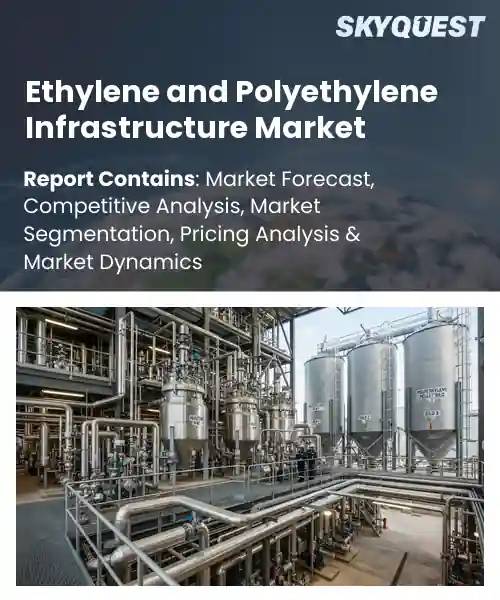
Ethylene and Polyethylene Infrastructure Market
Report ID: SQMIG10F2056
Report ID: SQMIG10F2056
[email protected]
USA +1 351-333-4748
Report ID:
SQMIG10F2056 |
Region:
Global |
Published Date: September, 2026
Pages:
157
|Tables:
150
|Figures:
78


Global Ethylene And Polyethylene Infrastructure Market size was valued at USD 34.2 Billion in 2024 and is poised to grow from USD 35.74 Billion in 2025 to USD 50.83 Billion by 2033, growing at a CAGR of 4.5% during the forecast period (2026-2033).
Demand for packaging is a pivotal factor for the ethylene‑polyethylene infrastructure market because manufacturers replace heavier glass and metal with thin‑film polyethylene. This shift pushes expansion of monomer‑recovery units and high‑speed extrusion lines, illustrated by a $1.2 billion European consortium investment to build an LDPE plant in Belgium with carbon‑capture technology. Higher output lowers per‑ton costs, prompting downstream converters to adopt thicker multilayer films for food preservation, which in turn drives spending on storage tanks and rail terminals near ports. As a result, mature petrochemical hubs such as Gulf Cooperation Council and U.S. Gulf Coast see amplified export volumes, reinforcing growth. Rising demand for lightweight packaging is a pivotal factor for the ethylene‑polyethylene infrastructure market because manufacturers replace heavier glass and metal with thin‑film polyethylene. This shift pushes expansion of monomer‑recovery units and high‑speed extrusion lines, illustrated by a recent $1.2 billion European consortium investment to build a sustainable LDPE plant in Belgium with carbon‑capture technology. Higher output lowers per‑ton costs, prompting downstream converters to adopt thicker multilayer films for food preservation, which in turn drives additional spending on storage tanks and rail terminals near ports. As a result, mature petrochemical hubs such as Gulf Cooperation Council and U.S. Gulf Coast see amplified export volumes, reinforcing growth.
How are AI-driven automation and IoT improving efficiency in the ethylene and polyethylene infrastructure market?
AI-driven automation and IoT are reshaping ethylene and polyethylene production by linking sensors, control systems, and analytics across the value chain. Real‑time monitoring of reactor conditions, compressor performance, and pipeline flow enables predictive maintenance that reduces unplanned downtime. Integrated data platforms aggregate temperature, pressure, and energy consumption metrics, allowing operators to fine‑tune processes for optimal catalyst use and lower heat‑energy demand. The result is a more responsive plant that can quickly adapt to feedstock price shifts and regulatory pressures while maintaining product quality. These technologies also support remote operation centers, giving managers a holistic view of multiple sites and fostering collaborative decision‑making that drives overall efficiency.Recent developments show that a leading petrochemical firm introduced an IoT‑enabled monitoring system in early 2024, leveraging AI to streamline feedstock handling and improve plant reliability, thereby reinforcing growth in the ethylene and polyethylene infrastructure market.
Market snapshot - (2026-2033)
Global Market Size
USD 34.2 Billion
Largest Segment
Ethylene Production Infrastructure
Fastest Growth
Transportation & Distribution Infrastructure
Growth Rate
4.5% CAGR
To get more insights on this market click here to Request a Free Sample Report
Global ethylene and polyethylene infrastructure market is segmented by infrastructure type, process, product type, application, end user and region. Based on infrastructure type, the market is segmented into Ethylene Production Infrastructure, Polyethylene Production Infrastructure, Storage Infrastructure and Transportation & Distribution Infrastructure. Based on process, the market is segmented into Ethylene Cracking, Polyethylene Polymerization, Separation & Purification and Storage & Handling. Based on product type, the market is segmented into HDPE, LDPE, LLDPE and Other Polyethylene Grades. Based on application, the market is segmented into Pipes & Infrastructure, Packaging, Construction, Automotive, Consumer Products and Other Applications. Based on end user, the market is segmented into Petrochemical Companies, Polymer Manufacturers and Industrial & Infrastructure Operators. Based on region, the market is segmented into North America, Europe, Asia Pacific, Latin America and Middle East & Africa.
Ethylene Cracking segment dominates because it serves as the foundational feedstock source for all downstream polyethylene production, linking crude oil and natural gas liquids to polymer synthesis. Its centrality drives continuous investment in advanced furnaces and catalytic technologies, ensuring high conversion efficiency and operational reliability. The critical need for stable ethylene supply and resilient industrial logistics underpins the entire value chain, reinforcing its leading position within the market.
However, Polyethylene Polymerization segment is witnessing the strongest growth momentum as manufacturers adopt low energy catalysts and explore specialty grades to meet expanding applications. The push for higher performance and sustainability in packaging and construction fuels capacity additions, positioning this area as a key driver of market expansion and opportunity creation.
Storage & Handling segment dominates because it provides the essential link between polymer production and end‑user delivery, ensuring product integrity and safety across the supply chain. Advanced tank designs, automated loading systems, and real time monitoring mitigate degradation and contamination risks, fostering confidence among downstream users. As manufacturers seek to minimize downtime and inventory loss, robust storage solutions become a strategic priority, cementing this segment’s preeminence in the market.
Meanwhile, Transportation & Distribution segment is experiencing rapid expansion as logistics providers integrate digital tracking and low emission fleets to meet heightened customer expectations. The growing demand for just in time delivery of polyethylene grades pushes investments in railcars and truck solutions, accelerating market penetration and creating avenues for value added services.
To get detailed segments analysis, Request a Free Sample Report
Asia Pacific leads the global ethylene and polyethylene infrastructure market through a combination of advanced manufacturing capabilities, strong downstream demand, and sustained investment in integrated complexes. The region benefits from highly developed petrochemical clusters that leverage proximity to feedstock supplies and world‑class logistics networks. Technical expertise in process optimization and a culture of continuous innovation enable producers to achieve high operational efficiency. Additionally, strategic partnerships between multinational corporations and local firms accelerate technology transfer and capacity expansion. Government policies that support industrial growth and promote circular economy initiatives further reinforce the region’s competitive edge, ensuring a resilient supply chain that meets both domestic consumption and export requirements.
Japan Ethylene and Polyethylene Infrastructure Market
Ethylene and Polyethylene Infrastructure Market Japan showcases mature plant designs and a strong emphasis on sustainability. Operators focus on energy efficiency and waste reduction while maintaining high product quality for automotive and packaging sectors. Strategic location of refineries near major ports facilitates efficient feedstock import and product distribution. Collaborative R&D programs with academic institutions drive incremental improvements in catalyst performance, reinforcing Japan’s reputation for technological excellence in polymer production.
South Korea Ethylene and Polyethylene Infrastructure Market
Ethylene and Polyethylene Infrastructure Market South Korea is characterized by rapid adoption of advanced process technologies and a proactive approach to capacity optimization. The country leverages its well‑integrated logistics infrastructure to supply downstream manufacturers in electronics and consumer goods. Government incentives encourage modernization of aging units and the implementation of digital monitoring systems. Partnerships with leading global licensors support the deployment of high‑performance catalysts, enhancing conversion rates and product consistency across the Korean petrochemical landscape.
The United States and Canada together fuel rapid expansion of the ethylene and polyethylene infrastructure market through abundant feedstock availability, robust demand from construction, automotive, and packaging industries, and a supportive policy environment encouraging domestic production. Integrated complexes benefit from established pipeline networks and access to deep‑water ports, reducing logistical constraints. Continuous investment in state‑of‑the‑art reactors and catalyst technologies improves operational flexibility, allowing producers to address shifting consumer preferences. Energy efficiency initiatives and a focus on reducing carbon intensity further enhance the region’s attractiveness, positioning North America as a dynamic hub for polymer manufacturing.
United States Ethylene and Polyethylene Infrastructure Market
Ethylene and Polyethylene Infrastructure Market United States reflects a mature ecosystem built on extensive petrochemical corridors and a strong emphasis on scale. Facilities prioritize high throughput and adopt advanced digital control systems to maximize yield. Close proximity to major end‑use markets shortens supply chains and lowers transportation costs. Ongoing collaborations with research institutes accelerate the development of next‑generation catalysts, while sustainability programs target emission reductions and circular material use, reinforcing the United States role as a leader in polymer infrastructure.
Canada Ethylene and Polyethylene Infrastructure Market
Ethylene and Polyethylene Infrastructure Market Canada benefits from abundant natural gas resources and a strategic focus on expanding value‑added downstream capacity. Projects often emphasize modular design and flexibility to serve diverse market segments, including specialty applications. Strong regulatory frameworks promote environmental stewardship and encourage the adoption of low‑carbon technologies. Partnerships with Indigenous communities and investment in workforce development ensure that growth aligns with broader socio‑economic goals, enhancing Canada’s position in the North American polymer landscape.
Europe advances its position in the ethylene and polyethylene infrastructure market by integrating sustainability mandates with cutting‑edge manufacturing practices. Leading chemical hubs in Germany, the United Kingdom, and France combine long‑standing expertise with aggressive decarbonization roadmaps, fostering the adoption of renewable feedstocks and energy‑saving technologies. Collaborative innovation clusters connect petrochemical firms with research universities, accelerating breakthroughs in catalyst efficiency and process intensification. Policy frameworks that reward circular economy solutions and carbon‑neutral operations encourage investment in advanced recycling and bio‑based polymer capacities, reinforcing Europe’s reputation as a forward‑looking and resilient polymer producer.
Germany Ethylene and Polyethylene Infrastructure Market
Ethylene and Polyethylene Infrastructure Market Germany is anchored by world‑renowned engineering capabilities and a dense network of specialized suppliers. Facilities emphasize precision engineering, high reliability, and integration of renewable energy sources to lower operational footprints. Collaborative platforms bring together major producers, technology providers, and academic partners to pilot next‑generation catalysts and digital twins. Strong regulatory support for emissions reduction drives the implementation of carbon capture and utilization projects, positioning Germany as a benchmark for environmentally conscious polymer manufacturing.
United Kingdom Ethylene and Polyethylene Infrastructure Market
Ethylene and Polyethylene Infrastructure Market United Kingdom focuses on strategic location and flexibility to serve a diversified consumer base across Europe. Plants adopt modular designs that enable rapid scaling and adaptation to market shifts. Investment in advanced analytics and automation enhances process efficiency and product consistency. Government incentives for low‑carbon initiatives stimulate the development of green hydrogen alongside traditional feedstock, while partnerships with research institutes accelerate the commercialization of sustainable polymer solutions.
France Ethylene and Polyethylene Infrastructure Market
Ethylene and Polyethylene Infrastructure Market France combines a strong tradition in specialty chemicals with a proactive approach to sustainability. Facilities integrate renewable energy inputs and prioritize process intensification to reduce energy intensity. Collaborative research programs with leading universities target improvements in catalyst selectivity and waste minimization. National policies encouraging circular economy practices support the growth of recycling infrastructure, ensuring that French polymer production aligns with broader environmental objectives and reinforces its competitive edge in the European market.
To know more about the market opportunities by region and country, click here to
Buy The Complete Report
Rising Demand for Flexible Packaging
Stringent Regulations Favoring Recycled Materials
High Capital Expenditure Requirements
Stringent Safety and Environmental Standards
Request Free Customization of this report to help us to meet your business objectives.
Top Player’s Company Profile
Recent Developments
SkyQuest’s ABIRAW (Advanced Business Intelligence, Research & Analysis Wing) is our Business Information Services team that Collects, Collates, Correlates, and Analyses the Data collected by means of Primary Exploratory Research backed by robust Secondary Desk research. As per SkyQuest analysis, the global ethylene and polyethylene infrastructure market is being propelled chiefly by the surge in flexible packaging demand, which is prompting capacity expansions across cracking and polymerization plants, while the parallel push toward digital‑twin and AI‑driven automation is accelerating operational efficiency and attracting fresh investment. The market is led by Asia Pacific, thanks to its integrated petrochemical clusters and strong downstream consumption, and the ethylene‑cracking segment remains the dominant driver of overall value because it supplies the essential feedstock for all downstream polymers. However, the very high capital outlay required for new cracking complexes acts as a significant restraint on faster market rollout.
| Report Metric | Details |
|---|---|
| Market size value in 2024 | USD 34.2 Billion |
| Market size value in 2033 | USD 50.83 Billion |
| Growth Rate | 4.5% |
| Base year | 2024 |
| Forecast period | (2026-2033) |
| Forecast Unit (Value) | USD Billion |
| Segments covered |
|
| Regions covered | North America (US, Canada), Europe (Germany, France, United Kingdom, Italy, Spain, Rest of Europe), Asia Pacific (China, India, Japan, Rest of Asia-Pacific), Latin America (Brazil, Rest of Latin America), Middle East & Africa (South Africa, GCC Countries, Rest of MEA) |
| Companies covered |
|
| Customization scope | Free report customization with purchase. Customization includes:-
|
To get a free trial access to our platform which is a one stop solution for all your data requirements for quicker decision making. This platform allows you to compare markets, competitors who are prominent in the market, and mega trends that are influencing the dynamics in the market. Also, get access to detailed SkyQuest exclusive matrix.
Table Of Content
Executive Summary
Market overview
Parent Market Analysis
Market overview
Market size
KEY MARKET INSIGHTS
COVID IMPACT
MARKET DYNAMICS & OUTLOOK
Market Size by Region
KEY COMPANY PROFILES
Methodology
For the Ethylene and Polyethylene Infrastructure Market, our research methodology involved a mixture of primary and secondary data sources. Key steps involved in the research process are listed below:
1. Information Procurement: This stage involved the procurement of Market data or related information via primary and secondary sources. The various secondary sources used included various company websites, annual reports, trade databases, and paid databases such as Hoover's, Bloomberg Business, Factiva, and Avention. Our team did 45 primary interactions Globally which included several stakeholders such as manufacturers, customers, key opinion leaders, etc. Overall, information procurement was one of the most extensive stages in our research process.
2. Information Analysis: This step involved triangulation of data through bottom-up and top-down approaches to estimate and validate the total size and future estimate of the Ethylene and Polyethylene Infrastructure Market.
3. Report Formulation: The final step entailed the placement of data points in appropriate Market spaces in an attempt to deduce viable conclusions.
4. Validation & Publishing: Validation is the most important step in the process. Validation & re-validation via an intricately designed process helped us finalize data points to be used for final calculations. The final Market estimates and forecasts were then aligned and sent to our panel of industry experts for validation of data. Once the validation was done the report was sent to our Quality Assurance team to ensure adherence to style guides, consistency & design.
Analyst Support
Customization Options
With the given market data, our dedicated team of analysts can offer you the following customization options are available for the Ethylene and Polyethylene Infrastructure Market:
Product Analysis: Product matrix, which offers a detailed comparison of the product portfolio of companies.
Regional Analysis: Further analysis of the Ethylene and Polyethylene Infrastructure Market for additional countries.
Competitive Analysis: Detailed analysis and profiling of additional Market players & comparative analysis of competitive products.
Go to Market Strategy: Find the high-growth channels to invest your marketing efforts and increase your customer base.
Innovation Mapping: Identify racial solutions and innovation, connected to deep ecosystems of innovators, start-ups, academics, and strategic partners.
Category Intelligence: Customized intelligence that is relevant to their supply Markets will enable them to make smarter sourcing decisions and improve their category management.
Public Company Transcript Analysis: To improve the investment performance by generating new alpha and making better-informed decisions.
Social Media Listening: To analyze the conversations and trends happening not just around your brand, but around your industry as a whole, and use those insights to make better Marketing decisions.
REQUEST FOR SAMPLE
 REQUEST FREE CUSTOMIZATION


Want to customize this report? This report can be personalized according to your needs. Our analysts and industry experts will work directly with you to understand your requirements and provide you with customized data in a short amount of time. We offer $1000 worth of FREE customization at the time of purchase.
Feedback From Our Clients


 USA (+1) 351-333-4748

