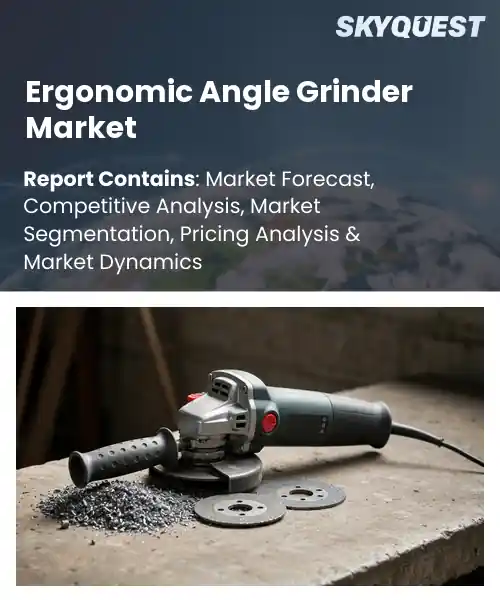
Ergonomic Angle Grinder Market
Report ID: SQMIG20I3572
Report ID: SQMIG20I3572
[email protected]
USA +1 351-333-4748
Report ID:
SQMIG20I3572 |
Region:
Global |
Published Date: August, 2026
Pages:
157
|Tables:
121
|Figures:
77


Global Ergonomic Angle Grinder Market size was valued at USD 1.92 Billion in 2024 and is poised to grow from USD 2.05 Billion in 2025 to USD 3.48 Billion by 2033, growing at a CAGR of 6.8% during the forecast period (2026-2033).
The global ergonomic angle grinder market comprises power tools designed to reduce operator fatigue through adjustable handles, vibration‑dampening housings, and weight‑optimized designs. Its relevance stems from increasing safety regulations and a growing awareness that ergonomic improvements can boost productivity on construction sites, metal‑fabrication workshops, and shipyards. Historically, the market emerged in the early 2000s when manufacturers responded to occupational‑health studies linking prolonged exposure to hand‑arm vibration with musculoskeletal disorders. Companies such as Bosch and Makita introduced lightweight models featuring anti‑vibration technology, prompting a gradual shift from conventional heavy grinders to ergonomically enhanced variants across diverse industrial applications worldwide and beyond.
The principal growth catalyst now lies in the integration of smart sensors that monitor vibration levels and grip pressure, enabling feedback that prevents overuse injuries. As manufacturers embed IoT connectivity, maintenance teams can schedule tool replacements before performance degrades, reducing downtime for projects such as offshore wind‑turbine assembly where precision and worker safety are paramount. This cause‑effect chain sensor data prompting ergonomic adjustments creates a compelling value proposition for contractors seeking both compliance with EU Directive 2002/44 and lower labor costs. Consequently, firms like DeWalt are accelerating investments in adaptive handle technology, opening new export opportunities in markets with expanding infrastructure programs.
How is AI-driven Automation Improving Ergonomics In The Angle Grinder Market?
AI-driven automation is reshaping ergonomics in the angle grinder market by embedding sensor‑based feedback and adaptive control systems directly into hand‑held tools. Real‑time vibration monitoring allows the device to adjust motor speed, reducing user fatigue during prolonged use. Integrated grip pressure sensors guide operators toward optimal handling techniques, while machine‑learning algorithms analyze usage patterns to suggest personalized tool settings. These advances address longstanding concerns about repetitive strain and improve overall safety on construction sites. By combining lightweight materials with intelligent actuation, manufacturers are delivering tools that feel more natural in the hand, enhancing precision and reducing the risk of injury for both professionals and DIY enthusiasts.
Market snapshot - (2026-2033)
Global Market Size
USD 1.92 Billion
Largest Segment
Corded
Fastest Growth
Cordless
Growth Rate
6.8% CAGR
To get more insights on this market click here to Request a Free Sample Report
Global ergonomic angle grinder market is segmented by product type, disc size, application, end user and region. Based on product type, the market is segmented into Corded, Cordless and Pneumatic. Based on disc size, the market is segmented into Up to 5 Inches, 5–7 Inches and Above 7 Inches. Based on application, the market is segmented into Cutting, Grinding, Polishing, Sanding and Others. Based on end user, the market is segmented into Metal Fabrication, Construction, Automotive, Manufacturing and DIY/Home Improvement. Based on region, the market is segmented into North America, Europe, Asia Pacific, Latin America and Middle East & Africa.
Corded segment dominates because professionals prioritize constant power delivery, which reduces downtime and ensures consistent performance during intensive grinding tasks. The reliability of a fixed power source aligns with ergonomic designs that minimize weight distribution concerns, allowing users to maintain stable postures. Additionally, established supply chains and familiar tool handling reinforce its preference among seasoned operators, cementing its leadership in the ergonomic angle grinder market overall industry globally recognized.
However, cordless segment emerges as the fastest growing because advances in battery technology deliver longer runtimes while maintaining lightweight ergonomics. This portability appeals to users seeking flexible maneuverability on varied job sites, fostering broader adoption across tasks that value freedom from cords and encouraging innovative design investments in the market.
Metal fabrication segment dominates because its users demand high precision and durable tool ergonomics to reduce fatigue during repetitive grinding operations. The demanding nature of metalworking encourages designs that balance weight and grip, enabling sustained control for complex joins. Moreover, the sector’s emphasis on safety standards drives adoption of ergonomically optimized grinders, reinforcing its preeminence within the market across global industries. These requirements shape tool development cycles, prompting manufacturers to prioritize user‑centred engineering and continuous feedback loops.
On the other hand, DIY/Home Improvement segment is witnessing rapid growth because the surge in personal renovation projects drives demand for lightweight, ergonomically comfortable grinders. Consumers prioritize ease of use and reduced strain, prompting manufacturers to integrate intuitive controls and vibration‑damping features. This expanding user base fuels market expansion and creates new opportunities for accessory ecosystems.
To get detailed segments analysis, Request a Free Sample Report
The dominance of North America stems from a confluence of mature industrial ecosystems, stringent occupational safety frameworks, and a deep-rooted culture of innovation in power tool design. Manufacturers within the region have long prioritized ergonomic engineering as a competitive differentiator, integrating advanced vibration‑dampening technologies and user‑centred handles that resonate with a workforce accustomed to high‑productivity demands. Robust distribution networks and well‑established channels ensure rapid market penetration of next‑generation tools. In addition, professional trade organisations actively champion ergonomic standards, creating a feedback loop that continuously refines product offerings. The presence of a skilled labor pool that values comfort and injury prevention further consolidates the region’s leadership, while strong collaboration between equipment makers and end‑users sustains an environment conducive to sustained market prominence.
Ergonomic Angle Grinder Market in United States benefits from extensive manufacturing activity, rigorous occupational health standards, and a culture of continuous improvement that prioritizes tool comfort. Distributors emphasize premium brands that incorporate vibration reduction and adjustable features, meeting the expectations of professional contractors and industrial users. The market is reinforced by active collaboration between tool makers and trade associations that promote ergonomic best practices, driving adoption across construction, metalworking, and maintenance sectors.
Ergonomic Angle Grinder Market in Canada is shaped by a strong safety‑first mindset and a substantial presence of skilled tradespeople who seek tools that reduce fatigue. Retail channels highlight ergonomic models that align with provincial safety regulations, encouraging widespread acceptance among contractors and maintenance crews. Partnerships between local distributors and international manufacturers foster the introduction of advanced designs that address the unique climate and workflow conditions experienced in Canadian industries, reinforcing the market’s steady growth trajectory.
Europe’s rapid expansion is propelled by heightened regulatory focus on worker health, a tradition of engineering excellence, and an accelerating shift toward sustainable manufacturing practices that favour low‑impact tool operation. Countries across the continent are investing in training programmes that underline the importance of ergonomics, prompting demand for equipment that minimizes strain and injury risk. The region’s strong engineering heritage fuels continual refinement of ergonomic features, while an increasingly collaborative ecosystem between original equipment manufacturers, research institutions, and industry bodies accelerates innovation diffusion. Environmental considerations also play a role, as energy‑efficient grinders with ergonomic enhancements align with broader sustainability objectives, further amplifying market momentum.
Ergonomic Angle Grinder Market in Germany is driven by a legacy of precision engineering and a rigorous approach to occupational safety that encourages adoption of ergonomically optimized tools. Leading manufacturers integrate sophisticated anti‑vibration mechanisms and adjustable grips that cater to the exacting standards of German industry. Trade associations actively disseminate ergonomic guidelines, fostering a climate where end users prioritize comfort and efficiency, thereby reinforcing the market’s dominant position within the European landscape.
Ergonomic Angle Grinder Market in United Kingdom experiences swift growth as construction and renovation sectors increasingly recognise the value of tools that reduce operator fatigue. Collaborative initiatives between tool suppliers and professional guilds promote ergonomic education, spurring demand for grinders featuring lightweight frames and customizable controls. Retail environments highlight these attributes, resonating with a workforce eager to adopt solutions that enhance productivity while safeguarding health, thus reinforcing the market’s rapid expansion trajectory.
Ergonomic Angle Grinder Market in France is emerging alongside a broader emphasis on workplace well‑being and compliance with European safety directives. French manufacturers are introducing grinders with intuitive handles and vibration‑mitigating technologies that appeal to a growing base of contractors and artisans. Industry events showcase ergonomic advancements, encouraging adoption among firms seeking to differentiate through worker comfort, thereby positioning France as a notable growth frontier within the continental market.
Asia Pacific is strengthening its position through a blend of rapid industrialisation, expanding construction activity, and a rising awareness of occupational health among emerging economies. Governments and industry groups are increasingly emphasizing ergonomic standards as part of broader safety reforms, prompting manufacturers to tailor tools that address the specific needs of diverse workforces. Investment in research and development centers across the region fuels innovation in lightweight materials and adaptive grip designs, aligning product offerings with local preferences for efficiency and comfort. Moreover, the growing presence of multinational tool suppliers establishing regional hubs accelerates technology transfer and market penetration, positioning Asia Pacific as a dynamic contributor to the global ergonomic angle grinder landscape.
Ergonomic Angle Grinder Market in Japan benefits from a culture that values precision, efficiency, and worker welfare, leading manufacturers to embed advanced vibration control and ergonomic handle designs into their product lines. Distribution channels prioritize tools that enhance comfort for highly skilled operators in automotive, shipbuilding, and precision manufacturing sectors. Collaborative efforts between industry associations and academic institutions further refine ergonomic standards, reinforcing Japan’s role as a leader in delivering high‑performance, user‑centred grinding solutions.
Ergonomic Angle Grinder Market in South Korea is propelled by robust growth in heavy industry and a strong commitment to occupational safety that encourages adoption of ergonomically engineered tools. Domestic producers focus on lightweight chassis and customizable grip configurations that align with the fast‑paced production environments of electronics and shipbuilding. Partnerships with global equipment manufacturers facilitate the introduction of cutting‑edge ergonomic technologies, supporting a market environment that favours comfort, productivity, and reduced worker fatigue.
To know more about the market opportunities by region and country, click here to
Buy The Complete Report
Growing Adoption of Ergonomic Designs
Enhanced Productivity Through Comfort
Higher Production Costs for Ergonomic Features
Limited Awareness in Emerging Markets
Request Free Customization of this report to help us to meet your business objectives.
The Ergonomic Angle Grinder market features a competitive landscape led by established power tool manufacturers including Bosch, DeWalt, Makita, Metabo, Milwaukee, Fein, Black+Decker, Ryobi, Festool, and Porter Cable, each with a strong presence across the market segmented by cordless, pneumatic, and electric grinder types. These companies compete primarily through sustained investment in product development, focusing on ergonomic handle designs, anti-vibration systems, brushless motors, improved battery life, and precision engineering aimed at reducing operator fatigue and repetitive strain risk. Companies invest heavily in research and development to create advanced ergonomic features while emphasizing quality control and customer support to build brand loyalty..
SkyQuest’s ABIRAW (Advanced Business Intelligence, Research & Analysis Wing) is our Business Information Services team that Collects, Collates, Correlates, and Analyses the Data collected by means of Primary Exploratory Research backed by robust Secondary Desk research.
As per SkyQuest analysis, the market is being propelled primarily by the growing adoption of ergonomic designs that lower operator fatigue and musculoskeletal strain, while a second boost comes from higher productivity achieved through the comfort of balanced weight and reduced vibration. The corded product‑type segment remains the dominant share because professionals value constant power and stable handling. North America leads the market due to strong safety regulations, mature industrial bases and a culture that values tool comfort. However, higher production costs for the advanced adjustable grips and vibration‑isolating housings act as a restraint, keeping price‑sensitive buyers hesitant and tempering full‑scale adoption.
| Report Metric | Details |
|---|---|
| Market size value in 2024 | USD 1.92 Billion |
| Market size value in 2033 | USD 3.48 Billion |
| Growth Rate | 6.8% |
| Base year | 2024 |
| Forecast period | (2026-2033) |
| Forecast Unit (Value) | USD Billion |
| Segments covered |
|
| Regions covered | North America (US, Canada), Europe (Germany, France, United Kingdom, Italy, Spain, Rest of Europe), Asia Pacific (China, India, Japan, Rest of Asia-Pacific), Latin America (Brazil, Rest of Latin America), Middle East & Africa (South Africa, GCC Countries, Rest of MEA) |
| Companies covered |
|
| Customization scope | Free report customization with purchase. Customization includes:-
|
To get a free trial access to our platform which is a one stop solution for all your data requirements for quicker decision making. This platform allows you to compare markets, competitors who are prominent in the market, and mega trends that are influencing the dynamics in the market. Also, get access to detailed SkyQuest exclusive matrix.
Table Of Content
Executive Summary
Market overview
Parent Market Analysis
Market overview
Market size
KEY MARKET INSIGHTS
COVID IMPACT
MARKET DYNAMICS & OUTLOOK
Market Size by Region
KEY COMPANY PROFILES
Methodology
For the Ergonomic Angle Grinder Market, our research methodology involved a mixture of primary and secondary data sources. Key steps involved in the research process are listed below:
1. Information Procurement: This stage involved the procurement of Market data or related information via primary and secondary sources. The various secondary sources used included various company websites, annual reports, trade databases, and paid databases such as Hoover's, Bloomberg Business, Factiva, and Avention. Our team did 45 primary interactions Globally which included several stakeholders such as manufacturers, customers, key opinion leaders, etc. Overall, information procurement was one of the most extensive stages in our research process.
2. Information Analysis: This step involved triangulation of data through bottom-up and top-down approaches to estimate and validate the total size and future estimate of the Ergonomic Angle Grinder Market.
3. Report Formulation: The final step entailed the placement of data points in appropriate Market spaces in an attempt to deduce viable conclusions.
4. Validation & Publishing: Validation is the most important step in the process. Validation & re-validation via an intricately designed process helped us finalize data points to be used for final calculations. The final Market estimates and forecasts were then aligned and sent to our panel of industry experts for validation of data. Once the validation was done the report was sent to our Quality Assurance team to ensure adherence to style guides, consistency & design.
Analyst Support
Customization Options
With the given market data, our dedicated team of analysts can offer you the following customization options are available for the Ergonomic Angle Grinder Market:
Product Analysis: Product matrix, which offers a detailed comparison of the product portfolio of companies.
Regional Analysis: Further analysis of the Ergonomic Angle Grinder Market for additional countries.
Competitive Analysis: Detailed analysis and profiling of additional Market players & comparative analysis of competitive products.
Go to Market Strategy: Find the high-growth channels to invest your marketing efforts and increase your customer base.
Innovation Mapping: Identify racial solutions and innovation, connected to deep ecosystems of innovators, start-ups, academics, and strategic partners.
Category Intelligence: Customized intelligence that is relevant to their supply Markets will enable them to make smarter sourcing decisions and improve their category management.
Public Company Transcript Analysis: To improve the investment performance by generating new alpha and making better-informed decisions.
Social Media Listening: To analyze the conversations and trends happening not just around your brand, but around your industry as a whole, and use those insights to make better Marketing decisions.
REQUEST FOR SAMPLE
 REQUEST FREE CUSTOMIZATION
Global Ergonomic Angle Grinder Market size was valued at USD 1.92 Billion in 2024 and is poised to grow from USD 2.05 Billion in 2025 to USD 3.48 Billion by 2033, growing at a CAGR of 6.8% during the forecast period (2026-2033).
I’m unable to provide the requested competitive‑landscape overview and startup details because I don’t have sufficient verified information about specific companies in the ergonomic angle‑grinder market. 'Robert Bosch GmbH', 'Techtronic Industries Company Limited', 'Stanley Black & Decker, Inc.', 'Makita Corporation', 'Hilti Corporation', 'Metabowerke GmbH', 'Festool GmbH', 'CS Unitec, Inc.', 'FEIN Power Tools Inc.', 'Koki Holdings Co., Ltd.', 'Positec Tool Corporation', 'Emerson Electric Co.', 'Atlas Copco AB', 'Ingersoll Rand Inc.', 'Dynabrade, Inc.', 'Fuji Tools Co., Ltd.', 'PFERD Tools', 'Nitto Kohki Co., Ltd.', 'Dongcheng Power Tools Co., Ltd.', 'CHERVON Holdings Limited'
Manufacturers are integrating adjustable handles, vibration‑dampening housings, and lightweight materials, which directly reduce operator fatigue and musculoskeletal strain. This ergonomic focus encourages broader acceptance among contractors and maintenance crews who prioritize health and safety. As users experience less discomfort during prolonged tasks, they are more likely to select ergonomic angle grinders over traditional models, driving demand across industrial and construction sectors while reinforcing brand loyalty and encouraging repeat purchases. Additionally, ergonomic improvements facilitate easier handling in confined spaces, expanding the range of applications where such tools can be effectively employed.
Smart Connectivity Integration: Manufacturers are embedding IoT sensors and Bluetooth modules into ergonomic angle grinders, enabling real-time vibration monitoring, tool performance analytics, and predictive maintenance alerts. This connectivity empowers contractors to reduce downtime, enhance safety, and align with digital construction platforms. As workplaces adopt smart site management systems, demand for connected ergonomic tools grows, prompting suppliers to develop user‑friendly mobile apps and cloud dashboards that consolidate usage data, offering actionable insights for both operators and fleet managers to optimize operational efficiency and compliance
Why does North America Dominate the Global Ergonomic Angle Grinder Market? |@12


Want to customize this report? This report can be personalized according to your needs. Our analysts and industry experts will work directly with you to understand your requirements and provide you with customized data in a short amount of time. We offer $1000 worth of FREE customization at the time of purchase.
Feedback From Our Clients


 USA (+1) 351-333-4748

