Endodontic Reamer Market
Report ID: SQMIG35J2207
Report ID: SQMIG35J2207
[email protected]
USA +1 351-333-4748
Report ID:
SQMIG35J2207 |
Region:
Global |
Published Date: February, 2026
Pages:
157
|Tables:
89
|Figures:
76


Global Endodontic Reamer Market size was valued at USD 1.7 Billion in 2024 and is poised to grow from USD 1.82 Billion in 2025 to USD 3.21 Billion by 2033, growing at a CAGR of 7.3% during the forecast period (2026-2033).
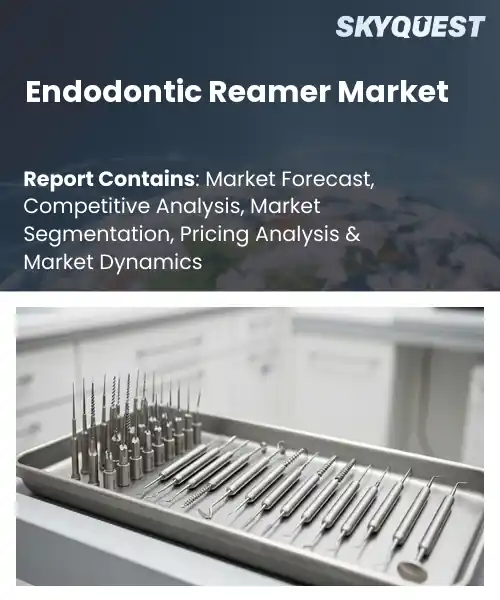
The market is driven primarily by demographic changes that are leading to greater demand for root canal treatment, along with increased awareness of oral health and the growing incidence of dental caries and pulp diseases. Endodontic reamers are used to mechanically shape root canals to prepare them for disinfection and filling; within the category of dental instruments used for endodontics, they are one of the most used instruments by endodontists and general dentists.
Over time, the market for endodontic reamers has moved from traditional manual stainless-steel files to more advanced systems that utilize nickel-titanium rotary and reciprocating technology. These advancements have increased the flexibility of the endodontic reamers and their resistance to cyclic fatigue, which has resulted in faster treatment times, reduced complications, and a greater use of these reamers globally due to a higher rate of acceptance of the advanced NiTi reaming technology worldwide.
Another major factor driving growth in the global endodontic reamers market is continued technological advancements by manufacturers that have resulted in improvements to both the clinical outcomes of procedures performed with these devices and the economic efficiencies associated with their use in practice. Introduction of heat-treated alloys, variable taper designs, and single-use disposables has resulted in lower rates of instrument separation and faster preparation of the canal, allowing for increased patient throughput and satisfaction. High-volume practices utilizing heat-treated rotary reamers report decreased appointment times and increase in their daily case capacity. Additionally, single-use endodontic reamers relieve the sterilization burden on practices in low-resourced communities.
How is AI Improving Precision and Outcomes in the Endodontic Reamer Market?
Precision and outcome improvement in the endodontic reamer industry is driven by using advanced image interpretation, predictive analytics, and procedure guidance (AI). AI-assisted radiographs and CBCT analyses that identify hidden canals, and workflow tools that guide the clinician through proper instrumentation based on canal architecture (e.g., appropriate sequence) are core components of these technologies. The trend towards anatomically conservative shaping and increased clinician confidence has led manufacturers/software providers to integrate AI solutions into imaging platforms and clinical practice environments to develop streamlined treatment plans for improved consistency of outcomes.
Market snapshot - 2026-2033
Global Market Size
USD 1.7 Billion
Largest Segment
Instruments
Fastest Growth
Consumables
Growth Rate
7.3% CAGR
To get more insights on this market click here to Request a Free Sample Report
Global endodontic reamer market is segmented into product type, type, end user and region. Based on product type, the market is segmented into instruments and consumables. Based on type, the market is segmented into linear and rotary. Based on end user, the market is segmented into dental hospitals, dental clinics, academic & research institutes and others. Based on region, the market is segmented into North America, Europe, Asia Pacific, Latin America and Middle East & Africa.
As per endodontic reamer market outlook, instruments segment dominates because the physical reamers and related handpieces form the core tools used in endodontic procedures, shaping procurement priorities and clinical protocols. These will shape clinical protocols and procurement priorities. The continued advancement of materials, ergonomic designs, and compatibility with motorized systems will allow for improved clinical accuracy and decreased variability within the procedure being performed, influencing clinician's preferences. Investments by manufacturers into instrument safety features, performance, and the availability of training also reinforce the importance of instruments and continue to influence both product development and purchasing patterns.
As per endodontic reamer market analysis, the consumables segment has become the fastest growing segment of the market given the increasing demand for single-use disposables and system specific accessories designed to enhance infection control and clinical workflows. The recurring purchasing patterns drive the supplier's emphasis on streamlined sterilization, packaging, and supply models leading to innovation and creating new opportunities for continued growth and predictable revenue in the market.
As per endodontic reamer market forecast, rotary segment leads because mechanized nickel titanium instruments enable faster canal preparation, improved canal centering, and more predictable shaping outcomes that align with clinician efficiency goals. The use of motorized systems and torque control has lowered the variability of procedures enabling practitioners to adopt rotary instruments that are more reproducible in their performance. Continuous innovation in alloy use and flute design results in improved cutting and durability capabilities. This will enable manufacturers and training programs to focus on rotary products in their product offerings.
However, the linear segment is growing extremely fast because of the value clinicians place on tactile feedback and manual control for the treatment of complex canals. Increased interest in manual techniques, cost efficiency, and compatibility with minimal equipment have contributed to the adoption of manual techniques in many types of practice settings. The growth of the manual segment creates opportunities for innovation in niches and complementary products.
To get detailed segments analysis, Request a Free Sample Report
The North America endodontic reamer industry is heavily influenced by clinical sophistication, an extensive manufacturing infrastructure, and highly developed distribution and reimbursement infrastructures. High numbers of trained specialists combined with a focus on less-invasive endodontic procedures lead the practitioner community to prefer advanced clinical tools and advanced improvements in single-use products per patient. Endodontic reamer product innovation and trust are supported by a strong, collaborative research and development ecosystem, close partnerships between endodontic reamer manufacturers and endodontists, and a mature aftermarket support infrastructure.
The endodontic reamer business in the United States derives its strength from a complicated clinical ecosystem with an increasing number of trained specialists and an increasing number of practitioners who are familiar with advanced endodontic reaming tools. Domestic endodontic reamer manufacturers and their close partnerships with both academic institutions and endodontists support continued product improvement and rigorous clinical testing.
The Canada endodontic reamer industry trends have found a good balance between high clinical standards in Canada. Endodontic reamer business is characterized by concentrated innovation and adoption at specialty centers. Most endodontic reamer manufacturers in Canada. Using high-quality materials, provide reliable and ergonomically designed products, and have a strong distributor partnership network. The endodontic reamer business is supported by cross-border acquisitions by purchasers in Canada and long-term partnerships between the manufacturers of endodontic reaming products and Canadian practitioners, ensuring access to a wide range of products and a strong network of continuing education and referrals for practitioners of modern endodontic reaming methods in both urban and community-based dental practices.
As per endodontic reamer market regional outlook, the market in Europe is experiencing rapid growth due to several factors, including regulatory harmonization, significant clinical research, and a high density of endodontic specialists currently practicing within Europe. Additionally, national centers of excellence as well as university clinics serve as adoption centers for precision instruments and minimally invasive procedures. The presence of established precision engineering companies and innovative medical device companies creates a durable local base that allows for ongoing product development and improvement. The networks of cross border trade and integrated distribution systems provide access to wide-ranging product lines, while the continual provision of professional education and increasing patient demand for conservative endodontic care will drive the adoption of advanced reaming technologies throughout both private and public healthcare systems.
In the Germany endodontic reamer market, there is a high level of expertise in the manufacture of products in Germany as well as precision engineering. Additionally, the high level of scrutiny with regard to product certification provides a foundation for clinical trust among practitioners. Many specialist endodontists and academic institutions work closely with the Original Equipment Manufacturer (OEM)/manufacturer to refine the design and performance of endodontic instrumentation.
In the UK endodontic reamer market, the combination of a highly dynamic private dental sector and the increasing number of specialist endodontic training programs has encouraged the adoption of contemporary reaming solutions. The collaboration of clinicians and manufacturers in creating and implementing proprietary instrument development and implementation processes and programs, as well as through ongoing continuing professional development will build clinician confidence in the new technology available for use in their practices.
As per endodontic reamer market regional outlook, in France, there are gradual changes in favour of conservative endodontics and specialist training that support the use of current technology for reamer instruments. The dental societies in France and training centres assist in providing evidence-based practice and clinical evaluations of devices. By increasing the number of innovative products through distributor partnerships and clinical outreach, they are increasing the number of practitioners that are familiar with the innovative products and are then able to incorporate these advanced reamer options into their existing endodontic practice.
By working together to improve the quality of manufacturing capabilities and clinical expertise, the Asia Pacific is strengthening its position in the endodontic reamer market through cross-border collaboration. Domestic manufacturers improve the quality of their products and design capabilities; global OEM partnerships rapidly transfer technology to local markets and create local variants of products. Clinical adoption is aided by expanding specialist training programmed, increased patient demand for more conservative options in dental care, and a reputation for medical tourism within the region. Regulatory reform and investment in clinical research infrastructure enable rigorous evaluation of products, while competitively priced production and export-oriented distribution networks have increased regional influence within both domestic and international markets.
As per endodontic reamer industry analysis, the market in Japan is characterized by a high level of clinical precision and technology integration. As a result, practitioners prefer the instruments they use to reflect their adherence to strict protocols. Domestic manufacturers have developed advanced metallurgy, combined it with strict manufacturing processes, and created improved instrument designs.
The endodontic reamer market in South Korea illustrates a clinical acceptance of innovative instrument formats and strong domestic manufacturing capabilities that focus on design and cost efficiency. Cooperation between manufacturers and clinicians is accelerating the rate of iterative improvements and validating products. Exports are the result of production and support additional refinements to technology. Additionally, specialist training programmers and distributor networks are facilitating the spread of new products.
To know more about the market opportunities by region and country, click here to
Buy The Complete Report
Rising Demand for Minimally Invasive Endodontics
Advancements in Technology for Endodontic Instrumentation
High Cost of Advanced Instruments
Diverse and Stringent Regulatory Approval Requirements
Request Free Customization of this report to help us to meet your business objectives.
The factors that affect competitive dynamics are product differentiation and exclusive product distribution agreements which create competition and then are influenced by innovation in materials and techniques as the primary driver of market demand for reamer products. Companies are making strategic moves by upgrading existing technique platforms to create opportunities for clinicians to switch from one brand to another through the launch of co-developed files.
SkyQuest’s ABIRAW (Advanced Business Intelligence, Research & Analysis Wing) is our Business Information Services team that Collects, Collates, Correlates, and Analyses the Data collected by means of Primary Exploratory Research backed by robust Secondary Desk research.
As per SkyQuest analysis, there are two main factors that are influencing global endodontic reamer market growth. The increasing need for minimal invasive root canal treatments and the growing awareness concerning oral health, as well as rapid advancements in technology, such as heat treated NiTi alloys, AI assisted imaging and rapid prototyping that help improve accuracy and efficiency. Since most of these high-end instruments are very expensive, the adoption of these advanced instruments by smaller practices usually results in restrictions on using those instruments.
The region with the largest endodontic reamer market share remains North America because of its high level of clinical sophistication, strong manufacturing capabilities, well-established distribution networks, etc., and endodontic reamers & motor systems continue to represent the predominant segment of the endodontics purchasing decision making process.
| Report Metric | Details |
|---|---|
| Market size value in 2024 | USD 1.7 Billion |
| Market size value in 2033 | USD 3.21 Billion |
| Growth Rate | 7.3% |
| Base year | 2024 |
| Forecast period | 2026-2033 |
| Forecast Unit (Value) | USD Billion |
| Segments covered |
|
| Regions covered | North America (US, Canada), Europe (Germany, France, United Kingdom, Italy, Spain, Rest of Europe), Asia Pacific (China, India, Japan, Rest of Asia-Pacific), Latin America (Brazil, Rest of Latin America), Middle East & Africa (South Africa, GCC Countries, Rest of MEA) |
| Companies covered |
|
| Customization scope | Free report customization with purchase. Customization includes:-
|
To get a free trial access to our platform which is a one stop solution for all your data requirements for quicker decision making. This platform allows you to compare markets, competitors who are prominent in the market, and mega trends that are influencing the dynamics in the market. Also, get access to detailed SkyQuest exclusive matrix.
Table Of Content
Executive Summary
Market overview
Parent Market Analysis
Market overview
Market size
KEY MARKET INSIGHTS
COVID IMPACT
MARKET DYNAMICS & OUTLOOK
Market Size by Region
KEY COMPANY PROFILES
Methodology
For the Endodontic Reamer Market, our research methodology involved a mixture of primary and secondary data sources. Key steps involved in the research process are listed below:
1. Information Procurement: This stage involved the procurement of Market data or related information via primary and secondary sources. The various secondary sources used included various company websites, annual reports, trade databases, and paid databases such as Hoover's, Bloomberg Business, Factiva, and Avention. Our team did 45 primary interactions Globally which included several stakeholders such as manufacturers, customers, key opinion leaders, etc. Overall, information procurement was one of the most extensive stages in our research process.
2. Information Analysis: This step involved triangulation of data through bottom-up and top-down approaches to estimate and validate the total size and future estimate of the Endodontic Reamer Market.
3. Report Formulation: The final step entailed the placement of data points in appropriate Market spaces in an attempt to deduce viable conclusions.
4. Validation & Publishing: Validation is the most important step in the process. Validation & re-validation via an intricately designed process helped us finalize data points to be used for final calculations. The final Market estimates and forecasts were then aligned and sent to our panel of industry experts for validation of data. Once the validation was done the report was sent to our Quality Assurance team to ensure adherence to style guides, consistency & design.
Analyst Support
Customization Options
With the given market data, our dedicated team of analysts can offer you the following customization options are available for the Endodontic Reamer Market:
Product Analysis: Product matrix, which offers a detailed comparison of the product portfolio of companies.
Regional Analysis: Further analysis of the Endodontic Reamer Market for additional countries.
Competitive Analysis: Detailed analysis and profiling of additional Market players & comparative analysis of competitive products.
Go to Market Strategy: Find the high-growth channels to invest your marketing efforts and increase your customer base.
Innovation Mapping: Identify racial solutions and innovation, connected to deep ecosystems of innovators, start-ups, academics, and strategic partners.
Category Intelligence: Customized intelligence that is relevant to their supply Markets will enable them to make smarter sourcing decisions and improve their category management.
Public Company Transcript Analysis: To improve the investment performance by generating new alpha and making better-informed decisions.
Social Media Listening: To analyze the conversations and trends happening not just around your brand, but around your industry as a whole, and use those insights to make better Marketing decisions.
REQUEST FOR SAMPLE
 REQUEST FREE CUSTOMIZATION
Global Endodontic Reamer Market size was valued at USD 1.7 Billion in 2024 and is poised to grow from USD 1.82 Billion in 2025 to USD 3.21 Billion by 2033, growing at a CAGR of 7.3% during the forecast period (2026-2033).
Competitive landscape is shaped by aggressive product differentiation and exclusive distribution arrangements that intensify rivalry, while innovation in metallurgy and procedure platforms acts as the primary market driver for reamer adoption. Strategic moves include procedure platform upgrades and co developed file launches that drive clinician switching. Examples include Sonendo CleanFlow updates, Septodont and Micro Mega collaboration on GenENDO, and Endoperfection’s Patterson distribution deal. 'Danaher', 'Dentsply Sirona', 'FKG Dentaire', 'Septodont', 'Ultradent Products', 'COLTENE', 'Micro-Mega', 'Brasseler Holdings LLC', 'DiaDent Group International', 'EdgeEndo', 'MANI', 'META-BIOMED CO.', 'Planmeca Oy', 'Envista Holdings Corporation', 'VDW GmbH', 'NSK Ltd.', 'Cattani S.p.A.', 'Kerr Corporation', 'Hu-Friedy Mfg. Co., LLC', 'Silverman Dental'
Rising patient preference for tooth preservation has encouraged clinicians to favor root canal therapy over extraction, increasing routine use of endodontic reamers. Manufacturers respond by developing instruments with improved cutting efficiency, flexibility and tactile control that align with procedural needs, prompting practitioners to adopt new tools to enhance treatment predictability and reduce chair time. Continued professional acceptance and integration of advanced reamers into standard practice strengthen procurement by dental clinics and specialties, supporting sustained market expansion through consistent clinical demand and product replacement cycles.
Digital Integration In Endodontics: The market is increasingly shaped by seamless digital workflows that connect diagnostics, instrument selection and treatment planning. Integration of imaging, software-driven file management and practice management systems enhances procedural predictability, reduces chair time and supports remote consultation and training. Manufacturers emphasizing compatibility with digital platforms and offering software-enabled instruments gain preference among progressive clinics. This trend drives strategic partnerships, service-oriented offerings, and product ecosystems that prioritize connectivity and practitioner experience over standalone disposables, reshaping procurement and post-sale service expectations.
North America Dominates the Global Endodontic Reamer Market


Want to customize this report? This report can be personalized according to your needs. Our analysts and industry experts will work directly with you to understand your requirements and provide you with customized data in a short amount of time. We offer $1000 worth of FREE customization at the time of purchase.
Feedback From Our Clients


 USA (+1) 351-333-4748

