Distributed Antenna System Market
Report ID: SQMIG50C2062
Report ID: SQMIG50C2062
[email protected]
USA +1 351-333-4748
Report ID:
SQMIG50C2062 |
Region:
Global |
Published Date: June, 2026
Pages:
157
|Tables:
208
|Figures:
80


Global Distributed Antenna System Market size was valued at USD 10.8 Billion in 2024 and is poised to grow from USD 11.83 Billion in 2025 to USD 24.44 Billion by 2033, growing at a CAGR of 9.5% during the forecast period (2026-2033).
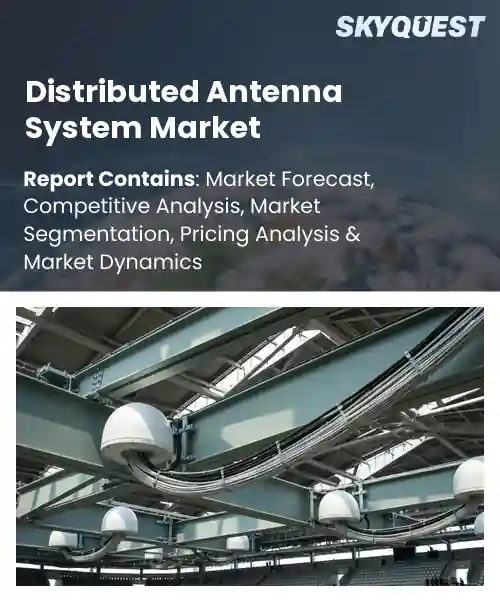
The primary driver of the distributed antenna system market is the exponential growth in mobile data traffic and demand for consistent indoor coverage. Distributed antenna systems are networks of spaced antenna nodes connected to a common source and deployed to improve wireless performance in buildings, stadiums, transportation hubs and urban areas. This market matters because inadequate indoor connectivity degrades user experience, slows enterprise digital transformation and undermines public safety communications. Over time DAS rapidly evolved from passive coaxial architectures to active, hybrid and small cell integrations as operators pursued capacity, energy efficiency and spectrum reuse during stadium and campus deployments.
Building on that evolution, the key factor shaping the global distributed antenna system market is network densification driven by 5G rollouts and enterprise digitalization, which creates opportunity for DAS suppliers. As carriers deploy higher frequency bands, signal attenuation increases, so venue operators and property developers invest in DAS to preserve coverage and monetize connectivity via IoT sensors, AR and private networks. This generates predictable revenue streams for systems integrators because long term service agreements and hardware upgrades follow installations. Real-world examples include airport terminal retrofits that enabled private LTE for logistics and smart building deployments that significantly reduced operational costs.
How is AI enhancing performance optimization in the distributed antenna system market?
AI is improving performance optimization in distributed antenna systems by enabling real time radio resource management adaptive beamforming and intelligent interference mitigation. Key aspects include automated site tuning predictive traffic shaping and digital twin driven planning that reduce manual adjustment and speed rollouts. The market is shifting as operators and equipment vendors adopt AI RAN principles to handle complex indoor traffic and heterogeneous networks. Examples include field trials and new AI capable radios and orchestration tools that focus on uplink optimization and energy aware scheduling. These moves make DAS deployments more flexible and efficient while supporting neutral host models and denser venues such as stadiums and campuses.
SOLiD May 2026, introduced the nGENESIS active distributed antenna system with a focus on neutral host digital connectivity. By integrating analytics that can be augmented with AI the solution enables automated tuning and predictive maintenance which improves coverage consistency and lowers operational complexity supporting faster deployments and market growth.
Market snapshot - (2026-2033)
Global Market Size
USD 10.8 Billion
Largest Segment
Hardware
Fastest Growth
Software
Growth Rate
9.5% CAGR
To get more insights on this market click here to Request a Free Sample Report
Global distributed antenna system market is segmented by offering, coverage, das type, ownership model, technology, application, end user and region. Based on offering, the market is segmented into Hardware, Services and Software. Based on coverage, the market is segmented into Indoor DAS and Outdoor DAS. Based on das type, the market is segmented into Active DAS, Passive DAS and Hybrid DAS. Based on ownership model, the market is segmented into Carrier Ownership, Neutral Host Ownership and Enterprise Ownership. Based on technology, the market is segmented into 4G/LTE, 5G and Wi-Fi. Based on application, the market is segmented into Public Venues, Transportation, Healthcare Facilities, Educational Institutions, Industrial Facilities, Commercial Buildings, Government & Defense, Hospitality, Retail Complexes and Others. Based on end user, the market is segmented into Telecom Operators, Enterprises, Government Organizations, Healthcare Providers, Transportation Authorities, Commercial Real Estate Owners and Others. Based on region, the market is segmented into North America, Europe, Asia Pacific, Latin America and Middle East & Africa.
Active DAS segment dominates because it centralizes radio frequency processing and signal routing to deliver high spectral efficiency and consistent capacity across dense venues. Operators favor its scalable architecture for supporting advanced MIMO configurations and carrier grade quality of service, which reduces dropped connections and interference. This centralized control enables easier upgrades and integration with backhaul and core networks, driving procurement preference and long-term investment by service providers and large enterprises.
However, Hybrid DAS is emerging as the most rapidly expanding area because it combines intelligent radio control with passive distribution to offer flexible cost to performance trade-offs and simplified deployments in mixed environments. Its modularity accelerates 5G and multi-technology rollouts for venues and enterprises, unlocking new installation models, third party service opportunities, and retrofit use cases.
Carrier Ownership segment leads because incumbent operators control spectrum access, network planning, and end to end service delivery, making them natural owners of antenna infrastructure. Their established billing, maintenance and service assurance systems enable predictable revenue management and quality guarantees, which attract large venue and enterprise contracts. This ownership model incentivizes coordinated upgrades and long-term investment, aligning infrastructure deployment with carrier roadmaps and enabling efficient capacity scaling for consumer and enterprise traffic demands.
Meanwhile, Neutral Host Ownership is witnessing the strongest growth momentum as venues and property owners seek single managed solutions that deliver multi-operator connectivity without multiple infrastructures. Third party providers enable shared investment, simplified operator onboarding, and flexible commercial models, driving adoption in complex venues and multi-tenant properties while creating recurring revenue streams and opening opportunities for cross industry partnerships and value added services.
To get detailed segments analysis, Request a Free Sample Report
North America leads the global Distributed Antenna System market because it combines advanced telecommunications infrastructure, proactive operator strategies, and a strong enterprise ecosystem that demands reliable indoor coverage and high-capacity wireless services. Carriers and system integrators in the region prioritize network densification and neutral host models, driving deployment across complex venues such as airports, stadiums, healthcare facilities and corporate campuses. Supportive regulatory frameworks for spectrum use and public–private collaboration accelerate rollouts, while a mature supply chain of equipment vendors and service providers enables integration with fiber and small-cell solutions. Investment in research and close vendor-operator collaboration further supports tailored DAS offerings for complex indoor environments and critical communications.
Distributed Antenna System Market in United States is characterized by widespread adoption across commercial, institutional and public safety segments, driven by carrier initiatives and strong demand for consistent in-building connectivity. Deployment scenarios emphasize large venues, healthcare spaces and transportation hubs, with integrators offering managed services and solutions. Collaboration among operators, venue owners and equipment providers fosters system designs, while procurement maturity, financing models support large scale and multi site implementations.
Distributed Antenna System Market in Canada shows adoption across urban centers, healthcare and enterprise campuses, supported by regional carriers and integrators delivering tailored indoor coverage solutions. Focus on interoperability and vendor neutral approaches enables multi operator deployments, while venue modernization and demand for consistent connectivity in remote-linked locations spur project activity. Collaborations among equipment vendors, consulting firms and property owners foster managed services and phased deployments for complex building environments.
Rapid expansion in Asia Pacific is driven by a convergence of urban densification, aggressive operator strategies for enhancing indoor user experience, and expanding enterprise demand for reliable in-building connectivity. Countries in the region prioritize deployment of distributed antenna systems to address coverage challenges in complex structures such as transit hubs, large retail complexes and high-rise office clusters. Growth is further supported by vendor innovation, neutral host business models and increasing collaboration between carriers and property developers. Regulatory encouragement for advanced wireless infrastructure and a competitive vendor landscape promote scalable and interoperable DAS solutions. Local systems integrators and specialized consultancy support accelerate customized implementations across commercial and public sectors, creating a dynamic market environment focused on integration and managed services.
Distributed Antenna System Market in Japan is shaped by dense urban environments, extensive public transit networks and expectations for uninterrupted indoor connectivity. Operators and venue owners collaborate on solutions for stations, shopping centers and large corporate campuses, emphasizing engineering quality. Local vendors and integrators focus on seamless integration with existing infrastructure, efficient designs and compliance with stringent building standards. Managed services and configurations address complex indoor propagation and capacity requirements.
Distributed Antenna System Market in South Korea is driven by mobile usage, dense urban centers and advanced carrier strategies for pervasive indoor coverage. Deployments focus on transport hubs, commercial complexes and smart campus initiatives, with vendor ecosystems offering high-density solutions. Integration with fiber networks and emphasis on low-latency performance enable demanding enterprise and public safety applications. Collaborative pilots between operators, property developers and technology providers accelerate adoption of DAS offerings.
Europe is strengthening its position in the Distributed Antenna System market through coordinated initiatives that emphasize interoperability, standardization and multi-stakeholder collaboration. Operators, venue owners and neutral host providers work with equipment vendors to deliver interoperable DAS solutions that address coverage and capacity needs across transportation corridors, large public venues and dense urban complexes. Policy frameworks and industry consortia promote common technical specifications and spectrum efficiency, encouraging cross-border deployments and scalable architectures. Emphasis on energy efficiency, modular designs and managed service models supports diverse commercial and public sector use cases. Regional research centers and testing labs further validate solutions for critical communications and enable certification pathways that reassure buyers, accelerating tailored deployments across varied building environments.
Distributed Antenna System Market in Germany features demand from industrial sites, transportation hubs and large commercial developments, driven by operator upgrades and enterprise digitalization. System integrators and equipment vendors emphasize robust engineering, compliance with strict safety standards and efficient designs. Neutral host arrangements and managed services enable multi operator coverage in complex venues. Collaborative projects with automotive and manufacturing sectors highlight tailored DAS deployments addressing interference mitigation and reliability requirements.
Distributed Antenna System Market in United Kingdom benefits from investment in large venues, transport modernization and infrastructure programs that prioritize indoor connectivity. Operators and neutral host providers deliver tailored DAS for stadiums, hospitals and transit centers, emphasizing scalability and service. UK integrators focus on standardized designs, interoperability and managed service contracts. Public sector procurement and collaboration with property owners facilitate deployment of DAS solutions that support commercial and critical communications.
Distributed Antenna System Market in France is influenced by urban redevelopment, transport hub upgrades and strong demand for reliable indoor coverage in cultural venues. Operators and integrators emphasize interoperable DAS tailored to historic buildings, balancing aesthetic constraints with technical performance. Neutral host models and partnerships support multi operator rollouts. Emphasis on sustainable designs and energy conscious operation complements focus on managed services that ensure service continuity in complex environments overall.
To know more about the market opportunities by region and country, click here to
Buy The Complete Report
Rising Mobile Data Consumption
Enterprise And Venue Connectivity Needs
Deployment And Integration Complexity
Regulatory And Spectrum Constraints
Request Free Customization of this report to help us to meet your business objectives.
The Global DAS competitive landscape is marked by consolidation among legacy infrastructure vendors and rising neutral host entrants competing on Network as a Service and orchestration. Example M&A includes CommScope selling its DAS and outdoor wireless units to Amphenol in 2024. Venue and operator partnerships and software driven orchestration, exemplified by Tillman Digital Cities deployments, are reshaping vendor positioning and procurement choices.
SkyQuest’s ABIRAW (Advanced Business Intelligence, Research & Analysis Wing) is our Business Information Services team that Collects, Collates, Correlates, and Analyses the Data collected by means of Primary Exploratory Research backed by robust Secondary Desk research.
As per SkyQuest analysis, the global distributed antenna system market is propelled primarily by rising mobile data consumption and demand for consistent indoor coverage, with a secondary driver being 5G network densification and enterprise digitalization that push capacity and private network investments. Deployment and integration complexity remains a material restraint, slowing smaller projects and extending timelines. North America remains the dominating region due to mature infrastructure, active operator strategies and strong enterprise demand. Active DAS is the dominating segment because centralized RF processing and scalable architectures deliver carrier grade capacity and easier upgrades. Overall, predictable service revenues, neutral host models and AI driven optimization support steady market expansion.
| Report Metric | Details |
|---|---|
| Market size value in 2024 | USD 10.8 Billion |
| Market size value in 2033 | USD 24.44 Billion |
| Growth Rate | 9.5% |
| Base year | 2024 |
| Forecast period | (2026-2033) |
| Forecast Unit (Value) | USD Billion |
| Segments covered |
|
| Regions covered | North America (US, Canada), Europe (Germany, France, United Kingdom, Italy, Spain, Rest of Europe), Asia Pacific (China, India, Japan, Rest of Asia-Pacific), Latin America (Brazil, Rest of Latin America), Middle East & Africa (South Africa, GCC Countries, Rest of MEA) |
| Companies covered |
|
| Customization scope | Free report customization with purchase. Customization includes:-
|
To get a free trial access to our platform which is a one stop solution for all your data requirements for quicker decision making. This platform allows you to compare markets, competitors who are prominent in the market, and mega trends that are influencing the dynamics in the market. Also, get access to detailed SkyQuest exclusive matrix.
Table Of Content
Executive Summary
Market overview
Parent Market Analysis
Market overview
Market size
KEY MARKET INSIGHTS
COVID IMPACT
MARKET DYNAMICS & OUTLOOK
Market Size by Region
KEY COMPANY PROFILES
Methodology
For the Distributed Antenna System Market, our research methodology involved a mixture of primary and secondary data sources. Key steps involved in the research process are listed below:
1. Information Procurement: This stage involved the procurement of Market data or related information via primary and secondary sources. The various secondary sources used included various company websites, annual reports, trade databases, and paid databases such as Hoover's, Bloomberg Business, Factiva, and Avention. Our team did 45 primary interactions Globally which included several stakeholders such as manufacturers, customers, key opinion leaders, etc. Overall, information procurement was one of the most extensive stages in our research process.
2. Information Analysis: This step involved triangulation of data through bottom-up and top-down approaches to estimate and validate the total size and future estimate of the Distributed Antenna System Market.
3. Report Formulation: The final step entailed the placement of data points in appropriate Market spaces in an attempt to deduce viable conclusions.
4. Validation & Publishing: Validation is the most important step in the process. Validation & re-validation via an intricately designed process helped us finalize data points to be used for final calculations. The final Market estimates and forecasts were then aligned and sent to our panel of industry experts for validation of data. Once the validation was done the report was sent to our Quality Assurance team to ensure adherence to style guides, consistency & design.
Analyst Support
Customization Options
With the given market data, our dedicated team of analysts can offer you the following customization options are available for the Distributed Antenna System Market:
Product Analysis: Product matrix, which offers a detailed comparison of the product portfolio of companies.
Regional Analysis: Further analysis of the Distributed Antenna System Market for additional countries.
Competitive Analysis: Detailed analysis and profiling of additional Market players & comparative analysis of competitive products.
Go to Market Strategy: Find the high-growth channels to invest your marketing efforts and increase your customer base.
Innovation Mapping: Identify racial solutions and innovation, connected to deep ecosystems of innovators, start-ups, academics, and strategic partners.
Category Intelligence: Customized intelligence that is relevant to their supply Markets will enable them to make smarter sourcing decisions and improve their category management.
Public Company Transcript Analysis: To improve the investment performance by generating new alpha and making better-informed decisions.
Social Media Listening: To analyze the conversations and trends happening not just around your brand, but around your industry as a whole, and use those insights to make better Marketing decisions.
REQUEST FOR SAMPLE
 REQUEST FREE CUSTOMIZATION
Global Distributed Antenna System Market size was valued at USD 10.8 Billion in 2024 and is poised to grow from USD 11.83 Billion in 2025 to USD 24.44 Billion by 2033, growing at a CAGR of 9.5% during the forecast period (2026-2033).
The Global DAS competitive landscape is marked by consolidation among legacy infrastructure vendors and rising neutral host entrants competing on Network as a Service and orchestration. Example M&A includes CommScope selling its DAS and outdoor wireless units to Amphenol in 2024. Venue and operator partnerships and software driven orchestration, exemplified by Tillman Digital Cities deployments, are reshaping vendor positioning and procurement choices. 'CommScope Holding Company, Inc.', 'Corning Incorporated', 'AT&T Inc.', 'American Tower Corporation', 'Boingo Wireless, Inc.', 'Comba Telecom Systems Holdings Ltd.', 'TE Connectivity plc', 'Nokia Corporation', 'Telefonaktiebolaget LM Ericsson', 'Huawei Technologies Co., Ltd.', 'ZTE Corporation', 'SOLiD, Inc.', 'PBE Group', 'Dali Wireless, Inc.', 'Airspan Networks Holdings Inc.', 'BTI Wireless', 'JMA Wireless', 'Advanced RF Technologies, Inc.', 'Bird Technologies', 'Cisco Systems, Inc'
Rising mobile data usage compels network operators and venue owners to deploy distributed antenna systems to improve indoor coverage, enhance user experience, and support capacity for bandwidth intensive applications. As demand for seamless connectivity grows, DAS installations become a practical means to densify networks without extensive macro tower expansion. This encourages partnerships among operators, system integrators, and property managers, stimulates investment in DAS technologies, and broadens service offerings for enterprise, commercial, and public venues seeking reliable and high quality wireless performance.
5G Densification And Capacity: 5G densification is driving demand for DAS as operators and venue owners seek reliable indoor coverage in dense urban campuses. DAS enables efficient spectrum reuse, supports multi operator sharing, and integrates with small cells and neutral host models to improve user experience. Vendors focus on modular scalable architectures and fiber backhaul to simplify upgrades and extend lifecycles. Emphasis on energy efficiency, seamless handovers and enhanced MIMO positions DAS as a central strategy for managing device density and high throughput services.
Why does North America Dominate the Global Distributed Antenna System Market? |@12


Want to customize this report? This report can be personalized according to your needs. Our analysts and industry experts will work directly with you to understand your requirements and provide you with customized data in a short amount of time. We offer $1000 worth of FREE customization at the time of purchase.
Feedback From Our Clients


 USA (+1) 351-333-4748

