Diagnostic SaMD and Radiogenomics Market
Report ID: SQMIG35A3345
Report ID: SQMIG35A3345
[email protected]
USA +1 351-333-4748
Report ID:
SQMIG35A3345 |
Region:
Global |
Published Date: March, 2026
Pages:
157
|Tables:
117
|Figures:
77


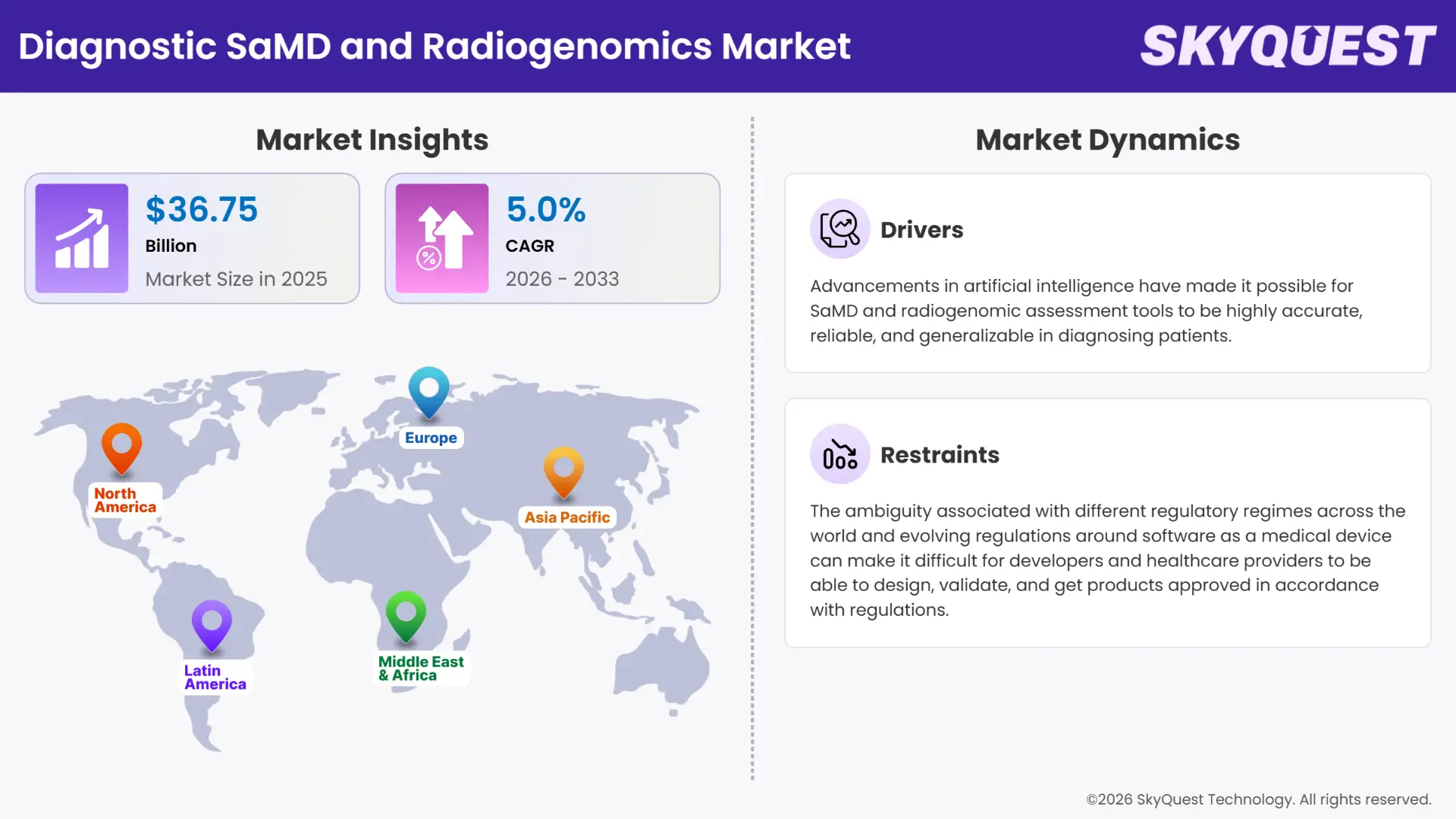
Global Diagnostic SaMD and Radiogenomics Market size was valued at USD 35.00 Billion in 2024 and is poised to grow from USD 36.75 Billion in 2025 to USD 54.30 Billion by 2033, growing at a CAGR of 5.0% during the forecast period (2026-2033).
Key Takeaways: Market Trends & Insights
The primary advantage of the diagnostic SaMD & radiogenomics market is the fusion of next-gen artificial intelligence (AI), high-resolution imaging, and genomic information that enhances the precision and speed of diagnostics and ultimately supports more informed clinical decisions. The market consists of software-based diagnostic devices, imaging and genomic analytics and supports non-invasive phenotyping, stratification of therapies based on cohorts of patients, and expedited clinical workflows. Thereby reducing time from diagnosis to treatment and overall healthcare expenses to the healthcare system. The field has progressed historically from heuristic-based image processing and single gene assay testing to deep learning models using multimodal training.
Double-axis milestones demonstrate the progress that includes government-approved AI diagnostic SaMD from the Food and Drug Administration (FDA) through research consortiums that have correlated radiographic features with the genomic characteristics of tumors. The central driver for growth within the diagnostic radiogenomic space is having scalable access to annotated multimodal datasets; as the quality and quantity of data for algorithm training will increase, so will the robustness of the algorithm. Therefore, making it more possible to have approval from the U.S. government and obtaining benefits from the payer.
Examples of linking the record retention from patients x-ray archives to genomic biobanks have allowed for the construction of models that predict the status of a mutation for a protein called EGFR with CT images (CAT Scan). Thereby allowing for the identification of patients who may best respond to treatment without the need for an invasive procedure to obtain a tissue sample such as repeating a biopsy.
How is AI Improving Diagnostic SaMD Effectiveness in the Radiogenomics Market?
Radiogenomics combines medical imaging analytics with genomic or molecular data for non-invasive disease profiling. Significant characteristics include various elements, such as image feature extraction to create AI driven phenotype to genotype mapping for supporting clinician-directed decision making. The status of multimodal models indicates these new tools create improved lesion characterization, decreasing the level of uncertainty in diagnosis while also creating efficiency within radiology workflows. This helps to target therapies and select patients for clinical studies. Currently, there is momentum within the market based on increased interest in the development of validated AI tools from the oncology center and regulatory perspective as they are looking to identify clearer signals for diagnostic applications and enhanced capability to integrate into clinical systems.
Examples of current positive initiatives have been AI assisted applications being developed for both lung and mammography imaging in combination with molecular predictions to assist with both biopsy guidelines and treatment decision-making.
In February 2026, Median Technologies obtained FDA 510k clearance for its eyonis LCS diagnostic SaMD, demonstrating the FDA's acceptance of AI in imaging and facilitating the accelerated implementation of AI in clinical settings. This will facilitate global diagnostic SaMD and radiogenomics market growth by allowing hospitals to begin implementation of the AI workflow, which will ultimately integrate radiogenomic models in the future.
To get more insights on this market click here to Request a Free Sample Report
Global diagnostic SaMD and radiogenomics market is segmented into software type, application area, modality integration, end-user and region. Based on software type, the market is segmented into AI-based diagnostic SaMD, radiogenomics platforms link, and clinical decision support systems (CDSS). Based on application area, the market is segmented into oncology, neurology and cardiovascular imaging. Based on modality integration, the market is segmented into MRI-based radiogenomics, CT-based analysis, and PET/SPECT imaging. Based on end-user, the market is segmented into diagnostic imaging centers, biotech & pharma R&D and tertiary care hospitals. Based on the region, the market is segmented into North America, Europe, Asia Pacific, Latin America, and Middle East & Africa.
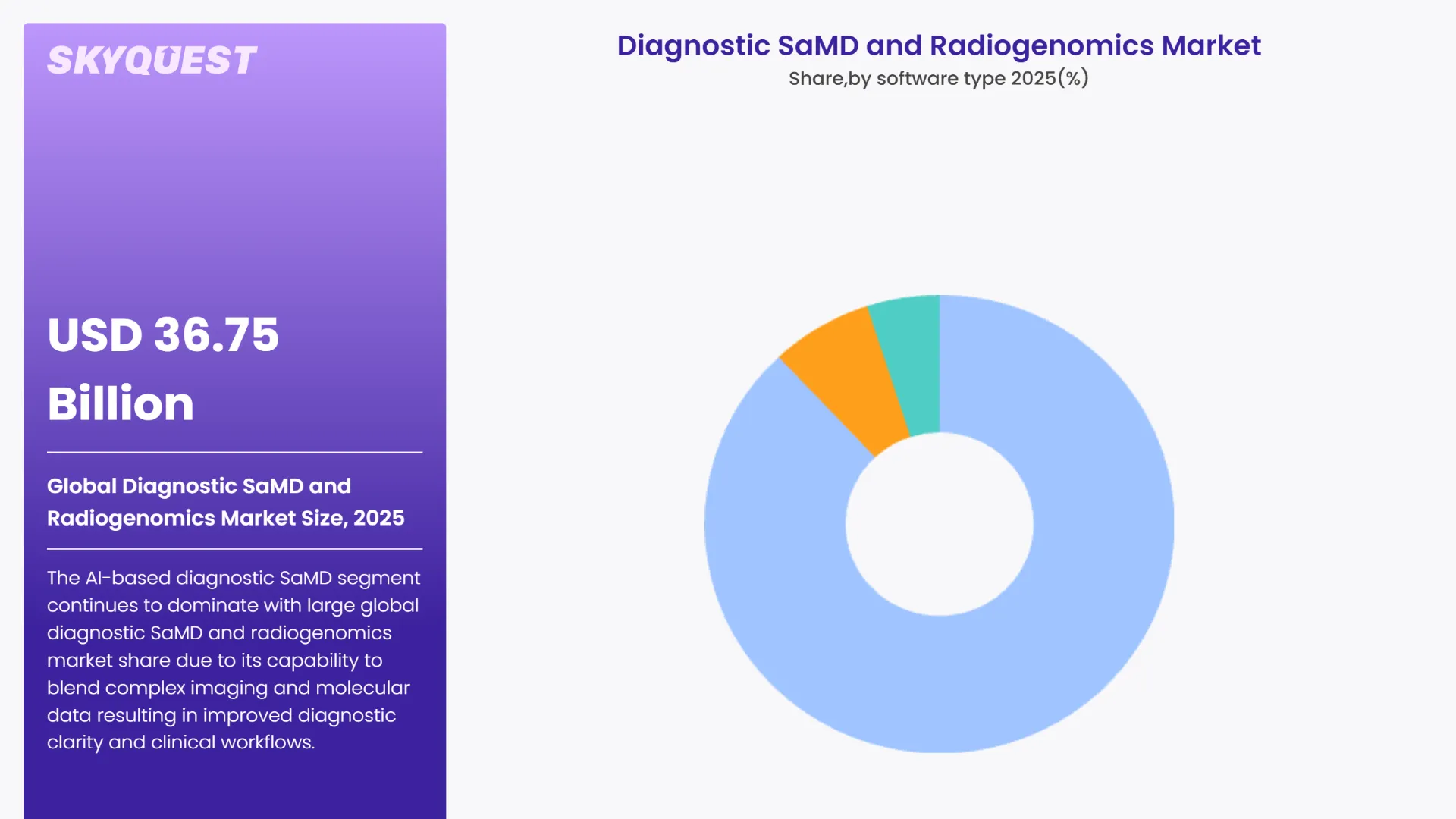
The AI-based diagnostic SaMD segment continues to dominate with large global diagnostic SaMD and radiogenomics market share due to its capability to blend complex imaging and molecular data resulting in improved diagnostic clarity and clinical workflows. The use of advanced algorithms with continuous learning allows for the accelerated discovery of biomarkers and the streamlined implementation of these solutions into imaging pipelines. Increased regulatory clearance and growing clinician trust have further increased demand for these solutions. Thus, creating a self-reinforcing ecosystem that drives investment and partnership activities towards these solutions.
As per global diagnostic SaMD and radiogenomics market outlook, clinical decision support systems (CDSS) are emerging as the fastest growing segment because of how they integrate into electronic health records (EHRs) and clinician workflows to provide real-time actionable insights. Continued focus on clinical validation and vendors' emphasis on interoperability and explainability is contributing to the rapid uptake of CDSS and, as such, will continue to expand the number of diagnostic and therapeutic use cases.
MRI-based radiogenomics is a leader with large global diagnostic SaMD and radiogenomics market share, because it offers superior soft tissue contrast and multiparametric imaging, which allows for rich phenotypic features matching molecular profiles that allow for the derivation of noninvasive biomarkers and more accurate tumor characterization. The compatibility of this imaging modality with advanced image processing and machine learning means that clinically relevant signatures can be generated to assist in determining prognosis and selecting therapies. Therefore, MRI will be adopted by imaging centers and research organizations and will continue to direct funding to the development of MRI-based radiogenomic tools and their validation.
PET/SPECT imaging is emerging as the fastest growing segment of the field. PET/SPECT functional imaging will complement molecular profiles of tumors and will support metabolic phenotyping of tumor responses to treatments. The development of new tracers and quantitative PET metrics is creating a foundation upon which new radiogenomic correlations are being developed, ultimately leading to the creation of precision imaging biomarkers.
To get detailed segments analysis, Request a Free Sample Report
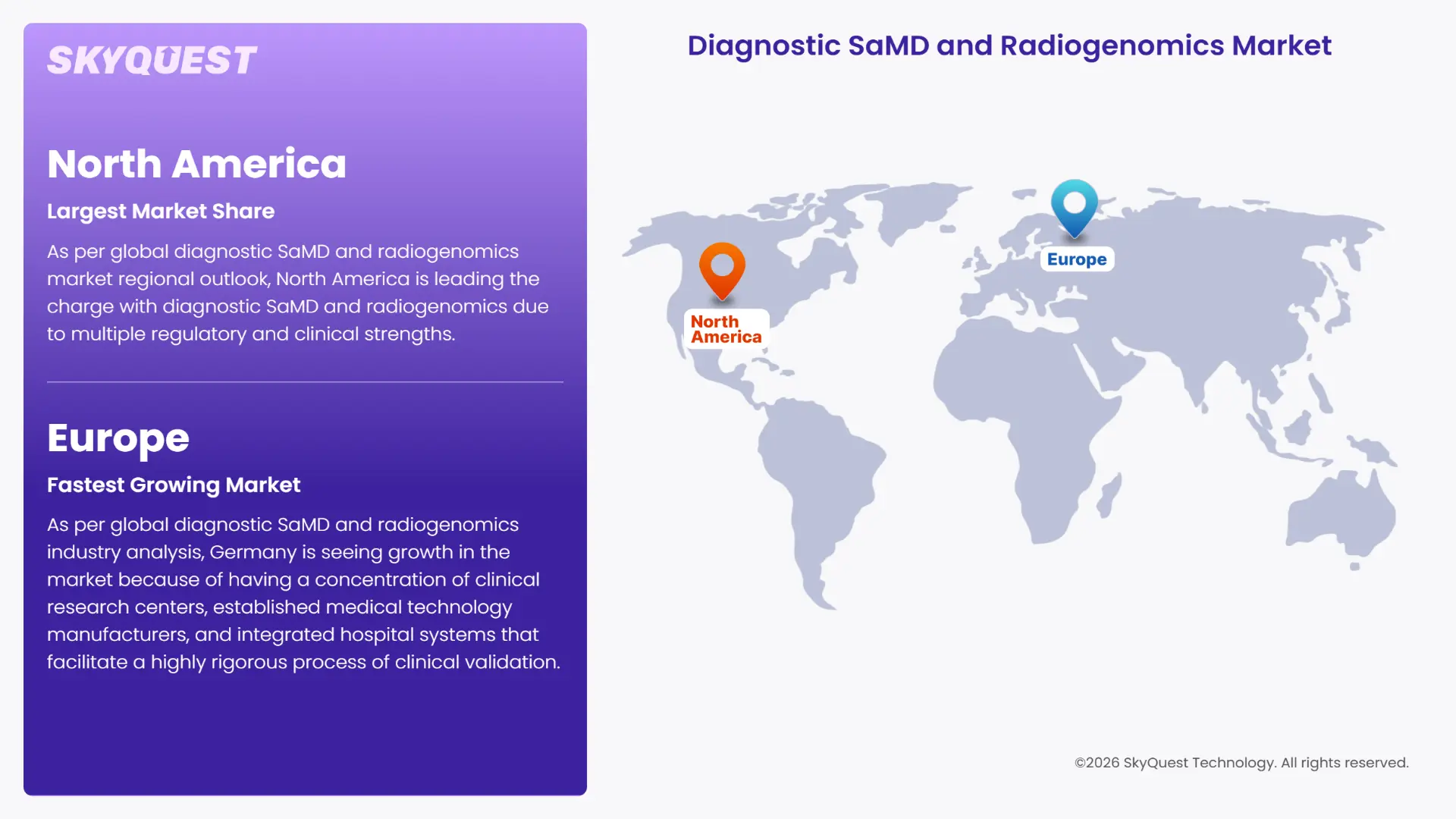
As per global diagnostic SaMD and radiogenomics market regional outlook, North America is leading the charge with diagnostic SaMD and radiogenomics due to multiple regulatory and clinical strengths. Combined, these create an ecosystem for rapid innovation and commercialization of the industry. There are extensive clinical research infrastructure and the highest number of academic medical centres found in Canada and the United States; therefore, there is access to very rigorous validation of algorithm-driven diagnostics and genomic interpretation tools. The deep levels of collaboration between technology companies and health care systems, along with the diagnostic laboratories, help shorten the time from development to deployment.
In the United States, the diagnostic SaMD and radiogenomics market is extremely mature with a very well-established technology ecosystem, that are very supportive of the clinical validation and commercialization of diagnostic SaMD and radiogenomics. This collaborative environment between software developers and clinical laboratories allows for fully integrated workflows, where regulatory clarity and established reimbursement pathways encourage adoption and investments by venture capitalists.
As per global diagnostic SaMD and radiogenomics market regional forecast, in Canada, the market leverages a publicly funded health care system and strong networks to facilitate the evaluation and adoption of diagnostic SaMD and radiogenomics. Each of the provincial governments has launched initiatives or formed consortia that enable data sharing and interoperability between data sources, which will facilitate the training and validation of algorithms. In addition, the expanding cluster of technology companies linked to a hospital creates easier pathways for deployment.
As national health priorities continue to become aligned with strong research capabilities and coordinated regulatory initiatives aimed at promoting safe and effective digital health innovations across Europe, diagnostic SaMD (software as a medical device) and radiogenomics are experiencing rapid growth. In conjunction with this growth initiative, cross-border collaborative research and pan-European consortiums are facilitating large-scale data initiatives and multi-center clinical validation. The diverse ecosystem established by medical device manufacturers, software innovators, and academic genomic centers collectively facilitates product refinement and evidence generation. By placing emphasis on interoperability, data privacy, and equitable access to products and services, trust is built among users, ultimately resulting in scalable deployment. Similarly, through the establishment of strong clinical networks and growing collaborations with payers, the speed of adoption and locally relevant validation will continue to increase.
As per global diagnostic SaMD and radiogenomics industry analysis, Germany is seeing growth in the market because of having a concentration of clinical research centers, established medical technology manufacturers, and integrated hospital systems that facilitate a highly rigorous process of clinical validation. The strong relationship between industries and academic genomic centers has created an environment for evidence of generation and product refinement to take place. The focus on quality standards for clinical education and the integration of diagnostic pathways is introducing a new level of acceptance of diagnostics and ultimately creating a scalable means for the implementation of such diagnostic services across the healthcare delivery system in continental Europe.
Diagnostic SaMD and radiogenomics market in U.K. refers to multiple life science clusters, active digital health incubators, and coordinated national initiatives designed to accelerate the devolution of software driven medical devices into the market. Regulatory pilots and targeted health programs promote and facilitate the clinical adoption of diagnostic software as a medical device through the execution of local validation processes. Biotech companies, hospitals, and university medical centers that facilitate ongoing iterative testing and deployment of diagnostic software as medical device products. Alignment with payer priorities, infrastructure for interoperability supporting the rapid expansion of SaMD diagnostic tools and radiogenomics products in the UK market.
Diagnostic SaMD and radiogenomics market in France is growing because public researchers are collaborating more than ever through publicly funded research initiatives, creating many opportunities for privately financed partners, such as biotech, pharmaceutical and diagnostic technology companies, interested in precision medicine. Each region has developed one or more regional academic research centres/clinical-sourcing partners to support regionally based pilot projects and early clinical studies. A recently strengthened focus on data governance and interoperability will enable secure, scalable development of algorithm-based diagnostics and genomic applications that are essential to the practice of precision medicine. A strong emphasis on providing equitable access to clinical and laboratory services combined with training for clinicians will promote the establishment of confidence in the clinical value of each algorithm used in the diagnosis and treatment of certain diseases through the development of a more uniform application of algorithms among all clinicians in France.
The Asia Pacific region is making substantial strides in enhancing diagnostic SaMD and radiogenomics capabilities through strategic healthcare infrastructure investments, National-level research initiatives and collaborative efforts between public/private partnerships for rapid technology transfer. Localized development and validation of computational biology models will be accelerated by increased amounts of clinical data and upgraded imaging networks.
The diagnostic SaMD and radiogenomics market trends in Japan is benefitting from a sophisticated system of medical imaging infrastructure, comprehensive partnerships between industry and university hospitals, as well as strong support from national-level research programs focused on creating genomic medicine solutions. In addition, because of their extensive experience in the establishment of regulated medical devices, the regulated medical technology sector is also positioned to provide support throughout the entire product development process.
The diagnostic SaMD and radiogenomics market in South Korea is benefitting from both a national priority focuses on digital health, advanced infrastructure, and collaborative partnerships with hospitals, universities, and technology businesses to create new solutions and products. The use of imaging technology is widely used throughout the healthcare sector; therefore, there exist numerous opportunities to develop and validate computational biology models. The wide variety of innovation-support programs, and incubators that provide support to startups in South Korea, has provided the foundation for the establishment of international partnerships.
To know more about the market opportunities by region and country, click here to
Buy The Complete Report
Advancements In AI Integration
Increased Adoption of Radiogenomics
Regulatory Complexity and Variability
Patient Privacy & Security Issues
Request Free Customization of this report to help us to meet your business objectives.
The global diagnostic SaMD and radiogenomics industry are experiencing growing competition as a result of numerous mergers and acquisitions (M&A), regulatory validation, and scale partnerships. For example, recent examples include Illumina's acquisition of GRAIL; and integration of AI startups and existing companies for clinical deployment (e.g., GE Healthcare and Lucida). Additionally, growth-stage investments into AI infrastructure companies will play an increasing role in accelerating the commercial rollout of these companies' products throughout hospital networks.
SkyQuest’s ABIRAW (Advanced Business Intelligence, Research & Analysis Wing) is our Business Information Services team that Collects, Collates, Correlates, and Analyses the Data collected by means of Primary Exploratory Research backed by robust Secondary Desk research.
As per SkyQuest analysis, the global diagnostic SaMD and radiogenomics market is being propelled by the convergence of advanced artificial intelligence with high-resolution imaging and genomic data as a key driver, while regulatory complexity and variability act as a major restraint. A second driver is scalable access to richly annotated multimodal datasets that improve algorithm robustness and commercial acceptance. North America dominates the market due to deep clinical, regulatory, and investor ecosystems, and the AI-based diagnostic SaMD segment dominates adoption due to its ability to integrate imaging and molecular data into clinical workflows. Continued focus on interoperability and clinical validation will shape near term uptake.
| Report Metric | Details |
|---|---|
| Market size value in 2024 | USD 35.00 Billion |
| Market size value in 2033 | USD 54.30 Billion |
| Growth Rate | 5.0% |
| Base year | 2024 |
| Forecast period | 2026-2033 |
| Forecast Unit (Value) | USD Billion |
| Segments covered |
|
| Regions covered | North America (US, Canada), Europe (Germany, France, United Kingdom, Italy, Spain, Rest of Europe), Asia Pacific (China, India, Japan, Rest of Asia-Pacific), Latin America (Brazil, Rest of Latin America), Middle East & Africa (South Africa, GCC Countries, Rest of MEA) |
| Companies covered |
|
| Customization scope | Free report customization with purchase. Customization includes:-
|
To get a free trial access to our platform which is a one stop solution for all your data requirements for quicker decision making. This platform allows you to compare markets, competitors who are prominent in the market, and mega trends that are influencing the dynamics in the market. Also, get access to detailed SkyQuest exclusive matrix.
Table Of Content
Executive Summary
Market overview
Parent Market Analysis
Market overview
Market size
KEY MARKET INSIGHTS
COVID IMPACT
MARKET DYNAMICS & OUTLOOK
Market Size by Region
KEY COMPANY PROFILES
Methodology
For the Diagnostic SaMD and Radiogenomics Market, our research methodology involved a mixture of primary and secondary data sources. Key steps involved in the research process are listed below:
1. Information Procurement: This stage involved the procurement of Market data or related information via primary and secondary sources. The various secondary sources used included various company websites, annual reports, trade databases, and paid databases such as Hoover's, Bloomberg Business, Factiva, and Avention. Our team did 45 primary interactions Globally which included several stakeholders such as manufacturers, customers, key opinion leaders, etc. Overall, information procurement was one of the most extensive stages in our research process.
2. Information Analysis: This step involved triangulation of data through bottom-up and top-down approaches to estimate and validate the total size and future estimate of the Diagnostic SaMD and Radiogenomics Market.
3. Report Formulation: The final step entailed the placement of data points in appropriate Market spaces in an attempt to deduce viable conclusions.
4. Validation & Publishing: Validation is the most important step in the process. Validation & re-validation via an intricately designed process helped us finalize data points to be used for final calculations. The final Market estimates and forecasts were then aligned and sent to our panel of industry experts for validation of data. Once the validation was done the report was sent to our Quality Assurance team to ensure adherence to style guides, consistency & design.
Analyst Support
Customization Options
With the given market data, our dedicated team of analysts can offer you the following customization options are available for the Diagnostic SaMD and Radiogenomics Market:
Product Analysis: Product matrix, which offers a detailed comparison of the product portfolio of companies.
Regional Analysis: Further analysis of the Diagnostic SaMD and Radiogenomics Market for additional countries.
Competitive Analysis: Detailed analysis and profiling of additional Market players & comparative analysis of competitive products.
Go to Market Strategy: Find the high-growth channels to invest your marketing efforts and increase your customer base.
Innovation Mapping: Identify racial solutions and innovation, connected to deep ecosystems of innovators, start-ups, academics, and strategic partners.
Category Intelligence: Customized intelligence that is relevant to their supply Markets will enable them to make smarter sourcing decisions and improve their category management.
Public Company Transcript Analysis: To improve the investment performance by generating new alpha and making better-informed decisions.
Social Media Listening: To analyze the conversations and trends happening not just around your brand, but around your industry as a whole, and use those insights to make better Marketing decisions.
REQUEST FOR SAMPLE
 REQUEST FREE CUSTOMIZATION
Global Diagnostic Samd And Radiogenomics Market size was valued at USD 35.0 Billion in 2024 and is poised to grow from USD 36.75 Billion in 2025 to USD 54.3 Billion by 2033, growing at a CAGR of 5.0% during the forecast period (2026-2033).
Competition in the global diagnostic SaMD and radiogenomics market is driven by strategic consolidation, regulatory validation and scale partnerships; M&A such as Illumina's acquisition of GRAIL, integrations between incumbents and AI startups for clinical deployment like GE Healthcare and Lucida, and growth-stage funding of AI infrastructure firms are accelerating commercial rollouts across hospital networks. 'GE HealthCare', 'Siemens Healthineers', 'Philips Healthcare', 'Fujifilm Holdings', 'Canon Medical', 'IBM Watson Health', 'NVIDIA', 'AiCure', 'Viz.ai', 'HeartFlow Inc.', 'Butterfly Network', 'Zebra Medical Vision', 'Aidoc', 'ScreenPoint Medical', 'Lunit', 'Riverain Technologies', 'Quantib', 'ContextVision', 'Median Technologies', 'TeraRecon'
Rapid progress in artificial intelligence algorithms and model training has enabled more accurate, reliable, and generalizable diagnostic SaMD and radiogenomics tools, improving clinical confidence and encouraging integration into care pathways. Enhanced algorithm performance shortens development cycles and expands applicability across imaging modalities, enabling developers to create solutions that address unmet diagnostic needs. As clinicians and institutions observe consistent diagnostic value, investment and adoption increase, stimulating further innovation and partnerships between technology firms and healthcare providers that together accelerate market expansion and product maturation.
Integrated Multiomic Diagnostics: Stakeholders are shifting toward platforms that combine imaging-derived radiogenomic signatures with software-only diagnostic workflows to deliver richer, clinically actionable insights. This convergence enables earlier disease characterization, personalized therapeutic selection, and streamlined reporting that aligns with clinician workflows. Cross-disciplinary collaboration among radiology, pathology, and data science groups is accelerating validation and clinical adoption. Vendors emphasizing interoperability, transparent model explainability, and integration with electronic health records are gaining preference as healthcare systems prioritize solutions that improve diagnostic confidence and patient management pathways.
North America Dominate the Global Diagnostic SaMD and Radiogenomics Market.
Diagnostic Software as a Medical Device (SaMD) and Radiogenomics combine AI-powered diagnostic software, medical imaging, and genomic data analysis to improve disease detection, patient stratification, treatment planning, and precision medicine outcomes.
AI-based Diagnostic SaMD currently dominates the market due to its ability to integrate imaging and molecular data, accelerate biomarker discovery, enhance diagnostic accuracy, and streamline clinical workflows.
Clinical Decision Support Systems (CDSS) are expected to be the fastest-growing segment because of their increasing integration with electronic health records (EHRs), real-time clinical insights, and expanding use in diagnostic and therapeutic decision-making.


Want to customize this report? This report can be personalized according to your needs. Our analysts and industry experts will work directly with you to understand your requirements and provide you with customized data in a short amount of time. We offer $1000 worth of FREE customization at the time of purchase.
Feedback From Our Clients


 USA (+1) 351-333-4748

