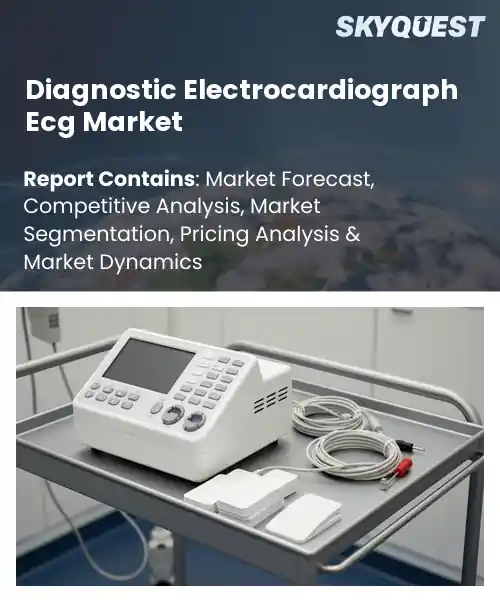
Diagnostic Electrocardiograph Ecg Market
Report ID: SQMIG35A4204
Report ID: SQMIG35A4204
[email protected]
USA +1 351-333-4748
Report ID:
SQMIG35A4204 |
Region:
Global |
Published Date: July, 2026
Pages:
157
|Tables:
181
|Figures:
79


Global Diagnostic Electrocardiograph ECG Market size was valued at USD 8.8 Billion in 2024 and is poised to grow from USD 9.33 Billion in 2025 to USD 14.87 Billion by 2033, growing at a CAGR of 6.0% during the forecast period (2026-2033).
High prevalence of cardiovascular diseases, rising geriatric population, increasing adoption of preventive cardiac screening, advancements in portable and wireless ECG technologies, and expanding telehealth and remote patient monitoring are driving demand for diagnostic electrocardiographs (ECGs).
Rise in the adoption of electrocardiography equipment in hospitals, diagnostic centers, ambulatory care centers, and home healthcare settings is driving growth in the market through the provision of reliable and real-time monitoring of the heart. Advances in digital, portable, and wireless ECG equipment, coupled with rising adoption of telehealth technology and cloud technology, are making cardiac diagnostics and patient management easier. Investments in healthcare infrastructure and remote patient monitoring technologies are likely to play a pivotal role in driving demand for diagnostic electrocardiographs (ECGs). Rising awareness regarding early detection of cardiovascular diseases coupled with increasing emphasis on preventive healthcare is expected to primarily drive diagnostic electrocardiograph (ECG) market growth.
Contrastingly, high costs of advanced ECG systems, data privacy and cybersecurity concerns, shortage of skilled professionals for ECG interpretation, and stringent regulatory requirements are anticipated to slow down diagnostic electrocardiograph (ECG) market penetration in the future.
How is AI Enhancing Accuracy And Adoption Of Diagnostic Electrocardiograph ECG Devices?
Artificial Intelligence is revolutionizing the field of ECG diagnostics through enhanced analysis of heart electrical activity. AI algorithms process data faster and more efficiently, eliminating noises from heart electrical activity and detecting abnormalities faster than traditional ECG reading. Contemporary ECG machines are equipped with artificial intelligence that allows analyzing ECG data in real-time, saving time and decreasing frequency of repeat tests. Cloud technology enables continuous analysis of ECG data, remote patients' monitoring, and algorithm training to increase its efficiency. Such innovations contribute to growing popularity of ECG equipment enabled by AI in hospitals, ERs, PCPs clinics, and even in home settings.
Market snapshot - (2026-2033)
Global Market Size
USD 8.8 Billion
Largest Segment
Resting ECG Systems
Fastest Growth
Wireless ECG Systems
Growth Rate
6.0% CAGR
To get more insights on this market click here to Request a Free Sample Report
Global diagnostic electrocardiograph ECG market is segmented by product type, lead type, end user, application, portability, technology, and region. Based on product type, the market is segmented into Resting ECG Systems, Stress ECG Systems, Holter ECG Systems, Wireless ECG Systems, Portable ECG Systems, and PC-based ECG Systems. Based on lead type, the market is segmented into Single-lead ECG, 3-lead ECG, 6-lead ECG, 12-lead ECG, and Multi-lead ECG Systems. Based on end user, the market is segmented into hospitals, cardiology clinics, diagnostic centers, ambulatory surgical centers, and home healthcare settings. Based on application, the market is segmented into arrhythmia diagnosis, coronary artery disease diagnosis, cardiac monitoring, pre-operative assessment, routine health screening, and others. Based on portability, the market is segmented into fixed ECG systems, portable ECG Systems, and handheld ECG Systems. Based on technology, the market is segmented into conventional ECG, Digital ECG, and AI-enabled ECG Analysis. Based on region, the market is segmented into North America, Europe, Asia Pacific, Latin America, and Middle East & Africa.
The resting ECG systems segment is anticipated to lead the global diagnostic electrocardiograph (ECG) market revenue generation in the future. they offer the best cardiac waveform recording available in a clinical setting, with high-fidelity diagnostic tools being necessary for proper arrhythmia and ischemia detection. The reliability of the devices, as well as their easy integrability into hospital information systems, coupled with longstanding experience of clinicians with the devices, adds up to their continued popularity, which makes them a staple of any cardiac analysis in the market of diagnostic electrocardiographs.
However, wireless ECG systems emerge as the most rapidly expanding segment as per this diagnostic electrocardiograph (ECG) industry analysis, because of its capability to transfer data in real-time from the heart to mobile devices. Empowerment of patients, low cost of wireless modules, and greater use of cloud-based analysis contribute to its adoption, which acts as a market growth driver.
The 12 lead ECG segment is expected to hold the largest global diagnostic electrocardiograph (ECG) market share in the future. it provides the most accurate representation of the cardiac electrical activity in space, making it critical in diagnosing coronary artery disease and complex arrhythmias. Medical practitioners depend on the holistic nature of the technology in their treatment plan process and with the inclusion of imaging and decision support software, the importance of the technology remains critical in hospitals and other specialized settings. Mapping ischemic areas and continuous improvements in signal processing contribute to the technology’s preeminence in various healthcare processes.
Meanwhile, multi lead ECG systems segment experiences the strongest growth momentum as a result of its scalable design, which enables clinicians to create individual lead configurations that suit certain requirements. New developments in wireless technology and AI-based interpretation increase its applicability in other environments, contributing to increased market reach and generating additional revenue sources for manufacturers of such equipment.
To get detailed segments analysis, Request a Free Sample Report
Sophisticated healthcare delivery systems, extensive investment in medical technology research, and robust reimbursement mechanisms are helping cement the dominance of this region going forward. Mature regulatory frameworks exist within the region to enable easier approvals of products without compromising safety, which enhances the level of trust between physicians. High level of physician awareness about heart disease along with extensive adoption of preventive screening programs ensures steady demand. Furthermore, collaborative research efforts between top universities and industry help to incorporate the most advanced electrocardiograph solutions in the region within no time.
Diagnostic electrocardiograph ECG demand growth in the United States is propelled by an extensive network of tertiary care hospitals and specialty cardiac centers that prioritize cutting‑edge diagnostic tools. The presence of major medical device manufacturers headquartered in the country fuels continuous product refinement and customization for local clinical needs. Reimbursement policies that favor evidence‑based technologies further stimulate clinician adoption, while ongoing physician education programs deepen familiarity with advanced ECG capabilities. Together these factors create a fertile environment for sustained market expansion.
Diagnostic electrocardiograph ECG market development in Canada reflects a strong public healthcare framework that emphasizes equitable access to high‑quality cardiac diagnostics. Provincial health authorities support the integration of modern ECG systems through strategic procurement and funding initiatives, encouraging hospitals to upgrade legacy equipment. Collaborative research between Canadian universities and industry partners nurtures innovation tailored to the nation’s demographic health profile. Continued emphasis on early detection and preventive cardiology reinforces the demand for reliable, user‑friendly electrocardiograph solutions across the country.
Harmonized regulatory standards that simplify cross-border product launch, coupled with a mature healthcare ecosystem that values preventive cardiology are helping support high demand for diagnostic electrocardiograph (ECG) in the region. Strong governmental and non-governmental payment models encourage investment in the use of advanced ECG technology, and the national health care policies always ensure the priority of the monitoring of cardiovascular diseases. Joint research initiatives involving universities and businesses ensure the fast implementation of innovations in the clinic. In addition, due to the regional focus on the integration of digital health solutions, it ensures the introduction of advanced ECGs with connectivity and analytical capabilities.
Diagnostic electrocardiograph ECG market activity in Germany is anchored by a robust network of university hospitals and specialized cardiac clinics that champion advanced diagnostic methodologies. The country’s well‑established reimbursement landscape supports the procurement of high‑performance ECG equipment, while stringent quality standards ensure reliability. Active collaboration between German medical device firms and research institutions accelerates innovation, delivering solutions that meet the precise needs of clinicians. This environment sustains Germany’s position as a dominant market player in Europe.
Demand for diagnostic electrocardiograph (ECG) in the United Kingdom is fueled by aggressive adoption of digital health initiatives within the National Health Service. Efforts to modernize cardiac care pathways encourage the implementation of ECG platforms with integrated data analytics, supporting real‑time clinical decision‑making. Strong academic‑industry partnerships generate cutting‑edge technology tailored to the UK’s health priorities. Policy emphasis on early detection of heart conditions further stimulates demand, positioning the United Kingdom as a rapidly growing market within Europe.
Diagnostic electrocardiograph ECG Market progression in France reflects an emerging focus on cardiovascular prevention within its public health agenda. Modernization of hospitals' infrastructure leads to the substitution of older electrocardiogram systems by new ones that are flexible enough. The cooperation of French research centers and the manufacturers of devices leads to the creation of solutions in accordance with national clinical guidelines. The increasing understanding of the advantages of early heart examination among medical professionals promotes the emergence of the market; France becomes a promising player in the European context.
Rapid urbanization, expanding middle-class populations, and heightened awareness of cardiovascular health risks are expected to support steady demand for diagnostic electrocardiograph (ECG) in the region. Governments in the region have made large investments in building the necessary healthcare infrastructure by setting up hospitals as well as upgrading existing hospitals with advanced diagnostic technologies. The increased participation of the private sector brings in competition in terms of price and technology, enabling greater accessibility to modern ECG machines. Regional cooperation and collaboration in research is leading to innovation that meets the needs of different patient profiles.
Diagnostic electrocardiograph ECG market evolution in Japan benefits from a highly organized healthcare system that emphasizes precision medicine and early disease detection. Strong institutional focus on integrating electronic health records with ECG data enhances clinical workflows, encouraging hospitals to adopt sophisticated devices. Domestic manufacturers collaborate closely with research universities, driving forward innovations that address the specific cardiac health needs of the aging population. Continuous professional development programs for clinicians further embed advanced ECG technology into routine practice, reinforcing Japan’s leadership in the region.
Demand for diagnostic electrocardiograph (ECG) in South Korea is propelled by aggressive national health initiatives aimed at reducing cardiovascular disease prevalence. The country’s advanced digital infrastructure supports the seamless adoption of ECG systems with wireless connectivity and cloud‑based analytics. Partnerships between leading Korean device firms and global technology providers accelerate the introduction of cutting‑edge features. A proactive approach to physician training and public awareness campaigns underpins widespread acceptance, positioning South Korea as a key contributor to the region’s expanding market.
To know more about the market opportunities by region and country, click here to
Buy The Complete Report
Increasing Cardiovascular Disease Awareness
Adoption Of Portable ECG Devices
High Initial Equipment Cost
Regulatory Approval Complexity
Request Free Customization of this report to help us to meet your business objectives.
The diagnostic electrocardiograph market is shaped by intense competition as incumbents such as Philips and Boston Scientific deepened integration with Epic in 2025, following iRhythm’s 2024 partnership, while newcomers accelerate innovation through AI‑driven analysis and portable hardware; recent M&A activity and strategic alliances are aimed at expanding digital health ecosystems and capturing hospital‑level contracts.
SkyQuest’s ABIRAW (Advanced Business Intelligence, Research & Analysis Wing) is our Business Information Services team that Collects, Collates, Correlates, and Analyses the Data collected by means of Primary Exploratory Research backed by robust Secondary Desk research.
As per SkyQuest analysis, high prevalence of cardiovascular diseases, rising geriatric population, increasing adoption of preventive cardiac screening, and advancements in portable and wireless ECG technologies are anticipated to drive the demand for diagnostic electrocardiographs (ECGs) going forward. However, high costs of advanced ECG systems and data privacy and cybersecurity concerns are slated to slow down the adoption of diagnostic electrocardiographs (ECGs) in the future. North America is slated to spearhead the demand for diagnostic electrocardiographs (ECGs) owing to advanced healthcare infrastructure, high adoption of digital healthcare technologies, growing prevalence of cardiovascular disorders, and favorable reimbursement policies. AI-enabled ECG interpretation and integration of cloud-based remote cardiac monitoring platforms are anticipated to be key trends driving the diagnostic electrocardiograph (ECG) sector in the long run.
| Report Metric | Details |
|---|---|
| Market size value in 2024 | USD 8.8 Billion |
| Market size value in 2033 | USD 14.87 Billion |
| Growth Rate | 6.0% |
| Base year | 2024 |
| Forecast period | (2026-2033) |
| Forecast Unit (Value) | USD Billion |
| Segments covered |
|
| Regions covered | North America (US, Canada), Europe (Germany, France, United Kingdom, Italy, Spain, Rest of Europe), Asia Pacific (China, India, Japan, Rest of Asia-Pacific), Latin America (Brazil, Rest of Latin America), Middle East & Africa (South Africa, GCC Countries, Rest of MEA) |
| Companies covered |
|
| Customization scope | Free report customization with purchase. Customization includes:-
|
To get a free trial access to our platform which is a one stop solution for all your data requirements for quicker decision making. This platform allows you to compare markets, competitors who are prominent in the market, and mega trends that are influencing the dynamics in the market. Also, get access to detailed SkyQuest exclusive matrix.
Table Of Content
Executive Summary
Market overview
Parent Market Analysis
Market overview
Market size
KEY MARKET INSIGHTS
COVID IMPACT
MARKET DYNAMICS & OUTLOOK
Market Size by Region
KEY COMPANY PROFILES
Methodology
For the Diagnostic Electrocardiograph Ecg Market, our research methodology involved a mixture of primary and secondary data sources. Key steps involved in the research process are listed below:
1. Information Procurement: This stage involved the procurement of Market data or related information via primary and secondary sources. The various secondary sources used included various company websites, annual reports, trade databases, and paid databases such as Hoover's, Bloomberg Business, Factiva, and Avention. Our team did 45 primary interactions Globally which included several stakeholders such as manufacturers, customers, key opinion leaders, etc. Overall, information procurement was one of the most extensive stages in our research process.
2. Information Analysis: This step involved triangulation of data through bottom-up and top-down approaches to estimate and validate the total size and future estimate of the Diagnostic Electrocardiograph Ecg Market.
3. Report Formulation: The final step entailed the placement of data points in appropriate Market spaces in an attempt to deduce viable conclusions.
4. Validation & Publishing: Validation is the most important step in the process. Validation & re-validation via an intricately designed process helped us finalize data points to be used for final calculations. The final Market estimates and forecasts were then aligned and sent to our panel of industry experts for validation of data. Once the validation was done the report was sent to our Quality Assurance team to ensure adherence to style guides, consistency & design.
Analyst Support
Customization Options
With the given market data, our dedicated team of analysts can offer you the following customization options are available for the Diagnostic Electrocardiograph Ecg Market:
Product Analysis: Product matrix, which offers a detailed comparison of the product portfolio of companies.
Regional Analysis: Further analysis of the Diagnostic Electrocardiograph Ecg Market for additional countries.
Competitive Analysis: Detailed analysis and profiling of additional Market players & comparative analysis of competitive products.
Go to Market Strategy: Find the high-growth channels to invest your marketing efforts and increase your customer base.
Innovation Mapping: Identify racial solutions and innovation, connected to deep ecosystems of innovators, start-ups, academics, and strategic partners.
Category Intelligence: Customized intelligence that is relevant to their supply Markets will enable them to make smarter sourcing decisions and improve their category management.
Public Company Transcript Analysis: To improve the investment performance by generating new alpha and making better-informed decisions.
Social Media Listening: To analyze the conversations and trends happening not just around your brand, but around your industry as a whole, and use those insights to make better Marketing decisions.
REQUEST FOR SAMPLE
 REQUEST FREE CUSTOMIZATION
Global Diagnostic Electrocardiograph Ecg Market size was valued at USD 8.8 Billion in 2024 and is poised to grow from USD 9.33 Billion in 2025 to USD 14.87 Billion by 2033, growing at a CAGR of 6.0% during the forecast period (2026-2033).
The diagnostic electrocardiograph market is shaped by intense competition as incumbents such as Philips and Boston Scientific deepened integration with Epic in 2025, following iRhythm’s 2024 partnership, while newcomers accelerate innovation through AI‑driven analysis and portable hardware; recent M&A activity and strategic alliances are aimed at expanding digital health ecosystems and capturing hospital‑level contracts. 'GE HealthCare', 'Philips', 'Schiller AG', 'Nihon Kohden', 'Fukuda Denshi', 'OSI Systems', 'Bionet', 'EDAN Instruments', 'Cardioline', 'Norav Medical', 'Mortara Instrument', 'CardioComm Solutions', 'Allengers Medical Systems', 'Shenzhen Carewell Electronics', 'Labtech Ltd.', 'Innomed Medical', 'NASAN Medical Electronics', 'Lepu Medical Technology', 'Contec Medical Systems', 'Cardiolex Medical'
Increasing public and professional awareness of cardiovascular conditions drives greater demand for early detection tools, prompting hospitals and clinics to prioritize electrocardiograph acquisition. Physicians view routine ECG screening as essential for risk stratification, and patient expectations for timely diagnosis encourage healthcare providers to integrate advanced ECG solutions into standard care pathways. This heightened focus on preventive cardiology creates sustained procurement cycles, fostering market expansion through continuous product upgrades and service contracts and long‑term partnerships with technology vendors globally to ensure continued support.
Ai‑Driven Diagnostics Evolution: The integration of artificial intelligence into electrocardiograph systems is reshaping clinical workflows by delivering real‑time arrhythmia detection and automated report generation. Hospitals are adopting AI‑enhanced devices to reduce interpretation variability and accelerate patient triage. This shift improves diagnostic confidence and allows clinicians to focus on complex decision‑making. Vendors are partnering with software firms to embed deep‑learning algorithms, creating a new value proposition centered on predictive analytics and personalized cardiology care and supporting long‑term population health monitoring initiatives across regional networks.
Why does North America Dominate the Global Diagnostic Electrocardiograph Ecg Market? |@12


Want to customize this report? This report can be personalized according to your needs. Our analysts and industry experts will work directly with you to understand your requirements and provide you with customized data in a short amount of time. We offer $1000 worth of FREE customization at the time of purchase.
Feedback From Our Clients


 USA (+1) 351-333-4748

