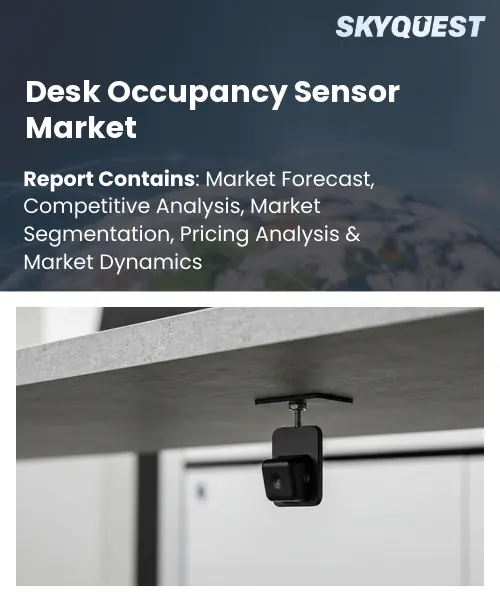
Desk Occupancy Sensor Market
Report ID: SQMIG45N2159
Report ID: SQMIG45N2159
[email protected]
USA +1 351-333-4748
Report ID:
SQMIG45N2159 |
Region:
Global |
Published Date: February, 2026
Pages:
157
|Tables:
116
|Figures:
77


Global Desk Occupancy Sensor Market size was valued at USD 450 Million in 2024 and is poised to grow from USD 506.25 Million in 2025 to USD 1,298.93 Million by 2033, growing at a CAGR of 12.5% during the forecast period (2026-2033).
The global desk occupancy sensor market growth is driven because workplaces now require smarter solutions which use IoT technology to enhance space efficiency. Desk occupancy sensors detect presence at individual workspaces and feed analytics into facility management systems, enabling organizations to reduce real estate costs while improving employee experience. The market exists because organizations consider real estate as their second most expensive expenditure, while data-based space planning solutions provide companies with enhanced capacity to adapt their operations to hybrid work environments.
Businesses today use multi-sensor solutions which combine BLE, UWB and cloud analytics to replace traditional infrared sensors. The global desk occupancy sensor sector depends on building management and workplace software systems because sensors provide accurate occupancy data which enables organizations to manage their power distribution and cleaning schedules while implementing hot-desking systems. The company achieves lower utility expenses together with faster space optimization during busy periods, which results in observable returns that support the sensor system implementation. A multinational corporation achieved campus energy savings through sensor implementation while a co-working operator raised desk occupancy rates by moving less popular workspaces into active use, which created a market for retrofit and subscription-based analytics solutions.
How is AI-powered IoT Improving Accuracy in the Desk Occupancy Sensor Market?
AI powered IoT desk occupancy sensors merge sensor hardware connectivity and embedded machine learning to detect presence and activity at the desk level. The system operates through three main components which include multimodal sensing and edge inference and cloud analytics that detect patterns while eliminating irrelevant data. People now prefer using AI powered systems which operate through radar and thermal and camera free methods to identify actual occupancy from brief passes by movements because they want to protect their privacy. Organizations need reliable space monitoring solutions which enable them to track energy use while hybrid work demands continue to develop as facilities teams require these solutions. The real world demonstrates edge classifiers which change according to room designs and sensor fusion technology which enhances detection precision while decreasing false alarm rates.
The FP400 Spatial Multi Sensor from Aqara which uses mmWave radar technology and on device learning, launched in January 2026, to detect seated presence without video. The new technology improves desk detection accuracy, which enables workplace systems to provide better occupancy data that organizations need for enhanced operational performance and system adoption.
Market snapshot - (2026-2033)
Global Market Size
USD 2.1 Billion
Largest Segment
Infrared Sensors
Fastest Growth
Hybrid Sensors
Growth Rate
13.1% CAGR
To get more insights on this market click here to Request a Free Sample Report
The global desk occupancy sensor market is segmented based on sensor type, connectivity technology, application, end user, and region. By sensor type, the market is categorized into infrared sensors, ultrasonic sensors, and hybrid sensors. Based on connectivity technology, it is divided into wired connectivity and wireless connectivity solutions. In terms of application, the market is segmented into energy management, space utilization, and security monitoring. By end user, the market includes corporate offices, educational institutions, and healthcare facilities. Regionally, the market is analyzed across North America, Europe, Asia Pacific, Latin America, and the Middle East & Africa.
According to the global desk occupancy sensor market analysis, organizations used infrared sensors as their primary desk occupancy sensor because of their inexpensive price, low energy needs, and seamless compatibility with smart office equipment. Companies started using infrared desk sensors to create better hybrid work environments while tracking real-time workstation usage. Smart building management systems use passive infrared sensors to track workstation occupancy levels and to automatically turn off heating and cooling systems and lights when spaces become empty.
Whereas the hybrid sensors segment is anticipated to have the highest desk occupancy sensor market share which combine ultrasonic and infrared technologies to improve detection performance. Businesses that use advanced space analytics solutions benefit from hybrid sensors which deliver precise occupancy information for their collaborative workspaces and offices which regularly change their layouts.
As per the global desk occupancy sensor market forecast, the wireless connectivity became the preferred choice because it required no complicated installation process and it could grow with the building and it worked with IoT smart building systems. Companies adopted flexible office setups which led to the rising demand for wireless desk sensors that operate together with cloud-based workplace management systems. The use of wireless systems for direct data transmission enabled real-time data access while eliminating the need for expensive wiring costs. The technology proved to be the perfect solution for upgrading traditional office equipment, which required modernization.
Whereas the wired connectivity segment is expected to grow because they provide better connection stability together with enhanced security features and more effective data transmission. Most large corporations and medical facilities now use desk occupancy sensors which operate through direct connections because these sensors provide better reliability together with reduced hacking risks. Businesses will continue to need wired connectivity solutions for their safe building management systems and permanent infrastructure investments.
To get detailed segments analysis, Request a Free Sample Report
As per the desk occupancy sensor market regional forecast, North America led the market because of its advanced workplace automation systems which businesses widely adopt and its existing smart building technology network. The market benefits from intelligent office technology investments which people can implement together with their facility management systems to achieve rapid value creation. The presence of top technology companies together with their network of integrators and service providers establishes an environment which fosters both innovation and system compatibility.
The requirement from regulations to improve energy efficiency while maintaining safe environments for occupants drives organizations to use these systems. The end users with advanced capabilities require space optimization methods based on data to maintain their essential demand for hybrid work solutions. The market leadership functions in three ways by establishing distribution networks and professional services which enable companies to develop solutions and maintain their market position through successful deployments and ongoing system improvements.
Desk occupancy sensors find use in the United States because corporate adoption of smart office systems started early in the United States and multiple vendors now operate in the market while building automation systems now achieve extensive compatibility with all available products. Corporate office space needs to achieve optimal workspace performance which enhances staff experience at work because this drives market demand for the solution. The strong service provider networks enable businesses to expand their operations while receiving constant support for data analysis. The technology industry partners with enterprises to develop solutions which meet the requirements of complex office environments within various business sectors.
The Canadian desk occupancy sensors sector develops through strong demand for energy-efficient building operations combined with active workplace flexibility requirements. Local integrators work with international vendors to establish system interoperability through their partnership which enables system adoption. Organizations choose their solutions based on their need to maintain comfortable workspaces while controlling energy consumption. The public sector together with corporate modernization projects establishes ongoing demand for intelligence systems which use sensors to track space usage. The service ecosystem delivers building type expertise which enables acceptance of sensor technology throughout different building types.
The European market expands quickly because two factors drive progress: businesses now require energy-efficient solutions, and hybrid workplace programs and commercial properties need to transform into intelligent building systems. Integration networks remain divided yet stay fully operational because their skilled professionals enable them to create unique deployment solutions which match different building designs. Technology vendors and facility operators and utility companies form cross-border partnerships which boost solution implementation and develop systems which work together. The private and public sectors now require spaces which focus on occupant needs, so they start to invest in systems which use sensors to provide space optimization and analytics. The local market needs product specific characteristics which enhance understanding of multiple languages and provide various service options. The corporate real estate programs and sustainability initiatives of businesses sustain their market demand for implementation of their sustainability commitments.
Desk occupancy sensors in Germany gain extensive use through their connection with industrial automated building systems while their design focuses on optimizing energy efficiency. Corporate real estate modernization creates demand for the market because the vendor ecosystem now provides complete interoperable solutions to customers. Facility managers require proven analytics solutions which can be combined with reliable system implementation methods. Energy service providers working with technology vendors and integrators create solutions which boost system reliability for commercial properties through their customer-specific implementation processes.
The UK desk occupancy sensor industry thrives because companies adopt hybrid work systems which drive development of new technology solutions. Organizations need flexible ways to manage their office space, so they establish pilot projects and full deployments throughout their entire organization. Organizations need privacy protection for their data, so they start using sensors and analytics which create secure environments for sensitive information. The company's transmission partnerships together with their service innovations enable businesses to deploy workplace experience solutions, which they plan to optimize for all business environments throughout their commercial spaces.
The French desk occupancy sensors market develops through comprehensive office space updates which create demand for design-centered workplaces that prioritize occupant experience. Organizations base their hiring decisions on their need to meet sustainability requirements, which drive them to secure unobtrusive sensor solutions for their existing building retrofit projects. Integrated solutions serve the market need, which requires organizations to implement both privacy-protecting sensors together with all other connectivity options. Organizations need complete systems which include privacy-focused sensors, which drive demand for local market solutions from our business.
Asia Pacific enhances its market position through targeted investments in smart building projects which coincide with increasing corporate real estate digitization and growing regional technology supplier networks that deliver customized services. The manufacturing process depends on strong manufacturing capabilities and localized supply chains to deliver cost effective device production and quick product development cycles. The facility operators experience greater value from their operations through the platform connectivity to the IoT system and facility management system. The commercial market continues to grow because of operational tests which take place in multiple business environments and the rising partnerships between global technology companies and local distributors.
The desk occupancy sensor market in Japan requires precise engineering which must function as a complete system that works with existing building management systems. The building operators need reliable systems which provide analytics data that can be integrated into their facility management operations. The local manufacturers and integrators develop long lasting hardware products which function with customized software solutions that match the operational requirements of different office environments. The technology vendors and research institutions work together to enhance sensor accuracy and user centric features which enable commercial properties to achieve broad adoption through their privacy protection and human centered design.
The desk occupancy sensor market in South Korea benefits from strong local expertise in electronics and IoT integration, enabling highly responsive sensor solutions. Companies work together to create monitoring systems which provide analytics data that helps them manage space usage. The development of solutions follows two main design principles which prioritize creating energy efficient products that provide comfort to users. The domestic manufacturers and international vendors form partnerships which drive product innovation while delivering local services that match the operational requirements of both commercial and public sector enterprises.
To know more about the market opportunities by region and country, click here to
Buy The Complete Report
Increasing Adoption Of Smart Buildings
The demand for smart building solutions which combine multiple building systems drives organizations to implement desk occupancy sensors as part of their complete automation systems because the sensors provide continuous space tracking which works with existing HVAC and lighting systems and enhances employee productivity. The presence information from sensors creates actionable data which organizations use to allocate spaces and operate their facilities more efficiently. Organizations choose occupancy sensors as their preferred work technology solution because the sensors deliver advantages that improve employee satisfaction and operational efficiency and create better facility management processes.
Rising Focus on Workplace Efficiency
The organizations which want to improve workplace efficiency choose to invest in desk occupancy sensors because the sensors provide detailed presence data which helps space planning and resource distribution. The presence of sensors enables organizations to make data driven decisions about room setups and schedule planning which results in better operational performance and higher employee contentment. The operational transparency of data management systems leads more companies to implement these systems because their operations need adaptable facilities which can handle shifting work patterns.
Privacy Concerns and Data Governance
The organizations must comply with strict data governance standards which create privacy concerns, thus resulting in reduced acceptance of desk occupancy sensors by both occupants of spaces and organizations. The process of implementing procurement systems will face delays because individuals are concerned about their personal safety, organizations have ambiguous data handling rules, and there is a requirement to establish comprehensive anonymization and access control processes. The market growth for sensor technology will face challenges because facility managers will postpone sensor projects when their teams express concern about reputational and legal hazards.
Integration Complexity and Implementation Costs
The process of implementing desk occupancy sensors into existing structure systems and operational procedures will take more time and use more resources, which leads to potential customers deciding against making a purchase. The total cost of ownership from sensor systems increases because organizations must operate multiple platforms while developing special system settings for their office layouts and handling sensor upkeep throughout the entire operational period. The absence of standard infrastructure within their facilities causes organizations to delay projects, which results in their adoption of basic solutions that restrict market growth while organizations show preference towards traditional systems instead of trying out new sensor technologies.
Request Free Customization of this report to help us to meet your business objectives.
The global desk occupancy sensor market experiences competitive dynamics through three main forces which include technology differentiation and privacy led sensing and channel consolidation. Companies use M&A and strategic partnerships to combine sensors with workplace software, for instance R-Zero acquired CoWorkr to introduce room sensing capabilities, while Butlr established partnerships to enhance their deployment abilities. The market competition among vendors occurs through their distribution of AI edge analytics products which include VergeSense Occupancy Intelligence Platform to attract enterprise customers.
SkyQuest’s ABIRAW (Advanced Business Intelligence, Research & Analysis Wing) is our Business Information Services team that Collects, Collates, Correlates, and Analyses the Data collected by means of Primary Exploratory Research backed by robust Secondary Desk research.
As per SkyQuest analysis, the desk occupancy sensor market has experienced continuous worldwide growth throughout its existence. The implementation of smart buildings combined with hybrid work systems and the need to optimize existing space resources has driven this growth. Businesses use occupancy data to reduce costs while enhancing employee comfort and streamlining their operational processes. The low cost of infrared sensors leads to their continued use in most situations although hybrid technologies have become popular because they deliver better accuracy. Wired connections remain the optimal solution for environments that require both secure and dependable data transmission. The market will experience sustained growth from 2024 to 2026 because workplace analytics and IoT technology and smart facility management systems will emerge as new demand drivers.
| Report Metric | Details |
|---|---|
| Market size value in 2024 | USD 2.1 Billion |
| Market size value in 2033 | USD 6.36 Billion |
| Growth Rate | 13.1% |
| Base year | 2024 |
| Forecast period | (2026-2033) |
| Forecast Unit (Value) | USD Billion |
| Segments covered |
|
| Regions covered | North America (US, Canada), Europe (Germany, France, United Kingdom, Italy, Spain, Rest of Europe), Asia Pacific (China, India, Japan, Rest of Asia-Pacific), Latin America (Brazil, Rest of Latin America), Middle East & Africa (South Africa, GCC Countries, Rest of MEA) |
| Companies covered |
|
| Customization scope | Free report customization with purchase. Customization includes:-
|
To get a free trial access to our platform which is a one stop solution for all your data requirements for quicker decision making. This platform allows you to compare markets, competitors who are prominent in the market, and mega trends that are influencing the dynamics in the market. Also, get access to detailed SkyQuest exclusive matrix.
Table Of Content
Executive Summary
Market overview
Parent Market Analysis
Market overview
Market size
KEY MARKET INSIGHTS
COVID IMPACT
MARKET DYNAMICS & OUTLOOK
Market Size by Region
KEY COMPANY PROFILES
Methodology
For the Desk Occupancy Sensor Market, our research methodology involved a mixture of primary and secondary data sources. Key steps involved in the research process are listed below:
1. Information Procurement: This stage involved the procurement of Market data or related information via primary and secondary sources. The various secondary sources used included various company websites, annual reports, trade databases, and paid databases such as Hoover's, Bloomberg Business, Factiva, and Avention. Our team did 45 primary interactions Globally which included several stakeholders such as manufacturers, customers, key opinion leaders, etc. Overall, information procurement was one of the most extensive stages in our research process.
2. Information Analysis: This step involved triangulation of data through bottom-up and top-down approaches to estimate and validate the total size and future estimate of the Desk Occupancy Sensor Market.
3. Report Formulation: The final step entailed the placement of data points in appropriate Market spaces in an attempt to deduce viable conclusions.
4. Validation & Publishing: Validation is the most important step in the process. Validation & re-validation via an intricately designed process helped us finalize data points to be used for final calculations. The final Market estimates and forecasts were then aligned and sent to our panel of industry experts for validation of data. Once the validation was done the report was sent to our Quality Assurance team to ensure adherence to style guides, consistency & design.
Analyst Support
Customization Options
With the given market data, our dedicated team of analysts can offer you the following customization options are available for the Desk Occupancy Sensor Market:
Product Analysis: Product matrix, which offers a detailed comparison of the product portfolio of companies.
Regional Analysis: Further analysis of the Desk Occupancy Sensor Market for additional countries.
Competitive Analysis: Detailed analysis and profiling of additional Market players & comparative analysis of competitive products.
Go to Market Strategy: Find the high-growth channels to invest your marketing efforts and increase your customer base.
Innovation Mapping: Identify racial solutions and innovation, connected to deep ecosystems of innovators, start-ups, academics, and strategic partners.
Category Intelligence: Customized intelligence that is relevant to their supply Markets will enable them to make smarter sourcing decisions and improve their category management.
Public Company Transcript Analysis: To improve the investment performance by generating new alpha and making better-informed decisions.
Social Media Listening: To analyze the conversations and trends happening not just around your brand, but around your industry as a whole, and use those insights to make better Marketing decisions.
REQUEST FOR SAMPLE
 REQUEST FREE CUSTOMIZATION
Global Desk Occupancy Sensor Market size was valued at USD 2.1 Billion in 2024 and is poised to grow from USD 2.38 Billion in 2025 to USD 6.36 Billion by 2033, growing at a CAGR of 13.1% during the forecast period (2026-2033).
Competitive dynamics in the global desk occupancy sensor market center on technology differentiation, privacy led sensing, and channel consolidation. Firms pursue M&A and strategic partnerships to bundle sensors with workplace software, for example R-Zero acquired CoWorkr to add room sensing, while Butlr formed partnerships to expand deployments. Vendors also compete by shipping AI edge analytics such as VergeSense’s Occupancy Intelligence Platform to win enterprise portfolios. 'Philips Lighting', 'Lutron Electronics', 'Schneider Electric', 'Siemens', 'Honeywell', 'Johnson Controls', 'Crestron Electronics', 'SensorSwitch', 'EnOcean', 'Verra Mobility', 'Vantage Controls', 'KMC Controls', 'Leviton', 'Trane', 'Cree, Inc.', 'Novar Controls', 'Eaton', 'AxxonSoft', 'Acurite', 'SpaceIQ'
Demand for integrated smart building solutions is prompting facility managers and enterprises to incorporate desk occupancy sensors into broader automation frameworks, because these sensors enable real time space monitoring, seamless interaction with HVAC and lighting controls, and improved workplace experience. By providing actionable presence information, sensors support flexible space allocation and operational efficiency, encouraging procurement and deployment. The perceived benefits in occupant comfort, operational coordination, and streamlined facility workflows make occupancy sensors a preferred component when organizations pursue technology driven workplace modernization.
As per the desk occupancy sensor market regional forecast, North America led the market because of its advanced workplace automation systems which businesses widely adopt and its existing smart building technology network.


Want to customize this report? This report can be personalized according to your needs. Our analysts and industry experts will work directly with you to understand your requirements and provide you with customized data in a short amount of time. We offer $1000 worth of FREE customization at the time of purchase.
Feedback From Our Clients


 USA (+1) 351-333-4748

