Cytomegalovir Treatment Market
Report ID: SQMIG35I2593
Report ID: SQMIG35I2593
[email protected]
USA +1 351-333-4748
Report ID:
SQMIG35I2593 |
Region:
Global |
Published Date: March, 2026
Pages:
157
|Tables:
118
|Figures:
77


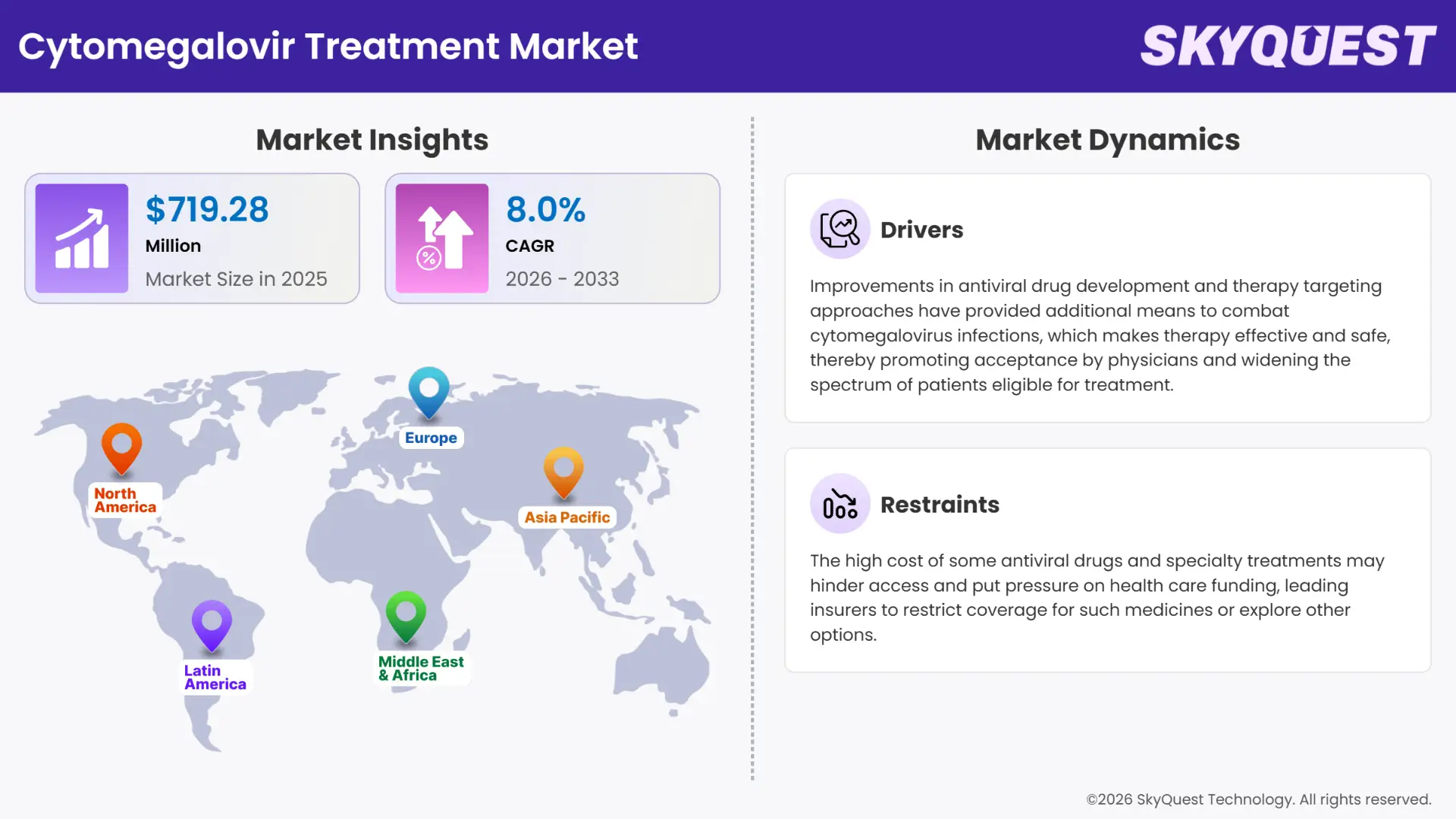
Global Cytomegalovir Treatment Market size was valued at USD 666.0 Million in 2024 and is poised to grow from USD 719.28 Million in 2025 to USD 1331.34 Million by 2033, growing at a CAGR of 8.0% during the forecast period (2026-2033).
Key Takeaways: Market Trends & Insights
Growing prevalence of immunocompromised conditions, increasing number of organ and stem cell transplants, rising incidence of congenital infections, advancements in antiviral therapies, and emphasis on preventive healthcare are driving demand for cytomegalovirus (CMV) treatment.
Growing use of prophylaxis and preventive approaches facilitated by the use of PCR testing is helping in the early diagnosis and intervention of diseases, which ultimately leads to lower disease burden and shorter stays in hospitals. In addition, regulatory clearances, guidelines, investment in innovative antiviral drugs and vaccines are contributing to high demand for Cytomegalovir treatment. Expanding population of vulnerable patients, including transplant recipients, neonates, and immunocompromised individuals is also expected to boost the adoption of Cytomegalovir treatment on a global level. Growing awareness regarding infectious disease management among healthcare providers around the world coupled with increasing focus on early diagnosis and preventive care is expected to primarily drive cytomegalovirus treatment market growth.
On the contrary, high costs of advanced antiviral therapies, drug resistance concerns, limited access to early diagnostics in developing regions, and potential side effects associated with long-term antiviral use are anticipated to slow down cytomegalovirus treatment market penetration in the long run.
How is AI Driving Personalized Therapies in the Cytomegalovirus Treatment Market?
The use of AI technology is leading to greater personalized medicine in the CMV market by integrating viral sequencing, immune response, and clinical data in order to personalize medical interventions for each individual patient. Machine learning algorithms will be used to detect immune signatures indicating the potential reactivation of CMV in patients, thus helping doctors decide whether the patient needs preventive treatments or immune therapy. This innovation in the field is making it easier to develop new drugs like cell-based medicines and antibodies.
In October 2025, Moderna halted its congenital CMV vaccine program after a Phase 3 failure. This has increased industry focus on AI-driven diagnostics and personalized immunotherapies, helping improve treatment decisions and accelerate future development.
To get more insights on this market click here to Request a Free Sample Report
Global cytomegalovir treatment market is segmented by drug class, patient profile, route of administration, end-user, and region. Based on drug class, the market is segmented into DNA polymerase inhibitors, terminase inhibitors, antisense RNA Drugs, and immunoglobulins. Based on patient profile, the market is segmented into organ/bone marrow transplant recipients, HIV/AIDS patients, and congenital CMV. Based on route of administration, the market is segmented into oral tablets/suspensions, Intravenous (IV) infusion, and intravitreal (Eye) injections. Based on end-user, the market is segmented into specialized transplant centers, infectious disease clinics, and hospital pharmacies. Based on region, the market is segmented into North America, Europe, Asia Pacific, Latin America, and Middle East & Africa.
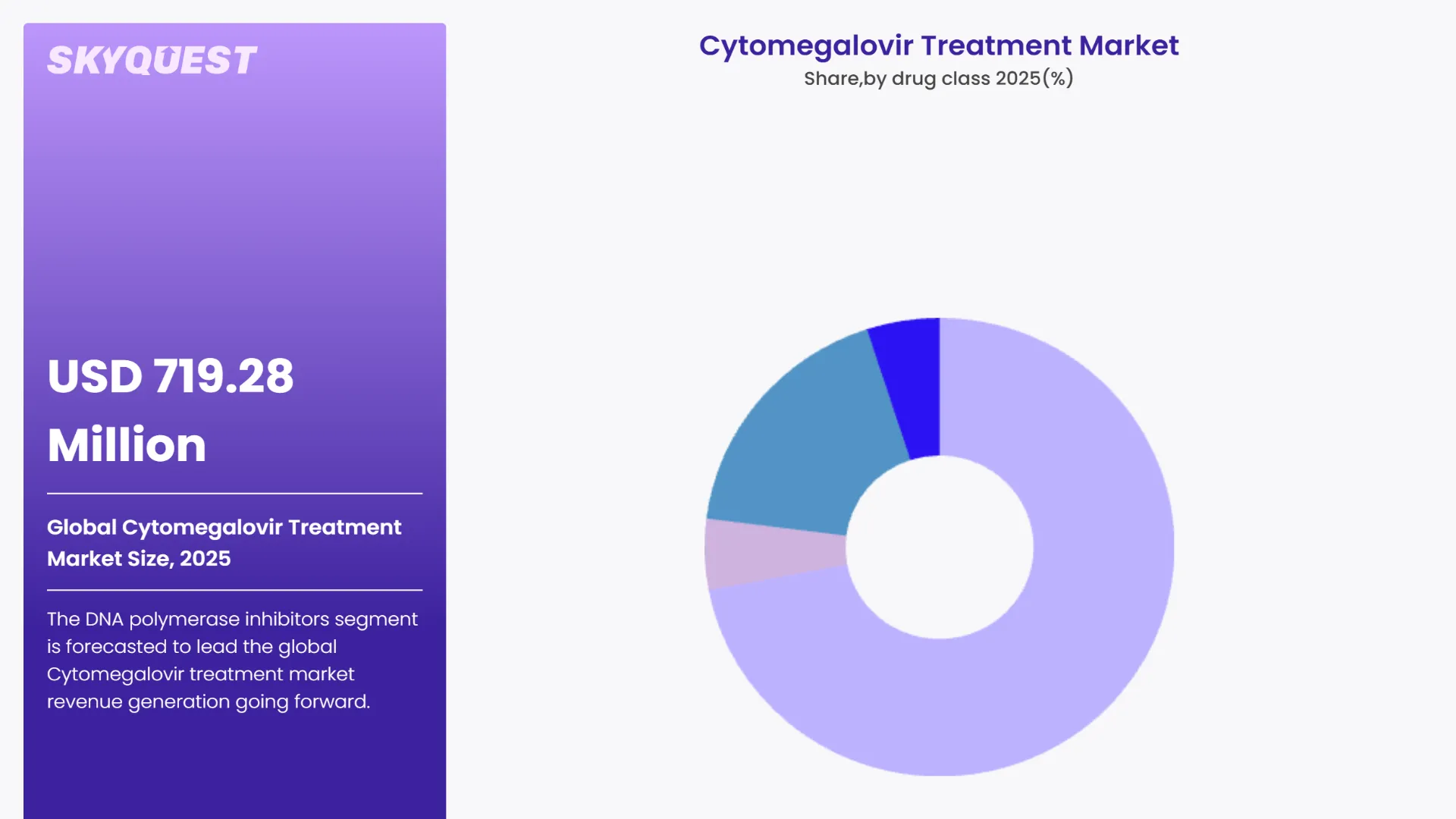
The DNA polymerase inhibitors segment is forecasted to lead the global Cytomegalovir treatment market revenue generation going forward. These agents provide the established backbone of cytomegalovirus management across risk populations, with long clinical experience and broad therapeutic applicability. Due to their efficacy and various delivery methods, doctors often use them initially as both a form of treatment and as prophylactics. Their familiarity to prescribing physicians and coverage by the insurance companies contributes to their sustained popularity.
However, Terminase Inhibitors are emerging as the fastest-growing segment as per this Cytomegalovir treatment market forecast. Novel mechanism and activity against resistant strains helps boost the adoption of terminase inhibitors in Cytomegalovir treatment. Approvals and ongoing trials are speeding adoption, bringing in money, and increasing applications, thus providing for combinations and other possibilities that will fuel growth and create opportunities going forward.
The organ/bone marrow transplant recipients segment is slated to account for the highest global Cytomegalovir treatment market share in the future. This population faces the highest risk of clinically significant cytomegalovirus events and requires intensive prophylaxis, monitoring, and therapeutic intervention thereby cementing its dominance. Due to their complicated immune suppression profiles, it becomes imperative that antivirals be used reliably and in proper dosages, hence the focus on them in guidelines and resource allocation. The continuous need for these patients in practice dictates the focus of drug developers and payers.
Nonetheless, Congenital CMV is recording the most significant growth traction due to an upsurge in screening tests coupled with increasing awareness among clinicians leading to increased demand for early detection and management. Progress made in the field of neonatal diagnostics, coupled with the need for early intervention, has spurred interest in pediatric treatments, opening up new avenues in the market.
To get detailed segments analysis, Request a Free Sample Report
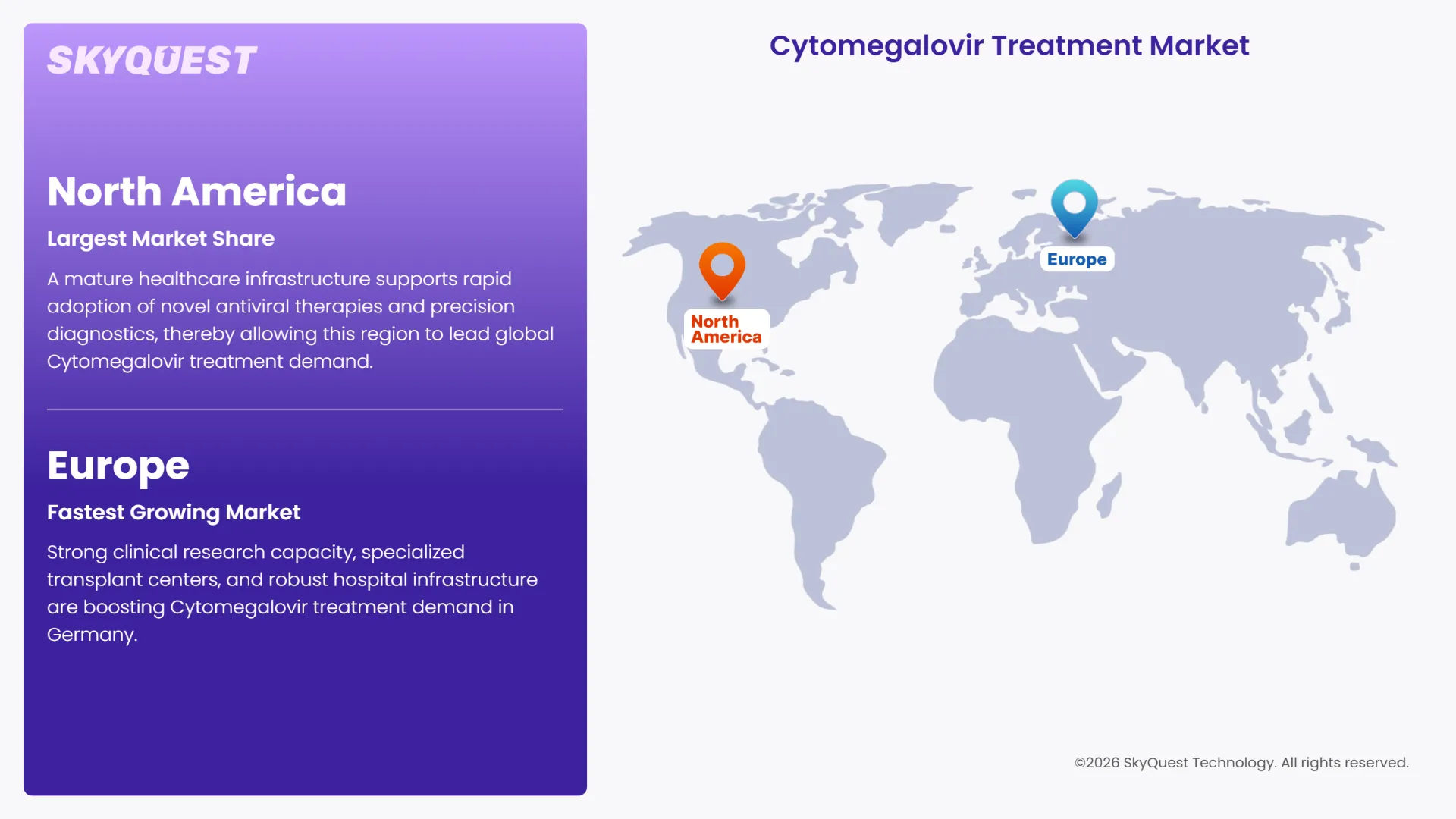
A mature healthcare infrastructure supports rapid adoption of novel antiviral therapies and precision diagnostics, thereby allowing this region to lead global Cytomegalovir treatment demand. Close collaboration between regulatory agencies and third-party payers is also helping cement the dominance of North America. The abundance of highly skilled healthcare professionals that are well-organized to treat solid organ transplants and patients with compromised immune systems is also promoting demand for novel Cytomegalovir treatment. The presence of advanced laboratories to rapidly and accurately diagnose these conditions is also helping create a new business scope. Additionally, having efficient manufacturing and logistical capabilities ensures continuous availability of treatments. Robust funding opportunities for research, and rising collaborative relationships between academic institutions, the pharma/biotech industry and healthcare systems facilitate rapid transfer of research findings into commercially available products.
Presence of leading biopharmaceutical companies, academic medical centers, and specialist clinics are helping boost Cytomegalovir treatment demand in the United States. Efficient insurance reimbursement procedures and commercial knowledge allow for wide market penetration, and effective partnerships between industry, academic, and medical communities ensure quick adoption of innovations to standard medical practices. Sophisticated diagnosis methods and well-trained transplant and immunocompromised patient programs facilitate early detection and treatment.
Integrated healthcare delivery, strong public health engagement, and growing clinical expertise are supporting steady Cytomegalovir treatment adoption in Canada. Reimbursement policies and care pathways within each province impact access patterns, while relationships between hospitals, research institutions, and industries promote local capabilities in managing diagnoses and treatments. Diagnostics and scientific collaboration on a national level help to build evidence for adopting targeted medicines.
Robust scientific capability, coordinated healthcare systems, and increasing prioritization of antiviral therapy are creating new opportunities in Europe. Regulatory agencies have also been more progressive in establishing rapid dialogues with all stakeholders and have made efforts at both national and regional levels to provide targeted funding opportunities to reduce complexity in regulatory pathways for product approval. Increasing levels of diagnostic sophistication, specialized testing centres and the evolution of reimbursement systems in several countries have contributed to accelerating adoption curves for products. Furthermore, organizational partnerships across borders between global developers and organizations within the European Union are accelerating commercialization of novel Cytomegalovir treatment and therapies. Mutual partnerships between industry, major hospitals, and academic institutions enabling collaborative efforts to create multicenter clinical studies and generate real-world evidence have also enabled increased confidence among healthcare professionals for entering new global markets.
Strong clinical research capacity, specialized transplant centers, and robust hospital infrastructure are boosting Cytomegalovir treatment demand in Germany. Cooperation among educational institutions, physicians, and industry results in the creation of full-fledged evidence and influence guidelines. Reimbursement pathways and HTA processes, in addition to a quality diagnostics and specialty care approach, lead to continuous demand and European landscape position leadership.
Changing reimbursement approaches and strong clinical trial participation are boosting the demand for novel Cytomegalovir treatment across the United Kingdom. Diagnostic innovations and professional training facilitate adoption, creating a favorable environment for antiviral drugs. Expert medical facilities and academic institutions play a key role in promoting changes in clinical practice and generating evidence, and collaboration between governmental and non-governmental organizations promotes patient access and physician awareness.
Rising clinical focus on antiviral management within specialized hospital networks and transplant centers shapes Cytomegalovir treatment adoption in France. Government healthcare organizations and medical societies have begun incorporating diagnosis and treatment plans, in addition to payer involvement. Collaborative research conducted by academic organizations and corporate partners helps establish proof of concept and adopt innovative technologies.
Strategic investments in clinical research, regulatory modernization, and expanding clinical infrastructure creates new opportunities for Cytomegalovir treatment companies in this region. Local pharmaceutical and biotechnology companies are furthering their research and development through partnerships with many of their international counterparts, which is significantly advancing the transfer of technology into local markets. Regulatory authorities in the region have become increasingly receptive to collaborative reviews, adaptive pathways, and accelerated market access for drug products. Growing physician expertise, focused training programs, and concentration of transplant and immunocompromised care centers all support increased demand by providing an environment conducive to the adoption of advanced technologies in the practice of medicine. Local manufacturing capability and real-world data initiatives will further reinforce the security and reliability of the entire supply chain while providing specific insights into identifying the appropriate clinical strategies for very diverse patient populations across Asia Pacific.
Robust domestic research capabilities, sophisticated diagnostics, and high standards within specialist hospital systems shape Cytomegalovir treatment demand in Japan. A high level of specialization in transplantology and treatment of immunocompromised patients, along with structured clinician networks also creates new business scope. Partnerships among biotechnology companies from the country and abroad contribute to innovation exchange and clinical trials, while regulations enable review and research to be conducted.
Vibrant biotech activity, active clinical research, and modern diagnostics adoption are helping boost the demand for Cytomegalovir treatment across South Korea. Specialized centers of excellence for transplantation and immune-compromised patient care, along with training clinicians and regulation, encourage evidence-based adoption. Collaborations between national developers and international players facilitate local production and quicker adoption of innovative treatment methods.
To know more about the market opportunities by region and country, click here to
Buy The Complete Report
Advancements In Antiviral Therapies
Improvements in antiviral drug development and therapy targeting approaches have provided additional means to combat cytomegalovirus infections, which makes therapy effective and safe, thereby promoting acceptance by physicians and widening the spectrum of patients eligible for treatment. Knowledge of the virus has generated new ways of action that have resulted in more acceptable treatment regimes, increasing the degree of confidence among medical professionals and healthcare systems. Investments in improved formulations and delivery methods increase the value of medicines.
Increasing Diagnostic Screening Programs
With an increased focus on diagnostic screening that is systematic and focused on targeting cytomegalovirus infections, there is an improvement in the ability to detect the virus early and provide treatment, which will be important in improving patient outcomes and showing the significance of the availability of therapies. Increased screening will result in a greater number of patients who could receive benefits from existing and emerging antiviral treatments, resulting in stronger demand. This will influence healthcare systems to consider treatment options.
High Treatment Costs
The high cost of some antiviral drugs and specialty treatments may hinder access and put pressure on health care funding, leading insurers to restrict coverage for such medicines or explore other options. The high price of medicines may make it less likely to be used in areas with limited resources or cause challenges when trying to include it on drug formularies. Cost considerations may make it less likely that doctors will prescribe such medicines when the cost falls on the patient.
Safety and Tolerability Concerns
The safety concerns and side effects linked with certain treatments for cytomegalovirus can make doctors reluctant to prescribe such drugs and hinder their compliance by patients, thus hindering the market’s expansion. There are fears about the toxicity that may be experienced in the long run, drug interaction issues, and the need for surveillance during treatment. Regulatory authorities’ and prescribers’ increased level of caution could lead to delays in the introduction of innovative products and hinder the global Cytomegalovir treatment market outlook.
Request Free Customization of this report to help us to meet your business objectives.
Competitive landscape is defined by platform-driven rivalry as vaccine and cell therapy innovators compete with established pharma for CMV prophylactics and transplant antivirals. Strategic M&A and licensing moves such as Gilead’s acquisition of Immunomedics and Merck’s Prevymis positioning, plus manufacturing and development partnerships exemplified by Moderna and Lonza and active mRNA clinical programs, are accelerating deal activity.
SkyQuest’s ABIRAW (Advanced Business Intelligence, Research & Analysis Wing) is our Business Information Services team that Collects, Collates, Correlates, and Analyses the Data collected by means of Primary Exploratory Research backed by robust Secondary Desk research.
As per SkyQuest analysis, surge in prevalence of cytomegalovirus infections and increasing population of immunocompromised patients are anticipated to drive the demand for cytomegalovirus treatment going forward. However, high costs of advanced antiviral therapies, drug resistance concerns, and limited access to early diagnostics are slated to slow down the adoption of cytomegalovirus treatment in the future. North America is slated to spearhead the demand for cytomegalovirus treatment owing to strong healthcare infrastructure, high adoption of advanced diagnostic technologies, and presence of leading pharmaceutical companies. Advancements in AI-driven personalized therapies, increasing adoption of prophylactic treatment strategies, and development of novel antivirals and immunotherapies are anticipated to be key trends driving the cytomegalovirus treatment sector across the forecast period.
| Report Metric | Details |
|---|---|
| Market size value in 2024 | USD 666.0 Million |
| Market size value in 2033 | USD 1331.34 Million |
| Growth Rate | 8.0% |
| Base year | 2024 |
| Forecast period | 2026-2033 |
| Forecast Unit (Value) | USD Million |
| Segments covered |
|
| Regions covered | North America (US, Canada), Europe (Germany, France, United Kingdom, Italy, Spain, Rest of Europe), Asia Pacific (China, India, Japan, Rest of Asia-Pacific), Latin America (Brazil, Rest of Latin America), Middle East & Africa (South Africa, GCC Countries, Rest of MEA) |
| Companies covered |
|
| Customization scope | Free report customization with purchase. Customization includes:-
|
To get a free trial access to our platform which is a one stop solution for all your data requirements for quicker decision making. This platform allows you to compare markets, competitors who are prominent in the market, and mega trends that are influencing the dynamics in the market. Also, get access to detailed SkyQuest exclusive matrix.
Table Of Content
Executive Summary
Market overview
Parent Market Analysis
Market overview
Market size
KEY MARKET INSIGHTS
COVID IMPACT
MARKET DYNAMICS & OUTLOOK
Market Size by Region
KEY COMPANY PROFILES
Methodology
For the Cytomegalovir Treatment Market, our research methodology involved a mixture of primary and secondary data sources. Key steps involved in the research process are listed below:
1. Information Procurement: This stage involved the procurement of Market data or related information via primary and secondary sources. The various secondary sources used included various company websites, annual reports, trade databases, and paid databases such as Hoover's, Bloomberg Business, Factiva, and Avention. Our team did 45 primary interactions Globally which included several stakeholders such as manufacturers, customers, key opinion leaders, etc. Overall, information procurement was one of the most extensive stages in our research process.
2. Information Analysis: This step involved triangulation of data through bottom-up and top-down approaches to estimate and validate the total size and future estimate of the Cytomegalovir Treatment Market.
3. Report Formulation: The final step entailed the placement of data points in appropriate Market spaces in an attempt to deduce viable conclusions.
4. Validation & Publishing: Validation is the most important step in the process. Validation & re-validation via an intricately designed process helped us finalize data points to be used for final calculations. The final Market estimates and forecasts were then aligned and sent to our panel of industry experts for validation of data. Once the validation was done the report was sent to our Quality Assurance team to ensure adherence to style guides, consistency & design.
Analyst Support
Customization Options
With the given market data, our dedicated team of analysts can offer you the following customization options are available for the Cytomegalovir Treatment Market:
Product Analysis: Product matrix, which offers a detailed comparison of the product portfolio of companies.
Regional Analysis: Further analysis of the Cytomegalovir Treatment Market for additional countries.
Competitive Analysis: Detailed analysis and profiling of additional Market players & comparative analysis of competitive products.
Go to Market Strategy: Find the high-growth channels to invest your marketing efforts and increase your customer base.
Innovation Mapping: Identify racial solutions and innovation, connected to deep ecosystems of innovators, start-ups, academics, and strategic partners.
Category Intelligence: Customized intelligence that is relevant to their supply Markets will enable them to make smarter sourcing decisions and improve their category management.
Public Company Transcript Analysis: To improve the investment performance by generating new alpha and making better-informed decisions.
Social Media Listening: To analyze the conversations and trends happening not just around your brand, but around your industry as a whole, and use those insights to make better Marketing decisions.
REQUEST FOR SAMPLE
 REQUEST FREE CUSTOMIZATION
Global Cytomegalovirtreatment Market size was valued at USD 666.0 Million in 2024 and is poised to grow from USD 719.28 Million in 2025 to USD 1331.34 Million by 2033, growing at a CAGR of 8.0% during the forecast period (2026-2033).
Competitive landscape is defined by platform-driven rivalry as vaccine and cell therapy innovators compete with established pharma for CMV prophylactics and transplant antivirals; strategic M&A and licensing moves such as Gilead’s acquisition of Immunomedics and Merck’s Prevymis positioning, plus manufacturing and development partnerships exemplified by Moderna and Lonza and active mRNA clinical programs, are accelerating deal activity. 'F. Hoffmann-La Roche', 'Merck & Co. (MSD)', 'Takeda Pharmaceutical', 'Gilead Sciences', 'AstraZeneca', 'Pfizer Inc.', 'GlaxoSmithKline', 'Teva Pharmaceutical', 'Fresenius Kabi', 'Ajanta Pharma', 'Cipla Limited', 'Emcure Pharmaceuticals', 'Exela Pharma Sciences', 'Lupin Limited', 'Bausch Health', 'ViroPharma', 'Aetos Pharma', 'Biocon', 'Sun Pharma', 'Hetero Drugs'
Advancements in antiviral drug development and targeted therapies have expanded treatment options for cytomegalovirus, improving efficacy and safety profiles which encourages clinician adoption and expands patient eligibility for therapy. Enhanced understanding of viral biology has led to novel mechanisms of action and more tolerable regimens, fostering confidence among prescribers and healthcare systems. Pharmaceutical investment in formulation and delivery improvements increases perceived value and accessibility. Together, these developments support broader uptake of therapies, stimulate research collaborations, and create a favorable environment for market expansion.
Innovative Antiviral Modalities: The field is shifting toward novel therapeutic platforms that prioritize targeted viral suppression and durable control. Advances in small molecules, long acting formulations and immunomodulatory approaches are enabling more personalized regimens that reduce treatment burden and better address immunocompromised populations. Strategic partnerships between biotech firms and academic centers accelerate translational research, while pipeline diversification emphasizes combination strategies and mechanism driven designs. These trends foster differentiated product profiles that aim to improve adherence, simplify management pathways and expand use across clinical settings.
North America Dominate the Global CytomegalovirTreatment Market.
DNA Polymerase Inhibitors currently account for the largest market share due to their established efficacy and widespread use in treating CMV infections among high-risk patient populations.
Terminase Inhibitors are anticipated to witness the fastest growth owing to their improved safety profiles, targeted mechanisms of action, and increasing adoption in transplant-related CMV management.
AI is supporting the development of personalized CMV therapies by analyzing viral sequencing, immune response patterns, and clinical data to predict disease reactivation and optimize treatment decisions.


Want to customize this report? This report can be personalized according to your needs. Our analysts and industry experts will work directly with you to understand your requirements and provide you with customized data in a short amount of time. We offer $1000 worth of FREE customization at the time of purchase.
Feedback From Our Clients


 USA (+1) 351-333-4748

