

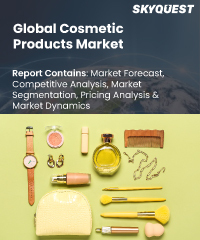
Cosmetic Products Market
Report ID: SQMIG30L2224
Skyquest Technology's expert advisors have carried out comprehensive research and identified these companies as industry leaders in the Cosmetic Products Market. This Analysis is based on comprehensive primary and secondary research on the corporate strategies, financial and operational performance, product portfolio, market share and brand analysis of all the leading Cosmetic Products industry players.


The cosmetic products industry has been growing rapidly, especially among millennials and Gen Z, who are becoming more conscious about their looks as well as self-care. New styles and skin-care therapies that can seemingly be experimental or tested are being presented by various social media channels such as YouTube, Instagram, and TikTok. Their advertisement has increased worldwide demand for premium, inclusive, and personalized beauty products. One of the most prominent trends is about to change the market; the consumers are now increasingly on the lookout for freshly launched products containing natural, organic, and responsibly sourced ingredients. The future of beauty is changing, and so too is the trust that global brands have put in their customers with the advancement of cosmetic science and the adoption of ethics in production along with eco-friendly packaging. This page details some of the more important factors and trends that impact the global cosmetic products market.
According to SkyQuest Technology “Cosmetic Products Market By Product (Skincare Products, Haircare Products, Color Cosmetics, and Fragrances & Deodorants) By Category (Conventional, Natural/Organic, and Vegan), By Distribution Channel, By Region - Industry Forecast 2025-2032,” the vegan segment is growing very fast in the global cosmetics market. This is due to the increasing public awareness of ethical, environmental, and health concerns.
|
Company |
Est. Year |
Headquarters |
Revenue |
Key Services |
|
L’Oréal S.A. |
1909 |
Clichy, France |
USD 45 billion (2024) |
Global leader in beauty: skin-care, hair-care, makeup & fragrance. Strong research & innovation base (21 R&I centres). Extensive e-commerce & mass-market presence. |
|
Unilever PLC |
1929 (via merger), brand roots earlier |
London, UK / Rotterdam, NL |
Total Turnover (USD 66.3 Billion in 2024) Beauty & Wellness Segment (USD 14.4 Billion) |
Broad FMCG player: beauty & personal care brands (Dove, Sunsilk, Rexona). Strong in hair & skin-care mass market. Invests in premiumisation & sustainability. |
|
The Estee Lauder Companies Inc. |
1946
|
New York, USA |
USD 15.6–15.9 billion (FY ended June 2024) |
Prestige beauty specialist: skincare & makeup (Estée Lauder, MAC, La Mer) and fragrance/haircare. Global travel-retail and multi-channel distribution. |
|
Beiersdorf AG |
1882 |
Hamburg, Germany |
Approximate USD 10.79 Billion (2024) |
Skin-care specialist: NIVEA, Eucerin, La Prairie. Emphasis on dermatological and mass-skin brands. Global reach with R&D focus. |
|
Shiseido Company, Limited |
1872 |
Tokyo, Japan |
NA |
Japanese heritage beauty house: skincare, makeup, fragrance, hair-care. Strong in Asia-Pacific premium market and innovation in beauty tech. |
|
Henkel AG |
1876 |
Düsseldorf, Germany |
USD 11.5 billion (beauty/life-care segment) (2024) |
Consumer brands and adhesive/industrial segments; beauty care division covers hair-care, styling, colouring (Schwarzkopf, Dial) with global mass-market presence. |
|
LVMH Moet Hennessy Louis Vuitton SE (Perfumes & Cosmetics) |
1987 (group), beauty segment earlier |
Paris, France |
USD 8.3 billion beauty & cosmetics business (2024) |
Luxury beauty and fragrance: Dior, Givenchy, Guerlain. Premiumisation, travel-retail and global luxury distribution are core strengths. |
|
Procter & Gamble Co. (Beauty Segment) |
1837 |
Cincinnati, USA |
NA |
Broad consumer goods company: personal care, grooming, beauty (Olay, Gillette, Pantene). Strong global marketing and category leadership. |
|
Groupe L’Occitane International SA |
2000 |
Luxembourg City, Luxembourg |
USD 27.2 Billion (2024) |
Specialty beauty & wellness house: natural and fragrance-based brands (L’Occitane, Elemis, Erborian). Focus on premium natural cosmetics and global expansion. |
|
Amorepacific Group |
1945 |
Seoul, South Korea |
USD 2.9 Billion (2024) |
South-Korean beauty powerhouse: skincare & cosmetics brands (Sulwhasoo, Laneige, Innisfree) with strong Asian presence & K-beauty export growth. |
As L’Oreal is the largest cosmetics company in the world, it never stops bringing life to the innovative world of makeup, skin care, hair care, and perfumes. In 2024, for the sake of its over €1.3 billion investment in research and development that has gone to biotechnology, AI-powered personalization, and green science, it is said to have shifted towards beauty more digitally through having a robust digital ecosystem, integrated international e-commerce platforms, and sustainability programs such as "L'Oréal for the Future."
Due to clever branding and new natural ingredients, the Beauty and Well-being section of Unilever continues its growth. The initiative borrows prominently known brands like Dove, Sunsilk, and Axe to make its products greener in all aspects-in reducing plastic waste or easier to decompose. The business is now also more attractive to the Gen Z audience through its digital-first marketing strategy, through massive investments towards rapidly growing brands such as Paula's Choice and Liquid I.V. In 2024, Unilever's thrust on premiumization and ethical sourcing amplified its stakes in the international beauty market.
High-end beauty is clearly dominated by Estée Lauder as it combines classic history with modern-day skin science. The company has various brands under its wings including MAC, Clinique, La Mer, and The Ordinary, catering to a multitude of consumer needs. The company invested in AI-powered beauty diagnostics for 2024 and advanced its digital and travel retail channels. A rapidly changing mindset about consumers underpins this robust sustainability strategy, thereby strong clean formulations and refillable packaging. Certainly, Estee Lauder has been at the forefront of an excellent company in research and development as well as first-rate marketing efforts in the skincare and global makeup innovation industry.
NIVEA, Eucerin, and La Prairie are the well-known brands that belong to Beiersdorf, a well-established player in dermatological skincare. It is efficient owing to its scientific foundation and confidence in skin treatment. During the record-setting salesof Beiersdorf in 2024, it became even more a pioneer in scientific skin care with the opening of its marketing into emerging regions, along with new, eco-friendly innovations associated with its Care Beyond Skin strategy. Beiersdorf got even more into the lead as a pioneer of scientific skincare through investments in digital skin care diagnostics and biotechnology-based formulations.
Though eastern ideas bring together the concepts of beauty and western technology, Shiseido makes sumptuous skin care, color cosmetics, and fragrances. This made use of AI skin analysis and customized beauty platforms for participation in 2024. Brands such as Shiseido, NARS, and Clé de Peau Beauté showed continuous growth in Asia-Pacific and the United States markets. In making it a leader in advanced holistic beauty science, Shiseido combines its innovations in understanding the skin microbiome with its environmentally conscious packaging.
With brands like Schwarzkopf, Syoss, and Dial in its kitty, Henkel enjoys unparalleled reputation in the beauty care division for owning the finest hair care products in the universe. The themes were sustainability, digital revolution, and innovative concepts for professional salons. Eco-friendly packaging was introduced by the company paired with AI-based hair diagnostics to fulfill the needs of both the experts and the consumers. Science-based formulas give Henkel a strong international presence, allowing it to play a unique role in both retail and professional hair care segments. This enhances the reputation as a pioneer in value-driven beauty innovation.
Luxury beauty perfection defines the Perfumes & Cosmetics branch of LVMH through its brands such as Dior, Guerlain, and Givenchy Beauty. In 2024, the company has invested in top-grade recyclable packaging and sustainable sourcing to further its strategy of decreasing carbon emissions related to its operations. The unique quality of LVMH is his ability to combine ultra-modern formulation science with high fashion. It is through strong advertising that their prestige skincare and fragrance brands shine, setting the gold standard for aspirational beauty, simultaneously enhancing the appeal of the premium products in the fast-growing global luxury markets.
The best-selling brands in beauty and grooming are Olay, Pantene, and Head & Shoulders from Procter & Gamble. In 2024, P&G, through the dermatology studies and skin care customization with AI support, further promoted its performance-tier beauty projects. New product undertakings conform to the company's sustainability goals, which include minimizing plastic and water consumption. P&G enjoys equity in its global brand and continues to relate daily beauty care innovation and its affordability and effectiveness.
L'Occitane gets its influences from the Provençal traditions; its beauty products are entirely natural and timeless. The company's spa portfolio and skincare business adopted further prestigious names, such as Elemis and Erborian in 2024, into its premium category of wellness. It has become a much more eco-luxury brand because of the commitment to biodiversity; fair-trade sourcing; and refillable packaging. It does maintain a certain authenticity of handcrafted with perfect digital thinking and engagement to keep attracting its consumers in both developed and developing markets.
Amorepacific has played a big role in the global rise of K-beauty with its mix of traditional beauty and advanced research in skincare. Additionally, in 2024, as Sulwhasoo gained market access to North America and Europe and expanded its reach via partnerships there, it gained a lot of international recognition. The company leads in innovative concepts towards their cushion foundations, hydration technology, and fermented components. Its eco-friendly packaging coupled with digital-first marketing supports its environmentally friendly growth. Amorepacific is also a flagbearer for contemporary beauty, mixing traditional and innovative concepts from different parts of the globe.
Global cosmetic brands continue to flourish on the embers of innovation, changing trends of digital tools, and rising interests in natural and ecological beauty products. To keep up with the latest-changing consumer demands, big corporations like L'Oréal, Estée Lauder, and Shiseido drive themselves towards biotechnology, AI, and other eco-friendly products. On the flip side, new brands focus on accessibility for all, offering personalized experiences and developing sustainable products. With more people buying products online, science-on-the-up, and Gen Z and millennials trending towards more products, the cosmetics business is expected to keep growing.
REQUEST FOR SAMPLE
 REQUEST FREE CUSTOMIZATION
Want to customize this report? This report can be personalized according to your needs. Our analysts and industry experts will work directly with you to understand your requirements and provide you with customized data in a short amount of time. We offer $1000 worth of FREE customization at the time of purchase.
Feedback From Our Clients
Report ID: SQMIG30L2224
sales@skyquestt.com
USA +1 351-333-4748
 USA (+1) 351-333-4748

