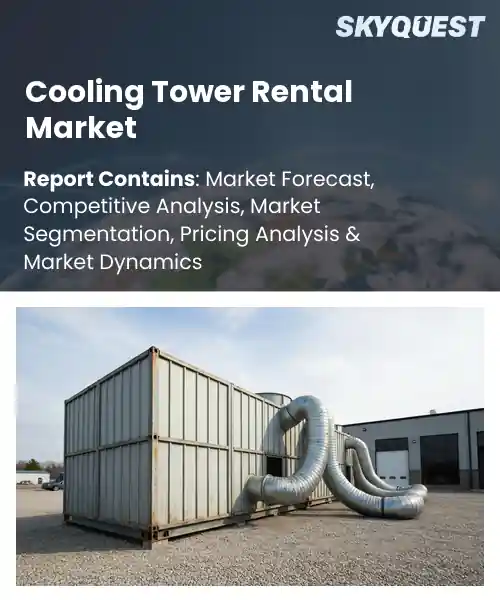
Cooling Tower Rental Market
Report ID: SQMIG20D2548
Report ID: SQMIG20D2548
[email protected]
USA +1 351-333-4748
Report ID:
SQMIG20D2548 |
Region:
Global |
Published Date: February, 2026
Pages:
157
|Tables:
203
|Figures:
80


Global Cooling Tower Rental Market size was valued at USD 1.2 Billion in 2024 and is poised to grow from USD 1.27 Billion in 2025 to USD 2.03 Billion by 2033, growing at a CAGR of 6.0% during the forecast period (2026-2033).
Rising need for uninterrupted industrial operations, increasing frequency of scheduled maintenance and unplanned outages, and growing demand from power generation, petrochemical, and data center industries are anticipated to drive the demand for cooling tower rental in the future.
The rise in environmental regulations and increasing occurrence of heatwaves are also accelerating demand, as industries require compliant, low-drift, and water-efficient cooling solutions during retrofits and upgrades. Additionally, expanding data center infrastructure and municipal plant operations facing sudden load surges are driving reliance on mobile cooling systems to ensure uninterrupted service. Growing investments by rental companies in remote monitoring, modular systems, and long-term leasing models are further expected to support cooling tower rental adoption over the coming years. High industrial emphasis on minimizing downtime which can result in significant financial losses and regulatory penalties, is further boosting the adoption of rental cooling solutions. Growing need to bridge temporary cooling capacity gaps caused by maintenance shutdowns, emergency breakdowns, and seasonal peak loads is expected to primarily drive cooling tower rental market growth going forward.
On the contrary, high operational and rental costs, limited standardization, concerns regarding efficiency and scientific validation of performance, and risks of contamination or system failure are anticipated to slow down cooling tower rental market penetration through 2033 and beyond.
How is IoT Improving Efficiency of Cooling Tower Rental Solutions?
IoT technology plays an important role in changing the cooling tower rental industry by introducing various sensors, control systems, and cloud-based analytical services into the equipment. This helps to deliver various capabilities such as remote monitoring of the cooling tower, predictive maintenance, and control of the fans and pumps. Therefore, the industry is moving from a basic rental of the cooling tower to a data-based service, which helps the provider to utilize the fleet efficiently while minimizing any downtime.
In January 2025, Trane Technologies acquired BrainBox AI, which adds autonomous control of HVAC systems to their portfolio. This will enhance IoT-based optimization of temporary cooling solutions by allowing remote control of the system, scheduling of servicing, and efficiency of rented cooling assets, thus promoting growth.
Market snapshot - (2026-2033)
Global Market Size
USD 1.2 Billion
Largest Segment
Wet
Fastest Growth
Hybrid
Growth Rate
6.0% CAGR
To get more insights on this market click here to Request a Free Sample Report
Global cooling tower rental market is segmented by tower type, tower capacity, design type, cooling medium, rental duration, application, end-user industry, and region. Based on tower type, the market is segmented into wet, dry, and hybrid. Based on tower capacity, the market is segmented into up to 500 tons, 500-1000 tons, 1000-1500 tons, 1500-3000 tons, and above 3000 tons. based on design type, the market is segmented into mechanical draft and natural draft. Based on cooling medium, the market is segmented into water, air and refrigerant. based on rental duration, the market is segmented into short-term, mid-term and long-term. Based on application, the market is segmented into construction, HVAC, power generation, data centers, and others. Based on end-user industry, the market is segmented into oil and gas, chemical and petrochemical, pulp and paper, food and beverage, and others. Based on region, the market is segmented into North America, Europe, Asia Pacific, Latin America, and Middle East & Africa.
The wet segment is projected to lead the global cooling tower rental market revenue generation over the coming years. The ability of wet cooling towers to offer highly effective heat rejection with straightforward operational protocols helps this segment hold sway over others. The familiar technology simplifies commissioning needs and staff training, allowing rental providers to quickly mobilize units. Proven maintenance practices and access to treatment consumables minimize risks, which is why customers are selecting these units for fast and dependable temporary cooling in construction and industrial projects.
However, hybrid segment is slated to expand at a rapid pace as per this cooling tower rental industry analysis. Dual mode designs lower consumable usage while delivering adaptable thermal performance, appealing to renters facing tighter environmental constraints, which creates new business scope. The development in hybrid control and modular configuration facilitates service providers to provide flexible temporary solutions for sensitive applications, thus increasing the pace of rental demand.
The 500-1000 tons segment is estimated to hold the largest global cooling tower rental market share going forward. Midrange capacity units strike an optimal balance between transportability and sufficient cooling power for many temporary industrial requirements, which helps boost their adoption around the world. Their physical footprint is easier to manage, which in turn makes it easier to integrate with existing process connections. Predictable performance in typical HVAC, construction, and maintenance scenarios promotes standardization of investment in these capacities.
However, above 3000 tons, this segment is growing at the fastest rate due to increasing rental needs for large temporary cooling arrangements during large outages, plant turnarounds, and data center activations. In addition, advancements in transportable megacooling units and heavy logistics capabilities allow temporary solutions to be more viable compared to permanent expansion.
To get detailed segments analysis, Request a Free Sample Report
Presence of concentrated industrial capacity, extensive thermal generation infrastructure, and rapid urban and manufacturing expansion are supporting sustained cooling tower rental adoption in this region. Engineering capabilities in countries such as India, Japan, and China are strong enough to support the development of advanced materials and modular designs that improve reliability and significantly decrease downtime during plant turnarounds. Seasonal demand for cooling and the scale of major metro projects in the region are also boosting revenue generation in the long run. Additionally, the need for rental solutions as a flexible compliance tool due to the regulatory focus on safety and environmental management drives continued growth. The combination of a high density of equipment suppliers and service companies that provide complete rental, maintenance, and water treatment services has allowed many players in this market to have effective supply chains.
Presence of a mature industrial base and a culture of precision engineering that prioritizes reliability and lifecycle service supports cooling tower rental demand in Japan. Cooling tower rental companies in the country are noted for their technical support, maintenance practices, and close relationship with manufacturing and power industries. The rental requirement is driven by the need to provide deployable cooling solutions of high quality during planned maintenance outages or emergency situations. There is a focus on compact designs that meet strict industry standards.
Integration with heavy industries and advanced manufacturing sectors are governing the adoption of cooling tower rental solutions across South Korea. The rental operators focus on innovation in modular design, materials that resist corrosion, and on-site water treatment to meet performance and environmental demands. The market takes advantage of flexible logistics and a service mentality that focuses on limiting interruptions in production to accommodate large-scale plant maintenance as well as flexible capacity needs in ever-changing industrial workflows.
Presence of a diverse set of end use industries that increasingly favor rental models for capital flexibility and operational resilience are helping drive cooling tower rental demand. Large data centre clusters, petrochemical hubs, and commercial property portfolios generate a rapidly changing demand from the end-use industries for scalable cooling services that can easily accommodate maintenance schedules, emergency outages, and seasonal variations. Increased safety and environmental regulations have created an opportunity for an increased use of outsourced cooling management services across North America. Established rental markets that provide fully equipped rental solutions, including installation, water treatment, and remote monitoring further create new business scope for established as well incoming cooling tower rental providers through 2033.
Availability of a broad spectrum of industrial, commercial, and mission critical applications that focus on up-time and compliance drives the demand for cooling tower rentals in the United States. The rental service offers a total solution that includes deployment, preventive maintenance services, as well as water management services. The market is characterized by regional service capabilities that provide technical solutions to planned outages and unplanned failures, with a focus on efficiency, safety, and asset management.
Cooling tower rental demand in Canada is forecasted to be governed by energy, mining, and manufacturing sectors that require robust cooling solutions. Reliability and end-to-end service offerings are key to rental companies. The rental market also values partnerships that minimize disruption to their operations during maintenance windows and help meet contingency needs caused by seasonal and project-related fluctuations. This is in addition to a professional service environment and environmental stewardship.
Regulatory pressure, sustainability priorities, and technological innovation emphasis are shaping cooling tower rental adoption across the European region. High preference for energy-efficient equipment, advanced water treatment technologies, and flexible rental solutions that can easily be adapted to existing plant room retrofits are also creating new business scope. Service networks across borders and rental fleet expertise help to rapidly deploy across industrial clusters. Emphasis on lifecycle service contracts and asset performance management helps to build customer confidence. The relationship between manufacturers and service companies helps to deliver innovative solutions to meet stringent environmental and safety regulations. This helps to place greater emphasis on the role of rental in meeting the needs for cooling.
Industrial needs, as well as a regulatory environment that promotes energy efficiency and environmental protection, influence cooling tower rental service adoption in Germany. Cooling tower rental firms are dedicated to providing comprehensive solutions that incorporate the most advanced cooling technologies, water treatment solutions, and performance monitoring capabilities to address industrial needs for turnaround and modernization. Service firms in Germany are providing technologically advanced solutions along with effective maintenance and documentation.
Commercial real estate, process industries, and a growing need for flexible capacity during infrastructure upgrades are support consistent cooling tower rental demand in the United Kingdom. Service providers in this market focus on rapid response times, customer-centric service contracts, and providing solutions that focus on water conservation and emission reductions. The market benefits from an established network in logistics and professional service standards to support complex projects while aligning with corporate sustainability objectives.
Diversified industries, including chemical, food processing, and utilities, which require reliable cooling, are driving the adoption of cooling tower rental in France. The adoption of cooperative strategies, from suppliers to users, in providing efficient and environmentally friendly cooling towers is expected to increase through 2033. The focus of cooling tower rental companies in France is on packages, which include regulatory requirements, noise, and effluent restrictions, as well as business continuity.
To know more about the market opportunities by region and country, click here to
Buy The Complete Report
Rising Industrial Cooling Demand
The growing need to ensure temperature control in heavy industries fuels the rental market because heavy industries are seeking flexible and quick deployment methods to meet their needs without incurring capital costs in acquiring permanent equipment. The flexibility in capacity adjustment and maintenance provided by equipment rental can ensure operations during periods of increased demand or equipment shutdown. This flexibility in operations can ensure reliability in operations and reduce the possibility of equipment downtime, hence increasing the number of facilities that opt to rent equipment instead of buying it.
Rapid Deployment And Scalability
Rental cooling towers’ ease of deployment and scalability to meet short-term needs promotes market growth since they provide plants and projects with a low-friction option to meet needs when they change or need to add cooling capacity on short notice. This rental approach enables plants to meet needs without having to go through lengthy procurements to meet their cycles of operation, thereby providing a solution that removes some friction to meeting transient needs. This promotes growth since plants will be encouraged to use this solution.
Limited Availability Of Specialized Units
Limited supply of rental cooling towers, especially those of a high capacity, might act as a restraint on the market because of the complexity of industrial needs, which might require customized towers not readily available in the rental market. This might cause a preference for permanent procurement, thus limiting the rental market. The limited supply might cause a lack of quick response in case of urgent needs, which might also cause potential customers to shy away from renting, thus limiting the global cooling tower rental market outlook in the future.
Perceived Total Cost Disadvantage
The perception that renting cooling towers is more costly in the long term than owning one may impede market penetration since decision-makers may be more interested in the total economics of the investment and capital asset management strategies. This is because some decision-makers may still perceive that renting is more expensive for the project's operation; hence, they may be more interested in procuring one for their projects since they may be more interested in the depreciation of the asset and the rental costs involved.
Request Free Customization of this report to help us to meet your business objectives.
Competitive landscape in the global cooling tower rental market is shaped by incumbents deploying technology differentiation, consolidation via strategic acquisitions and partnerships, and newcomers offering Cooling as a Service and modular alternatives. For example, Aggreko secured a patent for containerized modular rental cooling towers, and market reports show CaaS and regional consolidation are shifting competition toward bundled service and logistics capabilities.
SkyQuest’s ABIRAW (Advanced Business Intelligence, Research & Analysis Wing) is our Business Information Services team that Collects, Collates, Correlates, and Analyses the Data collected by means of Primary Exploratory Research backed by robust Secondary Desk research.
As per SkyQuest analysis, increasing industrialization, rising need for uninterrupted cooling during maintenance and outages, and growing demand from power generation, petrochemical, and data center industries are anticipated to drive the demand for cooling tower rental going forward. However, high rental and operational costs, lack of standardization, and performance reliability concerns are slated to slow down the adoption of cooling tower rental services in the future. North America is slated to spearhead the demand for cooling tower rental owing to high emphasis on operational continuity and presence of a well-established industrial infrastructure. Development of IoT-enabled cooling solutions and integration of remote monitoring and predictive maintenance capabilities are anticipated to be key trends driving the cooling tower rental sector across the study period.
| Report Metric | Details |
|---|---|
| Market size value in 2024 | USD 1.2 Billion |
| Market size value in 2033 | USD 2.03 Billion |
| Growth Rate | 6.0% |
| Base year | 2024 |
| Forecast period | (2026-2033) |
| Forecast Unit (Value) | USD Billion |
| Segments covered |
|
| Regions covered | North America (US, Canada), Europe (Germany, France, United Kingdom, Italy, Spain, Rest of Europe), Asia Pacific (China, India, Japan, Rest of Asia-Pacific), Latin America (Brazil, Rest of Latin America), Middle East & Africa (South Africa, GCC Countries, Rest of MEA) |
| Companies covered |
|
| Customization scope | Free report customization with purchase. Customization includes:-
|
To get a free trial access to our platform which is a one stop solution for all your data requirements for quicker decision making. This platform allows you to compare markets, competitors who are prominent in the market, and mega trends that are influencing the dynamics in the market. Also, get access to detailed SkyQuest exclusive matrix.
Table Of Content
Executive Summary
Market overview
Parent Market Analysis
Market overview
Market size
KEY MARKET INSIGHTS
COVID IMPACT
MARKET DYNAMICS & OUTLOOK
Market Size by Region
KEY COMPANY PROFILES
Methodology
For the Cooling Tower Rental Market, our research methodology involved a mixture of primary and secondary data sources. Key steps involved in the research process are listed below:
1. Information Procurement: This stage involved the procurement of Market data or related information via primary and secondary sources. The various secondary sources used included various company websites, annual reports, trade databases, and paid databases such as Hoover's, Bloomberg Business, Factiva, and Avention. Our team did 45 primary interactions Globally which included several stakeholders such as manufacturers, customers, key opinion leaders, etc. Overall, information procurement was one of the most extensive stages in our research process.
2. Information Analysis: This step involved triangulation of data through bottom-up and top-down approaches to estimate and validate the total size and future estimate of the Cooling Tower Rental Market.
3. Report Formulation: The final step entailed the placement of data points in appropriate Market spaces in an attempt to deduce viable conclusions.
4. Validation & Publishing: Validation is the most important step in the process. Validation & re-validation via an intricately designed process helped us finalize data points to be used for final calculations. The final Market estimates and forecasts were then aligned and sent to our panel of industry experts for validation of data. Once the validation was done the report was sent to our Quality Assurance team to ensure adherence to style guides, consistency & design.
Analyst Support
Customization Options
With the given market data, our dedicated team of analysts can offer you the following customization options are available for the Cooling Tower Rental Market:
Product Analysis: Product matrix, which offers a detailed comparison of the product portfolio of companies.
Regional Analysis: Further analysis of the Cooling Tower Rental Market for additional countries.
Competitive Analysis: Detailed analysis and profiling of additional Market players & comparative analysis of competitive products.
Go to Market Strategy: Find the high-growth channels to invest your marketing efforts and increase your customer base.
Innovation Mapping: Identify racial solutions and innovation, connected to deep ecosystems of innovators, start-ups, academics, and strategic partners.
Category Intelligence: Customized intelligence that is relevant to their supply Markets will enable them to make smarter sourcing decisions and improve their category management.
Public Company Transcript Analysis: To improve the investment performance by generating new alpha and making better-informed decisions.
Social Media Listening: To analyze the conversations and trends happening not just around your brand, but around your industry as a whole, and use those insights to make better Marketing decisions.
REQUEST FOR SAMPLE
 REQUEST FREE CUSTOMIZATION
Global Cooling Tower Rental Market size was valued at USD 1.2 Billion in 2024 and is poised to grow from USD 1.27 Billion in 2025 to USD 2.03 Billion by 2033, growing at a CAGR of 6.0% during the forecast period (2026-2033).
Competitive landscape in the global cooling tower rental market is shaped by incumbents deploying technology differentiation, consolidation via strategic acquisitions and partnerships, and newcomers offering Cooling as a Service and modular alternatives. For example Aggreko secured a patent for containerized modular rental cooling towers, and market reports show CaaS and regional consolidation are shifting competition toward bundled service and logistics capabilities. 'Carrier Rental Systems', 'Johnson Controls', 'Aggreko', 'United Rentals', 'SPX Cooling Technologies Inc.', 'Midwest Cooling Tower Services', 'Baltimore Aircoil Company Inc.', 'Trane Technologies', 'Caterpillar Inc.', 'Ahern Rentals', 'Thermo King', 'Evapco Inc.', 'Cooltherm Group', 'Rapid Energy Temporary Cooling Ltd.', 'Mesa Equipment Rental', 'ICS Cool Energy', 'KTK Kuhlturm Karlsruhe GmbH', 'Cooling Tower Depot Inc.', 'Finning International', 'Jacir'
The increasing demand for effective temperature control in heavy industries drives rental uptake because operators seek flexible, rapid deployment solutions that avoid capital expenditure and long lead times for purchasing and installing permanent cooling systems. Rental providers can supply tailored capacity adjustments and maintenance services, enabling continuous operations during peak loads or shutdowns. This adaptability supports operational reliability and reduces downtime risk, encouraging more facilities to choose rental over purchase as a practical strategy for managing fluctuating cooling requirements and capital constraints.
Decarbonization Driving Demand: Companies prioritizing carbon reduction increasingly favor rental cooling towers as a flexible solution during plant upgrades and transitions to cleaner processes. Rental providers offer rapid deployment, expertise, and services that help clients meet evolving sustainability goals while limiting upfront investment. This model supports experimentation with efficient cooling strategies, capacity during refurbishments, and alignment with corporate environmental commitments. Strong collaboration between providers and clients and service based contracting enable predictable environmental outcomes and greater integration with broader decarbonization initiatives across operations.
Presence of concentrated industrial capacity, extensive thermal generation infrastructure, and rapid urban and manufacturing expansion are supporting sustained cooling tower rental adoption in the Asia pacific region.


Want to customize this report? This report can be personalized according to your needs. Our analysts and industry experts will work directly with you to understand your requirements and provide you with customized data in a short amount of time. We offer $1000 worth of FREE customization at the time of purchase.
Feedback From Our Clients


 USA (+1) 351-333-4748

