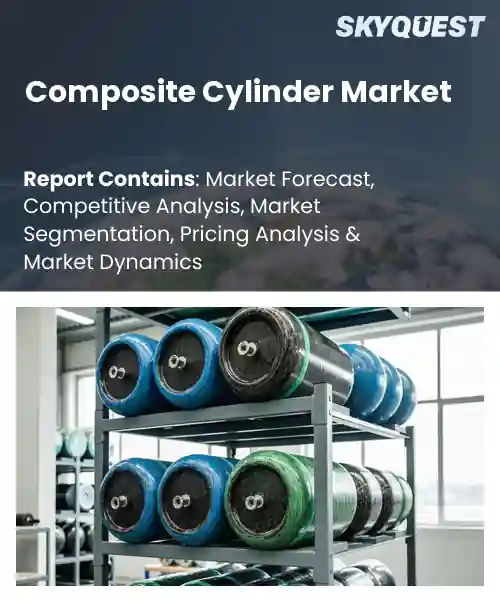
Composite Cylinder Market
Report ID: SQMIG15G2185
Report ID: SQMIG15G2185
[email protected]
USA +1 351-333-4748
Report ID:
SQMIG15G2185 |
Region:
Global |
Published Date: June, 2026
Pages:
157
|Tables:
174
|Figures:
79


Global Composite Cylinder Market size was valued at USD 984.7 Million in 2024 and is poised to grow from USD 1067.41 Million in 2025 to USD 2035.02 Million by 2033, growing at a CAGR of 8.4% during the forecast period (2026-2033).
The globalcomposite cylinder market comprises lightweight pressure vessels fabricated from carbon‑fiber or glass‑fiber reinforced polymers, primarily used for storing gases such as hydrogen, oxygen, and industrial gases. Its significance lies in delivering higher strength‑to‑weight ratios than steel cylinders, enabling fuel‑efficient transportation and reduced payload penalties in aerospace and automotive applications. The market emerged in the 1990s when the oil‑and‑gas sector sought corrosion‑resistant containers, and accelerated after 2010 as renewable‑energy projects demanded storage. For example, the adoption of composite hydrogen tanks in fuel‑cell vehicles has illustrated the technology’s ability to cut vehicle weight by 30 percent, spurring significant capital investment.
Building on the weight‑reduction advantages that have convinced automakers, the fastest‑growing driver for composite cylinders is the global rollout of hydrogen‑fuel infrastructure. Government decarbonization mandates raise demand for high‑pressure hydrogen storage, urging manufacturers to expand capacity and achieve cost reductions via scale. Europe’s recent launch of over 10,000 composite tanks for new refueling stations illustrates this surge, while Asian firms such as Hyundai embed the cylinders in fuel‑cell trucks to boost range and payload. Suppliers meeting emerging safety certifications secure lucrative contracts, and the resulting significant revenue fuels further development of advanced resin systems, reinforcing market momentum across the industry.
How is AI-driven automation influencing design and production efficiency in the composite cylinder market?
AI driven automation is reshaping how composite cylinders are designed and manufactured. Key aspects include generative design tools that explore fiber orientations, real time simulation that predicts stress performance, and robotic winding systems that place material with precision. The industry is moving from manual layup to data guided processes, cutting development time and material waste. Demand for lighter, safer cylinders is rising, prompting firms to adopt machine learning models that optimise layup patterns and predict equipment wear. Vision inspection systems now catch defects early, reducing scrap and improving consistency across production runs. Integrated AI scheduling aligns raw material delivery with production slots, further smoothing workflow and lowering inventory costs.
Hexagon Ragasco September 2023, launched an AI driven design platform that shortens prototype cycles and refines fiber layup, resulting in faster market entry and higher material efficiency. This innovation directly boosts production speed and supports the expanding demand for advanced composite cylinders through improved automation.
Market snapshot - (2026-2033)
Global Market Size
USD 984.7 Million
Largest Segment
Fastest Growth
Growth Rate
8.4% CAGR
To get more insights on this market click here to Request a Free Sample Report
Global composite cylinder market is segmented by product type, gas type, fiber type, end use industry, capacity, sales channel and region. Based on product type, no specific sub-segments were identified. Based on gas type, no specific sub-segments were identified. Based on fiber type, no specific sub-segments were identified. Based on end use industry, no specific sub-segments were identified. Based on capacity, no specific sub-segments were identified. Based on sales channel, no specific sub-segments were identified. Based on region, the market is segmented into North America, Europe, Asia Pacific, Latin America and Middle East & Africa.
Carbon fiber segment dominates because its strength to weight ratio meets the core demand for lightweight yet robust storage solutions. Manufacturers leverage carbon fiber’s fatigue resistance to extend cylinder service life, lowering maintenance costs and enhancing safety. The material’s compatibility with winding techniques streamlines production, making it the preferred choice for high performance applications. Its corrosion resistance also removes the need for metallic liners, supporting regulatory compliance and sustainability goals.
Meanwhile, aramid fiber segment is the most rapidly expanding area as designers seek enhanced impact resistance without sacrificing flexibility. Innovations in resin formulations enable aramid to bond more efficiently, opening new possibilities for protective and transport cylinders. This growth fuels broader market adoption by addressing niche safety requirements and prompting further material research.
Medical industry segment dominates because healthcare providers require cylinders that guarantee purity, reliability, and strict compliance with safety standards. Composite designs eliminate rust and reduce contamination risks, making them ideal for oxygen and anesthetic storage. The sector’s emphasis on patient safety drives continuous investment in lightweight, high pressure solutions that improve portability for emergency response and ambulatory use, reinforcing its leadership within the market.
On the other hand, aerospace industry segment emerges as the key high growth area as aircraft manufacturers adopt composites to cut weight and increase fuel efficiency. The need for reliable high pressure fuel and hydraulic systems pushes demand for cylinders that can withstand extreme conditions. This rapid uptake expands market opportunities and spurs further innovation in certification processes.
To get detailed segments analysis, Request a Free Sample Report
The region benefits from a convergence of high‑tech manufacturing capabilities, extensive downstream demand in automotive, aerospace, and industrial gas sectors, and proactive regulatory frameworks that encourage lightweight and high‑pressure solutions. Robust research institutions and a culture of continuous innovation drive material advancements and cost‑effective production methods. Well‑integrated supply chains reduce lead times, while strong export orientation expands market reach beyond domestic borders. Skilled labor pools and government incentives further reinforce the region’s ability to scale operations and meet evolving industry standards, cementing its leadership in composite cylinder adoption.
Composite Cylinder Market in Japan thrives on a deep engineering heritage and a strategic focus on safety‑critical applications. Collaboration between automotive manufacturers and material suppliers accelerates the development of high‑performance cylinders for hybrid and fuel‑cell vehicles. Domestic standards emphasise durability and environmental compliance, prompting manufacturers to adopt advanced composite technologies. Continuous investment in R&D and a well‑established distribution network support both domestic consumption and export activities, reinforcing Japan’s position as a pivotal hub within the Asia Pacific landscape.
Composite Cylinder Market in South Korea is propelled by rapid industrial diversification and strong governmental support for green technologies. The nation’s emphasis on high‑speed rail, shipbuilding, and renewable energy storage creates a fertile environment for composite cylinder integration. Close partnerships between conglomerates and research institutes foster innovation in lightweight, high‑pressure solutions that meet stringent safety criteria. An agile manufacturing ecosystem enables swift scaling of production, positioning South Korea as a key contributor to the region’s dominant market stance.
Europe’s growth is anchored by rigorous safety and environmental regulations that compel industries to adopt lightweight, high‑strength storage solutions. A mature automotive sector, coupled with ambitious decarbonisation targets, fuels demand for composite cylinders in alternative‑fuel vehicles. Strong engineering expertise and a collaborative ecosystem of universities, research centres, and manufacturers accelerate material breakthroughs and certification processes. Incentive programmes for renewable energy storage and industrial gas applications further stimulate market uptake, while established logistical networks ensure efficient distribution across the continent, reinforcing Europe’s strategic position in the global landscape.
Composite Cylinder Market in Germany benefits from a longstanding tradition of precision engineering and a dense network of component suppliers. The country’s leading automotive and machinery industries prioritize lightweight design, driving the integration of composites for high‑pressure applications. Close cooperation between research institutes and manufacturers yields continuous improvements in material performance and regulatory compliance. Robust export infrastructure enables German products to serve both domestic demand and international markets, affirming the nation’s dominant role within Europe.
Composite Cylinder Market in United Kingdom experiences accelerated growth through an active focus on low‑carbon mobility and offshore energy projects. Policy frameworks encourage the adoption of composite solutions for hydrogen storage and marine applications, prompting investment in specialized production facilities. Academic‑industry partnerships foster rapid prototyping and testing, shortening time‑to‑market for innovative cylinder designs. A flexible supply chain and strategic location for transatlantic trade further amplify the United Kingdom’s position as a fast‑growing market within the European context.
Composite Cylinder Market in France is emerging as a niche yet rapidly developing segment, driven by national initiatives to support clean energy transition. Emerging sectors such as renewable gas and electric vehicle infrastructure create new opportunities for composite storage solutions. Collaborative efforts between government agencies, research laboratories, and emerging manufacturers nurture technology transfer and market entry. Growing awareness of environmental benefits and a supportive regulatory environment position France as an emerging player poised for accelerated adoption.
North America leverages its extensive industrial base, advanced manufacturing capabilities, and a proactive stance on safety and sustainability to enhance its market presence. The region’s emphasis on high‑performance applications in aerospace, defense, and energy sectors creates a robust demand for reliable composite cylinders. Strong collaboration among research universities, corporate innovators, and standards bodies accelerates product development and certification. Market players benefit from a flexible supply chain and strategic logistics that support both domestic consumption and export. Continuous investment in material science and a regulatory climate that encourages lightweight, high‑pressure solutions underpin North America’s expanding influence in the global arena.
Composite Cylinder Market in United States is propelled by extensive adoption in aerospace, automotive, and industrial gas sectors. Strong emphasis on safety standards and performance drives manufacturers to integrate advanced composites for lightweight, high‑pressure storage. Partnerships between leading technology firms and research institutions accelerate innovation, while a vast distribution network ensures rapid delivery across multiple industries. Investment in renewable energy projects further broadens application scope, reinforcing the United States as a pivotal contributor to North American market strength.
Composite Cylinder Market in Canada benefits from a strategic focus on clean energy and resource extraction industries. The country's commitment to reducing emissions encourages the use of composite storage solutions for hydrogen and natural gas applications. Collaboration between governmental agencies, academic researchers, and emerging manufacturers supports the development of region‑specific cylinder designs that meet harsh environmental conditions. A well‑connected logistics framework and proximity to major North American markets enhance Canada’s role in strengthening the overall regional market position.
To know more about the market opportunities by region and country, click here to
Buy The Complete Report
Increasing Demand for Lightweight Solutions
Advancements In Manufacturing Technologies
High Material Cost
Regulatory Certification Complexity
Request Free Customization of this report to help us to meet your business objectives.
The competitive landscape of the global composite cylinder market is shaped by intense rivalry among key manufacturers such as Quantum Fuel Systems, Luxfer, Hexagon, NPROXX and Shenyang Gas Cylinder, each leveraging advanced composite technologies and substantial investment to differentiate their Type IV offerings; recent strategic moves include Quantum Fuel Systems’ partnership with Luxfer to co‑develop high‑pressure cylinders and Hexagon’s acquisition of NPROXX’s European distribution network, accelerating market penetration and product innovation.
SkyQuest’s ABIRAW (Advanced Business Intelligence, Research & Analysis Wing) is our Business Information Services team that Collects, Collates, Correlates, and Analyses the Data collected by means of Primary Exploratory Research backed by robust Secondary Desk research. As per SkyQuest analysis, the global composite cylinder market is being propelled primarily by the rising demand for lightweight solutions across automotive, aerospace and renewable‑energy applications, which encourages manufacturers to replace metal tanks with high‑strength carbon‑fiber vessels. A second strong engine of growth is the rapid advancement in automated manufacturing, such as robotic filament winding and AI‑driven design, that cuts cycle times and material waste. The carbon‑fiber segment remains dominant because its superior strength‑to‑weight ratio meets core performance needs. The Asia‑Pacific region leads the market, driven by robust downstream demand and supportive policies, while high material costs continue to restrain broader adoption, especially in price‑sensitive segments.
| Report Metric | Details |
|---|---|
| Market size value in 2024 | USD 984.7 Million |
| Market size value in 2033 | USD 2035.02 Million |
| Growth Rate | 8.4% |
| Base year | 2024 |
| Forecast period | (2026-2033) |
| Forecast Unit (Value) | USD Million |
| Segments covered |
|
| Regions covered | North America (US, Canada), Europe (Germany, France, United Kingdom, Italy, Spain, Rest of Europe), Asia Pacific (China, India, Japan, Rest of Asia-Pacific), Latin America (Brazil, Rest of Latin America), Middle East & Africa (South Africa, GCC Countries, Rest of MEA) |
| Companies covered |
|
| Customization scope | Free report customization with purchase. Customization includes:-
|
To get a free trial access to our platform which is a one stop solution for all your data requirements for quicker decision making. This platform allows you to compare markets, competitors who are prominent in the market, and mega trends that are influencing the dynamics in the market. Also, get access to detailed SkyQuest exclusive matrix.
Table Of Content
Executive Summary
Market overview
Parent Market Analysis
Market overview
Market size
KEY MARKET INSIGHTS
COVID IMPACT
MARKET DYNAMICS & OUTLOOK
Market Size by Region
KEY COMPANY PROFILES
Methodology
For the Composite Cylinder Market, our research methodology involved a mixture of primary and secondary data sources. Key steps involved in the research process are listed below:
1. Information Procurement: This stage involved the procurement of Market data or related information via primary and secondary sources. The various secondary sources used included various company websites, annual reports, trade databases, and paid databases such as Hoover's, Bloomberg Business, Factiva, and Avention. Our team did 45 primary interactions Globally which included several stakeholders such as manufacturers, customers, key opinion leaders, etc. Overall, information procurement was one of the most extensive stages in our research process.
2. Information Analysis: This step involved triangulation of data through bottom-up and top-down approaches to estimate and validate the total size and future estimate of the Composite Cylinder Market.
3. Report Formulation: The final step entailed the placement of data points in appropriate Market spaces in an attempt to deduce viable conclusions.
4. Validation & Publishing: Validation is the most important step in the process. Validation & re-validation via an intricately designed process helped us finalize data points to be used for final calculations. The final Market estimates and forecasts were then aligned and sent to our panel of industry experts for validation of data. Once the validation was done the report was sent to our Quality Assurance team to ensure adherence to style guides, consistency & design.
Analyst Support
Customization Options
With the given market data, our dedicated team of analysts can offer you the following customization options are available for the Composite Cylinder Market:
Product Analysis: Product matrix, which offers a detailed comparison of the product portfolio of companies.
Regional Analysis: Further analysis of the Composite Cylinder Market for additional countries.
Competitive Analysis: Detailed analysis and profiling of additional Market players & comparative analysis of competitive products.
Go to Market Strategy: Find the high-growth channels to invest your marketing efforts and increase your customer base.
Innovation Mapping: Identify racial solutions and innovation, connected to deep ecosystems of innovators, start-ups, academics, and strategic partners.
Category Intelligence: Customized intelligence that is relevant to their supply Markets will enable them to make smarter sourcing decisions and improve their category management.
Public Company Transcript Analysis: To improve the investment performance by generating new alpha and making better-informed decisions.
Social Media Listening: To analyze the conversations and trends happening not just around your brand, but around your industry as a whole, and use those insights to make better Marketing decisions.
REQUEST FOR SAMPLE
 REQUEST FREE CUSTOMIZATION
Global Composite Cylinder Market size was valued at USD 984.7 Million in 2024 and is poised to grow from USD 1067.41 Million in 2025 to USD 2035.02 Million by 2033, growing at a CAGR of 8.4% during the forecast period (2026-2033).
The competitive landscape of the global composite cylinder market is shaped by intense rivalry among key manufacturers such as Quantum Fuel Systems, Luxfer, Hexagon, NPROXX and Shenyang Gas Cylinder, each leveraging advanced composite technologies and substantial investment to differentiate their Type IV offerings; recent strategic moves include Quantum Fuel Systems’ partnership with Luxfer to co‑develop high‑pressure cylinders and Hexagon’s acquisition of NPROXX’s European distribution network, accelerating market penetration and product innovation. 'Hexagon Composites ASA', 'Worthington Enterprises, Inc.', 'Luxfer Holdings PLC', 'Time Technoplast Ltd.', 'Quantum Fuel Systems LLC', 'Faber Industrie S.p.A.', 'Aburi Composites Oy', 'NPROXX B.V.', 'Everest Kanto Cylinder Ltd.', 'Santek S.r.l.', 'Avanco Group', 'Shenyang Gas Cylinder Safety Technology Co., Ltd.', 'Sahamitr Pressure Container Plc', 'Beijing Tianhai Industry Co., Ltd.', 'Mahytec SAS', 'Steelhead Composites, Inc.', 'Doosan Mobility Innovation Co., Ltd.', 'AMS Composite Cylinders', 'Sinoma Science & Technology Co., Ltd.', 'Forvia SE'
Manufacturers in automotive, aerospace, and defense prioritize weight reduction to improve fuel efficiency and performance, and composite cylinders provide substantial mass savings compared to metal tanks while retaining strength. This shift encourages designers to adopt advanced materials, prompting suppliers to expand production capabilities and accelerate market growth as end‑users seek lighter, more efficient storage for high‑pressure gases. Regulatory focus on emissions further reinforces adoption, prompting integration of composites into new product lines and retrofits, thereby broadening acceptance across multiple sectors.
Lightweight Design Adoption: Manufacturers across aerospace, automotive, and renewable energy sectors are increasingly prioritizing lightweight composite cylinders to improve fuel efficiency, extend range, and reduce emissions. The shift is driven by heightened environmental awareness, customer demand for greener solutions, and the competitive advantage of lower operating costs. As design tools evolve, engineers can integrate composite cylinders more seamlessly into complex structures, unlocking new product architectures that were previously unattainable with traditional metal tanks thereby supporting long‑term sustainability goals for global industries and strengthening.
Why does Asia Pacific Dominate the Global Composite Cylinder Market? |@12


Want to customize this report? This report can be personalized according to your needs. Our analysts and industry experts will work directly with you to understand your requirements and provide you with customized data in a short amount of time. We offer $1000 worth of FREE customization at the time of purchase.
Feedback From Our Clients


 USA (+1) 351-333-4748

