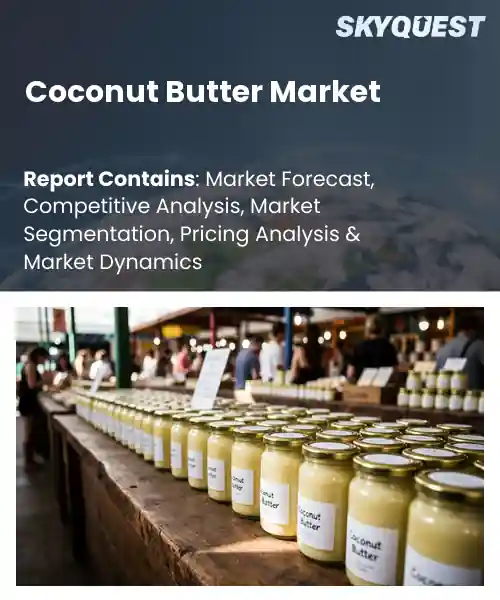
Coconut Butter Market
Report ID: SQMIG30I2759
Report ID: SQMIG30I2759
[email protected]
USA +1 351-333-4748
Report ID:
SQMIG30I2759 |
Region:
Global |
Published Date: February, 2026
Pages:
157
|Tables:
118
|Figures:
77


Global Coconut Butter Market size was valued at USD 255.7 million in 2024 and is poised to grow from USD 275.9 million in 2025 to USD 506.9 million by 2033, growing at a CAGR of 7.9% during the forecast period (2026-2033).
Surge in popularity of veganism, high demand for clean-label products, consumer emphasis on plant-based lifestyle adoption, and expanding applications in food and personal care are anticipated to uplift the consumption of coconut butter on a global level. Rising health consciousness among people and preference for dairy-free and nut-free alternatives are expected to primarily drive coconut butter market growth. Organized supply chains, advancements in press technology, and packaging have improved the shelf life of the product, leading to increased retail space for coconut butter packages for health-conscious consumers. The coconut butter industry is trying to improve production from small-scale to organized chains, ensuring standardization of the extraction process, packaging, and shelf life to meet the retail requirements of a larger audience.
Coconut butter is used as an ingredient in various products such as spreads, baked goods, sauces, smoothies, and cosmetics. However, high production and transportation costs, unstable prices of coconut raw materials, low consumer awareness in certain areas, stability of shelf life, and competition from other plant-based spreads are slated to hamper coconut butter market penetration in the long run.
How is AI Enhancing Demand Forecasting in the Coconut Butter Market?
AI is enhancing the accuracy of demand forecasting in the coconut butter industry by integrating various sources of data to produce accurate, real-time forecasts on an SKU level. Machine learning capabilities are also enhancing the ability to monitor seasonality, shifting demand trends, and supply chain dynamics. Natural language processing is also analyzing social media trends, search data, and customer reviews to monitor shifts in consumer behavior. Most food manufacturers are using these technologies to minimize shortages and overstocking while also meeting the rising demand for high-end and clean-label products.
Market snapshot - (2026-2033)
Global Market Size
USD 1.02 Billion
Largest Segment
Unrefined Coconut Butter
Fastest Growth
Organic Coconut Butter
Growth Rate
7.5% CAGR
To get more insights on this market click here to Request a Free Sample Report
Global coconut butter market is segmented by type, packaging type, end user, distribution channel, and region. Based on type, the market is segmented into unrefined coconut butter, refined coconut butter, organic coconut butter, and flavored coconut butter. Based on packaging type, the market is segmented into glass jars, plastic containers, pouches,and bulk packaging. Based on end user, the market is segmented into food and beverage, cosmetics and personal care, and others. Based on distribution channel, the market is segmented into online sales and physical stores. Based on region, the market is segmented into North America, Europe, Asia Pacific, Latin America, and Middle East & Africa.
The glass jars segment is projected to spearhead the global coconut butter market revenue generation in the future. Health-conscious consumers also favor glass packaging because it is non-reactive and preserves the quality of the product. They are also durable and retain their flavor, making them the best for retailing and hence their dominance in the market.
On the other hand, use of pouches is slated to rise rapidly as per this coconut butter industry analysis through 2033. Flexible packaging is also cost-effective in terms of transportation and storage. It is also convenient for online shopping. The resealable and single-serve packaging options are also convenient for consumers who want to buy on a portion basis.
The organic coconut butter segment is slated to account for the highest global coconut butter market share going forward. Health-conscious and vegan consumers look for certified organic variants that resonate with natural and sustainable living. Retailers and health food stores display organic variants prominently to tap into the premium pricing potential.
Meanwhile, the consumption of flavoured coconut butter is slated to rise at an impressive CAGR over the coming years. Chocolate, vanilla, cinnamon, or fruit-flavoured variants are attractive to the younger generation and health-conscious consumers looking for indulgent yet plant-based alternatives. Increasing usage in baking, smoothies, and desserts is driving demand.
To get detailed segments analysis, Request a Free Sample Report
The presence of an established retail infrastructure along with consumer education about plant-based and clean-label spreads is contributing to North America’s leading role in coconut butter sales. The presence of a sophisticated private label and specialty retail infrastructure enables quick innovation and packaging differentiation. Easy access to sources and investments in quality enable the development of a consistent product profile. Trade facilitation and relationships between suppliers, distributors, and foodservice providers are further ensuring the long-term leadership role of this region in the market. Private investment in branding and education is also influencing the development of a premium consumer profile.
Presence of a developed retail infrastructure and high consumer demand for natural food products are boosting coconut butter consumption in the United States. Sales of premium coconut butter products are expected to be high in the country. Growing tourism and expanding vegan populations are also creating new business scope for market players.
The rising demand for natural and plant-based spreads, fuelled by health-focused retail channels, is also contributing to the growth of coconut butter sales in Canada. Partnerships between distributors and small-scale producers are improving the depth of product offerings and geographical reach and thus boosting consumer confidence. Educational programs are also emphasizing functional benefits and versatility.
Shifting consumer preferences toward clean-label, plant-based indulgence are expected to boost the demand for coconut butter across Europe. Regulatory alignment and quality assurance frameworks support import pathways and build retailer confidence. Growing emphasis on sustainability and increasing number of people opting for plant-based lifestyles are also promoting the sales of coconut butter. Urbanization and a vibrant natural foods movement create fertile ground for premium and artisan positioning of multiple coconut butter brands and products through 2033 and beyond.
Presence of a developed natural foods retail network, discerning consumer preferences, and strict quality standards are shaping coconut butter demand in Germany. Coconut butter companies focusing on traceability and certified sourcing are expected to succeed in the country going forward. Collaborations between regional suppliers and retailers facilitate seasonal promotions and expand distribution into mainstream grocery channels.
High consumer interest in experimentation, high digital retail penetration, and active food influencer communities is projected to boost the demand for coconut butter in the United Kingdom. Marketing through retail and sampling drive trials faster, while partnerships with cafés and food delivery services increase the use of coconut butter in cooking. Sustainability also makes the brand more attractive to consumers in urban areas.
High adoption of artisanal and premium spreads among French chefs and boutique retailers is slated to bolster coconut butter market development across France. Consumers are attentive to provenance and culinary storytelling, prompting brands to emphasize sourcing quality and recipe integration. Small-batch and flavoured variants are expected to be highly sought-after in gourmet restaurants and stores across the country.
Innovation in culinary arts, increasing disposable income, and the trend towards vegetarian diets are expected to ensure new business opportunities for coconut butter sellers in this region. Increasing middle-class population in urban areas and their rising interest in functional and natural ingredients are also expected to increase the sales of coconut butter. Food manufacturers and confectionery makers use coconut butter in their product formulations, and regional distributors increase cold chain and specialty routing services for premium offerings. Cross-border e-commerce and culinary education programs further increased awareness, and coconut butter can move from gourmet ingredients to a versatile ingredient in mainstream culinary applications.
Evolving consumer tastes, high expectations for product refinement, and strong retail systems are expected to govern coconut butter consumption in the country. coconut butterwith premium packaging and functional claims is expected to be highly prized among Japanese consumers. Access to premium and specialty coconut butter products in the country is governed by partnerships between importers and international gourmet retailers.
Dynamic culinary trends, strong online retail channels, and a youthful consumer base favouring experimentation are helping drive coconut butter demand in South Korea. Suppliers are launching new coconut butter formats well suited for snacking and spreading to maximize their sales potential. Collaborations with culinary influencers and cafes will also be important for increasing the sales of coconut butter products.
To know more about the market opportunities by region and country, click here to
Buy The Complete Report
Rising Demand for Natural Alternatives
The growing consumer interest in clean-label and natural foods, as well as the active distaste for synthetic foods, is also contributing to the demand for coconut butter. The easy-to-understand ingredient statement and minimally processed perception of coconut butter meets the consumer desire for recognizable and wholesome products. This drives manufacturers and retailers to promote coconut butter in spreads, baking, and blends.
Expansion of Plant Based Product Use
Rise in popularity of veganism and growing adoption of plant-based lifestyles around the world are slated to boost coconut butter sales going forward. The functional characteristics and compatibility of coconut butter with sweet and savory dishes make it an attractive option for product developers who are working to meet the demand for plant-based products. This substitution strategy promotes innovation, diversifies product offerings, and enhances retailer support for coconut butter variants, thus improving the outlook for the global coconut butter market outlook until 2033.
Volatile Coconut Supply and Costs
Variations in the availability of coconuts and the cost of procurement make it uncertain for coconut butter manufacturers. This makes it difficult for them to plan for product lines that use coconut butter as a component. This uncertainty makes it difficult for manufacturers to decide on expanding their production capacity or adding new SKUs, as it affects their pricing decisions and retailer commitments.
Limited Awareness in Emerging Regions
Less familiarity with coconut butter in some regions makes it difficult for customers to purchase it. If there are no awareness campaigns, consumers will not be able to understand the usage of coconut butter in the kitchen and will not be able to differentiate it from other coconut products. Lack of clear usage guidance and limited localized marketing efforts are slowing down sales of coconut butter in the long run.
Request Free Customization of this report to help us to meet your business objectives.
Use of premium packaging and introduction of new flavours are slated to be key opportunities for coconut butter companies going forward. Targeting countries with high vegan and vegetarian populations remains a key opportunity as per this coconut butter market analysis. Alignment with sustainability trends can also help boost the sales of coconut butter.
Here’s a startup that is estimated to alter coconut butter consumption trends in the long run.
Kokada: Established in 2020, the startup is focused on creating sugar-free, peanut-free vegan coconut spreads that act as nut-butter alternatives and on-the-go snacks. The United States-based company has successfully secured national retail placements including Sprouts and Wegmans, scaled rapid store distribution after fundraising to expand supply chain capacity. The startup also leverages digital rebate and sampling partnerships to drive trial and used shopper analytics to reformulate flavours and support continued shelf growth.
In March 2025, Savor, a company focused on developing healthy alternatives to animal and tropical fats unveiled first-of-its-kind ‘butter’ made without cows, plants, or microbes. Such product launches are expected to hamper the sales of coconut butter.
In June 2024, that Costco's Kirkland Signature introduced a USDA Organic-certified coconut butter, in response to increasing demand from consumers for clean label, sustainable pantry staples. It has a cold-pressed, single-origin coconut emphasis and recyclable packaging. The product highlights Costco's emphasis on sustainability and improves its competitive nature as well.
In February 2025 Artisana Organics introduced an upgraded cold pressed coconut butter line featuring improved texture stability, enhanced nutrient retention, extended shelf life performance, consumer friendly formats, and targeted clean label certifications, enabling the brand to expand its premium vegan product range and reinforce its presence in the health focused food market across North American and European retail channels.
Premiumization and Indulgence Demand: Consumers are increasingly recognizing coconut butter as a high-end food and snacking choice. The development of coconut butter with artisanal textures, exotic flavor extensions, and high-end packaging is turning out to be a growing trend in the Coconut butter industry. Suppliers are dedicating shelf space to specialty and natural food product lines, and foodservice professionals are seeking high-end uses via this coconut butter industry trend through 2033.
Convenience and Packaging Innovation: The packaging of coconut butter in novel packagig formats is driven by emphasis on convenience and sustainable packaging. The application of portion-controlled sachets, resealable packaging, and spoonable textures is gaining popularity and expanding the usage base for industry players. Suppliers and marketing professionals are working together to optimize product placement and e-commerce readiness through this coconut butter market trend.
SkyQuest’s ABIRAW (Advanced Business Intelligence, Research & Analysis Wing) is our Business Information Services team that Collects, Collates, Correlates, and Analyses the Data collected by means of Primary Exploratory Research backed by robust Secondary Desk research.
As per SkyQuest analysis, rising consumer preference for plant-based and clean-label food products is anticipated to drive the demand for coconut butter going forward. However, fluctuating coconut raw material prices and competition from alternative plant-based spreads are slated to slow down the adoption of coconut butter in the future. North America is slated to spearhead the demand for coconut butter owing to strong vegan product penetration and high consumer awareness regarding dairy-free alternatives. Product diversification and expansion into personal care and functional food applications are projected to be key trends driving the coconut butter sector through 2033.
| Report Metric | Details |
|---|---|
| Market size value in 2024 | USD 1.02 Billion |
| Market size value in 2033 | USD 1.96 Billion |
| Growth Rate | 7.5% |
| Base year | 2024 |
| Forecast period | (2026-2033) |
| Forecast Unit (Value) | USD Billion |
| Segments covered |
|
| Regions covered | North America (US, Canada), Europe (Germany, France, United Kingdom, Italy, Spain, Rest of Europe), Asia Pacific (China, India, Japan, Rest of Asia-Pacific), Latin America (Brazil, Rest of Latin America), Middle East & Africa (South Africa, GCC Countries, Rest of MEA) |
| Companies covered |
|
| Customization scope | Free report customization with purchase. Customization includes:-
|
To get a free trial access to our platform which is a one stop solution for all your data requirements for quicker decision making. This platform allows you to compare markets, competitors who are prominent in the market, and mega trends that are influencing the dynamics in the market. Also, get access to detailed SkyQuest exclusive matrix.
Table Of Content
Executive Summary
Market overview
Parent Market Analysis
Market overview
Market size
KEY MARKET INSIGHTS
COVID IMPACT
MARKET DYNAMICS & OUTLOOK
Market Size by Region
KEY COMPANY PROFILES
Methodology
For the Coconut Butter Market, our research methodology involved a mixture of primary and secondary data sources. Key steps involved in the research process are listed below:
1. Information Procurement: This stage involved the procurement of Market data or related information via primary and secondary sources. The various secondary sources used included various company websites, annual reports, trade databases, and paid databases such as Hoover's, Bloomberg Business, Factiva, and Avention. Our team did 45 primary interactions Globally which included several stakeholders such as manufacturers, customers, key opinion leaders, etc. Overall, information procurement was one of the most extensive stages in our research process.
2. Information Analysis: This step involved triangulation of data through bottom-up and top-down approaches to estimate and validate the total size and future estimate of the Coconut Butter Market.
3. Report Formulation: The final step entailed the placement of data points in appropriate Market spaces in an attempt to deduce viable conclusions.
4. Validation & Publishing: Validation is the most important step in the process. Validation & re-validation via an intricately designed process helped us finalize data points to be used for final calculations. The final Market estimates and forecasts were then aligned and sent to our panel of industry experts for validation of data. Once the validation was done the report was sent to our Quality Assurance team to ensure adherence to style guides, consistency & design.
Analyst Support
Customization Options
With the given market data, our dedicated team of analysts can offer you the following customization options are available for the Coconut Butter Market:
Product Analysis: Product matrix, which offers a detailed comparison of the product portfolio of companies.
Regional Analysis: Further analysis of the Coconut Butter Market for additional countries.
Competitive Analysis: Detailed analysis and profiling of additional Market players & comparative analysis of competitive products.
Go to Market Strategy: Find the high-growth channels to invest your marketing efforts and increase your customer base.
Innovation Mapping: Identify racial solutions and innovation, connected to deep ecosystems of innovators, start-ups, academics, and strategic partners.
Category Intelligence: Customized intelligence that is relevant to their supply Markets will enable them to make smarter sourcing decisions and improve their category management.
Public Company Transcript Analysis: To improve the investment performance by generating new alpha and making better-informed decisions.
Social Media Listening: To analyze the conversations and trends happening not just around your brand, but around your industry as a whole, and use those insights to make better Marketing decisions.
REQUEST FOR SAMPLE
 REQUEST FREE CUSTOMIZATION
Global Coconut Butter Market size was valued at USD 1.02 Billion in 2024 and is poised to grow from USD 1.1 Billion in 2025 to USD 1.96 Billion by 2033, growing at a CAGR of 7.5% during the forecast period (2026-2033).
The competitive landscape of the global coconut butter market is defined by product differentiation, retail shelf competition, and ingredient-driven M&A. Retail listings and formulation performance are key market drivers that push firms toward partnerships and acquisitions to secure supply and scale production, as seen in AAK’s acquisition of ForA:Butter and Marico’s 2019 Coco Soul entry into coconut spreads. 'Nutiva', 'Tropical Traditions', 'Artisana Organics', 'Ceylon Coconut Company', 'Bali Nutra', 'Dhatu Organics & Naturals', 'MaraNatha', 'Nature's Way', 'Kirkland Signature', 'Coco Earth', 'Coconut Merchant', 'United Foods India', 'Phildesco', 'Hallstar', 'Coco & Co.', 'Andy Albao Corporation', 'Nutretiaa Industries', 'Aloha Organic Superfoods', 'Dr. Bronner's', 'The Coconut Company'
Rising consumer interest in clean-label and natural foods motivates adoption of coconut butter because its simple ingredient profile and minimally processed image align with shoppers seeking recognizable, wholesome options. This preference encourages manufacturers and retailers to feature coconut butter in spreads, baking, and ingredient blends, increasing visibility and category presence. As a result, product development prioritizes formulations that highlight natural sourcing and sensory appeal, leading to broader distribution and shelf space that directly supports market expansion through enhanced consumer awareness and purchase frequency.
The presence of an established retail infrastructure along with consumer education about plant-based and clean-label spreads is contributing to North America’s leading role in coconut butter sales. The presence of a sophisticated private label and specialty retail infrastructure enables quick innovation and packaging differentiation.


Want to customize this report? This report can be personalized according to your needs. Our analysts and industry experts will work directly with you to understand your requirements and provide you with customized data in a short amount of time. We offer $1000 worth of FREE customization at the time of purchase.
Feedback From Our Clients


 USA (+1) 351-333-4748

