Cetuximab Biosimilar Market
Report ID: SQMIG35H2453
Report ID: SQMIG35H2453
[email protected]
USA +1 351-333-4748
Report ID:
SQMIG35H2453 |
Region:
Global |
Published Date: March, 2026
Pages:
157
|Tables:
113
|Figures:
77


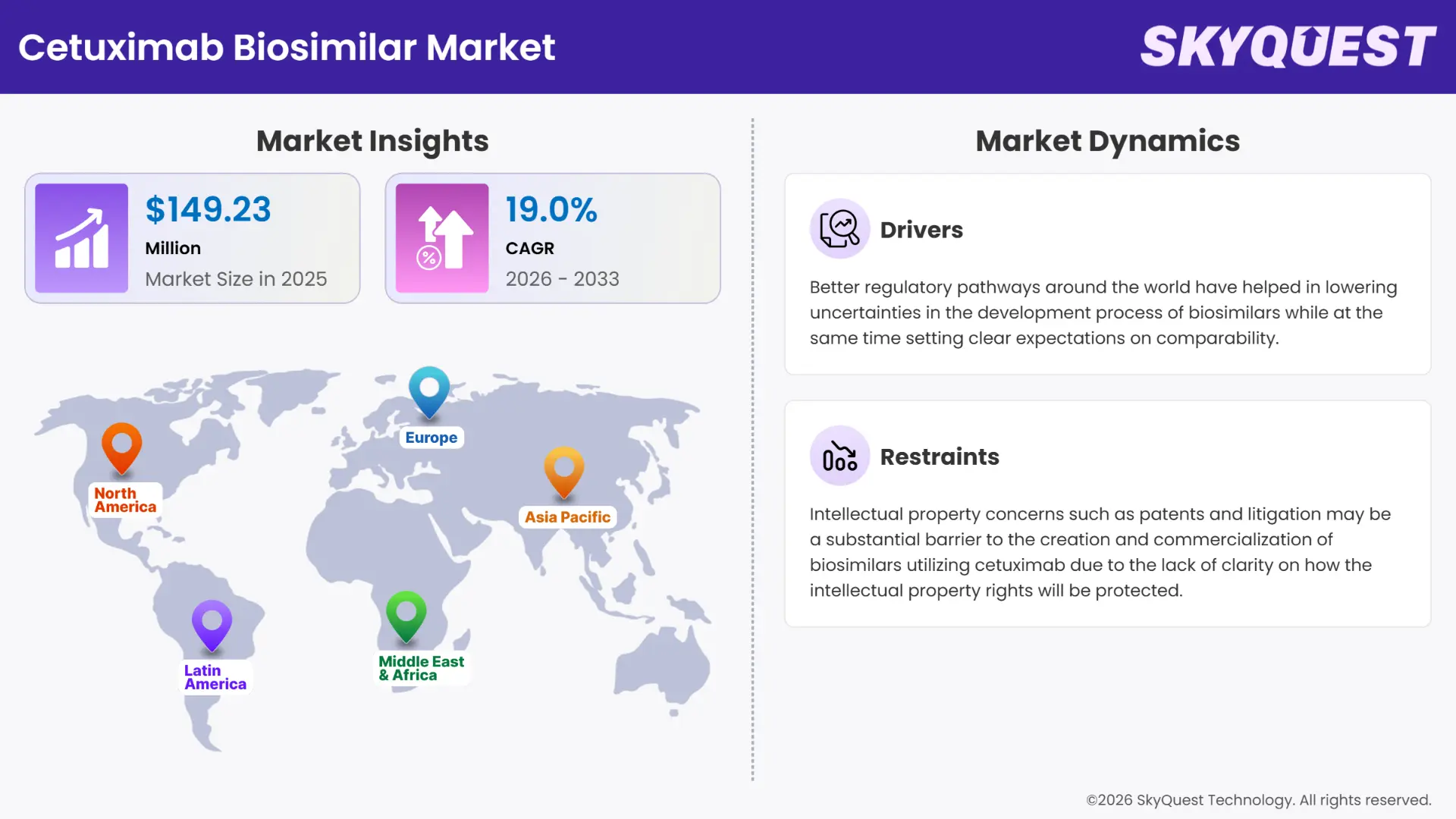
Global Cetuximab Biosimilar Market size was valued at USD 125.40 Million in 2024 and is poised to grow from USD 149.23 Million in 2025 to USD 600.10 Million by 2033, growing at a CAGR of 19.0% during the forecast period (2026-2033).
Key Takeaways: Market Trends & Insights
Growing patent expirations of biologic drugs, increasing pressure to reduce oncology treatment costs, rising adoption of biosimilars, expanding cancer patient population, and supportive regulatory frameworks are driving sales of cetuximab biosimilars.
Patent expiration of the originator drug and the impact of pricing pressures will enhance the ability of biosimilars producers to provide affordable treatments. The issue of price economics that is shaped by tender-based purchasing mechanisms and payer policies is an important driver of market growth since cheaper treatment will allow hospitals to treat larger numbers of patients and begin biologic therapy early. Growing need for cost-effective cancer therapies among healthcare providers and patients coupled with a shift toward biosimilar adoption is expected to primarily drive cetuximab biosimilar market growth.
On the contrary, high development and manufacturing costs, stringent regulatory requirements, concerns regarding interchangeability and physician acceptance, pricing pressures affecting margins, and limited awareness in certain regions are predicted to impede cetuximab biosimilar market penetration across the forecast period.
How is AI Influencing Pricing Strategies in the Cetuximab Biosimilar Market?
AI is influencing pricing policies in the context of cetuximab biosimilars by transforming intricate information related to both clinical and payor factors into strategic choices. Currently, AI is employed by businesses and model competitor pricing policies. This is particularly relevant since cetuximab biosimilars are usually launched on regional levels in a bidding system. From a practical perspective, this allows the businesses to price differently depending on each market and apply appropriate discounts to secure a successful bid.
To get more insights on this market click here to Request a Free Sample Report
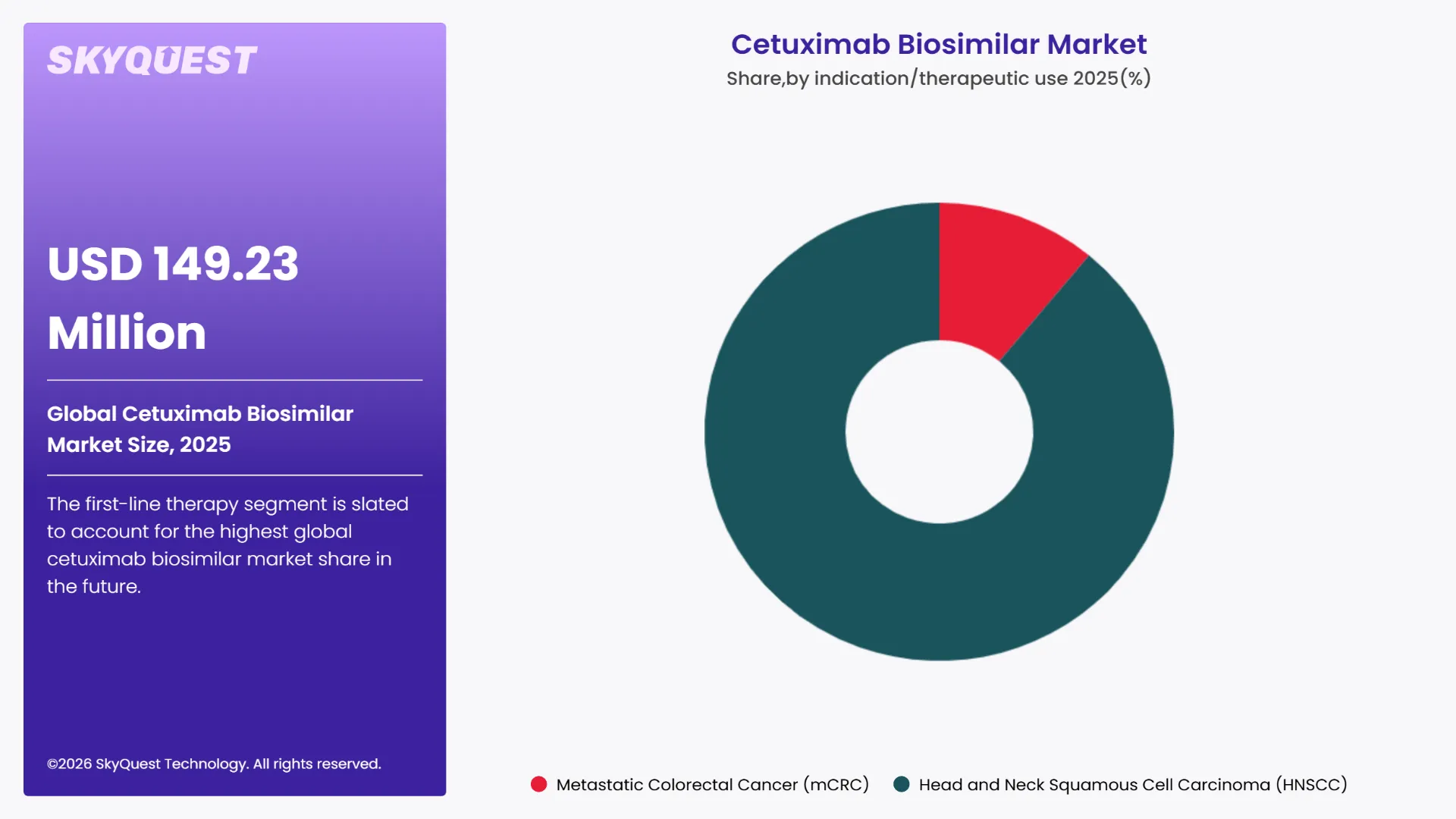
The cetuximab biosimilar market is segmented by indication/therapeutic use, line of treatment, end-user, and region. Based on indication/therapeutic use, the market is segmented into Metastatic Colorectal Cancer (mCRC) and Head and Neck Squamous Cell Carcinoma (HNSCC). Based on line of treatment, the market is segmented into first-line therapy and second-line/combination therapy. Based on end-user, the market is segmented into oncology specialty hospitals, outpatient chemotherapy centers, and academic research institutes. Based on region, the market is segmented into North America, Europe, Asia Pacific, Latin America, and Middle East & Africa.
The first-line therapy segment is slated to account for the highest global cetuximab biosimilar market share in the future. Established clinical guidelines and prescribing pathways position cetuximab as an early-line biologic for eligible patients, thereby allowing this segment to hold sway over others. Clinical knowledge about therapeutic efficacy and safety promotes confidence in making the transition to biosimilars, whereas inclusion in formularies and payor alignment creates motivation for purchasing. Collectively, these elements create long-term prescribing habits that compel manufacturers to invest in supply and pricing advantages.
However, second-line/combination therapy is emerging as the fastest growing segment as per this cetuximab biosimilar market forecast. Expanding use of cetuximab biosimilars in combination regimens and growing clinical evidence create new business scope. Increased incorporation in more complicated drug treatment regimens leads to higher biologic utilization, and this calls for manufacturers to offer specific forms of assistance and distribution channels.
The outpatient chemotherapy centers segment is estimated to lead the global cetuximab biosimilar market revenue generation. These facilities centralize routine infusion treatments with standardized administration workflows. Procurement procedures and the standardization of protocols make rapid adjustments to the formulary and reliable stock management possible, motivating pharmaceutical companies to ensure a dependable supply and good aftercare. This creates a steady demand for cetuximab biosimilars due to steady drug administration quantities.
However, academic research institutes seem to be enjoying the most significant momentum of growth because they generate important evidence to show the clinical benefits as well as real world usage of such biosimilars in terms of their interchangeability as well as innovative combinations. This is done through investigator-initiated studies, translational studies, and collaboration between academia and industry.
To get detailed segments analysis, Request a Free Sample Report
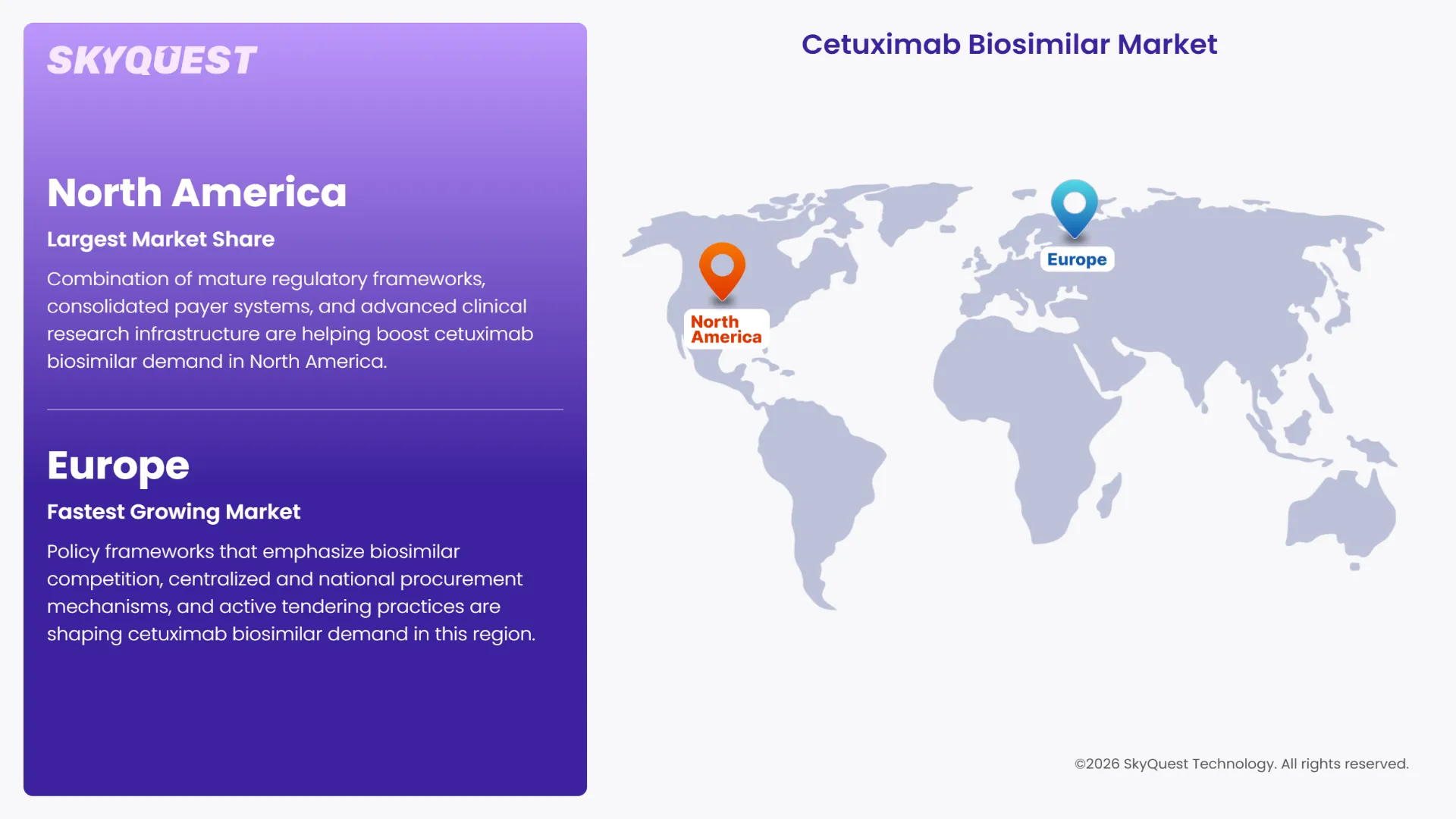
Combination of mature regulatory frameworks, consolidated payer systems, and advanced clinical research infrastructure are helping boost cetuximab biosimilar demand in North America. Efficiently developing and ramping-up production of biosimilars will be made smooth by the existing manufacturing base of both domestic (multinational) and international (contract) manufacturing capacity. The high degree of clinician engagement and the existence of established guidelines for the treatment of cancer patients is a key driver in quickly adopting biosimilars into the therapeutic protocol for the treatment of a specific cancer. The reimbursement policies and value-based purchasing practices by payers also promote the use of cost-efficient alternative products.
The development of collaborative networks among key stakeholders (academic medical centers, Contract Manufacturers, Specialty Pharmacies) also enhances the success of commercial launch strategies for biosimilars. The ability of these stakeholders to continue to work together on practices that promote competitive pricing and increase patient access will further solidify North America as the leader in the global cetuximab biosimilar space.
Extensive clinical trial networks, well-established oncology treatment protocols, and sophisticated hospital procurement practices are supporting steady cetuximab biosimilar demand in the United States. The high concentration of expert clinicians and academics ensures professionalism and trust among prescribers. The synergy between specialty distribution channels and reimbursement methods contributes to the adoption of cetuximab biosimilar drugs in formularies and promotes access, emphasizing the US’s status as the market leader for cetuximab biosimilar medications.
Public reimbursement frameworks and coordinated provincial procurement are shaping cetuximab biosimilar sales in Canada. Collaboration in drug production between local companies and prescriber and pharmacist training programs enhance biosimilar utilization. In all, this drives the use of cetuximab biosimilars. Provincial formulary systems and hospitals emphasize therapy similarity and stakeholder engagement, ensuring physician adoption and patient availability.
Policy frameworks that emphasize biosimilar competition, centralized and national procurement mechanisms, and active tendering practices are shaping cetuximab biosimilar demand in this region. Collaborative approach of regulatory bodies in Europe, and practical guidance for interchangeability, provides confidence to clinicians, while the manufacturing and distribution capabilities of European manufacturing provide a consistent supply of cetuximab biosimilars.
The implementation of stakeholder education programs and payer-related formulary strategies have also increased the uptake of cetuximab biosimilars. Collectively, these trends position Europe as a rapidly evolving market for cetuximab biosimilars, where policy, clinical stewardship, and procurement efficiencies work together to create ongoing opportunities for sustained growth of cetuximab biosimilars. Continued engagement among regulators, payers, and providers will foster the enhancement of agreed-upon pathways of adoption.
Highly structured hospital procurement environment and coordinated payer frameworks are expected to shape cetuximab biosimilar demand in Germany. With tendering processes in place and cost-control motivations present, inclusion in the drug formulary is encouraged. The presence of well-developed pharmaceutical infrastructure. The clinical experts and oncologists act as the clinical authority along with practical advice on interchangeability.
Procurement processes and involvement of the NHS that emphasize value in oncology drugs will be beneficial for increasing the sales of cetuximab biosimilar in the UK. The involvement of clinical staff in outreach programs and other educational activities will raise the level of confidence of doctors in the prescription of biosimilar drugs. The effective process of tendering and commissioning will help to get the drug listed in formulary.
Interventions by national health authorities promoting therapeutic options and cost optimization in oncology services impact the implementation of cetuximab biosimilars in France. Cooperation within the local region, together with logistics efforts, enhances availability, while patient education and third-party payor engagement improve confidence, creating an enabling environment for the broader implementation of cetuximab biosimilars. Health care facilities and purchasing groups are increasingly adopting biosimilars in treatment regimens, supported by training physicians and monitoring activities.
The efforts in regulatory modernization, investments in local production, and the partnership between producers and clinicians will open up new areas of business in the future. Cost-containment strategies implemented by healthcare organizations, the creation of infrastructure for the delivery of oncology treatment, and educational programs for physicians have been among the factors that have made it possible for the Asia-Pacific region to expand its ability to support biosimilar cetuximab. Payer engagement and reforms in hospital procurement are creating real opportunities for biosimilars to be included on formularies. Additionally, clinical trial activity and increased collection of systematic real-world data will continue to support the development of confidence among clinicians to use biosimilar therapies locally.
Rigorous regulatory standards and a cautious but evolving approach to biosimilar integration within oncology care shapes cetuximab biosimilar adoption in Japan. Collaboration efforts by manufacturers and medical organizations are fostering the adoption of biosimilars. The country's capacity in drug development and manufacturing ensures high-quality production of biosimilars. In terms of reimbursement, healthcare institutions are becoming more open to biosimilars where comparisons can be made.
Proactive regulatory guidance and a strong domestic biologics manufacturing sector are helping boost cetuximab biosimilar sales in South Korea. Negotiations with payers and reimbursement policies ensure inclusion on formularies, while alliances abroad enhance technical skills. South Korea thus stands out as a player in the regional and global market for cetuximab biosimilars. Coordination with hospitals makes clinical trials easier, and acceptance is achieved as soon as the product is proven to be effective.
To know more about the market opportunities by region and country, click here to
Buy The Complete Report
Improved Regulatory Pathways Globally
Rising Manufacturing Capabilities
Patent and Litigation Challenges
Physician Switching and Confidence
Request Free Customization of this report to help us to meet your business objectives.
The competitive landscape for the global cetuximab biosimilar market is shaped by rapid entry from regional biosimilar specialists, NRDL driven pricing pressure and technology led manufacturing strategies that compress time to market; companies are executing targeted licensing, regional launches and CDMO scale ups such as India launches led by Enzene and Lupin, China regulatory approvals by local developers, and strategic licensing and clinical partnerships to secure hospital adoption and reimbursement.
Market Access Expansion
Supply Chain Diversification
SkyQuest’s ABIRAW (Advanced Business Intelligence, Research & Analysis Wing) is our Business Information Services team that Collects, Collates, Correlates, and Analyses the Data collected by means of Primary Exploratory Research backed by robust Secondary Desk research.
As per SkyQuest analysis, rising patent expirations of biologics, increasing pressure to reduce oncology treatment costs, and growing adoption of biosimilars are anticipated to drive the demand for cetuximab biosimilars going forward. However, high development costs, stringent regulatory requirements, pricing pressures, and concerns regarding physician acceptance are slated to slow down the adoption of cetuximab biosimilars in the future. Europe is slated to spearhead the demand for cetuximab biosimilars owing to strong regulatory support, widespread use of tender-based procurement systems, and high biosimilar acceptance. Integration of AI-driven pricing strategies, expansion of tender optimization tools, and advancements in biosimilar manufacturing and commercialization are anticipated to be key trends driving the cetuximab biosimilar industry over the coming years.
| Report Metric | Details |
|---|---|
| Market size value in 2024 | USD 125.40 Million |
| Market size value in 2033 | USD 600.10 Million |
| Growth Rate | 19.0% |
| Base year | 2024 |
| Forecast period | 2026-2033 |
| Forecast Unit (Value) | USD Million |
| Segments covered |
|
| Regions covered | North America (US, Canada), Europe (Germany, France, United Kingdom, Italy, Spain, Rest of Europe), Asia Pacific (China, India, Japan, Rest of Asia-Pacific), Latin America (Brazil, Rest of Latin America), Middle East & Africa (South Africa, GCC Countries, Rest of MEA) |
| Companies covered |
|
| Customization scope | Free report customization with purchase. Customization includes:-
|
To get a free trial access to our platform which is a one stop solution for all your data requirements for quicker decision making. This platform allows you to compare markets, competitors who are prominent in the market, and mega trends that are influencing the dynamics in the market. Also, get access to detailed SkyQuest exclusive matrix.
Table Of Content
Executive Summary
Market overview
Parent Market Analysis
Market overview
Market size
KEY MARKET INSIGHTS
COVID IMPACT
MARKET DYNAMICS & OUTLOOK
Market Size by Region
KEY COMPANY PROFILES
Methodology
For the Cetuximab Biosimilar Market, our research methodology involved a mixture of primary and secondary data sources. Key steps involved in the research process are listed below:
1. Information Procurement: This stage involved the procurement of Market data or related information via primary and secondary sources. The various secondary sources used included various company websites, annual reports, trade databases, and paid databases such as Hoover's, Bloomberg Business, Factiva, and Avention. Our team did 45 primary interactions Globally which included several stakeholders such as manufacturers, customers, key opinion leaders, etc. Overall, information procurement was one of the most extensive stages in our research process.
2. Information Analysis: This step involved triangulation of data through bottom-up and top-down approaches to estimate and validate the total size and future estimate of the Cetuximab Biosimilar Market.
3. Report Formulation: The final step entailed the placement of data points in appropriate Market spaces in an attempt to deduce viable conclusions.
4. Validation & Publishing: Validation is the most important step in the process. Validation & re-validation via an intricately designed process helped us finalize data points to be used for final calculations. The final Market estimates and forecasts were then aligned and sent to our panel of industry experts for validation of data. Once the validation was done the report was sent to our Quality Assurance team to ensure adherence to style guides, consistency & design.
Analyst Support
Customization Options
With the given market data, our dedicated team of analysts can offer you the following customization options are available for the Cetuximab Biosimilar Market:
Product Analysis: Product matrix, which offers a detailed comparison of the product portfolio of companies.
Regional Analysis: Further analysis of the Cetuximab Biosimilar Market for additional countries.
Competitive Analysis: Detailed analysis and profiling of additional Market players & comparative analysis of competitive products.
Go to Market Strategy: Find the high-growth channels to invest your marketing efforts and increase your customer base.
Innovation Mapping: Identify racial solutions and innovation, connected to deep ecosystems of innovators, start-ups, academics, and strategic partners.
Category Intelligence: Customized intelligence that is relevant to their supply Markets will enable them to make smarter sourcing decisions and improve their category management.
Public Company Transcript Analysis: To improve the investment performance by generating new alpha and making better-informed decisions.
Social Media Listening: To analyze the conversations and trends happening not just around your brand, but around your industry as a whole, and use those insights to make better Marketing decisions.
REQUEST FOR SAMPLE
 REQUEST FREE CUSTOMIZATION
Global Cetuximab Biosimilar Market size was valued at USD 125.4 Million in 2024 and is poised to grow from USD 149.23 Million in 2025 to USD 600.1 Million by 2033, growing at a CAGR of 19.0% during the forecast period (2026-2033).
Key vendors in the Cetuximab Biosimilar Market include major pharmaceutical and biotechnology companies such as Novartis, Pfizer Inc., Amgen Inc., Celltrion, Samsung Bioepis, Teva Pharmaceutical Industries, Biocon Limited, Sandoz, Lupin Pharmaceuticals, and Aurobindo Pharma.
The key driver of the Cetuximab Biosimilar Market is the growing demand for cost-effective alternatives to biologic cancer therapies. Biosimilars help reduce treatment costs, making them more accessible. Additionally, the rising prevalence of cancers such as colorectal and head & neck cancers is further driving market growth.
A key market trend in the Cetuximab Biosimilar Market is the increasing number of product launches and regulatory approvals, leading to greater competition. Additionally, there is a growing focus on advanced manufacturing technologies and cost optimization to improve accessibility and efficiency.
North America accounted for the largest share in the Cetuximab Biosimilar Market, driven by strong healthcare infrastructure, high adoption of biosimilars, and increasing prevalence of cancers such as colorectal and head & neck cancers in the region.


Want to customize this report? This report can be personalized according to your needs. Our analysts and industry experts will work directly with you to understand your requirements and provide you with customized data in a short amount of time. We offer $1000 worth of FREE customization at the time of purchase.
Feedback From Our Clients


 USA (+1) 351-333-4748

