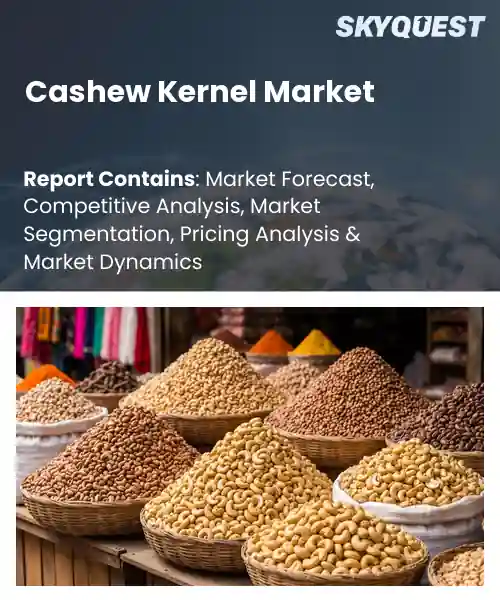
Cashew Kernel Market
Report ID: SQMIG30H2455
Report ID: SQMIG30H2455
[email protected]
USA +1 351-333-4748
Report ID:
SQMIG30H2455 |
Region:
Global |
Published Date: June, 2026
Pages:
157
|Tables:
140
|Figures:
78


Global Cashew Kernel Market size was valued at USD 7.39 Billion in 2024 and is poised to grow from USD 7.69 Billion in 2025 to USD 10.6 Billion by 2033, growing at a CAGR of 4.09% during the forecast period (2026-2033).
The global cashew kernel market is segmented by production, processing and distribution of peeled, roasted or raw nuts for foodservice, retail and industrial use. Important nut for high nutrition, versatile culinary uses and growing consumer shift to plant-based snacks. The growth has been driven largely by disposable income of the middle class in emerging economies like India, Vietnam and Brazil, who are demanding more premium snacks. “Previously limited to a few West African producers, African exporters tripled production in the 2000s as agronomy and supply chain investments took hold and Asian processors scrambled to secure long-term contracts. These changes have reshaped global trade flows and consumer preferences.”
Besides the income-driven demand mentioned above, the second big driver of the cashew kernel market is the fast acceptance of health-oriented product lines by food manufacturers. As consumers look for more indulgent choices, companies such as PepsiCo and Nestlé are tweaking snack bars and dairy-free sauces to include cashew kernels, creating a cycle that increases sourcing volumes and encourages farmers to grow the varieties. This synergy, provides opportunities in downstream processing where value added roasted, flavored or oil extracted derivatives command margins. For example, a Vietnamese processor launched a cashew-based infant cereal that won contracts with European retailers. This shows how such trends can be translated into export growth and diversification.
How is AI-driven automation influencing growth and sustainability in the global cashew kernel market?
AI-based automation is revolutionizing the cashew kernel industry, improving product quality, cutting labor costs, and minimizing environmental impact. In this paper we show that machine learning models can quickly analyze visual data for kernel classification, thereby reducing waste and increasing yield. Predictive maintenance offers the operator an early warning of equipment wear and tear before it fails, helps to extend the life of the machine and saves energy. Integrated data platforms connect farms to processors and exporters, enabling real-time demand forecasting to synchronize inventory flows and avoid overproduction. They also help to meet sustainability objectives by reducing water and chemical residues, enhancing the resilience of the supply chain and making it more appealing to responsible buyers. “The wider deployment of AI tools is driving the development and adoption of green standards.
Hanfimex June 2025 has added a new processing line with AI sorting technology to improve kernel yield and cut waste. “This move is in line with the market’s growth path and drives sustainability goals. The system provides exporters with real-time quality indicators that are compliant with international standards, minimizing post-harvest losses and increasing productivity.
Market snapshot - (2026-2033)
Global Market Size
USD 7.39 Billion
Largest Segment
Wholes
Fastest Growth
Pieces
Growth Rate
4.09% CAGR
To get more insights on this market click here to Request a Free Sample Report
Global cashew kernel market is segmented by grade, form, flavor profile, end-use application, distribution channel and region. Based on grade, the market is segmented into Wholes and Pieces. Based on form, the market is segmented into Whole Cashew Kernels and Broken Cashew Kernels. Based on flavor profile, the market is segmented into Raw Kernels, Roasted and Salted Kernels and Flavored Kernels. Based on end-use application, the market is segmented into Direct Retail Snacking and Industrial Food Processing. Based on distribution channel, the market is segmented into Retail Channels and B2B Institutional Procurement. Based on region, the market is segmented into North America, Europe, Asia Pacific, Latin America and Middle East & Africa.
The portion size and savory flavor profile of the ready to eat snack experience has the consumer preference highly skewed toward the segment of roasted and salted kernels dominating. The mouthfeel, crunch and taste profile drive repeat purchase and therefore retailers give them prominent shelf space. Also, manufacturers enjoy a longer shelf life than raw kernels, cutting waste and helping to drive efficient supply chains. All these elements have contributed to its position as market leader today.
However, raw kernels segment is witnessing the highest growth momentum, owing to health-conscious buyers, who are looking for minimally processed ingredients for nutritious meals and clean-label products. Demand for raw cashews is also being driven by foodservice chefs and manufacturers who are adding the ingredient to create perceptions of natural purity in plant-based formulations, thus opening up new avenues for market growth.
Broken cashew kernels segment dominates as it provides the manufacturers with a cost-effective raw material which helps in maximizing the yield from each harvested nut thus lowering the overall production cost. The smaller pieces can be incorporated easily into confectionery, bakery and nutrient dense snack formulations for a wide range of product innovation without compromise on texture. Broken pieces also draw in price-sensitive consumers seeking value without sacrificing flavour, reaffirming their preferred positioning across processing tiers in today’s competitive landscape and supply chain efficiency.
Meanwhile, whole cashew kernels segment is emerging as the key high-growth area as premium snack brands capitalize on consumer cravings for authentic, full-nut experiences. The intact look and better mouthfeel open up new product lines like gourmet trail mixes and luxury gift packs. It encourages the suppliers to scale dedicated processing and thus the market grows.
To get detailed segments analysis, Request a Free Sample Report
Asia Pacific dominates the global cashew kernel market owing to high consumer demand for healthy snacking, high processing capacity and its strategic location close to the major cashew producing countries. The area’s upscale retail landscape stocks cashew kernels in both classic confectionary and contemporary convenience formats, serving a rising consumer segment that prioritizes plant‑based nutrition. Sophisticated logistics networks and strong trade relationships enable smooth import and distribution, and new product development that caters to local tastes. In some regional cuisines, festive dishes are made with cashew kernels, which further integrates the nut into everyday use. Exporters are using the latest technologies in roasting and flavour infusion to make the region a hub for premium quality cashew products that attract buyers locally and internationally.
Japan Cashew Kernel Market. Japanese consumers prefer to select premium quality and presentation of snack items. This is because of the Japanese consumers’ culture towards quality and presentation. Retailers are shifting towards single-serve packaging that highlights natural flavor and health benefits. Roasted kernels are used in traditional wagashi and modern confections. Culinary Innovators Are Using Matcha and Yuzu Infusions to Differentiate Offerings and Keep Demand Strong in Both Grocery and Foodservice Channels
The cashew kernel market is a well established market which is strengthened by South Korea’s snack culture of new textures and flavour combinations. Convenience stores and online outlets also sell ready-to-eat roasted kernels flavoured with honey, chili or sea-salt to suit local palates. Food manufacturers are incorporating cashew kernels into meals, salads and bakery products to enhance the profile of the nut as a versatile source of protein. Ongoing product innovation and consumer health consciousness are based on wide market acceptance.
The European market for cashew kernels is accelerating with growing consumer interest in plant-based nutrition, premium retail outlets, and high culinary adoption. Roasted and flavored kernels are marketed as a fast protein snack in premium supermarkets and health food chains, and are used by foodservice operators in gourmet dishes, salads and bakery items. The EU’s stringent trade rules encourage easy imports, leading to a broad supplier base and product innovation. More regional cooking is experimenting with flavors of the world. Cashew kernels are an ingredient that can be used both in traditional and adventurous trends. Growers, processors and retailers are working together to build on the momentum that is expanding market penetration across the continent, building brand visibility and consumer confidence. Tell stories about ethical sourcing and sustainability in cashew products to further differentiate and appeal to European consumers. New private label initiatives provide access across income groups with lower cost, higher quality alternatives.
Cashew Kernel Market in Germany is anchored by a health‑food retail sector that positions roasted kernels as premium snack alternatives. Supermarket chains emphasize clean‑label packaging and traceability, appealing to environmentally aware consumers. Food manufacturers incorporate cashew kernels into protein‑rich bakery and confectionery lines, reinforcing the nut’s reputation for nutritional value. Continuous product diversification, including organic and flavored varieties, sustains robust demand across both retail and foodservice landscapes throughout the country.
Cashew Kernel Market in United Kingdom experiences rapid adoption driven by snack culture and strong interest in plant‑based alternatives. Major retailers promote single‑serve and flavored cashew kernels as on‑the‑go nutrition, while premium foodservice outlets feature them in artisanal salads and desserts. Consumer education campaigns highlight the health benefits of cashews, reinforcing purchase motivation. Emerging private‑label brands deliver competitively priced options, expanding accessibility and accelerating market penetration across diverse consumer segments.
Cashew Kernel Market in France is emerging as a niche segment energized by culinary experimentation and health consciousness. Gourmet retailers and specialty shops introduce flavored and organic cashew kernels, positioning them as snack choices. French chefs incorporate kernels into pâtés, salads, and confectionery, showcasing versatility and enhancing menu innovation. Consumer curiosity about ingredients, combined with media emphasis on snacking, fuels gradual adoption and supports the development of a market presence.
North America consolidates its position in the cashew kernel market through a combination of consumer health awareness, expansive retail distribution, and innovative product development. Major grocery chains and online platforms showcase roasted and flavored kernels as convenient protein snacks, aligning with lifestyle trends that prioritize on‑the‑go nutrition. Food manufacturers integrate cashew kernels into a wide array of products, from breakfast cereals to plant‑based meat alternatives, enhancing the nut’s functional appeal. Collaborative partnerships between importers and domestic processors improve supply chain efficiency, while sustainability narratives resonate with environmentally conscious shoppers. Marketing initiatives that emphasize natural origins and nutritional benefits further differentiate cashew offerings, encouraging repeat purchase. This integrated approach, supported by robust promotional activities and diverse consumption occasions, propels sustained market expansion across the continent.
Cashew Kernel Market in United States thrives on a diverse consumer base that values convenience, flavor variety, and nutritional content. Large retailers stock both raw and seasoned kernels, while specialty stores highlight organic and non‑GMO options. Foodservice channels incorporate cashews into salads, snack mixes, and plant‑based dishes, reinforcing the nut’s versatility. Influencer marketing and health‑focused media amplify consumer interest, driving steady growth across multiple distribution channels throughout the national market.
Cashew Kernel Market in Canada benefits from a health consumer profile and e‑commerce penetration. Retailers emphasize sourcing and premium packaging, appealing to aware shoppers. Food manufacturers blend cashew kernels into trail mixes, dairy alternatives, and functional bars, highlighting protein content and natural flavor. Seasonal promotions and collaborations with local chefs introduce taste profiles, expanding consumer reach and reinforcing the nut’s position as a versatile, nutritious snack option across the country.
To know more about the market opportunities by region and country, click here to
Buy The Complete Report
Increasing Health Consciousness
Rising Demand for Plant Based Snacks
Supply Chain Vulnerabilities
Price Volatility of Raw Materials
Request Free Customization of this report to help us to meet your business objectives.
Competitive dynamics in the global cashew kernel market are shaped by intense rivalry among processors seeking to capture rising snack food demand. Companies are differentiating through technology upgrades, exemplified by investments in automated cashew processing machines highlighted in recent market analyses, and by forming strategic partnerships to expand processing capacity and distribution networks across key regions.
SkyQuest’s ABIRAW (Advanced Business Intelligence, Research & Analysis Wing) is our Business Information Services team that Collects, Collates, Correlates, and Analyses the Data collected by means of Primary Exploratory Research backed by robust Secondary Desk research. As per SkyQuest analysis, the global cashew kernel market is being propelled primarily by rising health consciousness, as consumers seek protein‑rich, antioxidant‑laden snacks, while a second strong catalyst is the surging demand for plant‑based alternatives that embed cashews into dairy‑free milks and vegan cheeses. The market is most vibrant in Asia Pacific, where deep consumer affinity and advanced processing keep the region ahead. Roasted and salted kernels dominate the segment landscape, driven by their ready‑to‑eat appeal and longer shelf life. However, supply‑chain vulnerabilities, especially climate‑related yield fluctuations in key producing belts, act as a restraint limiting seamless growth. Investments in AI‑driven sorting and eco‑friendly packaging are emerging to mitigate these challenges and boost efficiency.
| Report Metric | Details |
|---|---|
| Market size value in 2024 | USD 7.39 Billion |
| Market size value in 2033 | USD 10.6 Billion |
| Growth Rate | 4.09% |
| Base year | 2024 |
| Forecast period | (2026-2033) |
| Forecast Unit (Value) | USD Billion |
| Segments covered |
|
| Regions covered | North America (US, Canada), Europe (Germany, France, United Kingdom, Italy, Spain, Rest of Europe), Asia Pacific (China, India, Japan, Rest of Asia-Pacific), Latin America (Brazil, Rest of Latin America), Middle East & Africa (South Africa, GCC Countries, Rest of MEA) |
| Companies covered |
|
| Customization scope | Free report customization with purchase. Customization includes:-
|
To get a free trial access to our platform which is a one stop solution for all your data requirements for quicker decision making. This platform allows you to compare markets, competitors who are prominent in the market, and mega trends that are influencing the dynamics in the market. Also, get access to detailed SkyQuest exclusive matrix.
Table Of Content
Executive Summary
Market overview
Parent Market Analysis
Market overview
Market size
KEY MARKET INSIGHTS
COVID IMPACT
MARKET DYNAMICS & OUTLOOK
Market Size by Region
KEY COMPANY PROFILES
Methodology
For the Cashew Kernel Market, our research methodology involved a mixture of primary and secondary data sources. Key steps involved in the research process are listed below:
1. Information Procurement: This stage involved the procurement of Market data or related information via primary and secondary sources. The various secondary sources used included various company websites, annual reports, trade databases, and paid databases such as Hoover's, Bloomberg Business, Factiva, and Avention. Our team did 45 primary interactions Globally which included several stakeholders such as manufacturers, customers, key opinion leaders, etc. Overall, information procurement was one of the most extensive stages in our research process.
2. Information Analysis: This step involved triangulation of data through bottom-up and top-down approaches to estimate and validate the total size and future estimate of the Cashew Kernel Market.
3. Report Formulation: The final step entailed the placement of data points in appropriate Market spaces in an attempt to deduce viable conclusions.
4. Validation & Publishing: Validation is the most important step in the process. Validation & re-validation via an intricately designed process helped us finalize data points to be used for final calculations. The final Market estimates and forecasts were then aligned and sent to our panel of industry experts for validation of data. Once the validation was done the report was sent to our Quality Assurance team to ensure adherence to style guides, consistency & design.
Analyst Support
Customization Options
With the given market data, our dedicated team of analysts can offer you the following customization options are available for the Cashew Kernel Market:
Product Analysis: Product matrix, which offers a detailed comparison of the product portfolio of companies.
Regional Analysis: Further analysis of the Cashew Kernel Market for additional countries.
Competitive Analysis: Detailed analysis and profiling of additional Market players & comparative analysis of competitive products.
Go to Market Strategy: Find the high-growth channels to invest your marketing efforts and increase your customer base.
Innovation Mapping: Identify racial solutions and innovation, connected to deep ecosystems of innovators, start-ups, academics, and strategic partners.
Category Intelligence: Customized intelligence that is relevant to their supply Markets will enable them to make smarter sourcing decisions and improve their category management.
Public Company Transcript Analysis: To improve the investment performance by generating new alpha and making better-informed decisions.
Social Media Listening: To analyze the conversations and trends happening not just around your brand, but around your industry as a whole, and use those insights to make better Marketing decisions.
REQUEST FOR SAMPLE
 REQUEST FREE CUSTOMIZATION
Global Cashew Kernel Market size was valued at USD 7.39 Billion in 2024 and is poised to grow from USD 7.69 Billion in 2025 to USD 10.6 Billion by 2033, growing at a CAGR of 4.09% during the forecast period (2026-2033).
Competitive dynamics in the global cashew kernel market are shaped by intense rivalry among processors seeking to capture rising snack food demand. Companies are differentiating through technology upgrades, exemplified by investments in automated cashew processing machines highlighted in recent market analyses, and by forming strategic partnerships to expand processing capacity and distribution networks across key regions. 'Olam Group Limited', 'Cargill Incorporated', 'Delphi Organic GmbH', 'Alphonsa Cashew Industries', 'Achal Cashew Industries Private Limited', 'Wonder Nut Pvt. Ltd.', 'Alien Green SA', 'Cashew Coast', 'Prime Exporters', 'Kondor Nut Company', 'Rajkumar Impex Private Limited', 'Vijayalaxmi Cashew Company', 'Puratos Group', 'Borges Agricultural & Industrial Nuts', 'Haldiram Snacks Pvt. Ltd.', 'ITC Limited', 'Britannia Industries Limited', 'VKC Nuts Pvt. Ltd.', 'Nutrinor Cooperative', 'Agro Food Industrie'
Consumers increasingly equate cashew kernels with nutrient‑rich snack options, valuing their protein content, healthy fats, and antioxidant properties. This perception encourages frequent purchase and inclusion in daily diets, prompting manufacturers to expand product lines and distribution channels. As health‑focused retail spaces proliferate, shelf space for cashew products grows, reinforcing brand visibility and encouraging further consumer trial. The cumulative effect sustains demand momentum and supports robust market expansion across diverse geographic regions and fosters long‑term loyalty among health‑aware shoppers while also prompting retailers to allocate premium shelf placement.
Health‑Driven Demand Surge: Rising consumer awareness of nutritional benefits is reshaping purchasing patterns, with cashew kernels positioned as premium plant‑based protein and micronutrient sources. Brands are reformulating snack lines, incorporating roasted and flavored cashews into health‑focused portfolios, while retailers expand dedicated sections for natural and functional foods. This shift encourages manufacturers to emphasize clean label attributes, traceability, and sustainable sourcing, enhancing brand equity and fostering loyalty among wellness‑conscious shoppers across diverse demographic segments in both emerging and mature markets, boosting sales velocity significantly.
Why does Asia Pacific Dominate the Global Cashew Kernel Market? |@12


Want to customize this report? This report can be personalized according to your needs. Our analysts and industry experts will work directly with you to understand your requirements and provide you with customized data in a short amount of time. We offer $1000 worth of FREE customization at the time of purchase.
Feedback From Our Clients


 USA (+1) 351-333-4748

