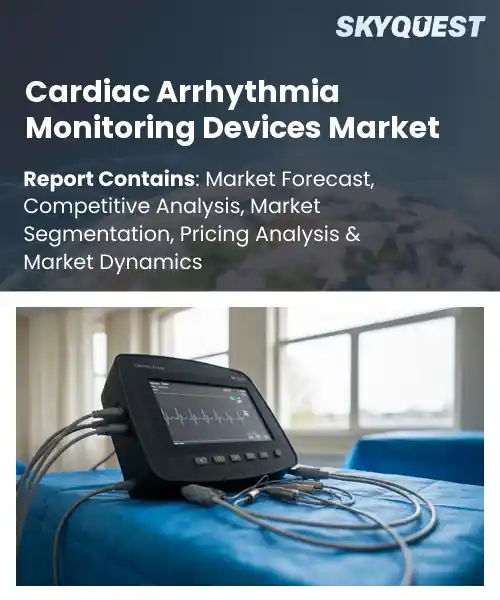
Cardiac Arrhythmia Monitoring Devices Market
Report ID: SQMIG35A3624
Report ID: SQMIG35A3624
[email protected]
USA +1 351-333-4748
Report ID:
SQMIG35A3624 |
Region:
Global |
Published Date: May, 2026
Pages:
157
|Tables:
184
|Figures:
79


Global Cardiac Arrhythmia Monitoring Devices Market size was valued at USD 7.34 Billion in 2024 and is poised to grow from USD 7.88 Billion in 2025 to USD 13.96 Billion by 2033, growing at a CAGR of 7.4% during the forecast period (2026-2033).
High incidence of atrial fibrillation and other cardiac arrhythmias, rising incidence of cardiovascular diseases, increasing adoption of remote patient monitoring, advancements in wearable cardiac monitoring technologies, and growing awareness regarding early diagnosis are driving sales of cardiac arrhythmia monitoring devices.
The use of connected monitoring tools facilitates the generation of a constant stream of patient information which can be reviewed using sophisticated algorithms to detect irregular rhythms that would normally go unnoticed. Such technologies allow healthcare professionals to diagnose patients with atrial fibrillation at an early stage. Remote monitoring solutions assist providers to become more efficient in their diagnosis, especially when taking into account telemedicine trends. More investments from the part of device manufacturers and healthcare organizations into connected monitoring solutions will pave the way for several innovations in remote heart care and service-based health care. The growing burden of atrial fibrillation and other cardiac rhythm disorders is expected to primarily drive cardiac arrhythmia monitoring devices market growth.
Contrastingly, high costs associated with advanced monitoring devices, concerns regarding data privacy and cybersecurity, reimbursement limitations in certain regions, and challenges related to patient compliance and data interpretation are anticipated to slow down cardiac arrhythmia monitoring devices market penetration in the long run.
How is AI Enhancing Accuracy in Cardiac Arrhythmia Monitoring Devices?
Cardiac arrhythmias can now be identified using artificial intelligence through the improved signal processing capabilities of AI and better ECG interpretation through the reduction of interference and signal noise. By using machine learning algorithms in training with ECG datasets, cardiac arrhythmias are more accurately detected by helping to recognize real arrhythmias and eliminating the others. These innovations are increasingly available in various types of devices used, including implantable cardiac monitors, ECG patches, and the commercial smartwatch. Using artificial intelligence makes workflow more efficient by prioritizing clinically significant events with the help of AI. Increasingly, there is a rising need for remotely monitoring the heart among healthcare providers.
Market snapshot - (2026-2033)
Global Market Size
USD 7.34 Billion
Largest Segment
Holter Monitors
Fastest Growth
Patch-based Cardiac Monitors
Growth Rate
7.4% CAGR
To get more insights on this market click here to Request a Free Sample Report
Global cardiac arrhythmia monitoring devices market is segmented by product type, technology, application, end user, patient type, distribution channel, and region. Based on product type, the market is segmented into holter monitors, event monitors, mobile cardiac telemetry devices, implantable loop recorders, patch-based cardiac monitors, wearable ecg monitoring devices, and others. Based on technology, the market is segmented into wireless monitoring devices, Bluetooth-enabled devices, AI-enabled monitoring devices, cloud-connected monitoring systems, and others. Based on application, the market is segmented into atrial fibrillation monitoring, bradycardia monitoring, tachycardia monitoring, cardiac event detection, post-stroke monitoring, heart failure monitoring, and others. Based on end user, the market is segmented into hospitals, cardiology clinics, ambulatory surgical centers, homecare settings, diagnostic centers, and others. Based on patient type, the market is segmented into adult, pediatric, and geriatric. Based on distribution channel, the market is segmented into direct sales, medical device distributors an,d online sales. Based on region, the market is segmented into North America, Europe, Asia Pacific, Latin America, and Middle East & Africa.
The patch-based cardiac monitors segment is anticipated to lead the global cardiac arrhythmia monitoring devices market revenue generation in the long run. These devices provide both a minimal disruption and continuous application process while being able to capture data easily and efficiently, thus making them preferable in long-term out-patient monitoring by doctors and their patients. With the use of such devices, patients’ adherence becomes better, and more efficient detection of heart rhythms can be performed, resulting in easier data analysis.
However, wearable ECG monitoring devices are witnessing the fastest growth as per this cardiac arrhythmia monitoring devices industry analysis. With more consumer-friendly designs, along with advancements in miniaturizing sensors and their incorporation into telemedicine systems, there is an increased usage of these devices beyond clinical settings. This trend towards greater adoption will be driven by higher levels of user engagement and wider acceptance of these devices amongst providers, as well as continued technological innovation.
The wireless monitoring devices segment is expected to account for the largest global cardiac arrhythmia monitoring devices market share going forward. Seamless connectivity and real-time data transmission have enabled continuous remote monitoring and immediate interventions by clinicians to ensure diagnosis and treatment. The capability of integration with mobile technology makes them suitable for monitoring programs where there is very little labor involved. Wireless capabilities will be helpful in facilitating telemetry in clinics that intend to incorporate remote patient care techniques.
On the other hand, AI-enabled monitoring devices have been found to be the most rapidly growing segment thanks to innovations in signal processing and detection algorithms, which improve sensitivity and specificity in detecting arrhythmias. The regulatory drive and investments made by vendors into developing machine learning models are increasing acceptance of such technologies, while predictive analytics and automated triage bring workflow efficiencies.
To get detailed segments analysis, Request a Free Sample Report
Integrated ecosystem of advanced clinical infrastructure, strong reimbursement frameworks, and concentrated presence of leading medical device companies are helping this region maintain its dominance. North America has a high adoption rate of both ambulatory and implantable monitoring technologies, as a result of established referral pathways and collaborative networks between cardiology centers, primary care providers, and providers of specialized diagnostics. Rapid commercialization via efficient regulatory channels has occurred as a result of continuous innovation in sensor miniaturization, remote monitoring platforms, and data analytics. The payer community has embraced these technologies with substantial investments towards building structures that facilitate wide adoption across both inpatient and outpatient settings supporting North America's continued leadership in this market segment. In addition, through the establishment of strategic collaborative partnerships between industry and academic institutions, enhanced clinical validation will occur resulting in much greater utilization of these devices in many different types of care settings.
Cardiac Arrhythmia Monitoring Devices Market in the United States is characterized by early technology adoption, a dense network of specialist centers, and strong payer engagement. Market activity is driven by continuous device innovation, extensive clinical research infrastructure, and established commercialization channels. Healthcare providers prioritize remote diagnostics and integrated care pathways, while collaboration between industry and academic centers supports iterative improvements and evidence generation that reinforce clinical acceptance and broader adoption.
Collaborative healthcare environment with provincial delivery models and growing integration of ambulatory monitoring are helping boost adoption of cardiac arrhythmia monitoring devices in Canada. Collaborations between international manufacturers and local agencies contribute to local validation and methodical adoption of these technologies which enhance patient management capacity. Adoption focuses on interoperability with health information records and value-based purchasing through health agencies. Telemonitoring and allied health program collaborations provide remote monitoring and device management.
Harmonized clinical guidelines encouraging ambulatory and implantable monitoring, increasing clinician familiarity with remote care models, and strategic investments by device manufacturers create new business scope in the region. The presence of centralized healthcare systems allows for coordinated procurement and greater ability to conduct large-scale pilot projects in many jurisdictions, while cross-border collaborations on research result in faster clinical validation and distribution of best-practice guidelines for telemedicine. Regulatory clarifications and recognition of reimbursement for remote diagnostic services help to ensure the commercial viability of telemedicine services, particularly in geographies with strong cardiology network. Furthermore, an emphasis on both patient-centered care and integration with digital health technologies has fueled the adoption of cloud-enabled, wearable monitoring devices. Germany has developed a large clinical and manufacturing hub for telemedicine; UK has experienced a rapid uptick in telemedicine services due to innovative care delivery processes and France has emerged as a market through targeted implementation initiatives and developing a robust regional expertise.
Cardiac arrhythmia monitoring device demand in Germany benefits from a strong manufacturing ecosystem, dense clinical networks, and established pathways for technology assessment. Collaboration between industry and academia results in engineering improvement and local manufacture, while clinician advocacy and training speeds up adoption in clinics. Hospitals and specialty cardiology centers are involved in device testing and follow-up studies, thus aiding in providing scientific evidence. Reimbursement strategies and collaborative purchasing from health facilities ensure large-scale rollouts.
Digital health programs, primary care integration, and innovation in service delivery help boost demand for cardiac arrhythmia monitoring devices in the United Kingdom. Procurement trends encourage the adoption of interoperable monitoring systems. Implementation strategies and pilot programs in academic medical networks in health sciences enable remote monitoring model piloting. Partnership between NHS providers and private industry enables scale-up of implementations, while clinician advocates and patient engagement efforts lead to adoption.
Cardiac arrhythmia monitoring devices market in France is emerging through targeted clinical programs and pilot deployments increasing focus on remote cardiac care. Clinical societies and health authorities are developing evaluation frameworks to align device performance with care pathway objectives. Increasing involvement from clinicians and implementation strategies advance the market development process. Integrative programs enhance the incorporation of monitoring information into health care systems, whereas collaborations with international vendors enable adjustment to regional clinical needs.
Targeted investments in healthcare modernization, growing local manufacturing capabilities, and increasing clinical adoption of remote monitoring technologies drive consistent sales of cardiac arrhythmia monitoring devices in Asia Pacific through 2033. The focus of healthcare in the region continues to be on improving the interoperability of devices, developing more localized designs for those devices, and integrating remote monitoring technologies with hospital patient record systems to better support the different types of care delivery systems used across various countries in the Asia Pacific. Multinational medical device manufacturers are entering into strategic collaborations with local partners, which help to expedite regulatory approvals and localize their services. Clinical training programs and government-sponsored initiatives in support of telemedicine will help to increase clinicians' knowledge of remote diagnostics and improve patient acceptance of remote diagnostics services. Japan has advanced knowledge in electronics technology and established the cardiology network, while South Korea has developed an agile innovation ecosystem and will be able to utilize its strong digital health infrastructure; the increased number of clinical trials will create a greater understanding about remote diagnosis services; and payers across many different types of healthcare delivery systems in the Asia-Pacific region will support remote diagnosis services in their respective markets.
Cardiac arrhythmia monitoring device sales in Japan leverage advanced electronics expertise, a mature ecosystem, and collaboration between manufacturers and clinical centers. Collaboration between local companies and foreign entities helps achieve technology transfer and compliance, while the acceptance of patients promotes adoption into healthcare settings. Local expertise in the field of sensors and miniaturization facilitates customization according to the needs of clinicians. The connectivity with hospital management systems and a focus on quality assurance promote clinician acceptance.
An agile innovation ecosystem, strong digital infrastructure, and collaboration between technology firms and healthcare providers are helping boost cardiac arrhythmia monitoring devices innovation in South Korea. Interoperability and efficiency in regulatory affairs facilitate market preparedness. Rapid prototyping and development of connection-based monitoring solutions fit well into the models of integrated health care delivery systems. National push towards extending telemedicine capabilities and data connectivity promotes clinician involvement, along with manufacturer alliances.
To know more about the market opportunities by region and country, click here to
Buy The Complete Report
Rising Prevalence Of Arrhythmias
Advances In Monitoring Technology
High Device and Maintenance Costs
Regulatory and Reimbursement Complexity
Request Free Customization of this report to help us to meet your business objectives.
Competitive dynamics in the global cardiac arrhythmia monitoring devices market are driven by consolidation, regulatory enabled product launches, and AI enabled differentiation. Established medtechs execute acquisitions of niche monitoring startups while challengers pursue FDA clearances and IDTF or health system partnerships to scale. Examples include WearLinq's acquisition of AMI, Cardiosense's regulatory milestones, and earlier strategic deals such as Hillrom's purchase of Bardy Diagnostics.
SkyQuest’s ABIRAW (Advanced Business Intelligence, Research & Analysis Wing) is our Business Information Services team that Collects, Collates, Correlates, and Analyses the Data collected by means of Primary Exploratory Research backed by robust Secondary Desk research.
As per SkyQuest analysis, high prevalence of atrial fibrillation and other cardiac arrhythmias, rising incidence of cardiovascular diseases, increasing adoption of remote patient monitoring, and advancements in wearable cardiac monitoring technologies are anticipated to drive the demand for cardiac arrhythmia monitoring devices going forward. However, high costs associated with advanced monitoring devices, concerns regarding data privacy and cybersecurity, and reimbursement limitations in certain regions are slated to slow down the adoption of cardiac arrhythmia monitoring devices in the future. North America is slated to spearhead the demand for cardiac arrhythmia monitoring devices owing to high prevalence of cardiovascular disorders, advanced healthcare infrastructure, and strong adoption of digital health and remote monitoring technologies. Development of AI-powered ECG interpretation algorithms, increasing adoption of wearable and implantable monitoring devices, and integration of remote monitoring platforms with telehealth services are anticipated to be key trends driving the cardiac arrhythmia monitoring devices sector across the study period.
| Report Metric | Details |
|---|---|
| Market size value in 2024 | USD 7.34 Billion |
| Market size value in 2033 | USD 13.96 Billion |
| Growth Rate | 7.4% |
| Base year | 2024 |
| Forecast period | (2026-2033) |
| Forecast Unit (Value) | USD Billion |
| Segments covered |
|
| Regions covered | North America (US, Canada), Europe (Germany, France, United Kingdom, Italy, Spain, Rest of Europe), Asia Pacific (China, India, Japan, Rest of Asia-Pacific), Latin America (Brazil, Rest of Latin America), Middle East & Africa (South Africa, GCC Countries, Rest of MEA) |
| Companies covered |
|
| Customization scope | Free report customization with purchase. Customization includes:-
|
To get a free trial access to our platform which is a one stop solution for all your data requirements for quicker decision making. This platform allows you to compare markets, competitors who are prominent in the market, and mega trends that are influencing the dynamics in the market. Also, get access to detailed SkyQuest exclusive matrix.
Table Of Content
Executive Summary
Market overview
Parent Market Analysis
Market overview
Market size
KEY MARKET INSIGHTS
COVID IMPACT
MARKET DYNAMICS & OUTLOOK
Market Size by Region
KEY COMPANY PROFILES
Methodology
For the Cardiac Arrhythmia Monitoring Devices Market, our research methodology involved a mixture of primary and secondary data sources. Key steps involved in the research process are listed below:
1. Information Procurement: This stage involved the procurement of Market data or related information via primary and secondary sources. The various secondary sources used included various company websites, annual reports, trade databases, and paid databases such as Hoover's, Bloomberg Business, Factiva, and Avention. Our team did 45 primary interactions Globally which included several stakeholders such as manufacturers, customers, key opinion leaders, etc. Overall, information procurement was one of the most extensive stages in our research process.
2. Information Analysis: This step involved triangulation of data through bottom-up and top-down approaches to estimate and validate the total size and future estimate of the Cardiac Arrhythmia Monitoring Devices Market.
3. Report Formulation: The final step entailed the placement of data points in appropriate Market spaces in an attempt to deduce viable conclusions.
4. Validation & Publishing: Validation is the most important step in the process. Validation & re-validation via an intricately designed process helped us finalize data points to be used for final calculations. The final Market estimates and forecasts were then aligned and sent to our panel of industry experts for validation of data. Once the validation was done the report was sent to our Quality Assurance team to ensure adherence to style guides, consistency & design.
Analyst Support
Customization Options
With the given market data, our dedicated team of analysts can offer you the following customization options are available for the Cardiac Arrhythmia Monitoring Devices Market:
Product Analysis: Product matrix, which offers a detailed comparison of the product portfolio of companies.
Regional Analysis: Further analysis of the Cardiac Arrhythmia Monitoring Devices Market for additional countries.
Competitive Analysis: Detailed analysis and profiling of additional Market players & comparative analysis of competitive products.
Go to Market Strategy: Find the high-growth channels to invest your marketing efforts and increase your customer base.
Innovation Mapping: Identify racial solutions and innovation, connected to deep ecosystems of innovators, start-ups, academics, and strategic partners.
Category Intelligence: Customized intelligence that is relevant to their supply Markets will enable them to make smarter sourcing decisions and improve their category management.
Public Company Transcript Analysis: To improve the investment performance by generating new alpha and making better-informed decisions.
Social Media Listening: To analyze the conversations and trends happening not just around your brand, but around your industry as a whole, and use those insights to make better Marketing decisions.
REQUEST FOR SAMPLE
 REQUEST FREE CUSTOMIZATION
Global Cardiac Arrhythmia Monitoring Devices Market size was valued at USD 7.34 Billion in 2024 and is poised to grow from USD 7.88 Billion in 2025 to USD 13.96 Billion by 2033, growing at a CAGR of 7.4% during the forecast period (2026-2033).
Competitive dynamics in the global cardiac arrhythmia monitoring devices market are driven by consolidation, regulatory enabled product launches, and AI enabled differentiation. Established medtechs execute acquisitions of niche monitoring startups while challengers pursue FDA clearances and IDTF or health system partnerships to scale. Examples include WearLinq's acquisition of AMI, Cardiosense's regulatory milestones, and earlier strategic deals such as Hillrom's purchase of Bardy Diagnostics. 'Medtronic', 'Abbott Laboratories', 'Boston Scientific', 'iRhythm Technologies', 'Philips Healthcare', 'GE HealthCare', 'Biotronik', 'AliveCor', 'BioTelemetry', 'Preventice Solutions', 'Nihon Kohden', 'Fukuda Denshi', 'Schiller', 'Cardiac Insight', 'Norav Medical', 'VectraCor', 'Lepu Medical', 'Hill-Rom Holdings', 'Omron Healthcare', 'Baxter International'
The increasing prevalence of cardiac arrhythmias has expanded clinical demand for continuous and intermittent monitoring solutions, prompting healthcare providers to integrate advanced devices into diagnostic and follow up pathways. Clinicians evaluate symptoms more proactively, leading to greater adoption of wearable and implantable monitors. Manufacturers respond with device innovations and enhanced service models to address unmet needs, which stimulates investment in product development and commercialization. This dynamic supports market growth by creating steady clinical use cases and broader acceptance across care settings.
Wearable Continuous Monitoring Uptake: Patient and clinician preference for unobtrusive, home-based devices is driving adoption of wearable continuous arrhythmia monitoring. These form factors enable long-term rhythm capture, greater patient comfort, and seamless integration with remote care pathways. Manufacturers are prioritizing ergonomic design, extended battery life, and wearable materials to support daily activities. Clinicians value richer longitudinal data for trend analysis and treatment personalization, while care teams leverage remote alerts to streamline follow-up and reduce reliance on episodic clinic visits overall.
Why does North America Dominate the Global Cardiac Arrhythmia Monitoring Devices Market? |@12


Want to customize this report? This report can be personalized according to your needs. Our analysts and industry experts will work directly with you to understand your requirements and provide you with customized data in a short amount of time. We offer $1000 worth of FREE customization at the time of purchase.
Feedback From Our Clients


 USA (+1) 351-333-4748

