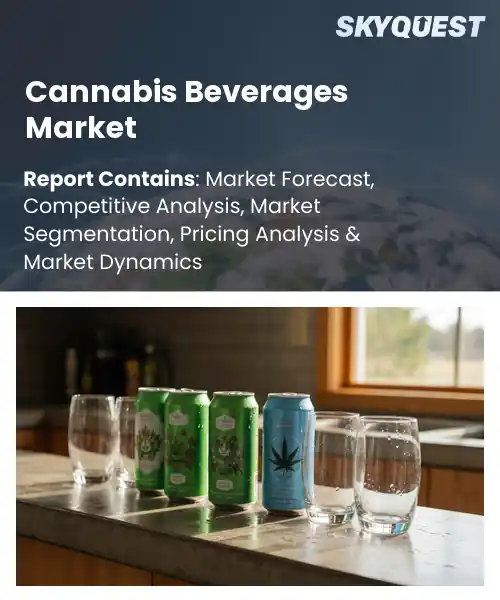
Cannabis Beverages Market
Report ID: SQMIG30G2097
Report ID: SQMIG30G2097
[email protected]
USA +1 351-333-4748
Report ID:
SQMIG30G2097 |
Region:
Global |
Published Date: May, 2026
Pages:
157
|Tables:
118
|Figures:
77


Global Cannabis Beverages Market size was valued at USD 1.52 Billion in 2024 and is poised to grow from USD 1.79 Billion in 2025 to USD 6.52 Billion by 2033, growing at a CAGR of 17.52% during the forecast period (2026-2033).
As the legalization landscape widened, along with decreased stigma, the major factor behind the growth in the cannabis drinks market was the consumer need for reliable consumption methods that provided dosed and comparable experience to that of alcohol. Examples of cannabis beverages are infused water, teas, and carbonated beverages. The significance of cannabis drinks is that these products make botanical cannabis accessible by making it more convenient, with lower stigma attached. The development timeline includes the launch of CBD tonics giving visibility to companies such as Recess, followed by experimentation by craft breweries and beverage makers in THC drinks, with Lagunitas launching its Hi Fi Hops drinks.
Factors that drive expansion globally include regulatory certainty and innovative formulation, since it is only via regulation that companies can sell their products, while the investor will finance the manufacturing process on a large scale. It is only with the help of the licenses that have been made available in countries like Canada and some states in the United States that companies find room for distribution through their partnership with the incumbent. Research and development efforts aimed at creating nano-emulsions and accurate dosing lead to immediate effects that prompt professionals looking for micro-dosing or an alternative to alcohol to try out their product.
How is IoT Enhancing Quality Control in the Cannabis Beverages Market?
IoT enables an enhanced quality control strategy in cannabis beverages in terms of continuous sensing and automation throughout the formulation, packaging, and distribution process. Some examples include the inclusion of environmental sensors in relation to temperature and humidity levels, fill levels and flow rate detection during formulation and packaging and integration of laboratory potency levels into the traceability system. Currently, there is coexistence of both small scale producers and large scale manufacturers, and regulations stipulate consistency in dosing and high standards of manufacture. Such measures will prevent any deviation from the standard manufacturing and formulation procedures to improve compliance and ensure consistency in the sensory and dosage experience. Twofold April 2026 introduced a spirits-based THC product that emphasizes the importance of reliability in relation to stability and dosing.
Market snapshot - (2026-2033)
Global Market Size
USD 1.52 Billion
Largest Segment
CBD-Infused Beverages
Fastest Growth
CBG/CBN Beverages
Growth Rate
17.52% CAGR
To get more insights on this market click here to Request a Free Sample Report
Global cannabis beverages market is segmented by product type, beverage category, distribution, consumer and region. Based on product type, the market is segmented into CBD-Infused Beverages, THC-Infused Beverages and CBG/CBN Beverages. Based on beverage category, the market is segmented into Water & Sparkling Water, Energy Drinks, Tea & Coffee and Beer & Hops-Based. Based on distribution, the market is segmented into Dispensaries, Online and Specialty Stores. Based on consumer, the market is segmented into Recreational, Wellness and Medical. Based on region, the market is segmented into North America, Europe, Asia Pacific, Latin America and Middle East & Africa.
CBD-Infused Beverages segment leads, as the customer's familiarity with non-psychoactive products makes CBD beverages the most prominent starting point for consumers to engage with cannabis beverages. The wellness image and dosing versatility enable these beverages to adapt easily to standard beverage forms and promote their development and distribution by both retailers and established beverage companies, contributing to ongoing R&D efforts on the part of producers and consumers.
Conversely, THC-Infused Beverages show strong growth potential owing to changing consumption preferences among adult users in favor of experience-oriented and smokeless beverages. Micro-dosing and innovative flavors as well as high-end branding create conditions conducive to increased production and consumption occasions.
Segment that dominates the market is Dispensaries due to the existence of regulated retailers that create a well-controlled environment for the consumer and allow the consumer to be exposed to cannabis drinks under the guidance of knowledgeable employees and through proper purchasing protocols. Knowledgeable employees and the ability to offer samples of products educate consumers on dosages and effect.
On the other hand, the online segment has been experiencing very strong momentum due to the ability of online channels to eliminate bottlenecks involved in discovering and purchasing cannabis beverages through convenient delivery services. Age verification and logistics support make it easier to create catalogs and repeat purchases.
To get detailed segments analysis, Request a Free Sample Report
The dominance of North America can be attributed to matured regulatory systems, effective production processes, and a favorable environment for innovation as well as large-scale distribution of products. Market players enjoy the advantage of having developed farming systems, product development techniques, and high levels of research and development efforts directed at beverages. Effective retail networks coupled with strategic partnerships formed by established beverage companies with cannabis firms facilitate rapid expansion into the markets. Well-defined regulations in key markets lead to the development of diversified beverage ranges, and customers seem willing to accept functional and lifestyle-oriented drinks. The availability of skilled manufacturers, efficient supply chains, and allied services ensures sustainability within the industry.
Market for Cannabis Beverages in US is distinguished by the high pace of innovation and diversification of products offered; by the considerable influx of capital into private enterprises; and the wide retail distribution channel enabling customers' trial and acceptance. The consumer demand for more effective formulations, and luxury offerings, leads the established brands and newcomers alike to develop novel products. The developed infrastructure, and the presence of strong manufacturing facilities allows for easy scaling up.
The Cannabis Beverages Market in Canada enjoys a favorable regulatory atmosphere, an existing adult use regime, and an eco-system that works well with craft breweries and beverage companies. The demand for health and new ways to consume cannabis leads to innovation with low concentration and flavored products. Using both specialty stores and regular grocery chains for distribution increases exposure, and quality and regulation ensure responsible consumer use.
Europe is witnessing an increase in the size of its market due to changing regulatory policies, increasing acceptability in the medical community, and growing curiosity on the part of consumers toward such beverages. Such development is fueled by an increasing number of pilots and reform-oriented regulators, which pave ways toward increased product availability. Entrepreneurs operating locally and established beverage manufacturers work together to customize products according to the tastes of local consumers and relevant labeling guidelines. Both specialty stores and conventional retail channels can be used in order to distribute beverages to a variety of audiences. The trend toward premiumization and the need for transparently sourced products can help differentiate them. With cross-national knowledge transfer and specialized marketing campaigns, beverage companies will find it easier to penetrate different national markets with the help of innovative strategies.
German Cannabinoid Drinks Market reflects a robust trend towards regulation driven by quality and consumer safety, thus motivating major players in beverages industry to investigate suitable cannabis-based drinks solutions. Consumer preferences are inclined towards high-quality beverages featuring exact dosage information as well as precise product labeling. German producers prefer cooperation with suppliers of ingredients for maintaining high-quality control standards. Preferred distribution methods include pharmacies and stores, and marketing efforts focus on transparency and proper consumption.
United Kingdom Cannabis Beverages Market showcases an active adoption pattern by consumers and an active industry environment that concentrates on innovation and experience-based branding. Innovations in the sector come in the form of innovative flavors, convenient packaging, and partnerships with hospitality businesses to enable tastings. Industry involvement in regulatory processes helps in executing the initiative as well as testing products. The distribution strategy utilizes both online and retail channels with targeted marketing activities.
France’s Cannabis Drinks Market is slowly but surely coming into its own through careful regulatory changes, and the interest shown in wellness-based beverages. The French producers have an emphasis on using traditional craftsmanship, natural ingredients, and delicate flavors that cater to the discerning palates of the consumers. Development within the market is based on adhering to labeling and safety regulations, leading to working partnerships between producers, consultants, and retailers.
Asia Pacific continues to fortify itself by implementing a more balanced approach to regulation through experiments, investments into ingredient R&D, and adaptation of their products to suit regional tastes and cultural preferences. The advantages of entering such a market will arise from joint ventures between regional beverage giants and cannabis specialists with a special focus on product safety, control over quality, and dosage method. Product appeal in many cases is associated with the wellness concept, which makes it important to differentiate themselves in terms of having some calming and soothing properties. Controlled distribution networks, together with online marketing, are the key strategies used by companies entering Asia Pacific markets to ensure success here. Gradual liberalization policies along with pilot programs and investments into supply chain management and scientific evidence-based approach make it possible to expand the business step-by-step and in harmony with the conservative attitudes of the population.
Japan Cannabis Drinks Market progresses via strategic regulation engagement coupled with strong safety and validation considerations. The concept of product revolves around well-being and functional aspects with mild flavors and lower dosing preferred by consumers. Manufacturers pay great attention to ensuring quality standards and cooperation with research institutions. Marketing is directed towards regulated distribution channels and websites, while communication strategy is based on educating consumers.
The Market for Cannabis Drinks in South Korea is developing through a rigorous regulation regime and a wellness approach which resonates with public health goals. Firms rely on scientifically-backedformulations and quality manufacturing to establish collaborations with well-known beverage companies to modify their products according to local tastes. Distribution relies on controlled retail sales networks, while educational campaigns focus on dispelling consumer fears and enhancing credibility.
To know more about the market opportunities by region and country, click here to
Buy The Complete Report
Rising Consumer Acceptance
With an increased societal tolerance and destigmatization around cannabis use, the market for beverages has grown to encompass a wider consumer demographic. With shifting perspectives, dispensaries and other distribution channels are more likely to stock cannabis-based beverages among other beverages, which enhances their exposure and trial. Greater acceptance results in greater resources being allocated to the research and development of innovative products, along with their promotion and distribution.
Innovation in Product Formulation
Improvements in formulation technology and the sourcing of ingredients make it possible for manufacturers to produce formulations that are both stable and tasty without any loss of flavor. The continuous development of terpene profiles, microdosing methods, and non-alcoholic delivery platforms makes it possible for brands to cater to specific occasions and needs in terms of wellness, creating differentiation for their products. This improvement in formulation technology lowers the entry barrier into this market space, allowing more brands to consider entering this space.
Regulatory Complexity Across Jurisdictions
The inconsistent and constantly changing regulations within various geographical regions pose a major challenge to producers, distributors, and retailers, making compliance difficult while exposing businesses to additional risks. This is attributed to the fact that there are differences between regulatory guidelines in terms of product specifications, testing procedures, and even advertising practices. The above makes it harder for businesses to operate effectively as it limits their ability to expand their operations and invest in new markets.
Supply Chain and Quality Challenges
Maintaining consistent cannabinoid potency, flavor integrity, and purity of ingredients from batch to batch is difficult and may become an obstacle to a steady supply of high-quality products and customers' trust, especially regarding the sourcing of natural extracts and special carriers. Differences in raw materials' quality and stringent requirements on testing contribute to complex production process and lengthy timeframes, and disruption in supplies could mean having to revise formulations or limit product distribution. All those issues demand considerable knowledge and efforts and delay development of new products and their entry into the market.
Request Free Customization of this report to help us to meet your business objectives.
Competitive dynamics are rooted in strategic mergers and acquisitions as well as cross-sector partnerships to achieve fast distribution and credibility. For Instance, Tilray has acquired several craft beer and beverage companies to get to beverage scale, Molson Coors partnered with HEXO in their Truss Joint Venture in beverages with cannabis. There are also innovative solutions like Sorse’s emulsions for creating stable THC formulations.
Premiumization and Flavor Innovation: Consume are moving towards hand-crafted cannabis beverages that place emphasis on flavor composition. The companies focus on flavor, collaborations with mixologists and premium packaging to help create a strong position in terms of value and customer loyalty. The functional blends providing mood modulation together with exquisite flavors appeal to those who want to have rituals without using alcohol. Seasonal and small-batch products are an important part of the story creation, allowing for easier distinction from competitors when it comes to retail shelves and restaurant menus.
Experiential and Lifestyle Positioning: The brands are using the experiential positioning strategy to normalize cannabis beverages in the lives of consumers through collaborations between brands and hotels or restaurants where the beverage experiences are tailored to offer unique tastes in fun settings. Some strategies include pop-up experiences, chef-curated pairing events, and other immersive experiences that place emphasis on taste and responsible drinking. The focus is on creating sophisticated beverage experiences that will encourage more people to try the beverages and spread positive word-of-mouth messages about them.
SkyQuest’s ABIRAW (Advanced Business Intelligence, Research & Analysis Wing) is our Business Information Services team that Collects, Collates, Correlates, and Analyses the Data collected by means ofPrimary Exploratory Research backed by robust Secondary Desk research.
As per SkyQuest analysis, the market for cannabis beverages around the world is mainly fueled by an increase in the acceptance levels among consumers of conventional beverage products that have low stigma. The other driving factor includes innovations in the formulations used which allow for proper dosages, faster effect, and stable emulsion for general commercial consumption. In the same light, the complexity surrounding the regulations within various jurisdictions acts as a major constraint on market growth through high compliance costs. North America continues to dominate the market owing to its advanced regulation, strong infrastructure, and investments, whereas CBD-based beverages take the lead in terms of popularity.
| Report Metric | Details |
|---|---|
| Market size value in 2024 | USD 1.52 Billion |
| Market size value in 2033 | USD 6.52 Billion |
| Growth Rate | 17.52% |
| Base year | 2024 |
| Forecast period | (2026-2033) |
| Forecast Unit (Value) | USD Billion |
| Segments covered |
|
| Regions covered | North America (US, Canada), Europe (Germany, France, United Kingdom, Italy, Spain, Rest of Europe), Asia Pacific (China, India, Japan, Rest of Asia-Pacific), Latin America (Brazil, Rest of Latin America), Middle East & Africa (South Africa, GCC Countries, Rest of MEA) |
| Companies covered |
|
| Customization scope | Free report customization with purchase. Customization includes:-
|
To get a free trial access to our platform which is a one stop solution for all your data requirements for quicker decision making. This platform allows you to compare markets, competitors who are prominent in the market, and mega trends that are influencing the dynamics in the market. Also, get access to detailed SkyQuest exclusive matrix.
Table Of Content
Executive Summary
Market overview
Parent Market Analysis
Market overview
Market size
KEY MARKET INSIGHTS
COVID IMPACT
MARKET DYNAMICS & OUTLOOK
Market Size by Region
KEY COMPANY PROFILES
Methodology
For the Cannabis Beverages Market, our research methodology involved a mixture of primary and secondary data sources. Key steps involved in the research process are listed below:
1. Information Procurement: This stage involved the procurement of Market data or related information via primary and secondary sources. The various secondary sources used included various company websites, annual reports, trade databases, and paid databases such as Hoover's, Bloomberg Business, Factiva, and Avention. Our team did 45 primary interactions Globally which included several stakeholders such as manufacturers, customers, key opinion leaders, etc. Overall, information procurement was one of the most extensive stages in our research process.
2. Information Analysis: This step involved triangulation of data through bottom-up and top-down approaches to estimate and validate the total size and future estimate of the Cannabis Beverages Market.
3. Report Formulation: The final step entailed the placement of data points in appropriate Market spaces in an attempt to deduce viable conclusions.
4. Validation & Publishing: Validation is the most important step in the process. Validation & re-validation via an intricately designed process helped us finalize data points to be used for final calculations. The final Market estimates and forecasts were then aligned and sent to our panel of industry experts for validation of data. Once the validation was done the report was sent to our Quality Assurance team to ensure adherence to style guides, consistency & design.
Analyst Support
Customization Options
With the given market data, our dedicated team of analysts can offer you the following customization options are available for the Cannabis Beverages Market:
Product Analysis: Product matrix, which offers a detailed comparison of the product portfolio of companies.
Regional Analysis: Further analysis of the Cannabis Beverages Market for additional countries.
Competitive Analysis: Detailed analysis and profiling of additional Market players & comparative analysis of competitive products.
Go to Market Strategy: Find the high-growth channels to invest your marketing efforts and increase your customer base.
Innovation Mapping: Identify racial solutions and innovation, connected to deep ecosystems of innovators, start-ups, academics, and strategic partners.
Category Intelligence: Customized intelligence that is relevant to their supply Markets will enable them to make smarter sourcing decisions and improve their category management.
Public Company Transcript Analysis: To improve the investment performance by generating new alpha and making better-informed decisions.
Social Media Listening: To analyze the conversations and trends happening not just around your brand, but around your industry as a whole, and use those insights to make better Marketing decisions.
REQUEST FOR SAMPLE
 REQUEST FREE CUSTOMIZATION
Global Cannabis Beverages Market size was valued at USD 1.52 Billion in 2024 and is poised to grow from USD 1.79 Billion in 2025 to USD 6.52 Billion by 2033, growing at a CAGR of 17.52% during the forecast period (2026-2033).
The competitive landscape is driven by strategic M&A and cross sector partnerships that accelerate distribution and credibility. Examples include Tilray acquiring multiple craft beer and beverage brands to build beverage scale, Molson Coors forming the Truss joint venture with HEXO for cannabis drinks, and emulsion innovators such as Sorse enabling stable THC formulations. Brands pursue retail and distributor tie ups to gain on premise access. 'Constellation Brands (Canopy Growth investment)', 'Molson Coors (Hexo partnership)', 'Lagunitas (Heineken) - Hi-Fi Hops', 'Cann Social Tonics', 'Keef Brands', 'Tinley Beverage Company', 'Bev Tasting Room', 'Vertosa', 'Wana Brands', 'BRĒZ', 'Flying Dog Brewery', 'Calyx Peaks', 'Mary Jones (Jones Soda)', 'Wynk (Outbound Brewing)', 'Sweet Leaf Tea', 'Beatbox Beverages', 'Pabst Labs', 'Pura Still (cannabis water)', 'The Tinley Beverage Company', 'KALI-EXTRAKT'
Growing social acceptance and destigmatization of cannabis consumption have expanded the potential consumer base for beverages, enabling producers to introduce mainstream products that appeal to diverse demographics. As perceptions shift, retailers and hospitality channels are more willing to carry cannabis-infused drinks alongside conventional offerings, which increases visibility and trial. This broader acceptance encourages investment in product development, marketing, and distribution, fostering category legitimacy and allowing brands to experiment with flavor profiles and formats that meet established beverage consumer expectations effectively.
Premiumization And Flavor Innovation: Consumers are shifting toward crafted cannabis beverages that emphasize distinctive flavor composition, premium ingredients and elevated sensory experiences. Companies prioritize flavor development, mixologist partnerships and premium packaging to support value positioning and cultivate loyalty. Functional blends that deliver mood modulation alongside refined taste attract consumers seeking ritualized, nonalcoholic occasions. Seasonal releases and limited, small-batch artisan offerings reinforce brand storytelling and perceived scarcity, enabling clearer differentiation on retail shelves and hospitality menus while strengthening emotional connections and willingness to pay more.
Why does North America Dominate the Global Cannabis Beverages Market? |@12


Want to customize this report? This report can be personalized according to your needs. Our analysts and industry experts will work directly with you to understand your requirements and provide you with customized data in a short amount of time. We offer $1000 worth of FREE customization at the time of purchase.
Feedback From Our Clients


 USA (+1) 351-333-4748

