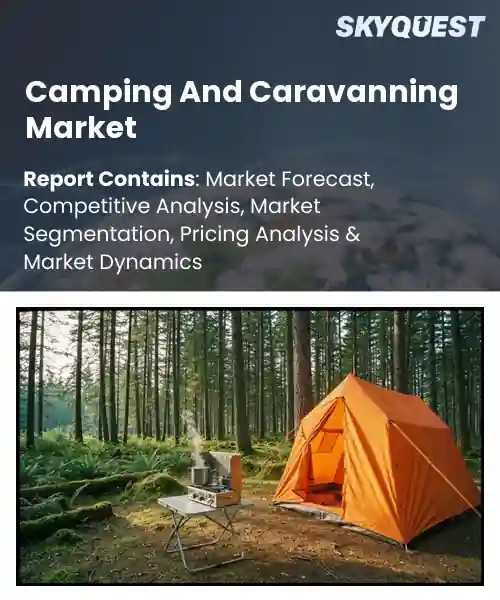
Camping And Caravanning Market
Report ID: SQMIG25O2040
Report ID: SQMIG25O2040
[email protected]
USA +1 351-333-4748
Report ID:
SQMIG25O2040 |
Region:
Global |
Published Date: May, 2026
Pages:
157
|Tables:
118
|Figures:
72


Global Camping And Caravanning Market size was valued at USD 52.52 Billion in 2024 and is poised to grow from USD 55.68 Billion in 2025 to USD 88.85 Billion by 2033, growing at a CAGR of 6.02% during the forecast period (2026-2033).
As a primary driver, the shift toward more hands-on outdoor travel has nudged the camping and caravanning market growth, reworking what people actually care about toward flexibility and safety. This market sits across recreational vehicles, towable caravans, tents, camping gear, campground infrastructure, and those platform services, and it matters because it pulls in tourism receipts, backs rural economies, and it gives leisure options that better match sustainability targets.
Building on that evolution, one key factor behind global camping and caravanning market penetration is tech-enabled accessibility, since online markets and reservation systems cut down friction and broaden the audience. So rental platforms like Outdoorsy and RVshare turn quiet interest into real reservations, and that then pushes fleet operators to buy newer models and do better maintenance, which lowers the barrier for occasional travelers. Also, progress in lightweight materials and solar power helps extend vehicle range and off-grid readiness, so campgrounds respond by upgrading services, adding EV chargers, and this whole chain tends to encourage longer stays, increases local spending, and even opens financing and subscription-style options and new opportunities.
IoT is changing the camping and caravanning market outlook by connecting vehicles, appliances, and campsites into a coherent, user-focused setup. The big wins include remote control for heating and cooling, smarter energy use, predictive upkeep, and location-aware features that reduce the hassle on the road. Manufacturers and parks now drop sensors and cloud-based apps into the mix, so owners see real-time status, get a smoother check-in flow, and also receive more proactive help. Common examples are app-controlled refrigerators, automated awnings, onboard diagnostics that alert users about faults, and campsite systems that track occupancy and safety. All of this shifts the market toward experience-driven services and longer stays that feel safer, not so uncertain.
Market snapshot - (2026-2033)
Global Market Size
USD 52.52 Billion
Largest Segment
Caravans & Motorhomes
Fastest Growth
Camping Equipment & Gear
Growth Rate
6.02% CAGR
To get more insights on this market click here to Request a Free Sample Report
The global camping and caravanning market is segmented by product type, mode, distribution, end user, and region. Based on product type, the market is segmented into Caravans & Motorhomes, Camping Tents, Camping Equipment & Gear, and Camping Furniture. Based on mode, the market is segmented into Traditional Camping, Glamping, and Adventure Camping. Based on distribution, the market is segmented into Specialty Outdoor Stores, Online Retail, and Brand Stores. Based on end user, the market is segmented into Solo Travelers, Families, and Couples. Based on region, the market is segmented into North America, Europe, Asia Pacific, Latin America, and the Middle East & Africa.
As per the camping and caravanning market analysis, the glamping segment dominates, since many consumers want upscale outdoor stays that feel comfortable but still outdoorsy, so suppliers end up pushing for turnkey accommodations, with premium amenities and curated experiences. Hospitality partnerships and lifestyle branding, that whole mix boosts visibility, and it also makes people more willing to spend. Due to that, operators feel pressure to retrofit what they have or simply create specialized setups. This demand also pulls more investment into infrastructure and service integration, so glamping stays ahead in a real virtuous cycle, where guest expectations get higher, and margins open up too.
However, the Adventure Camping segment is showing strong growth, because enthusiasts are chasing experiential trips that lean into mobility and skill-based involvement rather than just being there. Improvements in lightweight equipment, social media-driven sharing within communities, and growing curiosity for off-grid moments are widening where these products and services can fit. That, in turn, builds niche offerings , spreads the market out more, and creates new opportunities fairly fast.
According to the camping and caravanning market forecast, the camping equipment & gear segment still leads, largely because it is the practical backbone of outdoor experiences, which supports accessibility, safety, and comfort across different user profiles. It also helps drive repeat purchases and keeps brand loyalty intact. Ongoing product updates in materials and portability lower participation barriers, so retailers and manufacturers tend to focus on deeper assortment and stronger channel partnerships. In the end, this central role helps them keep shelf space, increases marketing budgets, and positions gear as the primary enabler for people to actually join the market.
However, the Camping Tents category is predicted to achieve the largest camping and caravanning market share, especially as demand rises for flexible, quick-deploy shelters among mobile travelers and families. Lightweight fabrics, modular approaches, and faster setup all of these advances broaden the real use cases for weekend stays and multisite trips. That leads to more product variants, and it generates extra retail chances, which then lifts the whole category.
To get detailed segments analysis, Request a Free Sample Report
As per the camping and caravanning market regional forecast, Europe leads, mostly because people have this deep cultural pull toward outdoor downtime, and there’s huge and connected infrastructure for campgrounds and caravan routes. On top of that there is a solid manufacturing footprint for caravans and motorhomes, along with rental, swapping, and sharing ecosystems that feel normal. Supportive regulatory frameworks and high consumer comfort with long leisure getaways also make a difference. The road web is well developed, and the natural areas that are protected kinda push a wider range of camping experiences, not just the same thing again and again. Also proximity between countries makes it easier to cross borders, and that helps product innovation move faster from established OEMs and aftermarket suppliers. Services are mature too, with specialized financing, insurance, and maintenance networks that lower the whole barrier to ownership and everyday use.
Germany Camping And Caravanning Market
The Camping And Caravanning sector in Germany benefits from a mature manufacturing ecosystem, a dense web of campsites, and a real culture of outdoor recreation. There’s a strong OEM presence, skilled suppliers, and specialized service providers, so there is plenty of variety and generally good quality. Rental activity and community platforms are well established, and they pull in people across different age groups. Infrastructure upgrades , including electrification of camp sites and sustainability initiatives, boost overall appeal and support more premium offerings. Local tourism partnerships also help keep the market resilient, especially when demand shifts.
United Kingdom Camping And Caravanning Market
The Camping And Caravanning industry in United Kingdom is shaped by a strong leisure culture, with coastal and countryside destinations that feel quite varied. There’s also this lively community around parks and routes, and that keeps participation steady. Innovative rental platforms and brands have widened access and improved attraction, even for people who are not traditional campers. High interest in flexible travel is paired with targeted investment in site amenities and digital booking infrastructure. That combination raises service quality, and it brings in both established campers and newer users looking for fresh experiences.
France Camping And Caravanning Market
The Camping And Caravanning Market in France benefits from a long standing outdoor leisure tradition, diverse regional scenery, and an extensive caravan park network that serves different preferences. Strong design and manufacturing know-how make it easier for innovative vehicle formats and conversion projects to happen. The tourism value chain is integrated, and local promotion of slow travel supports demand for longer stays. Investments in site amenities, partnerships with producers, and a clearer push toward sustainable practices all strengthen the sector’s appeal for travelers.
The rapid expansion across North America is mainly pulled by the strong road travel tradition, and the vast and varied landscapes that let people do outdoor activity in different seasons. Another reason is the growing consumer desire for flexible, experiential leisure. There’s also a lively mix of independent manufacturers, conversion specialists, and rental operators, which increases product availability and creates more service models. Private park networks, state and provincial recreation options, and an active community of outdoor enthusiasts encourage more frequent usage and longer trips. Digital marketplaces and social media have helped popularize vanlife and quick weekend escapes, so entry feels easier for more people. Ongoing investment in amenities, tech enabled booking and connectivity solutions, and a stronger emphasis on sustainability in park operations all keep the momentum going. Together, these elements build an accessible, lifestyle driven market that appeals to both hardcore enthusiasts and newcomers.
United States Camping And Caravanning Market
In the United States, the Camping And Caravanning Market benefits from expansive public lands, road trip culture, and a mixed set of national plus private campgrounds that support different camping styles. A strong conversion and aftermarket industry backs custom builds, and it also helps with gear selection. Rental platforms and community networks are vibrant too, expanding access without forcing everyone to own a vehicle right away. People also see improvements in amenities, and tech-enabled reservation systems are becoming more common. Partnerships between parks and local businesses further enhance the visitor experience and help sustain participation.
Canada Camping And Caravanning Market
The Camping And Caravanning Market in Canada is anchored in wide natural landscapes, a steady culture of private camping, and consumer preference for outdoor recreation. There’s also a community around conversion workshops and outfitters, which supports a range of vehicle types and build styles. Park authorities and private operators often collaborate, so facilities and services keep improving. Sustainability in site management is increasingly emphasized, digital booking tools are being integrated more, and local route promotion makes the offer more attractive to different traveler profiles across different geographies.
Asia Pacific is strengthening its position via targeted innovation, product adaptation to local preferences, and a growing consumer appetite for experiential homegrown travel. In the region, manufacturers and conversion specialists are pushing compact, tech oriented vehicles for city access and mixed terrain, while glamping and premium campsite ideas keep adjusting to the request for comfort, mixed with nature. Public and private stakeholders are also working together on access, amenities, and digital services so planning and booking feels less complicated. Newer rental and sharing models reduce the initial barrier, so people can try without commitment, and the focus on high quality interiors plus energy saving systems matches the sustainability line. Cross sector partnerships between tourism agencies, outdoor operators and lifestyle brands boost visibility, and they encourage wider adoption across different demographic pockets. More investment in campsite electrification and connectivity, supports longer stays and multi modal travel too.
Japan Camping And Caravanning Market
The Camping and Caravanning Market in Japan is shifting forward through compact vehicle design, high quality conversions, and a clear emphasis on making limited space work very efficiently. The country’s diverse landscapes, plus cultural enjoyment of seasonal trips , motivates travelers to go beyond the usual and explore more regions. Glamping keeps growing, campsite amenities are getting better, and tech-enabled booking platforms make access smoother. OEMs, conversion workshops and tourism bodies collaborate so the final offers stay balanced , comfort focused, innovation driven, and still respectful of natural settings and heritage.
South Korea Camping And Caravanning Market
The Camping and Caravanning Market in South Korea is moving ahead with innovative compact camper concepts, updated interior finishes, and strong aftermarket support that fits urban customers looking for rural getaways. Upgraded campsite infrastructure, parks, and coastal routes allow for a broader range of experiences. Digital booking platforms and social media communities have accelerated awareness, and basically, they speed up the trial. Partnerships between manufacturers, tourism agencies, and lifestyle brands help shape product offerings and integrated travel packages, that can appeal to consumers across a wide spectrum.
To know more about the market opportunities by region and country, click here to
Buy The Complete Report
Rising Outdoor Recreation Participation
Growing Interest In Domestic Travel
High Upfront Ownership Costs
Limited Infrastructure In Remote Areas
Request Free Customization of this report to help us to meet your business objectives.
Competitive intensity in the global camping and caravanning market is rising, but like not just because of demand. Consolidation and technology driven differentiation are basically reshaping rivalries between brands. So, established platforms have been going after mergers and acquisitions such as the Yescapa and Goboony union, while OEMs also chase targeted purchases and partnerships, specifically around mobile power capabilities. At the same time new entrants are pushing real disruption, think electric trailers and digital market innovations, and this shows up in Lightship’s product launches and those more recent specialist acquisitions made by other industry players.
Top Player’s Company Profile
Recent Developments in the Camping and Caravanning Market
Winnebago rolled out the ARKA off grid all season adventure truck May 2026, which snaps the spotlight onto its rugged RV lineup and, you know, insists on heavy duty off grid capacity. They also talk up integrated systems for extra autonomy, and modular serviceability, like it’s meant for people who actually go far off the beaten trails, reinforcing that outdoor lifestyle focus with stronger durability and enhanced connectivity features.
Thor Industries then announced in May 2025 a strategic partnership aimed at optimizing diesel Class A motorhome production, and it’s framed as aligning brands and manufacturing steps to boost product consistency. There’s also that idea of transferring design elements across portfolios, so it feels like a smoother customer journey, not just for one model but for many. Overall it signals a platform consolidation vibe, with more coordinated planning across leading North American motorhome marques.
Erwin Hymer Group also moved in March 2025, entering a long term cooperation with Ahorn Camp. The pitch here is combining vehicle engineering with compact cabin knowledge to craft integrated leisure solutions. The stated goals include expanding the product ranges, using shared component strategies and presenting collaborative models that blend caravan comfort, with simpler ownership.
SkyQuest’s ABIRAW (Advanced Business Intelligence, Research & Analysis Wing) is our Business Information Services team that Collects, Collates, Correlates, and Analyses the Data collected by means of Primary Exploratory Research backed by robust Secondary Desk research.
As per SkyQuest analysis, the global camping and caravanning market keeps getting propelled by a shift toward experiential outdoor travel, as a key driver. There’s another push from technology-enabled accessibility through online markets and IoT, acting like the second driver. The strongest growth is in Europe, where it’s dominant, largely because infrastructure is strong, manufacturing is solid, and there’s cultural comfort with outdoor leisure. Glamping leads demand too, since it mixes comfort with nature and premium experiences. Still, high upfront ownership costs are a meaningful brake, especially for buyers who are more price sensitive, which makes rental and sharing models more important. So, the direction looks like experience-driven, tech-enabled, and more sustainable offerings, moving forward together.
| Report Metric | Details |
|---|---|
| Market size value in 2024 | USD 52.52 Billion |
| Market size value in 2033 | USD 88.85 Billion |
| Growth Rate | 6.02% |
| Base year | 2024 |
| Forecast period | (2026-2033) |
| Forecast Unit (Value) | USD Billion |
| Segments covered |
|
| Regions covered | North America (US, Canada), Europe (Germany, France, United Kingdom, Italy, Spain, Rest of Europe), Asia Pacific (China, India, Japan, Rest of Asia-Pacific), Latin America (Brazil, Rest of Latin America), Middle East & Africa (South Africa, GCC Countries, Rest of MEA) |
| Companies covered |
|
| Customization scope | Free report customization with purchase. Customization includes:-
|
To get a free trial access to our platform which is a one stop solution for all your data requirements for quicker decision making. This platform allows you to compare markets, competitors who are prominent in the market, and mega trends that are influencing the dynamics in the market. Also, get access to detailed SkyQuest exclusive matrix.
Table Of Content
Executive Summary
Market overview
Parent Market Analysis
Market overview
Market size
KEY MARKET INSIGHTS
COVID IMPACT
MARKET DYNAMICS & OUTLOOK
Market Size by Region
KEY COMPANY PROFILES
Methodology
For the Camping And Caravanning Market, our research methodology involved a mixture of primary and secondary data sources. Key steps involved in the research process are listed below:
1. Information Procurement: This stage involved the procurement of Market data or related information via primary and secondary sources. The various secondary sources used included various company websites, annual reports, trade databases, and paid databases such as Hoover's, Bloomberg Business, Factiva, and Avention. Our team did 45 primary interactions Globally which included several stakeholders such as manufacturers, customers, key opinion leaders, etc. Overall, information procurement was one of the most extensive stages in our research process.
2. Information Analysis: This step involved triangulation of data through bottom-up and top-down approaches to estimate and validate the total size and future estimate of the Camping And Caravanning Market.
3. Report Formulation: The final step entailed the placement of data points in appropriate Market spaces in an attempt to deduce viable conclusions.
4. Validation & Publishing: Validation is the most important step in the process. Validation & re-validation via an intricately designed process helped us finalize data points to be used for final calculations. The final Market estimates and forecasts were then aligned and sent to our panel of industry experts for validation of data. Once the validation was done the report was sent to our Quality Assurance team to ensure adherence to style guides, consistency & design.
Analyst Support
Customization Options
With the given market data, our dedicated team of analysts can offer you the following customization options are available for the Camping And Caravanning Market:
Product Analysis: Product matrix, which offers a detailed comparison of the product portfolio of companies.
Regional Analysis: Further analysis of the Camping And Caravanning Market for additional countries.
Competitive Analysis: Detailed analysis and profiling of additional Market players & comparative analysis of competitive products.
Go to Market Strategy: Find the high-growth channels to invest your marketing efforts and increase your customer base.
Innovation Mapping: Identify racial solutions and innovation, connected to deep ecosystems of innovators, start-ups, academics, and strategic partners.
Category Intelligence: Customized intelligence that is relevant to their supply Markets will enable them to make smarter sourcing decisions and improve their category management.
Public Company Transcript Analysis: To improve the investment performance by generating new alpha and making better-informed decisions.
Social Media Listening: To analyze the conversations and trends happening not just around your brand, but around your industry as a whole, and use those insights to make better Marketing decisions.
REQUEST FOR SAMPLE
 REQUEST FREE CUSTOMIZATION
Global Camping And Caravanning Market size was valued at USD 52.52 Billion in 2024 and is poised to grow from USD 55.68 Billion in 2025 to USD 88.85 Billion by 2033, growing at a CAGR of 6.02% during the forecast period (2026-2033).
Competitive intensity in the global camping and caravanning market is rising as consolidation and technology driven differentiation reshape rivalries. Established platforms have pursued mergers and acquisitions such as the Yescapa and Goboony union and OEMs pursue targeted purchases and partnerships for mobile power capabilities. New entrants drive disruption through electric trailers and digital marketplace innovations exemplified by Lightship’s product launches and recent specialist acquisitions by industry players. 'Thor Industries', 'Winnebago Industries', 'Trigano SA', 'Dethleffs GmbH (Erwin Hymer)', 'Airstream (Thor Industries)', 'REI Co-op', 'Coleman (Newell Brands)', 'The North Face (VF Corp)', 'Decathlon Group', 'Outwell (Oase Outdoors)', 'Vango (Outdoor Revolution)', 'Dometic Group', 'Thule Group', 'Hilleberg AB', 'Hilleberg Tentmaker'
Rising participation in outdoor recreation encourages demand for camping and caravanning by increasing consumer interest in experiential and nature based travel. As more individuals and families seek accessible, flexible vacation options that emphasize wellbeing and outdoor experiences, manufacturers and service providers respond with a broader range of vehicles, equipment, and campsite amenities. This expanded offering reduces perceived barriers to entry, enhances appeal across age groups, and fosters repeat usage, thereby creating a reinforcing cycle where consumer enthusiasm translates into sustained market expansion and investment in infrastructure and services.
Lifestyle Demand Growth: Consumer preferences are shifting toward flexible, experiential travel that integrates outdoor recreation with wellness, remote work and family time. This trend is expanding the customer base for camping and caravanning by attracting urban professionals seeking weekend escapes and longer stays. Manufacturers and service providers respond with modular layouts and improved connectivity features that support versatile use. Industry collaborations with tourism operators and digital platforms are enhancing discovery, personalization and seamless booking, making outdoor stays lifestyle choice rather than niche pursuit.
Why does Europe Dominate the Global Camping And Caravanning Market? |@12


Want to customize this report? This report can be personalized according to your needs. Our analysts and industry experts will work directly with you to understand your requirements and provide you with customized data in a short amount of time. We offer $1000 worth of FREE customization at the time of purchase.
Feedback From Our Clients


 USA (+1) 351-333-4748

