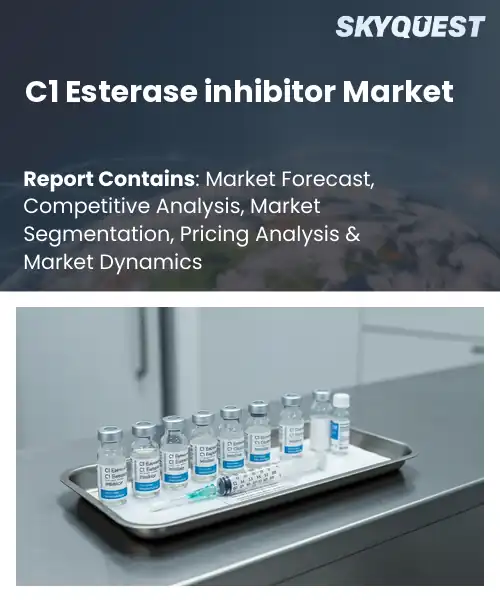
C1 Esterase inhibitor Market
Report ID: SQMIG35H2440
Report ID: SQMIG35H2440
[email protected]
USA +1 351-333-4748
Report ID:
SQMIG35H2440 |
Region:
Global |
Published Date: March, 2026
Pages:
157
|Tables:
114
|Figures:
77


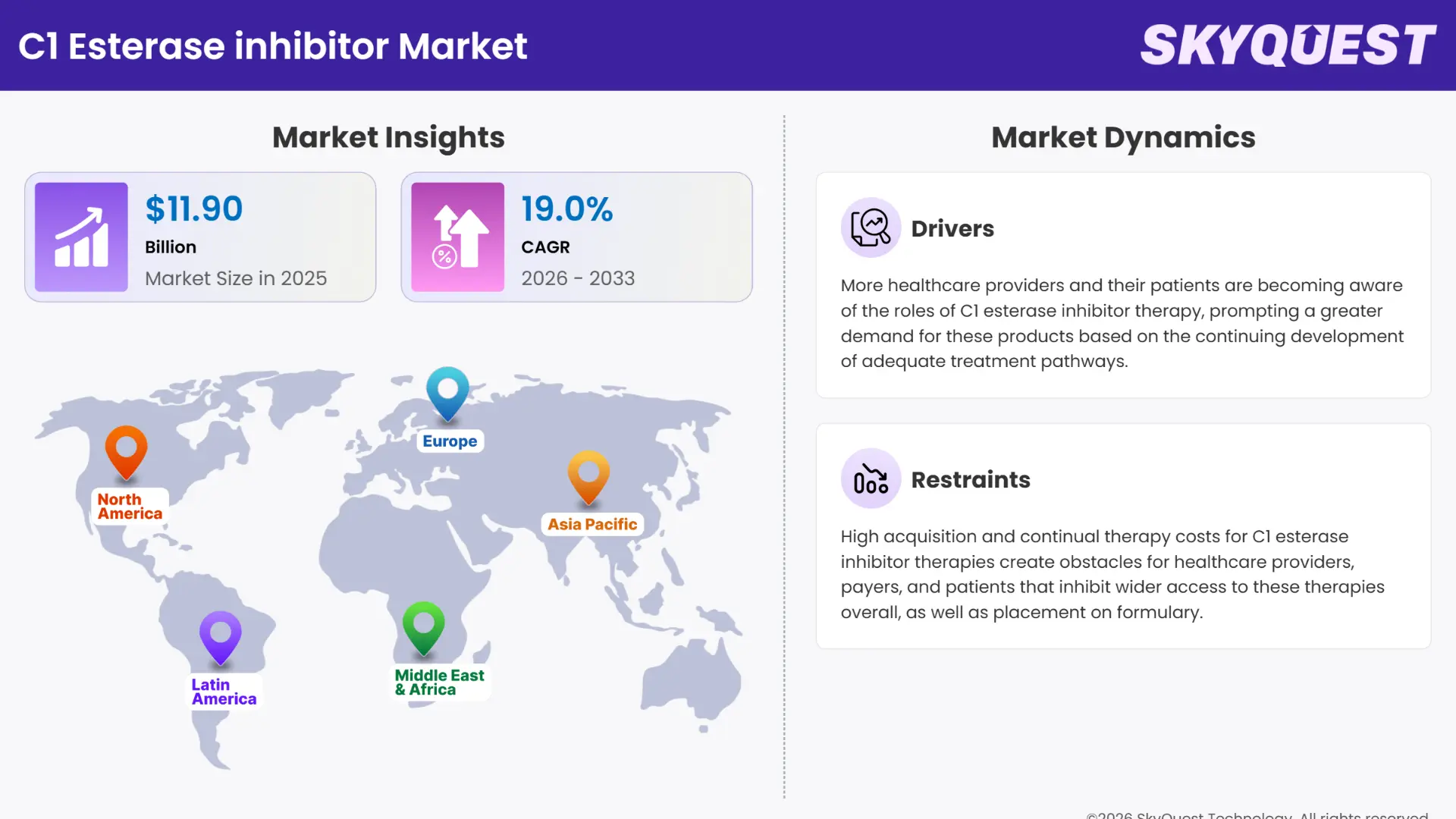
Global C1 Esterase Inhibitor Market size was valued at USD 10.00 Billion in 2024 and is poised to grow from USD 11.90 Billion in 2025 to USD 47.85 Billion by 2033, growing at a CAGR of 19.0% during the forecast period (2026-2033).
Key Takeaways: Market Trends & Insights
• North America dominated the C1 Esterase Inhibitor market with the largest market share in 2025.
• The U.S. C1 Esterase Inhibitor market is expected to grow significantly over the forecast period.
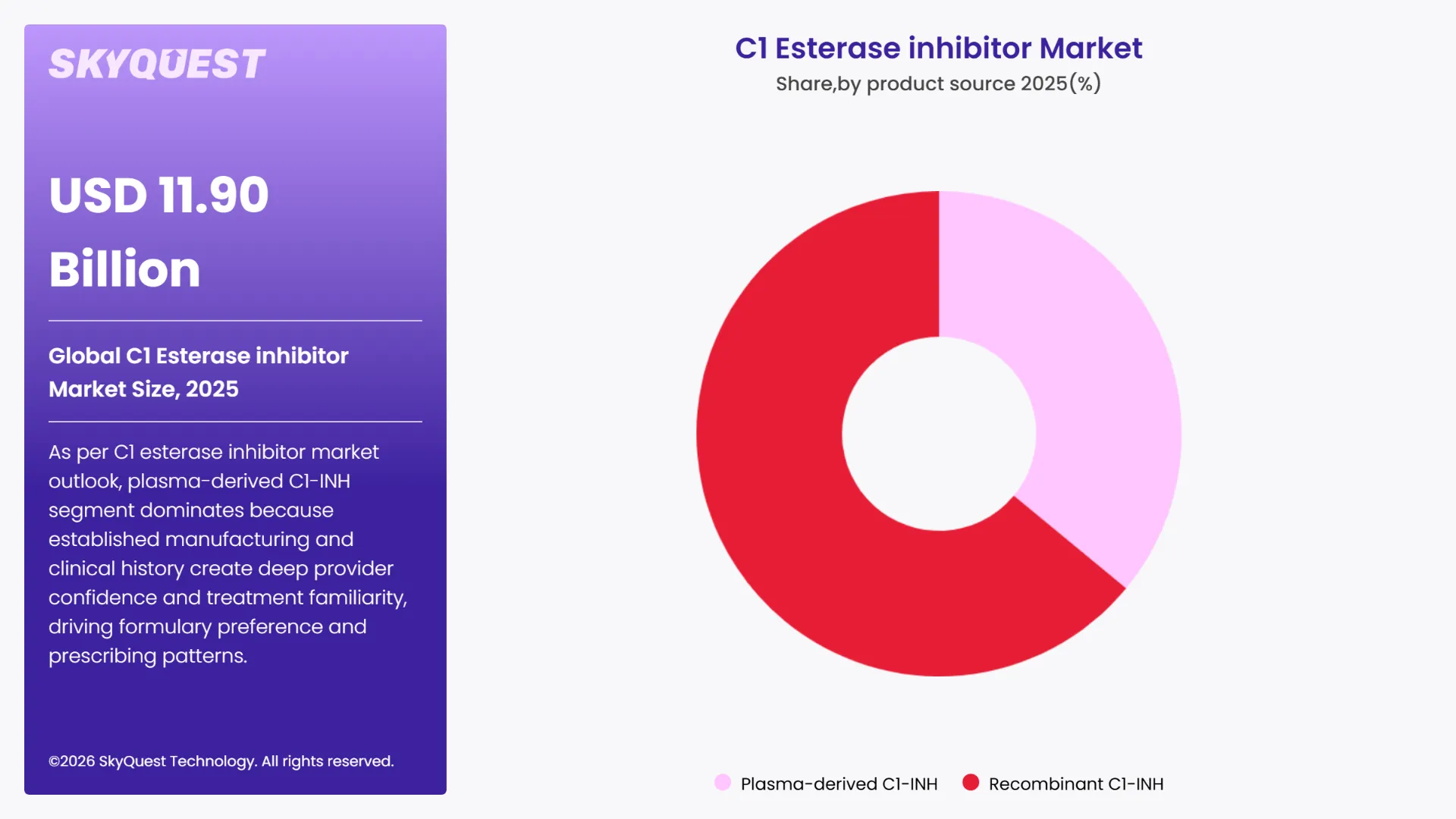
• By Product Source, the Plasma-derived C1-INH segment held the largest C1 Esterase Inhibitor market share in 2024.
• The Recombinant C1-INH segment is projected to be the fastest-growing segment over the forecast period.
• North America: Largest Market in 2025.
• Asia Pacific: Fastest Growing Market.
• 2025 Market Size: USD 11.90 Billion.
• 2026 Projected Market Size: USD 14.16 Billion.
• 2033 Projected Market Size: USD 47.85 Billion.
• CAGR (2026–2033): 19.0%.
The global C1 esterase inhibitor market is currently experiencing steady growth. The demand for C1 esterase inhibitors is largely driven by their importance in the treatment of rare diseases, specifically hereditary angioedema (HAE), an illness that causes recurrent and potentially fatal swelling attacks. HAE has developed into a niche but high-value section of the rare disease therapeutics marketplace, with growing diagnosis rates and an increasing awareness of HAE among health care practitioners.
The primary insight that continues to guide the overall C1 esterase inhibitor market growth is the dominance and continuing strong market share of plasma-derived C1 esterase inhibitors. The long-established clinical efficacy and associated long-standing federal regulatory (FDA/EMEA) approval historically have sustained the strong market position of plasma-derived C1 esterase inhibitors.
In contrast, the rapid growth rate of recombinant C1 esterase inhibitors is creating a new, rapidly developing segment, which is anticipated to accelerate more than the current C1 esterase inhibitor market trends.
The major advantages of recombinant C1 esterase inhibitors include a significantly lower risk of pathogen transmission than plasma-derived products, the ability to be manufactured on a large scale, and the availability of improved safety profiles compared to plasma-derived products. This emerging segment reflects the overall industry trend toward innovations in biologics as well as developments in advanced therapeutic formulation. Additionally, the advent of a shift away from intravascular administration toward subcutaneous administration is creating a more patient-friendly treatment option for patients and families while enabling providers to treat patients in the home, therefore improving adherence and increasing the available patient population.
How is AI Improving Patient Diagnosis and Therapy Personalization in the C1 Esterase Inhibitor Market?
C1 esterase inhibitors are being increasingly personalized using AI-based computer systems, which integrate clinical data with genetic information and laboratory results to produce clinical recommendations for treatment based on each individual patient’s needs. In addition, the implementation of natural language processing and machine learning techniques allows the identification of atypical presentations of hereditary angioedema, leading to greater clinician guidance regarding whether to use plasma-derived or recombinant products. Predictive modelling also refines prophylactic therapy and on-demand treatment strategies using electronic health record analytics and remote monitoring tools.
As a result, the combined efforts of these technologies are driving the C1 esterase inhibitor market towards more targeted clinical positioning and improved patient-centered care. The use of large HAE datasets created by Takeda Canada and Pentavere will assist with market efficiencies by providing a means for targeted identification of patients and facilitating informed decisions regarding therapies for the C1 esterase inhibitor market.
To get more insights on this market click here to Request a Free Sample Report
Global C1 esterase inhibitor market is segmented into product source, indication, route of administration, end-user and region. Based on product source, the market is segmented into plasma-derived C1-INH and recombinant C1-INH. Based on indication, the market is segmented into prophylaxis of hereditary angioedema (HAE) and acute HAE attacks. Based on route of administration, the market is segmented into intravenous (iv) injection and subcutaneous (SC) injection. Based on end-user, the market is segmented into specialized immunology clinics, hospital settings and home healthcare. Based on region, the market is segmented into North America, Europe, Asia Pacific, Latin America and Middle East & Africa.
As per C1 esterase inhibitor market outlook, plasma-derived C1-INH segment dominates because established manufacturing and clinical history create deep provider confidence and treatment familiarity, driving formulary preference and prescribing patterns. This drives formulary preference as well as prescribing patterns. As such, there are long-term efficacy data and the use of plasma-derived C1-INH in care pathways reduces the perceived risk by both payers and clinicians; therefore, both payers and clinicians prefer products that have established performance. Additionally, the established manufacturing and distribution networks that provide consistent supply chains support this choice, and as such, plasma-derived C1-INH is the product of choice for treating patients in almost all settings and by providers who have treated patients with this product.
As per C1 esterase inhibitor market analysis, recombinant C1-INH is beginning to emerge as the fastest growing segment of the pharmaceutical market because of a variety of factors; in particular, scalable production, reduced contamination risk, and the potential ability to molecularly optimize the C1-INH molecule for better meeting unmet clinical needs are major contributors to this trend. Advances in expression systems and regulatory receptivity to novel biologics are driving developer investment and providing increased opportunities for new product formulation that can be used to increase access and improve supply predictability.
As per C1 esterase inhibitor market forecast, intravenous (IV) injection is the dominant segment in the market because it uses existing acute care systems to provide swift plasma or recombinant infusions with medical supervision through IV access. Thereby allowing for immediate therapeutic response to episodes of severe angioedema. Hospitals’ procedures and emergency medicine protocols favour IV because of its reliable pharmacokinetics and ability to provide continuous dosing during an IV administration, thus reducing uncertainty for clinicians. The possibility of having experience with existing IV therapy thus maintains clinician preference for IV therapy when treating patients presenting with high acuity and complex medical conditions.
However, subcutaneous (SC) injection is the fastest-growing segment of the market largely due to consumer preference for less invasive administration modes, the possibility of being able to self-administer injections, and improvements in the stability of formulations allowing for longer-term stable SC dosing. A growing number of product developers now focus on developing easy-to-use home therapies, coupled with emerging positive trends in reimbursement for outpatient therapy, will further drive uptake and create new opportunities for use as preventive care.
To get detailed segments analysis, Request a Free Sample Report
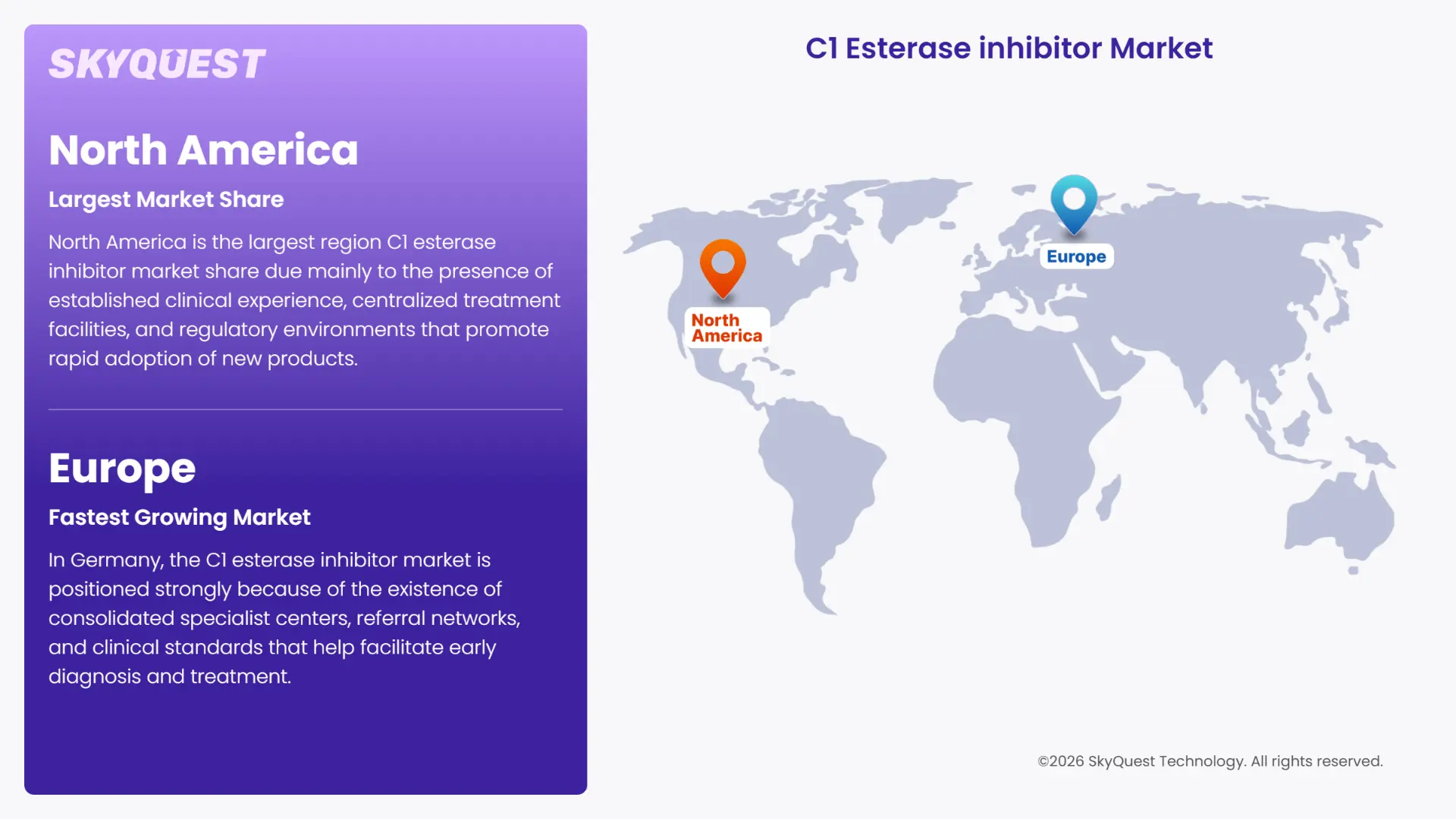
North America is the largest region C1 esterase inhibitor market share due mainly to the presence of established clinical experience, centralized treatment facilities, and regulatory environments that promote rapid adoption of new products. Patient advocacy organizations focused on promoting early detection and increasing awareness of C1 esterase inhibitors, and integrated healthcare delivery systems that allow for the establishment of structured therapeutic pathways.
The U.S. C1 esterase inhibitor market benefits from a high concentration of specialist locations, considerable expertise from clinicians in providing the necessary care, and the presence of detailed reimbursement pathways that can help provide access to this type of innovative therapies. The presence of robust systems of clinical research and collaboration with academic institutions results in good rates of acceptance of C1 esterase inhibitors, whereas the efforts of various patient advocacy organizations are greatly assisting with increasing public awareness of the condition and its associated diagnosis. The presence of good commercial infrastructure and centralized supply chains makes distribution of C1 esterase inhibitors relatively easy, while the generation of ongoing post market data related to these C1 esterase inhibitors will contribute positively to the development of clinical practice and support the engagement of payers across all care settings.
As per global C1 esterase inhibitor market regional forecast, Canada market is characterized by the existence of a coordinated system of provincial health care, a strong focus on equitable access to provincial health care services. The existence of a concentration of clinical centres of excellence that facilitate delivery of specialized care by permitting users of C1 Esterase inhibitors to have timely access to the medicines. Collaborative initiatives undertaken between the public payers and clinicians in Canada, many of the provinces use frameworks for technology appraisal and structured treatment pathways.
As per global C1 esterase inhibitor market regional outlook, Europe is rapidly expanding due to a collaborative model of regulation, strong clinical networks, and substantial collaboration among stakeholders that is fast tracking uptake into multiple health care systems. Centralized clinical guidelines and consensus statements from professional societies facilitate the standardization of diagnosis and treatment options. Meanwhile, active patient organizations expand the scope of screening and referral efforts. Strategic partnerships between the commercial sector and national research centers provide data for clinical trials and real-world evidence programs to increase clinician confidence. The development of multiple reimbursement models and processes for health technology assessment at the country level encourages the development of structured access strategies. The prevalence of cross-border collaborations and data sharing efforts supports the dissemination of best practices and places Europe in a unique region where integrated care models and evidence-based policy are converging to support market growth and patient-centered delivery models.
In Germany, the C1 esterase inhibitor market is positioned strongly because of the existence of consolidated specialist centers, referral networks, and clinical standards that help facilitate early diagnosis and treatment. Collaboration between academic institutions and the pharmaceutical industry supports clinical research and evidence generation while providing clarity regarding reimbursement through health technology assessment processes. Regional centers of excellence and organized patient advocacy support awareness and care coordination that facilitate access to advanced therapies across clinics.
The United Kingdom C1 esterase inhibitor market is developing innovative and expanded specialty-based networks, improving clinician awareness, and having a strong basis of patient advocacy support for both diagnosis and referral of patients at an earlier stage. The newest updates to national guidelines, along with the collaborative research initiatives, will promote the use of standardized pathways for care. Establishing centralized procurement mechanisms will support organized access strategies for patients. Investing in rare disease patient registries and multidisciplinary care teams will contribute to greater evidence collection and thus, will assist with clinical decision-making to further mature the C1 esterase inhibitor market in the United Kingdom.
The French C1 esterase inhibitor market is demonstrating dynamic growth through clinician networks, specialty organizations, and strong patient advocacy efforts for the diagnosis and treatment of C1 esterase inhibitors. Health authorities and regional hospitals are working collaboratively to assess new therapies as well as develop organized pathways for care. Partnerships between the pharmaceutical industry and academic institutions are promoting clinical research. Further, an emphasis on providing multidisciplinary management of patients with C1 esterase inhibitors. In addition to developing coordinated referral systems between practitioners, is producing a streamlined journey for patients in accessing therapy and positioning the C1 esterase inhibitor market for rapid integration of new therapies into existing frameworks of care.
With the C1 esterase inhibitor market growing considerably in the Asia-Pacific region, Asia is enhancing its role through expanded clinical research capabilities, focused funding on rare diseases, and further collaboration with international biopharmaceutical organizations. The Asia-Pacific region has shown an increased commitment to conducting clinical studies and developing registries for establishing local evidence and creating treatment guidelines. The establishment of emerging centers of excellence that focus on clinical care, as well as the development of specialist networks, will improve diagnosis, as well as the referral pathway for patients. The introduction of targeted reimbursement frameworks and patient support initiatives will further increase patient access.
The Japan C1 esterase inhibitor market is supported by the availability of state-of-the-art clinical infrastructure and extensive medical research capacity, and by initiatives that promote collaboration between existing specialist physicians and new ones, and developing collaborative initiatives needed to enhance the specialists’ ability to perform diagnostic testing. The industry’s partnership with academic institutions will also foster the development of research on local clinical studies and registries, which will lead to improvements in clinical practice throughout the region. Patient advocacy groups and other expert organizations will also assist in identifying and developing the referral pathway for patients. The industry’s distribution of the product will continue to be enhanced through coordinated efforts by experienced distributor sales representatives, thereby ensuring a consistent product supply and ongoing educational outreach efforts to meet the needs of physicians and caregivers.
As per global C1 esterase inhibitor industry analysis, South Korea market is benefiting from the existence of focused specialist programs that provide for a more coordinated effort for clinical research and clinical initiatives designed to incorporate support for diagnosis and treatment of patients. By continuing to improve clinician education, and by working with patient advocacy organizations to promote awareness of patients and to develop referral pathways, the South Korean C1 Esterase inhibitor market will continue to progress.
To know more about the market opportunities by region and country, click here to
Buy The Complete Report
Rising Clinical Adoption
Advances In Biologic Development
High Treatment Costs
Complicated Manufacturing and Supply
Request Free Customization of this report to help us to meet your business objectives.
In the global C1 esterase inhibitor industry, competition is focused on established biological manufacturers with continuing protection for their plasma-derived C1 esterase inhibitors, and their biomanufacturer products. While new entrants are focusing on recombinant C1-INH formulations and improved delivery mechanisms that are delivered by other means as well as gene editing methods. These changes to market share due to mergers and acquisitions (for example Takeda's acquisition of Shire, and BioCryst's oral prophylactic approval) will have created partnerships and vector engineering projects to establish reliable C1 INH supply for recovery and distribution.
SkyQuest’s ABIRAW (Advanced Business Intelligence, Research & Analysis Wing) is our Business Information Services team that Collects, Collates, Correlates, and Analyses the Data collected by means of Primary Exploratory Research backed by robust Secondary Desk research.
As per SkyQuest analysis, the global C1 esterase inhibitor industry is propelled by improved diagnosis and regulatory momentum as a key driver, while a restraint is high treatment costs that limit access and reimbursement. The dominating region is North America and the dominating segment is plasma-derived C1-INH, reflecting established clinical confidence and supply networks. A second driver is recombinant and subcutaneous innovation that enables scalable manufacturing and convenient home administration, expanding prophylactic and outpatient use. Together these forces encourage R&D investment and real-world evidence generation, though supply chain complexity and pricing pressures will shape adoption pace across emerging markets. Stakeholder collaboration will determine access outcomes.
| Report Metric | Details |
|---|---|
| Market size value in 2024 | USD 10.00 Billion |
| Market size value in 2033 | USD 47.85 Billion |
| Growth Rate | 19.0% |
| Base year | 2024 |
| Forecast period | 2026-2033 |
| Forecast Unit (Value) | USD Billion |
| Segments covered |
|
| Regions covered | North America (US, Canada), Europe (Germany, France, United Kingdom, Italy, Spain, Rest of Europe), Asia Pacific (China, India, Japan, Rest of Asia-Pacific), Latin America (Brazil, Rest of Latin America), Middle East & Africa (South Africa, GCC Countries, Rest of MEA) |
| Companies covered |
|
| Customization scope | Free report customization with purchase. Customization includes:-
|
To get a free trial access to our platform which is a one stop solution for all your data requirements for quicker decision making. This platform allows you to compare markets, competitors who are prominent in the market, and mega trends that are influencing the dynamics in the market. Also, get access to detailed SkyQuest exclusive matrix.
Table Of Content
Executive Summary
Market overview
Parent Market Analysis
Market overview
Market size
KEY MARKET INSIGHTS
COVID IMPACT
MARKET DYNAMICS & OUTLOOK
Market Size by Region
KEY COMPANY PROFILES
Methodology
For the C1 Esterase inhibitor Market, our research methodology involved a mixture of primary and secondary data sources. Key steps involved in the research process are listed below:
1. Information Procurement: This stage involved the procurement of Market data or related information via primary and secondary sources. The various secondary sources used included various company websites, annual reports, trade databases, and paid databases such as Hoover's, Bloomberg Business, Factiva, and Avention. Our team did 45 primary interactions Globally which included several stakeholders such as manufacturers, customers, key opinion leaders, etc. Overall, information procurement was one of the most extensive stages in our research process.
2. Information Analysis: This step involved triangulation of data through bottom-up and top-down approaches to estimate and validate the total size and future estimate of the C1 Esterase inhibitor Market.
3. Report Formulation: The final step entailed the placement of data points in appropriate Market spaces in an attempt to deduce viable conclusions.
4. Validation & Publishing: Validation is the most important step in the process. Validation & re-validation via an intricately designed process helped us finalize data points to be used for final calculations. The final Market estimates and forecasts were then aligned and sent to our panel of industry experts for validation of data. Once the validation was done the report was sent to our Quality Assurance team to ensure adherence to style guides, consistency & design.
Analyst Support
Customization Options
With the given market data, our dedicated team of analysts can offer you the following customization options are available for the C1 Esterase inhibitor Market:
Product Analysis: Product matrix, which offers a detailed comparison of the product portfolio of companies.
Regional Analysis: Further analysis of the C1 Esterase inhibitor Market for additional countries.
Competitive Analysis: Detailed analysis and profiling of additional Market players & comparative analysis of competitive products.
Go to Market Strategy: Find the high-growth channels to invest your marketing efforts and increase your customer base.
Innovation Mapping: Identify racial solutions and innovation, connected to deep ecosystems of innovators, start-ups, academics, and strategic partners.
Category Intelligence: Customized intelligence that is relevant to their supply Markets will enable them to make smarter sourcing decisions and improve their category management.
Public Company Transcript Analysis: To improve the investment performance by generating new alpha and making better-informed decisions.
Social Media Listening: To analyze the conversations and trends happening not just around your brand, but around your industry as a whole, and use those insights to make better Marketing decisions.
REQUEST FOR SAMPLE
 REQUEST FREE CUSTOMIZATION
Global C1 Esterase Inhibitor Market size was valued at USD 10.0 Billion in 2024 and is poised to grow from USD 11.9 Billion in 2025 to USD 47.85 Billion by 2033, growing at a CAGR of 19.0% during the forecast period (2026-2033).
Competition in the global C1 esterase inhibitor market centers on incumbent biologics defending plasma and recombinant C1 esterase inhibitor franchises while new entrants pursue oral small molecules and gene editing platforms. M&A and licensing deals have reshaped positions, for example Takeda's acquisition of Shire and BioCryst's oral prophylactic approval. Firms also pursue partnerships and vector engineering collaborations to secure durable C1 INH supply and delivery. 'CSL Behring', 'Grifols', 'Shire Pharmaceuticals', 'Takeda Pharmaceuticals', 'BioMarin Pharmaceutical', 'Sobi', 'Octapharma', 'Genentech', 'Apellis Pharmaceuticals', 'AbbVie', 'Alnylam Pharmaceuticals', 'Ionis Pharmaceuticals', 'Amgen', 'Vertex Pharmaceuticals', 'Regeneron Pharmaceuticals', 'Sanofi', 'Eiger BioPharmaceuticals', 'Catalyst Pharmaceuticals', 'Emergent BioSolutions', 'Pfizer'
Growing clinical awareness of C1 esterase inhibitor therapies among healthcare providers and patient communities has encouraged wider adoption for appropriate indications, strengthening demand. Clearer treatment pathways and clinician familiarity reduce hesitation in prescribing these biologic therapeutics, while supportive guideline language and educational initiatives help integrate them into care routines. As a result, procurement cycles become more predictable and healthcare systems incorporate these therapies into formularies, which in turn motivates manufacturers to expand supply and invest in further development.
Recombinant And Subcutaneous Innovation: Development of recombinant and subcutaneous formulations is shifting treatment paradigms by improving administration convenience and broadening patient eligibility. Manufacturers emphasize formulation stability, dosing flexibility and delivery technologies to support outpatient and home care. This trend encourages strategic partnerships between biotechs and device companies, accelerating next generation product introductions. Payers and providers favor therapies that reduce care setting burden and enhance adherence, creating incentives for innovation to support longer term treatment continuity and patient centered service models and robust market support.
North America Dominate the Global C1 Esterase inhibitor Market?


Want to customize this report? This report can be personalized according to your needs. Our analysts and industry experts will work directly with you to understand your requirements and provide you with customized data in a short amount of time. We offer $1000 worth of FREE customization at the time of purchase.
Feedback From Our Clients


 USA (+1) 351-333-4748

