BulloKeratopathy Market
Report ID: SQMIG35I2578
Report ID: SQMIG35I2578
[email protected]
USA +1 351-333-4748
Report ID:
SQMIG35I2578 |
Region:
Global |
Published Date: March, 2026
Pages:
157
|Tables:
90
|Figures:
76


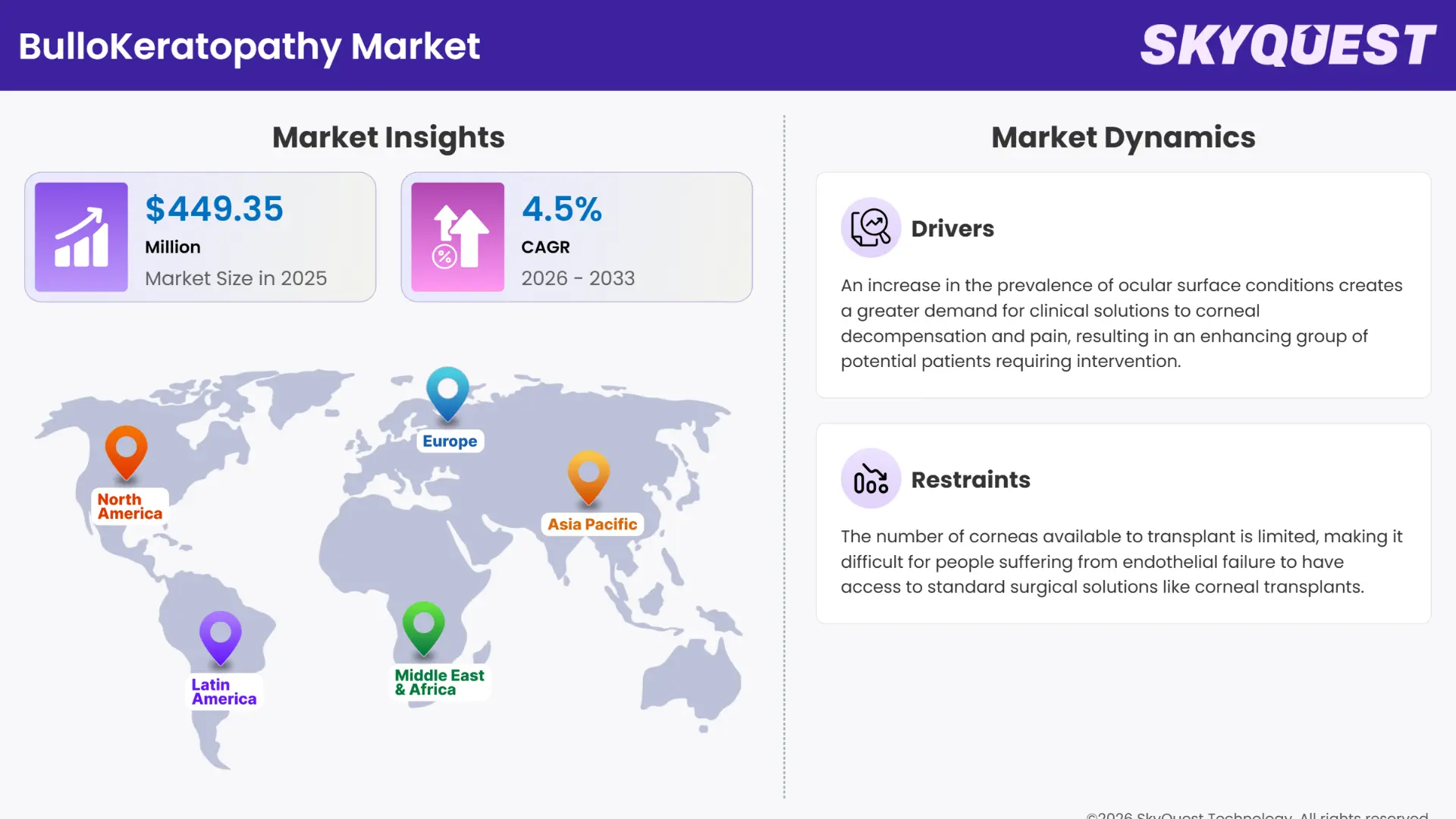
Global BulloKeratopathy Market size was valued at USD 430.00 Million in 2024 and is poised to grow from USD 449.35 Million in 2025 to USD 639.02 Million by 2033, growing at a CAGR of 4.5% during the forecast period (2026-2033).
Key Takeaways: Market Trends & Insights
The increasing prevalence of aging populations and the corresponding growth in intraocular surgery volumes are the main contributing factors to the bulloKeratopathy market. This market consists of products, procedures, and donor tissues that assist with corneal edema and loss of vision due to endothelial failure. The reason this market is significant is that visual impairments place a considerable economic and social burden on society and increase the need for effective treatments. Over the past several decades, care has shifted from full-thickness corneal transplants to endothelial keratoplasty (EK) procedures, including DSAEK and DMEK, which leads to improved recovery rates and higher-quality vision.
For example, the increased use of DMEK because of several comparative studies demonstrating the advantages of DMEK has driven increased utilization of instruments and services related to the preparation of tissue and significantly stimulated the bulloKeratopathy market growth.
Rapid advancements and innovations in surgical techniques and regenerative methods are causing the global bulloKeratopathy market to grow substantially. Innovations such as the introduction of pre-loaded endothelial grafts and DMEK procedures are now the standard of care for treatment. Therefore, hospitals are investing in staff training and acquiring instruments that contribute to an increase in sales of the instruments to manufactures and strengthen the eye banking process used to supply the prepared donor tissue.
Advances in the development of cultured endothelial cell injections and the application of bioengineered grafts have the potential to alleviate the shortage of available donor tissue and create business opportunities for cell producers and contract laboratories. Thus, the expanded use of DMEK and the continued expansion of surgical volume and access to care in Asia will encourage companies to pursue emerging markets with customized solutions to meet the needs of patients.
How will AI-Driven Diagnostics Impact the BulloKeratopathy Market?
The bulloKeratopathy market will be revolutionized through AI-based diagnosis. AI is expected to improve diagnostic accuracy, stage and plan treatment for bullous keratopathy by providing new automated ways to assess the corneal image, determine the number of endothelial cells and objectively interpret OCTs/EDFs. The existing tools are transitioning from research to clinical workflows allowing clinicians to earlier detect endothelial failure. Earlier detection of endothelial failure will help clinicians better prioritize medical treatment, trial new cell therapies and/or perform corneal transplantation.
AI will help clinicians reduce variability and shorten timeframes during diagnostic referrals; therefore, allowing clinicians to best utilize the extremely limited number of corneal donor tissues and maximize patient and provider treatment routes. The launch of Vyznova (an allogeneic cell therapy) in Japan marks a moderate growth from research to practice over the course of several months. In addition, the AI-based screening and monitoring platforms will greatly enhance the speed with which patients may be selected for innovative therapeutic approaches, improve follow-up.
To get more insights on this market click here to Request a Free Sample Report
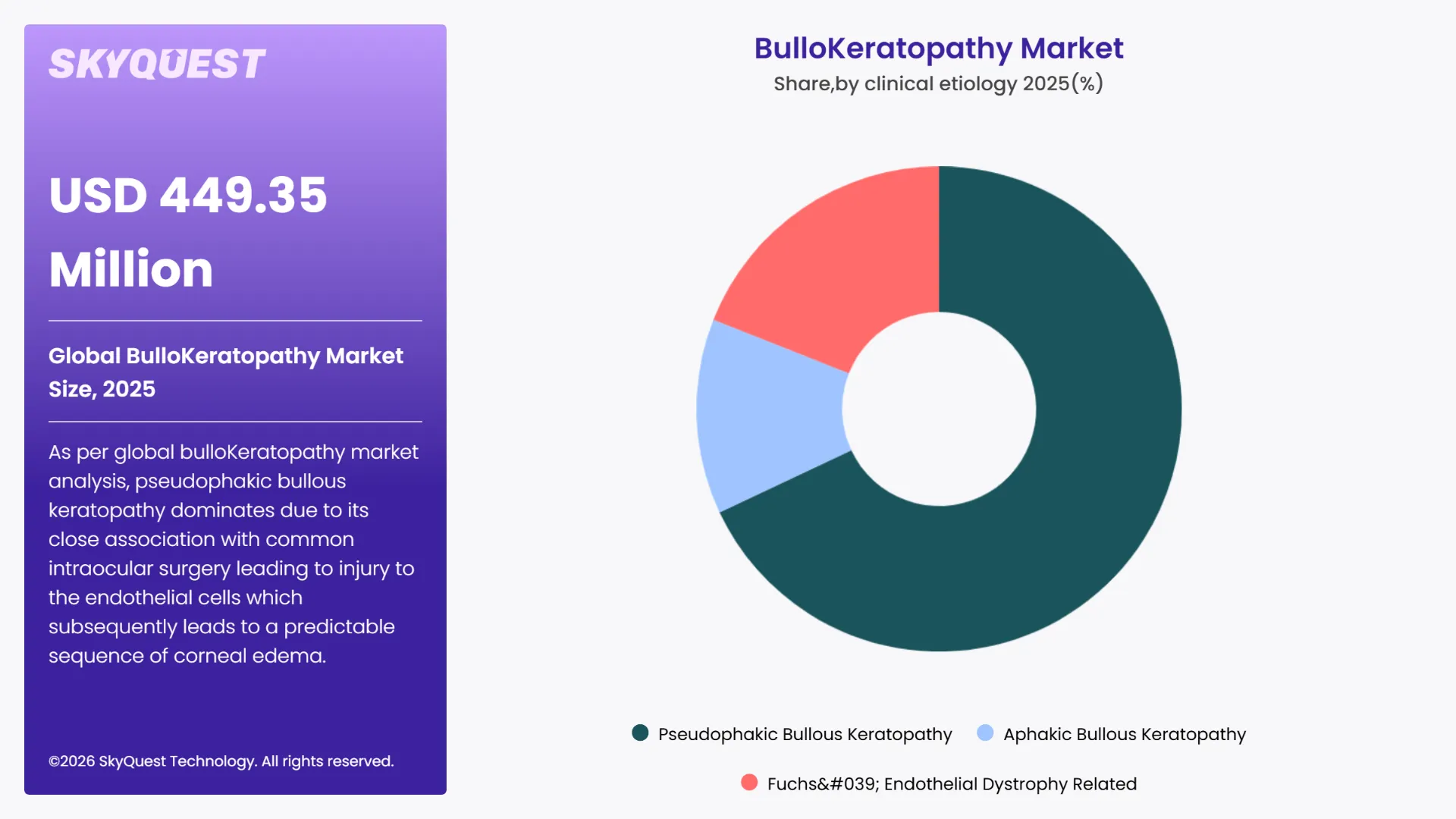
Global bulloKeratopathy market is segmented into clinical etiology, treatment modality, end-user and region. Based on clinical etiology, the market is segmented into pseudophakic bullous keratopathy, aphakic bullous keratopathy and fuchs' endothelial dystrophy related. Based on treatment modality, the market is segmented into pharmacological management, surgical intervention (DSEK/DMEK), penetrating keratoplasty (PK) and therapeutic contact lenses. Based on end-user, the market is segmented into specialized eye hospitals and academic & research institutes. Based on region, the market is segmented into North America, Europe, Asia Pacific, Latin America, and Middle East & Africa.
As per global bulloKeratopathy market analysis, pseudophakic bullous keratopathy dominates due to its close association with common intraocular surgery leading to injury to the endothelial cells which subsequently leads to a predictable sequence of corneal edema. Therefore, the primary cause of this complication leads to excessive clinical workload around postoperative decompensation, which is reflected in treatment priorities and clinical algorithms for diagnosis/management which forces clinicians and device manufacturers to focus on developing devices.
As per global bulloKeratopathy market outlook, fuchs’ endothelial dystrophy related is the area of fastest growth because of an increase in diagnosis of this condition and discovery of it at earlier stages therefore increase in elective surgery demand. New treatment modalities and advancement in regeneration technologies have resulted in greater clinical uptake and greater investment in developing new technologies and care processes leading to greater market penetration and continued growth of this area.
Surgical intervention (DSEK/DMEK) segment leads with large global bulloKeratopathy market share because these endothelial replacement techniques address the root endothelial failure with targeted tissue exchange that restores corneal clarity and shortens recovery pathways, yielding better functional outcomes and reduced complication profiles. Restore corneal clarity and hasten the returning process for the patient as well as allow them to achieve improved functional outcomes and decreased numbers of complications. These perspectives of clinical efficacy are the grounds on which clinicians choose to perform these procedures in their institutions and therefore warrant clinician investment in the training of surgeons, development of specialized instruments.
As per global bulloKeratopathy market forecast, therapeutic contact lenses are the most rapidly expanding treatment area because noninvasive management aligns with patient preferences and advances in lens design enhance comfort and corneal protection. The increase in demand from clinicians for these types of lenses for the relief of symptoms and to temporarily stabilize the cornea has created a new source of demand for these specialised lens products and services, thus creating new areas of commercial opportunities and expanding conservative care alternatives in the marketplace.
To get detailed segments analysis, Request a Free Sample Report
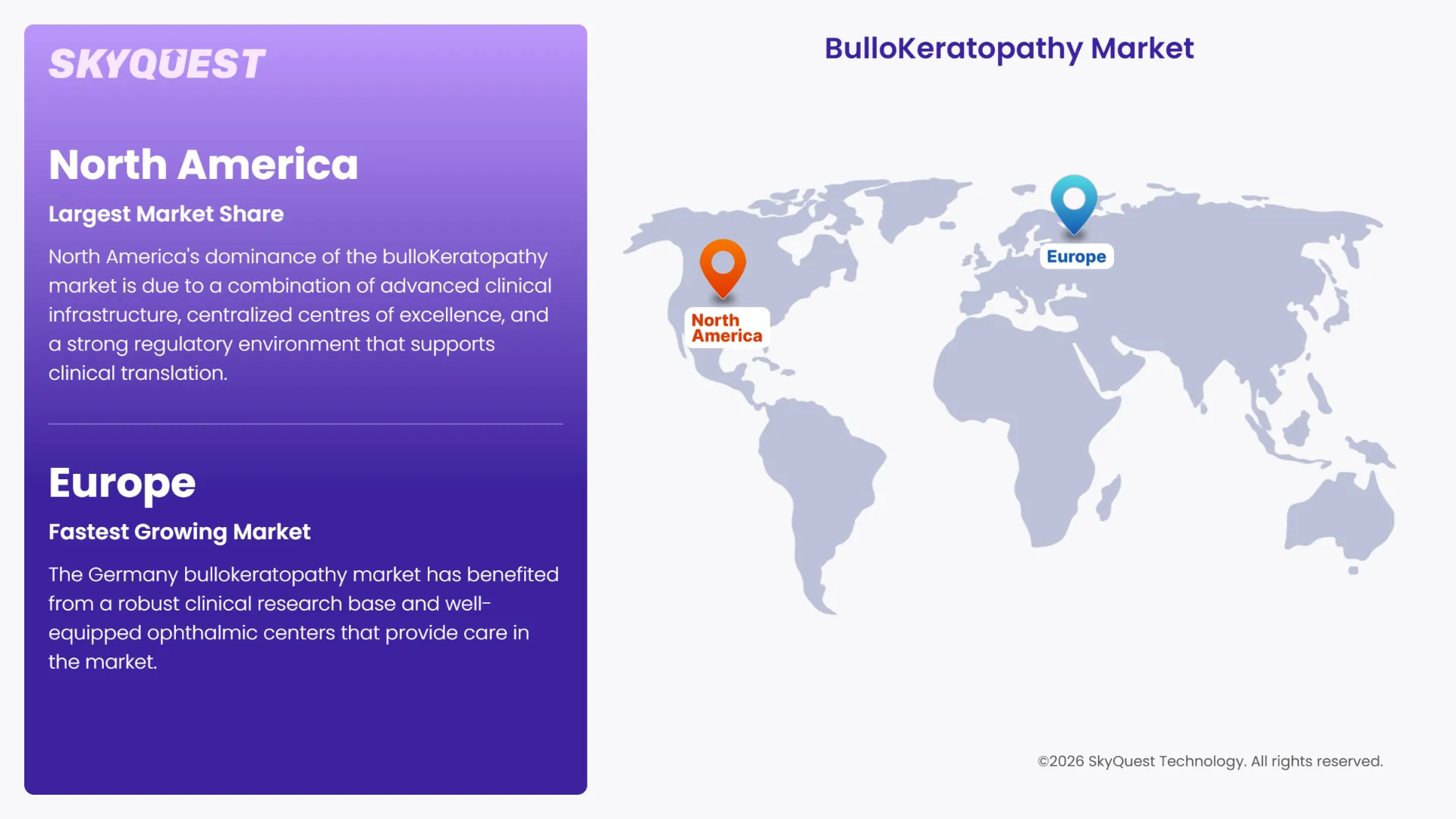
North America's dominance of the bulloKeratopathy market is due to a combination of advanced clinical infrastructure, centralized centres of excellence, and a strong regulatory environment that supports clinical translation. There is strong research capabilities located in academic medical centres, which will allow continuous innovation of diagnostic and therapeutic products, as well as developed reimbursement frameworks that provide access for patients to specialist treatments. Finally, through established referral networks, patients have access to care.
As per global bulloKeratopathy market regional forecast, the United States market is characterized by concentration of advanced clinical centres, high rates of adoption of new ophthalmic devices, and a large number of multinational manufacturers have a strong participation in this market. The diagnostic infrastructure and specialized corneal surgeons found in the US allow for the complex management of cases. Payer structure and reimbursement pathways provide access to newer forms of treatment and also create opportunities for industry and academic hospitals to form strategic partnerships to encourage the rapid translation of innovations into clinical practice.
As per global bulloKeratopathy market regional outlook, Canada is reflective of a reasonably balanced combination of strong expertise with publicly funded healthcare delivery systems which influences how patients can access care. In urban provinces, specialized ophthalmic centres also serve as a referral source for many cases, while there are many research alliances between hospitals provide development of a clinical protocol. Advanced therapies are primarily procured through institutional buying and inter-provincial cooperation, but there are also some logistical issues to consider when introducing these therapies because of the large geographic area that must be serviced. In addition, partnerships between local providers and international suppliers will improve availability of standardized products.
The bulloKeratopathy market in Europe is expanding rapidly due to a combination of multiple factors, including integrated healthcare systems; an increased focus on providing access to ophthalmic services; and collaborative activities in research across countries. The regulatory harmonization and reimbursement systems that exist in most significant European markets serve to facilitate the introduction of new technology into and increase the usage of such technology in these markets. Additionally, the increasing amounts of experience gained by specialized ophthalmology staff working in each of the specialized center locations in the various European countries, combined with the strong working relationships between industry and academia, have resulted in increased interest in utilizing advanced diagnostic methodologies and therapeutic approaches to treating patients with corneal disease. Cross-border collaboration, consolidated purchasing within certain healthcare systems, and a growing number of domestic and international manufacturers have resulted in a dynamic and innovative market for the treatment of corneal diseases throughout Europe. Patient education initiatives and referral pathways for corneal patients are improving the time to diagnosis and treatment; therefore, long-term growth is expected in both the established and yet-to-be-established European markets.
The Germany bullokeratopathy market has benefited from a robust clinical research base and well-equipped ophthalmic centers that provide care in the market. Coordinated provider networks in the German hospitals and established payers facilitate access to complex and advanced patient care systems. Collaboration between academia and industry is accelerating localized innovation and knowledge transfer. Manufacturers and distributions channels are reliable to ensure a consistent supply of products; professional associations and training programs are helping to maintain quality standards of care for all patients receiving corneal treatment throughout Germany.
The bulloKeratopathy market in the UK is being affected by the accelerated implementation of new therapies, vibrant clinical research setting and a combination of both publically funded and private care pathways allow for many opportunities for the delivery of care in various methods. The regional eye hospitals promote early detection of bulloKeratopathy and specialty referral. The collaborative efforts between companies and clinicians support the placement of new therapies into practice while the growth of professional associations and educational opportunities enables greater access and maintains established standards of corneal care throughout the healthcare system in the United States.
The bulloKeratopathy market in France is experiencing growth as a result of ongoing targeted initiatives aimed at improving the efficiency and effectiveness of existing ophthalmology programs, improved access to care through regional centres of excellence and increased collaboration between clinical and manufacturing companies. Publicly funded healthcare programs and targeted measures to improve access to care are resulting in improved access to diagnosis and treatment of bulloKeratopathy. International research collaborations and the increasing use of new surgical techniques are also increasing capacity within the clinical workforce delivering care to patients with bulloKeratopathy. Coordinated procurement and education initiatives provide consistent approaches for the management of corneal disease and support these goals through provision of care within the public and private healthcare sectors.
The Asia Pacific countries are continuing to enhance their position on the global bulloKeratopathy market by investing in clinical capabilities (e.g., clinical R&D, facilities, and expertise) as well as locally manufactured products, and establishing more modern regulatory systems that allow for faster product approval processes and easier access to global market. Countries in the Region expanding their specialist Ophthalmology Centres, as well as a greater number of better-trained specialists, and an increased rate of private healthcare provision are all helping improve the availability of diagnostic/therapeutic type products.
As per global bulloKeratopathy industry analysis, Japan is experiencing a strong growth due to an already established medical device ecosystem, an active clinical research component, and the presence of many high-quality corneal specialists. Both hospitals and specialty clinics within Japan are utilizing advanced diagnostics (e.g., enhanced imaging modalities) and surgical techniques, while also being able to access high quality devices and adjunct therapeutic options manufactured by local companies.
The South Korean bulloKeratopathy market is benefiting from a vigorous medtech industry, clinical adoption of new products, and a strong network of private hospitals providing access to leading edge treatments. Local manufacturers and clinical innovators are now producing miniaturized devices and less invasive adjunctive surgical techniques that can be utilized by regional surgeons. The close relationship between the technology company and leading clinicians is allowing for clinical studies to be completed quickly and the integration of the new technologies into the clinical setting. Professional education and export manufacturing programs also further develop the bulloKeratopathy market's ecosystem while also supporting regional build-of-capacity.
To know more about the market opportunities by region and country, click here to
Buy The Complete Report
Rising Prevalence of Ocular Surface Disease
Recent Advances in Corneal Surgery
Limited Availability of Donor Tissue
High Treatment Costs & Reimbursement Difficulties
Request Free Customization of this report to help us to meet your business objectives.
The competitive environment for global bullous keratopathy is changing as M&A, licensing, and platform scaling take place through eye care specialists and large eye care companies. An example of this trend is a recently completed M&A where a leading surgical device company purchased a cell therapy company to gain access to their dosing and manufacturing capacity.
SkyQuest’s ABIRAW (Advanced Business Intelligence, Research & Analysis Wing) is our Business Information Services team that Collects, Collates, Correlates, and Analyses the Data collected by means of Primary Exploratory Research backed by robust Secondary Desk research.
As per SkyQuest analysis, the global bulloKeratopathy industry is driven primarily by rising endothelial dysfunction linked to ageing populations and increasing intraocular surgery volumes and supported by rapid innovation in surgical techniques and regenerative therapies that expand treatment options and uptake. Growth is constrained by limited availability of donor corneal tissue, which restricts transplant capacity and influences clinical pathways. North America remains the dominant regional market due to advanced clinical infrastructure, strong research networks and established reimbursement. Clinically, the pseudophakic bullous keratopathy segment leads demand because postoperative endothelial decompensation concentrates cases needing targeted diagnostics, surgical solutions and perioperative care and creates commercial opportunities for innovators.
| Report Metric | Details |
|---|---|
| Market size value in 2024 | USD 430.00 Million |
| Market size value in 2033 | USD 639.02 Million |
| Growth Rate | 4.5% |
| Base year | 2024 |
| Forecast period | 2026-2033 |
| Forecast Unit (Value) | USD Million |
| Segments covered |
|
| Regions covered | North America (US, Canada), Europe (Germany, France, United Kingdom, Italy, Spain, Rest of Europe), Asia Pacific (China, India, Japan, Rest of Asia-Pacific), Latin America (Brazil, Rest of Latin America), Middle East & Africa (South Africa, GCC Countries, Rest of MEA) |
| Companies covered |
|
| Customization scope | Free report customization with purchase. Customization includes:-
|
To get a free trial access to our platform which is a one stop solution for all your data requirements for quicker decision making. This platform allows you to compare markets, competitors who are prominent in the market, and mega trends that are influencing the dynamics in the market. Also, get access to detailed SkyQuest exclusive matrix.
Table Of Content
Executive Summary
Market overview
Parent Market Analysis
Market overview
Market size
KEY MARKET INSIGHTS
COVID IMPACT
MARKET DYNAMICS & OUTLOOK
Market Size by Region
KEY COMPANY PROFILES
Methodology
For the BulloKeratopathy Market, our research methodology involved a mixture of primary and secondary data sources. Key steps involved in the research process are listed below:
1. Information Procurement: This stage involved the procurement of Market data or related information via primary and secondary sources. The various secondary sources used included various company websites, annual reports, trade databases, and paid databases such as Hoover's, Bloomberg Business, Factiva, and Avention. Our team did 45 primary interactions Globally which included several stakeholders such as manufacturers, customers, key opinion leaders, etc. Overall, information procurement was one of the most extensive stages in our research process.
2. Information Analysis: This step involved triangulation of data through bottom-up and top-down approaches to estimate and validate the total size and future estimate of the BulloKeratopathy Market.
3. Report Formulation: The final step entailed the placement of data points in appropriate Market spaces in an attempt to deduce viable conclusions.
4. Validation & Publishing: Validation is the most important step in the process. Validation & re-validation via an intricately designed process helped us finalize data points to be used for final calculations. The final Market estimates and forecasts were then aligned and sent to our panel of industry experts for validation of data. Once the validation was done the report was sent to our Quality Assurance team to ensure adherence to style guides, consistency & design.
Analyst Support
Customization Options
With the given market data, our dedicated team of analysts can offer you the following customization options are available for the BulloKeratopathy Market:
Product Analysis: Product matrix, which offers a detailed comparison of the product portfolio of companies.
Regional Analysis: Further analysis of the BulloKeratopathy Market for additional countries.
Competitive Analysis: Detailed analysis and profiling of additional Market players & comparative analysis of competitive products.
Go to Market Strategy: Find the high-growth channels to invest your marketing efforts and increase your customer base.
Innovation Mapping: Identify racial solutions and innovation, connected to deep ecosystems of innovators, start-ups, academics, and strategic partners.
Category Intelligence: Customized intelligence that is relevant to their supply Markets will enable them to make smarter sourcing decisions and improve their category management.
Public Company Transcript Analysis: To improve the investment performance by generating new alpha and making better-informed decisions.
Social Media Listening: To analyze the conversations and trends happening not just around your brand, but around your industry as a whole, and use those insights to make better Marketing decisions.
REQUEST FOR SAMPLE
 REQUEST FREE CUSTOMIZATION
Global Bullokeratopathy Market size was valued at USD 430.0 Million in 2024 and is poised to grow from USD 449.35 Million in 2025 to USD 639.02 Million by 2033, growing at a CAGR of 4.5% during the forecast period (2026-2033).
The competitive landscape for global bullous keratopathy is shifting as cell therapy specialists and legacy ophthalmic companies pursue M&A, licensing, and platform scaling to secure corneal endothelial programs. Recent M&A offers an example where a major surgical device company acquired a cell therapy startup to access dosing and manufacturing capacity. Partnerships and regional licensing accelerate market entry, while product launches and regenerative innovations are reshaping provider adoption and commercial positioning. 'Hoffmann-La Roche', 'Regeneron Pharmaceuticals', 'Pfizer', 'Bayer AG', 'Cellusion Inc.', 'Aurion Biotech', 'Corneat Vision', 'Alcon', 'Bausch + Lomb', 'Santen Pharmaceutical', 'Johnson & Johnson Vision', 'Carl Zeiss Meditec', 'Tarsier Pharma', 'Kowa Company', 'Lupin', 'Sun Pharma', 'Aerie Pharmaceuticals', 'Nicox', 'Dompé Farmaceutici', 'Eyevance Pharmaceuticals'
The increasing occurrence of ocular surface disorders elevates clinical demand for interventions that address corneal decompensation and pain, thereby expanding the pool of patients seeking therapeutic solutions. Greater clinical caseloads motivate healthcare providers to adopt available surgical and non-surgical options, encourage investment in specialized equipment and training, and stimulate product development among manufacturers. As clinicians encounter more cases requiring definitive management, referral patterns and treatment pathways favor adoption of established and emerging therapies, supporting sustained market growth through higher utilization and innovation.
Regenerative Therapies Expansion: Driven by progress in cell biology and tissue engineering, the market is shifting toward regenerative solutions that restore corneal endothelium without reliance on whole donor grafts. Manufacturers and clinicians are investing in cultured endothelial cell therapies and scaffold-based constructs to improve accessibility and reduce surgical complexity. This trend encourages collaboration between biotech firms and ophthalmic surgeons, accelerates translational research, and expands treatment pathways by offering less invasive, repeatable options that enhance patient outcomes and long-term corneal clarity and quality of life.
North America Dominate the Global BulloKeratopathy Market?
Bullous keratopathy is a corneal disorder characterized by swelling of the cornea due to endothelial cell dysfunction, often resulting in pain, blurred vision, and visual impairment.
Treatment options include medications, therapeutic contact lenses, endothelial keratoplasty procedures, and corneal transplantation in severe cases.


Want to customize this report? This report can be personalized according to your needs. Our analysts and industry experts will work directly with you to understand your requirements and provide you with customized data in a short amount of time. We offer $1000 worth of FREE customization at the time of purchase.
Feedback From Our Clients


 USA (+1) 351-333-4748

