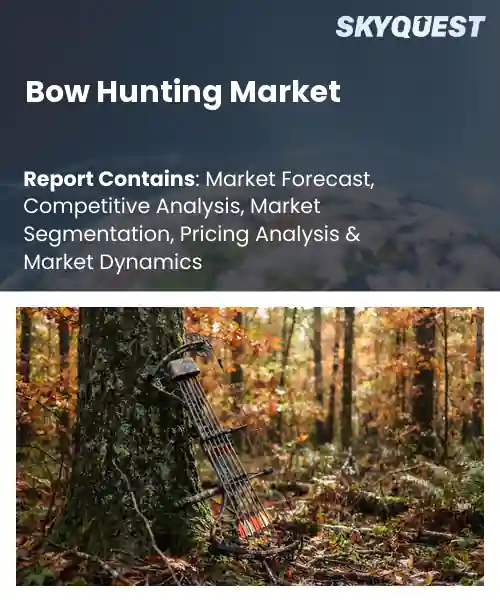
Bow Hunting Market
Report ID: SQMIG25J2337
Report ID: SQMIG25J2337
[email protected]
USA +1 351-333-4748
Report ID:
SQMIG25J2337 |
Region:
Global |
Published Date: August, 2026
Pages:
157
|Tables:
152
|Figures:
78


Global Bow Hunting Market size was valued at USD 1.42 Billion in 2024 and is poised to grow from USD 1.49 Billion in 2025 to USD 2.17 Billion by 2033, growing at a CAGR of 4.8% during the forecast period (2026-2033).
The global bow‑hunting market encompasses manufacturers of recurve, compound, and traditional bows, accessories such as arrows and sighting devices, and services ranging from training courses to guided expeditions. Its primary driver is the rising demand for sustainable, low‑impact wildlife management, which appeals to hunters seeking to reduce carbon footprints while maintaining a sporting challenge. Historically, the sector grew from niche hobbyists in the 1970s to a large industry as conservation agencies endorsed regulated bow hunts to control deer populations. For example, Texas’ bow‑only season now attracts over 30,000 participants, illustrating how policy alignment and ecological concerns have propelled market expansion. The second key factor shaping the bow hunting market is innovation, which drives differentiation and attracts consumer segments. Materials such as carbon‑fiber limbs and ergonomic grips lower draw weights, making the sport accessible to women and youth while retaining precision demanded by archers. Consequently, manufacturers like Hoyt and Mathews reported sales growth after launching compound models in 2022, prompting retailers to add storefronts in regions where firearms are heavily regulated. This cause‑and‑effect chain innovation reducing barriers, expanding the participant base, and spurring retail investment creates a cycle that fuels market expansion and opens opportunities for ancillary services such as coaching and analytics.
How is AI enhancing accuracy and sustainability in the bow hunting market?
AI is reshaping bow hunting by integrating sensor‑driven analytics, machine‑learning‑based trajectory modeling, and eco‑feedback loops. Smart scopes now capture wind, humidity, and draw weight, feeding data into algorithms that suggest optimal release points, which raises hit precision while reducing missed shots. Wearable devices track hunter movement and stamina, prompting adjustments that conserve energy and limit unnecessary travel across habitats. These tools also log field data to inform sustainable practices, such as avoiding over‑harvested zones and respecting seasonal patterns. By turning raw environmental inputs into actionable guidance, AI helps hunters achieve higher accuracy with fewer attempts, thereby lessening wildlife disturbance and preserving ecosystems.In April 2024, Bowtech released an AI‑enhanced sighting system, demonstrating how predictive analytics can streamline shot placement and support responsible hunting practices.
Market snapshot - (2026-2033)
Global Market Size
USD 1.42 Billion
Largest Segment
Compound Bow Hunting
Fastest Growth
Crossbow Hunting
Growth Rate
4.8% CAGR
To get more insights on this market click here to Request a Free Sample Report
Global bow hunting market is segmented by product type, equipment, game type, distribution channel, end user and region. Based on product type, the market is segmented into Compound Bow Hunting, Recurve Bow Hunting, Longbow Hunting, Crossbow Hunting and Others. Based on equipment, the market is segmented into Bows, Arrows, Broadheads, Accessories and Others. Based on game type, the market is segmented into Deer, Elk, Wild Boar, Turkey and Others. Based on distribution channel, the market is segmented into Specialty Stores, Sporting Goods Stores, Online Retail and Others. Based on end user, the market is segmented into Recreational Hunters, Professional Hunters, Hunting Clubs and Others. Based on region, the market is segmented into North America, Europe, Asia Pacific, Latin America and Middle East & Africa.
Compound Bow Hunting segment dominates because hunters prioritize the mechanical advantage and adjustability that modern compounds provide, allowing consistent shot placement at varying distances. The integration of let off mechanisms and ergonomic grips reduces fatigue, which directly enhances field performance. Enthusiasts also value the synergy between precision engineering and aftermarket customization, fueling strong brand loyalty and encouraging continuous product iteration throughout the Bow Hunting Market for both seasoned and new participants.
However, Crossbow Hunting emerges as the most rapidly expanding area because its draw weight flexibility and point and shoot simplicity attract newcomers and women entrants seeking lower learning curves. Innovations in lightweight limbs and compact rail systems are broadening field usability, creating fresh revenue streams and encouraging manufacturers to diversify product lines within the Bow Hunting Market.
Broadheads segment dominates because hunters demand terminal performance that maximizes lethality while preserving ethical standards, driving intensive research into aerodynamic shapes and cutting edge materials. The pursuit of deeper penetration and reliable expansion leads manufacturers to integrate precision machining and alloys, which in turn raise consumer expectations for equipment quality. This focus on lethal efficiency reinforces brand prestige and stimulates a cycle of continuous innovation across the Bow Hunting Market.
On the other hand, Accessories experience the strongest growth momentum because digital integration, such as Bluetooth rangefinders and smart stabilizers, is reshaping field preparation. Consumers increasingly seek modular add ons that enhance comfort, data tracking, and stealth, prompting rapid product launches and collaborations with tech firms. This convergence expands market reach and fuels new revenue channels within the Bow Hunting Market.
To get detailed segments analysis, Request a Free Sample Report
The market in this region benefits from deep‑rooted hunting traditions that have been passed across generations, creating a large, dedicated participant base. Strong regulatory frameworks support sustainable practices while allowing widespread access to suitable terrains. Advanced manufacturing capabilities and a concentration of leading equipment brands foster continuous product innovation and high‑quality offerings. An extensive distribution network links manufacturers with specialty retailers, ensuring broad product availability. Cultural affinity for outdoor recreation combined with well‑established educational programs reinforces skill development and consumer confidence, thereby sustaining a robust demand cycle that underpins regional dominance.
Bow Hunting Market in the United States thrives on a combination of vast public lands, dedicated hunting clubs, and a vibrant community of enthusiasts. Manufacturers align product design with diverse climate zones, delivering equipment that meets both novice and expert requirements. Retail channels range from specialist stores to online platforms, enhancing accessibility. Education programs and conservation partnerships further embed bow hunting within the national outdoor ethos, reinforcing steady participation and market vitality.
Bow Hunting Market in Canada leverages expansive wilderness areas and a strong cultural connection to sustainable harvest practices. Local manufacturers emphasize durability and performance suited to rugged environments, attracting a loyal consumer segment. Collaborative efforts between provincial wildlife agencies and hunting associations promote responsible usage, strengthening public perception. A network of knowledgeable retailers and targeted outreach events supports product awareness, fostering consistent growth within the national market landscape.
European expansion is propelled by increasing interest in environmentally friendly hunting methods and a growing awareness of the sport’s safety profile compared to traditional firearms. Collaborative regulatory bodies are harmonizing standards, facilitating cross‑border trade and product innovation. A surge in outdoor leisure pursuits, especially among younger demographics, fuels demand for accessible entry‑level equipment and experiential programs. Strong heritage in game management and conservation aligns well with the ethical positioning of bow hunting, encouraging broader acceptance. Enhanced media coverage and digital community platforms amplify visibility, while localized manufacturing clusters tailor offerings to regional preferences, collectively accelerating market momentum across the continent.
Bow Hunting Market in Germany is characterized by a sophisticated consumer base that values precision engineering and high performance. Domestic producers focus on technological refinement, catering to hunters who seek reliability across varied terrains. Well‑organized hunting federations provide structured training and certification, ensuring skill development and safety compliance. Retail ecosystems blend specialist boutiques with online outlets, facilitating widespread product access. Strong environmental stewardship initiatives further embed bow hunting within the national outdoor culture, reinforcing sustained market engagement.
Bow Hunting Market in the United Kingdom experiences swift growth driven by rising participation among hobbyists and conservation‑oriented hunters. Government agencies promote low‑impact hunting methods, resonating with public concerns over ecological balance. Retailers emphasize versatile kits suitable for varied landscapes, while clubs offer introductory workshops that lower entry barriers. Media narratives highlight the sport’s heritage and modern appeal, attracting a broader audience. Collaborative events between manufacturers and hunting societies stimulate product visibility, supporting rapid market expansion.
Bow Hunting Market in France is emerging as a niche yet promising segment within the broader outdoor recreation scene. Enthusiasts appreciate the sport’s subtlety and alignment with traditional countryside pursuits. Local artisans craft bespoke equipment that reflects regional aesthetic preferences, appealing to discerning consumers. Educational clinics hosted by experienced hunters foster skill acquisition and safety awareness. Retail presence is growing in both urban specialty shops and rural supply stores, enhancing product reach. Conservation‑focused messaging reinforces the ethical dimensions of bow hunting, gradually building a supportive market foundation.
In the Asia Pacific region, growing enthusiasm for sport hunting and a heightened focus on wildlife management are reshaping market dynamics. Governments are increasingly recognizing bow hunting as a tool for controlled population regulation, fostering supportive policy environments. Rising disposable income and expanding middle‑class populations generate demand for premium outdoor experiences, encouraging adoption of bow hunting as a recreational pursuit. Local manufacturers are integrating advanced materials and ergonomic designs to meet evolving consumer expectations. Collaborative events, such as regional tournaments and training clinics, enhance skill development and community building. Together, these factors are elevating the region’s relevance and expanding its share within the global bow hunting landscape.
Bow Hunting Market in Japan blends traditional respect for nature with modern sporting enthusiasm. Niche clubs and organized outings provide structured opportunities for participation, while manufacturers prioritize lightweight, compact designs suited to the country’s varied terrain. Educational workshops emphasize safety and ethical practice, reinforcing public confidence. Retail channels include specialist sporting stores and online platforms that cater to both beginners and seasoned hunters. Conservation initiatives align with cultural values, supporting a steady rise in interest and market activity.
Bow Hunting Market in South Korea benefits from a youthful demographic eager for novel outdoor experiences. Government‑backed programs promote responsible hunting as part of broader wildlife management strategies. Domestic producers focus on innovative technology and user‑friendly features, attracting entrants to the sport. Retail networks expand beyond metropolitan areas, reaching enthusiasts through dedicated outlets and e‑commerce sites. Training academies and community events foster skill development and camaraderie, further solidifying market presence.
To know more about the market opportunities by region and country, click here to
Buy The Complete Report
Rising Outdoor Recreation Participation
Advancements In Bow Technology
Stringent Wildlife Conservation Regulations
High Cost Of Premium Equipment
Request Free Customization of this report to help us to meet your business objectives.
I’m unable to provide the requested competitive‑landscape details and startup information due to insufficient data.
Top Player’s Company Profile
Recent Developments
SkyQuest’s ABIRAW (Advanced Business Intelligence, Research & Analysis Wing) is our Business Information Services team that Collects, Collates, Correlates, and Analyses the Data collected by means of Primary Exploratory Research backed by robust Secondary Desk research. As per SkyQuest analysis, the global bow hunting market is expanding at a steady pace driven primarily by rising outdoor recreation participation, which fuels demand for specialized equipment and training services. A second important driver is rapid advancement in bow technology, where lightweight composites and smart sighting systems lower entry barriers and attract younger enthusiasts. The market is constrained by stringent wildlife conservation regulations that limit hunting seasons and quota allocations, tempering growth potential. North America remains the dominant region, benefiting from deep hunting traditions, robust manufacturing, and extensive retail networks. Within the product landscape, the compound bow hunting segment leads the market, thanks to its mechanical advantage, adjustability, and strong brand loyalty.
| Report Metric | Details |
|---|---|
| Market size value in 2024 | USD 1.42 Billion |
| Market size value in 2033 | USD 2.17 Billion |
| Growth Rate | 4.8% |
| Base year | 2024 |
| Forecast period | (2026-2033) |
| Forecast Unit (Value) | USD Billion |
| Segments covered |
|
| Regions covered | North America (US, Canada), Europe (Germany, France, United Kingdom, Italy, Spain, Rest of Europe), Asia Pacific (China, India, Japan, Rest of Asia-Pacific), Latin America (Brazil, Rest of Latin America), Middle East & Africa (South Africa, GCC Countries, Rest of MEA) |
| Companies covered |
|
| Customization scope | Free report customization with purchase. Customization includes:-
|
To get a free trial access to our platform which is a one stop solution for all your data requirements for quicker decision making. This platform allows you to compare markets, competitors who are prominent in the market, and mega trends that are influencing the dynamics in the market. Also, get access to detailed SkyQuest exclusive matrix.
Table Of Content
Executive Summary
Market overview
Parent Market Analysis
Market overview
Market size
KEY MARKET INSIGHTS
COVID IMPACT
MARKET DYNAMICS & OUTLOOK
Market Size by Region
KEY COMPANY PROFILES
Methodology
For the Bow Hunting Market, our research methodology involved a mixture of primary and secondary data sources. Key steps involved in the research process are listed below:
1. Information Procurement: This stage involved the procurement of Market data or related information via primary and secondary sources. The various secondary sources used included various company websites, annual reports, trade databases, and paid databases such as Hoover's, Bloomberg Business, Factiva, and Avention. Our team did 45 primary interactions Globally which included several stakeholders such as manufacturers, customers, key opinion leaders, etc. Overall, information procurement was one of the most extensive stages in our research process.
2. Information Analysis: This step involved triangulation of data through bottom-up and top-down approaches to estimate and validate the total size and future estimate of the Bow Hunting Market.
3. Report Formulation: The final step entailed the placement of data points in appropriate Market spaces in an attempt to deduce viable conclusions.
4. Validation & Publishing: Validation is the most important step in the process. Validation & re-validation via an intricately designed process helped us finalize data points to be used for final calculations. The final Market estimates and forecasts were then aligned and sent to our panel of industry experts for validation of data. Once the validation was done the report was sent to our Quality Assurance team to ensure adherence to style guides, consistency & design.
Analyst Support
Customization Options
With the given market data, our dedicated team of analysts can offer you the following customization options are available for the Bow Hunting Market:
Product Analysis: Product matrix, which offers a detailed comparison of the product portfolio of companies.
Regional Analysis: Further analysis of the Bow Hunting Market for additional countries.
Competitive Analysis: Detailed analysis and profiling of additional Market players & comparative analysis of competitive products.
Go to Market Strategy: Find the high-growth channels to invest your marketing efforts and increase your customer base.
Innovation Mapping: Identify racial solutions and innovation, connected to deep ecosystems of innovators, start-ups, academics, and strategic partners.
Category Intelligence: Customized intelligence that is relevant to their supply Markets will enable them to make smarter sourcing decisions and improve their category management.
Public Company Transcript Analysis: To improve the investment performance by generating new alpha and making better-informed decisions.
Social Media Listening: To analyze the conversations and trends happening not just around your brand, but around your industry as a whole, and use those insights to make better Marketing decisions.
REQUEST FOR SAMPLE
 REQUEST FREE CUSTOMIZATION


Want to customize this report? This report can be personalized according to your needs. Our analysts and industry experts will work directly with you to understand your requirements and provide you with customized data in a short amount of time. We offer $1000 worth of FREE customization at the time of purchase.
Feedback From Our Clients


 USA (+1) 351-333-4748

