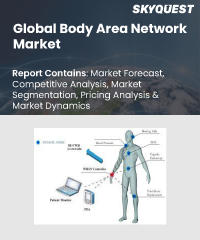
Body Area Network Market
Report ID: SQMIG45J2127
Report ID: SQMIG45J2127
[email protected]
USA +1 351-333-4748
Report ID:
SQMIG45J2127 |
Region:
Global |
Published Date: December, 2025
Pages:
157
|Tables:
60
|Figures:
74


Body Area Network Market size was valued at USD 15.86 Billion in 2024 and is poised to grow from USD 17.67 Billion in 2025 to USD 41.91 Billion by 2033, growing at a CAGR of 11.4% during the forecast period (2026–2033).
Global Body Area Network (BAN) Market has witnessed significant growth and evolution in recent years. The market is driven by factors such as the rising prevalence of chronic diseases, increasing healthcare costs, advancements in wireless communication technologies, and growing consumer demand for personalized and proactive healthcare solutions. Additionally, the integration of BANs with emerging technologies such as artificial intelligence, Internet of Things (IoT), and big data analytics has further expanded the market opportunities. The applications of BANs are vast, ranging from remote patient monitoring, fitness and sports tracking, elderly care, and wellness management to smart clothing and military healthcare. North America dominated the BAN market due to the presence of a well-established healthcare infrastructure, favorable government initiatives, and the presence of major industry players. However, the market is witnessing rapid growth in Asia Pacific, driven by increasing healthcare expenditure, rising awareness about preventive healthcare, and technological advancements. Key players in the global market include major technology companies, healthcare providers, and start-ups, all focusing on developing innovative devices, improving connectivity, and enhancing data security. As the demand for personalized healthcare continues to rise, the BAN market is expected to witness significant growth in the coming years, fostering a new era of connected healthcare and improving patient outcomes globally.
US Body Area Network Market is poised to grow at a sustainable CAGR for the next forecast year
Market snapshot - 2026-2033
Global Market Size
USD 14.24 billion
Largest Segment
Wearable devices
Fastest Growth
Wearable devices
Growth Rate
11.4% CAGR
To get more insights on this market click here to Request a Free Sample Report
Global Body Area Network Market is segmented by Device Type, Components, Technology, Application and region. Based on Device Type, the market is segmented into Wearable Devices, Smart bands, Smartwatches, Smart earphones and Implantable Devices. Based on Components, the market is segmented into Displays, Application Processors & Memory Modules, and Pulse Generators, Electromechanicals, Communication & Interface Components, Power Management Units, Sensors and Others. Based on Technology, the market is segmented into Bluetooth low energy (BLE), Zigbee and Wi-Fi. Based on Application, the market is segmented into Medical, Fitness and Sports, Military and Security. Based on region, the market is segmented into North America, Europe, Asia Pacific, Latin America and Middle East & Africa.
Wearable devices hold a significant share in the Global Body Area Network (BAN) market. Wearable devices, such as smartwatches, fitness trackers, and smart clothing, have gained widespread popularity among consumers due to their ease of use, portability, and diverse functionalities. These devices can monitor vital signs, track physical activities, provide real-time feedback, and even enable communication with healthcare professionals. The dominance of wearable devices is attributed to their wide range of applications across various sectors, including healthcare, sports and fitness, and general wellness management.
On the other hand, when it comes to the fastest-growing segment in the BAN market, implant devices are witnessing rapid expansion. Implantable devices, such as cardiac monitors, glucose monitors, neurostimulators, and smart implants, are designed to be inserted inside the body to monitor specific health conditions or deliver therapeutic treatments. These devices offer the advantage of continuous monitoring and targeted interventions, allowing for early detection of abnormalities and personalized healthcare delivery. The increasing demand for implant devices is primarily driven by advancements in miniaturization, biocompatibility, and power-efficient technologies, enabling longer device lifespan and improved patient outcomes. Moreover, the growing prevalence of chronic diseases and the aging population further contribute to the rising adoption of implantable devices for long-term health monitoring and disease management.
The healthcare sector holds a prominent position in the Global Body Area Network (BAN) market. BANs have revolutionized healthcare by enabling remote patient monitoring, telemedicine, and personalized healthcare services. These networks facilitate continuous monitoring of vital signs, medication adherence, and early detection of health abnormalities, thereby improving patient outcomes and reducing healthcare costs. BANs in healthcare find applications in chronic disease management, post-operative care, elderly care, and preventive medicine. The dominant presence of BANs in the healthcare sector is driven by the increasing prevalence of chronic diseases, the need for efficient healthcare delivery systems, and the rising demand for personalized and proactive healthcare solutions.
Regarding the fastest-growing segment, the sports and fitness sector is witnessing significant growth in the BAN market. BANs have transformed sports and fitness activities by providing real-time monitoring of biometric data, performance tracking, and personalized training programs. Athletes and fitness enthusiasts utilize wearable devices and smart clothing integrated with BAN technology to optimize their training, prevent injuries, and improve overall performance. The growing awareness of health and fitness, coupled with advancements in sensor technology and data analytics, has fueled the adoption of BANs in the sports and fitness sector. The demand for BANs in this segment is expected to further surge as more individuals prioritize their physical well-being and seek data-driven insights for achieving their fitness goals.
To get detailed segments analysis, Request a Free Sample Report
North America emerges as the dominant region in the Global Body Area Network (BAN) market. North America's dominance can be attributed to factors such as a well-established healthcare infrastructure, advanced technological advancements, favorable government initiatives, and the presence of major industry players. The region has witnessed early adoption and widespread implementation of BANs in various healthcare settings, including hospitals, clinics, and home healthcare. Additionally, the region's strong focus on research and development, along with the presence of leading technology companies, contributes to its dominant position in the BAN market.
As for the fastest-growing region, Asia Pacific is experiencing significant growth in the BAN market. Factors driving this growth include the increasing healthcare expenditure, rising awareness about preventive healthcare, and technological advancements in countries like China, Japan, and India. The region has a large population base, a growing middle-class segment, and rising chronic disease prevalence, which creates a favorable market landscape for BAN adoption. Furthermore, the increasing penetration of smartphones and internet connectivity, along with the growing demand for wearable devices and remote healthcare services, propel the market growth in Asia Pacific. The region offers immense growth potential for BANs, with several emerging economies embracing digital healthcare solutions and focusing on improving healthcare accessibility and outcomes.
To know more about the market opportunities by region and country, click here to
Buy The Complete Report
Increasing prevalence of chronic diseases
Concern over data security and privacy
Request Free Customization of this report to help us to meet your business objectives.
The competitive landscape of the Global Body Area Network (BAN) market is characterized by intense competition and a diverse range of players. The market encompasses a mix of established technology companies, healthcare providers, start-ups, and research organizations, all striving to gain a competitive edge. These players focus on developing innovative BAN devices, improving connectivity, enhancing data security, and expanding their product portfolios. Technological advancements such as miniaturization, wireless communication, sensor technology, and data analytics are key areas of focus for market participants. Additionally, collaborations, partnerships, and strategic alliances are prevalent in the market as companies seek to leverage each other's expertise and expand their market presence. With the growing demand for personalized healthcare and connected solutions, the competitive landscape is expected to intensify further, driving continuous innovation and market growth.
SkyQuest's ABIRAW (Advanced Business Intelligence, Research & Analysis Wing) is our Business Information Services team that Collects, Collates, Co-relates, and Analyses the Data collected by means of Primary Exploratory Research backed by robust Secondary Desk research.
According to our Global Body Area Network (BAN) market analysis, the market encompasses interconnected wearable and implantable devices that collect and transmit data related to an individual's health and well-being. It has witnessed significant growth driven by factors such as the rising prevalence of chronic diseases, increasing healthcare costs, advancements in wireless communication technologies, and growing consumer demand for personalized healthcare solutions. The market is dominated by wearable devices, such as smartwatches and fitness trackers, which offer diverse functionalities and find applications in healthcare, sports, and wellness management. Implantable devices are also gaining traction for continuous monitoring and targeted interventions. North America holds a dominant position in the market, while Asia Pacific is the fastest-growing region. Key players in the market include major technology companies, healthcare providers, and start-ups, focusing on innovation, connectivity, and data security. The integration of advanced sensors is a key market trend, enhancing the functionality and capabilities of BAN devices. With the demand for personalized healthcare on the rise, the market is expected to continue growing, improving patient outcomes and transforming the healthcare landscape.
| Report Metric | Details |
|---|---|
| Market size value in 2024 | USD 15.86 Billion |
| Market size value in 2033 | USD 41.91 Billion |
| Growth Rate | 11.4% |
| Base year | 2024 |
| Forecast period | 2026-2033 |
| Forecast Unit (Value) | USD Billion |
| Segments covered |
|
| Regions covered | North America (US, Canada), Europe (Germany, France, United Kingdom, Italy, Spain, Rest of Europe), Asia Pacific (China, India, Japan, Rest of Asia-Pacific), Latin America (Brazil, Rest of Latin America), Middle East & Africa (South Africa, GCC Countries, Rest of MEA) |
| Companies covered |
|
| Customization scope | Free report customization with purchase. Customization includes:-
|
To get a free trial access to our platform which is a one stop solution for all your data requirements for quicker decision making. This platform allows you to compare markets, competitors who are prominent in the market, and mega trends that are influencing the dynamics in the market. Also, get access to detailed SkyQuest exclusive matrix.
Table Of Content
Executive Summary
Market overview
Parent Market Analysis
Market overview
Market size
KEY MARKET INSIGHTS
COVID IMPACT
MARKET DYNAMICS & OUTLOOK
Market Size by Region
KEY COMPANY PROFILES
Methodology
For the Body Area Network Market, our research methodology involved a mixture of primary and secondary data sources. Key steps involved in the research process are listed below:
1. Information Procurement: This stage involved the procurement of Market data or related information via primary and secondary sources. The various secondary sources used included various company websites, annual reports, trade databases, and paid databases such as Hoover's, Bloomberg Business, Factiva, and Avention. Our team did 45 primary interactions Globally which included several stakeholders such as manufacturers, customers, key opinion leaders, etc. Overall, information procurement was one of the most extensive stages in our research process.
2. Information Analysis: This step involved triangulation of data through bottom-up and top-down approaches to estimate and validate the total size and future estimate of the Body Area Network Market.
3. Report Formulation: The final step entailed the placement of data points in appropriate Market spaces in an attempt to deduce viable conclusions.
4. Validation & Publishing: Validation is the most important step in the process. Validation & re-validation via an intricately designed process helped us finalize data points to be used for final calculations. The final Market estimates and forecasts were then aligned and sent to our panel of industry experts for validation of data. Once the validation was done the report was sent to our Quality Assurance team to ensure adherence to style guides, consistency & design.
Analyst Support
Customization Options
With the given market data, our dedicated team of analysts can offer you the following customization options are available for the Body Area Network Market:
Product Analysis: Product matrix, which offers a detailed comparison of the product portfolio of companies.
Regional Analysis: Further analysis of the Body Area Network Market for additional countries.
Competitive Analysis: Detailed analysis and profiling of additional Market players & comparative analysis of competitive products.
Go to Market Strategy: Find the high-growth channels to invest your marketing efforts and increase your customer base.
Innovation Mapping: Identify racial solutions and innovation, connected to deep ecosystems of innovators, start-ups, academics, and strategic partners.
Category Intelligence: Customized intelligence that is relevant to their supply Markets will enable them to make smarter sourcing decisions and improve their category management.
Public Company Transcript Analysis: To improve the investment performance by generating new alpha and making better-informed decisions.
Social Media Listening: To analyze the conversations and trends happening not just around your brand, but around your industry as a whole, and use those insights to make better Marketing decisions.
REQUEST FOR SAMPLE
 REQUEST FREE CUSTOMIZATION


Want to customize this report? This report can be personalized according to your needs. Our analysts and industry experts will work directly with you to understand your requirements and provide you with customized data in a short amount of time. We offer $1000 worth of FREE customization at the time of purchase.
Feedback From Our Clients


 USA (+1) 351-333-4748

