Blowing Torch Market
Report ID: SQMIG20I3588
Report ID: SQMIG20I3588
[email protected]
USA +1 351-333-4748
Report ID:
SQMIG20I3588 |
Region:
Global |
Published Date: August, 2026
Pages:
157
|Tables:
146
|Figures:
78


Global Blowing Torch Market size was valued at USD 214.8 Million in 2024 and is poised to grow from USD 230.7 Million in 2025 to USD 408.39 Million by 2033, growing at a CAGR of 7.4% during the forecast period (2026-2033).
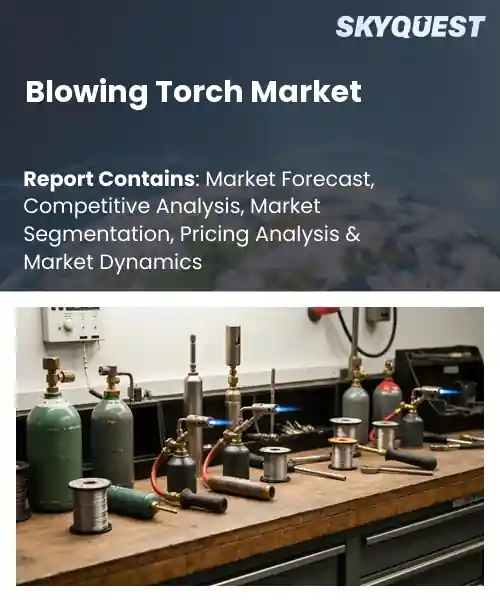
The global blowing torch market comprises handheld devices that emit a focused flame for applications ranging from jewelry soldering to automotive paint removal. Its significance stems from the ability to deliver precise heat quickly, reducing labor time and improving product quality across manufacturing and repair sectors. Historically, the market emerged in the early 20th century when blacksmiths adopted portable propane torches, and it accelerated in the 1990s as industrial coatings demanded faster surface preparation. Recent adoption of fuel‑efficient models and digital temperature controls illustrates a shift toward sustainability, positioning the sector as a critical enabler of modern production workflows for global competitiveness today.
One pivotal factor driving the next phase of expansion is the rising demand for lightweight composite repairs in aerospace and renewable‑energy infrastructure, where blowing torches provide curing of epoxy binders without compromising structural integrity. As manufacturers seek to shorten downtime, the ability of torches to integrate monitoring reduces overheating risk, directly translating into lower warranty costs and higher throughput. This technological advantage fuels investment in portable units, opening opportunities for regional distributors in emerging markets such as Southeast Asia, where expanding aircraft maintenance bases and offshore wind farms require efficient heat‑application tools. Consequently, revenue growth is expected to outpace the broader industrial‑equipment sector.
How is AI-driven Automation Influencing Efficiency And Safety In The Blowing Torch Market?
AI-driven automation is reshaping the blowing torch (cutting and welding torch) market mainly through smarter robotics and real-time process control. Robotic adoption in industrial metal-cutting applications, including oxy-fuel torch operations, is improving worker safety while boosting productivity across cutting-intensive sectors like manufacturing and metal scrap recycling. Vision-guided systems now let torches adjust cutting paths dynamically rather than following fixed programming, improving precision and reducing material waste.
On efficiency, AI-powered robotic arms can monitor tool quality, adjust angles when misalignment is detected, and flag maintenance needs before components like welding torches wear out, shifting operations from blind repetition to smart, adaptive control. This predictive-maintenance layer, combined with edge-deployed AI near machines and sensors for real-time responses, cuts downtime and rework in torch-based operations.
Market snapshot - (2026-2033)
Global Market Size
USD 214.8 Million
Largest Segment
Propane
Fastest Growth
Butane
Growth Rate
7.4% CAGR
To get more insights on this market click here to Request a Free Sample Report
Global blowing torch market is segmented by fuel type, product type, application, end user, ignition type and region. Based on fuel type, the market is segmented into Propane, Butane, Acetylene and MAPP Gas. Based on product type, the market is segmented into Handheld Torches, Trigger-Start Torches, Pencil Flame Torches and Heavy-Duty Torches. Based on application, the market is segmented into Soldering & Brazing, Welding, Plumbing and Culinary Applications. Based on end user, the market is segmented into Industrial, Professional Trades and Household. Based on ignition type, the market is segmented into Manual Ignition and Piezoelectric Ignition. Based on region, the market is segmented into North America, Europe, Asia Pacific, Latin America and Middle East & Africa.
Acetylene segment dominates because its high flame temperature and energy density meet the rigorous performance standards of industrial metalworking. Engineers favor it for welding and brazing where deep penetration and rapid heating are essential, driving consistent preference across heavy‑duty applications. Its long‑standing availability, established supply chains, and compatibility with existing equipment reinforce its leading position, creating a self‑sustaining loop of demand and production within the blowing torch market global supply.
Meanwhile, butane segment is witnessing the strongest growth momentum as portable and low‑heat applications expand in the home improvement and culinary arenas. Its lightweight canisters and ease of storage attract hobbyists and chefs, prompting manufacturers to innovate safety valves and ergonomic designs, thereby accelerating market expansion and creating new opportunities.
Culinary applications segment dominates because chefs value precise flame control and aesthetic finishing for dishes such as brûlée and charred vegetables. The demand for restaurant‑grade torches that combine safety, consistent performance, and elegant design drives manufacturers to tailor products specifically for gastronomy. This focus aligns with premium dining trends, encouraging continuous investment and reinforcing the segment’s central role in shaping product development across the blowing torch market global culinary innovation.
Conversely, soldering & brazing segment is emerging as the key high‑growth area due to rising electronics assembly and infrastructure projects that require reliable low‑temperature joining. The push for efficient, portable torches that minimize thermal distortion encourages manufacturers to integrate flame‑adjustment mechanisms, thereby stimulating demand and opening channels for market expansion.
To get detailed segments analysis, Request a Free Sample Report
The Asia Pacific region benefits from a confluence of advanced manufacturing ecosystems, robust industrial diversification, and a strong emphasis on precision engineering. Established supply chains for high‑performance alloys and electronics create a fertile environment for both OEMs and aftermarket providers. Technical expertise in sectors such as automotive, aerospace, and specialty metals drives continual innovation in torch design and fuel efficiency. Moreover, strategic investments in research collaborations and vocational training reinforce a skilled workforce capable of supporting complex applications, positioning the region as a benchmark for quality and reliability in blowing torch solutions.
Blowing Torch Market in Japan thrives on a legacy of meticulous craftsmanship and a deep integration with high‑tech industries. Demand is propelled by sophisticated automotive component production and precision electronics assembly, where controlled heat application is essential. Manufacturers prioritize ergonomic design and safety features to meet strict regulatory expectations, while local distributors emphasize after‑sales support and rapid parts availability, fostering strong customer loyalty.
Blowing Torch Market in South Korea is energized by a vibrant heavy‑industry sector and an expanding renewable energy infrastructure. The country’s focus on shipbuilding, petrochemical processing, and advanced battery manufacturing fuels consistent demand for reliable heat‑source equipment. Innovation hubs encourage the development of compact, energy‑efficient torch models, and close collaboration between equipment makers and end users ensures solutions are tailored to evolving production requirements.
North America experiences accelerated growth through a combination of industrial modernization, stringent safety standards, and a proactive approach to sustainability. The convergence of mature manufacturing bases with emerging sectors such as clean‑energy fabrication and high‑precision medical device production creates diverse usage scenarios. Regulatory frameworks that prioritize worker protection and emissions reduction compel manufacturers to adopt advanced torch technologies with improved control and lower environmental impact. Additionally, a culture of continuous improvement and strong distribution networks facilitate rapid adoption of innovative product features across the United States and Canada.
Blowing Torch Market in the United States is shaped by a broad spectrum of applications ranging from aerospace component assembly to infrastructure maintenance. High demand for precision heating solutions drives manufacturers to focus on digital controls, fuel versatility, and ergonomic designs. Industry associations promote best practices around safety and training, while aftermarket service providers deliver comprehensive support, reinforcing market resilience and fostering ongoing equipment upgrades.
Blowing Torch Market in Canada reflects a balance between traditional resource extraction activities and a growing emphasis on green technology development. Cold‑climate operational requirements encourage the production of robust, reliable torch systems capable of consistent performance in harsh conditions. Collaborative initiatives between equipment suppliers and petrochemical processors highlight a commitment to reducing emissions, while strong technical training programs ensure skilled personnel can safely manage sophisticated torch equipment.
Europe consolidates its market position through a strategic focus on engineering excellence, stringent environmental legislation, and cross‑border industrial collaboration. The region leverages deep expertise in automotive engineering, precision machining, and renewable energy equipment to drive demand for high‑efficiency, low‑emission blowing torches. Harmonized safety directives and carbon‑reduction targets compel manufacturers to innovate with cleaner fuel options and advanced sensor integration. Furthermore, a dense network of research institutions and industry clusters facilitates rapid prototyping and knowledge exchange, reinforcing Europe’s reputation as a leader in sustainable industrial heating solutions.
Blowing Torch Market in Germany is anchored by a strong automotive and mechanical engineering sector that values precision and reliability. German manufacturers prioritize high‑performance torches with sophisticated temperature control and robust safety mechanisms to meet exacting production tolerances. Collaborative efforts between equipment makers and vocational schools ensure a pipeline of skilled technicians, while a focus on energy efficiency aligns with national climate objectives.
Blowing Torch Market in the United Kingdom benefits from a diversified industrial landscape that includes aerospace, ship repair, and heritage conservation. The market emphasizes modular designs and versatile fuel options to accommodate varied project requirements. Quality certification and rigorous health‑and‑safety standards drive manufacturers toward innovative safety features, while specialist distributors provide tailored consulting services that enhance end‑user confidence.
Blowing Torch Market in France is propelled by a dynamic mix of aerospace manufacturing, luxury goods production, and renewable energy initiatives. French manufacturers seek compact, low‑emission torches that integrate seamlessly with automated production lines. Government incentives for low‑carbon technologies encourage the adoption of precision heating equipment, and close collaboration between industry associations and research labs fosters continuous product refinement.
To know more about the market opportunities by region and country, click here to
Buy The Complete Report
Increasing Demand for Precision Cutting
Advancements in Fuel Efficiency Technologies
Stringent Environmental Emission Regulations
High Capital Expenditure for Advanced Systems
Request Free Customization of this report to help us to meet your business objectives.
Competitive dynamics in the global blowing torch market are driven by manufacturers seeking to differentiate through advanced flame‑control technologies, lightweight materials, and integrated safety sensors. Companies are accelerating growth via strategic acquisitions of niche torch designers, forming joint ventures with sensor‑technology firms, and investing in R&D to launch next‑generation low‑emission torches that meet stricter industrial standards.
SkyQuest’s ABIRAW (Advanced Business Intelligence, Research & Analysis Wing) is our Business Information Services team that Collects, Collates, Correlates, and Analyses the Data collected by means of Primary Exploratory Research backed by robust Secondary Desk research.
As per SkyQuest analysis, the global blowing torch market is driven primarily by the rising demand for precision cutting in automotive, aerospace and heavy‑equipment manufacturing. A second driver comes from advancements in fuel‑efficiency technologies that lower operating costs and meet sustainability goals. The most significant restraint is the tightening of environmental emission regulations, which raise product complexity and price. Asia Pacific dominates the market due to its extensive manufacturing base and skilled workforce, while the acetylene fuel‑type segment remains the leading segment because of its high flame temperature and energy density.
| Report Metric | Details |
|---|---|
| Market size value in 2024 | USD 214.8 Million |
| Market size value in 2033 | USD 408.39 Million |
| Growth Rate | 7.4% |
| Base year | 2024 |
| Forecast period | (2026-2033) |
| Forecast Unit (Value) | USD Million |
| Segments covered |
|
| Regions covered | North America (US, Canada), Europe (Germany, France, United Kingdom, Italy, Spain, Rest of Europe), Asia Pacific (China, India, Japan, Rest of Asia-Pacific), Latin America (Brazil, Rest of Latin America), Middle East & Africa (South Africa, GCC Countries, Rest of MEA) |
| Companies covered |
|
| Customization scope | Free report customization with purchase. Customization includes:-
|
To get a free trial access to our platform which is a one stop solution for all your data requirements for quicker decision making. This platform allows you to compare markets, competitors who are prominent in the market, and mega trends that are influencing the dynamics in the market. Also, get access to detailed SkyQuest exclusive matrix.
Table Of Content
Executive Summary
Market overview
Parent Market Analysis
Market overview
Market size
KEY MARKET INSIGHTS
COVID IMPACT
MARKET DYNAMICS & OUTLOOK
Market Size by Region
KEY COMPANY PROFILES
Methodology
For the Blowing Torch Market, our research methodology involved a mixture of primary and secondary data sources. Key steps involved in the research process are listed below:
1. Information Procurement: This stage involved the procurement of Market data or related information via primary and secondary sources. The various secondary sources used included various company websites, annual reports, trade databases, and paid databases such as Hoover's, Bloomberg Business, Factiva, and Avention. Our team did 45 primary interactions Globally which included several stakeholders such as manufacturers, customers, key opinion leaders, etc. Overall, information procurement was one of the most extensive stages in our research process.
2. Information Analysis: This step involved triangulation of data through bottom-up and top-down approaches to estimate and validate the total size and future estimate of the Blowing Torch Market.
3. Report Formulation: The final step entailed the placement of data points in appropriate Market spaces in an attempt to deduce viable conclusions.
4. Validation & Publishing: Validation is the most important step in the process. Validation & re-validation via an intricately designed process helped us finalize data points to be used for final calculations. The final Market estimates and forecasts were then aligned and sent to our panel of industry experts for validation of data. Once the validation was done the report was sent to our Quality Assurance team to ensure adherence to style guides, consistency & design.
Analyst Support
Customization Options
With the given market data, our dedicated team of analysts can offer you the following customization options are available for the Blowing Torch Market:
Product Analysis: Product matrix, which offers a detailed comparison of the product portfolio of companies.
Regional Analysis: Further analysis of the Blowing Torch Market for additional countries.
Competitive Analysis: Detailed analysis and profiling of additional Market players & comparative analysis of competitive products.
Go to Market Strategy: Find the high-growth channels to invest your marketing efforts and increase your customer base.
Innovation Mapping: Identify racial solutions and innovation, connected to deep ecosystems of innovators, start-ups, academics, and strategic partners.
Category Intelligence: Customized intelligence that is relevant to their supply Markets will enable them to make smarter sourcing decisions and improve their category management.
Public Company Transcript Analysis: To improve the investment performance by generating new alpha and making better-informed decisions.
Social Media Listening: To analyze the conversations and trends happening not just around your brand, but around your industry as a whole, and use those insights to make better Marketing decisions.
REQUEST FOR SAMPLE
 REQUEST FREE CUSTOMIZATION
Global Blowing Torch Market size was valued at USD 214.8 Million in 2024 and is poised to grow from USD 230.7 Million in 2025 to USD 408.39 Million by 2033, growing at a CAGR of 7.4% during the forecast period (2026-2033).
Competitive dynamics in the global blowing torch market are driven by manufacturers seeking to differentiate through advanced flame‑control technologies, lightweight materials, and integrated safety sensors. Companies are accelerating growth via strategic acquisitions of niche torch designers, forming joint ventures with sensor‑technology firms, and investing in R&D to launch next‑generation low‑emission torches that meet stricter industrial standards. 'Stanley Black & Decker, Inc.', 'Worthington Enterprises, Inc.', 'Rothenberger AG', 'Sievert AB', 'Iwatani Corporation', 'Lincoln Electric Holdings, Inc.', 'Master Appliance Corp.', 'ESAB Corporation', 'Goss, Inc.', 'Bernzomatic', 'Mag-Torch', 'Forney Industries, Inc.', 'TurboTorch', 'Weller Tools', 'Kemper S.r.l.', 'Sievert Professional', 'Bullfinch Gas Equipment Ltd.', 'CEMONT S.p.A.', 'Harris Products Group', 'Flame Engineering, Inc.'
Manufacturers across automotive, aerospace, and heavy‑equipment sectors are seeking tools that deliver accurate welds and seamless material removal, which positions blowing torches as essential equipment. The ability of modern torches to produce consistent flame temperatures and adjustable flame shapes enables operators to achieve tighter tolerances, reduce rework, and enhance product quality. Consequently, procurement decisions favor advanced blowing torch solutions, stimulating demand and encouraging suppliers to innovate, thereby reinforcing market expansion. The integration of ergonomic designs and safety features reduces operator fatigue and risk, further accelerating adoption in high‑volume environments.
Advanced Material Integration: Manufacturers are increasingly embedding lightweight alloys and high‑temperature ceramics into torch housings, enabling longer flame stability and reduced heat loss. This material shift supports precision welding in aerospace and automotive sectors, where component tolerances are tightening. By leveraging these advanced composites, suppliers can offer tools that sustain higher operational cycles without degradation, enhancing overall productivity and lowering total cost of ownership for end users seeking reliable performance under demanding conditions while also meeting evolving safety standards across global markets today.
Why does Asia Pacific Dominate the Global Blowing Torch Market? |@12


Want to customize this report? This report can be personalized according to your needs. Our analysts and industry experts will work directly with you to understand your requirements and provide you with customized data in a short amount of time. We offer $1000 worth of FREE customization at the time of purchase.
Feedback From Our Clients


 USA (+1) 351-333-4748

