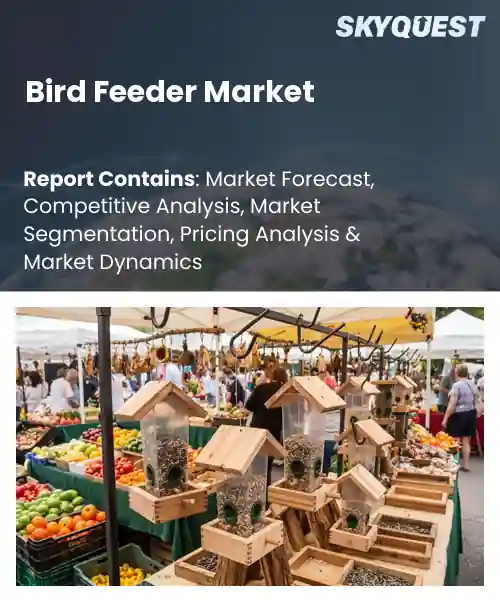
Bird Feeder Market
Report ID: SQMIG25H2065
Report ID: SQMIG25H2065
[email protected]
USA +1 351-333-4748
Report ID:
SQMIG25H2065 |
Region:
Global |
Published Date: February, 2026
Pages:
157
|Tables:
121
|Figures:
77


Global Bird Feeder Market size was valued at USD 2.21 Billion in 2024 and is poised to grow from USD 2.34 Billion in 2025 to USD 3.64 Billion by 2033, growing at a CAGR of 5.7% during the forecast period (2026-2033).
Gaining awareness about birds and the natural environment has become one of the primary motivating factors for consumers to purchase bird feeders, seeds, and supply or maintenance services at an increasingly steady pace. The bird feeder market can be thought of as comprising physical feeders, seed blends, and maintenance or supply services, but also digital products such as camera-equipped feeders and subscription seed delivery services.
Revenue generated through retail channels in this marketplace supports the development and sale of products that are good for wildlife and the environment and ultimately provide financial support to companies that manufacture products sold and to organizations that support wildlife and nature conservation efforts. The primary progression trend for the bird feeder marketplace over the past several years has shifted from traditional styles of simple hopper-based feeders made of wood or metal to a more diversified array of squirrel resistant-style feeders.
Consumer purchasing is facilitated by e-commerce; reducing the cost of distribution, enabling the introduction of niche products, and facilitating global access to unique offerings. Therefore, as retailers provide product descriptions and photographs for consumers to preview before purchasing, consumers become more aware of the types of feeders available.
Smart feeders allow consumers to watch the visits from their birds and share their sightings, while also allowing retailers to create starter bundles of products for new consumers, which creates a market opportunity. In addition, conservation groups can use the aggregate data provided by smart feeders to produce and facilitate citizen science; thereby creating substantial market opportunities for premium services.
How is IoT Improving Remote Monitoring of Bird Feeder Usage and Maintenance?
The Internet of Things (IoT) makes it easier to remotely monitor how well we use and maintain bird feeders, because it brings together sensors, cameras, connectivity and cloud analytics into one simple-to-use system. Motion sensor technology and AI-based species recognition provide notification alerts through the app, while battery and solar telemetry monitoring systems will let you know if the power supply is working properly.
When seed levels are low or there is a blockage, seed level sensors can trigger automatic notifications for when to refill or clean the feeder. All this results in a much more engaging backyard experience for the user. Companies are now bundling hardware and companion apps together in order to make it easier for people to maintain their equipment and be involved in citizen science projects.
Market snapshot - 2026-2033
Global Market Size
USD 2.21 Billion
Largest Segment
Tube Feeders
Fastest Growth
Platform Feeders
Growth Rate
5.7% CAGR
To get more insights on this market click here to Request a Free Sample Report
Global bird feeder market is segmented into bird feeder type, material type, mounting type, feeding mechanism and region. Based on bird feeder type, the market is segmented into hopper feeders, tube feeders, platform feeders and others. Based on material type, the market is segmented into wood, plastic, metal, ceramic and others. Based on mounting type, the market is segmented into hanging, pole-mounted, window-mounted, ground-mounted and others. Based on feeding mechanism, the market is segmented into gravity feeders and suction feeders. Based on region, the market is segmented into North America, Europe, Asia Pacific, Latin America, and Middle East & Africa.
As per global bird feeder market outlook, the hopper feeders segment is dominant and a significant portion of the total market and product assortment for backyard birdwatchers due to its versatility in meeting the needs of many bird species. Consumer preference for protection against weather elements, ease of filling, and multiple feedports drives up the number of retailers who carry this type of feeder. As a result, there is a continual focus on product design and marketing development for feeder manufacturers and retailers.
As per global bird feeder market analysis, the tube feeders are the fastest-growing type of bird feeder because of the concentrated user base, who desire specific species viewing and modular accessory options. As a result of increased innovation in products that have anti-squirrel features, ease of cleaning, and specialty feeding holes for finch and small songbirds, demand for this type of product is also growing rapidly. This strong market niche provides opportunities for differentiation and margin expansions through unique and innovative product lines, as well as online direct-to-consumer sales.
As per global bird feeder market forecast, metal continues to lead the category due to its durability, resistance to weather and pests, and associated perceived premium quality. Metal is used by many manufacturers to create strong, durable feeders that can hold up to the rigors of daily use and need to be replaced less often, which enhances the manufacturer's reputation as a dependable source for their products. The reputation of a company as a source of dependable products enhances the supply chain preference for that company, resulting in a higher price being charged for the product. This will result in a higher investment in metal tooling, metal finishes, and value-added features that contribute to the market leadership of that company.
On the other hand, the plastics segment is experiencing the greatest growth momentum, largely due to cost advantages, ease of handling, and design flexibility allowing quick product innovation and pricing flexibility. Advances in recyclable plastic formulations, seed visibility through transparent housings, and vibrant color selections increase the attractiveness of the products to consumers. These advantages also create opportunities for new competitors entering the market with varied product assortments at the retail level, thus speeding up the market penetration of these new companies and providing opportunities to segment the market based on convenience and price.
To get detailed segments analysis, Request a Free Sample Report
As per bird feeder industry analysis, North America is by far the largest geographical market for bird feeders in the world because of its significant cultural links to backyard birding, extensive distribution networks, and innovative products focused on quality and selection. A large and mature consumer base has significant expectations regarding high-quality materials, specialized feeding systems, and a variety of compatible accessories, which encourages manufacturers to focus their resources (i.e., research, product development, and marketing) in this region.
U.S. Bird Feeder Market
The United States bird feeder market has been shaped by a large community of backyard bird watchers, a wide variety of places to purchase specialty products, and a general culture of wildlife stewardship. There is a strong demand from hobbyists for a diverse selection of bird feeders, premium materials, feeder design innovation, and educational products geared toward both hobbyists and consumers who are focused on conservation. Manufacturers and retailers place a high priority on product quality, brand reputation, and providing access to all consumers via omnichannel distribution. Additionally, manufacturers and retailers' partner with local organizations to support outreach and seasonal promotional activities that help maintain interest from consumers throughout the entire year.
Canada Bird Feeder Market
The demand for bird feeders in Canada has been positively influenced by the country’s appreciation for the outdoors, the desire for more durable bird feeders that can withstand varying climatic conditions and attract a variety of birds, and a large network of specialty and online retailers. Manufacturers produce bird feeders using durable materials and make it easy for consumers to maintain their bird feeders by using educational marketing and engaging consumers through community events, which help create consumer loyalty to retailers and manufacturers.
As per bird feeder market regional forecast, the quick growth of the market in Europe is being driven by three characteristics i.e. increased consumer awareness of environmental issues, and better access to bird feeding products through retail outlets. These factors combine to create an increased demand for bird feeding products among consumers. Bird feeding product designers must develop products that are aesthetically pleasing as well as functional; therefore, many manufacturers are beginning to produce regionally designed products made from sustainable materials and/or recyclable content.
Conservation organizations have helped promote and educate communities about bird watching and feeding and have influenced consumer purchasing behavior. With a large number of new e-commerce channels and specialty retailers opening each year, the discovery of bird feeding products is improving.
In contrast, increasing green living must encourage people to purchase more eco-friendly bird feeders. Bird feeding product development is going to continue to be driven by the adoption of sustainable materials and ambitions among young designers for a green, low-waste bird feeding industry. Cross-border trade and the expansion of multinational companies will continue to lead to the availability of products in more locations throughout the continent of Europe.
Germany Bird Feeder Market
Germany has a strong demand for well-engineered and durable bird feeders that have different designs and functionalities based on the birds found in the country. Sustainability is a key issue for both consumers and retailers of specialty bird feeders; therefore, manufacturers are producing bird feeders that are made from recyclable materials and/or will last a long time. In addition, having established distribution channels and cooperating with conservation organizations allows manufacturers to participate in product testing and community about bird feeders through marketing and marketing strategies. There continues to be a large emphasis on brand reputation and differentiating based on performance characteristics, and consumers continue to purchase reliable bird feeder products that are easy to use.
U.K. Bird Feeder Market
The bird feeder market in the UK continues to grow rapidly with an increase in engagement with nature in urban areas, consumers who are aware of current trends, and online communities sharing information about how they feed birds. Retailers and brands have been responding by designing fashionable bird feeders, creating compact solutions for urban spaces, and developing user-friendly products targeted at a younger audience who are interested in birding. Eco-conscious consumers tend to prefer bird feeders made from sustainably sourced materials and those that can be customized. Companies are partnering with conservation groups and social media influencers to create awareness of their products and to increase usage rates.
France Bird Feeder Market
The bird feeder market in France is beginning to develop as consumers have shown a keen interest in buying bird feeders based on their ability to enhance the aesthetics of their gardens. French consumers are choosing to purchase artisans produced feeders that have a contemporary design, compact-style feeders for use on terraces and balconies, and products that exhibit high-quality craftsmanship and sustainable sourcing of materials. The use of boutique retailers and lifestyle brands curating high-end collections of feeders provides additional opportunities for collaboration across local bird clubs and with design-related social media influencers to increase visibility.
As per bird feeder market regional outlook, the Asia Pacific Region continues to build its presence within the market by creating new capabilities within their market and offering unique and localized product variety via digital retail channels. Manufacturers in the region utilize flexible production styles to create multiple price points for their consumers or to create products that fit local climatic and/or environmental requirements as well as native bird species. Increased interest in Recreational Birding interest as well as growing Lifestyle Garden cultures has increased participation rates and therefore, the rate of discovery of products and experimentation.
Japan Bird Feeder Market
Japan bird feeder market places a strong emphasis on precision-manufactured feeders for bird feeding and aesthetic integration of the feeders with other household living spaces. Consumers use high-quality materials, quiet operation, and natural/seasonal behavior of local birds as important considerations when choosing bird feeders. Specialty retailers, small craftsmen and e-commerce retailers are creating curated assortments; they are also providing resources for educational outreach via collaborative efforts between designers and environmental organizations.
South Korea Bird Feeder Market
South Korea bird feeder market demonstrates an increase in consumer desire for innovative technology and stylish aesthetic design of feeders made for balcony living in urban areas. Increased interest is in products that serve the dual purpose of both feeding birds and storing seeds and showing consumers how to create large quantities of bird food/stuffers quickly. Many of the new styles of products are gaining popularity this season from e-commerce platforms and/or social media; however, newer manufacturers are providing their customers with compact design, good quality, and easy cleaning/usage.
To know more about the market opportunities by region and country, click here to
Buy The Complete Report
Rising Urban Wildlife Interest
Eco-Conscious Consumer Trends
Seasonal Demand Fluctuations
Supply Chain Complexity and Cost
Request Free Customization of this report to help us to meet your business objectives.
The landscape of competition in the global bird feeder industry has been changing as traditional feed and hardware companies are faced with the entry of new smart device competitors. The consolidation of competitors and partnerships with retailers to differentiate their product offerings has led some legacy companies to acquire other companies to increase their feed offerings and gain access to major retailers. Other companies have transitioned out of crowdfunding into funded development of artificial intelligence products.
Urban Wildlife Engagement Rising
Sustainable Material Adoption Surge
SkyQuest’s ABIRAW (Advanced Business Intelligence, Research & Analysis Wing) is our Business Information Services team that Collects, Collates, Correlates, and Analyses the Data collected by means of Primary Exploratory Research backed by robust Secondary Desk research.
As per SkyQuest analysis, one key driver is growing urban and suburban interest in reconnecting with nature, which drives steady consumer spending on feeders, seed and maintenance. One restraint is seasonal demand fluctuations that create uneven sales cycles and complicate inventory planning and cash flow. The dominating region is North America, supported by mature birding culture, robust retail and online distribution, and strong product innovation. The dominating segment is hopper feeders because their all‑purpose design, weather protection and ease of use appeal broadly to backyard birdwatchers. A second driver is the convergence of e-commerce and product innovation, including connected IoT feeders and subscription models that unlock wider discovery and recurring revenue. The global bird feeder market share is characterized by the presence of several regional and global players, with no single company holding a significantly dominant share, fostering competitive pricing and continuous product development.
| Report Metric | Details |
|---|---|
| Market size value in 2024 | USD 2.21 Billion |
| Market size value in 2033 | USD 3.64 Billion |
| Growth Rate | 5.7% |
| Base year | 2024 |
| Forecast period | 2026-2033 |
| Forecast Unit (Value) | USD Billion |
| Segments covered |
|
| Regions covered | North America (US, Canada), Europe (Germany, France, United Kingdom, Italy, Spain, Rest of Europe), Asia Pacific (China, India, Japan, Rest of Asia-Pacific), Latin America (Brazil, Rest of Latin America), Middle East & Africa (South Africa, GCC Countries, Rest of MEA) |
| Companies covered |
|
| Customization scope | Free report customization with purchase. Customization includes:-
|
To get a free trial access to our platform which is a one stop solution for all your data requirements for quicker decision making. This platform allows you to compare markets, competitors who are prominent in the market, and mega trends that are influencing the dynamics in the market. Also, get access to detailed SkyQuest exclusive matrix.
Table Of Content
Executive Summary
Market overview
Parent Market Analysis
Market overview
Market size
KEY MARKET INSIGHTS
COVID IMPACT
MARKET DYNAMICS & OUTLOOK
Market Size by Region
KEY COMPANY PROFILES
Methodology
For the Bird Feeder Market, our research methodology involved a mixture of primary and secondary data sources. Key steps involved in the research process are listed below:
1. Information Procurement: This stage involved the procurement of Market data or related information via primary and secondary sources. The various secondary sources used included various company websites, annual reports, trade databases, and paid databases such as Hoover's, Bloomberg Business, Factiva, and Avention. Our team did 45 primary interactions Globally which included several stakeholders such as manufacturers, customers, key opinion leaders, etc. Overall, information procurement was one of the most extensive stages in our research process.
2. Information Analysis: This step involved triangulation of data through bottom-up and top-down approaches to estimate and validate the total size and future estimate of the Bird Feeder Market.
3. Report Formulation: The final step entailed the placement of data points in appropriate Market spaces in an attempt to deduce viable conclusions.
4. Validation & Publishing: Validation is the most important step in the process. Validation & re-validation via an intricately designed process helped us finalize data points to be used for final calculations. The final Market estimates and forecasts were then aligned and sent to our panel of industry experts for validation of data. Once the validation was done the report was sent to our Quality Assurance team to ensure adherence to style guides, consistency & design.
Analyst Support
Customization Options
With the given market data, our dedicated team of analysts can offer you the following customization options are available for the Bird Feeder Market:
Product Analysis: Product matrix, which offers a detailed comparison of the product portfolio of companies.
Regional Analysis: Further analysis of the Bird Feeder Market for additional countries.
Competitive Analysis: Detailed analysis and profiling of additional Market players & comparative analysis of competitive products.
Go to Market Strategy: Find the high-growth channels to invest your marketing efforts and increase your customer base.
Innovation Mapping: Identify racial solutions and innovation, connected to deep ecosystems of innovators, start-ups, academics, and strategic partners.
Category Intelligence: Customized intelligence that is relevant to their supply Markets will enable them to make smarter sourcing decisions and improve their category management.
Public Company Transcript Analysis: To improve the investment performance by generating new alpha and making better-informed decisions.
Social Media Listening: To analyze the conversations and trends happening not just around your brand, but around your industry as a whole, and use those insights to make better Marketing decisions.
REQUEST FOR SAMPLE
 REQUEST FREE CUSTOMIZATION
Global Bird Feeder Market size was valued at USD 2.21 Billion in 2024 and is poised to grow from USD 2.34 Billion in 2025 to USD 3.64 Billion by 2033, growing at a CAGR of 5.7% during the forecast period (2026-2033).
Droll Yankees, Perky-Pet, Wild Birds Unlimited, Brome Bird Care, Gardman, More Birds, Rustic Ridge, Songbird Essentials, Birdhaven, Stokes Select, Heath Outdoor Products, Birds Choice, Nature Products, Audubon Park, Woodlink, Backyard Bird Centers, Pine Tree Farms, Tomcats Bird Feeders, Yankee Flipper, Nature Gear
The key driver of the Bird Feeder Market is the growing interest in backyard bird feeding and wildlife conservation. Increasing consumer engagement in outdoor leisure activities and gardening, along with rising awareness of bird care and biodiversity, is significantly driving demand for bird feeders.
A key market trend in the Bird Feeder Market is the rising adoption of smart and innovative feeder designs, including camera-enabled and sensor-based products. Additionally, there is growing demand for eco-friendly materials and aesthetically appealing designs, aligning with sustainability and outdoor décor trends.
North America accounted for the largest share in the Bird Feeder Market, driven by a strong culture of backyard bird feeding, high consumer spending on outdoor and garden products, and increasing awareness of wildlife conservation.


Want to customize this report? This report can be personalized according to your needs. Our analysts and industry experts will work directly with you to understand your requirements and provide you with customized data in a short amount of time. We offer $1000 worth of FREE customization at the time of purchase.
Feedback From Our Clients


 USA (+1) 351-333-4748

