Bioprocess Bags Market
Report ID: SQMIG35J2495
Report ID: SQMIG35J2495
[email protected]
USA +1 351-333-4748
Report ID:
SQMIG35J2495 |
Region:
Global |
Published Date: June, 2026
Pages:
157
|Tables:
120
|Figures:
77


Global Bioprocess Bags Market size was valued at USD 5.6 Billion in 2024 and is poised to grow from USD 6.46 Billion in 2025 to USD 20.33 Billion by 2033, growing at a CAGR of 15.4% during the forecast period (2026-2033).
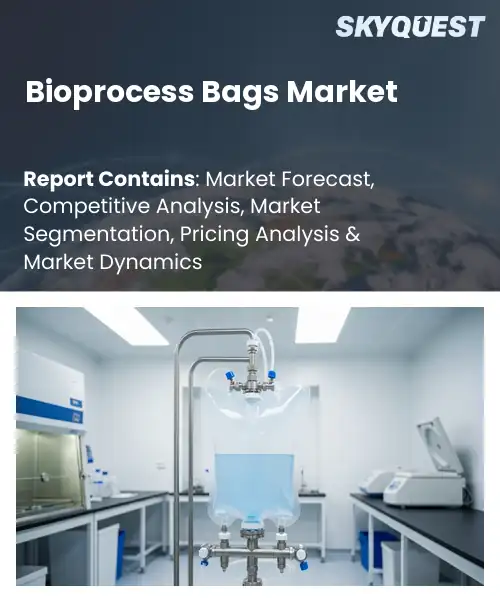
Bioprocess bags are single-use, sterile containers which are used in the global market to substitute traditional stainless steel vessels for the production of biologics. The importance lies in reducing capital investment, reducing change-over times and minimizing contamination risk, all of which are critical as the demand for monoclonal antibodies and gene therapies skyrockets. The sector has grown rapidly since the early 2000s with manufacturers understanding that flexible liners could scale up to 2,000-litre fermenters, starting with small-scale cell-culture bags. Adoption is increasingly pushing through industry among established pharma giants and emerging biotech start-ups globally, with high-volume bags that meet strict regulatory standards launched in industry by companies such as Sartorius and Merck KGaA.
The second important factor is the rapid development of single-use technology in large-scale manufacturing, driven by the growing demand for personalized medicines. Biopharma companies are increasingly turning to disposable bags to shorten their clinical timelines by eliminating the need for cleaning validation, reducing batch cycle times and freeing up facility space for more runs. This effect incentivizes investment in high capacity bags that can hold 5,000-liter fermentations, as seen in Pfizer’s recent pilot with a 4,500-liter bag for a COVID-19 antibody platform. This has resulted in a diverse ecosystem of opportunity for stakeholders around the world today, with ancillary markets such as bag-coating materials, waste management services and digital monitoring solutions growing in parallel.
How is AI-driven automation influencing the growth of the bioprocess bags market?
Real-time data collection linked to predictive control of bag filling, sterilisation and inventory handling by AI-powered automation is changing the bioprocess bag industry. Machine-learning models are enabling manufacturers to predict demand spikes and optimize batch scheduling, reducing changeover time and waste. The technology allows for remote monitoring of bag integrity so operators can intervene before any defects are visible. With increasing biopharmaceutical production, the demand for uniform sterile containers is increasing. AI tools provide agility and reliability that traditional manual processes do not. This synergy creates market momentum and investment.
In April 2024, a key supplier launched AI-powered monitoring of bag production lines, enabling real-time quality inspection and faster deviation response. The rollout showcased smart automation’s ability to streamline operations and to respond to growing demand for single-use containers.
Market snapshot - (2026-2033)
Global Market Size
USD 5.6 Billion
Largest Segment
Single-Use Bags
Fastest Growth
Single-Use Bags
Growth Rate
15.4% CAGR
To get more insights on this market click here to Request a Free Sample Report
Global bioprocess bags market is segmented by type, volumetric capacity, application, end user and region. Based on type, the market is segmented into Single-Use Bags and Multi-Use Bags. Based on volumetric capacity, the market is segmented into Up to 50 Liters, 51 to 500 Liters and Above 500 Liters. Based on application, the market is segmented into Media Storage and Preparation, Buffer Management, Cell Culture and Harvest, Purification Processes and Final Formulation and Filling. Based on end user, the market is segmented into Pharmaceutical Companies, Biotechnology Companies, Contract Development and Manufacturing Organizations, Academic Institutes and Research Institutes. Based on region, the market is segmented into North America, Europe, Asia Pacific, Latin America and Middle East & Africa.
The Single-Use Bags segment is dominating due to the manufacturers investing in disposable solutions that reduce cleaning validation and cross contamination risk and also accelerate batch turnover. Pre-sterilized containers are convenient and meet strict regulatory expectations but cost effective supply chains make them attractive for a range of processes. Their flexibility in a range of sizes and easy integration into closed systems keeps them at the forefront of the market for bioprocess bags.
Meanwhile, the 51 to 500 Liters segment is the fastest growing segment, as manufacturers look for flexible capacity between pilot and production scale. Strong bag designs are being invested in as mid-size batch growth fuels it. Material science advances are improving durability and reducing waste, driving wider adoption across bioprocess operations.
The cell culture and harvest segment held the largest share based on the process as it is the basis for producing high value biologics, where sterility and scalability are of utmost importance. High demand for monoclonal antibodies and cell therapies requires reliable containment that can handle high cell densities without compromising product quality. With integrated monitoring and single-use design the bags allow for fast turnaround, a must-have to meet the tight timelines and regulatory scrutiny of modern biomanufacturing.
On the other hand, the Multi-Use Bags segment is witnessing the strongest growth momentum as cost conscious manufacturers are returning to reusable solutions for large scale operations. Total cost of ownership is going down due to improved cleaning validation protocols and hybrid materials which extend bag life. These innovations open up new high volume process opportunities and accelerate the rate of market growth.
To get detailed segments analysis, Request a Free Sample Report
North America's strength comes from its strong biopharmaceutical ecosystem and high manufacturing capability. The U.S. has a dense network of research universities, contract development organisations and major therapeutic manufacturers that generates ongoing demand for high-quality single-use solutions. Strong regulatory confidence in single use technology is propelling adoption at pilot, clinical and commercial scale. Strong material science knowledge and funding support in Canada help drive innovation in bag design and sterilization methods. Sophisticated supply chains, reliable sources of raw material and investment driven culture combine to allow rapid product iteration and cost effective scaling, reinforcing the region’s dominant market share.
The U.S. Bioprocess Bags Market is being driven by the existence of biotech firms and contract manufacturing organizations that concentrate on flexibility and speed. The ecosystem promotes early adoption of single use technologies to reduce turnaround time and contamination risk. Joint research between academia and industry drives ongoing enhancements in bag materials and accessory integration, while a well-established distribution network ensures timely access for varying process volumes.
The Canada Bioprocess Bags Market is driven by strong government support for life science clusters and emphasis on sustainable manufacturing practices. The deep understanding of polymer engineering and sterilization science is applied to come up with advanced bag designs that are optimized for specific therapeutic processes. And partnerships between universities, research institutes and new biomanufacturers speed up technology transfer. A strong logistics infrastructure guarantees that single-use solutions are supplied to local and export markets in an efficient manner.
The fast growth of Europe is supported by a uniform regulatory environment that promotes the use of single-use technology to improve process safety and reduce validation burdens. The continent’s leading pharmaceutical centers are ploughing big bucks into flexible manufacturing footprints, triggering a move to disposable bioprocessing equipment. Adoption is also driven by environmental reasons, as single use bags require less water and energy than traditional steel vessels. The presence of a dense network of specialized suppliers enables quick access to custom bag solutions and collaborative industry consortia and academic programs are driving faster material innovation, fueling market growth across the region.
Germany Bioprocess Bags Germany is home to a robust pharmaceutical manufacturing industry that demands accuracy and reliability. The strong engineering culture of the country is always raising the standards of the material used for the bags and the design of the connectors to meet the demanding quality expectations. The tight cooperation between equipment manufacturers and top biotech companies is resulting in the fast adoption of single-use platforms in pilot and full-scale production, further strengthening Germany’s position as a large market contributor.
The United Kingdom Bioprocess Bags Market is experiencing fast adoption, driven by a thriving life-science ecosystem and aggressive investments in flexible manufacturing sites. The government has programs that promote single-use technologies to get new therapies to market faster. Academic research centers are creating new polymer composites to improve the performance of bags. The United Kingdom is the fastest growing market in Europe where more contract manufacturing organizations are adopting disposable solutions to meet various customer requirements.
The France Bioprocess Bags Market is emerging with focused development of niche therapeutic areas and collaborative innovation environment. Bioprocess Bags Market in France Biotech startups are using single-use bags to reduce capital expenditure and simplify validation. Close collaborations between national research agencies and equipment providers encourage custom bag designs for specialty biologics. This positive environment speeds up market awareness and adoption, positioning France as an emerging player in the European bioprocessing space.
Asia Pacific is increasing its footprint with combination of increasing biomanufacturing capacity, cost competitive production and proactive government policies to facilitate single-use adoption. For example, Japan and South Korea are investing in advanced biotech hubs that favor agile facilities. Disposable bags are an attractive option for reducing facility footprint and validation effort. The growing demand for biologics and biosimilars requires scalable and contamination-free solutions, while local product suppliers increase product availability and customization. The region is being positioned as an emerging player in the global bioprocess bags ecosystem with collaborative research programs aimed at improving membrane performance and environmental sustainability.
Japanese Bioprocess Bags market has a mature pharmaceutical industry with high emphasis on reliability and accuracy. The leading drug manufacturers are working with equipment makers, and this is accelerating the integration of single-use bags into continuous processing lines. High quality high performance polymers manufactured with a focus on innovation. Japan is a major player in the development of disposable bioprocess technology with strong technical expertise and a supply chain.
Rapid growth of biotechnology startups and government incentives for modernization of manufacturing infrastructure are driving the South Korea bioprocess bags market. Use of single use solutions to reduce development times Focus on flexible, low capital intensity facilities Bag manufacturers around the world are working with local research institutions to custom design material properties for high-yield processes. This synergistic approach also boosts South Korea's growing presence in the broader bioprocessing landscape of the Asia Pacific.
To know more about the market opportunities by region and country, click here to
Buy The Complete Report
Increasing Biopharma Production Capacity
Regulatory Support for Single-Use Systems
High Initial Capital Investment
Limited Compatibility with Complex Processes
Request Free Customization of this report to help us to meet your business objectives.
The global bioprocess bags market is highly competitive with major suppliers competing to capitalize on the rapid growth due to the rising biopharmaceutical manufacturing. To differentiate themselves, companies are also developing advanced single-use bag designs, scaling up manufacturing capacity and forming strategic alliances with biotech companies to win long term contracts. Competition drives innovation and forces market players to extend their geographical scope.
SkyQuest’s ABIRAW (Advanced Business Intelligence, Research & Analysis Wing) is our Business Information Services team that Collects, Collates, Correlates, and Analyses the Data collected by means of Primary Exploratory Research backed by robust Secondary Desk research. As per SkyQuest analysis the global bioprocess bags market is being propelled primarily by the surge in biopharma production capacity which pushes manufacturers toward flexible single‑use containers that shorten changeover and lower contamination risk. A second driver is growing regulatory support for single‑use systems that streamlines validation and speeds approvals. The single‑use bags segment remains dominant capturing the majority of demand across volumes. North America leads the market thanks to its mature biotech ecosystem extensive manufacturing capacity and strong supply chains. However high initial capital investment for disposable infrastructure acts as a restraint slowing adoption among smaller players and cost‑sensitive regions.
| Report Metric | Details |
|---|---|
| Market size value in 2024 | USD 5.6 Billion |
| Market size value in 2033 | USD 20.33 Billion |
| Growth Rate | 15.4% |
| Base year | 2024 |
| Forecast period | (2026-2033) |
| Forecast Unit (Value) | USD Billion |
| Segments covered |
|
| Regions covered | North America (US, Canada), Europe (Germany, France, United Kingdom, Italy, Spain, Rest of Europe), Asia Pacific (China, India, Japan, Rest of Asia-Pacific), Latin America (Brazil, Rest of Latin America), Middle East & Africa (South Africa, GCC Countries, Rest of MEA) |
| Companies covered |
|
| Customization scope | Free report customization with purchase. Customization includes:-
|
To get a free trial access to our platform which is a one stop solution for all your data requirements for quicker decision making. This platform allows you to compare markets, competitors who are prominent in the market, and mega trends that are influencing the dynamics in the market. Also, get access to detailed SkyQuest exclusive matrix.
Table Of Content
Executive Summary
Market overview
Parent Market Analysis
Market overview
Market size
KEY MARKET INSIGHTS
COVID IMPACT
MARKET DYNAMICS & OUTLOOK
Market Size by Region
KEY COMPANY PROFILES
Methodology
For the Bioprocess Bags Market, our research methodology involved a mixture of primary and secondary data sources. Key steps involved in the research process are listed below:
1. Information Procurement: This stage involved the procurement of Market data or related information via primary and secondary sources. The various secondary sources used included various company websites, annual reports, trade databases, and paid databases such as Hoover's, Bloomberg Business, Factiva, and Avention. Our team did 45 primary interactions Globally which included several stakeholders such as manufacturers, customers, key opinion leaders, etc. Overall, information procurement was one of the most extensive stages in our research process.
2. Information Analysis: This step involved triangulation of data through bottom-up and top-down approaches to estimate and validate the total size and future estimate of the Bioprocess Bags Market.
3. Report Formulation: The final step entailed the placement of data points in appropriate Market spaces in an attempt to deduce viable conclusions.
4. Validation & Publishing: Validation is the most important step in the process. Validation & re-validation via an intricately designed process helped us finalize data points to be used for final calculations. The final Market estimates and forecasts were then aligned and sent to our panel of industry experts for validation of data. Once the validation was done the report was sent to our Quality Assurance team to ensure adherence to style guides, consistency & design.
Analyst Support
Customization Options
With the given market data, our dedicated team of analysts can offer you the following customization options are available for the Bioprocess Bags Market:
Product Analysis: Product matrix, which offers a detailed comparison of the product portfolio of companies.
Regional Analysis: Further analysis of the Bioprocess Bags Market for additional countries.
Competitive Analysis: Detailed analysis and profiling of additional Market players & comparative analysis of competitive products.
Go to Market Strategy: Find the high-growth channels to invest your marketing efforts and increase your customer base.
Innovation Mapping: Identify racial solutions and innovation, connected to deep ecosystems of innovators, start-ups, academics, and strategic partners.
Category Intelligence: Customized intelligence that is relevant to their supply Markets will enable them to make smarter sourcing decisions and improve their category management.
Public Company Transcript Analysis: To improve the investment performance by generating new alpha and making better-informed decisions.
Social Media Listening: To analyze the conversations and trends happening not just around your brand, but around your industry as a whole, and use those insights to make better Marketing decisions.
REQUEST FOR SAMPLE
 REQUEST FREE CUSTOMIZATION
Global Bioprocess Bags Market size was valued at USD 5.6 Billion in 2024 and is poised to grow from USD 6.46 Billion in 2025 to USD 20.33 Billion by 2033, growing at a CAGR of 15.4% during the forecast period (2026-2033).
The global bioprocess bags market is shaped by intense competition among major suppliers seeking to capture rapid growth driven by expanding biopharmaceutical production. Companies are differentiating through advanced single‑use bag designs, scaling manufacturing capacity, and forming strategic alliances with biotech firms to secure long‑term contracts. This competitive pressure accelerates innovation and pushes market participants to expand geographic reach. 'Sartorius AG', 'Danaher Corporation', 'Thermo Fisher Scientific Inc', 'Merck KGaA', 'Entegris Inc', 'Saint Gobain Performance Plastics', 'Repligen Corporation', 'Meissner Filtration Products Inc', 'Cole Parmer Instrument Company LLC', 'Charter Medical LLC', 'FlexBoy', 'Avanos Medical Inc', 'Bormioli Rocco SpA', 'Charter Medical', 'W L Gore & Associates Inc', 'Parker Hannifin Corporation', 'Cellon SA', 'SaniSure', 'Saint Gobain', 'SaintGobain'
The surge in biopharmaceutical product pipelines drives manufacturers to seek flexible, scalable containment solutions, and single‑use bioprocess bags meet this need by enabling rapid changeover, reducing cleaning cycles, and supporting diverse batch sizes. Their adaptability allows firms to accelerate development timelines while maintaining sterility, which directly contributes to market expansion as companies prioritize speed to market and cost‑effective manufacturing strategies. Additionally, the ease of integration with existing downstream equipment reduces facility modifications, further encouraging adoption across both established and emerging bioprocessing sites.
Single-Use Flexibility Expansion: Manufacturers are increasingly adopting single-use bioprocess bags to replace traditional stainless‑steel systems, driven by the need for faster batch turnover, reduced cross‑contamination risk, and lower validation burdens. The modular nature of these disposable containers enables rapid scaling of production lines and facilitates flexible responses to shifting therapeutic demand. As regulatory agencies endorse comparable safety standards for single‑use equipment, firms are accelerating investments in advanced polymer technologies that improve material integrity and extend bag lifespans, further reinforcing market momentum globally today.
Why does North America Dominate the Global Bioprocess Bags Market? |@12


Want to customize this report? This report can be personalized according to your needs. Our analysts and industry experts will work directly with you to understand your requirements and provide you with customized data in a short amount of time. We offer $1000 worth of FREE customization at the time of purchase.
Feedback From Our Clients


 USA (+1) 351-333-4748

