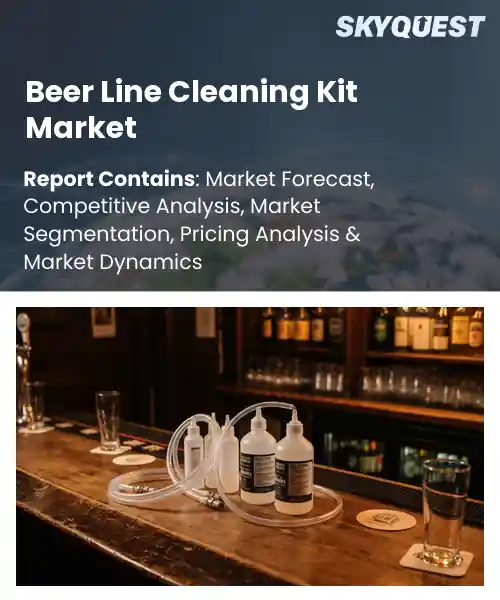
Beer Line Cleaning Kit Market
Report ID: SQMIG20D2705
Report ID: SQMIG20D2705
[email protected]
USA +1 351-333-4748
Report ID:
SQMIG20D2705 |
Region:
Global |
Published Date: June, 2026
Pages:
157
|Tables:
180
|Figures:
79


Global Beer Line Cleaning Kit Market size was valued at USD 851.51 Million in 2024 and is poised to grow from USD 901.75 Million in 2025 to USD 1426.44 Million by 2033, growing at a CAGR of 5.9% during the forecast period (2026-2033).
Sustainability now drives the global beer line cleaning kit industry because breweries aim to lower water and chemical use while preserving product quality. Adoption of closed‑loop CIP systems can reduce rinse volumes by up to 40 %, delivering cost savings and meeting stricter waste‑management regulations that appeal to environmentally conscious consumers.
This pressure raises demand for kits with biodegradable surfactants, sensor‑based dosing, and modular components that retrofit existing lines. A European brewery recently installed a sensor‑driven kit, cutting cleaning‑agent usage by 30 % and obtaining certification under the EU Green Manufacturing Initiative, exemplifying how regulatory and brand expectations expand market opportunities globally.
How is automation improving efficiency in the beer line cleaning kit market?
Automation is reshaping the beer line cleaning kit market by embedding smart dosing, sensor feedback and remote scheduling into traditional cleaning workflows. Modern kits now include programmable pumps that deliver precise amounts of sanitizer while inline sensors detect biofilm buildup and trigger cleaning cycles only when needed. This reduces labor, cuts waste and ensures consistent line hygiene. Integration with digital dispensing platforms allows operators to monitor cleaning performance from a tablet, streamlining maintenance logs and preventing human error. As draft systems become more complex, automated cleaning solutions provide the reliability and speed that bars and breweries demand.
AB InBev in March 2025, introduced the Budweiser Ultimate Dispense System which embeds automated line cleaning cycles into its draft network. The built in cleaning routine cuts manual labor and keeps lines pristine, directly boosting operational efficiency and supporting market
Market snapshot - (2026-2033)
Global Market Size
USD 851.51 Million
Largest Segment
Manual Beer Line Cleaning Kits
Fastest Growth
Electric/Automatic Beer Line Cleaning Kits
Growth Rate
5.9% CAGR
To get more insights on this market click here to Request a Free Sample Report
Global beer line cleaning kit market is segmented by product type, component, end user, system type, cleaning method, distribution channel and region. Based on product type, the market is segmented into Manual Beer Line Cleaning Kits, Pressurized Beer Line Cleaning Kits, Electric/Automatic Beer Line Cleaning Kits, Portable Beer Line Cleaning Kits and Others. Based on component, the market is segmented into Cleaning Pumps, Cleaning Bottles & Canisters, Cleaning Chemicals & Solutions, Brushes & Accessories and Others. Based on end user, the market is segmented into Breweries, Bars & Pubs, Restaurants, Hotels & Hospitality, Homebrewers and Others. Based on system type, the market is segmented into Small Systems, Medium Systems and Large Systems. Based on cleaning method, the market is segmented into Chemical Cleaning, Mechanical Cleaning and Combined Cleaning Systems. Based on distribution channel, the market is segmented into Direct Sales, Brewing Equipment Distributors, Online Retail, Specialty Stores and Others. Based on region, the market is segmented into North America, Europe, Asia Pacific, Latin America and Middle East & Africa.
Manual beer line cleaning kits segment dominates with global beer line cleaning kit market share because they are cost-effective, easy to use, and meet the basic cleaning requirements of most small to medium establishments. Their simplicity eliminates need for additional power sources, encouraging adoption among bars, pubs, and homebrewers. Reliability and low entry cost drive preference, making them the go to solution for routine maintenance. Additionally, manufacturers provide comprehensive instructions and compatible accessories, enhancing usability and confidence among users.
As per global beer line cleaning kit market outlook, pressurized beer line cleaning kits segment is witnessing the strongest growth momentum as establishments seek faster cleaning cycles and reduced labor. The ability to deliver high pressure cleaning improves hygiene and shortens downtime, appealing to high volume venues. Innovation in ergonomic designs and safety features fuels adoption, expanding market opportunities beyond traditional users.
Cleaning chemicals & solutions segment dominates because they are essential for effective biofilm removal and taste preservation. Their formulations address microbial safety standards, assuring consumers of product integrity. Continuous improvements in eco friendly ingredients and compatibility with diverse line materials increase confidence among operators. The indispensable role of chemistry in sanitation drives repeat purchases and loyalty across all user categories. Additionally, manufacturers offer standardized dosing guidelines that simplify training and ensure consistent results for staff.
As per global beer line cleaning kit market forecast, brushes & accessories segment is emerging as the key high growth area as operators prioritize thorough line reach and manual precision. New bristle technologies and flexible designs enable cleaning of intricate fittings, reducing contamination risk. Growing awareness of preventative maintenance drives demand, encouraging manufacturers to expand accessory portfolios.
To get detailed segments analysis, Request a Free Sample Report
North America leads the global beer line cleaning kit market due to a combination of mature brewing ecosystems, rigorous sanitation standards, and a high degree of technological adoption. Leading brewers and craft manufacturers alike prioritize line hygiene to safeguard flavor integrity, driving continuous demand for sophisticated cleaning solutions. The region benefits from well‑established supply chains that enable rapid distribution of specialty chemicals and equipment. Robust research and development activities in the United States and Canada foster innovative formulations that address diverse beer line challenges. Additionally, strong regulatory frameworks compel consistent compliance, reinforcing market depth and creating a resilient customer base that values reliability and safety. Industry associations promote best‑practice training that elevates operator competence, while sustainability initiatives encourage the use of environmentally considerate cleaning agents, further solidifying market leadership.
As per global beer line cleaning kit market regional outlook, United States reflects a deep integration of advanced cleaning chemistries with automated dispensing systems, driven by extensive craft and large‑scale brewing operations. Producers emphasize rigorous line sanitation to protect premium brand reputations, leading to strong demand for kits that combine efficacy with user‑friendly application. Collaborative efforts between suppliers and breweries foster continuous product refinement, ensuring alignment with evolving quality expectations and compliance with industry standards.
As per global beer line cleaning kit market regional forecast, Canada benefits from a collaborative ecosystem that links local breweries with specialty chemical providers focused on sustainable formulations. The market emphasizes environmentally responsible cleaning solutions that meet strict provincial health guidelines, encouraging adoption across both micro‑breweries and established lager producers. Ongoing training initiatives and close regulatory dialogue reinforce high standards of line hygiene, supporting consistent product quality and consumer confidence through industry partnerships.
Europe experiences rapid expansion of the beer line cleaning kit market as a result of tightly aligned regulatory frameworks, a flourishing craft brewing culture, and increasing emphasis on sustainable production practices. Harmonized hygiene standards across member states compel breweries to adopt comprehensive cleaning solutions that guarantee product consistency. Consumers demonstrate heightened sensitivity to flavor purity, prompting brewers to invest in kits that deliver thorough line sanitation without compromising beer character. Collaborative research initiatives among European chemical firms and brewing associations foster continuous innovation, delivering formulations that address diverse water profiles and packaging formats. Moreover, the region’s commitment to environmental stewardship encourages the development of biodegradable agents and reduced‑waste packaging, aligning market offerings with broader corporate responsibility goals. These dynamics collectively nurture a competitive landscape where innovation and quality assurance are paramount.
Germany is characterized by a sophisticated infrastructure that supports large‑scale lager production and an innovative craft segment. Strict national hygiene regulations drive the adoption of high‑performance cleaning agents that must meet precise microbiological thresholds. German manufacturers prioritize precision engineering, resulting in kits that integrate seamlessly with automated line systems. Close collaboration between equipment suppliers and chemical producers accelerates the introduction of eco‑friendly formulations, reinforcing Germany’s leadership role in the European market.
United Kingdom is gaining momentum as the nation’s craft brewing renaissance fuels demand for reliable line sanitation solutions. While regulatory requirements ensure baseline compliance, many brewers seek advanced kits that can adapt to varied beer styles and smaller batch sizes. Partnerships between local distributors and specialty chemical firms enable rapid introduction of tailored products, while industry workshops raise awareness of best practices. This emerging focus positions the United Kingdom as a fast‑growing contributor to the continental market.
France is distinguished by a surge in boutique breweries that prioritize artisanal quality and stringent sanitation protocols. French regulatory bodies emphasize hygiene in both production and service environments, prompting brewers to adopt cleaning kits that balance efficacy with gentle impact on delicate flavor profiles. The market benefits from a strong tradition of chemical innovation, with local firms developing plant‑based agents that align with consumer expectations for natural processes. This combination of regulatory support and consumer‑driven demand accelerates France’s rapid market expansion.
Asia Pacific is strengthening its position in the Beer Line Cleaning Kit market through a convergence of rapid craft brewery growth, heightened consumer expectations for product purity, and strategic investments in cleaning technology. Nations in the region adopt sophisticated line sanitation approaches to support diverse beer styles ranging from traditional lagers to experimental ales. Growing awareness of environmental impact drives the shift toward biodegradable cleaning agents and water‑saving processes. Collaborative initiatives between local equipment manufacturers and chemical innovators accelerate the rollout of compact, automated cleaning kits suited for varying production scales. This progressive landscape, underpinned by a cultural dedication to precision and quality, elevates the region’s relevance on the global stage. Retail channels are also expanding, offering breweries easy access to specialized kits that meet local regulatory and taste requirements.
Japan emphasizes ultra‑precise cleaning solutions that integrate with highly automated brewing lines and respect the nation’s exacting taste standards. Japanese breweries focus on maintaining pristine line conditions to preserve delicate flavor nuances, driving demand for kits that combine enzymatic action with low‑impact chemicals. Close cooperation between local chemical firms and equipment engineers ensures that products meet stringent safety regulations while supporting sustainability goals.
South Korea is driven by a vibrant craft scene and a strong tradition of macro‑brew production that values meticulous line hygiene. Korean brewers adopt cleaning kits designed for rapid turnaround and compatibility with compact equipment, reflecting limited brewery footprints. Investment in research collaborations with regional universities yields innovative formulations that address local water hardness and flavor preservation needs, reinforcing market confidence and encouraging broader adoption across the sector.
To know more about the market opportunities by region and country, click here to
Buy The Complete Report
Increasing Focus on Hygiene
Adoption Of Automated Cleaning
High Initial Equipment Cost
Stringent Regulatory Approvals
Request Free Customization of this report to help us to meet your business objectives.
The competitive landscape is shaped by a mix of established suppliers and emerging innovators who differentiate through strategic acquisitions, channel partnerships, and proprietary cleaning chemistries. UBC Group USA has expanded its portfolio by acquiring niche product lines to serve larger draft‑system operators, while Safebeerlinecleaning leverages a patented, low‑odor formulation that it licenses to regional distributors, illustrating how technology and alliance tactics drive market positioning.
SkyQuest’s ABIRAW (Advanced Business Intelligence, Research & Analysis Wing) is our Business Information Services team that Collects, Collates, Correlates, and Analyses the Data collected by means of Primary Exploratory Research backed by robust Secondary Desk research.
As per SkyQuest analysis the global beer line cleaning kit market growth is being propelled primarily by an increasing focus on hygiene, which pushes breweries to adopt comprehensive cleaning solutions, while the high initial equipment cost acts as a notable restraint limiting uptake among smaller operations. North America emerges as the dominant region, benefitting from mature brewing ecosystems and strong regulatory frameworks. The manual beer line cleaning kit segment continues to lead the market owing to its cost‑effectiveness and ease of use for a broad range of establishments. A second key driver is the growing adoption of automated cleaning, which enhances efficiency and reduces labor, further expanding demand for advanced kits. The global beer line cleaning kit market trend driven by expanding beer consumption, rising craft brewery installations, and strict hygiene regulations in the hospitality sector.
| Report Metric | Details |
|---|---|
| Market size value in 2024 | USD 851.51 Million |
| Market size value in 2033 | USD 1426.44 Million |
| Growth Rate | 5.9% |
| Base year | 2024 |
| Forecast period | (2026-2033) |
| Forecast Unit (Value) | USD Million |
| Segments covered |
|
| Regions covered | North America (US, Canada), Europe (Germany, France, United Kingdom, Italy, Spain, Rest of Europe), Asia Pacific (China, India, Japan, Rest of Asia-Pacific), Latin America (Brazil, Rest of Latin America), Middle East & Africa (South Africa, GCC Countries, Rest of MEA) |
| Companies covered |
|
| Customization scope | Free report customization with purchase. Customization includes:-
|
To get a free trial access to our platform which is a one stop solution for all your data requirements for quicker decision making. This platform allows you to compare markets, competitors who are prominent in the market, and mega trends that are influencing the dynamics in the market. Also, get access to detailed SkyQuest exclusive matrix.
Table Of Content
Executive Summary
Market overview
Parent Market Analysis
Market overview
Market size
KEY MARKET INSIGHTS
COVID IMPACT
MARKET DYNAMICS & OUTLOOK
Market Size by Region
KEY COMPANY PROFILES
Methodology
For the Beer Line Cleaning Kit Market, our research methodology involved a mixture of primary and secondary data sources. Key steps involved in the research process are listed below:
1. Information Procurement: This stage involved the procurement of Market data or related information via primary and secondary sources. The various secondary sources used included various company websites, annual reports, trade databases, and paid databases such as Hoover's, Bloomberg Business, Factiva, and Avention. Our team did 45 primary interactions Globally which included several stakeholders such as manufacturers, customers, key opinion leaders, etc. Overall, information procurement was one of the most extensive stages in our research process.
2. Information Analysis: This step involved triangulation of data through bottom-up and top-down approaches to estimate and validate the total size and future estimate of the Beer Line Cleaning Kit Market.
3. Report Formulation: The final step entailed the placement of data points in appropriate Market spaces in an attempt to deduce viable conclusions.
4. Validation & Publishing: Validation is the most important step in the process. Validation & re-validation via an intricately designed process helped us finalize data points to be used for final calculations. The final Market estimates and forecasts were then aligned and sent to our panel of industry experts for validation of data. Once the validation was done the report was sent to our Quality Assurance team to ensure adherence to style guides, consistency & design.
Analyst Support
Customization Options
With the given market data, our dedicated team of analysts can offer you the following customization options are available for the Beer Line Cleaning Kit Market:
Product Analysis: Product matrix, which offers a detailed comparison of the product portfolio of companies.
Regional Analysis: Further analysis of the Beer Line Cleaning Kit Market for additional countries.
Competitive Analysis: Detailed analysis and profiling of additional Market players & comparative analysis of competitive products.
Go to Market Strategy: Find the high-growth channels to invest your marketing efforts and increase your customer base.
Innovation Mapping: Identify racial solutions and innovation, connected to deep ecosystems of innovators, start-ups, academics, and strategic partners.
Category Intelligence: Customized intelligence that is relevant to their supply Markets will enable them to make smarter sourcing decisions and improve their category management.
Public Company Transcript Analysis: To improve the investment performance by generating new alpha and making better-informed decisions.
Social Media Listening: To analyze the conversations and trends happening not just around your brand, but around your industry as a whole, and use those insights to make better Marketing decisions.
REQUEST FOR SAMPLE
 REQUEST FREE CUSTOMIZATION
Global Beer Line Cleaning Kit Market size was valued at USD 851.51 Million in 2024 and is poised to grow from USD 901.75 Million in 2025 to USD 1426.44 Million by 2033, growing at a CAGR of 5.9% during the forecast period (2026-2033).
The competitive landscape is shaped by a mix of established suppliers and emerging innovators who differentiate through strategic acquisitions, channel partnerships, and proprietary cleaning chemistries. UBC Group USA has expanded its portfolio by acquiring niche product lines to serve larger draft‑system operators, while Safebeerlinecleaning leverages a patented, low‑odor formulation that it licenses to regional distributors, illustrating how technology and alliance tactics drive market positioning. 'Ecolab Inc.', 'Spartan Chemical Company, Inc.', 'Alfa Laval AB', 'Protex International', 'Sanitary Maintenance Products (SMP)', 'Keg King', 'Murphy & Son Ltd.', 'Celli Group', 'Micromatic LLC', 'Beer Piper LLC', 'Brewery Cleaning Solutions Ltd.', 'Brewmaster International', 'CM Becker International', 'Taprite', 'Foxx Equipment Company', 'GW Kent Inc.', 'Diversey Holdings Ltd.', 'Pentair plc', 'BrauKon GmbH', 'Krones AG'
The growing emphasis on hygiene across brewing facilities drives demand for comprehensive line cleaning kits, as manufacturers seek to prevent microbial contamination and ensure product integrity. Enhanced awareness of consumer safety standards prompts breweries to adopt systematic cleaning protocols, leading to increased procurement of specialized kits that combine effective chemicals and user‑friendly application tools. This proactive approach reduces downtime caused by contamination incidents and supports continuous production, thereby encouraging investment in advanced cleaning solutions that meet stringent regulatory expectations. Global industry.
Sustainable Cleaning Solutions Adoption: Breweries are increasingly prioritizing eco‑friendly cleaning practices, driven by consumer demand for sustainability and corporate responsibility goals. Manufacturers of line‑cleaning kits respond by formulating biodegradable detergents, reducing water consumption, and offering reusable components. This shift enhances brand reputation, lowers waste disposal costs, and aligns with emerging green procurement policies across the hospitality sector. As sustainability becomes a core purchasing criterion, suppliers that showcase transparent environmental performance and provide training on low‑impact procedures gain a competitive edge and long‑term operational resilience.
Why does North America Dominate the Global Beer Line Cleaning Kit Market? |@12


Want to customize this report? This report can be personalized according to your needs. Our analysts and industry experts will work directly with you to understand your requirements and provide you with customized data in a short amount of time. We offer $1000 worth of FREE customization at the time of purchase.
Feedback From Our Clients


 USA (+1) 351-333-4748

