Beauty ingestible Market
Report ID: SQMIG30L2364
Report ID: SQMIG30L2364
[email protected]
USA +1 351-333-4748
Report ID:
SQMIG30L2364 |
Region:
Global |
Published Date: March, 2026
Pages:
157
|Tables:
119
|Figures:
77


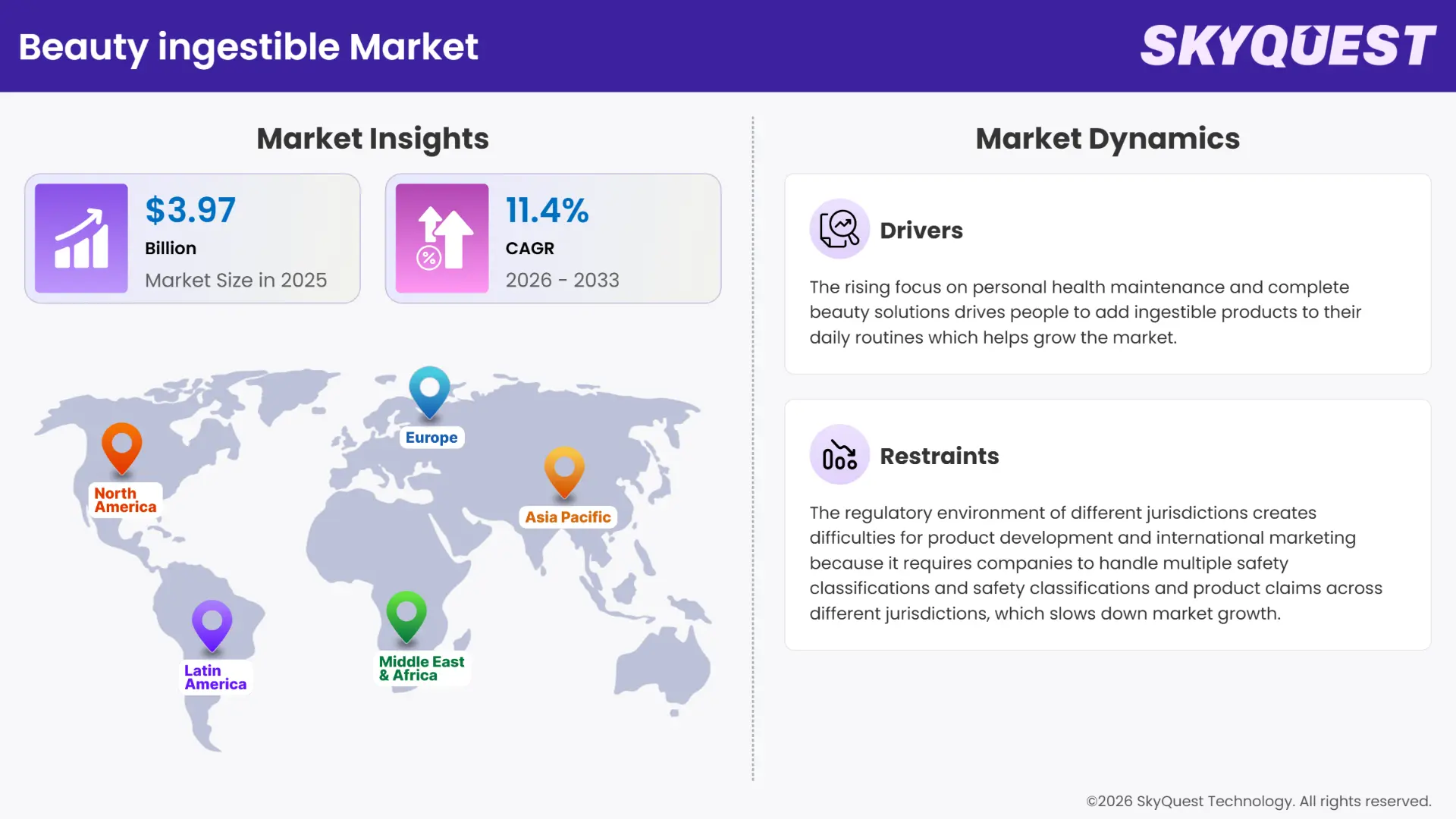
Global Beauty Ingestible Market size was valued at USD 3.56 Billion in 2024 and is poised to grow from USD 3.97 Billion in 2025 to USD 9.41 Billion by 2033, growing at a CAGR of 11.4% during the forecast period (2026-2033).
The beauty ingestible industry contains orally consumed products which include collagen peptides and vitamins and botanicals and probiotic formulations that aim to enhance skin health and hair health and nail health because consumers now prefer complete protective solutions which work together with their topical cosmetic products. The category started with basic multivitamins but then developed into targeted nutricosmetics during its introduction to East Asia because collagen drinks and fermented formulations served as its first innovative products which later reached global markets through major brands and celebrity endorsements that turned trends into popular consumer attractions. Scientific research has improved product biological availability through clinical studies which now demonstrate higher product credibility. The product development process along with consumer trust establishment depended on regulatory levels and ingredient information which consumers could access.
The future global beauty ingestible market penetration will happen through personalized solutions which require clinical verification because direct distribution channels build upon branded effectiveness evidence. Subscription brands operate through their online systems which conduct testing to find matching collagen and omega 3 and botanical products based on each user's skin type preferences to enhance product usage. Companies achieve higher profit margins through their investment strategy that develops strong research and development capabilities together with direct-to-consumer distribution networks and food sourcing methods which create fresh business opportunities in male grooming products and products for elderly customers and markets that are just starting to develop.
How is AI Enhancing Product Personalization In The Beauty Ingestible Market?
AI boosts product personalization for the beauty ingestible sector through its system that connects biological data with behavioral patterns and scientific product information to create an ongoing educational system. The process requires genetic data and microbiome information together with data from wearable devices and lifestyle habits to determine specific ingredient needs through customized dosage adjustments. The present system utilizes AI-powered diagnostic systems which develop medication formulas through user feedback while creating ongoing review processes that examine operational performance. The situation impacts consumer behavior because people want products which deliver specific results, so brands must showcase their main advantages while reducing product waste.
Companies combine home testing with algorithmic-based formulation systems which predict effective skin aging active ingredients and gut-based beauty products. The January AI platform revealed its corporate solution which transforms photos and wearable data and food intake information into metabolic insights at CES 2026, which helps brands and medical professionals choose the right ingestible products for their patients. Personalized product matching becomes faster through this system, while production process improvements and demand prediction accuracy rise because of better AI system decision-making.
To get more insights on this market click here to Request a Free Sample Report
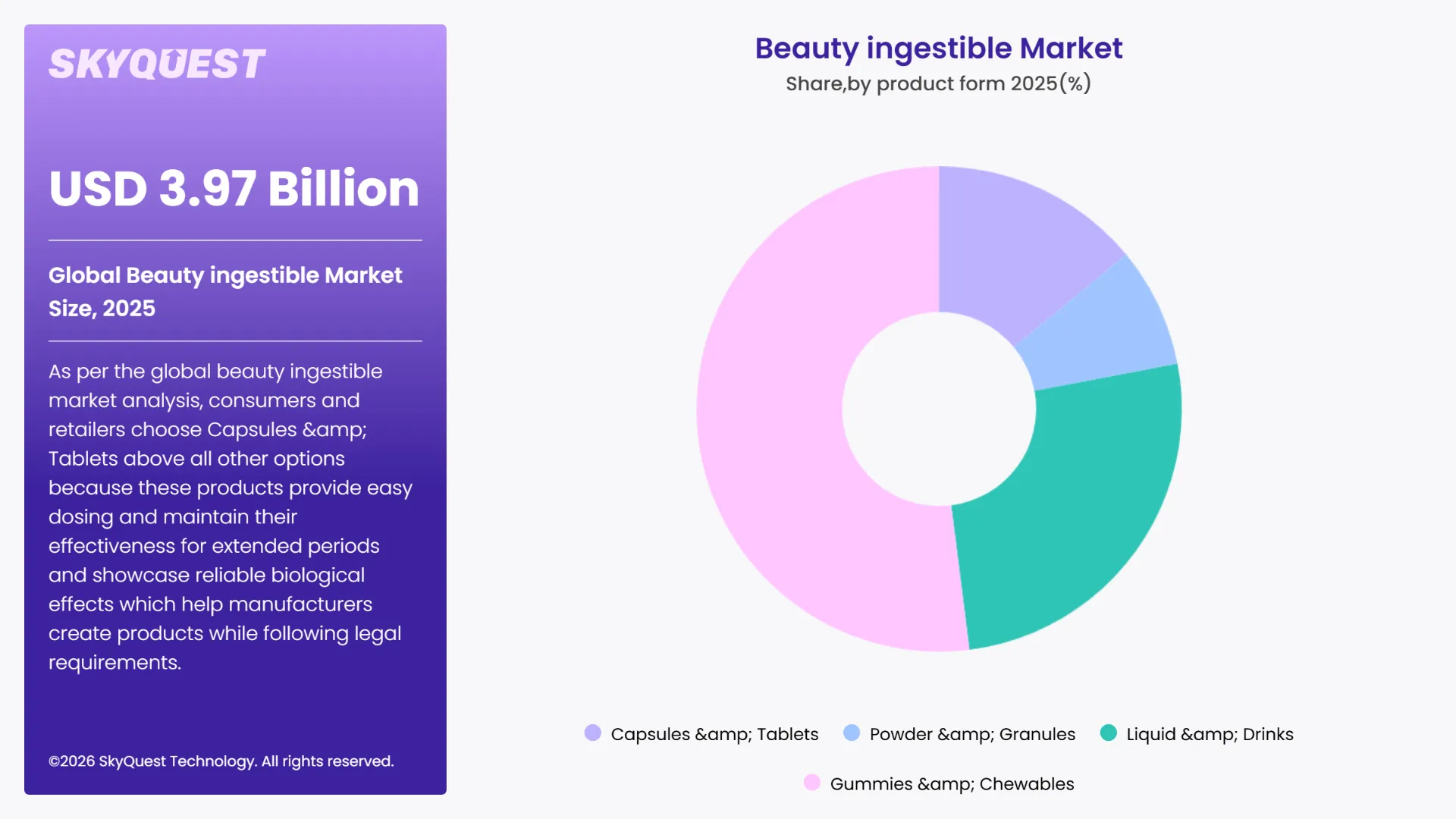
The global beauty ingestible market is segmented based on product form, primary ingredient, target concern, distribution channel, and region. In terms of product form, the market includes capsules and tablets, powders and granules, liquid formats and drinks, as well as gummies and chewables. By primary ingredient, the segmentation comprises collagen, vitamins and minerals, hyaluronic acid, and herbal and botanical extracts. Based on target concern, the market is categorized into skin care, hair care, and nail health. Depending on distribution channels, it is divided into specialty beauty stores, pharmacies and drugstores, and online e-commerce or direct-to-consumer (D2C) platforms. Regionally, the market is analyzed across North America, Europe, Asia Pacific, Latin America, and the Middle East & Africa.
As per the global beauty ingestible market analysis, consumers and retailers choose Capsules & Tablets above all other options because these products provide easy dosing and maintain their effectiveness for extended periods and showcase reliable biological effects which help manufacturers create products while following legal requirements. The established manufacturing base of the company plus its ability to produce beauty actives from different sources enables distributors and healthcare professionals to stock their products which helps consumers trust the brand while more people buy their products.
However, the powder & granules category is anticipated to have the highest beauty ingestible market share because on-the-go customers and athletes prefer its personalized dosing system which provides sachet convenience while users can mix it with various drinks. The market expansion of direct-to-consumer trial models has increased flavor masking and clean label powder usage, which brings new brands into the market through new business models and product development.
According to the global beauty ingestible market forecast, the collagen segment leads the market because consumers see collagen as the fundamental anti-aging component which drives their purchasing decisions of beauty ingestible products. The product has multiple applications across different product types plus its ability to create products which work together perfectly for product development research and retailer partnerships. The product creates strong brand stories through its precise description of skin elasticity and firmness, which helps companies charge higher prices and secure product availability in regular stores, thus strengthening its position as the top beauty ingestible product in the market.
Whereas the hyaluronic acid is anticipated to have the largest beauty ingestible market share because consumers want to know about its benefits for hydration through ingesting products, plus new microencapsulation technologies to make products more stable and easier to consume. The market alternatives use cross-category blends which combine hydrating ingredients with vitamins, while influencers provide educational content through innovative delivery systems, which brings in new customers and improves product pricing and market distribution.
To get detailed segments analysis, Request a Free Sample Report
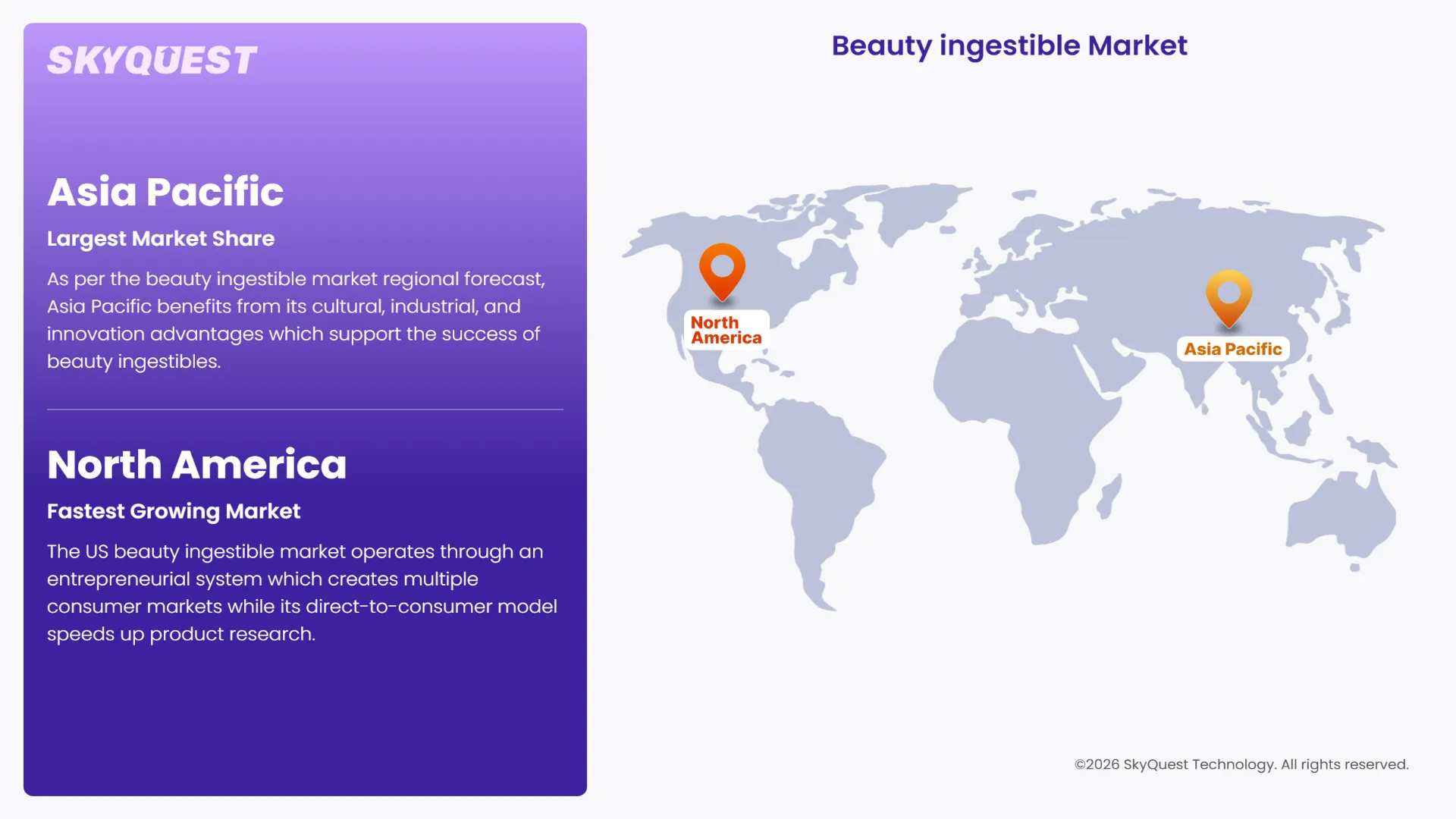
As per the beauty ingestible market regional forecast, Asia Pacific benefits from its cultural, industrial, and innovation advantages which support the success of beauty ingestibles. The combination of established beauty rituals and strong consumer interest in preventive and enhancement products leads to continuous market demand. The region possesses formulation science expertise together with ingredient sourcing capabilities which enable fast development of research into commercial products. The production capacity of the company enables it to produce products in large quantities while its integrated beauty and wellness systems create distribution channels for multiple platforms. Market leaders gain competitive advantages through their influencer networks and the way trends spread to nearby markets and their emphasis on premium products which deliver effective results. The primary markets create an environment which rewards high product quality and safe manufacturing, thereby motivating companies to spend on clinical research verification. The regional market becomes a center for global innovation and product distribution because cosmetic companies together with pharmaceutical businesses and retail networks work to develop and sell their products.
The Japanese beauty ingestible market operates according to a systematic scientific methodology which leads to consumer choices based on product safety and efficacy. Local companies require their products to undergo clinical verification while maintaining strict production processes by using advanced technologies which they obtained from the pharmaceutical and nutraceutical industries. Distribution networks utilize pharmacy channels together with specialty beauty stores and specific e-commerce platforms, while established brands control premium price points through their market presence. Product narratives frequently center on functional beauty benefits and long-term wellness integration, supported by collaborations between researchers and established cosmetic houses.
The beauty ingestible market growth in South Korea through fast fashion trends, strong celebrity endorsements, and quick product development that meets customer requirements. The market demands new product development which includes different textures and formats and ingredient combinations that match aesthetic preferences. Digital native consumers quickly adopt new concepts which enable direct to consumer brands to test products and gather customer feedback. The region's export-based economy and strong brand recognition drive market trends, while topical beauty innovations create product connections between different categories.
The North American market expansion creates a wellness framework which portrays beauty as a holistic practice that develops through internal processes. Consumers want products that serve multiple purposes and match their personal health needs and daily life requirements, so brands must increase their product ranges and marketing methods. The consumer goods sector combines established companies with new startups to create a trust-building system through research and development and brand storytelling and direct customer engagement. Healthcare professionals and beauty experts generate credibility through their partnerships with retail and digital commerce solutions, which also help customers try products and make repeat purchases. Marketing uses lifestyle influencers and community-based content to establish ingestible as a normal part of daily self-care routines. Brands use clean label communication to meet regulatory demands for transparency to create substantiated claims which lead to higher product standards and better market differentiation.
The US beauty ingestible market operates through an entrepreneurial system which creates multiple consumer markets while its direct-to-consumer model speeds up product research. Brands use clinical proof together with customized products and subscription services to create customer loyalty. Influencers and wellness media help products reach the mainstream market, while partnerships with beauty experts and industry practitioners help build product credibility. Companies operate retail outlets through specialty stores and pharmacies while also maintaining an online store to provide multiple shopping options for both early adopters and mainstream users.
Canadian consumers prefer beauty ingestible products that contain natural ingredients and provide transparent product information about their cultivation. Consumers want products that combine wellness and beauty, so they choose products with sustainable ingredients which show their ingredient sources. The market depends on pharmacy and health retailer's credibility to build trust, while e-commerce sales are rapidly increasing. Neighboring markets create cross-border trends, but local regulatory standards and consumer expectations direct product development toward moderate innovation and trusted efficacy.
Europe strengthens its position through scientific research work and natural ingredient usage together with its established history of producing beauty and wellness products. The regulatory system requires companies to create clear product labels through their evidence-based claims which drives them to establish clinical testing facilities and produce top-quality goods. Premium responsible production products which consumers demand enable companies to create distinct market identity through their use of artisanal methods and supply chain traceability systems. Research institutions and cosmetic companies and retailers work together to create new products and establish professional support for their work. The retail networks which cover multiple regions together with the special pharmacy distribution channels provide customers with the information they need to make their purchases, while the sustainability commitments of companies and their circularity messages establish trust with European customers which strengthens market development and business credibility in Europe.
The German beauty ingestible market develops through scientific verification practices which lead to cautious adoption of products that demonstrate proven benefits. The pharmacy and health retailer channels establish the standards which determine customer trust because brands must conduct detailed product testing together with maintaining their top-quality production methods. Product positioning emphasizes clinical backing and functional advantages to attract buyers who prioritize quality and transparent ingredient information and extended health benefits.
The beauty ingestible market in the United Kingdom combines market trends with advanced digital platforms and media-based product discovery. The brands use lifestyle stories and expert endorsements together with educational content to connect with their customers. The distribution network extends to online platforms and boutique shops and pharmacy locations which provide wide-reaching product availability. The diverse cultural backgrounds of consumers drive their interest in different ingredient traditions and new product formats because they require evidence-based safety information to maintain product and marketing credibility.
The French beauty ingestible market blends luxury French beauty heritage with an artistic approach to product storytelling which targets high-end customers. Consumers expect refined formulations that complement topical skincare and embody elegance. The distribution system advantages from pharmacies and selective retail which create both authoritative and aspirational spaces. The brands showcase their artisanal ingredient sources together with their visual product design and their beauty routine products which match existing beauty practices to create a self-care experience that feels both luxurious and effective.
To know more about the market opportunities by region and country, click here to
Buy The Complete Report
Rising Consumer Wellness Awareness
The rising focus on personal health maintenance and complete beauty solutions drives people to add ingestible products to their daily routines which helps grow the market. The nutritional supplementation transformation establishes a link between supplement use and visible improvements in skin and hair and nail health, which drives ongoing customer interest together with prolonged product usage. The manufacturers develop specific products which come with educational materials that help customers understand the product value when they increase their product use. The connection between beauty and overall well-being enhances customer willingness to use ingestible products together with topical products, which leads to increased distribution and brand investment in various distribution channels.
Advances In Ingredient Science
The market for ingestible beauty products has grown because ingredient research and formulation technology improvements enable better product absorption which delivers active ingredients to specific body areas. The product provides users with daily benefits because its enhanced stability together with its taste masking function, while its scientific validation proves its marketing claims and health experts endorse it. The new developments make it possible to create products that target multiple demographic groups and different health needs, which helps retailers and healthcare facilities to expand their product range. The enhanced product efficacy together with its unique product characteristics drive businesses to invest in their operational activities while they keep their customers engaged through prolonged product experiences.
Regulatory Complexity and Variation
The regulatory environment of different jurisdictions creates difficulties for product development and international marketing because it requires companies to handle multiple safety classifications and safety classifications and product claims across different jurisdictions, which slows down market growth. Multiple regulatory requirements force companies to conduct product formulation and labeling changes while they need to substantiate their products, which delays their market introduction while reducing their ability to create standardized products for worldwide distribution. The complex process of multiple compliance demands makes it difficult for small companies to enter the market, which results in their resources being redirected from innovation activities to compliance work. The requirement for multiple regulatory systems to operate simultaneously at the same time creates distribution system challenges which restrict rapid product introduction and customer access to products.
Safety Perception and Skepticism
The public requires information about ingredient safety and food and drug interactions, which leads to declines in adoption rates and market growth. The perceived risks lead consumers to make more careful purchasing decisions while they choose medical professionals as their primary source of information instead of direct product sales channels, which decreases impulse purchases and mass market sales. The health professional community increases its product scrutiny while retail stores adopt restrictive policies, which limits the consumer trial experience, because consumers want to see clinical validation before they will try a product. The process of overcoming these beliefs needs extensive educational efforts which require time to complete, which leads to delayed product market entry while it increases the costs manufacturers must spend on marketing and producing evidence for their products.
Request Free Customization of this report to help us to meet your business objectives.
The global beauty ingestible market competes through product development and retail collaborations and market consolidation because both new businesses and established firms use M&A to obtain expertise in formulation. The current market shows two cases of personal supplement system design through personalized Neutrogena and Nourished products and Vector Consumer's acquisition of Dose and Co.
The company Dose & Co Established in 2019 delivers premium science backed ingestible beauty blends that contain high dose collagen peptides and essential vitamins and antioxidants which provide skin elasticity and hair and nail strength through sustainable sourcing and clinical formulation development. Vector Consumer acquired Dose and Co on May 2024 to use this strategic consolidation for retail distribution growth and manufacturing development and international market expansion.
SkyQuest’s ABIRAW (Advanced Business Intelligence, Research & Analysis Wing) is our Business Information Services team that Collects, Collates, Correlates, and Analyses the Data collected by means of Primary Exploratory Research backed by robust Secondary Desk research.
As per SkyQuest analysis, customer demand for beauty ingestible originates from increasing consumer knowledge about health and wellness because people search for all-natural preventive methods which work together with their skin treatment products. The market faces two major obstacles because of complicated regulations which slow product development and increases compliance expenses throughout different regions. Asia Pacific maintains its status as the leading market because consumers in that area use products more than other regions while companies use their advanced distribution networks and production capabilities to create their products. The industry prefers capsules and tablets as they provide simple dose administration and product stability and achieve widespread acceptance in retail stores. The field of ingredients science has developed into a major industry driver because it enhances ingredient bioavailability and product formulation stability and scientific study verification, which allows products to achieve premium market status and receive professional recommendations and public market adoption.
| Report Metric | Details |
|---|---|
| Market size value in 2024 | USD 3.56 Billion |
| Market size value in 2033 | USD 9.41 Billion |
| Growth Rate | 11.4% |
| Base year | 2024 |
| Forecast period | 2026-2033 |
| Forecast Unit (Value) | USD Billion |
| Segments covered |
|
| Regions covered | North America (US, Canada), Europe (Germany, France, United Kingdom, Italy, Spain, Rest of Europe), Asia Pacific (China, India, Japan, Rest of Asia-Pacific), Latin America (Brazil, Rest of Latin America), Middle East & Africa (South Africa, GCC Countries, Rest of MEA) |
| Companies covered |
|
| Customization scope | Free report customization with purchase. Customization includes:-
|
To get a free trial access to our platform which is a one stop solution for all your data requirements for quicker decision making. This platform allows you to compare markets, competitors who are prominent in the market, and mega trends that are influencing the dynamics in the market. Also, get access to detailed SkyQuest exclusive matrix.
Table Of Content
Executive Summary
Market overview
Parent Market Analysis
Market overview
Market size
KEY MARKET INSIGHTS
COVID IMPACT
MARKET DYNAMICS & OUTLOOK
Market Size by Region
KEY COMPANY PROFILES
Methodology
For the Beauty ingestible Market, our research methodology involved a mixture of primary and secondary data sources. Key steps involved in the research process are listed below:
1. Information Procurement: This stage involved the procurement of Market data or related information via primary and secondary sources. The various secondary sources used included various company websites, annual reports, trade databases, and paid databases such as Hoover's, Bloomberg Business, Factiva, and Avention. Our team did 45 primary interactions Globally which included several stakeholders such as manufacturers, customers, key opinion leaders, etc. Overall, information procurement was one of the most extensive stages in our research process.
2. Information Analysis: This step involved triangulation of data through bottom-up and top-down approaches to estimate and validate the total size and future estimate of the Beauty ingestible Market.
3. Report Formulation: The final step entailed the placement of data points in appropriate Market spaces in an attempt to deduce viable conclusions.
4. Validation & Publishing: Validation is the most important step in the process. Validation & re-validation via an intricately designed process helped us finalize data points to be used for final calculations. The final Market estimates and forecasts were then aligned and sent to our panel of industry experts for validation of data. Once the validation was done the report was sent to our Quality Assurance team to ensure adherence to style guides, consistency & design.
Analyst Support
Customization Options
With the given market data, our dedicated team of analysts can offer you the following customization options are available for the Beauty ingestible Market:
Product Analysis: Product matrix, which offers a detailed comparison of the product portfolio of companies.
Regional Analysis: Further analysis of the Beauty ingestible Market for additional countries.
Competitive Analysis: Detailed analysis and profiling of additional Market players & comparative analysis of competitive products.
Go to Market Strategy: Find the high-growth channels to invest your marketing efforts and increase your customer base.
Innovation Mapping: Identify racial solutions and innovation, connected to deep ecosystems of innovators, start-ups, academics, and strategic partners.
Category Intelligence: Customized intelligence that is relevant to their supply Markets will enable them to make smarter sourcing decisions and improve their category management.
Public Company Transcript Analysis: To improve the investment performance by generating new alpha and making better-informed decisions.
Social Media Listening: To analyze the conversations and trends happening not just around your brand, but around your industry as a whole, and use those insights to make better Marketing decisions.
REQUEST FOR SAMPLE
 REQUEST FREE CUSTOMIZATION
Global Beauty Ingestible Market size was valued at USD 6.9 Billion in 2024 and is poised to grow from USD 7.87 Billion in 2025 to USD 22.44 Billion by 2033, growing at a CAGR of 14.0% during the forecast period (2026-2033).
Competition in the global ingestible beauty market centers on product innovation, retail partnerships and consolidation, as startups and incumbents pursue M&A to secure formulation expertise. Recent examples include Vector Consumer's acquisition of Dose and Co and Neutrogena partnering with Nourished on personalized supplement stacks, while tech driven personalization and novel delivery formats are primary differentiation levers. 'Nestlé', 'Unilever', 'Procter & Gamble', 'Amway', 'GNC Holdings', 'Blackmores', 'Nature’s Bounty', 'Hum Nutrition', 'Moon Juice', 'Ritual', 'Care/of', 'SugarBearHair', 'Viviscal', 'Advanced Nutrition Programme', 'NeoCell', 'Sports Research', 'Life Extension', 'Garden of Life', 'Perricone MD', 'The Nue Co.'
Growing emphasis on preventative personal wellness and holistic beauty encourages consumers to integrate ingestible solutions into daily routines, supporting market expansion. This shift links nutritional supplementation with visible skin, hair, and nail outcomes, prompting sustained interest and longer-term usage patterns. Manufacturers respond with targeted formulations and education, which reinforces adoption and perceived value. The alignment of beauty with overall well-being enhances willingness to try ingestibles as complementary to topical care, strengthening distribution and brand investment across multiple channels.
Personalized Nutraceutical Platforms: Consumers increasingly seek individualized ingestible solutions tailored to skin, hair and vitality goals, driving growth in bespoke formulation services and subscription delivery models. Brands are leveraging consumer health profiling, lifestyle inputs and feedback loops to craft adaptive regimens that evolve with customer needs. This trend opens opportunities for collaborative diagnostics, practitioner partnerships and brand differentiation through curated experiences, while elevating retention and perceived value as consumers prioritize effectiveness and personalization over mass-market offerings and fostering enduring loyalty and customer advocacy.
Asia Pacific Dominate the Global Beauty ingestible Market?


Want to customize this report? This report can be personalized according to your needs. Our analysts and industry experts will work directly with you to understand your requirements and provide you with customized data in a short amount of time. We offer $1000 worth of FREE customization at the time of purchase.
Feedback From Our Clients


 USA (+1) 351-333-4748

